What Is the Trekology UL R7 Temperature Rating for Winter Camping?
The Trekology UL R7 is labeled R-7, but field tests suggest closer to R-4.5 unless oriented correctly and paired with foam below 20°F. Learn how to assess its winter comfort and use it safely.
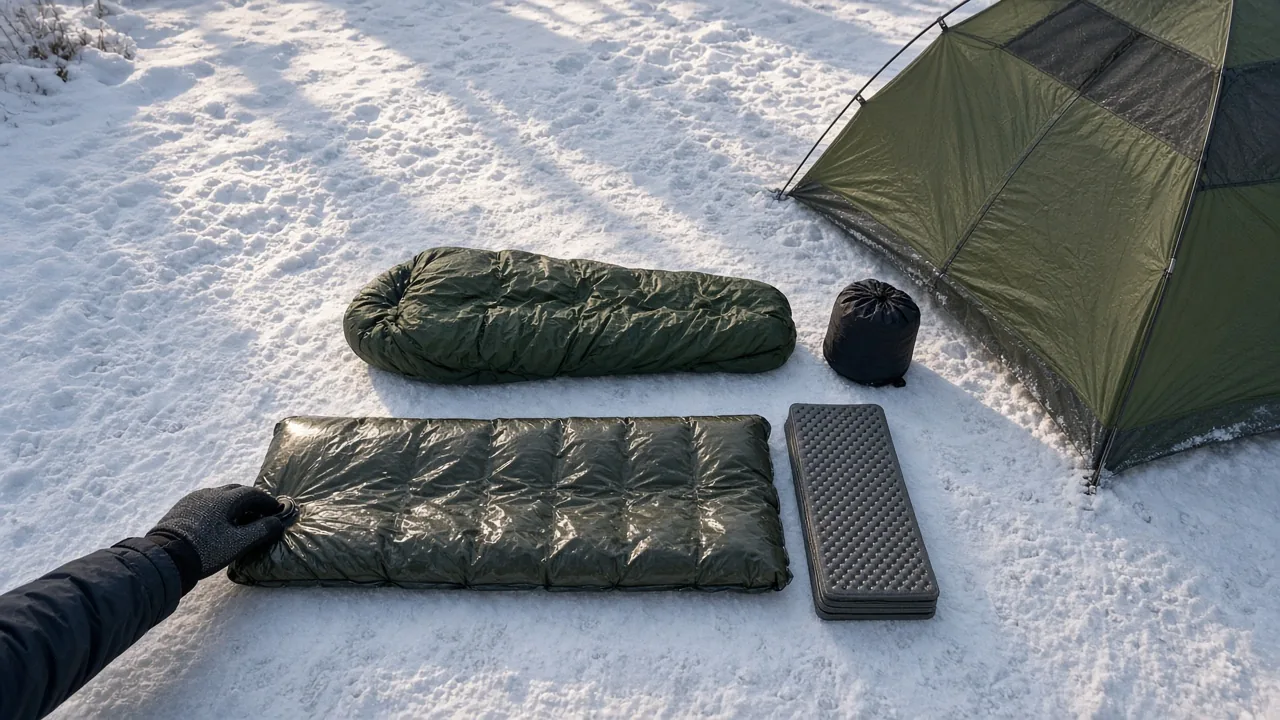
The Trekology UL R7 temperature rating says R-7, but winter performance is more complicated than one number. In cold ground and snow, a pad can feel warm while still letting heat escape through the bottom. Owner reports and a snow-melt test suggest the pad behaves closer to R-4.5 unless it is oriented correctly and backed up with foam below about 20°F. Treat it as a capable shoulder-season pad for moderate snow trips, not a true alpine mattress.
What Does the Trekology UL R7 Temperature Rating Tell You Before You Buy?
The R-7 label is a starting point, not a promise. A pad can pass a lab test and still feel different in a tent because of orientation, inflation, ground moisture, and side heat loss. Before packing it for snow, look past the number and check the testing standard, the pad’s face direction, and what kind of insulation it actually uses.
Check ASTM F3340 Winter R-Value Guidelines
ASTM F3340 is the current sleeping pad testing method most brands use. It places a hot plate on one side of the pad and a cold plate on the other, then measures how much energy is needed to keep the hot side stable. The less energy required, the higher the R-value.
Under this standard, winter use usually calls for R-4 or higher. Alpine conditions start at R-6. By that guide, a true R-7 should be more than enough for snow camping. The issue with the Trekology UL R7 is not the standard itself, but whether the pad actually meets its claimed number in field conditions.
Look for Pad Orientation Marks and Owner Clarifications
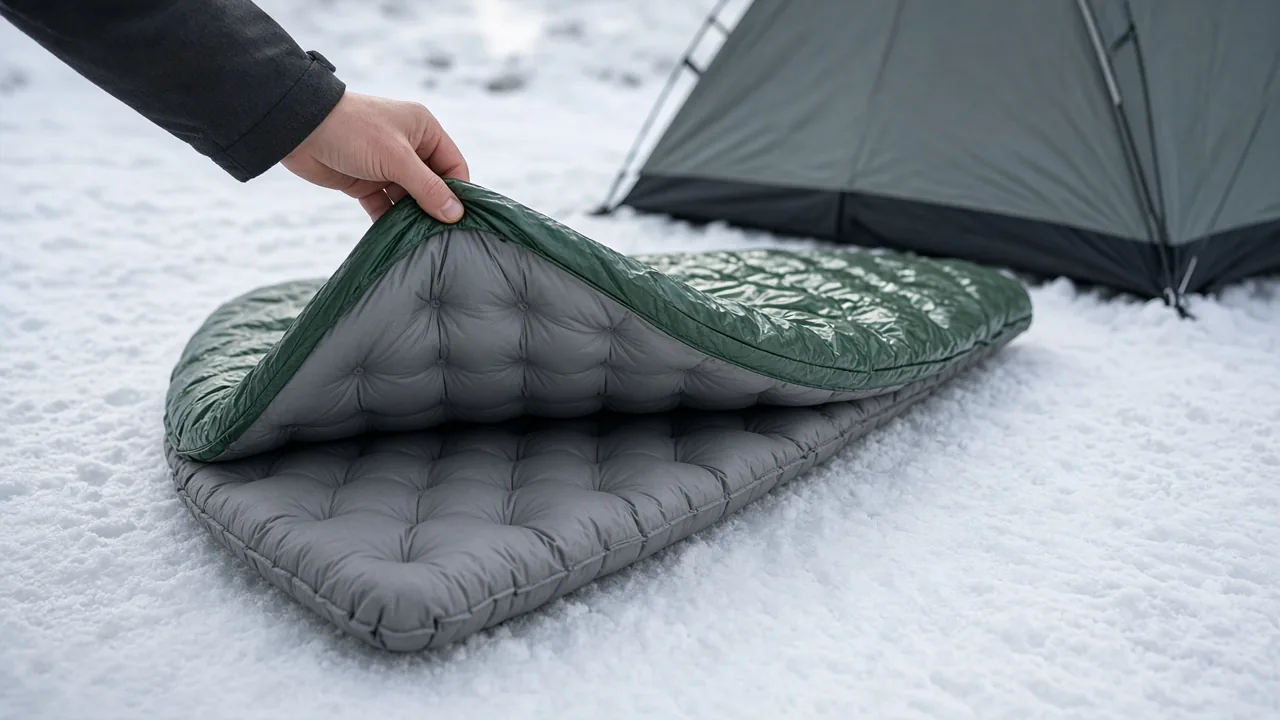
Several owners point out that this pad has a correct top and bottom. The green side faces up, and the gray or silver side goes down against the ground. Reversing that can reduce reflected heat and change how the pad feels on cold soil.
One widely shared snow test found a lower field estimate around R-4.5 after the tester slept on the pad overnight. But owners quickly noted the tester appeared to have the pad upside down. That does not prove the pad is a true R-7, but it means any field estimate without confirming orientation is incomplete. Before you buy, check the manufacturer’s face-up marks and follow them exactly.
Weigh Insulation Fill Against Packed Size
A pad this light for a claimed R-7 often gets its warmth from reflective film rather than thick synthetic fill. That is not automatically bad, but it changes how the pad behaves. Reflective film can reflect body heat back, but it does not trap as much dead air as filled baffles. It also tends to be noisier and thinner.
If the pad skips side insulation or uses only a reflective layer, you may lose heat through the edges even when the center feels warm. Check the construction details before assuming the R-value alone makes it winter-ready.
How to Test Trekology UL R7 Warmth in Snow or Cold Ground
One of the simplest ways to check a pad’s real insulation is to look at the ground underneath it after a cold night. If the pad is holding heat where it should, the snow or soil under your body should stay relatively frozen or at least show less melting. If it shows a deep body-shaped depression, heat is passing through.
Use the Snow Melt Check and Record the Conditions
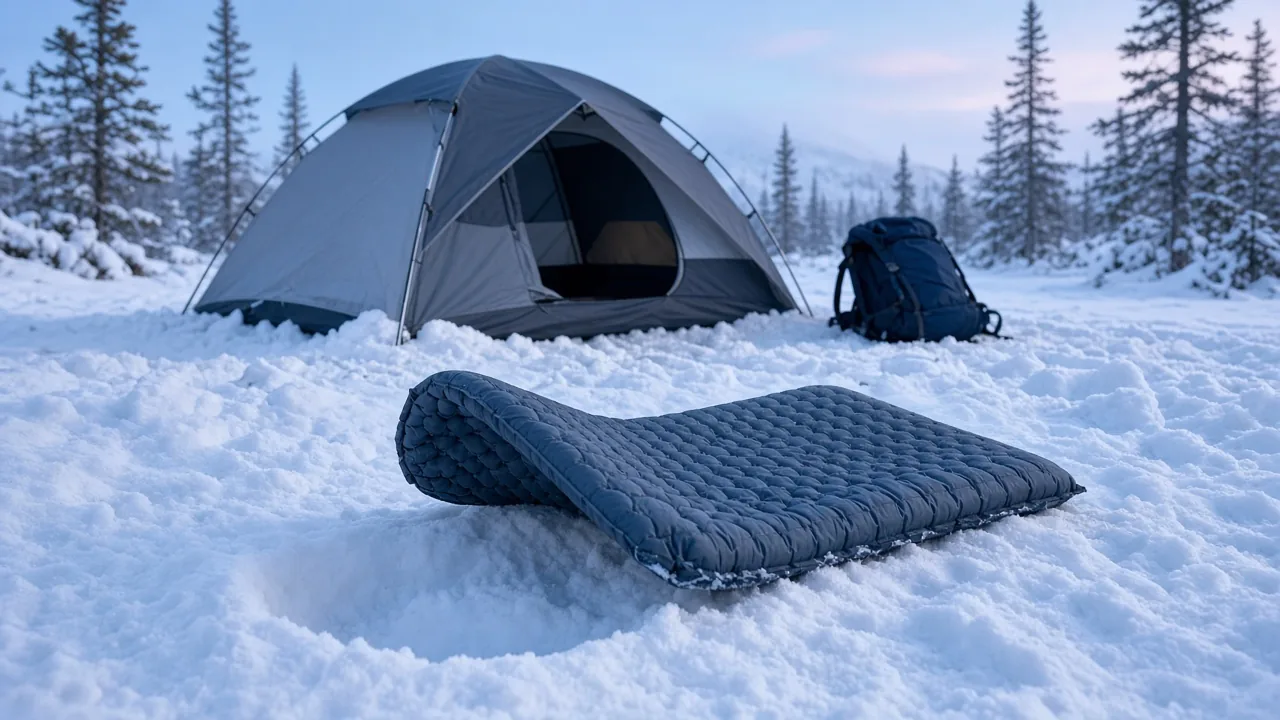
Set up on undisturbed snow, inflate the pad normally, and sleep as you usually would. In the morning, lift the pad and look at the snow. A visible body-shaped melt indicates the bottom insulation is not holding enough heat, even if you felt fine overnight.
Record the overnight low, whether you used a foam pad, and what side of the pad faced up. That gives you a repeatable way to compare pads later. A single night is not a lab test, but it tells you more than a catalog number.
Add a Closed-Cell Foam Pad for Sub-20°F Trips
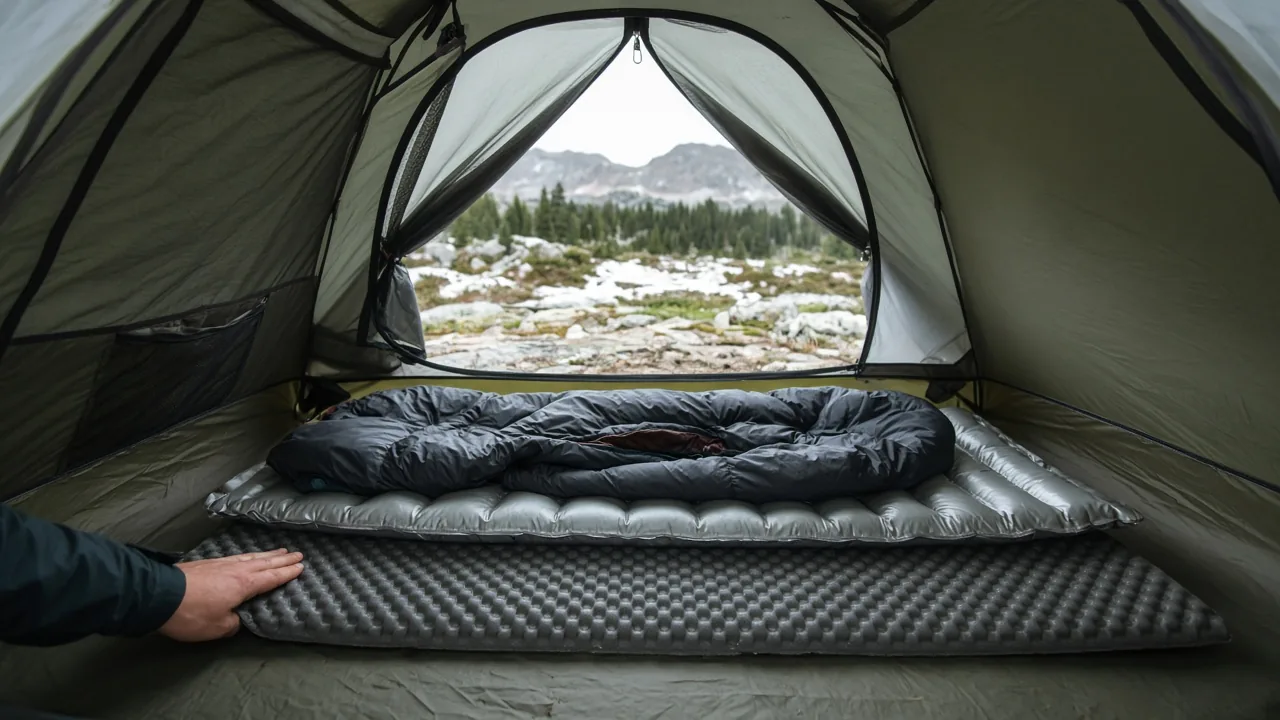
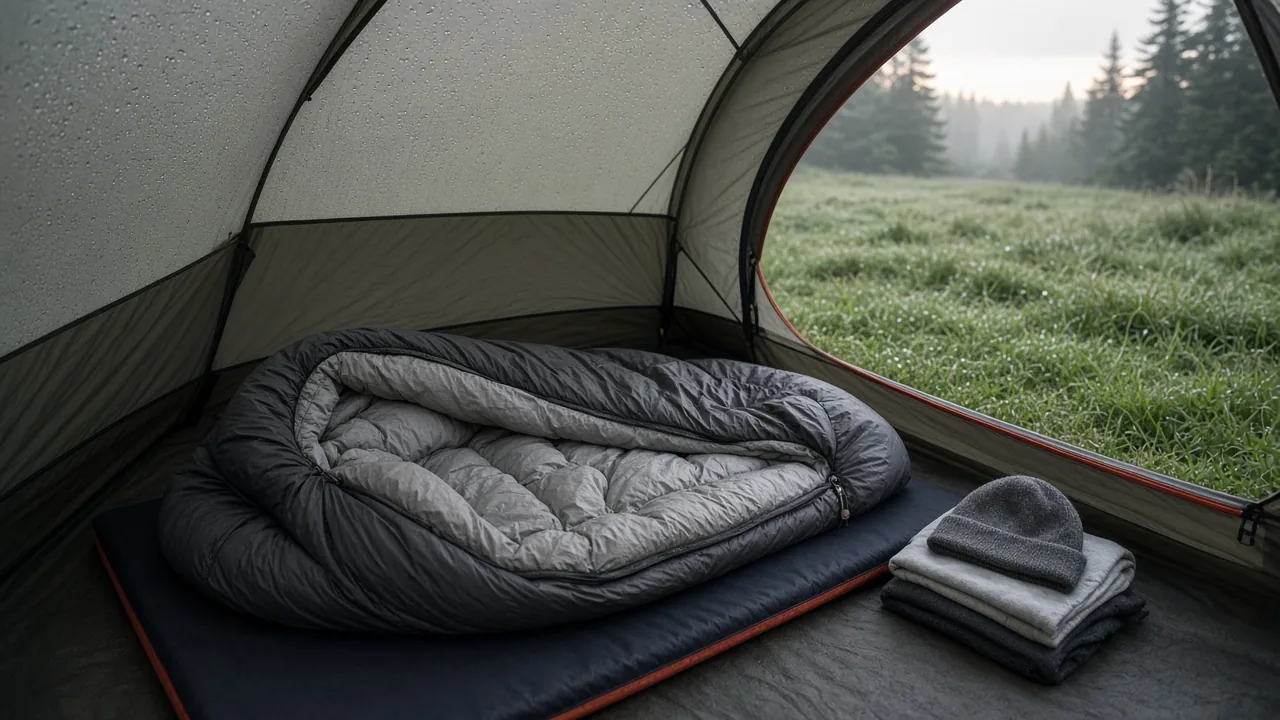
If the forecast may reach the teens or single digits, place a Z-style closed-cell foam pad under the UL R7. The foam adds a second layer that blocks ground cold and reduces reliance on the inflatable pad’s side insulation. It also works as a backup if the air pad loses pressure overnight.
This setup is bulkier, but for car camping or short winter backpacking trips, the extra weight is usually worth the margin. At around 20°F and below, treat the UL R7 as part of a sleep system rather than the only insulation under you.
Never Use a Stove or Heater Inside Your Tent
If you wake up cold, add dry layers or a warmer sleeping bag. Never use a stove or heater inside your tent. Any fuel appliance creates carbon monoxide and fire risk, even with a vent open. Cold is uncomfortable, but carbon monoxide can be fatal before you notice symptoms.
How to Match Your Pad to Expected Winter Lows
Choose the pad based on the lowest temperature you actually expect, not the temperature you hope for. Compare that number with owner reports for the UL R7, which land around the low 20s Fahrenheit for comfortable use and become less consistent below that.
Use This R-Value Temperature Range Table
As a general guide for sleeping pads:
| Expected overnight low | Recommended R-value |
|---|---|
| Above 50°F | Any pad works |
| 50°F to 32°F | R1.2 to R3 |
| 32°F to 14°F | R3 to R5 |
| Below 14°F | R5 or higher |
| Alpine conditions | R6 or higher |
A true R-7 sits in alpine territory. But the UL R7’s owner-reported field performance clusters closer to the moderate winter range—fine around 21°F for some users, shaky below that.
Understand That Higher R-Value Does Not Overheat You
A high-R pad only slows heat loss to the ground. It does not add heat. If you pick an R-7 pad for a shoulder-season trip, it will not make you sweat. The pad is simply separating your body from the cold surface more effectively.
That means there is little downside to choosing a higher R-value than you need, apart from weight and packed size. If the UL R7 were a true R-7, it would not overheat you in fall. The question is whether it actually delivers that insulation on snow.
Side Sleepers Should Add Length and Width
If you sleep on your side, choose a wide pad at least 6 inches longer than your height. This is especially important with the UL R7, because the pad feels short for people over about 6 feet. A 5-foot-8-inch tester found it workable, but taller sleepers may roll off the edges or press a hip into the ground.
Rolling off the edge does more than wake you up. It creates a direct path for body heat to escape into the tent floor. If you are tall or tend to sprawl, look for a longer, wider option or test the pad before committing to a winter trip.
Trekology UL R7 Temperature Rating Compared with Other Winter Pads
Comparing the UL R7 with filled, heavier pads shows what the weight savings cost you in noise, side warmth, and durability. Lighter reflective pads can work, but they trade away some of the things that make winter sleep more reliable.
| Pad | Claimed R-value | Measured weight | Notes |
|---|---|---|---|
| Trekology UL R7 | R7 | Not listed | Reflective design; field estimate around R4.5; short for tall users |
| Sea to Summit R6.2 | R6.2 | About 2 lb 3 oz | Filled insulation; quieter and warmer-feeling; bulkier |
| Sea to Summit R3.2 | R3.2 | About 1 lb 8 oz | Lighter than R6.2; less fill; better for shoulder season |
| Qingtu reflective pad | Not standardized | About 1 lb 3 oz | Reflective film only; high-pitched noise; thinner fabric |
Weights are approximate based on measured samples. The table is not a direct head-to-head test, but it shows the trade-off pattern: more fill generally means more weight and less noise.
Sea to Summit R6.2 and R3.2 by Weight and Feel
The Sea to Summit R6.2 weighs about 2 pounds 3 ounces, and owners describe it as the “mattress of air pads.” It has noticeably more fill, which reduces noise and improves side insulation. The R3.2 version weighs about 1 pound 8 ounces, so dropping from R6.2 to R3.2 saves roughly 11 ounces.
That weight difference is significant for backpacking, but the R6.2 feels more stable under a cold body. If you are comparing it to the UL R7, the STS pad gives up some weight for a more consistent winter feel.
Qingtu Reflective Pads: Lighter but Louder
A Qingtu pad with reflective film weighs about 1 pound 3 ounces, even less than the Sea to Summit R3.2. But the same reflective construction that keeps weight low also produces a high-frequency crinkle when you move. The fabric is thinner, and some users find it annoying in a quiet winter tent.
This is the same trade-off you see with the UL R7. Reflective insulation is excellent for weight, but it does not damp sound or retain as much heat at the edges as filled baffles.
Owner Reports for the UL R7 Around 20°F and Below
Some owners say the UL R7 worked well at 21°F during a winter scout camp. Others used it in the teens on short trips and found it acceptable. One user had slow leaks near 20°F and eventually switched to a higher-R pad for an 8°F trip, saying the Trekology lost heat through the sides.
These reports line up with the snow-melt observation. The pad can work in moderate cold, but its effective comfort range is closer to a three-season pad once lows drop below about 20°F.
Does Reversed Orientation Change the R-Value Estimate?
If the snow test was done with the gray side up, the estimated R-value around 4.5 may be lower than reality. The reflective layer is supposed to face the ground to bounce heat back up. Orienting it the other way would reduce that effect and could explain part of the gap between the claimed R-7 and the field estimate.
This does not mean the pad is automatically a true R-7. It means the test has a flaw. Before drawing a conclusion, check the maker’s orientation marks and consider a retest with the pad right-side up.
Troubleshooting Cold Spots, Slow Leaks, and Noise on the UL R7
Before blaming the R-value, rule out underinflation, wrong pad direction, rocks under the tent, and side heat loss. Each one can create cold spots that feel like a failed pad.
Pad Feels Cold in One Area
Fully inflate the pad and clear stones or branches from the tent site. A compressed spot from a rock underneath can feel like a dead spot in the insulation. Underinflation also makes the pad less supportive and can let your hip or shoulder press into the ground.
Set the pad on a flat, cleared area and check that you are not sliding toward the edge. A cold spot on the side often means your arm or leg has moved off the pad.
Pad Loses Air Overnight
A slow leak near 20°F may worsen in freezing conditions. Carry a repair kit, and if the pad repeatedly fails, use it only for three-season car camping or as a spare. One owner experienced leaks around 20°F after about 16 or 17 nights, which suggests cold weather can expose weak points in the valve or seams.
Before a winter trip, inflate the pad at home and leave it loaded overnight. A pad that holds air indoors may still leak when cold, but a quick check catches the worst problems early.
Noisy Fabric Interrupts Sleep
Reflective-film pads can have a high-pitched crinkle when you move. A quilt, a sleeping bag liner, or a layer of clothing between you and the pad reduces the noise a little, but it does not solve the problem. Filled pads like the Sea to Summit R6.2 are quieter, but they add weight and packed bulk.
If noise wakes you or your tent partner, try the pad in the backyard before relying on it for a multi-day trip.
How to Inflate, Pack, and Store the Trekology UL R7
The included stuff sack doubles as a pump. Fill the pad with air by trapping it in the sack, then pushing it into the valve. Most pads inflate in three to four fills, but you can stop earlier if the pad feels firm enough.
Inflate Firm but Not Rock Hard
Firmer inflation improves support and reduces cold spots because your body does not sink as deeply into the pad. But do not overstress the seams. Stop when the pad holds its shape under a firm hand, not when it feels like a drum.
A pad that is too soft allows your hips and shoulders to compress the insulation, creating direct contact with the cold ground. A pad that is too hard can stress the valve and seams over time.
Dry and Loosely Store After Any Condensation
Before packing, wipe down the pad if it collected breath or tent condensation. Store it dry and loosely rolled rather than tightly compressed. This helps the reflective layer and the valve survive multiple snow trips.
If you use a foam pad underneath, wipe that down too. Moisture trapped between two pads can freeze overnight and make the system feel colder than the R-value suggests.
For car camping, the UL R7 is a reasonable pad if you add a foam layer below 20°F. For backpacking, its weight is tempting, but check your height, the forecast, and the expected overnight low before packing it. If the trip is mostly above freezing, bring it. If lows will stay in the teens or single digits, pair it with foam or choose a filled pad with a more consistent winter record.
— Camp Kit Journal
This article is general information about camping gear, not professional safety, medical, or wilderness training. Check fire restrictions, weather, and campsite rules before you go, and follow the manufacturer's instructions for your own equipment.
FAQ
Is the Trekology UL R7 good for winter camping?
The Trekology UL R7 can work for moderate snow trips around 20°F, but field reports suggest it performs closer to R-4.5 than R-7. Below 20°F, pair it with a closed-cell foam pad for extra insulation.
What R-value do I need for winter camping?
For winter camping, ASTM F3340 guidelines recommend R-4 or higher. Alpine conditions usually call for R-6 or above. A true R-7 should handle snow, but the UL R7’s owner-reported performance is closer to a three-season pad in very cold conditions.
Does reversing the Trekology UL R7 affect its warmth?
Yes. The pad has a correct orientation: green side up and gray or silver side down. Reversing it can reduce reflected heat and make the pad feel colder on frozen ground, which may explain lower field R-value estimates.
How can I test my sleeping pad’s insulation in snow?
Use the snow-melt check. Sleep on undisturbed snow overnight, then lift the pad in the morning. A deep body-shaped melt indicates heat is passing through the pad, even if you felt warm during the night.
What temperature is the Trekology UL R7 comfortable to?
Owner reports cluster around the low 20s Fahrenheit for comfortable use. Below that, side heat loss and slow leaks become more noticeable, so pair it with a foam pad or choose a filled pad with a more consistent winter record.