Is a Voice Controlled Camping Lantern Worth It?
Voice control can be worth it when your lantern hangs out of reach or you want to switch it off from inside a sleeping bag. This guide covers car camping vs backpacking tradeoffs, brightness and runtime tests, and setup tips to help you decide.

Voice control can be worth it if your lantern hangs out of reach or you want to switch it off after you’re already zipped inside a sleeping bag. But a voice controlled camping lantern is not automatically a better lantern. The feature adds convenience that matters more in some camps than others, and you still need to judge weight, honest brightness, runtime behavior, and build quality before choosing one. Use this guide to decide whether hands-free control solves a real problem for your trip type or just adds complexity.
Decide Where and How You’ll Use the Lantern
Before comparing models, separate car camping from backpacking. At a campsite, hands-free convenience and larger light output matter more than saving a few ounces. On foot, every ounce counts, and you may already carry a headlamp that covers most night tasks.
Car Camping: Comfort and Hands-Free Control
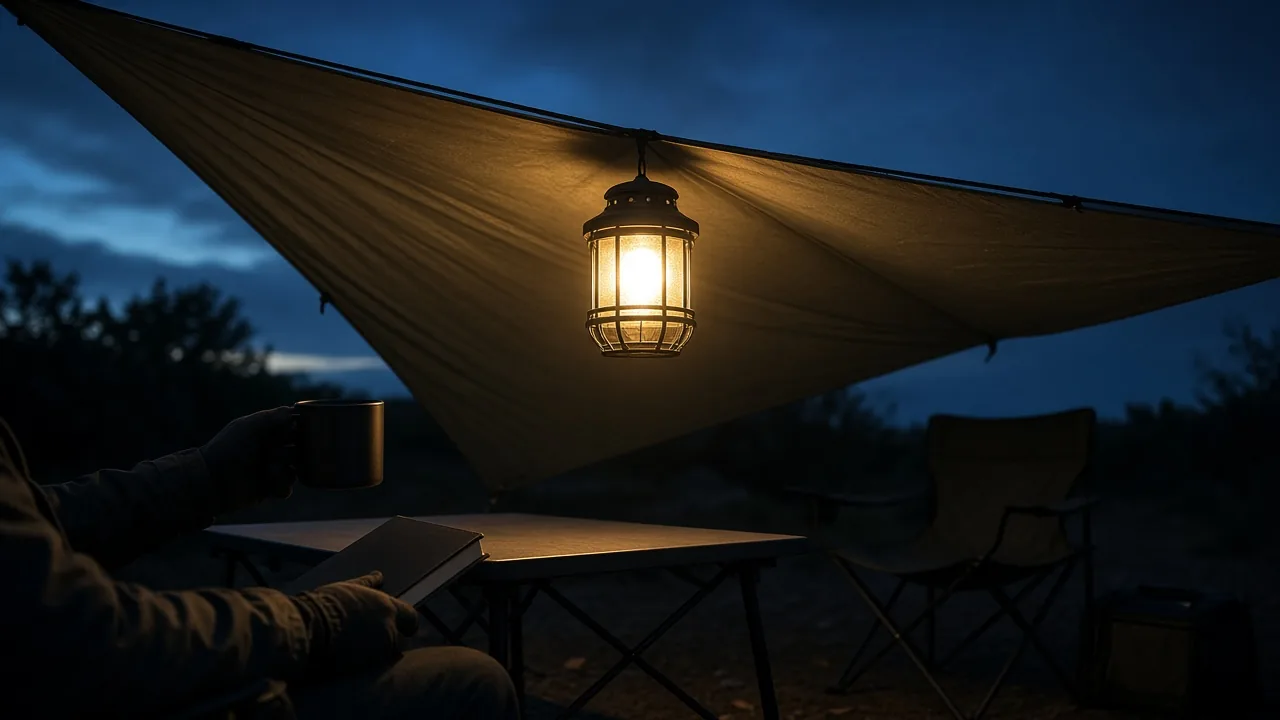
For car camping, a heavier voice-controlled lantern can solve practical problems. If you cook after dark, you can change brightness or switch the light off without touching it with greasy or wet hands. If the lantern hangs from an awning, canopy, or tarp ridge line, voice control means you don’t have to lower it every time you want a different output.
Reading in a camp chair is another case where voice control helps. The lantern may be clipped overhead or placed on a table just out of reach. A short spoken command is faster than standing up, and it doesn’t break your focus. In those situations, the extra weight of a 260–270 g lantern is less important than the convenience it provides.
Car camping also gives you room to carry a power bank or spare battery. If the voice lantern uses a nonstandard charging cable or runs down faster than expected, you have a backup plan. That reduces the risk of relying on a single smart light.
Backpacking: Weight and Simplicity
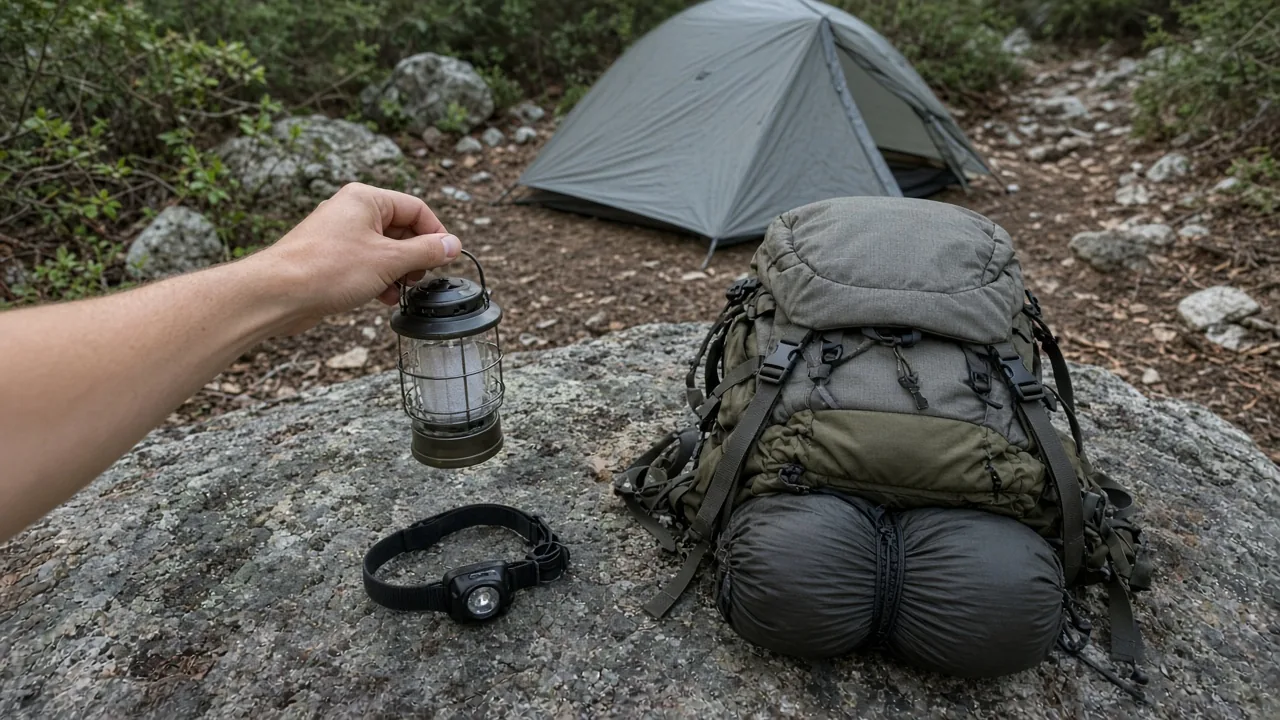
Backpacking changes the math. A voice-controlled lantern that weighs around 260–270 g may be heavier than you need, especially if a 71 g light or your headlamp already covers walking and tent tasks. On a long approach or multi-day trip, that weight difference is noticeable.
A small lantern without voice control can still clip to a pack strap, hang inside a tent, or ride in a hip belt pocket. Because you can usually reach it easily, voice commands add little. If you’re tired and just need a few lumens to organize your sleep system, a button press is often faster than speaking and waiting for a response.
Backpackers also tend to favor gear that uses standard charging methods or replaceable batteries. A voice lantern that relies on a proprietary magnetic cable or an app adds another failure point and another cable to track. For a minimalist kit, that may not be worthwhile.
What Voice Control Adds Over Buttons and Apps
Voice control matters most when the lantern is out of reach or you are closed inside a sleeping bag. It is not a general remote-control toy, and it does not automatically beat a well-placed button or a simple app.
Hanging High or Stowed Away
A voice-controlled lantern lets you change brightness or switch off without lowering the light. If you’ve hung the lantern from a tarp, canopy, or tent ceiling, that can save you from standing on a chair or pulling down a wet line in cold rain. The same applies when the lantern is clipped overhead inside a vestibule or attached to a branch.
You can also turn the light off after you’ve settled into your sleeping bag. Instead of reaching out into the cold to press a button, you say the wake word and command the lantern off. That solves a real pain point for people who read before sleep or who want to check the tent without fumbling for the lantern.
The benefit is stronger when the lantern is mounted high and stays there. If the light sits within arm’s reach on a camp table, voice control is less essential.
App and Button Limits
App control can add useful features such as red and white modes, brightness presets, and group settings for multiple lights. But using a phone at night is slower than speaking, and the screen light can harm your night vision. You may also need to unlock the phone, open the app, and wait for it to connect.
A physical button only works if you can reach the lantern. When the light is hanging above you or clipped behind a chair, a button becomes inconvenient. Voice control splits the difference: it is faster than an app and more useful than a button when the lantern is out of reach.
The catch is that voice commands must be recognized consistently. Wind noise, a zipped tent door, or a mismatched wake word can cause failures. A good voice lantern should still have a physical button as a fallback.
Compare Brightness, Runtime, and Build Before Buying
Peak-lumen labels can mislead. Third-party runtime tests and build details often reveal more than the biggest number on the box. A lantern that looks bright on a spec sheet may dim quickly, and a flimsy mount can make even the best light useless.
Here is a quick comparison of the main camping lantern styles based on reported specs and hands-on testing:
| Lantern type | Reported weight | Claimed max output | Voice control | Best for | Main watch-out |
|---|---|---|---|---|---|
| Small backpacking lantern | about 2.5 oz | 300 lumens boost | No | Backpacking, tent use, second light | Proprietary magnetic charging cable |
| Mid-size smart lantern | about 9.2–9.5 oz | 750 lumens boost | No, app only | Car camping, larger area, power bank | Heavier; app can be slower than voice |
| Voice-controlled lantern | similar weight to non-voice version, slightly heavier | 1500 lumens claimed, dims within minutes | Yes | Car camping, high hanging, sleeping bag off | Early brightness step-down; low-battery blink |
| Non-voice 1500-lumen lantern | similar weight, slightly slimmer | has a stable 750-lumen mode | No | General camp light if output stability matters | No voice control |
Brightness Claims vs Measured Output
In one direct comparison, a 1500-lumen lantern looked only slightly brighter than a 750-lumen model, and it started dimming after about three minutes. By around 20 minutes, its maximum brightness had fallen below that steady 750-lumen output.
That does not mean the 1500-lumen light is useless. It means the peak number is temporary. If you need stable light for cooking or reading, a lantern with a consistent 750-lumen mode may be more useful than one that spikes high and then drops.
When shopping, look for reviews that measure output over time rather than only quoting the box. A label that says “1500 lumens” tells you the maximum, not how long it holds or whether it drops suddenly when the battery drains.
Runtime Strategy and Low-Battery Warning
Some lights hold steady output for hours, while others ramp down slowly to extend battery life. Both approaches can work, but they affect how you plan your evening.
A lantern with a stable 750-lumen mode may run for about six hours before it starts stepping down noticeably. A voice-controlled model with a higher initial output may reduce brightness in stages over the first 20 minutes, then continue running longer overall. In one test, the voice lantern kept going nearly three hours after the stable-output lantern shut off.
The trade-off is predictability. If the light dims slowly, you can adapt. If it suddenly blinks to warn about low battery in the dark, that can be jarring and even a little unsettling at a remote campsite. Check the low-battery behavior before relying on the light for an entire night, and charge earlier than you think you need to.
Build, Mounting, and Magnet Stability
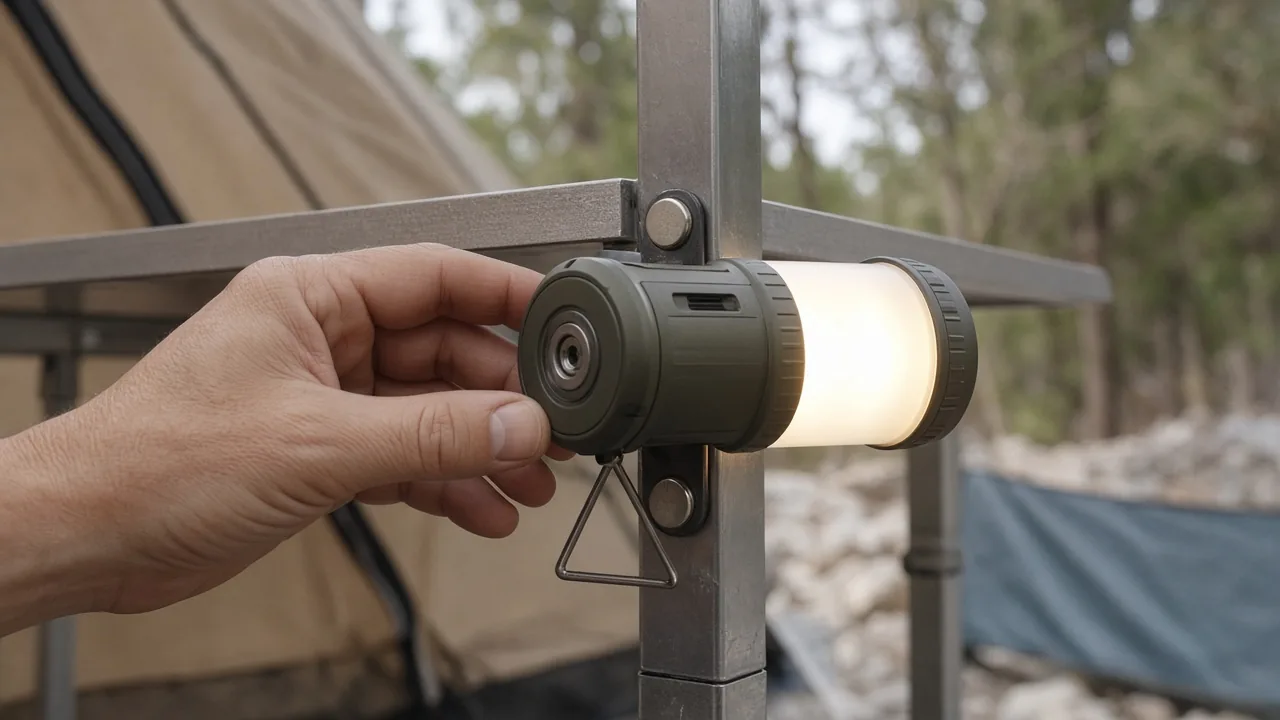
A voice-controlled lantern is only as useful as its mount. Shallow tripod threads, weak dual magnets, and flimsy hinges can make a good light frustrating to use.
For example, one voice lantern has a 1/4-inch tripod socket that is so shallow the screw never fully seats. Users report that common tripod plates cannot lock tight. If you plan to mount the lantern on a small tripod or clamp, that is a critical flaw.
Some lanterns use dual magnets for metal surfaces. Both contact points must fully seat. If only one magnet catches, the light can sag or fall. A heavier lantern with a high center of gravity may have trouble staying attached when mounted sideways on a vehicle or steel table.
Plastic hinges and folding stands also matter. A stand that feels stable in the store can loosen over a season. If the lantern’s only usable angle depends on that stand, the voice feature won’t save it.
Is a Voice Controlled Camping Lantern Worth It? Weigh the Tradeoffs
Ask whether hands-free convenience outweighs three things: extra weight, less predictable brightness, and potential build or charging compromises. For some campers, the answer is yes. For others, a simple lantern or headlamp covers the same night tasks with fewer annoyances.
Who Should Choose Voice Control
Car campers who hang lights high, cook after dark, or want to switch off from a sleeping bag are the strongest candidates for a voice-controlled model. If your lantern stays mounted overhead for an entire evening, voice control removes the need to get up repeatedly.
People with cold or wet hands also benefit. A voice command lets you adjust light without exposing your hands or fumbling with a button. The same applies if you wear thick gloves in shoulder-season weather.
Another good fit is a base camp setup where multiple people use the same light. Voice commands can be faster than passing a phone around for app control, assuming the wake word works reliably.
Who Should Skip It
Backpackers cutting ounces should probably skip voice control and choose a lighter lantern or rely on a headlamp. A 260–270 g lantern is a lot to carry when a 71 g light or your existing headlamp handles walking, cooking, and tent chores.
Users who want standard USB-C charging may also be better off with a non-voice lantern. Some smart lights use proprietary magnetic chargers. If you lose that cable or forget it, the lantern is dead until you get a replacement. A standard cable is easier to borrow or replace.
Anyone who prizes rugged, stable output may prefer a simpler lantern. Voice control does not fix weak plastics, shallow tripod threads, or early brightness step-down. If the non-voice version has better build quality and a more honest runtime curve, buy that instead.
How to Set Up and Use a Voice Lantern at Camp
Run through setup before dark: charge fully, test commands, mount where it won’t fall, and use reflected light instead of direct glare. A little daylight preparation prevents most nighttime frustration.
Before Dark
In daylight, test the voice phrases, brightness steps, and final mounting spot. Say the wake word the way the manual describes, and confirm the lantern responds before you hang it high. If the microphone area is covered by a strap or bracket, the command may not register.
Check the low-battery behavior too. If the lantern blinks when the battery gets low, decide whether that will bother you at 2 a.m. You may want to top off the battery before the evening or run the light at a lower setting.
Finally, mount the lantern where it will not fall. Test tripod thread depth, magnet contact, and stand stability before relying on it after sunset.
Inside the Tent and Safety
When hanging a lantern inside a tent, keep it the only powered item there. Never use a stove or heater inside your tent. Any flame or heating device releases carbon monoxide and creates a fire risk. The lantern is for light only.
Hang the lantern from a loop or clip at the tent peak. Keep it away from fabric that could block airflow or touch hot surfaces. If the lantern has a boost mode, avoid running it at maximum for long periods inside a small tent. The extra heat and bright direct beam can make the space uncomfortable.
Outdoor Light Placement
Point the lantern upward toward a tarp or tent ceiling for softer, more even light. Direct beams create glare and hard shadows. Reflected light spreads across the cooking area or seating space without shining into your eyes.
If the lantern has an adjustable stand or hanging hook, use the highest stable position. Avoid placing it on a flat table where it shines directly at eye level. For group meals, a light bounced off a canopy or tarp gives better visibility and feels more natural than a bare LED panel aimed sideways.
Troubleshooting Common Voice Lantern Problems
If output drops early, commands misfire, or mounting fails, first adjust settings and placement before assuming the light is defective. Most issues come from setup errors or unrealistic expectations.
Light Gets Dim Quicker Than Expected
Choose a lower brightness setting and charge earlier if the light steps down rapidly. Some models extend runtime by slowly reducing output, so the highest mode may not last long. If you need stable light for cooking, use a medium or high setting that the lantern can hold, not the temporary boost.
If the lantern dims within minutes even at moderate settings, the battery may be low or the light may have a firmware setting that limits output. Charge fully and test again in daylight. If it still drops too quickly, use it only when you can accept variable brightness.
Voice Commands Don’t Always Work
Use the exact wake word, keep the microphone area clear, and avoid high wind noise. If the lantern is clipped to a pack or shaking in the wind, the microphone may struggle to hear you. Move closer, speak clearly, and pause after the wake word before giving the command.
If commands fail, fall back to the button. A voice lantern should still work manually. If it doesn’t, the voice feature becomes a liability. Test both methods before you leave home.
Magnet or Tripod Mount Won’t Hold
For dual magnets, make sure both contact points fully seat. If only one magnet catches, the light can pivot loose. Clean metal surfaces and remove any fabric or dirt between the magnet and the steel.
For tripods, check the thread depth because a shallow socket may never lock tight. You may need a washer or a shorter screw. If the mount still feels loose, don’t force it. Use the built-in stand or hang the lantern instead.
Final Check: Bring the Right Light for the Trip
Before packing, check your trip type, the expected overnight low, and the chance of rain. If hands-free voice control solves a real problem—like a high hanging lantern or a cold night inside a sleeping bag—then the added weight and complexity may be worth it. If you’re backpacking or already have a reliable headlamp, a simple lantern may cover the same night tasks with less risk.
A voice controlled camping lantern is not a mandatory upgrade. It’s a specialty tool that earns its place in car camping and base camp setups. Match the light to the trip, and leave the smart features behind when they don’t pay their weight.
— Camp Kit Journal
This article is general information about camping gear, not professional safety, medical, or wilderness training. Check fire restrictions, weather, and campsite rules before you go, and follow the manufacturer's instructions for your own equipment.
FAQ
Is a voice controlled camping lantern worth it for backpacking?
Usually not, because backpackers prioritize light weight and simple controls. A small non-voice lantern or a headlamp covers most night tasks with fewer cables and failure points.
What are the main benefits of voice control on a camping lantern?
Voice control helps when the lantern hangs out of reach or when you are already inside a sleeping bag. You can change brightness or turn it off without touching the light with wet or greasy hands.
How reliable are voice commands on camping lanterns?
Voice commands can fail if wind noise is high, the microphone is covered, or the wake word is spoken incorrectly. A good voice lantern should still have a physical button as a fallback.
Does a higher lumen rating mean a brighter, better lantern?
Not always. Some 1500-lumen lanterns look only slightly brighter than 750-lumen models and may dim within minutes. Check runtime tests for stable output instead of relying only on peak lumens.
What should I check before mounting a voice-controlled lantern?
Test tripod thread depth, magnet contact, and stand stability before dark. Shallow tripod sockets and weak magnets can cause the lantern to sag or fall.