Durston X-Mid 2 vs X-Dome 2: Lighter Poles or Freestanding?
Compare the Durston X-Mid 2 and X-Dome 2 on weight, space, setup, wind handling, and campsite compatibility to decide whether a trekking-pole shelter or freestanding tent better suits your trips.

If you're deciding between the Durston X-Mid 2 and X-Dome 2, the real question is whether you'd rather save weight with a trekking-pole shelter or gain setup convenience with a freestanding tent. The X-Mid 2 weighs about 1 lb 15 oz and relies on two trekking poles and stakes. The X-Dome 2 weighs about 3 lb 2 oz and stands on its own with carbon poles. This comparison walks through weight, space, wind behavior, setup, and campsite compatibility so you can pick the tent that matches the trips you actually take.
Step 1: What to Gather Before Comparing the Durston X-Mid 2 and X-Dome 2
Before you look at specs, list your usual campsite surfaces, typical wind exposure, whether you already carry trekking poles, and how much setup fuss you're willing to accept. Those four factors matter more than the spec sheet.
Check your campsite surfaces first
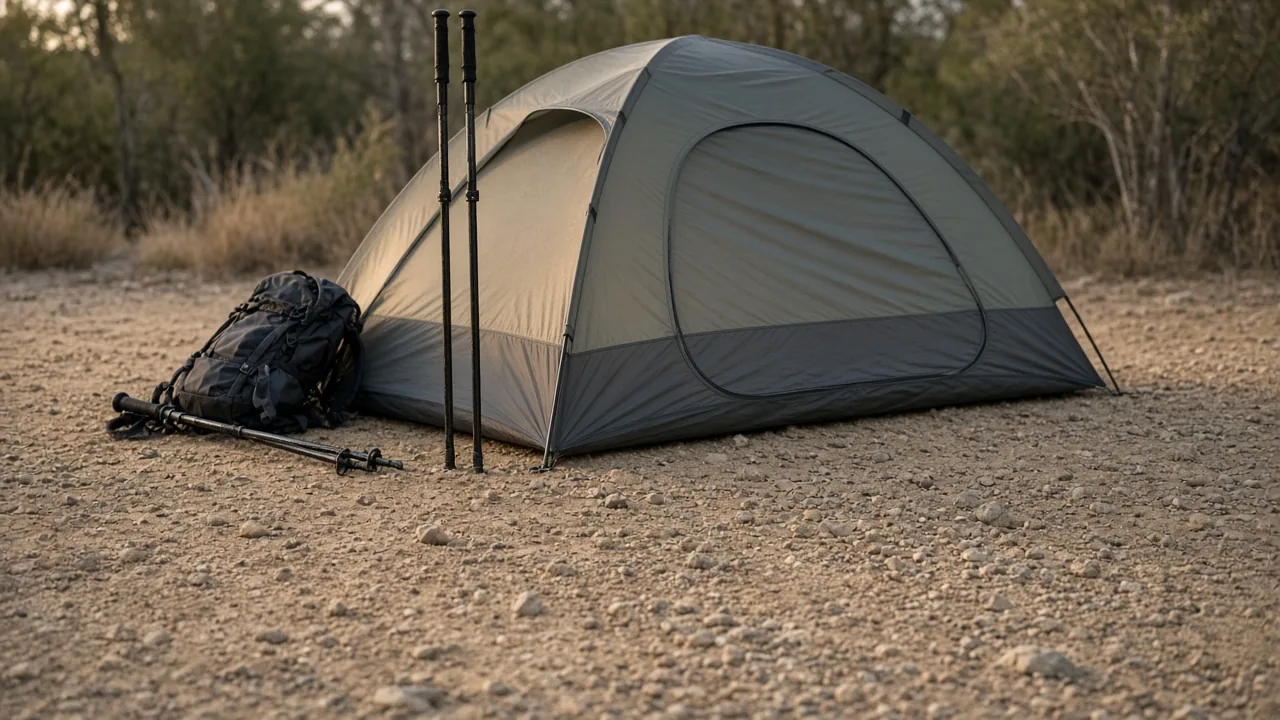
Sand, slickrock, gravel bars, and wooden platforms favor a freestanding tent. The X-Dome 2 can stand without stakes, which makes camp selection far more flexible. The X-Mid 2 needs at least four stakes in the corners to hold its shape, so soft but firm ground works best. Loose sand or shallow soil over rock can turn a simple pitch into a frustrating search for anchor points.
Know your comfort weight budget
Backpackers counting ounces will naturally lean toward the X-Mid 2. Saving roughly 1 lb 3 oz is meaningful on long carries. Car campers, short-mileage trips, or anyone who values convenience over weight can absorb the X-Dome 2's heavier build. Match the weight penalty to how far you actually carry the tent.
Step 2: Compare Core Specs for the Durston X-Mid 2 vs X-Dome 2
The spec table below gives you the quick reference points.
| Spec | Durston X-Mid 2 | Durston X-Dome 2 |
|---|---|---|
| Weight | About 1 lb 15 oz | About 3 lb 2 oz |
| Structure | Trekking-pole, non-freestanding | Carbon-pole, freestanding |
| Floor footprint | 83 x 100 in | 79 x 87 in |
| Stakes needed | 4 minimum | None to pitch, 2+ recommended in wind |
| Wall style | Sloped, angular | Near-vertical |
| Doors | 2 high openings | 2 extra-large side openings |
| Fabric | 15D polyester rainfly and floor | 15D polyester rainfly and floor |
| Interior options | Mesh or solid inner tent | Mesh or solid inner tent |
Weight and packed size
The X-Mid 2 wins clearly for backpacking weight. The catch is that it depends on trekking poles and stakes you may already carry or need to buy separately. Without trekking poles, you're adding support poles anyway, which erases much of the weight advantage. The X-Dome 2 packs heavier but includes everything needed to stand. Think of it as paying for convenience in ounces and cubic inches.
Floor space and interior shape
Floor dimensions look similar on paper, but the living experience differs. The X-Dome 2's near-vertical walls create more usable head and shoulder room throughout. The X-Mid 2 has offset poles that leave two low, angled corners. Taller sleepers sharing the tent may find one person's head pushing into that sloped space. If you're under roughly 6 feet and solo or with a partner who sleeps centered, the X-Mid 2 feels fine. If you want to sit up anywhere inside, the X-Dome 2 is more forgiving.
Step 3: Follow Setup Differences Step by Step
Practice the trekking-pole pitch before you depend on it
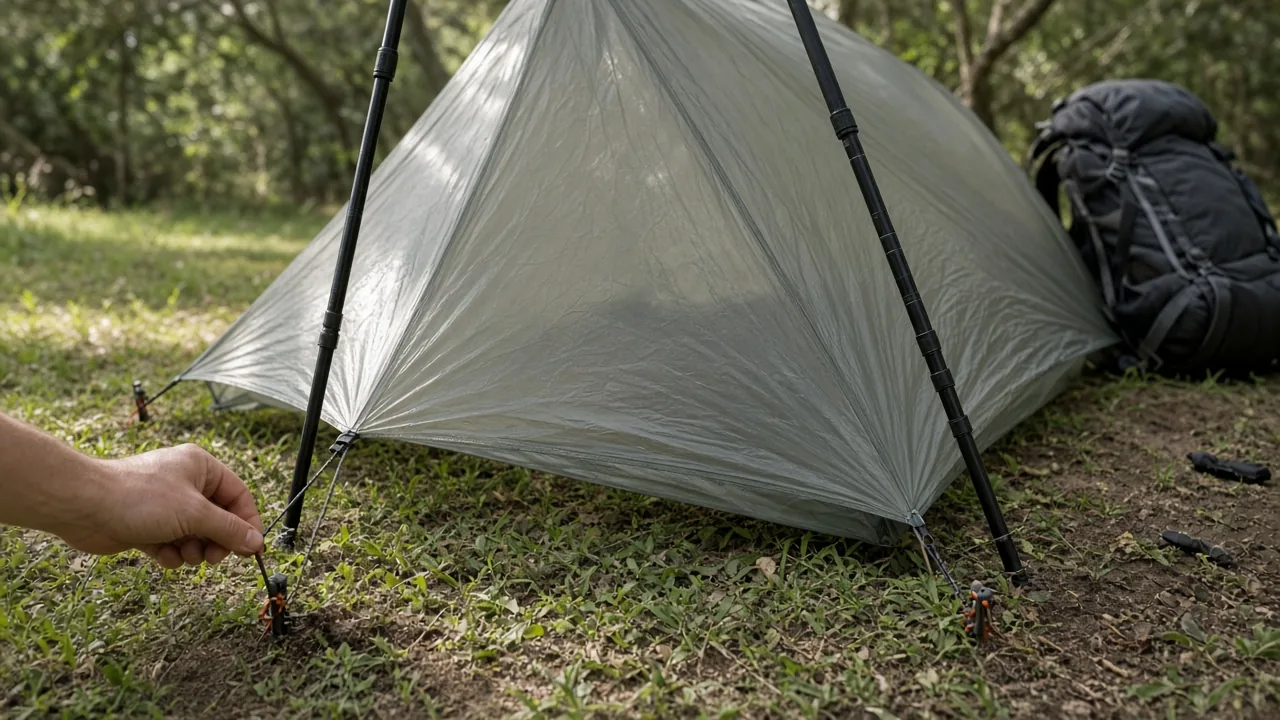
The X-Mid 2's flat-ground pitch is simple: stake the four corners, insert two trekking poles, and tension. Uneven ground changes that. A single corner sitting higher or lower forces repeated adjustments to stake position, pole height, and guyline tension. Practice at home or in a park before taking it into the backcountry. Carry extra stakes too, because rocky or sandy campsites can defeat the four-stake minimum.
Use the freestanding advantage wisely
With the X-Dome 2, you can pitch the tent and lift the whole thing to a better spot when you realize the first site was poor. That's hard to do with a trekking-pole shelter. In wind, stake at least two corners and add guylines to reduce frame stress. Never use a stove or heater inside your tent, regardless of which model you choose. Carbon monoxide builds up quickly in a closed shelter, and open flames near tent fabric are a serious fire risk.
Step 4: Evaluate Wind, Ventilation, and Weather Behavior
Wind and rain expectations
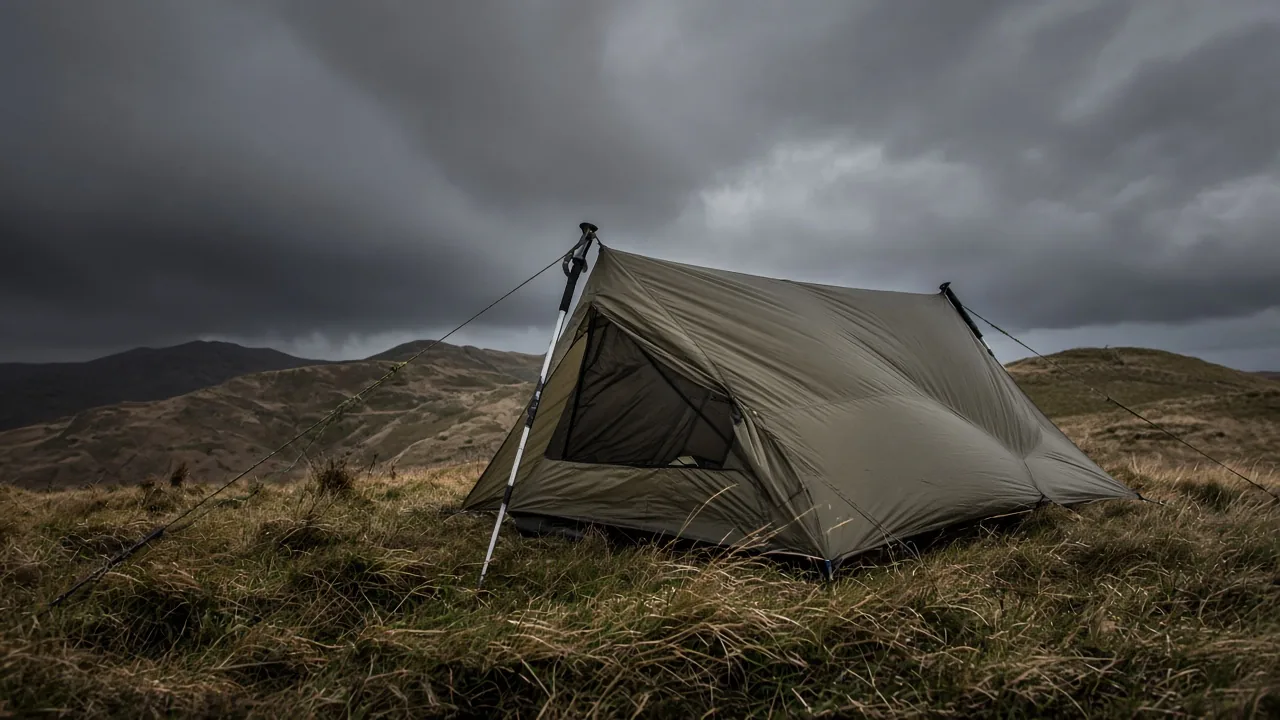
The X-Mid 2 has a reputation for better wind shedding. Its angled walls deflect gusts, and thick trekking poles provide a sturdier structure than thin carbon tent poles. The X-Dome 2's high end walls catch wind more directly, especially at the head and foot ends where no pole support exists. For exposed ridgelines, alpine basins, or storm-prone routes, the X-Mid 2 is the stronger choice. For sheltered forest sites, canyon bottoms, or when sand and rock make staking unreliable, the X-Dome 2's freestanding frame becomes more valuable.
Condensation and airflow
Double-wall construction helps both tents manage condensation. The X-Dome 2 has wider peak vents with greater opening range, which promotes more airflow. The X-Mid 2 still has two peak vents, but they're smaller. Neither tent will stay perfectly dry inside during humid, cold nights, but the X-Dome 2's ventilation gives it an edge for reducing interior moisture.
Durston X-Mid 2 vs X-Dome 2: Who Each Tent Actually Fits
Best for the X-Mid 2
The X-Mid 2 fits thru-hikers, committed trekking-pole users, and backpackers who obsess over carried weight. It's also the pick for stormier routes where wind shedding matters. The trade-off is that you need to practice the pitch and accept that some campsites simply won't work well. If you're willing to learn the skills, the X-Mid 2 rewards you with a light, capable shelter.
Best for the X-Dome 2
The X-Dome 2 suits car campers, newer backpackers, desert and slickrock campers, and anyone who values easy pitching over gram-counting. The huge double doors, large end pockets, and near-vertical walls make it easier to live with. You can pitch it on a wooden platform, packed gravel, sand, or rock without hunting for stake spots. You pay more and carry more, but you gain flexibility and interior comfort.
Troubleshooting Common Durston X-Mid 2 vs X-Dome 2 Concerns
Why does my X-Mid 2 feel hard to pitch?
Uneven ground is the usual culprit. A corner that sits high or low forces constant micro-adjustments to stakes and guylines. Practice on varied terrain before a trip. Carry a few extra stakes so you can anchor in rocky or sandy spots. If the ground is truly un-stakeable, the X-Mid 2 may not be the right shelter for that route.
Is the X-Dome 2 strong enough in wind?
The freestanding frame is stable when staked and guyed properly. The weakness is the high, unsupported end walls, which can catch gusts. Pitch near natural windbreaks like boulders, trees, or terrain folds. Some users add trekking poles at the head and foot with guylines for extra support in exposed camps, but the base design still won't shed wind the way the X-Mid 2 does.
Do we need a 2P or 3P for two people?
Standard 2P tents typically run 50 to 53 inches wide inside. That's snug with two adults, especially with wide sleeping pads or pack storage inside. If you want more shoulder room and less midnight contact, look at a 3P model or accept the X-Dome 2's extra headroom but still-narrow floor. The best measure is to check the inner tent width, not the headline footprint, before deciding.
Check whether your next trip is backpacking or car camping, how cold and wet it may get overnight, and whether your campsite surfaces allow stakes. Then choose the shelter that matches those conditions rather than whichever tent has the lighter spec sheet. If you're still uncertain, pair your tent choice with a quick review of your sleeping pad R-value to make sure your shelter and sleep system work together for the forecast.
This article is general information about camping gear, not professional safety, medical, or wilderness training. Check fire restrictions, weather, and campsite rules before you go, and follow the manufacturer's instructions for your own equipment.
FAQ
Which is lighter, the Durston X-Mid 2 or X-Dome 2?
The X-Mid 2 weighs about 1 lb 15 oz, while the X-Dome 2 weighs about 3 lb 2 oz. The X-Mid 2 saves roughly 1 lb 3 oz but relies on trekking poles and stakes.
Does the X-Dome 2 need stakes to pitch?
No, the X-Dome 2 can stand without stakes. However, staking at least two corners and adding guylines is recommended in windy conditions.
Which tent handles wind better?
The X-Mid 2 generally sheds wind better because its angled walls deflect gusts and trekking poles provide a sturdy structure. The X-Dome 2's high end walls catch wind more directly.
Which Durston tent is more comfortable for taller users or two people?
The X-Dome 2 has near-vertical walls and more usable head and shoulder room. The X-Mid 2 has sloped corners that may feel tight for taller sleepers sharing the tent.
Who is the X-Mid 2 best for?
The X-Mid 2 fits thru-hikers, committed trekking-pole users, and backpackers focused on weight savings and stormier routes. It requires practicing the pitch and accepting some campsite limitations.