Titanium vs Stainless Steel Camping Dinnerware: How to Choose
Titanium wins when packed weight and volume matter most; stainless steel wins when cooking control, durability, and price matter more. This comparison helps you choose the right camping dinnerware for backpacking or car camping.
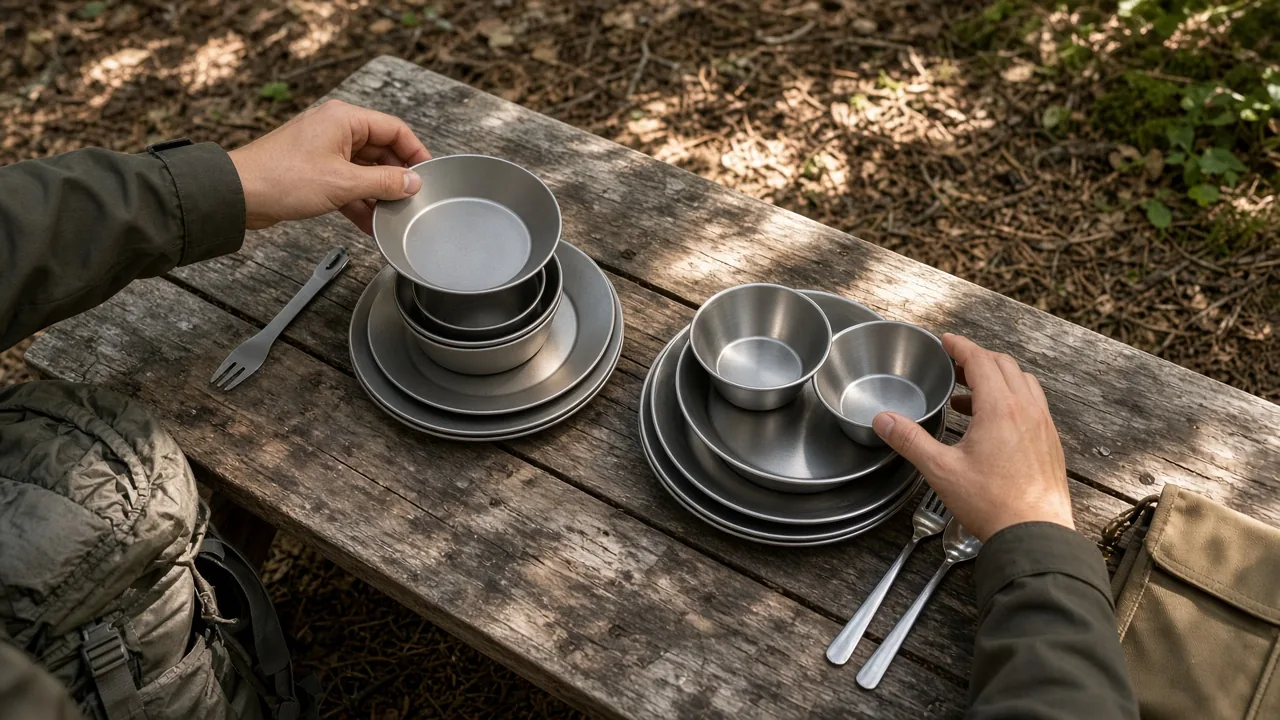
Titanium and stainless steel both earn space in camp kitchens, but they solve different problems. In this titanium vs stainless steel camping dinnerware comparison, the short answer is: titanium wins when packed weight and volume matter most, and stainless steel wins when cooking control, durability, and price matter more than ounces. The right choice depends on whether you are backpacking or car camping, how you cook, and how many people you feed.
Titanium vs Stainless Steel Camping Dinnerware: How to Compare
Start with specs you can verify before trusting a label. Packed weight, material thickness, cooking behavior, and packed size determine whether a plate, cup, or utensil fits your style better than marketing language does. A titanium plate set and a stainless steel plate set may look similar in photos but feel very different on a trail or over a stove.
Weight and packed size
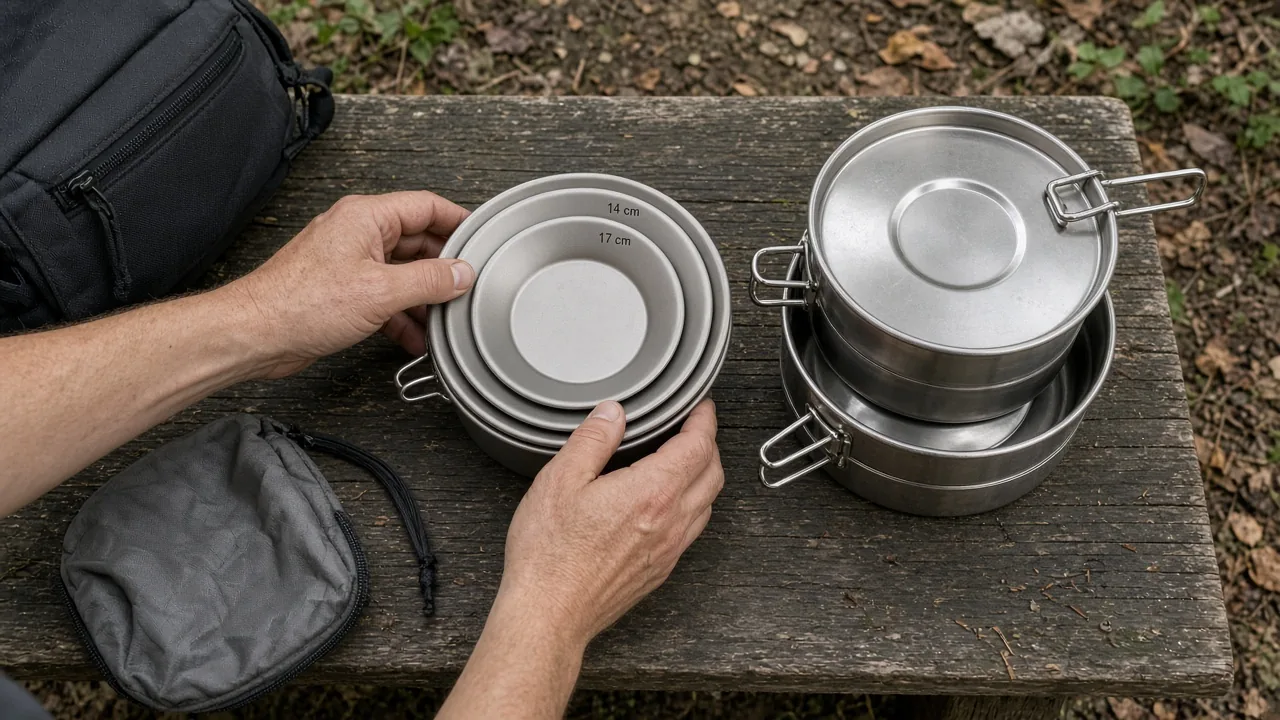
Titanium stacks smaller and lighter. A stackable titanium plate set in 14 cm (5.5 in), 17 cm (6.7 in), and 20 cm (7.9 in) versions nests into a compact bundle that barely registers on a backpacking gear list. Stainless steel tends to add weight for the same task, even in trimmed-down camping designs. That weight penalty multiplies when you carry plates, cups, bowls, and utensils for more than one person.
Packed size follows the same pattern. Titanium walls can be thin without collapsing, so cups and pots nest tightly. Stainless steel often needs similar nesting, but the pieces themselves weigh more, and handles, rims, and lids add bulk. For backpacking, the difference can be several ounces per item, which becomes a pound or more across a full kit.
Heat behavior
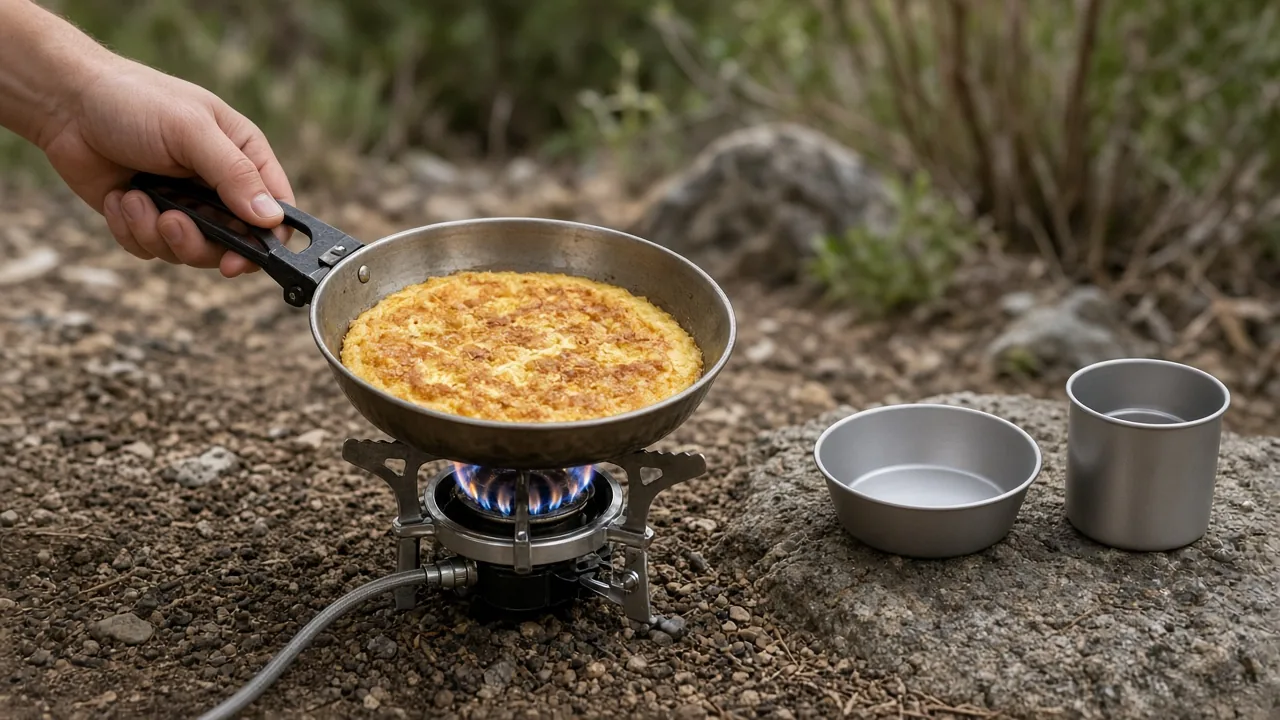
Thin titanium scorches more easily than stainless steel, especially when used as an improvised frying pan. A thin titanium bowl used to fry sausage or eggs can burn food quickly because the metal transfers heat away from the flame unevenly. Stainless steel holds heat more steadily and forgives a less attentive cook.
Thickness changes the story. A 2 mm (0.08 in) titanium pot may resist burning better than a 0.5 mm (0.02 in) pressed titanium version. If you choose titanium for cooking rather than just boiling water, look for thicker walls and accept a small weight increase. Stainless steel still offers more predictable all-around heat control, but thicker titanium narrows the gap.
Durability and price
Some campers prefer stainless steel for hardness, strength, and price over time. Stainless steel resists dents better, handles rougher cleaning, and usually costs less than titanium for comparable pieces. That matters if you car camp, cook for groups, or want a kit that lasts through years of hard use without babying.
Titanium keeps its advantage when low weight outweighs those concerns. It resists corrosion, cleans up quickly, and holds up well if you treat it as lightweight cooking gear rather than heavy-duty camp ware. The trade-off is price and a thinner feel that some campers find less satisfying in the hand.
Side-by-side comparison
| Factor | Titanium | Stainless Steel |
|---|---|---|
| Weight | Lighter for the same size piece | Heavier for the same task |
| Packed size | Nests smaller and thinner | Bulkier, especially with lids and handles |
| Heat control | Scorches more easily when thin | More even and forgiving |
| Durability | Dents more easily but resists corrosion | Harder and stronger |
| Price | Usually more expensive | Usually less expensive |
| Best fit | Backpacking, solo trips, boiling water | Car camping, group cooking, real frying |
1. Titanium Dinnerware: Best Uses, Cautions, and Packing
Choose titanium when every ounce counts and you mostly boil water or heat food, not when you need steady, all-purpose camp cooking. Titanium excels in minimalist kits built around simple meals and small pack volumes. It is less ideal for slow simmering, stir-frying, or cooking for a crowd.
Best uses
Titanium works for stackable plates, a 1 L (34 fl oz) kettle, and cups that double as a simple pot for noodles, hotpot, or light frying. A cup that can act as a pot removes one more item from your pack. The material heats water fast, cleans up easily after reheated meals, and dries quickly before you pack.
The stackable design is the real strength. Titanium plates and bowls nest into a single low-profile stack that fits in a pack side pocket or cook kit bag. That matters when you are counting cubic inches as closely as ounces.
Cautions
A thin titanium bowl used as a frying pan can scorch, especially with fatty foods or dry heat. Titanium works best for boiling, simmering liquid-based dishes, or quick reheating. If you want backpacking cookware that can genuinely fry fish or brown meat, choose a thicker titanium pan or switch to stainless steel.
A lightweight titanium spork may feel too thin or less sturdy than stainless steel. Some campers find titanium utensils slightly springy in the hand, and aggressive use on frozen food or hard cheese can bend tines. The weight savings is real, but the feel is not for everyone.
Packing safety
Never use a stove or heater inside your tent. That rule applies whether you are boiling water for a titanium cup meal or warming a pot on a cold morning. Carbon monoxide and fire risk make enclosed cooking unsafe without exception.
Let hot titanium cool or use its heat-safe sleeve before putting it in your pack. Thin titanium sheds heat quickly once off the flame, but the rim or handle may still be too hot to touch. A pot bag or sleeve protects your pack fabric and keeps other gear from melting or staining.
2. Stainless Steel Dinnerware: Best Uses, Cautions, and Packing
Choose stainless steel when car camping, group cooking, or real frying makes strength and heat control more important than shaving ounces. Stainless steel behaves more like the cookware you use at home, which lowers the learning curve for camp meals. It is the better pick for pancakes, stir-fries, seared meat, and any dish that needs steady heat.
Best uses
Stainless steel suits car camp kitchen kits where a harder, stronger pot and utensils can handle longer simmering or stir-frying without the scorch issues seen with thin titanium. The extra mass helps pans hold heat when food goes in, so the temperature does not crash as quickly as it does with ultralight titanium.
Larger groups benefit from stainless steel too. A bigger pot for pasta or chili, a sturdier spatula, and plates that do not bend under a heavy meal all point toward stainless steel when weight does not matter. You can pack a full kitchen box in the car and not worry about every ounce.
Cautions
The main trade-off is weight and packed size, especially on backpacking trips where every ounce and inch in a pack matters. Stainless steel can double or triple the weight of comparable titanium pieces. That adds up fast when you carry plates, bowls, cups, utensils, and pots for a three-day trip.
Stainless steel also holds heat longer after cooking, so hot handles and lids stay hot. You need a cloth, glove, or pot gripper before moving a stainless pot off the stove. This is a small hassle, but one worth remembering when camping with kids or new campers.
What to verify
Check the actual weight, wall thickness, and handle or lid material on the product spec sheet, because stainless steel dinnerware varies widely by design. A thin stainless plate may weigh nearly as much as a heavier titanium plate, while a thick-walled stainless pot may weigh twice what you expected. Look for the numbers rather than assuming all stainless steel is the same.
Handle material matters too. Silicone-wrapped or removable handles differ from bare metal in both weight and heat control. Lids may be stainless, plastic, or a combination. Verify what you are getting before deciding whether a piece earns space in your kit.
How to Choose for Car Camping vs Backpacking
Lead with weight and packed size for backpacking. Lead with cooking control and comfort for car camping. Then match pans and utensils to the number of people and the meals you actually plan to cook.
Backpacking setup
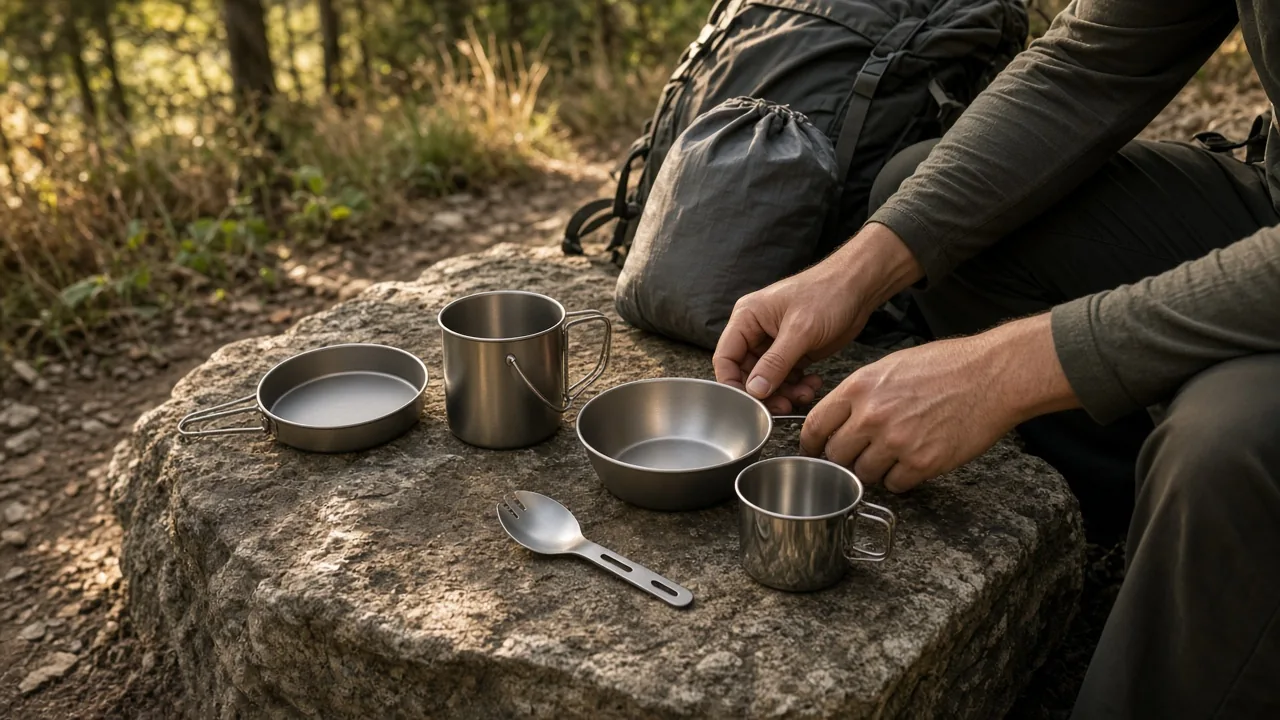
For solo trips, an 18 cm (7.1 in) titanium pan can be enough. It handles coffee water, noodles, dehydrated meals, and simple one-person cooking without dominating the pack. For two people or stir-frying, step up to a 22 cm (8.7 in) pan so food has room to move and liquids do not crowd the sides.
A minimal titanium setup often includes a kettle or pot, a cup that doubles as a cooking vessel, and a bowl that can act as a plate. Each piece earns its keep by doing more than one job. If you bring a plate, choose one that stacks flat rather than rattling loose in your pack.
Car camping setup
Because weight matters less from the car, stainless steel’s hardness and steadier heating can justify a heavier kitchen kit. You can bring a full set of plates, bowls, cups, and utensils for everyone without worrying about pack volume. You can also use the same pot for boiling pasta, frying bacon, and simmering sauce.
Car camping also allows more cleanup water and less creative packing. Stainless steel tolerates scrubbing with sand or a scouring pad better than thin titanium. If you cook messy meals, that durability makes cleanup easier back at camp.
Utensil choices
Take a spoon before a fork for minimal kits. A spoon handles soup, oatmeal, eggs, rice, and almost anything else you can rehydrate or boil. A fork can be whittled in camp from a stick, but a spoon is slower to carve and more useful when food is wet or saucy.
For car camping, a stainless fork and spoon set makes sense because the weight penalty is irrelevant and the feel is more familiar. For backpacking, a lightweight titanium spoon or spork saves weight, though it may feel thin compared with stainless steel.
How to Clean and Pack Titanium vs Stainless Steel Dinnerware
Clean and dry both materials before packing to keep food residue and moisture out of nests, closures, and threaded lids. Leftover food attracts animals and bacteria, and trapped water causes stains, spots, or odors. A quick rinse at camp and a thorough dry before storage prevents most problems.
Titanium care
Rinse narrow-mouth bottles and threaded lids well, since small openings trap grime. Some users report powder around the drinking mouth of titanium caps after repeated twisting. That can come from metal-to-metal thread wear, so do not over-tighten lids and wash the threads regularly.
Titanium dries fast and resists residual odors better than many materials, but sauce or oil can still cling to crevices. If you use a titanium bowl for frying, wipe it out while still warm and rinse before food hardens. Store pieces with enough air to dry completely.
Stainless steel care
Follow manufacturer care instructions and dry stainless pieces thoroughly before nesting. Trapped moisture can cause staining or water spots in a closed kit, especially if you stack plates and bowls tightly together. A quick towel dry before packing solves most of it.
Stainless steel tolerates more aggressive cleaning than titanium, including scouring pads and dish soap at camp. Just rinse soap thoroughly so it does not flavor the next meal. If you camp in bear country, clean and store food gear with the same care you give food itself.
Bottom Line
Match material to trip. Count weight for backpacking and cooking control for car camping, then make your decision before you pack. Titanium suits minimal kits built around boiling water and simple meals. Stainless steel suits base-camp kitchens where a few extra pounds buy better frying, longer life, and a more familiar feel.
Before you pack a single plate or cup, check nighttime lows, rain chance, and fire restrictions for the trip ahead. If you are backpacking into rain or cold, every ounce counts. If you are loading a car at a trailhead, comfort and cooking control can earn their place. Also check whether you need a bear canister or bear bag for food storage where you plan to camp, because clean dinnerware alone does not solve that problem.
This article is general information about camping gear, not professional safety, medical, or wilderness training. Check fire restrictions, weather, and campsite rules before you go, and follow the manufacturer's instructions for your own equipment.
FAQ
Is titanium or stainless steel better for backpacking dinnerware?
Titanium is usually better for backpacking because it is lighter and nests smaller. It works best for boiling water, reheating meals, and simple one-person cooking rather than real frying.
Does titanium dinnerware scorch more easily than stainless steel?
Yes, thin titanium scorches more easily than stainless steel, especially when used as an improvised frying pan. Thicker titanium can improve heat control, but stainless steel is generally more even and forgiving.
When should I choose stainless steel camping dinnerware?
Choose stainless steel for car camping, group cooking, or real frying where strength, steadier heat, and lower price matter more than saving ounces. It behaves more like home cookware and tolerates rougher cleaning.
How should I pack titanium and stainless steel dinnerware after use?
Clean and dry both materials thoroughly before packing to avoid food residue, odors, stains, and trapped moisture. Let hot titanium cool or use a heat-safe sleeve, and dry stainless pieces before nesting them tightly.
Can I use a titanium cup or bowl as a pot?
Yes, a titanium cup or bowl can double as a simple pot for noodles, hotpot, or light frying, but thin titanium can scorch with fatty foods or dry heat. Use thicker titanium if you plan to genuinely fry.



