Titanium vs Plastic Camping Plates: Which Should You Pack?
Plastic camping plates suit most campers better, while titanium saves only 11 grams but cools food faster and costs more. Learn how weight, heat, hygiene, durability, and trip type affect your choice.
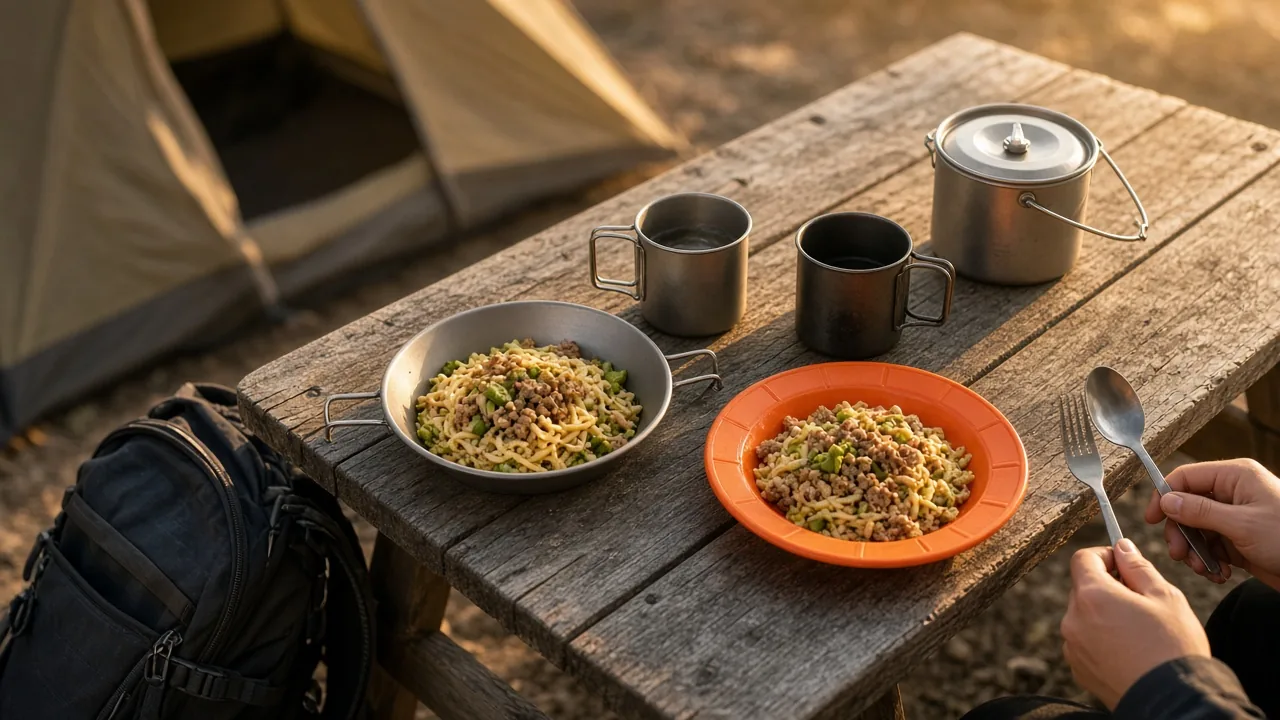
If you are trying to decide between titanium and plastic camping plates, the short answer is that plastic fits most campers better. A same-diameter test showed titanium weighs only 11 grams less per plate but loses heat faster and costs more. This guide compares titanium vs plastic camping plates across measured weight, heat behavior, hygiene, durability, and trip type, so you can choose dinnerware that matches the way you actually camp.
Titanium vs Plastic Camping Plates: Weight and Packed Size
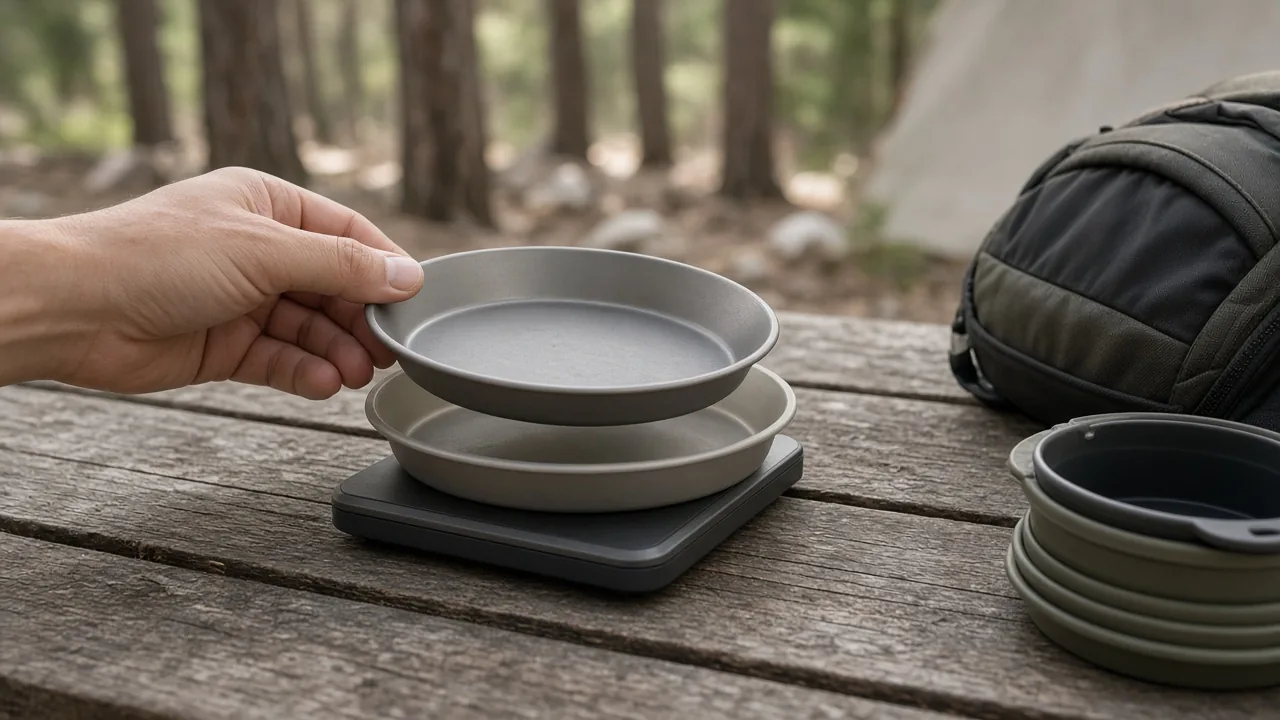
In one test using plates with similar diameters, titanium weighed about 63 grams and plastic about 74 grams. That means titanium saves only 11 grams per plate. For a four-person mess kit, the total difference is about 1.5 ounces.
Packed size depends more on the plate design than the material. Some plastic plates stack tightly and flex to fit into a backpack lid. Titanium plates are usually thin and flat, but they can still take up similar room unless they nest closely with a titanium pot or bowl.
Where the 11 g Difference Actually Matters
That 11-gram saving may matter on a long backpacking trip if you count every ounce and eat quickly. If you carry a full ultralight kit, small differences across a plate, mug, pot, and spork add up.
For car camping, the gap is not meaningful. A plate that weighs 74 grams instead of 63 grams will not change how your vehicle packs or how the meal feels. Most campers should treat the weight difference as real but minor.
Heat Performance: Which Camp Plate Keeps Food Warm Longer
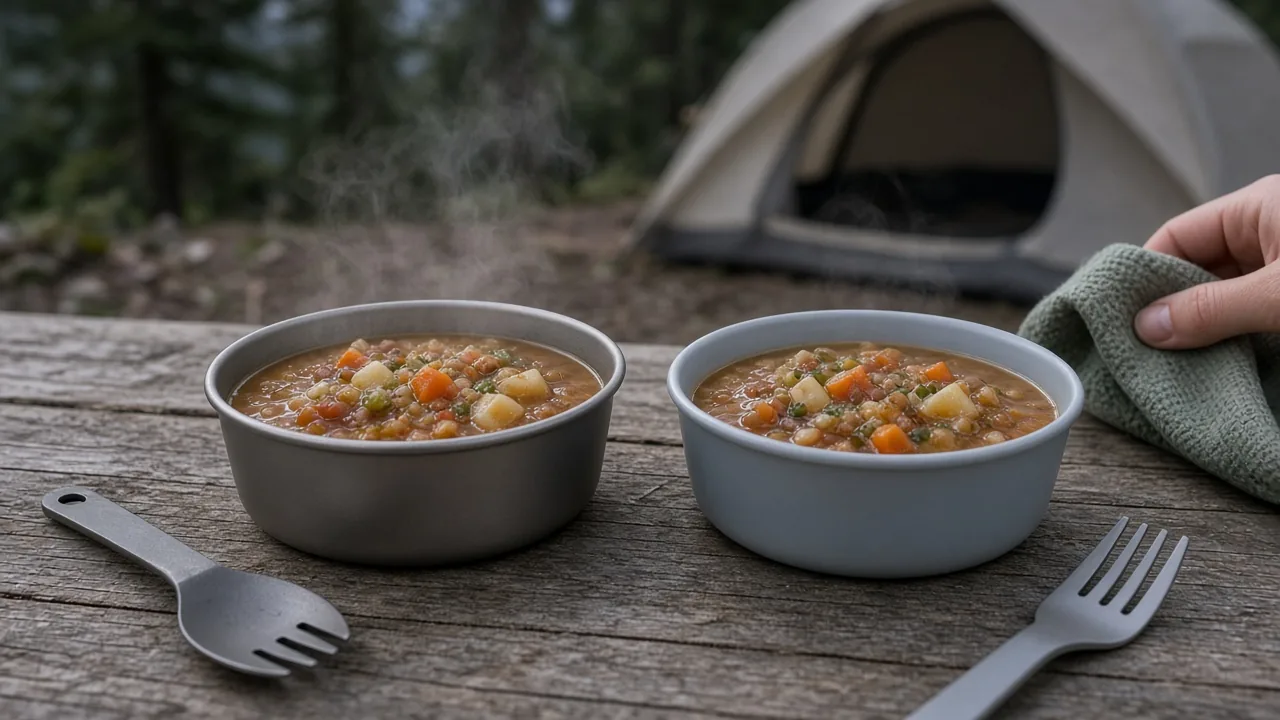
In a six-material heat comparison, plastic ranked fourth and titanium fifth. Titanium was only slightly ahead of stainless steel, which ranked last. That means titanium plates cool food faster at the table than plastic plates do.
The test used hot food and thermal imaging to see how quickly each plate surface lost heat. Bamboo held heat best, followed by ceramic and enameled steel. Plastic sat in the middle. Titanium and stainless steel fell to the bottom of the list.
Why Titanium Is Not a Fast, Even Heat Conductor
Titanium's thermal conductivity is close to stainless steel and far below aluminum. With a conductivity around 16 W/(m·K), titanium is much slower than aluminum's roughly 237 W/(m·K). Stainless steel comes in near 15 W/(m·K), which explains why both metals performed similarly in the plate test.
Because titanium does not spread heat evenly, it can create hot spots when used for cooking. That matters less for a plate than for a pot, but it still helps explain why the plate surface cools quickly. Some product claims describe titanium as fast-heating, but measured performance does not support that for dinnerware.
When a Hot Meal Outweighs the Material
If you eat slowly or camp in cold weather, food on a titanium plate may turn lukewarm before you finish. Plastic holds heat slightly better at the table, which can matter more than the 11-gram weight gap on a cold evening.
The concern is comfort, not food safety. Keep cooked food at a safe temperature by serving it hot and eating promptly. If you want slower cooling, choose a plate material that held heat better in testing, such as plastic or enameled steel.
Hygiene and Food Safety: Plastic vs Titanium Surfaces
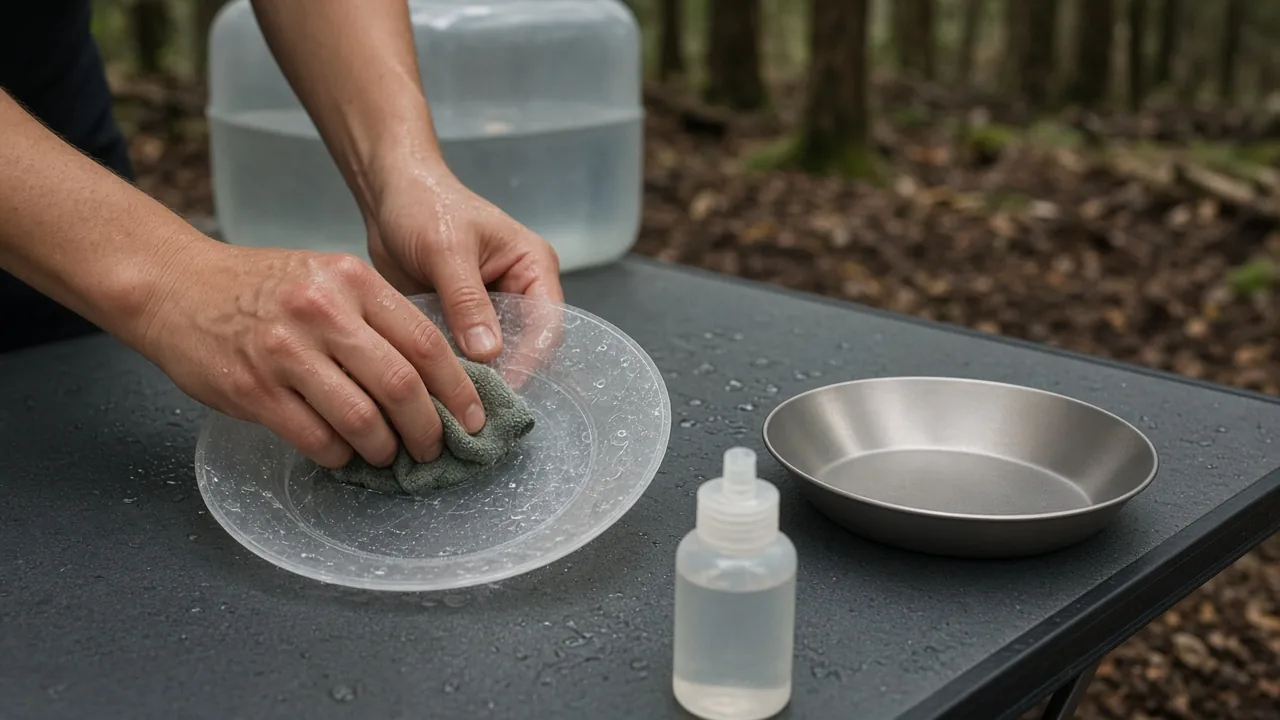
Plastic plates are light and inexpensive, but they can scratch. Knife marks and aggressive cleaning can create grooves where food particles and bacteria may linger. Check the manufacturer's guidance on BPA-free materials and dishwasher or hot-water limits before buying.
Titanium is nonreactive and resists corrosion and food odor. Its surface naturally forms a titanium dioxide film that stands up to weak acids, alkalis, and salty foods. Titanium is also used in medical implants, which gives some campers confidence in its food-contact safety.
What BPA and Hot-Food Concerns Mean for Plastic
The main plastic concerns come down to temperature and damage. Some plastic plates may warp or release odors with very hot food or extended dishwasher exposure. Scraping plastic with a metal fork or knife can also create small cuts in the surface.
One reader noted that plastic can be among the harder materials to keep clean once it is deeply scratched. The fix is to inspect plastic plates regularly, retire them when the surface feels rough, and use utensils that do not dig into the plate.
Why Titanium's Inert Surface Appeals to Some Campers
Titanium's inert surface resists weak acids, alkalis, and salty food, so it does not add a metallic taste. The oxide film helps prevent corrosion and food odor from sticking around.
That said, some users report that colored drinks can leave stains on bare or anodized titanium cups. A plate may show similar staining over time. Staining is not the same as bacteria growth, but it can make titanium look less clean than it actually is.
Durability, Cleaning, and Packed-Size Trade-offs
Plastic survives drops well and packs light, but it can scratch and warp under heat. A plastic plate dropped onto rock will usually bounce, while a titanium plate may dent or scratch but keep working.
Titanium is hard for its weight and resists scratching better than plastic. After burnt food dries on a titanium plate, you can clean it with sand and water in the field, then rinse. That is harder to do safely with plastic without scouring the surface.
Car Camping vs Backpacking Priorities
For car camping, comfort and easy packing matter more than shaving one ounce per plate. Plastic plates are easier to replace, stack well, and handle heat better at the table. That makes them the sensible default for most vehicle-based trips.
For backpacking, weight and volume decide whether titanium earns a place. If you already carry a titanium cook set and want one material throughout your kitchen kit, titanium plates may make sense. If every gram counts and you eat fast, the slight weight saving becomes more defensible.
Why Not Just Use Disposable Plates
Paper plates can reduce cleanup, but they are not a simple replacement for durable plates on every trip. Burning paper plates is only an option where fires are allowed and an established fire ring exists. In dry conditions, fire restrictions often make burning trash unsafe or illegal.
Packing out used paper plates adds wet, messy trash to your pack or vehicle. Durable plates avoid that waste. Follow Leave No Trace practice by packing out trash rather than relying on burning it.
Cost and When Titanium Plates Are Worth It
Titanium plates usually cost more than plastic but do not change the meal much. For the same diameter, you pay extra for a plate that weighs slightly less, cools faster, and may stain with colored food. For most campers, plastic delivers better value.
If you already use a titanium pot, mug, and spork, adding titanium plates can keep your cook kit consistent. The cost may be easier to justify if you camp often and want one nonreactive, long-lasting material across your dinnerware.
Who Should Choose Plastic
Choose plastic if you want affordable, lightweight plates that handle heat better than titanium in table tests. Plastic suits car camping, occasional backpacking, families, and anyone who values easy replacement. It is also forgiving when plates get dropped onto gravel or packed under a cooler.
The downside is that plastic can scratch over time. Buy BPA-free plates, avoid aggressive scraping, and replace any plate with deep cuts or a rough surface.
Who Should Choose Titanium
Choose titanium if you camp frequently, carry a full ultralight kit, and value a nonreactive, scratch-resistant plate more than heat retention and purchase cost. Titanium works well for fast eaters who do not need the plate to keep food warm for long.
Backpackers who already trust titanium cookware and want to cut every possible gram may find the plates worth the price. A reader who camps more than five times per year, especially on backpacking trips, is more likely to notice the long-term benefit.
How to Pick Based on Your Trip Type
Start with the trip, not the material. For car camping, begin with plastic plates and upgrade only if you have a specific reason to reduce weight or switch to metal. The measured one-plate difference is too small to justify a more expensive, faster-cooling titanium plate on its own.
For frequent backpacking, compare the whole mess kit rather than one plate. A titanium plate that saves 11 grams may also nest better with a titanium pot, which can save more space. Check the actual packed size and total ounces of your plate, mug, bowl, and utensil together.
Cold and Wet Weather Notes
Cold weather changes how fast food cools on any plate. Titanium will feel colder to the touch and may draw heat from food more quickly than plastic. If you expect near-freezing overnight temperatures or steady rain, consider whether a plastic plate will make the meal more comfortable.
Wet conditions also mean more cleanup. Metal plates dry quickly and do not absorb water, while plastic plates can collect water in small scratches and edges. If rain pushes you under a tarp or into a tent vestibule to eat, keep the stove outside. Never use a stove or heater inside your tent. Carbon monoxide can build up quickly in a closed space, and a flame near tent fabric creates a serious fire risk. Dry plates fully before storing them to avoid mildew and lingering odors.
Care and Storage
Dry all plates completely before packing them. For plastic, avoid sharp utensils and high heat that can warp or gouge the surface. If a plastic plate smells sour even after washing, the surface may be scratched deeply enough to replace.
For titanium, water and a mild cleaner are usually enough. Avoid aggressive abrasives that can scratch the surface. Keep a small pack towel or cloth in your cook kit so plates can be dried before they go back in a stuff sack or bear canister.
Match the plate to the trip. Weigh titanium's small weight and hygiene advantages against plastic's lower cost and better heat behavior at the table. Then check how long you will be out, how cold the nights will get, and whether rain is in the forecast before packing.
If you are rethinking your camp kitchen, look at the rest of the mess kit the same way: match the pot, mug, and utensil to whether this is a car camping weekend or a multi-day backpacking trip.
This article was written by Camp Kit Journal.
This article is general information about camping gear, not professional safety, medical, or wilderness training. Check fire restrictions, weather, and campsite rules before you go, and follow the manufacturer's instructions for your own equipment.
FAQ
Are titanium camping plates lighter than plastic camping plates?
In a same-diameter test, titanium plates weighed about 63 grams and plastic plates about 74 grams, so titanium saves only about 11 grams per plate. For most campers, this tiny weight difference is not meaningful.
Do titanium plates keep food warm better than plastic plates?
No. In a six-material heat comparison, plastic ranked fourth and titanium fifth, meaning titanium cooled food faster at the table. Plastic holds heat slightly better, which can matter on cold evenings or when eating slowly.
Which is easier to clean: titanium or plastic camping plates?
Titanium is more scratch-resistant and can be cleaned in the field with sand and water, while plastic plates can scratch and trap food particles in grooves. Check plastic for deep scratches and replace it when the surface feels rough.
Who should choose plastic camping plates?
Plastic plates are best for car campers, families, and occasional backpackers who want affordable, lightweight plates that handle heat better than titanium. They are also easier to replace and more forgiving when dropped.
When are titanium plates worth the higher cost?
Titanium may be worth it for frequent backpackers who count every gram, value a nonreactive scratch-resistant surface, and already use a titanium cook set. It also works well for fast eaters who don't need the plate to keep food warm long.