Self Inflating vs Air Pad for Camping: How to Choose
Choose an air pad for backpacking when weight and packed size matter, and a self-inflating pad for car camping when comfort and simpler top-off win. This guide compares both across comfort, warmth, weight, and ease of inflation.
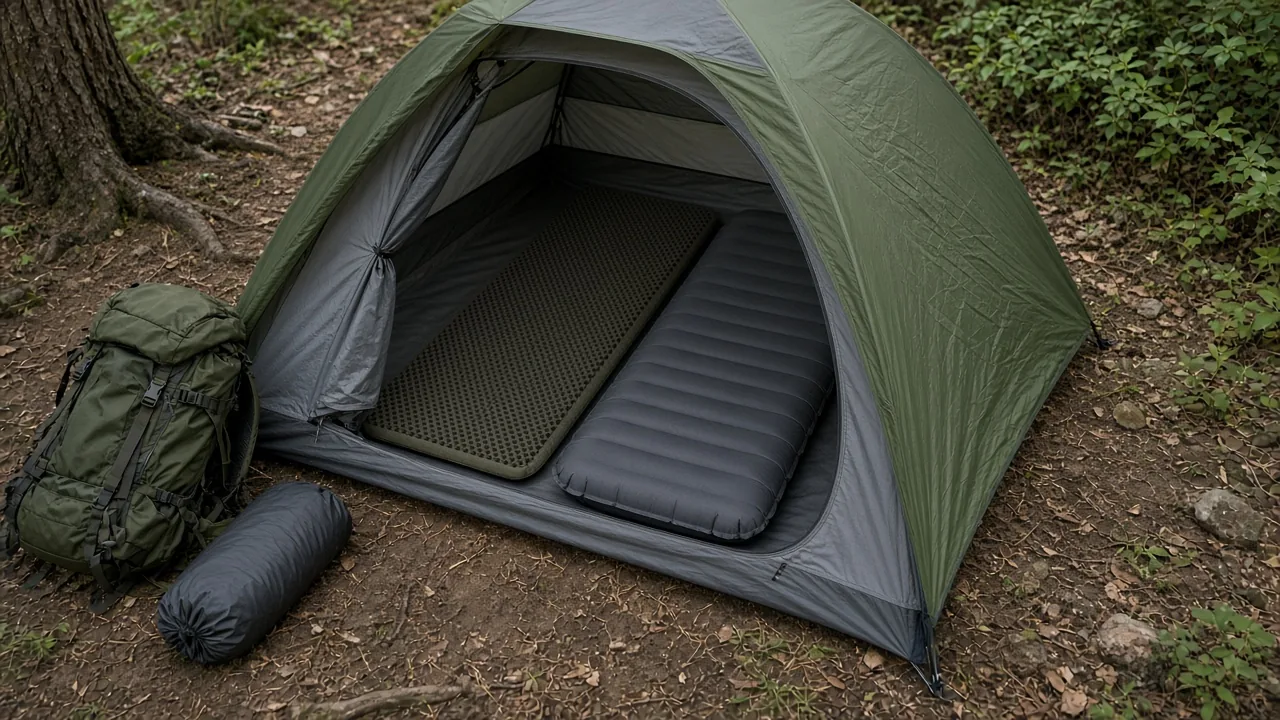
Choose an air pad for backpacking when weight and packed size matter. Choose a self-inflating pad for car camping when comfort, durability, and a simpler top-off matter more. This guide breaks down the self inflating vs air pad for camping decision across four factors: comfort, warmth, weight, and ease of inflation.
Self Inflating vs Air Pad for Camping: What’s the Real Difference?
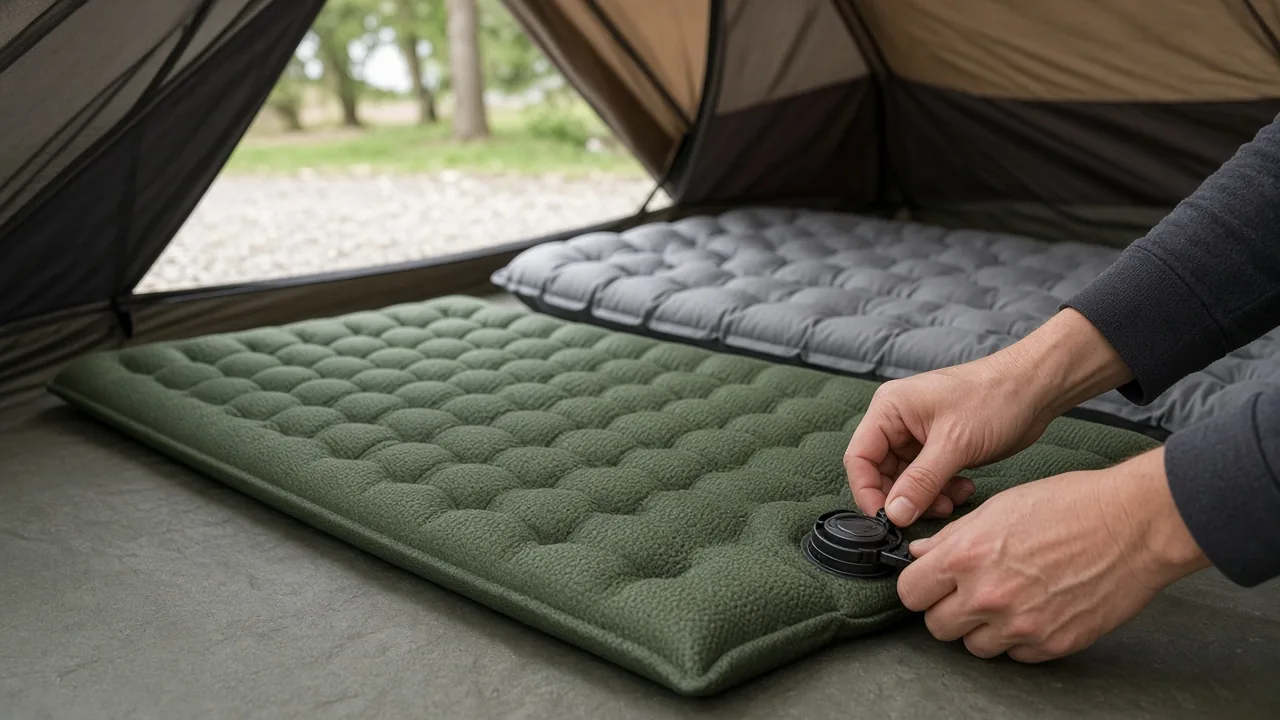
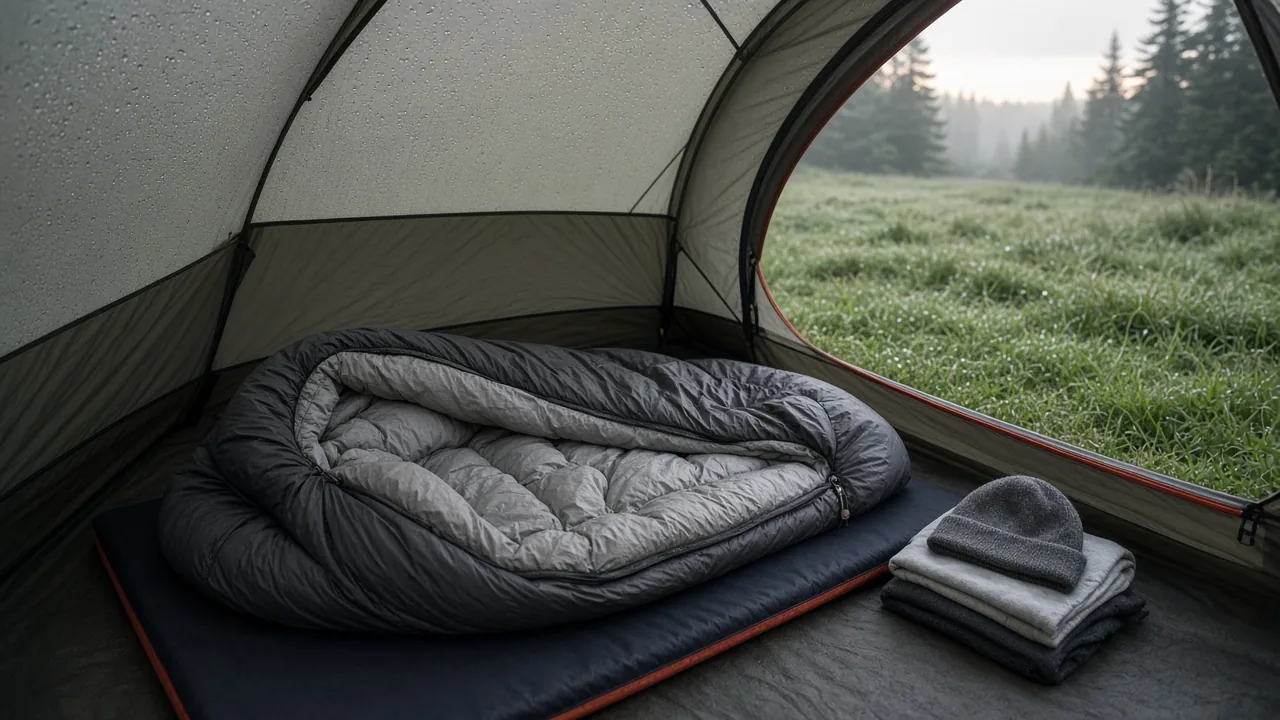
A self-inflating pad contains open-cell foam that expands when you open the valve, drawing air in on its own. An air pad replaces that foam with fabric baffles that create air chambers, so you add nearly all the air yourself. The trade-off is straightforward: self-inflating pads provide built-in structure and insulation from foam, while air pads trade that foam for lighter weight and often greater thickness.
Why Does a Self Inflating Pad Still Need Air?
Open-cell foam fills most of the pad by itself, but not fully. The foam expands to a comfortable-looking shape, yet it rarely reaches the firmness needed for overnight support without help. Plan to add about ten breaths after the initial expansion. A reader once emailed us about a pad that felt flat after an hour on the ground; the issue was simply that the foam had expanded but never received a mouth top-off. Skipping that step leaves hips and shoulders pressing toward the ground by midnight.
How Do Air Pads Get Thicker Without the Weight?
Air pads remove foam entirely and use shaped baffles to create loft. Without the weight of open-cell foam, backpacking models can reach 2.5 to 3 inches thick while staying in the 12-to-15-ounce range. That thickness comes from fabric tension and air pressure, not material density. The result is a pad that cradles pressure points better than a thin foam core while packing down to roughly the size of a water bottle.
Which Pad Is More Comfortable for Side Sleepers?
Side sleepers need enough thickness to keep hips from bottoming out. Air pads often reach that thickness at lower weight, making them the default choice for backpackers who sleep on their side. Self-inflating pads use firmer foam for support, which can feel more stable but less cushioned unless you choose a thicker car camping model.
How Thick Should a Pad Be to Keep Hips Off the Ground?
Aim for at least 2.5 inches, or about 5 cm, for side sleeping. Thicker pads like a 5.5-inch model help larger bodies and restless sleepers, but they add serious packed size and weight. One car camping pad we reviewed measured 5.5 inches thick and worked well for side sleepers, though it weighed several pounds and filled a large stuff sack. The best thickness depends on your body shape: wider hips need more loft, while narrower frames get away with less.
What Works for Back and Stomach Sleepers?
Back and stomach sleepers can use thinner pads because their weight spreads more evenly. However, avoid V-shaped baffles that let hips drop. Flatter baffles or foam cores spread support across the surface instead of creating channels. A pad with V-shaped tubes may feel fine on your back but leave a stomach sleeper's hips pressing into the ground. Horizontal baffles generally offer the most stable, even support for these positions.
How Warm Are Self Inflating vs Air Pads?
Compare R-value, not thickness. A thick air pad can still feel cold if it lacks insulation, while a thinner self-inflating pad with foam insulates more evenly. R-value measures resistance to heat loss: higher numbers mean warmer pads. Stacking pads raises R-value directly, which is a useful trick for shoulder-season trips. And never use a stove or heater inside your tent to compensate for a cold pad.
What R-Value Do You Need for Three-Season and Winter Trips?
R-values near 2 to 3.5 suit most three-season nights. R-5 and above handles freezing ground and winter conditions. Match the number to the expected ground temperature, not air temperature alone. A 40-degree night can still mean 35-degree ground under your tent, especially in early spring. For car camping, a pad with an R-value around 3.8 covers most summer and shoulder-season trips but falls short for alpine snow.
Can You Stack Pads to Add Warmth?
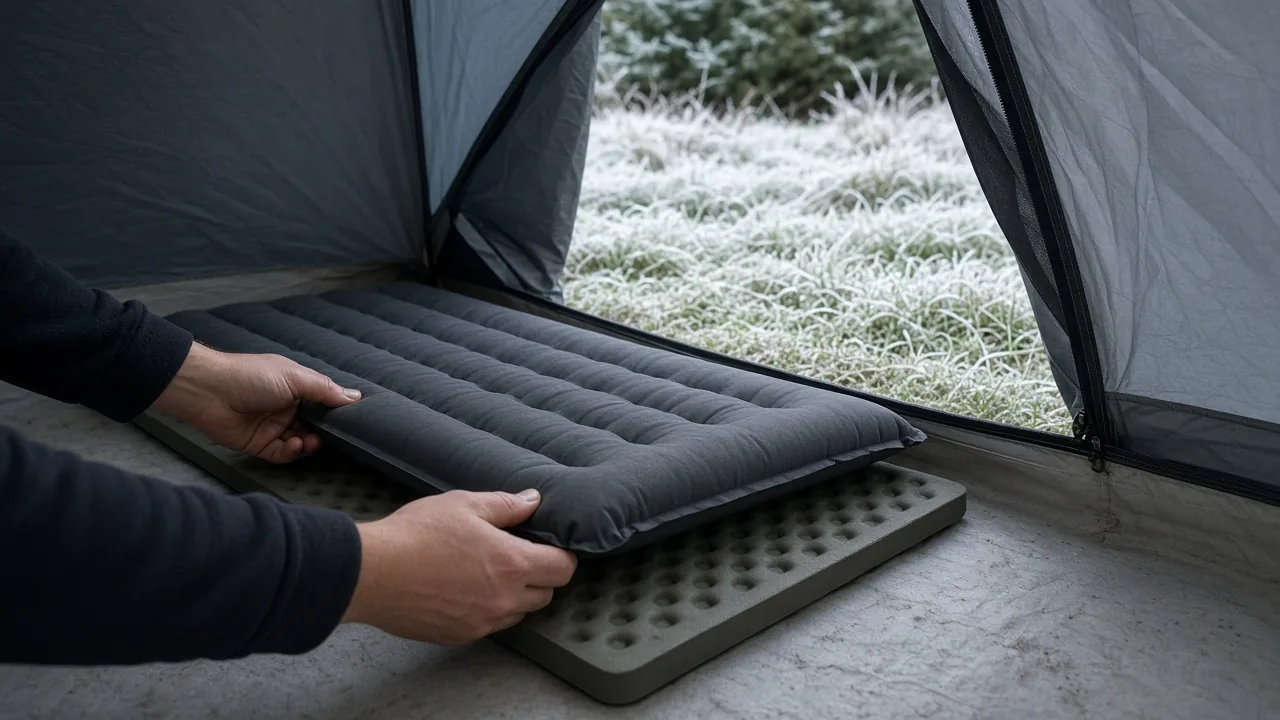
Yes. Place a closed-cell foam pad under or over an air pad, and their R-values add directly. A foam pad with R-2 plus an air pad with R-3.3 gives you roughly R-5.3 total. This approach lets a three-season air pad extend into colder weather without buying a dedicated winter pad. The foam layer also adds puncture protection when placed underneath.
Which Is Lighter and More Durable: Self Inflating or Air Pad?
Air pads win on weight and packed bulk. Self-inflating pads resist punctures and abrasion better. Neither pad replaces a tent footprint for protecting your shelter floor.
| Factor | Air Pad | Self-Inflating Pad | Closed-Cell Foam Pad |
|---|---|---|---|
| Typical weight | 12–15 oz (ultralight), 22–25 oz (standard) | 1.5–5 lb | Under 1 lb |
| Packed size | About 9 x 4 in | About 11 x 5 in (backpacking) to 25–30 x 6 in (car camping) | Bulky, external carry |
| Typical thickness | 2.5–3.5 in | 1.5 in (backpacking), 2.5–4 in+ (car camping) | Under 1 in |
| Durability | More puncture-prone | Better foam core resistance | Best, nothing to puncture |
| Puncture protection | Needs care near sharp objects | Moderate | Excellent |
What Weight and Packed Size Should Backpackers Expect?
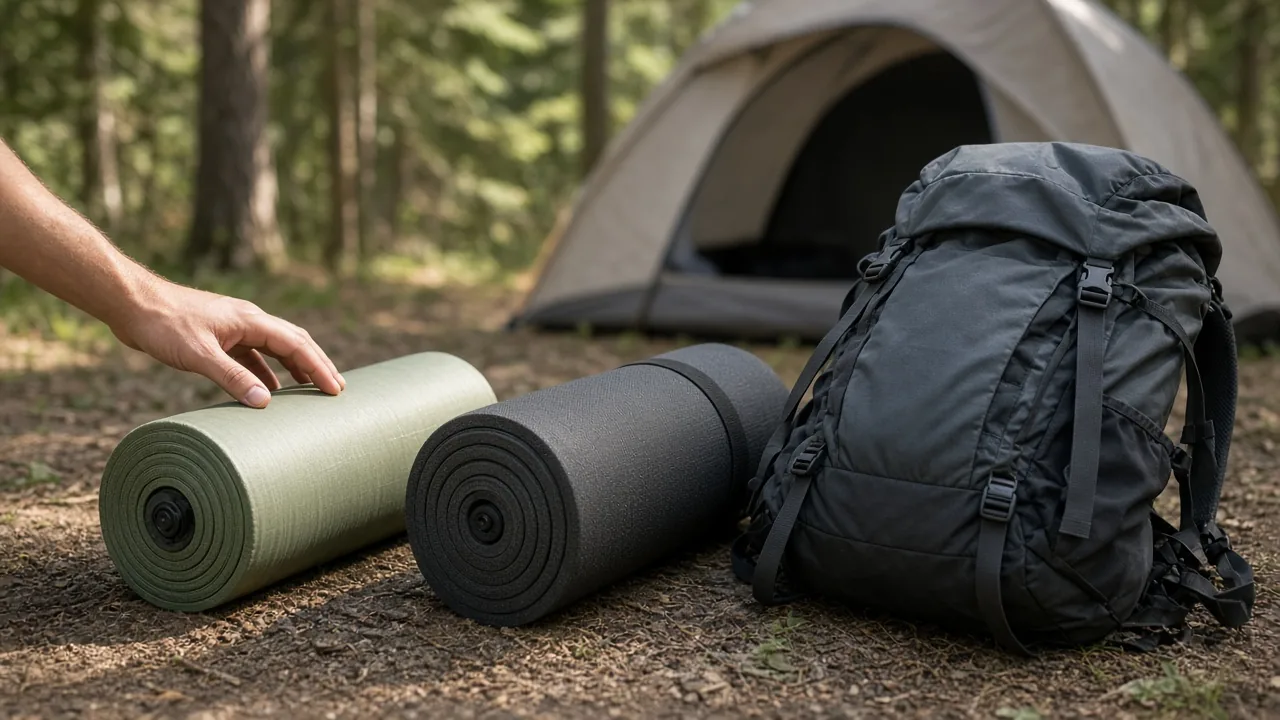
For backpacking, ultralight air pads often weigh 12 to 15 ounces and pack around 9 by 4 inches. Common wilderness pads run 22 to 25 ounces and pack about 11 by 5 inches. A self-inflating backpacking pad typically weighs more and packs larger because the foam core compresses less. If every ounce counts on a multi-day trip, the air pad's weight advantage is hard to ignore.
What Do Car Campers Trade for Durability?
Car camping self-inflating pads often weigh 3 to 5 pounds and pack bulky. Their foam cores handle repeated use and small scrapes better than thin air pad fabric. A 2.5-to-3.5-inch self-inflating pad from a tent platform sees little stress, but an air pad near the same site needs more careful placement away from sharp rocks and sticks.
How Long Does Each Pad Take to Inflate?
Self-inflating pads save some effort but still need mouth top-offs. Air pads need a pump or repeated breaths. Electric pumps are fastest; foot pumps can be slowest on thick pads.
How Much Mouth Top-Off Does a Self Inflating Pad Need?
Open the valve, let the foam expand, then add about ten breaths. The whole process may take a couple of minutes before the pad feels fully supportive. The expansion does most of the work, but those final breaths make the difference between a pad that looks inflated and one that actually supports you through the night.
What Is the Fastest Way to Inflate an Air Pad?
An electric or hand pump can fill an air pad in about 30 to 60 seconds. Foot pumps may take over three minutes on thick pads like a 5.5-inch car camping model. One workaround is the two-hand sponge squeeze: compress the pump bag with both hands, let it rebound, and repeat. A user reported this method took about five minutes for a thick pad, while a pump sack with a one-way valve cut the time to around a minute.
Self Inflating vs Air Pad for Camping: Which Should You Choose?
Match the pad to the trip. Backpackers usually pick an insulated air pad for weight and packed size. Car campers prefer self-inflating thickness and simpler top-off. Couples need wide or connecting pads to avoid the center gap.
When Should Backpackers Pick an Air Pad?
When pack weight drives your decision, choose an insulated air pad. Add a closed-cell foam pad under it for cold-ground trips rather than carrying a heavier single pad. The foam layer adds R-value and puncture protection, and it doubles as a sit pad during breaks. This combination covers three seasons for most hikers while keeping base weight manageable.
When Is a Self Inflating Pad the Better Car Camping Choice?
For car camping, a self-inflating pad around 2.5 to 3.5 inches gives a good balance of warmth, support, and easier top-off. Four-inch-plus pads feel more bed-like but bulkier to pack and store. If you camp mostly from a vehicle and value durability over grams, a self-inflating pad makes more sense than a delicate backpacking air pad.
What Works for Couples and Wide Sleepers?
Couples should look for double pads around 40 to 52 inches wide or pads with side snaps. A wide pad removes the center gap where cold air collects and helps restless sleepers stay on the pad. Some pads include side connectors that let two singles attach into one surface, which works well when one partner prefers a different firmness.
How Do You Store and Repair a Camping Pad?
Open the valve, roll firmly to push air out, then store loose if space allows. Keep air pads away from sharp sticks and rocks, and carry a patch kit for slow leaks.
How Should You Deflate and Store Each Pad Type?
Use the valve to release air, roll once to expel remaining air, then unroll and store loosely with the valve open. Long-term compression can reduce a self-inflating pad's foam recovery, making it slower to expand on future trips. A closet shelf or under-bed storage works better than leaving the pad compressed in a stuff sack for months.
How Do You Find and Fix a Slow Leak?
Inflate the pad fully, listen or feel for escaping air, and mark the spot. Clean it, apply the included patch or repair kit, and keep the pad away from sharp objects afterward. Some leaks are so slow they take days to become obvious, so submerge a suspicious section in water if you cannot find the hole by ear. One reader reported a pad that leaked but took multiple inspection rounds to locate; patience and soapy water helped identify the pinhole.
Recheck your trip type, expected overnight low, and rain chance before packing a pad. Backpackers can add a closed-cell foam pad for colder ground, while car campers can choose a thicker self-inflating pad for bed-like comfort. Pair the pad with a sleeping bag rated for the conditions, and you have a sleep system that handles most nights outside.
This article is general information about camping gear, not professional safety, medical, or wilderness training. Check fire restrictions, weather, and campsite rules before you go, and follow the manufacturer's instructions for your own equipment.
FAQ
What is the real difference between a self-inflating pad and an air pad?
A self-inflating pad contains open-cell foam that expands when you open the valve, drawing in air on its own. An air pad replaces the foam with fabric baffles that create air chambers, so you add nearly all the air yourself.
Which pad is better for side sleepers?
Air pads often work better for side sleepers because they can reach 2.5 to 3 inches thick at a lower weight. Aim for at least 2.5 inches of thickness to keep hips from bottoming out.
How warm are self-inflating vs air pads?
Compare R-value rather than thickness. R-values near 2 to 3.5 suit most three-season nights, while R-5 and above handles freezing ground and winter conditions.
Can you stack pads to add warmth?
Yes, place a closed-cell foam pad under or over an air pad, and their R-values add directly. A foam pad with R-2 plus an air pad with R-3.3 gives roughly R-5.3 total.
How should you store a camping pad?
Open the valve, roll once to push air out, then unroll and store loosely with the valve open. Long-term compression can reduce a self-inflating pad's foam recovery.