Rechargeable Camping Lantern Buying Guide: Match Your Needs
A practical rechargeable camping lantern buying guide that matches output, runtime, weather resistance, and battery type to your trip before you pack for car camping or backpacking.
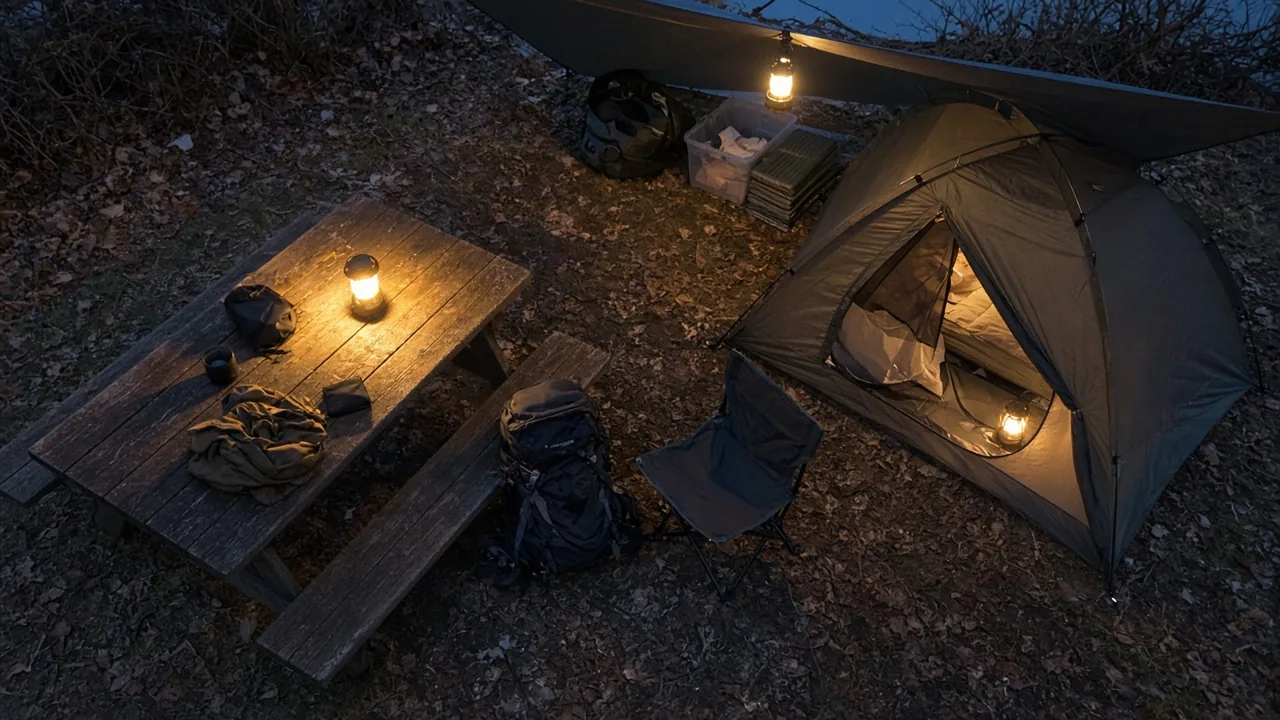
A rechargeable camping lantern is worth packing once you match the output, runtime, and weather resistance to your trip. Start by asking whether you need a small tent light, a close-range table light, or a main base-camp light. Then read the mode-by-mode runtime and look for a stated IP rating. This rechargeable camping lantern buying guide walks through that comparison before you pack for car camping or backpacking.
Know Your Camp Lighting Job Before You Buy
The same lantern cannot be a route light, a tent fill light, and a camp kitchen light all at once. Each job calls for different lumens, beam shape, weight, and mounting. Before comparing specs, decide where the light will spend most of its time. That choice narrows the field faster than any feature list.
Car Camping vs Backpacking: Pick Your Priorities First
Car camping favors brightness, stability, and long runtime because packed size and weight matter less. A lantern that weighs about a pound and sits beside a table is easy to manage next to a vehicle, but it becomes annoying in a multiday pack. Backpacking reverses the priority: look for a small folded shape and either a replaceable cell or a charging method you can manage between towns. If the light is heavy enough to leave behind, it is the wrong backpacking lantern.
Why Under 200 Lumens Is Not a Main Camp Light
A lantern rated below about 200 lumens suits tent interior use, table glow, or close tasks such as reading and cooking prep. It does not throw enough light across a cooking area, picnic table, and two or three chairs at night. For a main camp area light, look for roughly 1000 lumens or more, or use multiple smaller lights placed where people actually work. Tiny lights are great second lights, but they leave dark pockets when you need to see the whole site.
How to Read Brightness and Runtime Specs
A 20-hour runtime number means little unless it is tied to a specific brightness mode. Many rechargeable lanterns quote their low or moonlight mode, and some will not state which mode produced the number. Compare the high and medium figures instead, because those are the modes you will likely use after dark. A 1500-lumen lantern may run about 5.5 hours at full output and 21 hours at 300 lumens, which is a much more useful way to plan a night.
Lumens Alone Don't Tell You Enough
Look for mode-by-mode runtimes such as 300 lumens for 21 hours or 1500 lumens for 5.5 hours. That tells you whether one charge covers dinner and cleanup, or stretches across multiple nights at a lower setting. If a light lists only maximum output and total hours, treat the long number as a low-mode estimate. A smaller 300-lumen lantern with a clear 50-lumen/8-hour mode can be more practical than a 2000-lumen box with no per-mode detail.
A reader who used a Goal Zero Lighthouse on low reported about five days of light, well past the rated window. That example shows why mode matters more than the headline runtime.
Solar and Hand Crank Are Backup, Not Main Power
Small solar panels on lanterns work as a trickle-charge backup, not an off-grid main power source. A compact inflatable light may need roughly 12 hours of good sun for a full charge, and clouds or tree cover reduce that. Hand cranks are even more limited: one minute of cranking may give about 10 minutes of light, which is useful in an emergency but not a nightly charging plan. Treat both features as insurance, and carry a power bank or spare cells for predictable runtime.
Weather Protection and Safe Placement
The word “waterproof” without an IP rating does not tell you how the light handles rain. Check for a stated IP rating and match it to the forecast. IPX4 handles splashes and light rain; IPX5 can take rain and wet hanging; IP66 or IPX7 handles stronger wet conditions or brief immersion. If the light only says “waterproof,” treat it as splash-resistant and keep it out of extended rain.
Where and How to Hang It
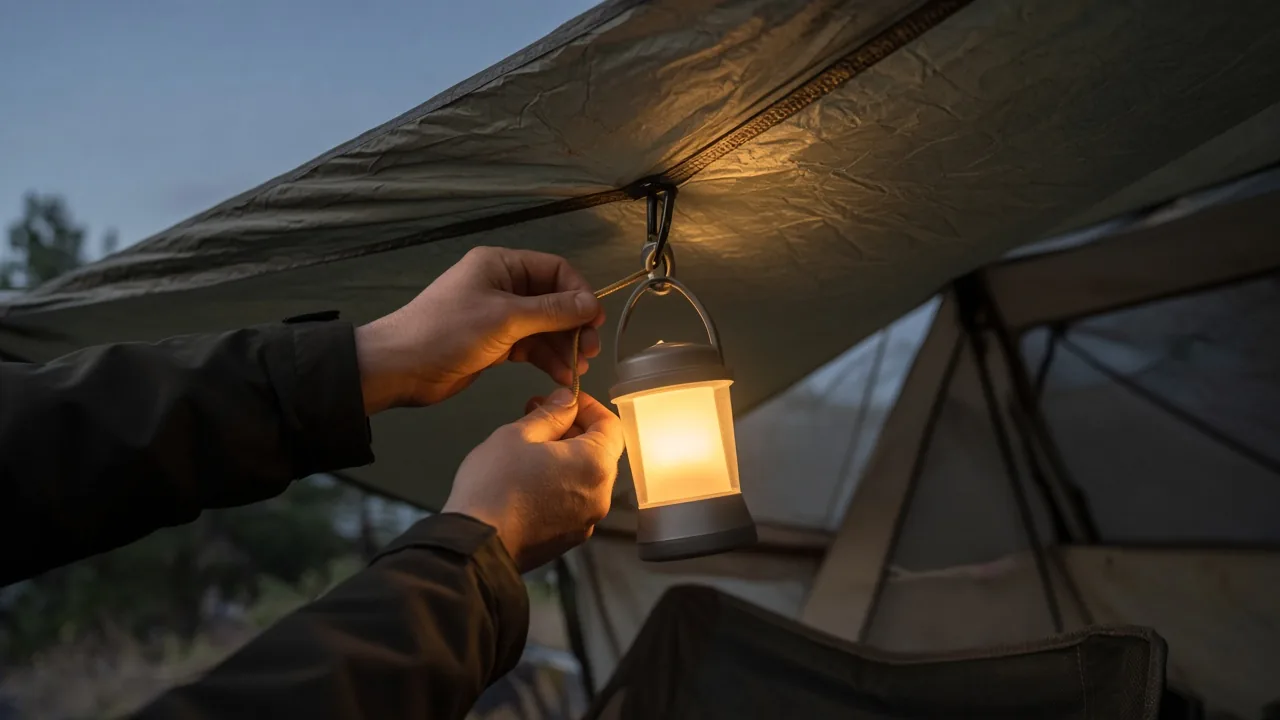
A lantern on the ground creates harsh shadows and glare. Look for hanging loops, hooks, magnets, or a tripod thread that fits your tent, tarp, or canopy. A magnetic body lets you stick it to a vehicle or a metal pole; a tripod thread opens up more placement options around a table. Before buying, picture where the light will hang or stand in your setup. If there is no good hang point, a barrel-shaped lantern is easier to hold and set in more positions than a bare bulb-shaped light.
Keep Heat and Flame Out of the Tent
Never use a stove or heater inside your tent, even if a fuel lantern seems convenient. Fuel lanterns such as liquid-fuel Coleman models are warm, bright, and useful outside, but they require pre-burned mantles, pumping, and careful lighting with clearance around them. Before a trip, check fire restrictions, campsite rules, and the weather forecast. Run any fuel lantern outdoors only, and let it cool before you pack or refuel near camp.
Battery, Charging, Care, and Long-Term Cost
USB-C charging is the easiest standard to live with because it matches most phones and power banks. Some compact lights use a dedicated magnetic cable, which means carrying one more cord that cannot charge anything else. If a light has a replaceable cell such as an 18650, 21700, or 14500, you can swap a worn battery instead of replacing the entire lantern. That matters for frequent campers and multi-day trips.
Replaceable vs Built-In Batteries
Replaceable batteries let you swap worn cells and pack spares for a multi-day route or a car camping weekend. A lantern with a sealed polymer or internal 18650 pack can be simpler to use at first, but after a few seasons the capacity fades and the whole light may need to go. If you camp often, look for a model that takes common cells. If you only use a light twice a year, a built-in battery is less of a problem.
Reverse Charging and Extra Features
Reverse charging can top off a phone in a pinch, and larger lanterns with 10,000 to 13,500 mAh packs do this reasonably well. But choose a lantern for light first; a huge battery that powers a weak emitter is not a great trade. Red light and SOS modes are useful for low-glare tasks at night and for emergency signaling. Skip app controls and RGB color mixing unless you actually plan to use them.
Daily Care and Packing
Dry the lantern after rain, especially around the charge port and any magnetic contacts. Store it with the battery partially charged or removed according to the manual, and avoid leaving it inside a hot vehicle for weeks. Pack it where the lens, switch, or inflatable body cannot be crushed by a stove or a chair. For inflatable lights, deflate them slowly and store them folded in a dry pocket.
Rechargeable Camping Lantern Buying Guide: Compare Types by Trip
The right class of lantern depends more on trip style than on a single spec. Use this table to narrow your options before you look at individual models.
| Type | Weight / size | Brightness and runtime notes | Weather / IP | Best fit |
|---|---|---|---|---|
| Small tent and route light | About 2.5 oz; 3.8 in tall | 300 lumens max; 50 lumens about 8 h; 5 lumens about 45 h | IP66 | Backpacking tent and personal light |
| Inflatable solar lantern | Very light; folds flat | 4 modes; solar full charge about 12 h of sun; small USB output | Not a heavy-rain light | Backpacking, emergency, water-side |
| Mid-size tent lantern | Compact; weight varies | Usually under 200 lumens; 5–10 h | IPX4 or no clear IP | Tent interior, table, ambience |
| High-lumen base camp lantern | About 1 lb | 1500 lumens; 300 lumens about 21 h; 1500 lumens about 5.5 h | IPX5 | Car camping main area |
| Modular app system | Folds to sandwich size; heavier base | 7800 mAh; phone charging; expandable satellite lights | Not a primary wet-weather unit | Base camp, family or group sites |
| Fuel lantern | Larger; needs protective case | Very bright; warm light; mantles need pre-burn | Use outdoors only | Car camping, open-air main light |
Small Tent and Route Lights
Small lights such as the Ledlenser ML4 and LuminAID PackLite work well for close tent reading, route finding around camp, or low-glare tasks. The ML4 is about 2.5 oz, takes a removable 14500 cell or AA, and carries an IP66 rating, but its 300-lumen maximum is too modest for lighting a full camp kitchen. Inflatable lights can strap to a pack and trickle-charge from the sun, though a full charge takes much of a sunny day. Keep a small second light for your own use, not as the main area light.
High-Lumen Base Camp Lanterns
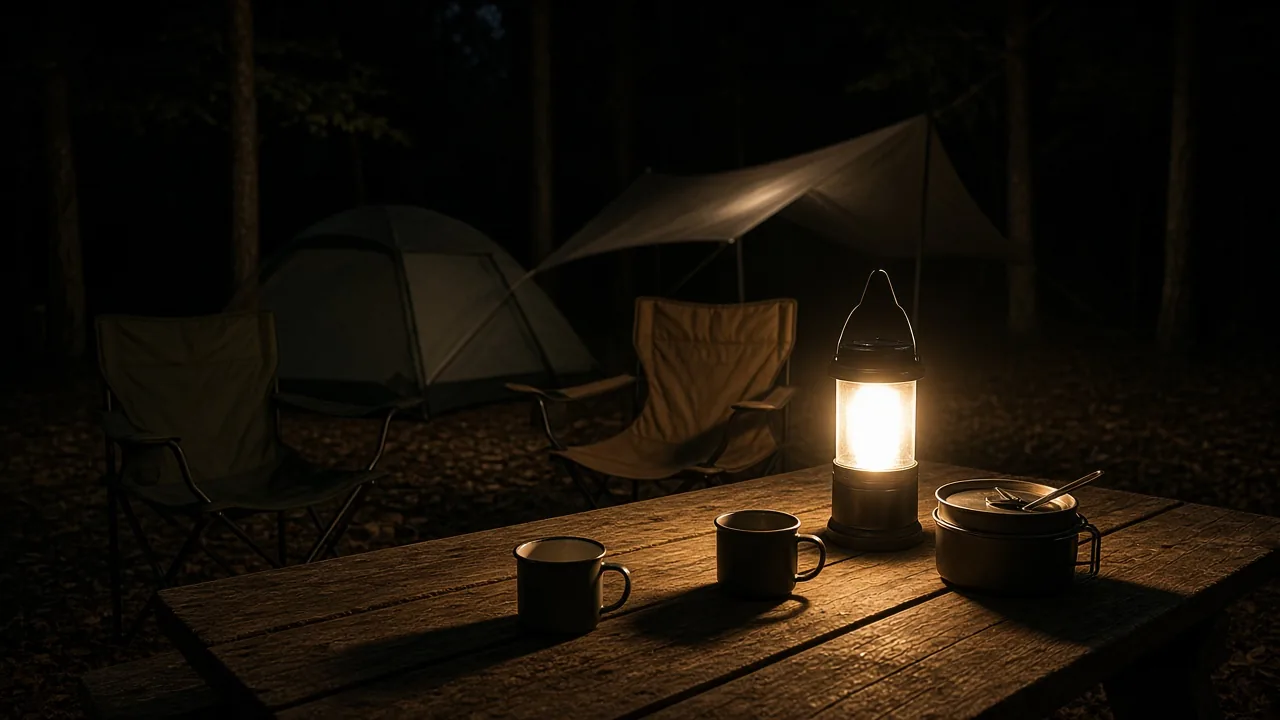
For car camping main area light, choose about 1000-plus lumens with published per-mode runtime. A light such as the 1500-lumen C1500 shows 1500 lumens for about 5.5 hours, 300 lumens for 21 hours, and 100 lumens for 50 hours, which makes it easy to plan a night and a spare power strategy. The trade-off is weight and bulk: about 1 lb and a body roughly the size of a sandwich. That is fine beside a vehicle, but annoying on a long backpacking route.
Multi-Light and App-Connected Systems
Modular systems like the BioLite BaseLantern Plus can power separate SiteLight satellite lights and adjust each one from a phone app. That is handy for spreading controlled light across a kitchen, table, and tent porch without stringing multiple power banks. The downside is more weight, more cost, and more setup than a simple tent lantern. If you mostly need one tent light and one table light, two small dedicated lanterns may be simpler.
Common Problems and Quick Fixes
Most rechargeable lantern complaints come down to runtime surprises, water resistance misunderstandings, or mounting limits. Check these before a trip so you don’t discover a problem after dark. Also confirm regional versions match the features you want; a lantern sold in one market may lack the legs or hand crank found in another.
Runtime Is Much Shorter Than the Box Says
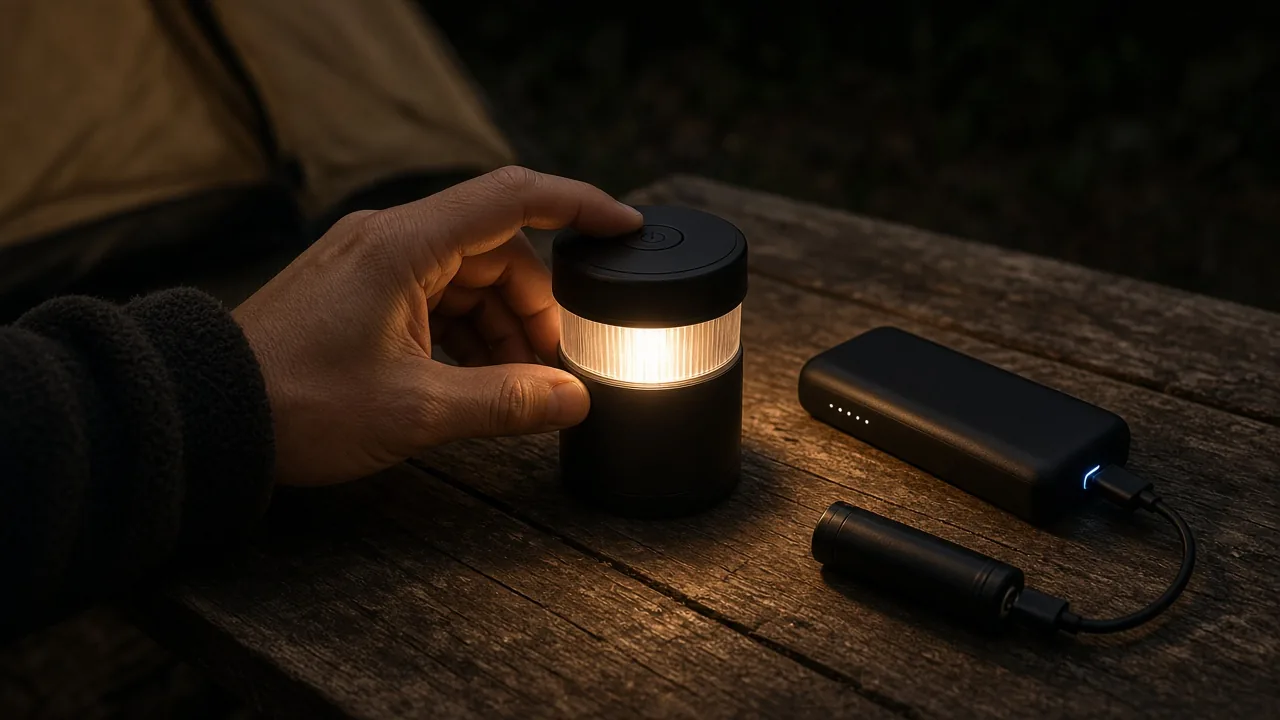
If runtime feels short, stop comparing maximum lumen output across models. Choose by the specific mode you will actually use, and carry a power bank or spare battery sized for that output. A light that quotes 15–20 hours may only deliver that at a dim moon mode; at a useful 300 or 1500 lumens the number falls sharply. When the label does not list per-mode runtimes, assume the long figure is low-output marketing.
The Light Fails in Rain or Won’t Stay Put
If the light may get wet or move overnight, treat an unrated lantern as splash-resistant only and test the hanging or magnetic mount in your tent or tarp setup first. A magnet that slides on a painted pole or a hook that opens under tension will fail at the worst time. For rainy trips, look for IPX4 at minimum, and prefer IPX5 or higher if the lantern will hang outside a tent vestibule. Dry all charge ports before you plug in.
Before packing, check whether the trip is car camping or backpacking, how cold and wet the night may be, and whether you need tent fill or main area light. Match the lantern to that job, and carry a power bank or spare cells that cover the realistic high-mode runtime. A headlamp is still worth adding for route-finding and hands-free work; the lantern belongs where you stop, not on the trail.
— Camp Kit Journal
This article is general information about camping gear, not professional safety, medical, or wilderness training. Check fire restrictions, weather, and campsite rules before you go, and follow the manufacturer's instructions for your own equipment.
FAQ
How many lumens do I need for a main camp lantern?
For a main camp area light, look for roughly 1000 lumens or more. Below about 200 lumens is better for tent interior use, table glow, or close tasks like reading and cooking prep.
What does a long runtime number really mean on a rechargeable lantern?
It usually refers to a low or moonlight mode unless the brand states the brightness for each mode. Compare high and medium runtimes such as 300 lumens for 21 hours or 1500 lumens for 5.5 hours to plan realistically.
Are solar panels and hand cranks enough to recharge my camping lantern?
No, they are backup options. A compact solar panel may need around 12 hours of good sun, and one minute of cranking may give about 10 minutes of light, so carry a power bank or spare cells for nightly use.
What IP rating should I look for in wet conditions?
IPX4 handles splashes and light rain, IPX5 can take rain and wet hanging, and IP66 or IPX7 handles stronger wet conditions or brief immersion. If a lantern only claims to be waterproof without an IP rating, treat it as splash-resistant.
Is a replaceable battery better than a built-in one?
Replaceable cells like 18650, 21700, or 14500 let you swap worn batteries and pack spares. Built-in batteries are simpler at first but may fade after a few seasons and require replacing the whole lantern.



