Onewind 12 Hammock Tarp Review: Storm Durability and Setup
This Onewind 12 hammock tarp review covers storm durability, setup, weight, and fit for backpacking hammock campers. Learn who should use it and how to pitch it in mixed weather.
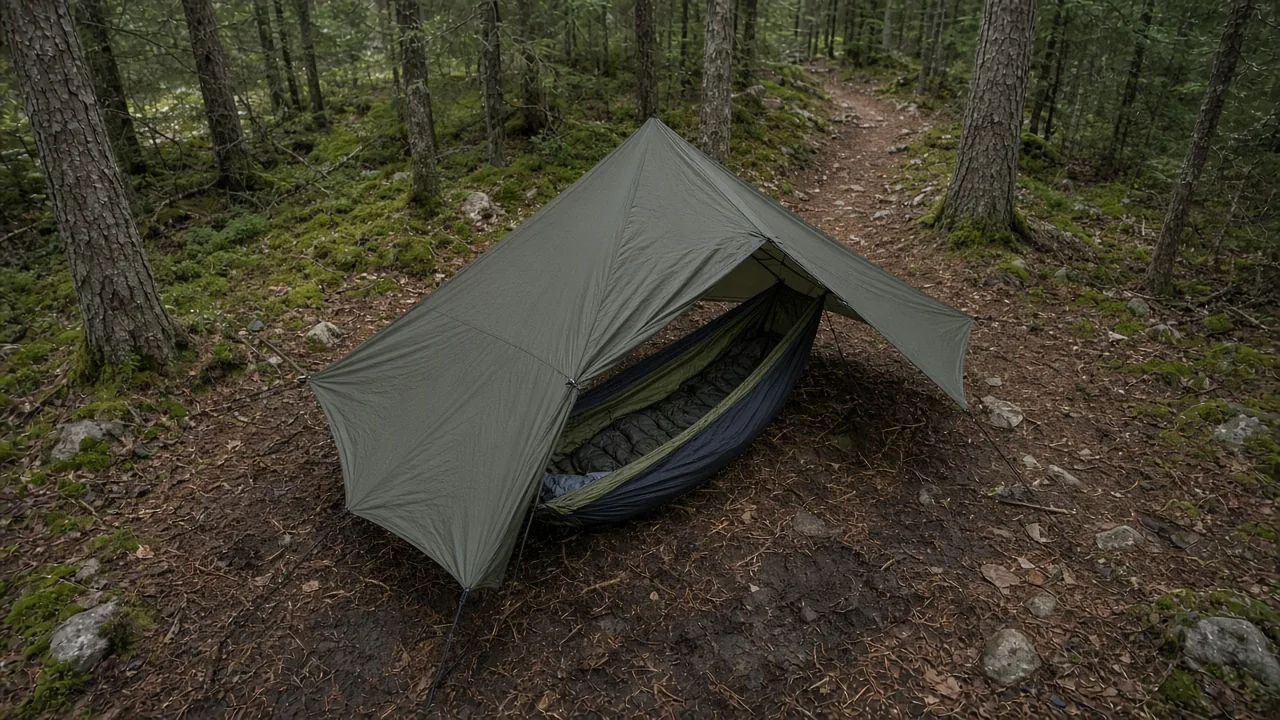
Camp Kit Journal's Onewind 12 hammock tarp review covers whether this shelter belongs in your kit. It suits hammock campers who want storm protection, multiple pitch options, and a 1.86 lb packed shelter, but plan around the bungee cords and small stuff sack. The tarp earns its place for backpacking hammock users in mixed weather, yet it is not a full tent replacement for bug pressure, ground sleeping, or standing-height living space.
1. Onewind 12 Hammock Tarp Review: Storm Durability and Weather Limits
Reported user experiences describe this tarp surviving thunderstorms and sustained high wind, but the included bungee cords failed in roughly 45 mph gusts for one reviewer. Treat it as a strong, adjustable shelter with a few hardware caveats, not an unlimited storm fortress.
What the fabric and seams do in rain
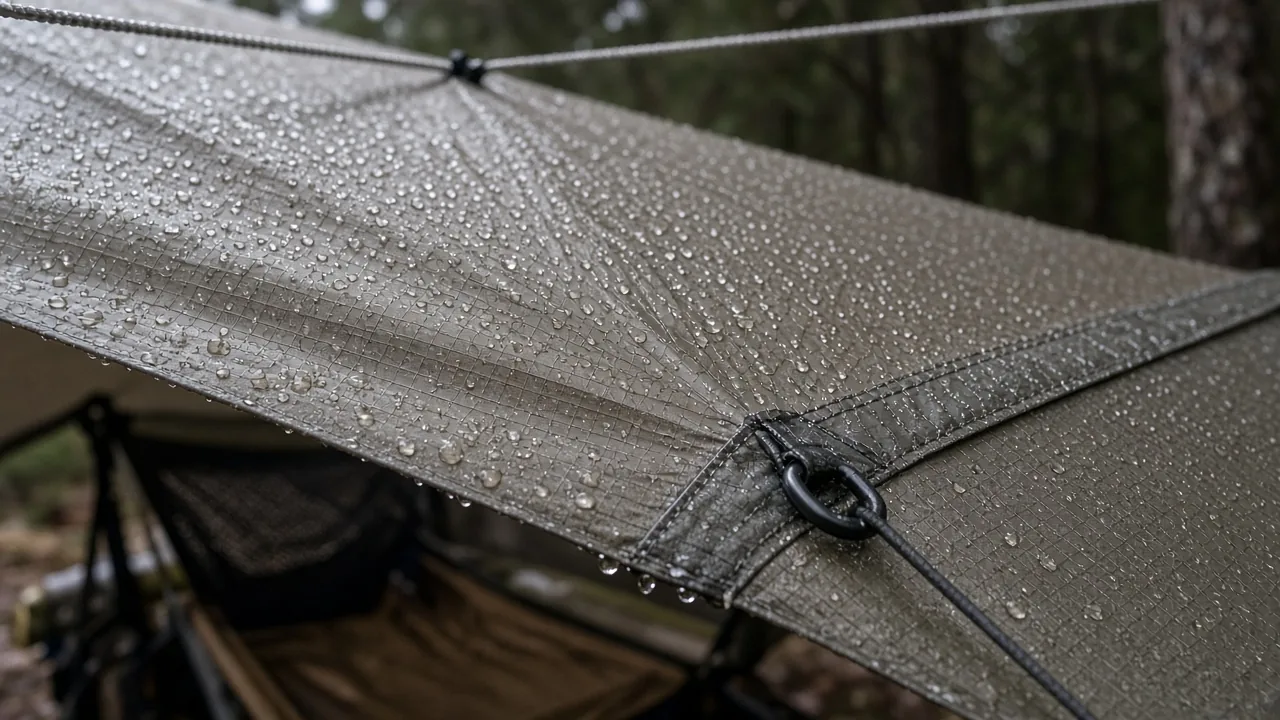
The 20D ripstop nylon uses a 4000 mm PU inner coating and a silicone outer coating. The PU layer resists water penetration from the inside, while the silicone-facing outer surface sheds rain and reflects moisture. A 4000 mm hydrostatic head rating places this tarp in the range of a solid three-season rain fly for a tent, though it does not mean the shelter can handle every sustained downpour without sagging or pooling if poorly pitched.
Seam taping covers the main tie-out points and pull-out points. One setup video found the taping mostly clean, with a small lifted edge on one section. That does not point to a widespread failure, but it does mean you should run a quick visual check along the seams before your first trip. A lifted tape edge can be pressed back or sealed if it sits in a high-stress area.
Where wind exposes weak points
The four doors and 11 main tie-out points let you close the shelter down when wind shifts, but wind will always find the weakest hardware first. One reviewer reported that the bungee shock cords shredded during a 4 a.m. burst of roughly 45 mph gusts. After that, they removed the bungee cords, switched to static line, and placed large rocks on top of tent stakes. Several other users say they have spent dozens of nights under this tarp in severe thunderstorms and high wind without damage.
That split tells a useful story. The fabric and geometry can handle rough weather when the pitch is tight, the doors are closed, and the stakes are solid. The elastic components are the first thing to check if you expect a real blow. For shoulder-season trips or exposed ridgelines, carry a few extra stakes and some non-elastic cord so you can harden the shelter in the field.
2. Setup Process: Pitching the Onewind 12 Tarp from Tree to Stake
The setup process relies on loop-through tie-outs that require no knots, adjustable corner tension, and four doors that clip open or closed. A separate ridge line with prusik loops makes centering the tarp over a hammock faster, especially when tree spacing is awkward.
Basic pitch: ridge line, corners, and doors
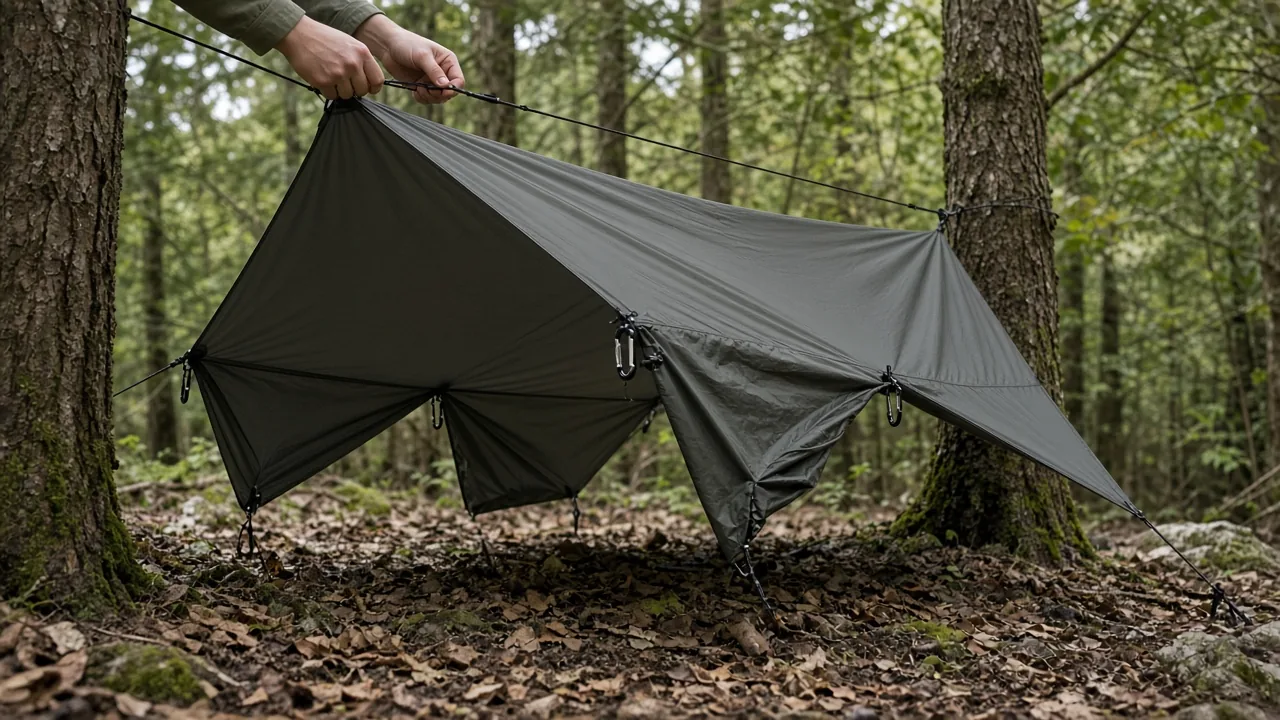
For a quick pitch, pass the ridge line through the top tie-out point and back down to secure it without tying a knot. Then run guylines through the top and bottom corner tie-outs, pull tension, and adjust. The corner tensioners let you pull slack and lock it by tension alone, which speeds up bad-weather setup when your hands are cold.
The four doors clip open with small carabiners or close against the door-edge shock cords for wind and rain protection. This works well enough for a basic A-frame. The main limitation is tree spacing. If two trees sit too close together, one end may not have enough room to pull out fully, and the tarp loses interior volume. That is where a separate ridge line with prusik loops helps, because you can slide the tarp along the line until the geometry balances over your hammock.
Folding versus stuffing: packing after use
The original setup video shows a careful folding method: fold along the length, press out air, and roll from the open edge rather than the folded edge. The goal is to remove trapped air and keep the packed size around 12 inches by 4 inches. That method works, but it takes time and patience in the field.
A different group of users prefers the opposite approach. They leave the double-end stuff sack on the ridge line, release one end of the tarp, and stuff the fabric directly into the sack without folding. The payoff is a faster next pitch, often under two minutes, and less fuss on a wet morning. The trade-off is a slightly less tidy bag and more wrinkles in the fabric over time. Neither method damages the 20D nylon as long as the tarp is dry before packing.
Safety notes for enclosed pitches
This tarp can close into an enclosed shelter when all four doors are shut. That is useful in blowing rain, but it changes ventilation. Never use a stove or heater inside your tent, and treat a fully closed tarp the same way. Carbon monoxide builds up quickly in an enclosed space, and a tarp wall can catch fire or melt. If you cook nearby, keep at least one door open and position the stove well clear of fabric and guylines.
3. Fit for Typical Hammock Camping: Coverage, Weight, and Packed Size
At 1.86 lb total with a 12-foot length, the Onewind 12 tarp works for backpacking hammock use and covers a typical gathered-end hammock. It is not a replacement for a tent if you need ground sleeping, integrated bug protection, or a standing-height dry room.
Hammock coverage and tree spacing
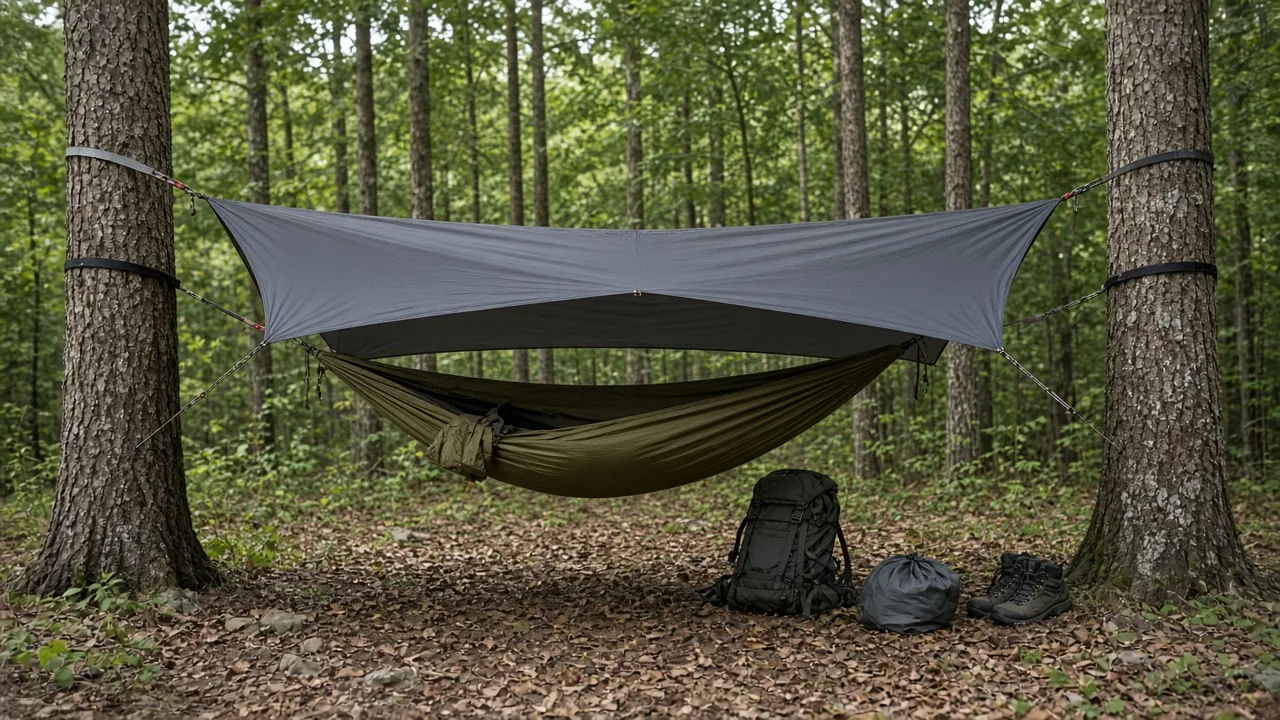
The 12-foot length plus four doors provides weather coverage for most gathered-end hammocks, including longer 11-foot hammock bodies. The four doors let you block wind from either end while leaving side ventilation open. That matters when rain blows sideways or when nighttime temperatures drop below freezing.
Tree spacing controls how well the tarp performs. If the gap between trees is too short, the end pull-outs lose tension and the tarp sags into your hammock. A separate top ridge line fixes much of this because you can position the tarp independently of the hammock suspension. Users who add a ridge line with prusik knots consistently report better centering and less fiddling.
The pull-out points create more interior headroom, but the holes are small. A trekking pole tip may not fit directly through them, so you may need a short paracord loop to connect the pull-out to your pole handle or a small toggle.
Tarp and hammock versus a tent
A tarp-and-hammock combo and a lightweight tent both weigh around 4.4 lb once you add stakes, guylines, suspension, and a bug net. The choice comes down to camp conditions and sleeping preference.
| Factor | Onewind 12 tarp + hammock | Typical lightweight tent |
|---|---|---|
| Total weight | About 1.86 lb tarp plus hammock, net, and suspension | Around 4.4 lb complete |
| Camp selection | Needs two trees; tolerates wet or uneven ground | Needs flat, dry, root-free ground |
| Bug protection | Hammock with integrated net required | Built-in mesh body |
| Interior height | Low; no standing room | Some sitting or stooping height |
| Pitch flexibility | Open, semi-closed, closed A-frame, pyramid variations | One main configuration |
| Storm coverage | Adjustable doors and tie-outs; depends on pitch tension | Full coverage when staked properly |
| Ground sleeping | Not possible without a pad and extra setup | Directly possible |
The tarp plus hammock wins on ground conditions. You can set up over mud, snow, roots, or a slope and still sleep dry. A tent needs a flat enough area for a sleeping pad and a floor isolated from ground moisture. The tent wins on bug protection and simplicity for beginners, since everything stays in one package.
Pitch shapes for shoulder seasons
The 11 main tie-out points and four doors support open, semi-closed, and pyramid-style pitches. In warm weather you can pitch one side high for ventilation and leave both end doors clipped open. When rain moves through, close the windward doors and drop the side closer to the ground. A pyramid-style pitch, where the tarp extends down toward the ground on multiple sides, traps more heat and blocks more wind for cold nights.
That range matters in shoulder seasons. A spring trip may start with a sunny afternoon and end with sleet at 2 a.m. The Onewind 12 changes shape without changing its hardware, which is the main advantage over a single-shape tent fly.
Cold-weather setup options
Above freezing, you can leave doors open or only partially closed to manage condensation. Once temperatures drop below roughly 32°F, a closed A-frame pitch becomes workable. Reports from users describe combining a fully closed tarp setup with a sleeping bag rated around freezing and staying comfortable. That matches general hammock-camping practice: the tarp blocks wind and precipitation, while your sleeping bag or top quilt handles warmth.
You still need an underquilt or a foam pad to prevent heat loss through the hammock body. The tarp only manages weather; it does not insulate. If you are new to cold-weather hammocking, test the full system in a backyard or a walk-out site before committing to a remote overnight.
4. Who Should Use the Onewind 12 Hammock Tarp (and Who Should Skip It)
This tarp suits backpackers and hammock campers who want modular storm coverage without carrying a full tent. Car campers who want a livable enclosed room or new hammock users with no bug protection should add a hammock net or choose a different shelter.
Best matches
Backpacking hammock users who value a packed weight around 1.86 lb, 11 tie-out points, and four-door ventilation will get the most from this tarp. It fits the gap between a minimal diamond tarp and a full winter tarp. The 12-foot length covers longer hammocks, and the four doors let you shift from open-air summer mode to closed storm mode in minutes.
Users who camp in mixed rain, wind, and variable shoulder-season conditions benefit most. The modular pitch options mean you can adjust ventilation and heat reflection as weather changes through a single night. If you already carry a hammock with an integrated bug net, this tarp completes the sleep system without excess weight.
Less ideal matches
If you camp where there are no suitable trees, this tarp alone is not enough. You can pitch a tarp with a single pole, but that requires extra gear and some improvisation. If you need standing-height space for changing clothes, cooking in heavy rain, or waiting out a long storm, a tarp with a 12-foot ridgeline still means crouching.
Bug pressure is another gap. The tarp has no mesh and no floor. In mosquito season you need a hammock with a full bug net, plus insect repellent and possibly a head net. For ground sleepers, this tarp offers no integrated groundsheet or bathtub floor. A tent remains the simpler shelter for that use case.
5. How to Choose, Pack, and Care for This Tarp
Match the tarp to your trip by checking rain, wind, nighttime temperature, and how far you will hike. Then dry it before storage to prevent mildew, and check the hardware before storms arrive.
Choosing by trip type and weather
For backpacking, the 1.86 lb total and 12-inch by 4-inch packed size are workable. That weight includes the guylines, stakes, carabiners, and bungee cords, so you are not adding hidden accessory weight. For car camping, the compact size matters less, but the tarp still works as a small additional shelter over a picnic table, gear pile, or cooking area when the main tent is occupied.
Consider the expected nighttime low, not the daytime high. A hammock setup loses heat faster than a tent on cold ground, so a tarp that blocks wind becomes essential below 50°F. Pair it with an underquilt or pad rated for the conditions, and confirm your sleeping bag can handle the low.
Care and storage
The video review recommends folding along the length and rolling from the open edge to expel air. That keeps the tarp smooth and the packed size predictable. Other users prefer stuffing because it is faster and puts less stress on any single fold line, though it tends to wrinkle the 20D fabric more over time. Both approaches work.
The non-negotiable step is drying. Mildew forms quickly when silnylon or PU-coated nylon is stored damp. Hang the tarp loosely at home, wipe off mud or pine sap, and let it dry completely before it goes into the stuff sack. Check the seam tape and tie-out stitching during this drying session. Catching a small tear before a trip is easier than repairing one at midnight in rain.
What to check before you go
Check fire restrictions, campsite rules, and the weather forecast before any trip. Fire restrictions affect whether you can use the open-door, heat-reflecting pitch shapes with a campfire, and some campgrounds restrict tying shelters to trees. If high wind is in the forecast, test the included bungee cords. If they show wear, swap them for static line and plan to place rocks on top of stakes. Carry a small repair kit with tenacious tape, extra cord, and two spare stakes.
Decide whether to bring the Onewind 12 hammock tarp by matching it to your trip: car or backpacking, expected nighttime temperature, rain chance, and available trees. Pair it with a bug-net hammock and inspect the hardware before storms. If a wet, windy trip is on the calendar and shelter weight matters, this tarp earns its place in the pack.
This article is general information about camping gear, not professional safety, medical, or wilderness training. Check fire restrictions, weather, and campsite rules before you go, and follow the manufacturer's instructions for your own equipment.
FAQ
Is the Onewind 12 hammock tarp good in strong wind?
The fabric and geometry can handle thunderstorms and high wind when pitched tightly with closed doors, but the included bungee cords failed around 45 mph gusts for one reviewer. Swapping to static line and extra stakes can harden the shelter.
How much does the Onewind 12 tarp weigh?
The Onewind 12 hammock tarp weighs about 1.86 lb total, including guylines, stakes, carabiners, and bungee cords, and packs to roughly 12 by 4 inches.
Can I use the Onewind 12 tarp for ground camping?
This tarp is designed for hammock camping and works best with a hammock and bug net. It can be pitched with a pole in some cases, but it lacks a floor and integrated bug protection for comfortable ground sleeping.
What setup tips improve the Onewind 12 tarp pitch?
Using a separate ridge line with prusik loops helps center the tarp over your hammock, and stuffing instead of folding can speed up the next pitch. Check seam tape and replace worn bungee cords before storms.
Who should choose the Onewind 12 hammock tarp?
Backpacking hammock users who want modular storm protection, four-door ventilation, and a pack weight around 1.86 lb will get the most from this tarp. Campers without trees or those needing standing-height shelter may want a tent.



