OneTigris Down Camping Blanket 2.0 Review: M vs. L for Cold Sleeps
The OneTigris Down Camping Blanket 2.0 is a packable 1.5 lb warmth layer for cold-weather sleep systems. This review covers real-world 40°F comfort, M vs L sizing, moisture risks, and care.
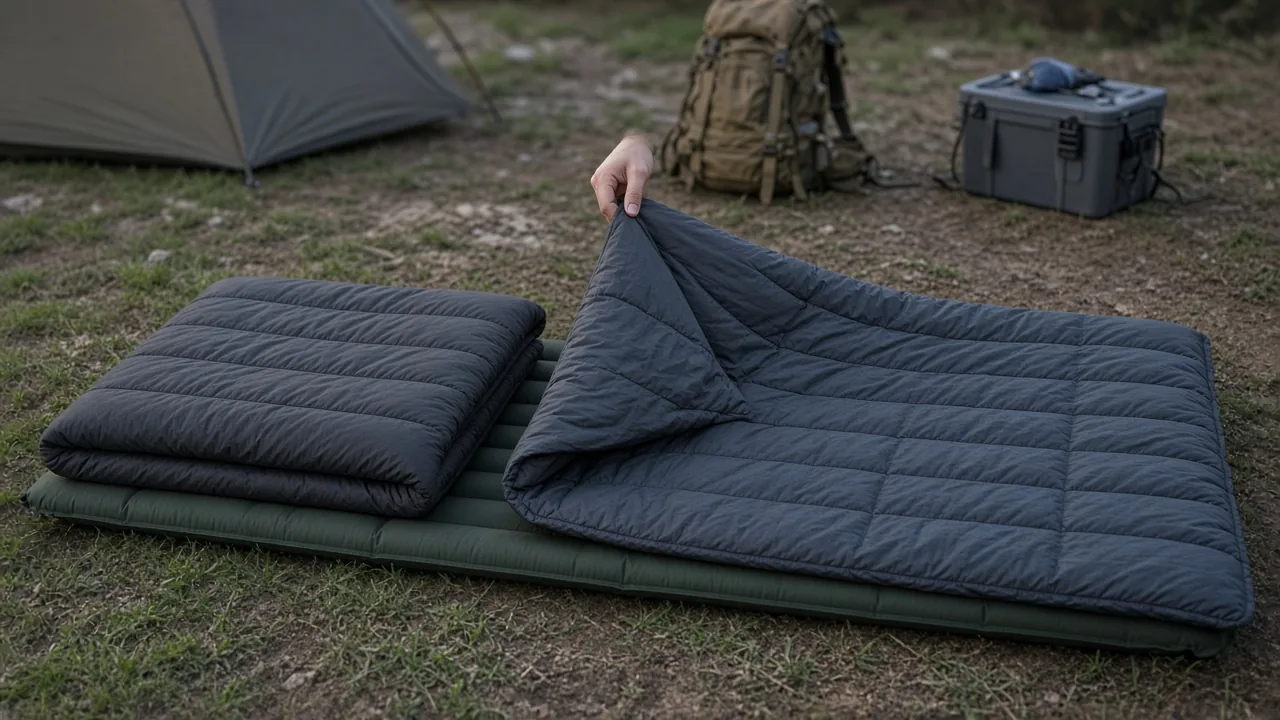
The OneTigris Down Camping Blanket 2.0 is a packable 1.5-pound layer that can strengthen a sleep system to around 40°F, but only if you choose the right size and keep it dry. This OneTigris Down Camping Blanket 2.0 review breaks down where it fits in a cold-weather kit, what the temperature rating really means, and when the medium or large size makes more sense. It is not a full sleeping bag replacement for winter, but it can work as a compact warmth booster for shoulder-season car camping and backpacking.
OneTigris Down Camping Blanket 2.0 Review: What You Get
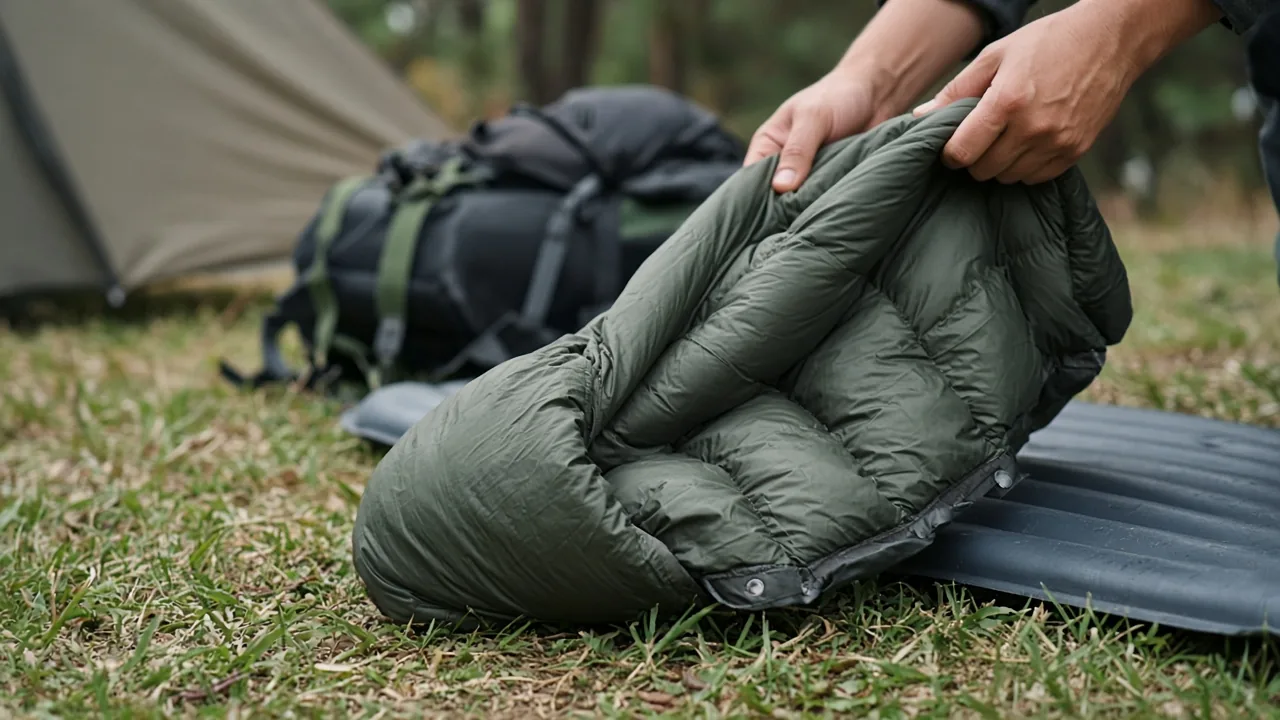
The blanket packs to under 12 by 6.5 inches and weighs 1.5 pounds. It uses a 20D ripstop nylon shell, a 300T polyester inner, and 600-fill duck down with a listed 46–77°F range. That combination gives you a lightweight layer that stuffs small enough to ride inside a backpack or a camp bin without taking over the whole load-out.
How warm should you expect it to be?
The official 46–77°F rating is a range, not a promise. In a video review, wearing regular shirt, pants, and socks pushed comfort down to about 40°F. Treat that official rating as a starting point rather than a guarantee. Your own comfort will shift with wind, pad insulation, tent condensation, and whether you sleep warm or cold.
What sizes and features should you check?
Medium runs 6.5 by 4.6 feet and large runs 7 by 6.7 feet. The three top snaps and three bottom snaps let you wear it as a poncho or cape when you are not sleeping. That poncho function is a bonus, but it should not drive the purchase by itself. Fit around your sleeping body matters more than how it hangs around your shoulders.
OneTigris Down Camping Blanket 2.0: Strengths for Cold-Weather Camping
The main advantages are low packed size, light weight, and the ability to add warmth inside or outside a sleeping bag without adding a second full bag. For backpackers who count ounces, that is a real difference. For car campers, it means less bulk in the cargo area and a quick extra layer for cold nights.
Does it work with a sleeping bag?
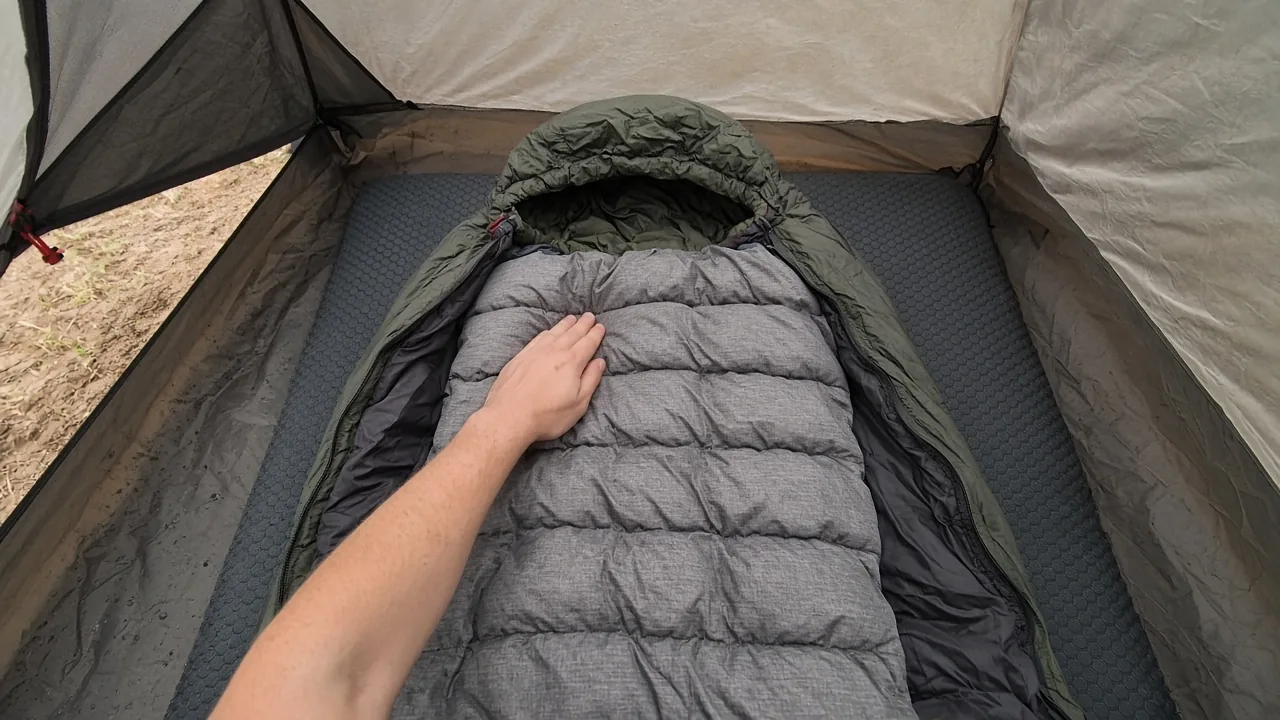
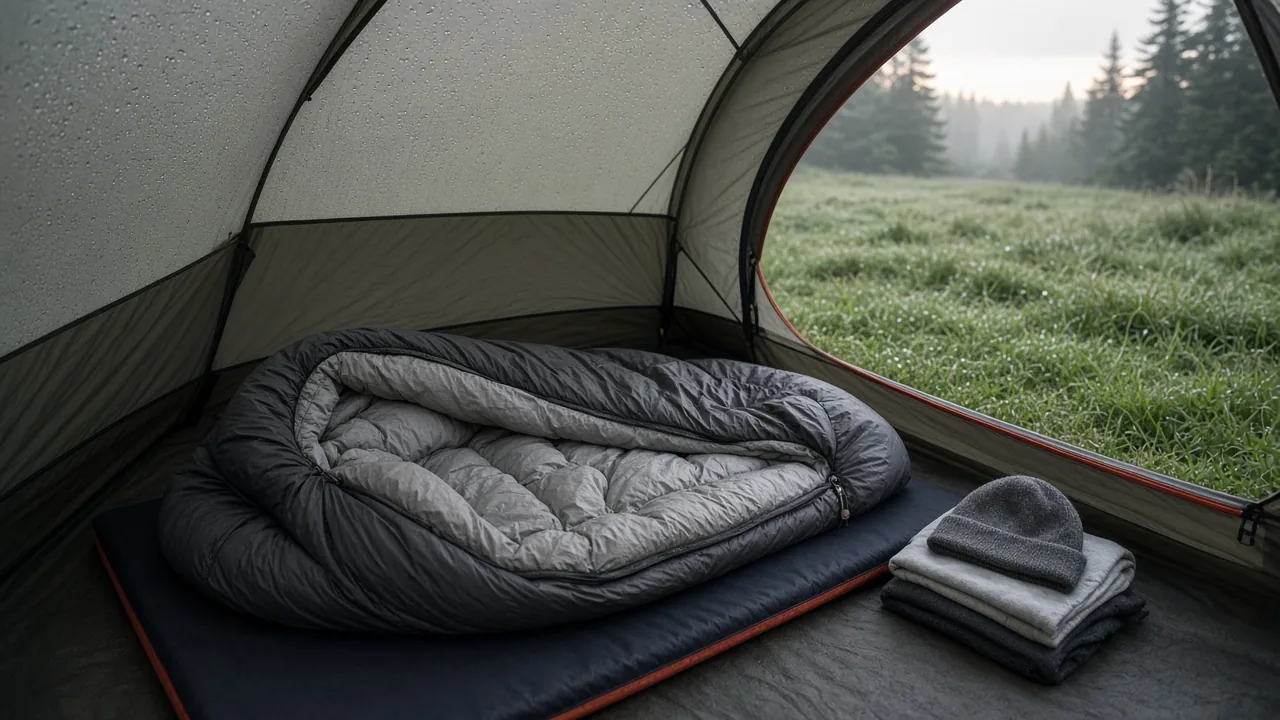
Yes, and users report that placing the blanket inside the sleeping bag works best. Use it as an inner booster layer rather than only draping it over the top. Inside a bag, it traps heat closer to your body and reduces the drafts that can sneak in around the zipper or hood. An outside drape adds warmth too, but it shifts more during the night.
Is down leakage a real problem?
The review noted only occasional tiny down escape. The fix is simple: pull the feather back from the other side instead of yanking it out. That keeps the shell intact and the fill in place. A few stray fibers are not a defect. Ripping them through the fabric creates a bigger hole and more leakage later.
Where the OneTigris Down Camping Blanket 2.0 Falls Short
Down insulation loses its warmth when wet. That is the core weakness of this product, not a minor caution. Rainy or splash-prone campsites are a risk unless you protect the blanket inside a dry bag or shelter. Once down gets soaked, it collapses and loses most of its insulating ability, and drying it in the field is slow.
Why do some campers wish they bought the large size?
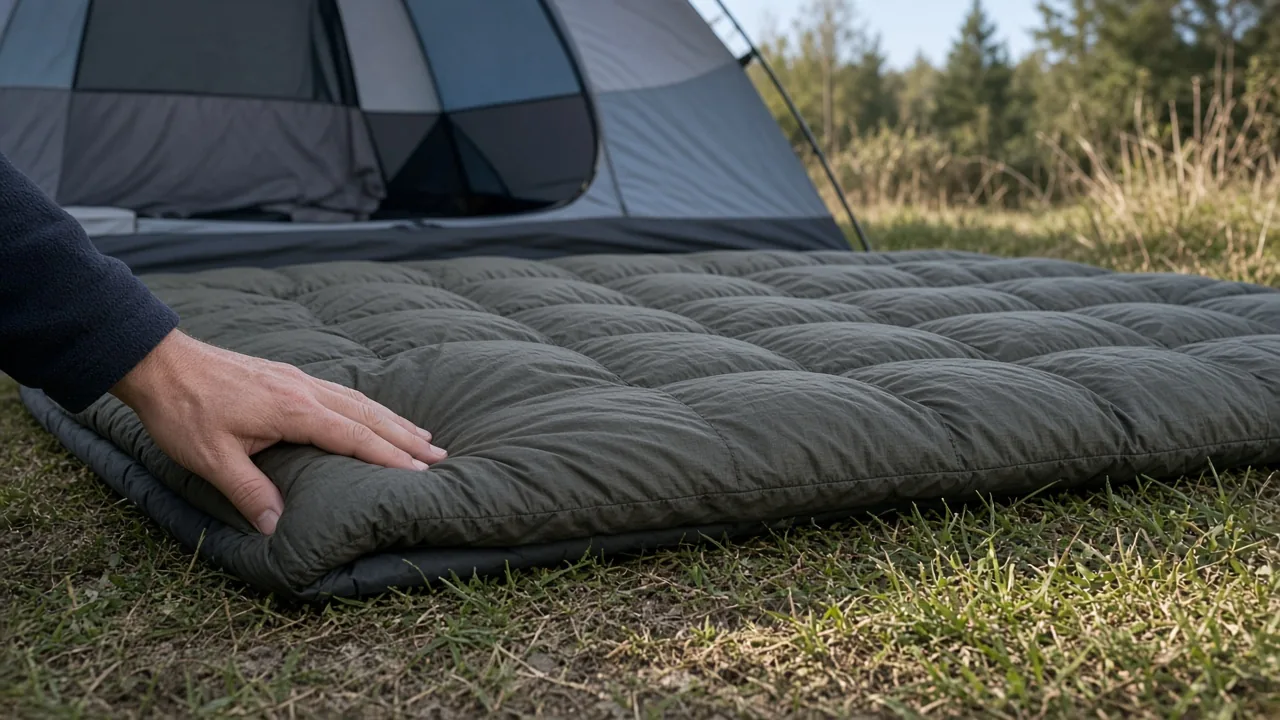
The medium can feel narrow at cold temperatures, allowing drafts around your sides. The reviewer concluded the large is the safer cold-weather choice for most body sizes. A blanket that leaves a gap along your hips or shoulders at 40°F forces you to wake up and adjust throughout the night. The extra width of the large reduces those cold spots.
How should you manage moisture?
Keep the blanket away from wet tent walls and heavy condensation. In single-wall tents or humid mornings, that means stowing it inside a dry bag when you are not using it. Never use a stove or heater inside your tent to dry gear because that creates carbon monoxide and fire risk. Air it outside when the weather allows, or wait until you are home to dry it properly.
M vs. L: How to Decide Which Size Fits You
Pick the medium only for mild nights, small bodies, or as a summer camp blanket. Choose the large if you want draft-free coverage near 40°F or plan to layer it over a sleeping bag. The table below maps the two sizes to typical use cases.
| Factor | Medium | Large |
|---|---|---|
| Dimensions | 6.5 ft x 4.6 ft | 7 ft x 6.7 ft |
| Best temperature range | 50°F and up for most sleepers | Around 40°F with more draft control |
| Body fit | Smaller sleepers or inside-sleeping-bag use | Most body sizes, especially side sleepers |
| Pack size and weight | Same 1.5 lb class, slightly less bulk | Same 1.5 lb class, slightly more bulk |
| Recommendation | Summer extra layer or mild-night booster | Cold-weather coverage and top-quilt duty |
Who is the medium best for?
The medium suits car campers who do not mind limited coverage and need a light extra layer for 50°F-and-up nights. It also works for smaller sleepers using it inside a bag. If you are under about 5 feet 8 inches, sleep on your back, and do not roll much, the medium can feel adequate. Anyone wider or more active should consider the large.
Who should go straight to large?
Backpackers and cold sleepers should go straight to large because the extra width reduces drafts and works better as a top quilt or poncho in wind. The large also covers a wider range of sleeping positions. If you side-sleep with knees bent, the medium may leave your back or shoulders exposed even when the air temperature stays above freezing.
Who Should and Should Not Add This to a Sleep Kit
This blanket fits campers who can keep down dry and want a compressible warmth layer for car or backpacking trips. It is not the best choice for very wet climates or people who prefer low-maintenance synthetic or wool insulation. Down requires more care, but the weight and packed-size payoff is real when moisture risk stays low.
When does it make sense?
It makes sense as a compact add-on for shoulder-season trips where nighttime lows hover around 40°F and you already carry a sleeping bag or pad. It also works for campers who want a separate blanket for camp comfort that can double as emergency warmth. If your sleep system is rated for 30°F but you sleep cold, this blanket can close the gap without buying a whole new bag.
When should you look elsewhere?
If your trips regularly include rain-soaked gear or you want a blanket that tolerates wet conditions better, consider a synthetic quilt, wool blanket, or military poncho liner instead. Those options weigh more and pack larger, but they keep working when damp. For coastal or mountain trips with frequent fog, splash, or condensation, that trade-off may be worth it.
How to Care for the OneTigris Down Camping Blanket 2.0
Store it loosely when dry, spot-clean as needed, and avoid long-term compression. Crushed down recovers loft and warmth better when given air. A stuff sack is for the trail, not for the closet shelf. Air it out after each trip, and make sure it is completely dry before storing.
What is the best way to pack it?
Stuff it into its sack and use the side buckle and drawcord to compress it under 12 by 6.5 inches. Do not leave it compressed for weeks between trips. The compression is useful for travel, but long-term storage in that state breaks down loft over time. A loose cotton or mesh storage sack works better at home.
How do you handle down leak or dampness?
For stray feathers, pull them back from the other side. For dampness, air out the blanket away from direct heat. Never run a stove or heater inside a tent. If the blanket gets wet in the field, squeeze out excess water gently, then hang or lay it in a dry place. Do not wring it hard or dry it near an open flame.
Alternatives Worth Considering
Some owners compare this blanket to the Onewind quilt-blanket-poncho for poncho use. Others note that military poncho liners or wool blankets remain stronger when wet-weather durability matters more than packed weight. The right pick depends on whether you prioritize ounces or forgiveness in poor conditions.
What trade-offs should you weigh before buying?
Use the comparison table below for weight, packed size, temperature comfort, wet-weather risk, and car vs. backpacking fit. OneTigris wins for weight and size, but wool or synthetic fits wet trips better.
| Product type | Weight class | Packed size | Comfort near 40°F | Wet-weather risk | Car vs. backpacking |
|---|---|---|---|---|---|
| OneTigris Down Camping Blanket 2.0 | 1.5 lb | Under 12 x 6.5 in | Good with layers | High if soaked | Both |
| Synthetic quilt | 2–3 lb typical | Medium | Good, even damp | Lower | Backpacking |
| Wool blanket | 3–5 lb typical | Large | Fair to good | Low | Car camping |
| Military poncho liner | About 1.5–2 lb | Medium | Fair with layers | Lower | Both |
The OneTigris packs smaller than nearly any synthetic or wool option in its warmth class. The risk is moisture. If your trips stay cold and dry, the down blanket is hard to beat per ounce. If your trips bring wet ground, wet gear, and wet air, the heavier options earn their space.
The Bottom Line
Check your trip type, expected nighttime low, and chance of rain before packing this blanket. If you need compact down warmth for dry cold and choose the large size for full coverage, it can fit a backpacking or car-camping sleep system. Pair it with a properly rated sleeping bag and a pad with enough R-value for the ground temperature, then watch how it performs on a low-stakes overnight before relying on it in deep cold.
By Camp Kit Journal
This article is general information about camping gear, not professional safety, medical, or wilderness training. Check fire restrictions, weather, and campsite rules before you go, and follow the manufacturer's instructions for your own equipment.
FAQ
How warm is the OneTigris Down Camping Blanket 2.0?
The official rating is 46–77°F, but in a video review, regular shirt, pants, and socks pushed comfort down to about 40°F. Treat that rating as a starting point because wind, pad insulation, and personal sleep warmth change comfort.
Should I choose medium or large for cold weather?
The large is the safer cold-weather choice for most body sizes because the medium can feel narrow and allow drafts around your sides. Choose medium only for mild nights, small bodies, or as a summer camp blanket.
Can I use this blanket with a sleeping bag?
Yes, users report that placing the blanket inside the sleeping bag works best. Inside a bag, it traps heat closer to your body and reduces drafts around the zipper or hood.
Is down leakage a problem?
The review noted only occasional tiny down escape. Pull the feather back from the other side instead of yanking it out to keep the shell intact.
What is the main weakness of this blanket?
Down insulation loses warmth when wet, so rainy or splash-prone campsites are a risk unless you protect the blanket inside a dry bag or shelter. Avoid long-term compression and dry it completely before storage.