Nalgene vs Stainless Steel Water Bottle for Camping: Which One?
This guide compares measured weights, durability limits, hot-water safety, and maintenance to help you choose between a Nalgene and stainless steel bottle for camping.
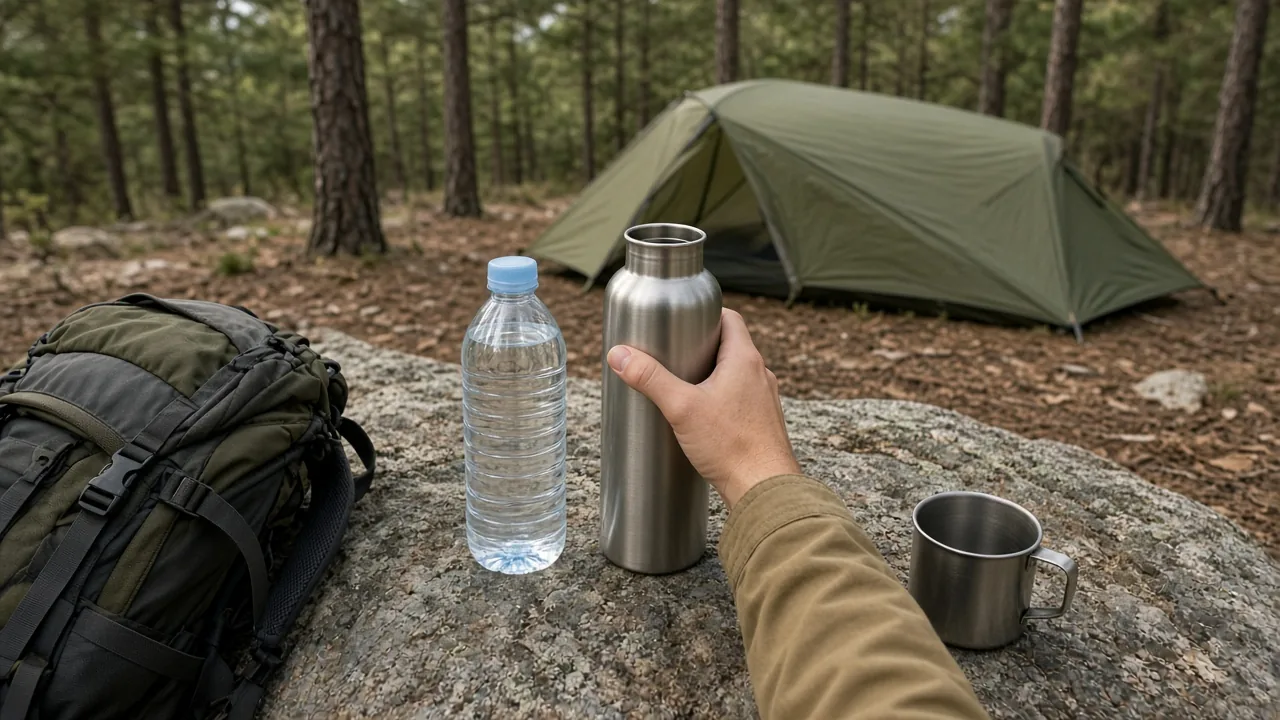
For most campers, the choice comes down to two needs: a Nalgene if you want a lightweight, low-maintenance bottle that shows your water level, and stainless steel if you often fill with hot water, park in hot sun, or want a container that survives hard drops. This Nalgene vs stainless steel water bottle for camping guide compares measured weights, durability limits, hot-water safety, and the practical maintenance each bottle demands.
Nalgene vs Stainless Steel Water Bottle for Camping: Quick Answer
Pick a Nalgene if you want a clear bottle that asks almost nothing from you between trips. Pick stainless steel if hot fills, hot vehicle interiors, or rough rocky terrain are part of your camping routine. The tradeoff is not as dramatic as many campers expect: a basic single-wall stainless bottle weighs only 0.7 to 2 ounces more than a standard Nalgene, though an insulated stainless bottle can weigh far more.
| Feature | Nalgene plastic bottle | Basic stainless steel bottle | Insulated stainless bottle |
|---|---|---|---|
| Typical measured weight | 6.3 oz | 7 to 8.3 oz | 17 oz or more for larger sizes |
| Water level visibility | Clear body | Hidden | Hidden |
| Hot water fill | Only certain plastic codes | Generally acceptable | Generally acceptable |
| Damage response | May crack or split on sharp rock | Dents but usually keeps holding water | Dent can break vacuum |
| Maintenance | Low, can stay damp | Needs drying to avoid rust | Needs drying; vacuum risk |
| Best for | Backpacking, measuring, low-maintenance use | Hot environments, rocky terrain, hot drinks | Cold drinks, car camping, winter day use |
Many campers do best carrying one of each for different conditions. A clear Nalgene handles drinking and measuring, while a stainless bottle covers hot water and rough handling when the trip calls for it.
How Much Do Nalgene and Stainless Steel Camp Bottles Really Weigh?
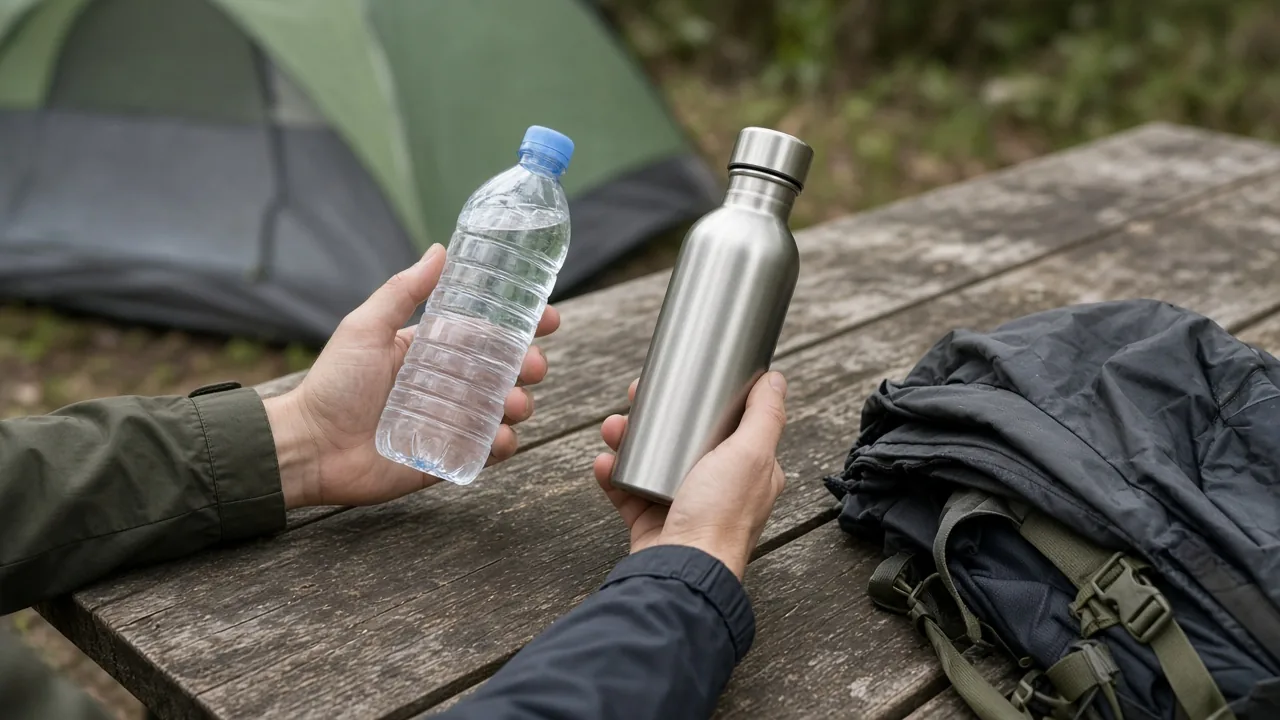
One measured comparison found a standard Nalgene plastic bottle weighs 6.3 ounces, while a similar basic stainless bottle came in at 7 ounces. Another stainless model weighed 8.3 ounces. That puts the difference at roughly 0.7 to 2 ounces for single-wall stainless bottles against the plastic baseline.
The picture changes with insulation. A larger insulated bottle, such as a 40-ounce Hydro Flask, can weigh more than 17 ounces on its own. That is over half a pound above the basic Nalgene. One reader also reported a stainless Nalgene-style bottle weighing 410 grams, about 14.5 ounces, which is far heavier than the standard plastic version.
When That Small Ounce Difference Adds Up
For backpacking, cycling, or any long water carry, the jump from a 6.3-ounce Nalgene to a heavy insulated bottle matters more than the Nalgene-to-uninsulated stainless difference. Two ounces is easy to shrug off at a campsite. Eleven extra ounces, repeated over thousands of steps, is not. If your trip involves carrying all your water and gear on your back, a clear plastic bottle or a light single-wall stainless bottle makes more sense than a vacuum bottle built for iced drinks.
Durability: Does a Stainless Bottle Actually Outlast a Nalgene?
Stainless steel can dent when slammed into rock or concrete, but the bottle usually keeps holding water. That is the main argument for metal. A Nalgene, by contrast, may crack or split if it lands on a sharp edge, and a cracked plastic bottle can leak and finish the trip early. In rough, rocky terrain, stainless has a real advantage.
That said, Nalgene plastic is not as brittle as the worst case suggests. The material is flexible enough to scratch, dent slightly, and keep working after many ordinary drops. Some campers who have used both argue a Nalgene is tougher than expected, and the difference is conditional: sharp-edge impacts favor metal, while routine drops favor either bottle equally.
Where Stainless Bottles Are Weak
Most stainless water bottles are welded from two or three metal pieces. The weld area is often the weakest point and can rust or corrode over time, especially if moisture is trapped inside after washing. On an insulated bottle, a hard dent can also break the vacuum seal, turning an effective cold-drink bottle into a much heavier single-wall bottle. Stainless is not automatically the longer-lived choice; it simply fails in different ways.
Can You Put Hot Water in a Nalgene or Stainless Bottle?
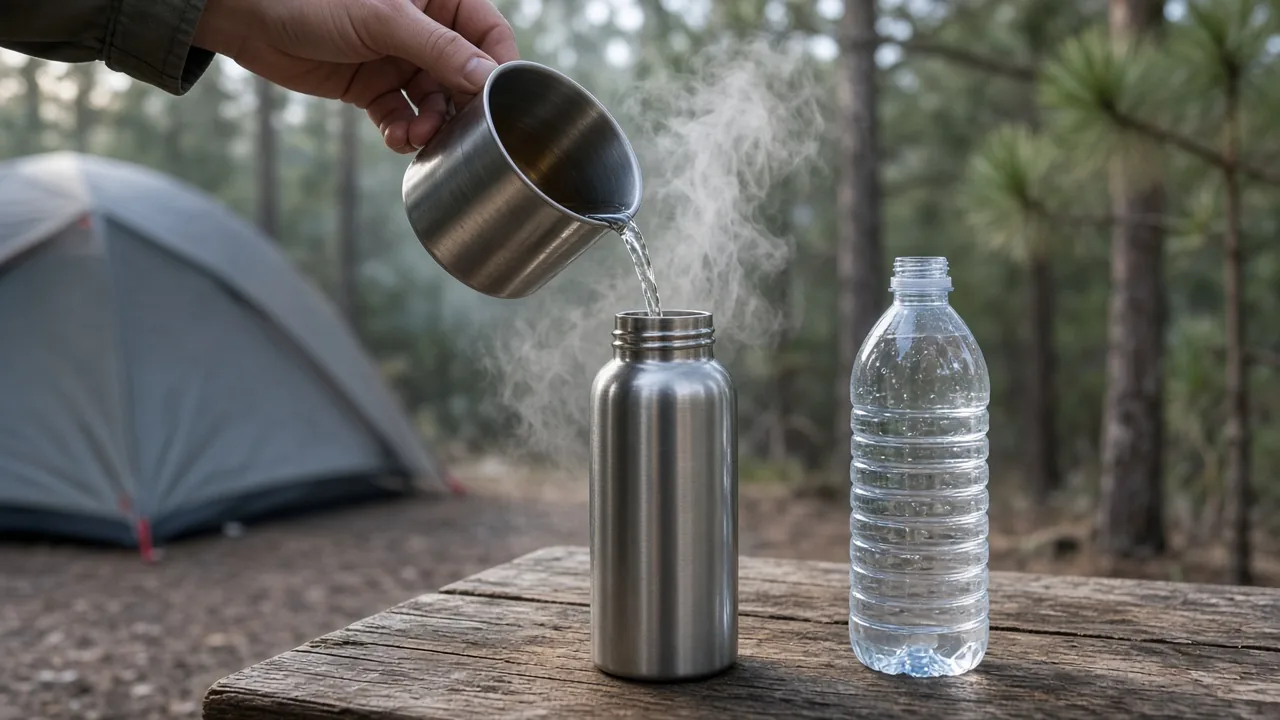
Stainless is generally the safer choice for hot fills. Hot water in a metal bottle is common: tea, coffee, or a warm bottle placed in a sleeping bag on a cold night. With plastic, the answer depends entirely on the material. Only certain plastic bottles should take boiling or near-boiling water, and you need to check the triangle code on the bottom before you pour.
A bottle that cannot handle the heat will soften, deform, or leach compounds into the water. That makes the bottom code the first thing to read if you plan to use a plastic bottle for hot drinks or winter warmth.
Plastic Bottle Codes That Matter for Camp Hot Water
Turn the bottle over and look for the triangle with a number. A number 1 PET bottle can deform with hot water and may release harmful substances, so keep it away from anything close to boiling. A number 2 HDPE bottle is not a good reusable camping bottle because it is hard to clean and can harbor bacteria. A number 5 PP bottle can handle near-boiling water and can be reused, making it the plastic option for hot fills.
A number 7 bottle is a catch-all category. It is only safe for hot water if the bottom clearly says BPA free. Without that marking, treat it as cold-water only.
Watch the Lid, Not Just the Bottle
Even if the bottle body is PP, the cap may be a different material. Some PP bottles ship with caps that cannot take the same heat. Check the cap as carefully as the body, or swap in a cap you have confirmed is PP. After filling with hot water, keep the bottle upright instead of laying it flat so the hot water stays away from the cap seal.
Seeing Water Level, Measuring, and Low-Maintenance Living
A clear Nalgene lets you see how much water is left, what color the contents are, and whether you mixed your drink correctly. That matters when you need to measure 8 or 16 ounces for a camp recipe, or when you are paired with a water filter and want to watch the output. Stainless steel hides the level, so you either shake the bottle or open it to check.
For cooking and filtering, transparency is a real utility. A clear bottle doubles as a measuring cup, which saves weight and packing space. Stainless simply cannot do that job.
Maintenance on a Camping Trip
A Nalgene can be tossed into a pack wet, left in a mesh pocket, and ignored until the next fill. It asks almost nothing of you. A stainless bottle needs more attention. If moisture sits inside after a hand wash or dishwasher cycle, the bottle can rust, especially around the weld. After washing a stainless bottle, dry it thoroughly or store it with the cap off.
When a Stainless Steel Bottle Is the Better Camping Choice
Choose stainless steel when heat is your main variable. In very hot environments, leaving a plastic bottle in a parked truck all day raises concerns about heat exposure and plastic, while a metal bottle shrugs it off. Rocky terrain that could shatter plastic also favors metal, since a dented stainless bottle usually still holds water.
Stainless is also the better choice when you want the option of hot drinks without switching containers. You can fill a metal bottle with hot tea in the morning and use the same bottle for cold water later. That flexibility matters on cold trips where a hot drink is part of the plan.
When a Nalgene Bottle Is the Better Camping Choice
Choose a Nalgene for backpacking, bike trips, or any time you need to see how much water is left. The clear body lets you monitor your drinking pace and ration water over a long dry stretch. It also pairs well with a filter, because you can watch the water level rise without unscrewing the top.
The low-maintenance nature of a Nalgene makes it ideal for trips where you are tired, dirty, and unlikely to dry anything out. Toss it in a pack, fill it from a stream, and move on. That is the whole routine.
Should You Carry Both? A Two-Bottle Camping Setup
A practical setup for many campers is one clear Nalgene for drinking and measuring, plus one stainless bottle as a backup or for hot conditions. That covers the visible-water need and the heat-tolerant need without forcing you to pick one weakness to live with. One of them can be a basic single-wall metal bottle that adds less than 2 ounces over the Nalgene.
This arrangement also gives you a spare if one bottle leaks, drops down a slope, or freezes overnight. Redundancy matters in the backcountry, and two bottles are cheaper than a failed water plan.
Skip the Bottle-in-Fire Trick
A stainless bottle can be placed over a fire in a pinch, but a nesting cup is more practical for boiling water and cooking. It keeps your bottle from getting sooty, scorched, or deformed. If you want hot water for a meal or drink, carry a metal cup that nests around the bottle. You get the same result without ruining your water container or spending time scrubbing campfire residue off it.
How to Match Your Bottle to Your Next Camping Trip
Before packing, check whether this is a car camping trip or a backpacking trip. For car camping, weight matters less, so a heavier insulated stainless bottle for cold drinks or hot coffee is easy to justify. For backpacking, every ounce counts, and a clear Nalgene or a light single-wall stainless bottle fits the goal better.
Also check the forecast. If night lows are near freezing, hot water in a stainless bottle can serve as a sleeping bag warmer, while a plastic bottle may not survive the combination of heat and cold stress. If rain is likely, a transparent bottle helps you confirm you have enough drinkable water without opening your pack in the wet. Whatever the trip, never use a stove or heater inside your tent. Carbon monoxide and fire risk make any enclosed shelter the wrong place for a fuel appliance.
Caring for a Nalgene or Stainless Bottle After the Trip
Wash either bottle with mild soap, rinse thoroughly, and let it dry. For stainless steel, dry the inside completely before storing, and leave the cap off for a day if possible. That prevents rust from forming around the weld or inside the neck.
For plastic, check the bottom code before the next time you pour hot water. A bottle that worked for cold water all summer may not be rated for heat, and materials matter more than brand names. Store bottles clean and dry, and they will be ready for the next trip.
At the end of the day, the bottle you bring depends on the trip you are taking. Check whether this is car camping or backpacking, how cold the nights will get, and whether rain is in the forecast. A clear Nalgene covers most drinking and measuring needs at the lowest weight and effort. A stainless bottle covers hot water, hot environments, and rough drops. If you often face a mix of those conditions, carry one of each and pair them with a nesting cup for hot drinks, cooking, and backup water capacity.
This article is general information about camping gear, not professional safety, medical, or wilderness training. Check fire restrictions, weather, and campsite rules before you go, and follow the manufacturer's instructions for your own equipment.
FAQ
Which is lighter for backpacking, a Nalgene or stainless steel bottle?
A standard Nalgene weighs about 6.3 ounces, while a basic single-wall stainless bottle typically weighs 0.7 to 2 ounces more. Insulated stainless bottles can weigh over 17 ounces, making them much heavier for backpacking.
Can you put hot water in a Nalgene bottle?
Only certain plastic codes can handle hot water. Check the triangle code on the bottom: number 5 PP bottles are generally safe for near-boiling water, while PET and unmarked number 7 bottles should be kept away from heat.
Does a stainless steel bottle outlast a Nalgene?
Stainless steel usually dents but keeps holding water when dropped on rock, while a Nalgene can crack on sharp impacts. However, stainless welds can rust, and a dent on an insulated bottle can break its vacuum seal.
Should I carry both a Nalgene and a stainless steel bottle when camping?
Many campers benefit from carrying one clear Nalgene for drinking and measuring plus one stainless bottle for hot water or rough conditions. This setup adds little weight if you choose a basic single-wall metal bottle.
How do I maintain a stainless steel water bottle after camping?
Wash it with mild soap, rinse thoroughly, and dry the inside completely before storing. Leave the cap off for a day if possible to prevent rust from forming around the weld or inside the neck.