Moon Chair vs Kermit Chair Camping: How to Choose
Compare moon chair vs Kermit chair camping for comfort, packability, ground stability, and back support. Learn which chair fits backpacking, motorcycle travel, or car camping.
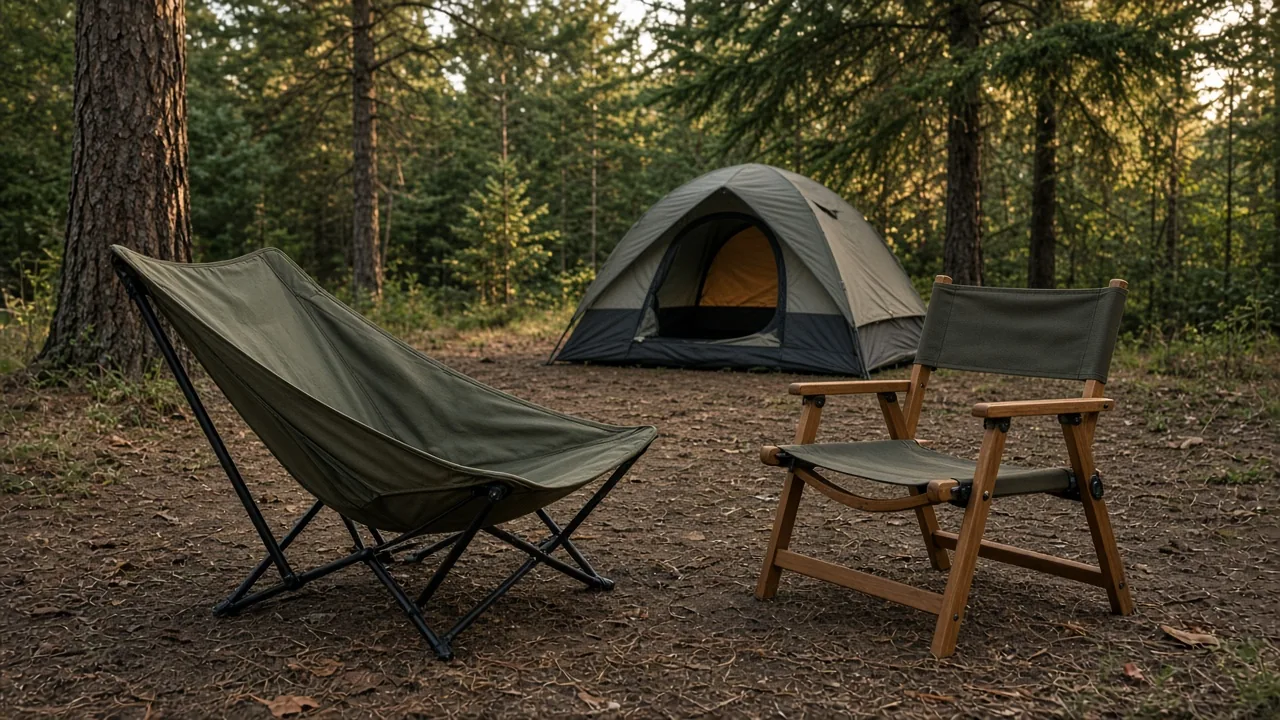
When you compare a moon chair vs Kermit chair camping, the choice usually comes down to packed size, lower-back support, and how the legs behave on soft ground. Choose a moon chair when backpacking, bicycle touring, or motorcycle luggage space makes weight and bulk your top concern. Choose a Kermit chair when car camping, long cooking sessions, or upright sitting comfort matter more. This guide breaks down comfort, packability, and ground stability so you can match the chair to the trip.
Moon Chair vs Kermit Chair Camping: Which Chair Matches Your Trip?
Start by separating backpacking or motorcycle travel from car camping. Moon chairs pack small and light, which matters when every inch of a backpack or side case counts. Kermit chairs fold flat and ride better inside a vehicle where you can stack or slide them beside other cargo.
| Feature | Moon Chair | Kermit Chair |
|---|---|---|
| Packed shape | Small tube or bundle | Flat panel or board-like shape |
| Weight | Often around the weight of one or two filled water bottles | A bit heavier than a moon chair |
| Sitting position | Reclined and wrapping | Upright and taut |
| Lower-back support | Marginal on standard models | Firmer and more consistent |
| Soft-ground stability | Legs can sink without accessory feet | Usually steadier on dirt and campsites |
| Best for | Backpacking, bike touring, motorcycle travel | Car camping, long meals, camp photos |
When a Moon Chair Makes More Sense
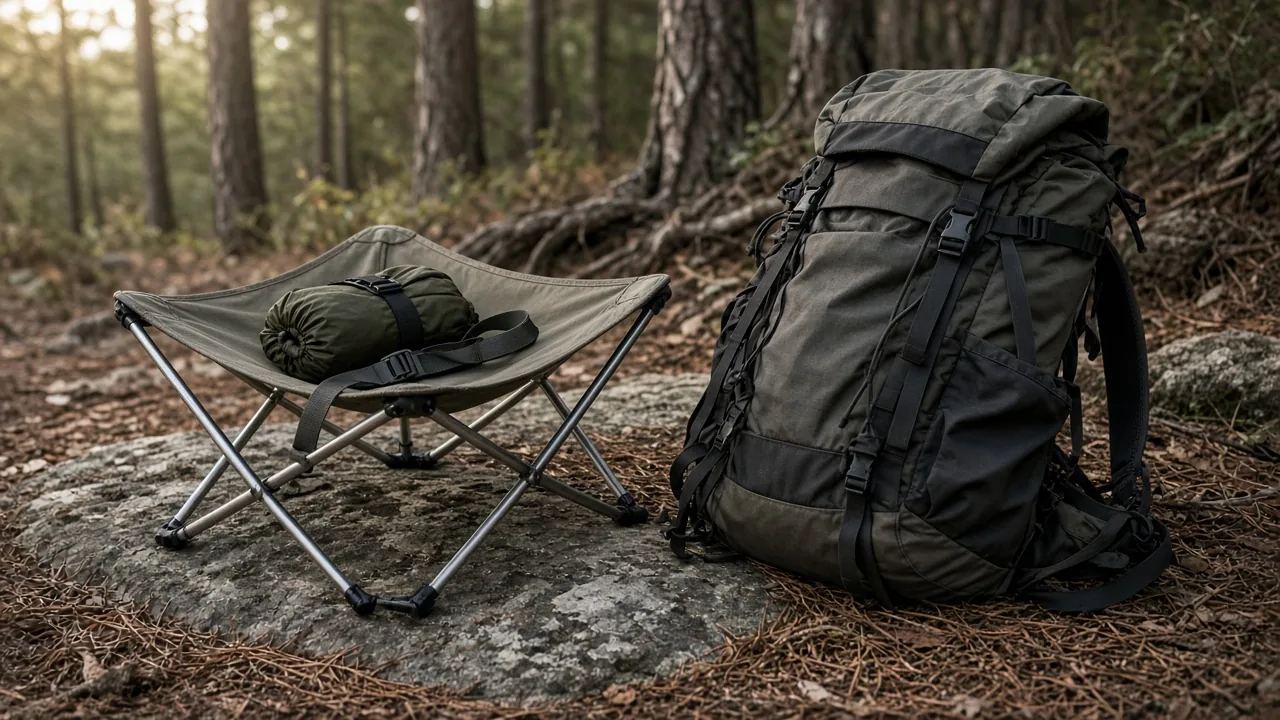
Pick a moon chair for backpacking, bicycle touring, or motorcycle luggage because its low weight and compact packed size outweigh the softer back support. A moon chair can slip into a backpack or motorcycle side case without forcing you to leave other gear behind. That is the main reason it remains popular with lightweight and two-wheel campers.
The trade-off is comfort. Standard moon chairs wrap around you, but the lumbar area often gets less support. If you want a moon chair and still need some back relief, look at high-back versions or larger models with hard tubes. Those changes add a little weight and bulk, but they improve sitting support without giving up the chair’s packability.
When a Kermit Chair Fits Better
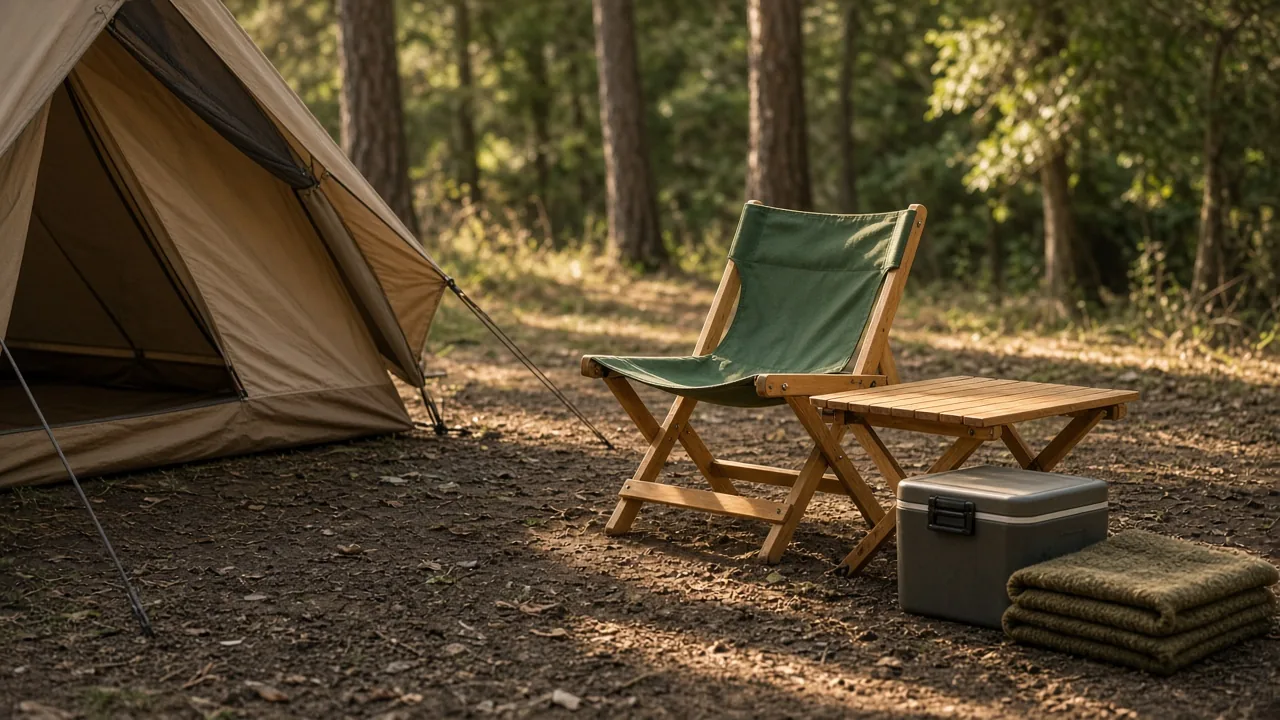
Pick a Kermit chair for car camping, long cooking sessions, or camp photos where a taut seat and stable frame beat pack compactness. A Kermit chair holds you more upright because the seat panel stays tight. That posture helps when you are cutting food, tending a stove, or sitting through a long camp dinner.
Kermit chairs also tend to look better in camp. Their flat frames and clean lines photograph well, which matters for campers who care about the visual side of a site. The main downside is packed shape. A Kermit chair folds into a flat panel, not a narrow tube, so it works best when you can slide it beside vehicle cargo or store it in a corner of a garage or car trunk.
Which Camp Chair Feels Better for Long Sitting?
Comfort differs mostly in lower-back support and sitting angle. A Kermit chair holds you more upright with tight fabric, while a moon chair wraps you but can leave the lumbar area under-supported. If you plan to sit for hours, that difference becomes obvious quickly.
Moon Chair Comfort Trade-Offs
Expect a reclined, wrapping feel that many campers like, but only marginal lumbar support unless you choose a high-back or large hard-tube version. Some campers find that reclined position comfortable for relaxing, especially when they add a footrest or use a high-back model. Others notice the lower back starts to slump after a while because the fabric does not hold the spine in a neutral position.
Standard moon chairs are best for short rests or trips where pack size matters more than all-day sitting. If you already own a moon chair and want more comfort, try a high-back model before replacing it. A larger seat with hard tubes can also reduce the feeling of being folded into the chair.
Kermit Chair Support and Posture
A Kermit chair uses a taut seat panel to keep hips, lower back, and shoulders aligned, suiting longer upright tasks like cooking or eating. The tight fabric acts more like a firm camp chair than a hammock. Many campers find that posture easier on the lower back after a long day outside.
That upright position helps when you lean forward to reach a camp table or stove. It also makes getting in and out of the chair feel more stable than sinking into a deeply reclined seat. The chair still has limits, but for sitting upright through meals or camp chores, it usually beats a standard moon chair.
How Do Moon Chairs and Kermit Chairs Handle Soft Ground?
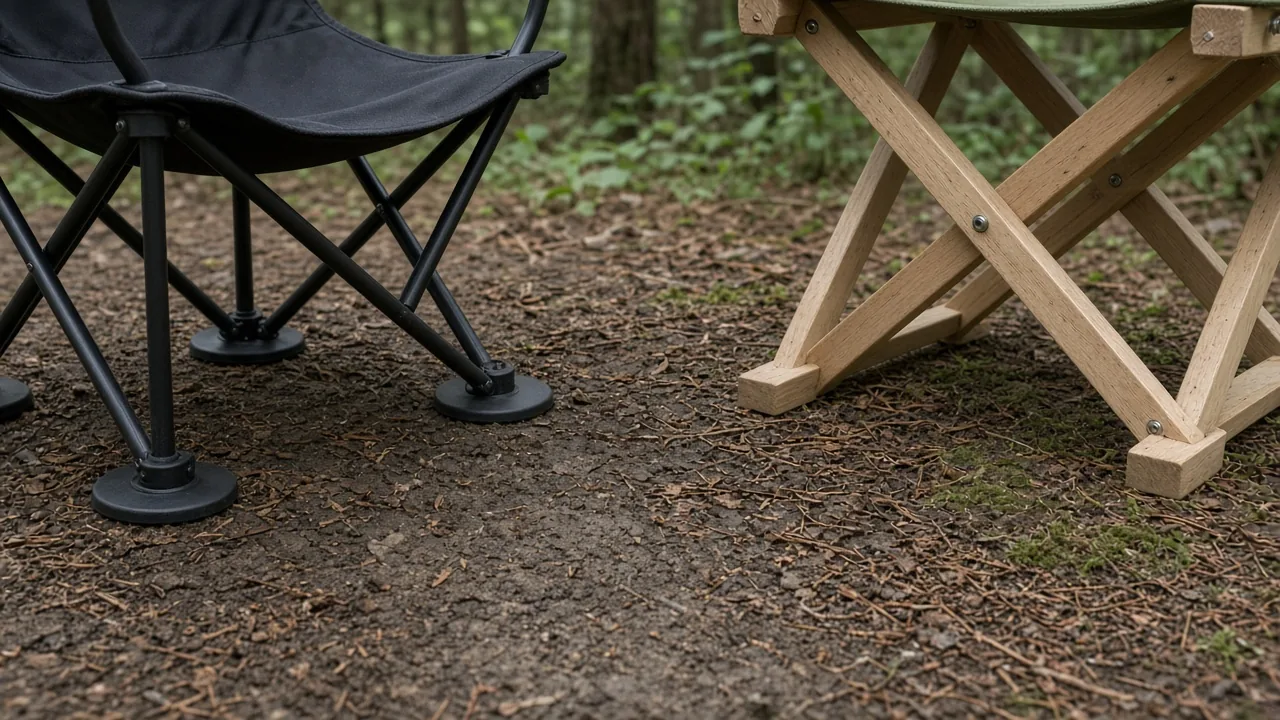
Leg design changes stability on dirt, sand, or mud. Moon chair legs can sink without accessory feet, and those feet can loosen or fall off. Kermit chairs usually sit steadier because their frames spread weight across a broader, flatter base.
Stopping Moon Chair Legs From Sinking
Add anti-sink balls or choose a large moon chair with hard tubes for loose soil, but inspect the feet before each trip because they can work loose and disappear. Anti-sink feet help on soft ground, but they are small parts that can fall off during packing or setup. Losing one turns a stable chair into a wobbly one.
For sandy or muddy campsites, a hard-tube moon chair with wider leg ends can reduce sinking. If you use accessory feet, check them when you pack, not just when you arrive. A missing foot is easy to overlook until you sit down and one leg punches into the dirt.
Kermit Chair Stability on Uneven Ground
A Kermit chair’s flat, reinforced leg frame resists sinking and side-to-side tipping better on typical campsites, though it still wants fairly level ground. The chair’s legs often have a triangle or reinforced shape, which keeps the frame from twisting when you shift your weight.
That does not mean a Kermit chair is rock solid on every slope. If the ground tilts sharply, level the spot before you set up. For small bumps and soft dirt, the flat frame usually holds better than the narrow tube legs of a moon chair.
How Packable Is Each Chair, Really?
Packed shape matters as much as weight. Moon chairs compress into a small tube or bundle, while Kermit chairs fold into a flat panel that may not fit a backpack or crowded trunk. Think about where the chair will ride, not just how much it weighs.
Moon Chair Packed Size and Weight
A moon chair weighs about one or two water bottles and can slip into a backpack or motorcycle side case, which is its biggest advantage. That small packed size lets you bring a chair on trips where you would otherwise sit on a log or a foam pad.
The catch is that the light fabric and thin frame are part of why it packs small. A standard moon chair will not give you the same support or durability as a heavier camp chair. For backpacking and motorcycle travel, that trade is usually worth it.
Kermit Chair Packed Shape and Storage
Plan around a flat folded board-like shape. It stores beside vehicle cargo well but can be awkward in a pack or small camper. You can slide a Kermit chair against the side of a trunk or behind a car seat, and it will stay out of the way.
For a backpack or bicycle pannier, that flat panel is much harder to manage. The chair does not compress into a narrow roll, so it tends to take up a wide, thin space. If you drive to camp, that is not a problem. If you carry everything on your back, it can become one.
What Body Type and Load Should You Buy For?
Fit the frame to your build and carry style. Heavier or broader campers should choose reinforced hard-tube moon chairs or Kermit chairs, and taller users should check backrest height. A chair that fits one person well may feel short or narrow for someone else.
Weight and Frame Strength
Do not rely on looks alone. Compare the maker’s weight capacity and look for hard tubes, reinforced leg joints, and a wider seat if you are a heavier camper. A thin-tube moon chair may pack small, but it can flex or sink more under a heavier load.
Kermit chairs tend to have a sturdier frame because the flat legs and taut fabric handle weight differently. Still, check the listed capacity before you buy. Some budget versions use thinner wood or lighter joints, so the design alone is not a guarantee.
Seat Height and Backrest Height
Traditional folding chairs often sit taller and have shorter backs, so match seat height and back height to how you plan to use the chair. A low chair can be hard to get out of on uneven ground. A short backrest leaves taller campers without shoulder support.
Moon chairs typically sit low and recline, which some people find hard to exit. Kermit chairs sit more upright but may have a lower back panel than a full-size camp chair. If you are tall or have knee trouble, look for a model with enough seat height for you to stand up without straining.
Troubleshooting Common Moon Chair and Kermit Chair Problems
Before each trip, check shock-corded tubes, joints, and leg feet, and never use a stove or heater inside your tent when you rearrange camp chairs for cold-weather comfort. Most chair failures happen because a small part was already loose or cracked before you left home.
Broken Shock Cord or Missing Anti-Sink Foot
If a tube’s inner shock cord breaks or a foot is lost, search the maker or camping retailers for replacement cord sets and chair foot parts instead of replacing the whole chair. Shock cord can wear out inside the frame, especially if the chair gets packed wet or stored tight. Replacement kits are usually easier to install than you expect.
Anti-sink feet are small and easy to lose. If one disappears, check the chair’s leg diameter and look for a matching replacement set. Carrying one spare foot or a small repair kit can keep you from sitting on the ground for the rest of a trip.
Chair Feels Tippy or Too Reclined
If a moon chair feels unstable or slouched, test a high-back or hard-tube model. If a Kermit chair rocks, level the ground instead of forcing the legs. Pushing a Kermit chair into uneven dirt can bend the frame or stress the joints.
For moon chairs, the reclined angle is part of the design. If that bothers your lower back, switching to a high-back version can help without moving to a completely different chair style. If the chair still tilts, check that all legs are fully seated and no foot is missing.
Final Check: Pack the Moon Chair or Kermit Chair?
Recheck whether you are car camping or backpacking, what the overnight low and rain chance are, and how much packed space you actually have, then take only the chair that fits this trip. A moon chair saves space and weight but asks you to accept less lumbar support and softer ground stability. A Kermit chair gives you a firmer, more upright seat but takes up a flat panel of storage space.
If the forecast includes rain or muddy ground, the Kermit chair’s broader leg frame may save you from a sinking mess. If you are covering miles on foot or on a motorcycle, the moon chair’s small bundle probably wins. Pair the chair with a compact camping table only if you have room, and check the ground under your tent footprint if you plan to set chairs near the tent on wet soil.
For backpacking or motorcycle trips, take a moon chair. For car camping where support and stability matter more, take a Kermit chair. Confirm the forecast and ground conditions before packing either, and leave the chair at home if the trip will not actually use it.
Camp Kit Journal
This article is general information about camping gear, not professional safety, medical, or wilderness training. Check fire restrictions, weather, and campsite rules before you go, and follow the manufacturer's instructions for your own equipment.
FAQ
Which is better for backpacking, a moon chair or Kermit chair?
A moon chair is better for backpacking because it packs smaller and lighter, often weighing about one or two filled water bottles. A Kermit chair folds into a flat panel that is harder to fit in a backpack.
Does a Kermit chair offer better lower-back support than a moon chair?
Yes. A Kermit chair uses a taut seat panel to keep hips, lower back, and shoulders aligned, while standard moon chairs often provide only marginal lumbar support.
How do moon chair legs perform on soft ground?
Moon chair legs can sink in sand or mud unless you add anti-sink feet or choose a hard-tube model. Those accessory feet can loosen or fall off, so inspect them before each trip.
What is the main downside of a Kermit chair?
Its packed shape is a flat board-like panel rather than a narrow tube. It works best for car camping or vehicle storage and can be awkward in a backpack or pannier.
Can tall or heavier campers use these chairs?
They should check the maker's weight capacity, seat height, and backrest height. Heavier or broader campers may prefer reinforced hard-tube moon chairs or Kermit chairs, while taller users should look for enough back support.