Minimum Down Fill Weight for Camping Sleeping Bag: Warm Enough?
A cheap down sleeping bag can be warm enough only when fill weight, fill power, and comfort rating match your lowest expected nighttime temperature. Here’s how to spot underfilled bags and choose the right down fill for car camping or backpacking.
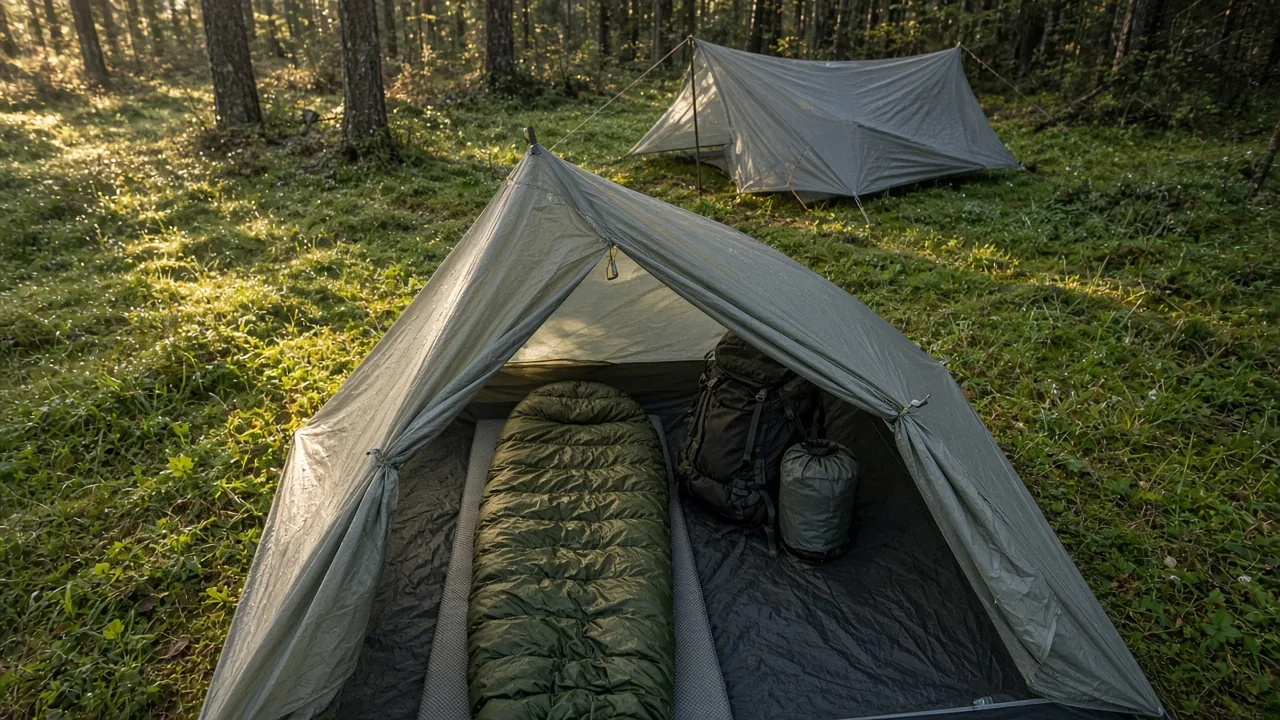
A cheap down sleeping bag can work for occasional dry car camping, but it is warm enough only when the fill weight or loft matches the lowest nighttime temperature you expect. There is no single minimum down fill weight for camping sleeping bag that fits every trip. Underfilled bags lose heat in the shoulders, hips, and feet first, so judge warmth by fill weight, fill power, and comfort rating rather than price alone. If you see a puffy-looking bag with no fill specs, assume you will need extra clothing or a liner to stay comfortable.
What Makes a Down Sleeping Bag Warm Enough?
Down insulation works by trapping air in tiny pockets. The more loft a bag holds, the more dead air it keeps around your body. A bag with strong loft or higher fill power can use less total down weight to reach the same warmth. A cheap bag with weak or unspecified loft often needs much more fill weight just to fill the gaps between baffles.
Comfort Rating vs. Limit Rating
When you see a number on a sleeping bag, check whether it is a comfort rating or a limit rating. The comfort rating is the temperature at which a cold sleeper can stay reasonably warm in a curled position. The limit rating is usually colder and describes survival or borderline conditions, not a good night’s sleep. Match your expected overnight low to the comfort rating, not the limit rating. One shoulder-season setup used a 700 g fill bag rated at 27°F comfort and kept a tester warm at 46°F, which shows how much margin a comfort rating can leave.
Why Fill Power Changes the Math
Fill power is the volume one ounce of down can loft, often shown as 650 FP, 800 FP, and so on. A 650 FP bag with 1.5 lb of down can be light enough for backpacking and warm in the right conditions. An unrated cheap bag has no fill-power claim, so you cannot tell whether 2 lb of down is mostly useful loft or mostly feathers and broken fiber. For those bags, total weight becomes the only rough guide, which is why cheap no-FP bags tend to be heavy.
What Is the Minimum Down Fill Weight for Camping Sleeping Bag?
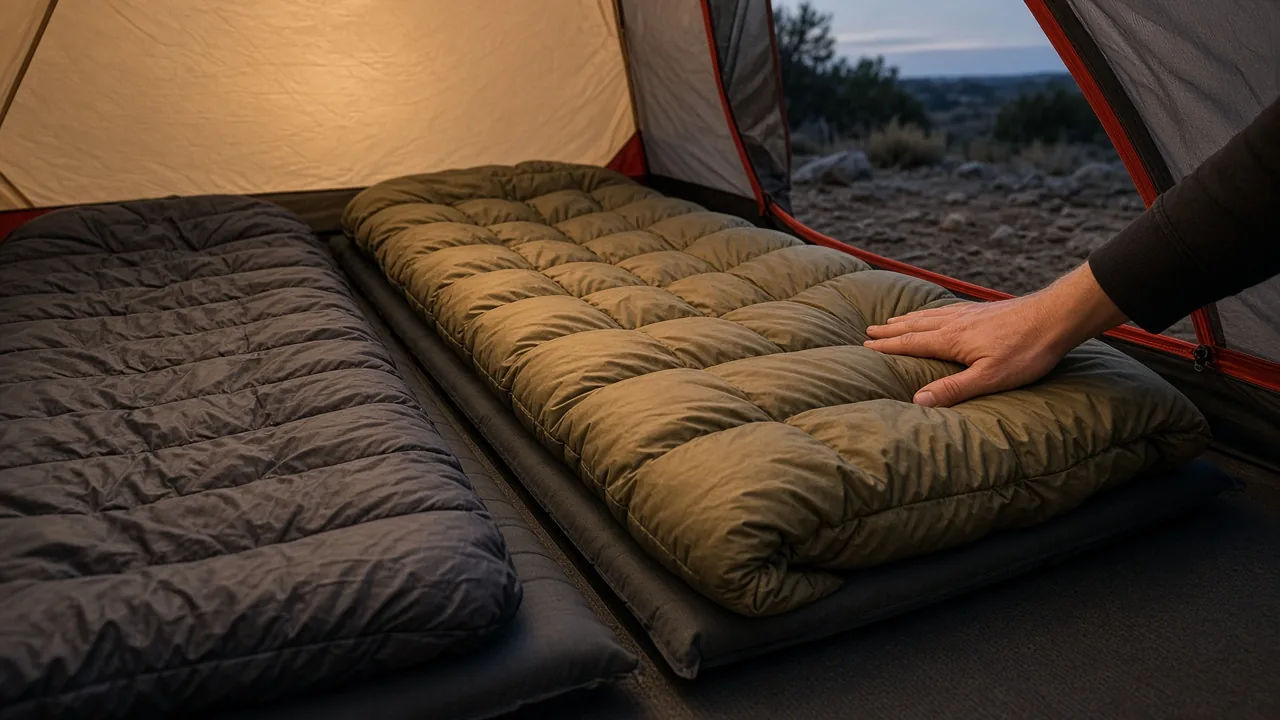
There is no universal number that works for every sleeper or every trip. However, for cheap bags that do not state fill power, a rough single-person starting point is about 4.4 lb total weight, and a double bag should be around 8.8 lb. Those figures come from the observation that lighter cheap bags often leave thin spots or cold spots. They are not a temperature rating. They are a way to avoid buying a bag that is obviously underfilled.
Cheap Bags Without a Fill-Power Claim
If a bag lists only total weight, treat 4.4 lb for a single bag as a minimum for car camping. That does not guarantee warmth below freezing. One reader found a 3.3 lb cheap down bag inadequate on cool nights, with the down shifting and leaving the sides and middle thin. A 4.4 lb bag is still no substitute for a stated fill weight and fill power, but it gives you a more realistic starting point than a 2 lb bargain bag.
For double bags, the same logic applies but with more risk. A 6 lb double down bag can look generous online and still sleep cold because the down migrates away from the center. Some campers have tried adding stitched baffles later, but that does not always fix poor distribution. Starting with enough total fill is cheaper than trying to repair a thin bag after a cold night.
Quality Bags with Stated Fill Weight
With a stated fill weight and fill power, you can actually match the bag to conditions. Common fill options include 0.88 lb, 1.5 lb, 2.2 lb, and 3.3 lb of down. A 1.5 lb fill at 650 FP can suit shoulder-season use for many car campers and some backpackers when paired with a warm pad. Larger options like 2.2 lb and 3.3 lb make sense for colder nights or when you sleep cold. A labeled 90% down and 650 FP construction also tells you the down has been processed enough to trap air efficiently.
Check the shell material and baffle design too. A 20D shell with a DWR finish and baffled construction helps keep down in place and resists light moisture. A mummy shape with good draft tubes uses the fill more efficiently than a rectangular bag of the same weight. If you are tall or share the bag with a child, look at the cut and length before deciding whether a given fill weight will be sufficient.
How to Spot an Underfilled or Misleading Down Bag
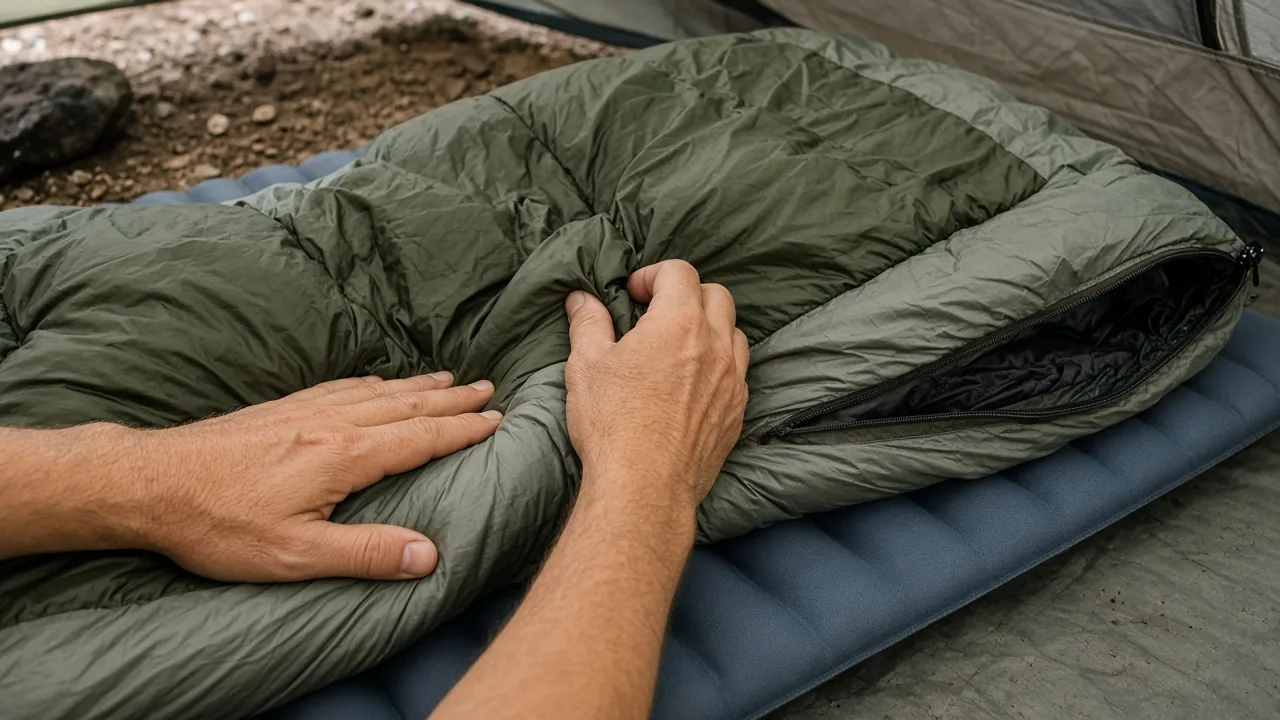
Some online listings use phrases like “inventory” or “export overrun” to explain low prices. In practice, those claims are unreliable. Mainstream sleeping bag inventory has been tight in recent years, so widespread “export overrun” down bags are almost all imitation or brand-adjacent products. That does not automatically make them useless, but it means you should judge them only by practical specs, not by the label.
Red Flags in the Listing
Missing fill power is the biggest warning sign. Missing fill weight is a close second. Vague brand stories, no temperature rating, and very high total weights without loft data often point to a bag that may look fluffy in photos but sleep cold. If the listing tells you the bag weighs 6 lb but never says how much down is inside, you are buying mostly shell and unknown fill.
A useful cheap bag should still tell you enough to estimate whether it will hold loft around your body overnight. Look for specific claims such as fill weight in ounces, fill power, or a comfort temperature rating. If none of those are present, treat the bag as a gamble. It might work for warm-weather car camping with extra blankets, but it is not a reliable piece of shoulder-season or cold-weather gear.
Pros and Cons of Cheap Down Bags
Cheap down bags can work if you camp occasionally, stay in dry conditions, and drive to the site. The trade-off is that they are often heavy, bulky, less durable, and prone to leaking down. They also tend to lose loft faster because the shell fabric and construction are not built for repeated compression. For occasional car camping in mild weather, that trade-off may be fine. For wet trips or regular use, a cheap down bag becomes a poor value even if the price looks low.
One practical advantage is the low initial cost. If you only need a bag for one or two summer trips, a heavy no-FP bag may keep you warm enough when paired with a good pad and dry clothing. Just do not expect it to pack small or survive years of hard use. The savings are less impressive if you later replace the bag because it sleeps cold or leaks down every morning.
When Cheap Down Is a Bad Choice
Down loses much of its insulating value when it becomes damp. If you expect rain, wet ground, or heavy tent condensation, cheap down can leave you cold even when temperatures are not extreme. Synthetic insulation keeps more of its warmth when wet, which makes synthetic bags a safer choice for wet-weather camping unless you are willing to protect the down carefully.
Wet Weather and Condensation
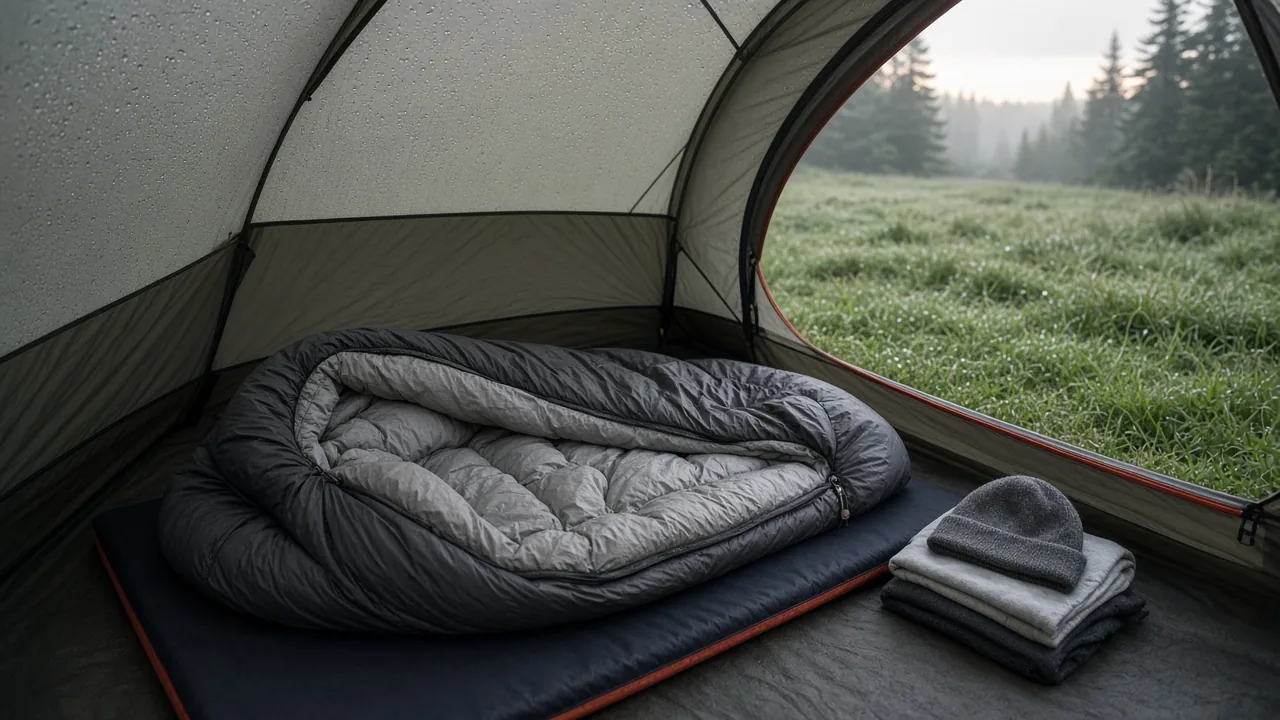
A down bag in a single-wall tent on a humid night can absorb moisture from your breath and the air. The shell may have a DWR finish, but that is not a complete barrier. Treated water-resistant down and a DWR shell help, but they do not make a bag suitable for every wet condition. If rain or condensation is likely, carry a synthetic bag or keep a lightweight synthetic quilt as a backup.
Some campers extend warmth by placing an emergency blanket inside or outside a bag, but that does not solve the problem of soaked down. Once down clumps and loses loft, you need to dry it thoroughly before it insulates properly again. In the backcountry, that can take all day or longer. For trips where wet weather is likely, a synthetic bag is the more forgiving choice.
Car Camping vs. Backpacking
A 4.4 lb cheap bag may be fine in the car, where packed size and weight do not matter much. Backpackers should pay much more attention to fill weight, fill power, total weight, and packed volume. A heavy, bulky cheap bag can hog space in a backpack and add pounds to a long approach. If you are hiking more than a few miles, a bag with a stated fill weight and higher fill power is worth the extra cost because it reduces both weight and pack size.
Car campers who occasionally sleep in tents can use heavy cotton or canvas-shell down bags without worrying about grams. Backpackers need a bag that compresses into a stuff sack and leaves room for food, shelter, and clothing. The same 4.4 lb cheap bag that works on a cot may be a frustrating load on a three-day hike. Match the bag to the trip, not just the temperature.
How to Match Fill Weight to Temperature and Trip Type
Use the table below to compare three common paths: a heavy no-FP cheap down bag, a quality 1.5 lb fill 650 FP down bag, and a synthetic bag for wet conditions.
| Option | Total Weight | Fill Weight | Temperature Guidance | Water Resistance | Car Camping Fit | Backpacking Fit |
|---|---|---|---|---|---|---|
| Cheap no-FP down bag | Often 4.4 lb or more for single; 8.8 lb for double | Not stated | No dependable rating; expect cool-weather use only and add layers | Shell likely not waterproof; down loses warmth when damp | Good for occasional dry car camping | Poor; bulky and heavy |
| Quality 650 FP down bag, 1.5 lb fill | Around 2.4 lb | 1.5 lb | Comfort about 27°F; works well at 40–50°F lows | DWR shell and water-resistant down help but not wet-weather proof | Excellent | Good if packed carefully |
| Synthetic rectangular or mummy bag | Generally heavier and bulkier than down for same warmth | Not applicable | Choose comfort rating for your expected low, not limit rating | Insulates better when damp | Good for wet car camping | Fair to poor for long hikes because of packed size |
Warm and Mild Nights
In warm conditions, thick down can overheat. A child-size down bag rated for 50°F and up was comfortable at first during a 70°F night but became too hot after a few hours because the bottom did not have a full-length zipper for venting. If nighttime lows stay warm, choose a lighter fill or a bag with a full-length or two-way zipper. That gives you a way to dump heat without climbing out.
For summer car camping, a rectangular bag with a full-length zipper is often more useful than a mummy bag. You can open it flat as a quilt, or vent the footbox when your feet get hot. The extra fabric weight matters less when you are not carrying the bag far. For warm nights, a cheap but adequately filled down bag may be overkill if it traps too much heat and has no venting path.
Cold and Freezing Nights
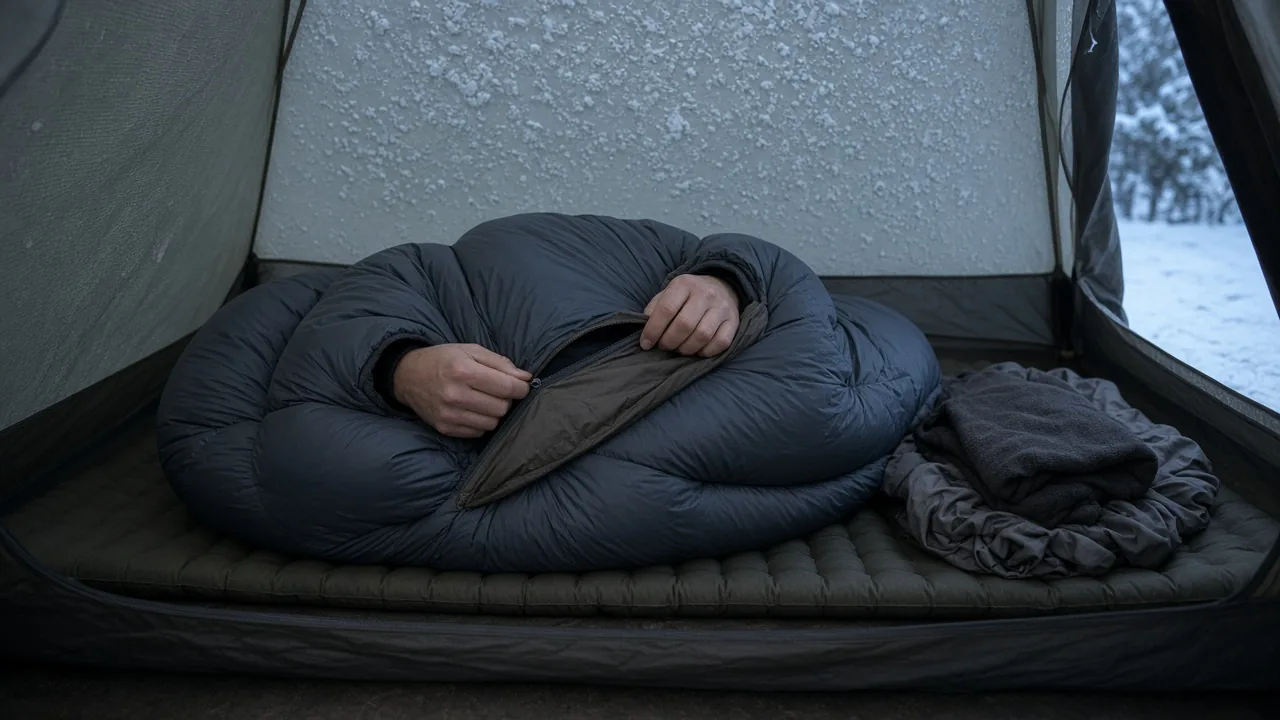
Before adding more down, improve the surface under you. A warm sleeping pad does a lot of work because compressed down under your hips and shoulders has almost no loft. Wear dry baselayers, use a liner, and keep the bag fully fluffed. Those changes can shift comfort as much as adding several ounces of fill. If you still sleep cold, choose the next higher fill weight option or a lower temperature rating.
Some campers place an emergency blanket under or over the bag to reflect heat on cold nights. This can add a few degrees of comfort, but it is not a replacement for a properly rated bag and pad. If you know the overnight low will approach freezing, choose a bag with a comfort rating at least 10°F below that number, then add a warm pad. That margin covers cold ground, damp air, and the normal drop in loft after several nights of use.
How to Set Up, Vent, and Care for a Down Sleeping Bag
A down bag arrives compressed. Shake it out before use so the down can expand and fill the baffles. Do this early in the evening, not after you already feel cold. Fluff the bag by patting the footbox and torso until it looks evenly puffy rather than flat.
Zipper Venting and Fit
Look for dual or two-way zippers. They let you open the bottom of the bag to cool your feet while keeping your chest covered. A bag without a full-length zipper can trap too much heat on mild nights and is harder to vent. If you sleep warm, a roomier rectangular bag with a full-length zipper may be more comfortable than a tight mummy bag, even if it weighs a little more.
Draft tubes behind the zipper also matter in cold weather. They stop cold air from sneaking through the zipper coils. A bag with both a top and bottom zipper works well when you need to adjust temperature after midnight. Closing the zipper from the inside can be easier with two sliders, especially when you are trying not to wake a tentmate.
Storage and Packing
Avoid storing a down bag compressed for months. Long-term compression crushes the down and reduces loft over time. For trips, close the zipper, roll from the head end to the foot end, and press out air as you go. This method makes it easier to fit the bag into its stuff sack without fighting the fabric. Once home, store it loose in a larger mesh or cotton sack.
If the bag gets damp during a trip, air it out before packing it away. Even a few hours of direct sun helps restore loft and drive out moisture. Never put a down bag away wet if you can avoid it. The next time you pull it out, it may smell musty or feel flat, and that is a sign the fill has been damaged by trapped moisture.
Choose your sleeping bag by the conditions you will actually face, not by the lowest sale price. Check whether you are car camping or backpacking, note the expected nighttime low, and look at the rain forecast before you pack. Carry a bag with enough fill weight for those conditions, and pair it with a warm pad. Never use a stove or heater inside your tent. If the weather turns colder or wetter than expected, add dry layers and reassess the next morning.
— Camp Kit Journal
This article is general information about camping gear, not professional safety, medical, or wilderness training. Check fire restrictions, weather, and campsite rules before you go, and follow the manufacturer's instructions for your own equipment.
FAQ
Is there a single minimum down fill weight for camping sleeping bags?
No. The right minimum depends on the overnight low, fill power, and whether the rating is comfort or limit. For cheap bags without a fill-power claim, a rough starting point is about 4.4 lb total weight for a single bag and 8.8 lb for a double bag.
What is the difference between a comfort rating and a limit rating on a sleeping bag?
A comfort rating is the temperature at which a cold sleeper can stay reasonably warm in a curled position. A limit rating is usually colder and describes borderline survival conditions, so match your expected overnight low to the comfort rating.
How much down fill weight do I need for shoulder-season car camping?
A 1.5 lb fill weight at 650 fill power can suit shoulder-season use for many car campers and some backpackers when paired with a warm pad. Colder nights or cold sleepers may need 2.2 lb or 3.3 lb of down.
Why are cheap down bags without a fill-power claim risky?
Missing fill power and fill weight make it impossible to know whether the down is useful loft or mostly feathers and broken fiber. Total weight becomes the only rough guide, so these bags tend to be heavy and may sleep cold.
When should I choose a synthetic sleeping bag instead of a down one?
Choose synthetic insulation when rain, wet ground, or heavy tent condensation is likely. Down loses much of its insulating value when damp, while synthetic insulation keeps more of its warmth when wet.