How to Build a Minimalist Backpacking First Aid Kit
A minimalist backpacking first aid kit is a deliberate, trip-specific list built around training, route, and likely injuries. Learn how to choose low-weight supplies and backup items without overpacking.
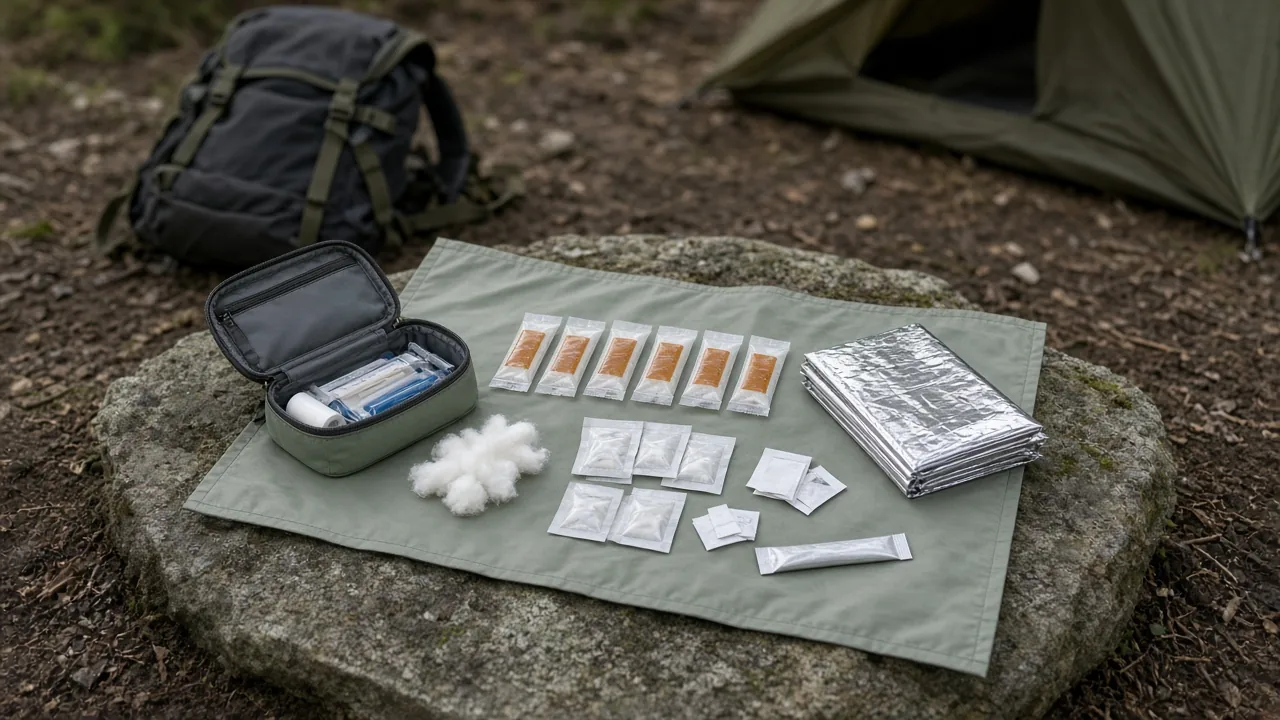
A minimalist backpacking first aid kit is not a smaller bag stuffed with the same old supplies. It's a short, deliberate list built around your training, your route, and the injuries you're actually likely to face. You'll learn to match supplies to trip risk, treat the most common backcountry problems with low-weight tools, and use knowledge as your base layer. Start with a small pouch, a few essential medications, and first aid training. Then add only what the trip genuinely requires.
Step 1: Match Your Kit to Trip Risk, Not Pack Size
A common mistake is shaving down a store-bought kit until it fits a sandwich bag. That's still the wrong approach. The right question is how far you'll be from help and what the weather could do before you reach it. A weekend car camper parked near a ranger station and a long-distance backpacker crossing a remote pass face different problems, and their kits should reflect that.
Weather matters as much as distance. Cold rain, wind, and nighttime temperature drops can turn a minor delay into a stability problem. If your route has exposed stretches and unreliable cell service, a few backup items earn their place. If you're camping within sight of your vehicle, you can rely more on the car as a shelter and supply source.
Training matters more than either factor. The better you can recognize a problem early, the fewer redundancies you need to carry. A person who knows how to clean, dress, and monitor a wound needs fewer wipes, bandages, and spares than someone working from guesswork.
List personal needs first
Before buying general supplies, review your allergies, prescription medications, and past injuries. Someone with a known bee allergy or a history of blisters packs differently than a first-time overnighter. Your kit should reflect your body, not someone else's checklist.
If you take a daily medication, pack enough for the trip plus a small buffer in case of delays. If you've had a previous reaction to adhesive bandages or tape, that changes your wound care choices. If you know a certain knee starts aching after long descents, a small roll of kinesiology tape may be more useful than extra bandages.
Personal history also includes past problems like severe diarrhea or facial swelling. These incidents are data. They tell you which medications deserve a permanent place in your kit and which ones you can leave at home.
Use first aid training as the base layer
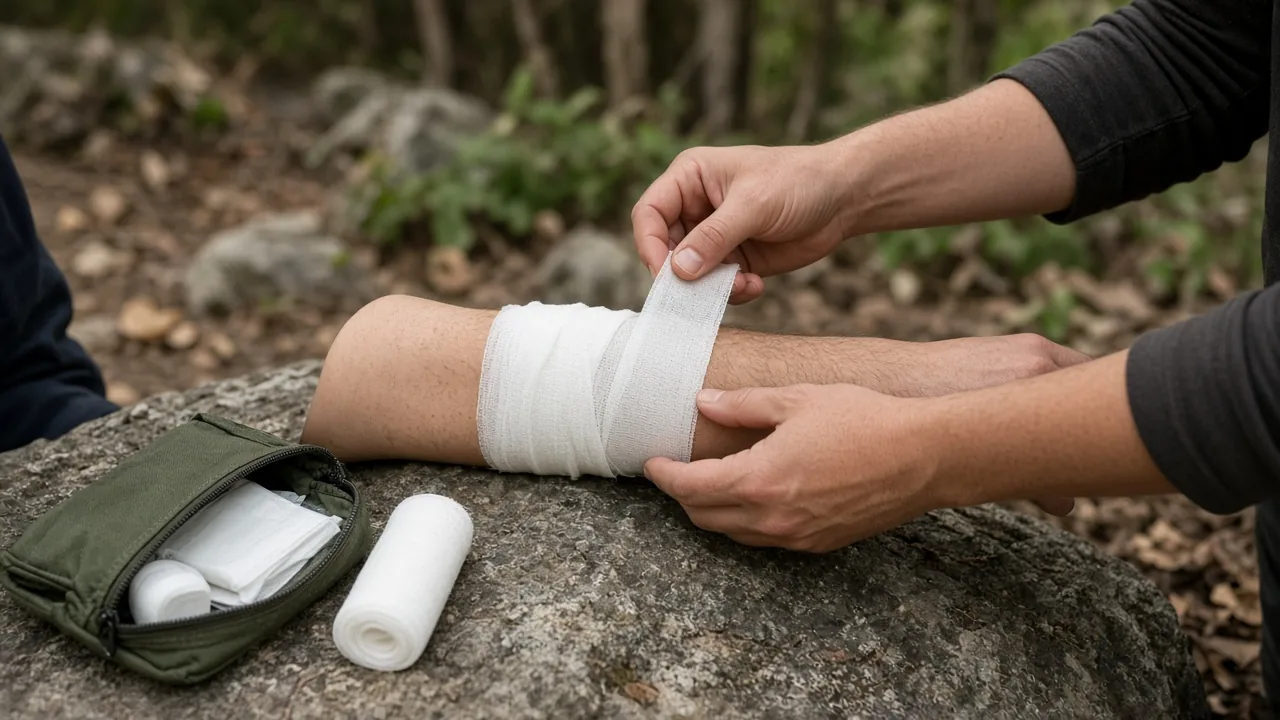
A first aid course does more than teach you how to wrap a sprain. It teaches you to recognize problems early, when they're smaller and easier to manage. That skill shrinks a kit more than any product swap. You stop carrying items for vague "just in case" fears and start carrying tools for problems you can actually identify.
Training also helps you stay calm. A person who has practiced wound cleaning, bandaging, and patient assessment is less likely to panic and less likely to overpack out of anxiety. Several experienced backpackers have noted that the more they learned about first aid, the simpler their kits became.
Before a long trip, take a wilderness first aid course or refresh your CPR and basic first aid skills. Then build your kit around what you know how to use. Carrying a tool you cannot use correctly adds weight without adding safety.
Step 2: Cover Blisters, Burns, and Small Wounds First
The most common backcountry injuries are not dramatic. Blisters, minor burns, and small cuts account for most of what actually happens on trail. These problems are also the easiest to treat well with a few low-weight items. By covering them first, you address the most likely scenarios without adding bulk.
Friction, heat, and small wounds share a common need: keep the area clean, reduce further damage, and let the body heal. That doesn't require a full pharmacy. It requires a few well-chosen supplies and the knowledge to use them.
Control blisters without relying on adhesive
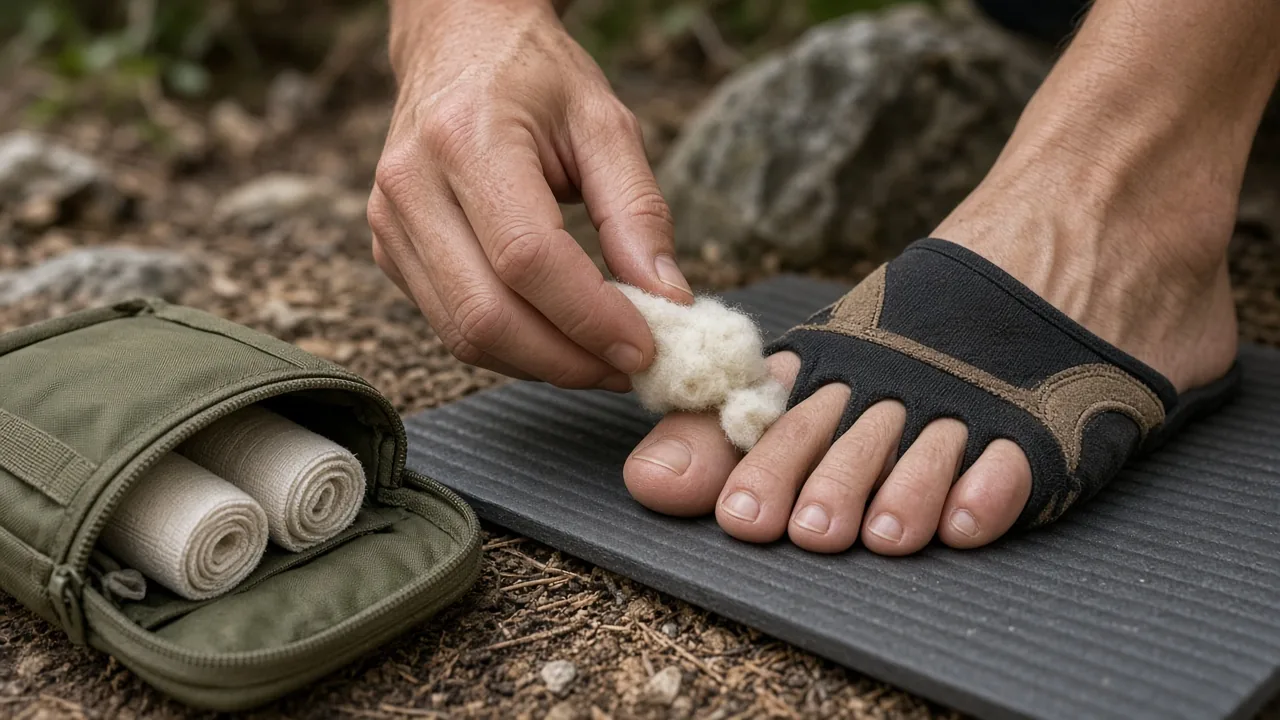
Blisters are the most common backpacking injury, and they can change your stride enough to cause problems elsewhere. A painful blister forces you to favor one side, which can stress the other foot, knee, or hip. Preventing them is better than treating them, and the best prevention is not always another adhesive bandage.
Blister wool is a low-tech option that reduces friction in high-rub zones like between toes. It doesn't rely on adhesive, so it avoids the skin irritation and damage that some tapes cause. It can also be tucked into the arch of a shoe for temporary support until you can reach town and adjust your footwear.
Toe socks are another non-adhesive option. One long-distance hiker found them helpful for reducing lateral toe blisters on a desert route. If you plan to carry leukotape or similar adhesive tape, patch-test it before a long trip. Some people react to the adhesive, and discovering that reaction in the backcountry is worse than leaving the tape at home.
Treat burns with a very small dressing
Camp-stove spills and boiling water are common sources of burns at camp. A small burn can still end a trip if it's not covered properly. You don't need a large burn kit, but a couple of low-weight items can make a real difference.
A hydrogel burn pad and a small dressing together weigh about 5.5 grams. That's a tiny addition for a problem that's relatively likely when you're cooking on a camp stove. The pad cools and protects the burn while you decide whether you can continue or need to seek help.
Prevention still comes first. Never use a stove or heater inside your tent. Carbon monoxide builds up quickly in enclosed spaces, and fire risk is high. Cook outside, set the stove on a stable surface, and keep boiling water away from high-traffic areas.
Clean and cover minor wounds with single-use supplies
Small cuts and scrapes need cleaning more than anything else. Individually wrapped iodine swabs are cleaner and more space-efficient than a bulky bottle. You can carry exactly what you need and avoid contaminating the rest of the kit.
A small single-use antibiotic ointment packet works for cuts, blisters that have opened, and minor infections. It's far lighter than a full tube and does the same job for a trip of a few days. If a wound shows spreading redness, swelling, or heat, stop and seek medical help rather than trying to manage it with a tiny kit.
Step 3: Pack a Minimalist Backpacking First Aid Kit Medication Set
Medications are where kits tend to bloat. People pack a broad pharmacy list because each item seems small, but together they add up. A minimalist approach means choosing medications that match the most likely trail problems: gastrointestinal trouble, allergic reactions, and pain that could stop you from walking out.
Each drug should earn its weight. If you wouldn't use it for a specific, realistic problem on this trip, leave it out. A few well-chosen medications cover more ground than a dozen partial options.
Stop diarrhea before dehydration occurs
Severe diarrhea on trail is not just unpleasant. It can lead to dehydration and weakness, which then makes it harder for you to reach help. One backpacker learned this the hard way during a food poisoning episode on a long trail without loperamide. The lesson stuck.
Loperamide is the practical tool for that situation. It slows the gut long enough for you to rehydrate and keep moving toward the next road or town. Pair it with electrolyte powder, which is extremely light and replaces what you lose through repeated bouts of illness. Plain water alone doesn't restore that balance.
This pairing is small, cheap, and addresses a problem that can otherwise strand you. For most backpackers, it's one of the highest-value additions to a minimalist kit.
Match allergy treatment to your exposure level
Allergic reactions range from mild sneezing to life-threatening swelling. Your medication should match your risk. For mild reactions, an antihistamine may be enough. For known or unknown bee and insect allergies, you may need more.
Some doctors recommend combining an H1 blocker and an H2 blocker for stronger antihistamine coverage than either provides alone. That approach is worth discussing with your own doctor if you have moderate allergy concerns. For severe reactions, you may need an EpiPen.
An EpiPen is only useful if you know when and how to use it, and it needs protection from extreme heat and cold. A temperature sleeve helps in hot or freezing conditions. Remember that using an EpiPen is not the end of care. You still need medical help as soon as possible, because severe reactions can return after the dose wears off.
Use pain medicine only when it keeps you functional
Ibuprofen handles pain, inflammation, and fever. A hiker with a swollen knee or a pounding headache may need it to continue walking safely. Without it, the same person might be stuck in place or moving badly enough to cause another injury.
The principle is "rarely used, but useful when needed." Pack a tiny, stated-use supply rather than a full bottle you never open. If pain is severe enough that you're taking it constantly just to keep going, that's a signal to reassess your plan, not to ration a bigger bottle.
Step 4: Add the Heavy-Weather and No-Cell-Service Backup Layer
Some items don't treat wounds, but they keep you stable long enough to get help. These are not optional extras. They belong in the kit because they cover the situations where bandages and pills cannot do anything. Think of this as the layer you use when the problem is bigger than a blister or a headache.
Carry an emergency blanket for sudden cold
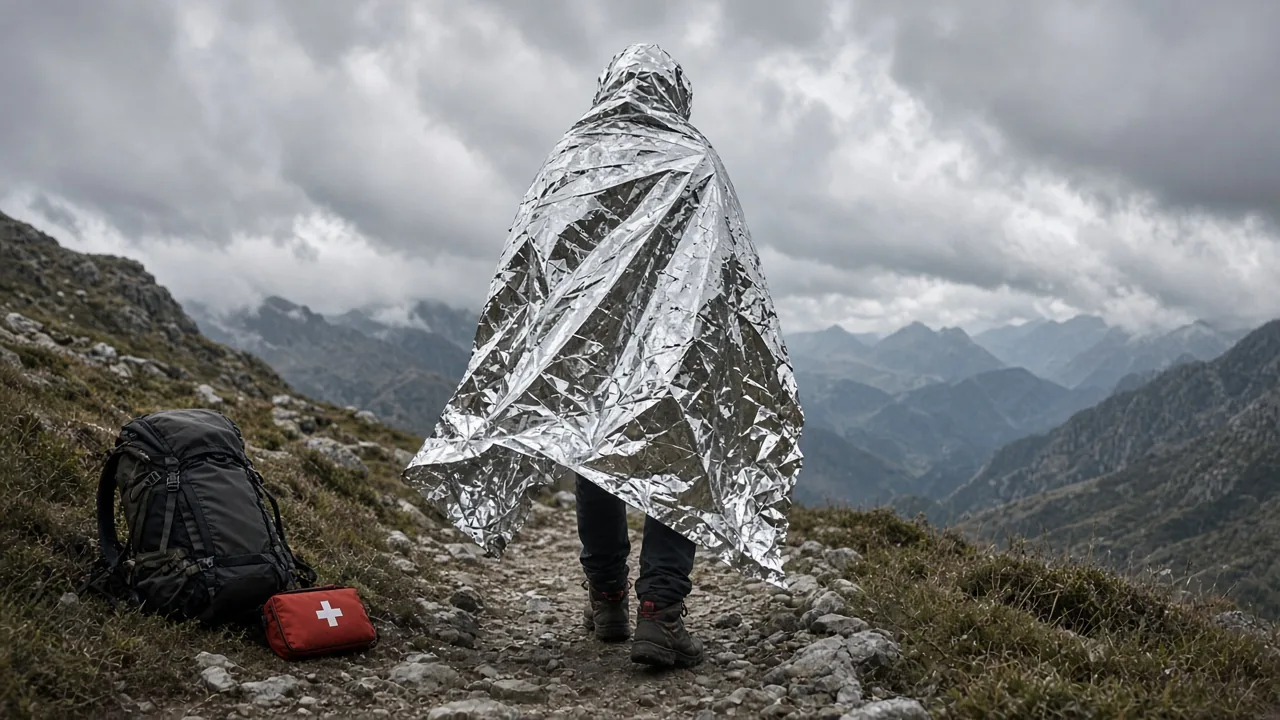
A lightweight emergency blanket goes on fast when wind, rain, or nighttime temperatures push you toward hypothermia on an exposed stretch. It reflects body heat and blocks wind better than a wet shirt or an unprotected huddle. It's a small, flat item that belongs in every backpacking kit.
Hypothermia can develop in temperatures well above freezing, especially when you're wet and tired. The emergency blanket doesn't replace proper layers, but it buys time while you get into shelter or wait for help. In heavy weather, a few extra ounces can be the difference between stable and dangerously cold.
Use a satellite messenger as the ultimate backup
A satellite messenger like an inReach covers situations your bandages and pills cannot handle. When you're alone, far from cell service, and facing a cardiac issue, a severe allergic reaction, or a broken bone, the ability to send an SOS is the most important tool you carry.
One hiker had an inReach on a remote Idaho trail when a heart rhythm problem developed. Without it, getting help would have taken much longer. Another reader has pressed SOS twice for other people, not for himself. That's an important point: tell your emergency contact that an SOS may mean you're assisting someone else, not that you're in immediate danger.
Pack a needle or blade with a dual purpose
A needle can drain a blister in the field if you disinfect it first with a flame and a sterile wipe. That's a small but valuable skill for long trips. The same needle can serve as a gear-repair tool, sewing a torn strap or strap buckle back together.
By choosing items with two uses, you reduce total item count. A needle plus a small length of thread weighs almost nothing and covers both medical and gear emergencies. Just keep it clean and sealed until you need it.
Troubleshooting a Minimalist Backpacking First Aid Kit
Common questions come down to balancing coverage and weight. Here's how to decide when a small kit is enough and when a larger or different item is justified.
How much should I carry?
The answer depends more on your training and distance from help than on a fixed list. The more you know, the fewer redundant supplies you need. A trained person can do more with less, while an untrained person may need more supplies to compensate for uncertainty.
For a short trip near a trailhead, a small kit with blister care, a few medications, and a way to call for help may be enough. For a remote route with multiple nights and no cell service, add the emergency blanket and satellite messenger. Match the kit to the trip, not to a generic idea of "preparedness."
What if adhesive bandages irritate my skin?
Switch to non-adhesive options like blister wool or a liquid bandage after a patch test. Blister wool reduces friction without adhesive, and liquid bandages can seal a small wound without pulling on the skin. If a wound shows spreading redness, warmth, or any sign of infection, don't try to manage it alone. Get medical help.
Some people also react to leukotape or medical tape. Test any adhesive product on a small patch of skin before relying on it in the backcountry. An allergic reaction at home is an inconvenience; the same reaction on a multi-day trip is a problem.
Do I really need a satellite device if I'm only out for one night?
For car camping near cell service, maybe not. You're close to your vehicle, and help is usually a short drive away. But for backpacking where no one can see you and your phone has no signal, a small satellite messenger can make reaching help much faster.
A one-night trip can still involve a bad fall, a severe allergic reaction, or a sudden health problem. If you're alone and off-grid, a satellite device is one of the most valuable items in your kit. Many hikers who once resisted carrying one now wouldn't leave a trailhead without it.
Before your next trip, check the trip type, overnight low, and rain forecast. Those three factors decide whether an emergency blanket or satellite messenger earns a place in your pack. A minimalist backpacking first aid kit is a trip-specific checklist, not a bag you pack once and ignore. Reassess it before every route, and let knowledge replace redundant gear where it can.
This article is general information about camping gear, not professional safety, medical, or wilderness training. Check fire restrictions, weather, and campsite rules before you go, and follow the manufacturer's instructions for your own equipment.
FAQ
How much should I carry in a minimalist backpacking first aid kit?
It depends on your training and distance from help. For short trips near a trailhead, blister care, a few medications, and a way to call for help may be enough. Remote routes need an emergency blanket and satellite messenger.
What if adhesive bandages irritate my skin?
Switch to non-adhesive options like blister wool or a liquid bandage after a patch test. If a wound shows spreading redness, warmth, or any sign of infection, get medical help.
Do I really need a satellite device for a one-night trip?
For car camping near cell service, maybe not. But if you are backpacking off-grid and alone, a small satellite messenger can make reaching help much faster.
What should I pack for blisters and small wounds?
Blister wool, toe socks, or patch-tested leukotape can help control friction. Individually wrapped iodine swabs and a small antibiotic ointment packet work for cleaning and covering minor wounds.
Which medications should I prioritize in a minimalist kit?
Loperamide with electrolyte powder for diarrhea, an antihistamine matched to your allergy risk, and ibuprofen for pain that could keep you from walking out safely.



