MARCHWAY Hydration Bladder Review: Cold Weather Worth It?
This MARCHWAY hydration bladder review explains how the neoprene sleeve and leak-proof valve perform in cold weather, where freezing starts, and when an insulated bottle is the safer choice.
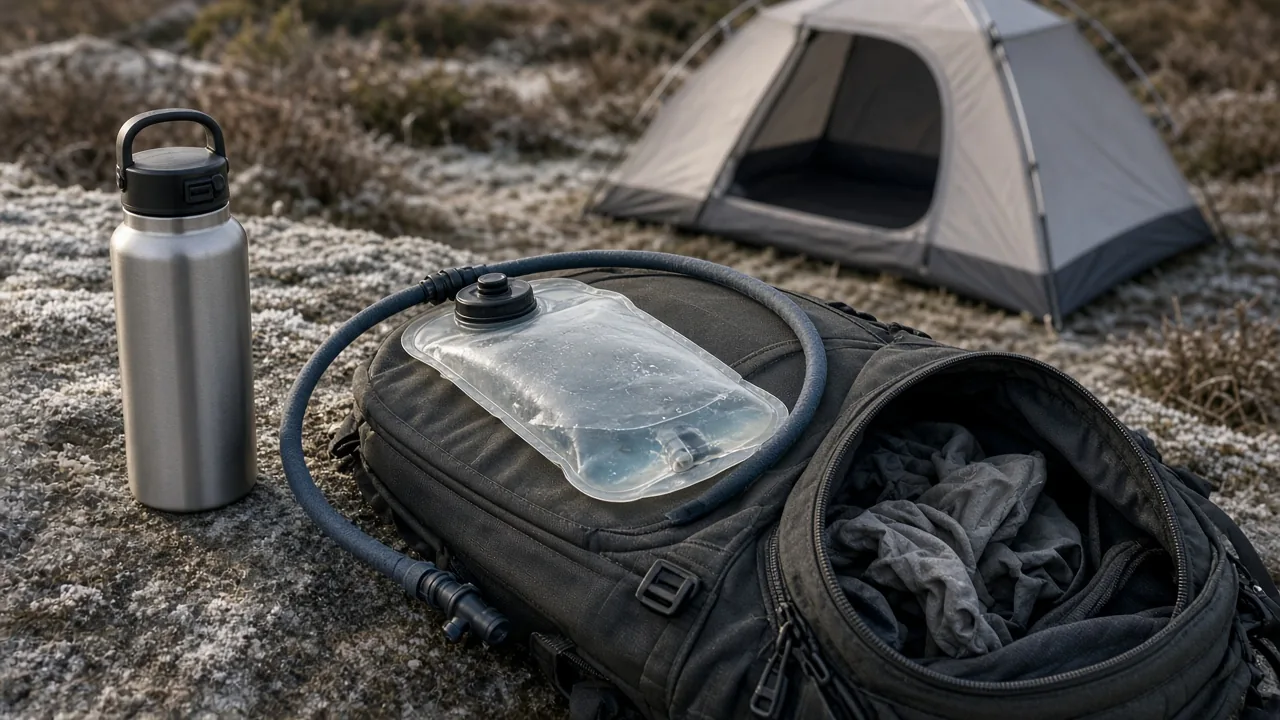
For cold-weather backpacking, the MARCHWAY hydration bladder is worth considering because of its neoprene tube sleeve, leak-proof valve, and wide opening. But this MARCHWAY hydration bladder review comes with one clear caveat: a tube sleeve and a well-sealed reservoir are not the same thing as a freeze-proof water system. It can work on day hikes if you manage the hose and bite valve actively. For overnight lows or low-effort winter hydration, a vacuum-insulated bottle is usually the more dependable choice.
What Does the MARCHWAY Hydration Bladder Review Say About Its Cold-Weather Design?
The MARCHWAY review highlights a 3-liter TPU reservoir with a 0.4 mm film, a 3.35-inch wide opening, an internal baffle, a neoprene tube sleeve, a leak-proof valve, and a 360-degree bite nozzle. Those details all help with winter use. The review does not, however, claim that the bladder itself has a rated freeze limit, and no temperature rating is listed for the sleeve.
Which MARCHWAY features matter most for cold-weather backpacking?
The wide opening and hanging hook let you refill without removing the bladder from your pack. That matters in cold weather because fewer steps mean less time with gloves off and less chance of spilling water onto your hands or shell.
The leak-proof valve and the on-off switch on the hose also help in freezing conditions. If the tube gets squeezed by a pack strap, the switch reduces accidental spray. If you need to disconnect the hose, the valve keeps water from dumping into your pack or soaking insulation layers.
How does the neoprene sleeve help prevent freezing?
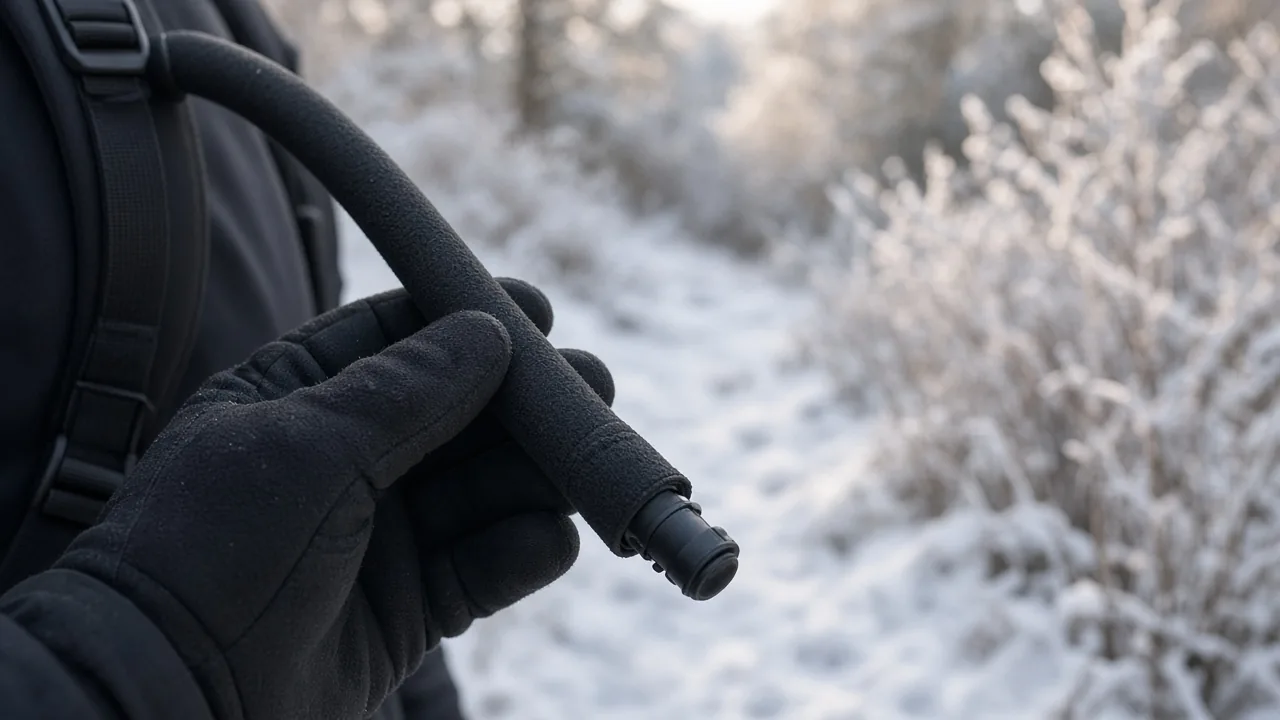
The included neoprene sleeve insulates the drinking tube, which is the most freeze-prone part of a winter hydration setup. That is useful because the hose and bite valve tend to ice up before the reservoir does.
Still, neither the product review nor the winter field reports give a specific temperature limit for the neoprene sleeve alone. Treat it as one layer of protection, not a guarantee for sustained cold.
Where Does a Hydration Bladder Freeze First in Winter?
In winter use, the exposed hose and bite valve freeze before the reservoir itself. The main bag holds more thermal mass and may stay liquid longer, even if the outside air is below freezing. The thin water column inside the hose loses heat quickly, and the bite valve is the first small reservoir of water to turn slushy or solid.
That changes how you should prioritize insulation. Wrapping only the bladder bag and ignoring the tube will often leave you with a working reservoir and a blocked drinking line. Focus first on the hose, the bite nozzle, and the connection point.
Can You Keep the MARCHWAY Bladder From Freezing on a Day Hike?
Yes, but only with a routine. Combine warm water, the neoprene sleeve or DIY insulation, blowing water back into the reservoir after each drink, and tucking the tube inside your jacket while you walk.
Winter reports show this multi-step approach worked around 14°F (-10°C). The tradeoff is attention: you have to repeat the steps all day, not just once at the trailhead.
Should you add salt, tea, or a sports drink to lower the freezing point?
Only as a minor aid. Salt, tea, or a sports drink can lower the freezing point by about 2°F to 4°F, which translates to roughly 1°C to 2°C. That is not enough to rescue a slushy hose or a frozen bite valve in a real cold snap.
Use additives for taste or electrolytes if you want them. Do not rely on them as your main freeze-prevention plan.
Why should you blow water back into the reservoir after drinking?
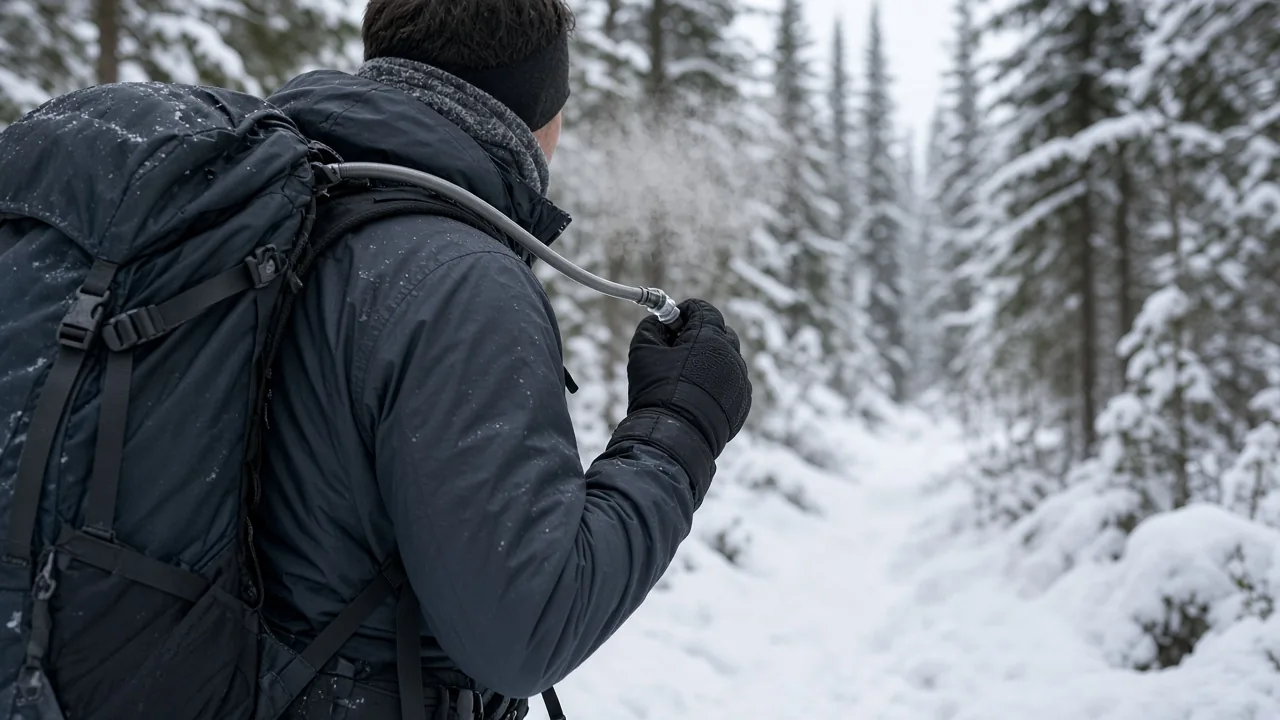
Blowing water back clears the tube and bite valve, the two parts most likely to ice up. If you leave water sitting inside the hose, it can freeze within minutes in a stiff wind or when the temperature drops hard.
The downside is noise. Sending water back into the reservoir creates a gurgling sound that some hikers find irritating when it repeats every few minutes.
Is the MARCHWAY Bladder Reliable for Overnight Winter Backpacking?
This is where the setup gets less dependable. Hikers who have tried it report that even a partially full bladder can freeze solid overnight and be useless the next morning. Once the bite valve, hose, and reservoir lock up together, getting a drink requires thawing time you may not have before breaking camp.
For overnight trips in below-freezing conditions, many backpackers still prefer a vacuum-insulated bottle. It can hold hot water through the night and gives you a drink without the same tube-clearing routine.
What if you sleep with the bladder in your sleeping bag?
Filling the bladder with hot water and sleeping with it may delay freezing, but it is not a reliable fix. It also adds bulk, puts a wet object inside your sleep system, and creates a leak risk near your down bag or quilt.
If you try it, use warm water rather than water hot enough to scald, and check the cap and valve before you climb in. A leak inside a sleeping bag is a bigger problem than a frozen hose.
Who Should Use the MARCHWAY Hydration Bladder in Cold Weather?
It suits day hikers and fast-moving backpackers who want hands-free sipping and are willing to follow a freeze-prevention routine. If you refill frequently, keep moving, and remember to blow the hose clear, the MARCHWAY bladder can hold up through a cold day.
It is less suitable for slow travel, overnight lows well below freezing, or anyone who prefers hot drinks. If stopping to unscrew a bottle feels less annoying than clearing a hose, skip the bladder.
When should you choose an insulated bottle instead?
Choose a vacuum-insulated bottle if you expect sustained below-freezing temperatures, overnight trips, or want hot water without extra steps. A bottle handles frozen mornings and hot drinks with far less maintenance than a bladder with a tube sleeve.
For car camping in cold weather, the bottle is also more practical. Weight matters less, and you can refill it from a camp pot without managing a hose and bite valve.
How Do You Clean and Store the MARCHWAY Bladder After Cold Use?
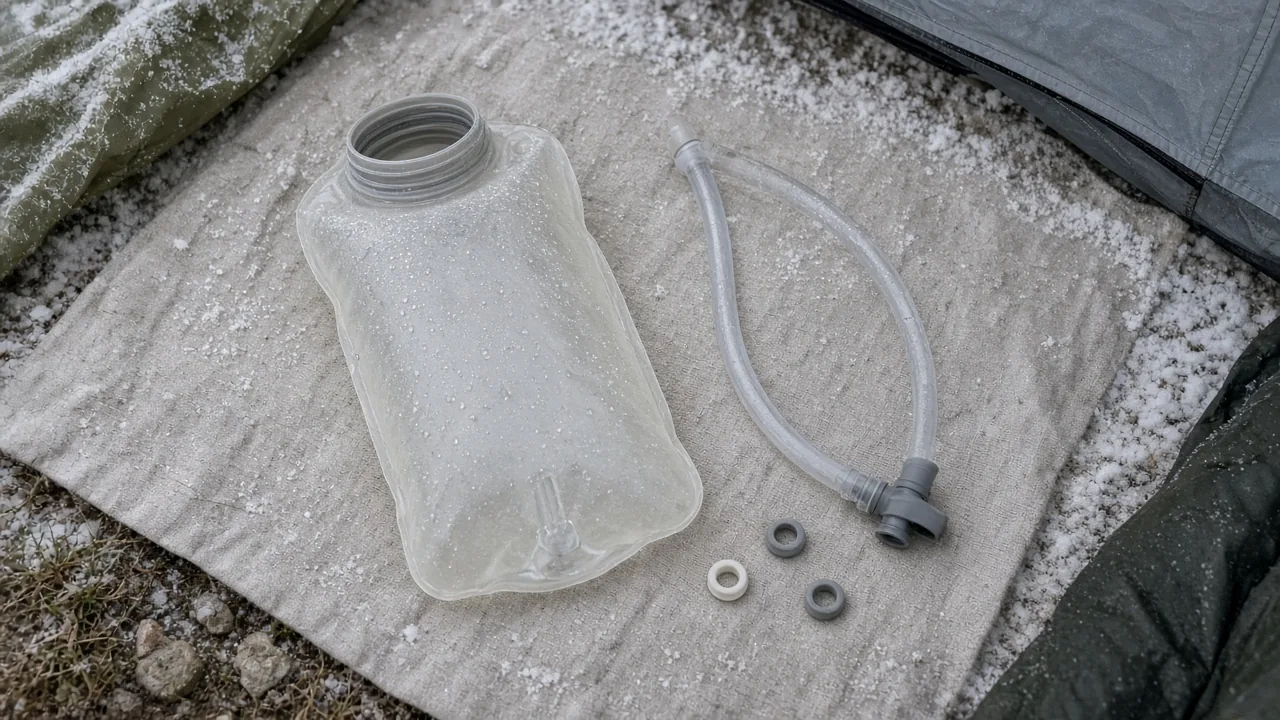
After winter use, remove the bite nozzle and wash it separately. Dry the hose and valve thoroughly before putting the reservoir away, and let the bag air dry fully before sealing it. Trapped moisture can freeze next trip or encourage mildew during storage.
The MARCHWAY setup includes spare silicone seals, which makes it easier to replace worn parts instead of tossing the whole thing. If a seal cracks after repeated freezing and thawing, swap in a spare.
MARCHWAY Hydration Bladder vs Insulated Bottle: Which Is Better for Winter Backpacking?
The MARCHWAY bladder is lighter for the water volume and built for on-the-go sipping. An insulated bottle handles freezing nights and hot drinks with less fuss. The right choice depends on trip length, expected lows, and how often you want to stop.
| Factor | MARCHWAY hydration bladder | Insulated bottle |
|---|---|---|
| Weight for capacity | Lighter per liter | Heavier for the same volume |
| Drinking on the move | Hands-free hose | Stop, unscrew, sip |
| Cold-day use | Workable with tube clearing | Simple, fewer steps |
| Overnight freezing | Can freeze solid | Holds heat longer, more reliable |
| Hot drinks | Not practical | Good fit |
| Maintenance after cold use | Dry hose, nozzle, reservoir | Rinse, dry cap and bottle |
| Better suited for | Fast day hikes, moving backpackers | Slow travel, overnight trips, hot drinks |
The table points away from one-size advice. For a fast winter day hike, the MARCHWAY is a reasonable pick. For camp mornings in the teens, the insulated bottle wins on dependability.
What Else Should You Check Before Taking a Hydration Bladder Into Cold Weather?
Confirm your backpack fits the 3-liter reservoir. A 3L bladder that slides into most packs still needs room for insulation, food, and spare layers, so test the fit before you commit.
Check the forecast and expected overnight lows, not just the daytime high. A day that starts at 40°F can drop fast after sunset, and a hose that worked at noon may freeze by early evening.
Finally, follow the manufacturer's care instructions for the reservoir, hose, and bite valve. And as with any cold-weather trip involving fuel or heat, never use a stove or heater inside your tent. Thaw gear outdoors or in a vestibule with proper ventilation, away from sleeping bags and tent walls.
For cold-weather day hikes, the MARCHWAY bladder is reasonable if you manage the tube and valve. For overnight freezing conditions or minimum fuss, switch to an insulated bottle instead. Before you pack one or the other, check the expected low, the length of the trip, and whether you really want to clear a frozen hose before your first sip of the day.
This article is general information about camping gear, not professional safety, medical, or wilderness training. Check fire restrictions, weather, and campsite rules before you go, and follow the manufacturer's instructions for your own equipment.
FAQ
Is the MARCHWAY hydration bladder freeze-proof?
No. It has a neoprene tube sleeve and leak-proof valve, but neither the bladder nor the sleeve has a rated freeze limit.
Can I use the MARCHWAY bladder for overnight winter backpacking?
It becomes less dependable overnight. Hikers report that even a partially full bladder can freeze solid by morning, and many prefer a vacuum-insulated bottle for below-freezing trips.
How do I keep the MARCHWAY hydration tube from freezing on a day hike?
Use warm water, keep the neoprene sleeve or DIY insulation on the tube, blow water back into the reservoir after each drink, and tuck the tube inside your jacket while moving.
Should I add salt or a sports drink to lower the freezing point?
Only as a minor aid. Salt, tea, or sports drink can lower the freezing point by about 2°F to 4°F, which is not enough to rescue a frozen hose or bite valve in a real cold snap.
When should I choose an insulated bottle instead of the MARCHWAY bladder?
Choose a vacuum-insulated bottle for sustained below-freezing temperatures, overnight trips, or if you want hot water without repeatedly clearing the hose.



