Is a Dyneema Hammock Tarp Worth It? A Real Review
Is a Dyneema hammock tarp worth it? This real-world review compares weight, packed size, storm coverage, noise, and price to help you decide between Dyneema and silpoly or silnylon.
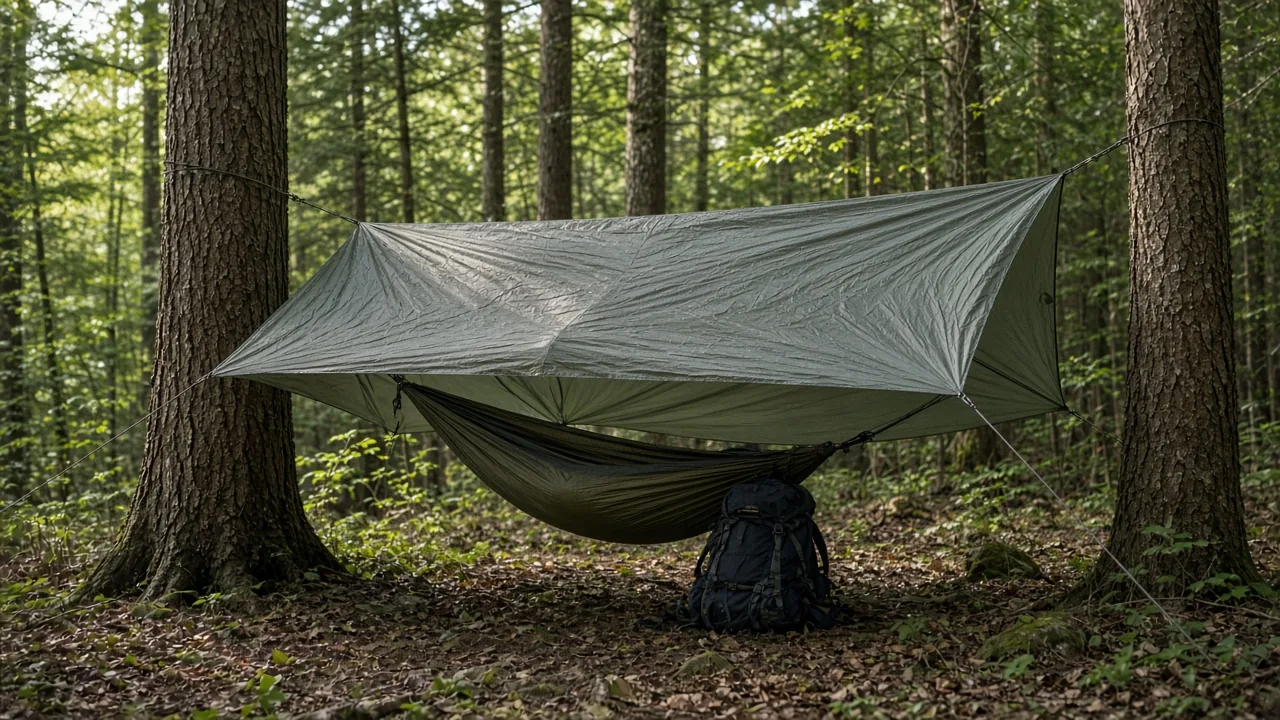
Is a Dyneema hammock tarp worth it? The short answer: it depends on how much you care about saving ounces, packing small, and staying dry when rain moves in. For backpackers who count grams and spend nights under trees in wet weather, a Dyneema hammock tarp with doors can justify its premium price. For car campers, budget-minded hammock users, or anyone annoyed by crinkly fabric, a silpoly or silnylon tarp may be the smarter buy.
Is a Dyneema hammock tarp worth it? —— It depends on how highly you rank low weight, packed size, and weather coverage; if you count ounces and hike in rain, the answer leans yes.
A Dyneema hammock tarp is worth the extra cost only if low weight, small packed size, and full rain coverage rank near the top of your list. Many hammock campers still use silpoly or silnylon tarps and stay perfectly dry. But when every ounce matters and the forecast includes real rain, Dyneema changes the math.
What makes Dyneema different from silnylon and silpoly?
Dyneema, also called Cuben fiber, is an ultralight non-woven material with high tensile strength. It looks thin and crinkly, almost like a heavy trash bag or spiderweb, but that thinness is the point. A Dyneema hammock tarp can weigh less than half of a comparable coated-fabric tarp while still providing a full ridgeline, tie-outs, and doors.
Silnylon and silpoly are woven fabrics with a waterproof coating. They stretch more, pack differently, and cost much less. Dyneema does not stretch the same way, which helps maintain a taut pitch, but it also has a stiffer feel when folded or stuffed.
Why the price stops some hammock campers
The main objection to Dyneema is cost. Some hammock campers look at the price and decide a silpoly or silnylon tarp is close enough for a fraction of the money. Others argue that long-term comfort, lower trail weight, and weather coverage make the premium worthwhile.
A reader who used an older 8x8 ultralight tarp for about eight years said the old tarp started leaking at the seams after four or five years. Even though that tarp was called bombproof by its owner, he replaced it with a Dyneema tarp with doors and did not look back. But not every camper needs that upgrade.
What does a Dyneema hammock tarp weigh and how does it pack? —— A Dyneema hammock tarp with doors can weigh around 7.8 ounces and include a stuff sack and patch kit, but check manufacturer specs for each size.
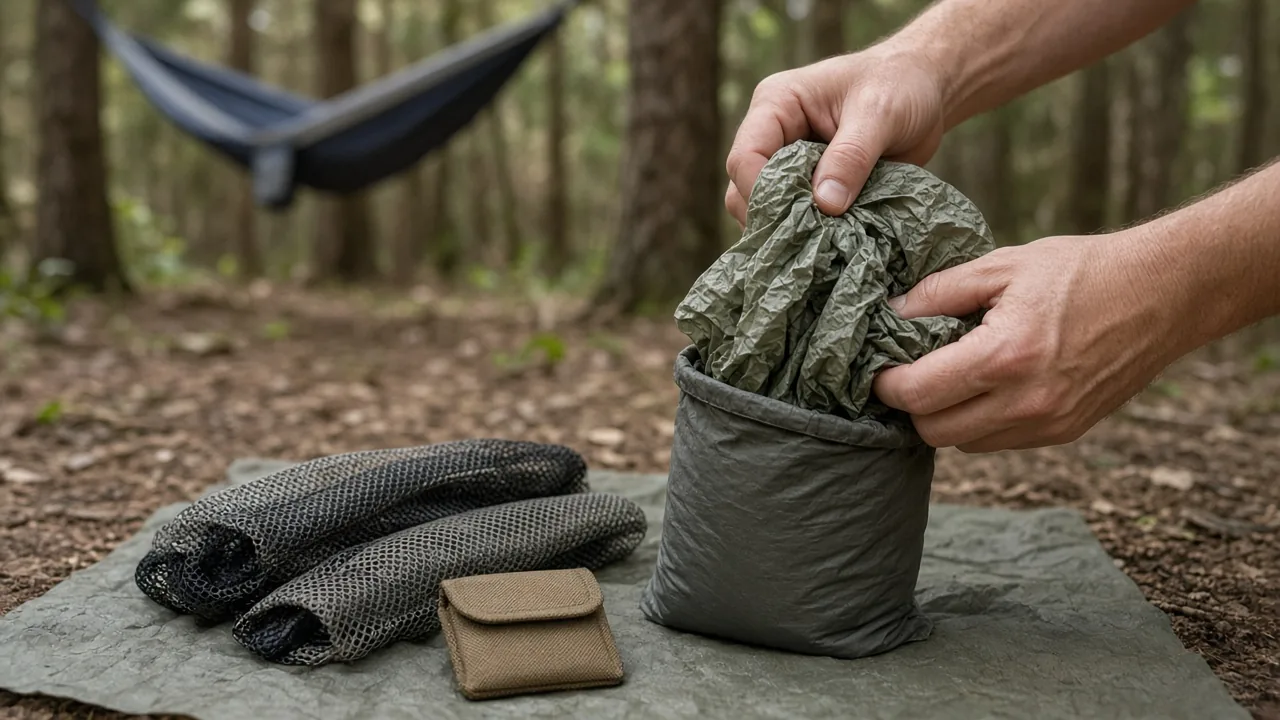
One Dyneema hammock tarp with doors is listed at 7.8 ounces including the stuff sack and a patch kit. That is extremely light for a hammock shelter, especially one with end doors and enough width to close up in wind. Lengths may be available around 10, 11, or 12 feet, with a width around 8.6 feet, though every maker has its own spec.
How small does it pack compared with a traditional tarp?
Mesh snake skins help roll the tarp into a narrow package that slides over the ridgeline. That makes setup and takedown quicker than folding a wet silnylon tarp flat. But Dyneema is thin and does not fold as compactly as some people expect. When stuffed loosely, it can feel bulkier than a tightly rolled silpoly tarp, even though it weighs less.
For backpacking, the weight savings usually matter more than the slight difference in stuffed volume. For car camping, neither weight nor packed size should drive the decision.
Does 7.8 ounces matter for car camping?
No. If you are driving to a campsite, shaving a few ounces off a tarp does not change your trip. Heavier, quieter, and cheaper silpoly or silnylon tarps make more sense there. Save the Dyneema for trips where you carry everything on your back.
How does a Dyneema tarp perform in rain, wind, and puncture risk? —— Sources report it blocks rain and closes up with overlapping doors, but Dyneema is thinner and some users find it more puncture-prone and noisier in wind than silnylon.
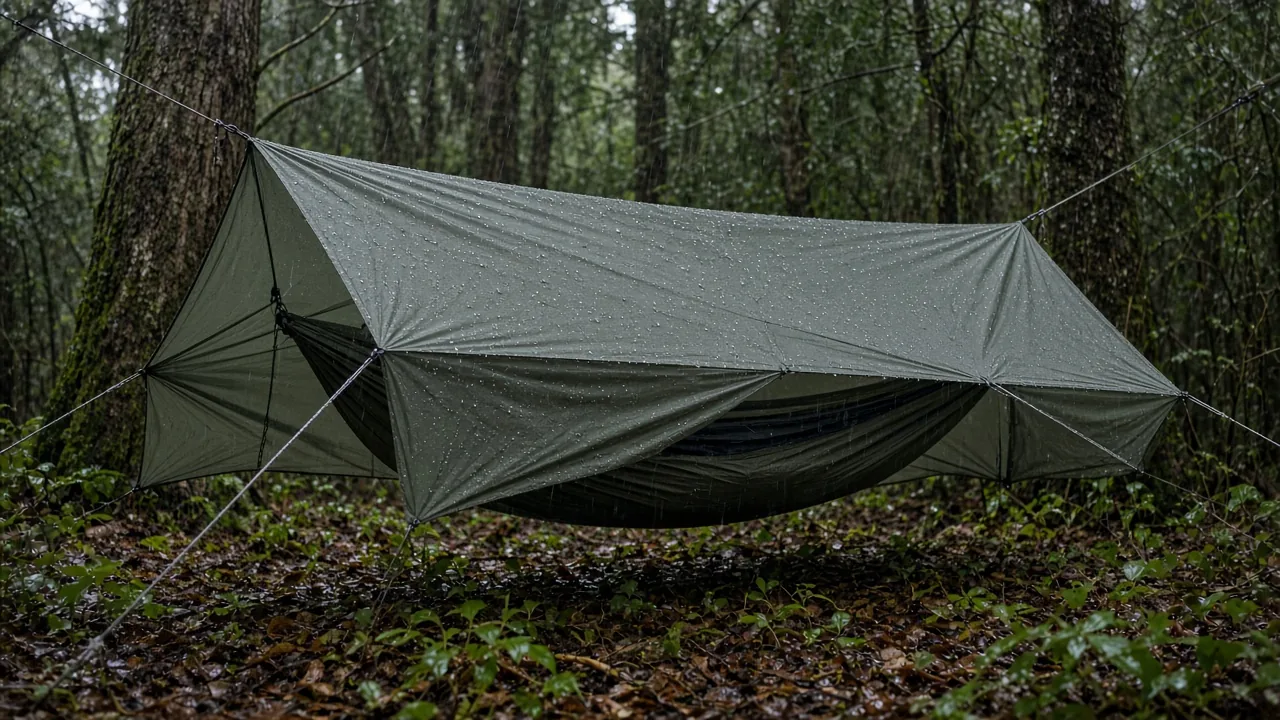
Owner reports and builder specs describe a Dyneema hammock tarp that blocks rain and closes up with overlapping doors. The material is thin, but it sheds water well when pitched correctly. The trade-offs show up in puncture resistance and noise.
Rain and wind performance
With both end doors closed, the tarp can overlap at the openings and block wind-driven rain. You can also drop the tarp down near ground level for extra storm coverage. That creates a more enclosed shelter, but the hammock sits lower and entry and exit become more awkward.
Reports say the tarp still keeps you off the ground, but don't expect the same interior space as a large rectangular tarp. In steady rain, the biggest factor is pitch angle. A taut ridgeline and tensioned guylines keep water moving off instead of pooling.
Puncture risk and crinkle noise
Some owners say Dyneema punctures more easily than silnylon or silpoly. The same thin quality that saves weight also makes it less forgiving against sharp sticks, rock edges, or careless packing. A small puncture can be patched, but you have to watch where you pitch and how you store it.
Noise is another common complaint. In wind, Dyneema can sound like a potato chip bag crinkling all night. If that bothers you, silpoly or silnylon will feel much quieter. The noise does not affect performance, but it can hurt sleep.
Weather protection has limits
No tarp can promise dry in every storm. Real-world performance depends on seams, pitch angle, site selection, and wear. A Dyneema tarp is not guaranteed to survive severe weather, and no shelter is completely waterproof in every condition. Pitch it low, close the doors, and use a ground cloth or footprint under the hammock if splashback is a concern.
How do you pitch a Dyneema hammock tarp with doors? —— Use a ridge line between two trees, run guidelines from both ends, and close overlapping doors to block wind.
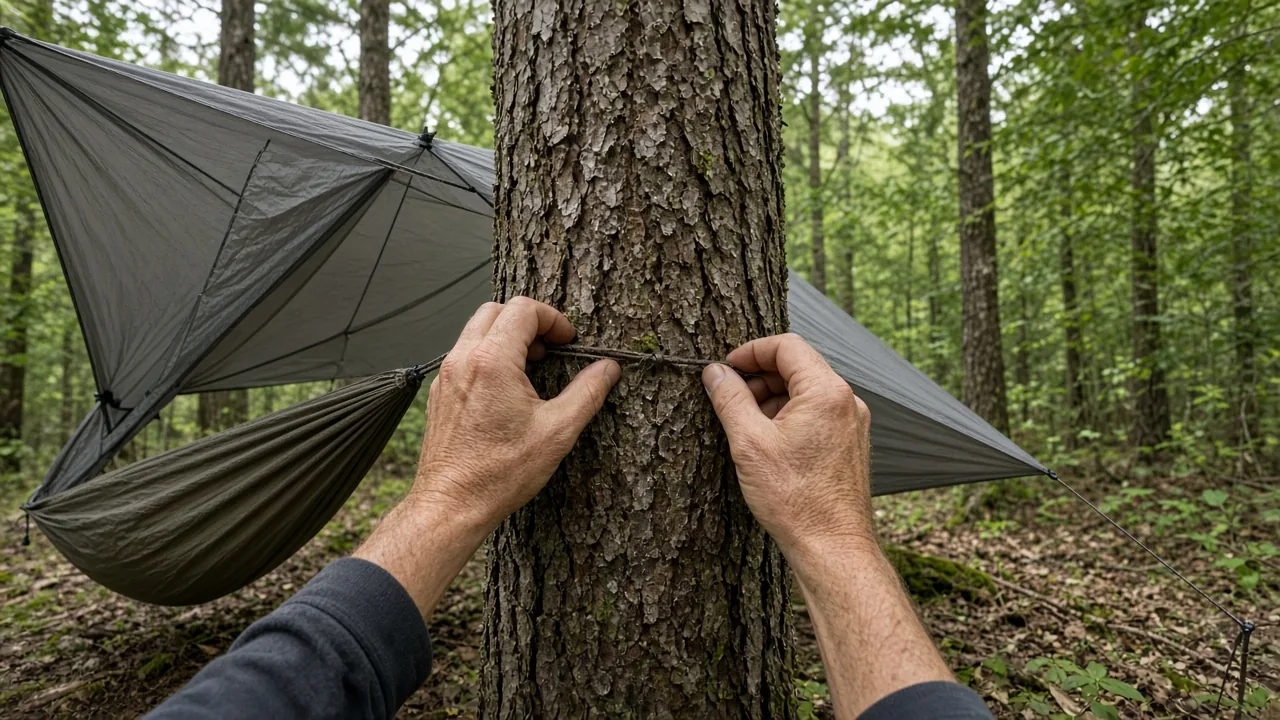
A Dyneema hammock tarp with doors pitches like any full-coverage hammock tarp. Run a ridgeline between two trees, tension the ends with guylines, and stake or tie out the side pull-outs. To close the doors, pull each end's guylines to the opposite side so the panels overlap.
What is the fastest way to pitch it?
One quick method is to anchor a line with one tent stake, then use two separate lines: one for the tarp and one for the hammock. This keeps hammock movement from shifting the tarp, so the ridgeline stays tight when you climb in. A carabiner or clip at the anchor point can speed setup and takedown.
Can you pitch it without stakes?
Yes. You can wrap the fixed line around a tree or pin it under rocks instead of using tent stakes. This works well on hard ground where stakes won't hold. Just make sure rainwater drips clear of your sleep surface. A drip line or a small knot below the tarp edge can redirect water away from the hammock and pack.
Should you set up the tarp before the hammock?
In rain, pitch the tarp first. That keeps your pack, hammock, and dry clothing protected while you finish setup. In hot weather, you can set the hammock first and adjust the tarp later to match the wind direction. Either order works, but wet conditions reward tarp-first thinking.
Where do you route the dripline?
Run guylines so rain drips clear of your hammock and pack. A line that runs downhill from the tarp edge will shed water away from your sleeping surface. If water follows the ridgeline or side lines toward you, add a drip cord or lower the windward side of the tarp.
Dyneema tarp vs silpoly or silnylon: which is better for you? —— Compare weight, pack size, noise, puncture resistance, waterproofing, and car vs backpacking fit in a table; Dyneema wins weight, silpoly/silnylon win price and quieter handling.
The right choice depends on how you camp, not just which fabric looks better on a spec sheet. Here is a practical comparison.
| Attribute | Dyneema hammock tarp | Silpoly / silnylon hammock tarp |
|---|---|---|
| Weight | Very light; around 7.8 oz for a door tarp in some sizes | Heavier; exact weight varies by size and coating |
| Packed size | Thin, can be bulkier when folded | Can roll smaller and more compact |
| Noise in wind | Crinkly, louder to some ears | Quieter |
| Puncture resistance | Thinner, more puncture-prone | More forgiving against abrasion |
| Waterproofing | Sheds rain well when pitched taut | Sheds rain well when coating is intact |
| Price | Premium | Budget-friendly |
| Best for | Backpacking, wet weather, gram counting | Car camping, budget builds, quiet sleep |
Where Dyneema makes sense
Long backpacking trips, rainy forecasts, and gram-counting setups make the extra cost easier to accept. A 7.8-ounce tarp replaces a heavier coated-fabric tarp without dropping weather coverage. That matters when you carry shelter miles every day.
Where silpoly or silnylon still beat it
Budget builds, car camping, and users who hate crinkle noise or worry about abrasion should look at traditional coated fabrics first. Silpoly and silnylon cost less, pack easily, and are often quieter in gusty conditions. The small weight penalty may be irrelevant if you drive to camp.
What about a cheap plastic tarp?
A basic plastic sheet can cover a hammock in an emergency, but it won't match the packed size, doors, or wind-shaped coverage of a cut tarp. Plastic tarps lack proper tie-outs and stretch poorly. They work for a one-night experiment but not for regular hammock camping.
Who should buy a Dyneema hammock tarp, and who should skip it? —— It suits ounce-counting backpackers who camp in rain and want full coverage; car campers, budget buyers, and those annoyed by crinkle noise may not see the value.
Dyneema is not a universal upgrade. It is a specific tool for a specific type of camper.
Backpacker scenario
If your base weight matters and you carry shelter miles, a Dyneema hammock tarp with doors replaces a heavier coated-fabric tarp without sacrificing storm coverage. You notice the difference on long climbs, wet resupply days, and mornings when you pack a damp shelter. For that user, the answer to "is a Dyneema hammock tarp worth it" leans yes.
Car camper scenario
If weight and packed size don't matter, a heavier, quieter, cheaper silpoly or silnylon tarp can cover the same hammock. You get more money left for a better sleeping bag or pad, and you avoid the crinkle noise. Car campers rarely need to save 8 ounces on a tarp.
What else does a hammock shelter need to work well? —— A hammock system still needs insect protection, a ground cloth, and wind-angle adjustment to work reliably.
A tarp is only part of the shelter. A complete hammock sleep system includes bug protection, a ground cloth or footprint to keep gear clean, and a way to adjust the tarp's angle when wind shifts.
How do you fix the hammock's banana shape?
Hammocks sag in the middle, which makes flat sleeping difficult. The practical fix is to put your pack flat under the middle as a back support, then add an inflatable pad on top. That creates a flatter sleeping surface and reduces the deep bend. It is not a substitute for a ground pad in cold weather, but it helps.
What if you add heat on a cold night?
Never use a stove or heater inside your tent or hammock shelter. Carbon monoxide and fire risk are real, even with ventilation. Instead, use a sleeping bag or quilt rated for the expected low temperature. Add a sleeping pad with an appropriate R-value under you, because the tarp does not insulate.
What if storm conditions are extreme?
In severe weather, hammock tarps are less stable than a ground pyramid. If wind is strong enough to flatten your tarp or rain is driving sideways, move to a sheltered area and set a pyramid pitch using the tarp. Hammock camping in exposed terrain or heavy snow is not worth the risk.
Do you need a separate bug net?
Yes, unless your hammock has a built-in net. A rope-support net packs smaller and works well when you have trees. A pole-support net can go to ground like a tunnel tent when trees are missing. In mosquito season, the tarp alone will not stop bites.
How do you store and patch a Dyneema tarp? —— Keep it dry and out of long-term compression, check seams after heavy seasons, and carry the included patch kit for small punctures.
Dyneema lasts longer if you treat it carefully. Store the tarp dry and loosely packed, not crushed under heavy gear. Long-term compression can stress the thin material and seam tape.
Pitching and taking it down without damage
Pull snake skins toward the ridgeline only after removing tent stakes. Release the ridgeline last. This prevents the thin fabric from dragging over rocks, roots, or dirt. When packing, shake off debris and avoid sharp folds.
Does Dyneema need seam sealing?
Seam tape can fail after years of use. Inspect the ridgeline and tie-out seams before trips. If you see lifting or cracking, patch or reseal as the maker instructs. The included patch kit handles small punctures, but a failing seam needs more attention.
Is a Dyneema tarp worth it for winter or cold hammock camping? —— Dyneema's greenhouse effect can warm the interior in sun, but cold nights still require a sleeping bag or quilt rated for the low, and the tarp alone won't keep you warm.
Dyneema can trap solar warmth during the day, especially if the tarp is a green or translucent color. One owner described a greenhouse effect similar to a plastic super shelter, where sunlight passes through and warm air stays inside. That is pleasant on a sunny afternoon but disappears after sunset.
Does the green color actually add warmth?
A green Dyneema tarp can let sunlight through and trap warm air under the ridgeline in calm, sunny conditions. Do not rely on that for overnight warmth. After dark, the tarp only blocks wind and precipitation. You still need insulation underneath and on top.
When to leave the hammock at home
In extreme cold wind, heavy snow, or exposed terrain, a ground pyramid or mountaineering tent gives more stability and interior space. Hammock tarps catch wind and shed snow poorly in some pitches. If the forecast calls for severe conditions, change the shelter plan.
Check whether you are backpacking or car camping, expected low temperature, and rain chance before packing a Dyneema tarp. Pair it with a bug net and pad for a complete hammock sleep system. Before you go, check fire restrictions, campsite rules, and the weather forecast, and follow Leave No Trace practices like packing out trash and camping on durable surfaces.
Camp Kit Journal
This article is general information about camping gear, not professional safety, medical, or wilderness training. Check fire restrictions, weather, and campsite rules before you go, and follow the manufacturer's instructions for your own equipment.
FAQ
How much does a Dyneema hammock tarp with doors weigh?
One model is listed at 7.8 ounces including the stuff sack and patch kit, but check manufacturer specs for each size.
Is Dyneema louder than silnylon or silpoly in wind?
Yes, some users find Dyneema crinkly and loud in wind, while silpoly and silnylon are quieter.
Who should skip a Dyneema hammock tarp?
Car campers, budget buyers, and anyone annoyed by crinkle noise may not see the value; silpoly or silnylon often makes more sense.
Does a Dyneema tarp keep you warm in cold weather?
It can trap solar warmth in sun, but after dark you still need a sleeping bag or quilt rated for the low and an insulated pad.
What else do you need for a complete hammock shelter system?
You need insect protection, a ground cloth or footprint, and a pad or pack support to reduce hammock sag.



