Is a Folding Camping Cot Worth It for Car Camping?
A folding camping cot can be worth it for car campers who want a flat, elevated sleep surface and have cargo room. Learn when it wins over pads and air mattresses, what to check before buying, and how to avoid common problems.
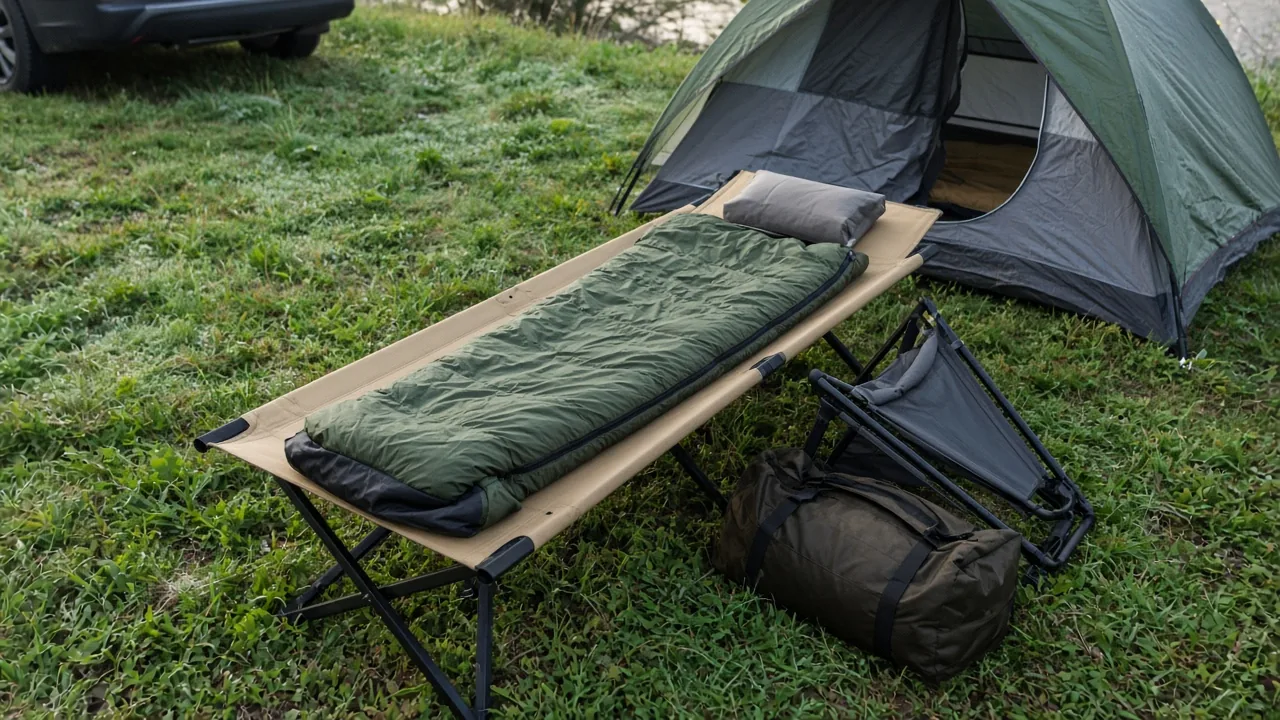
A heavy, bulky folding camping cot can absolutely be worth it for car campers who want a flat, elevated sleep surface and can spare the cargo room. It is a poor fit for backpacking trips or small vehicles where every cubic inch counts. Before you buy, ask whether a cot matches this trip's setup, weather, and storage reality.
Start With Your Sleep Setup and Cargo Limits

Car camping rewards comfort, but it still punishes gear that is awkward to load, heavy to carry from the vehicle, or slow to set up in fading light. A folding cot changes your sleep system more than a pad does, so start by measuring both your cargo area and your patience.
Measure the packed cot against the space it will actually occupy. Some folding cots fold into a bag that is nearly as large as a compact sleeping bag, a pad, and a camp chair combined. If you drive a midsize SUV and camp solo, that may be fine. If you pack for two adults and a dog, it may not be.
Also compare assembly time and effort. A cot with a semi-connected frame can go from folded to ready in a couple of minutes. That is helpful after a long drive. But if you would rather unroll a pad, inflate it halfway, and be done, the cot's extra steps may feel unnecessary.
The key question is not whether a cot is good or bad. It is whether the cot earns its bulk on this specific trip.
When Is a Folding Camping Cot Worth It for Car Camping?
A folding cot earns its place when you value a wide, elevated bed and quick assembly more than saving space or weight. For multi-night base camps, that trade-off often makes sense.
Who a heavy folding cot suits
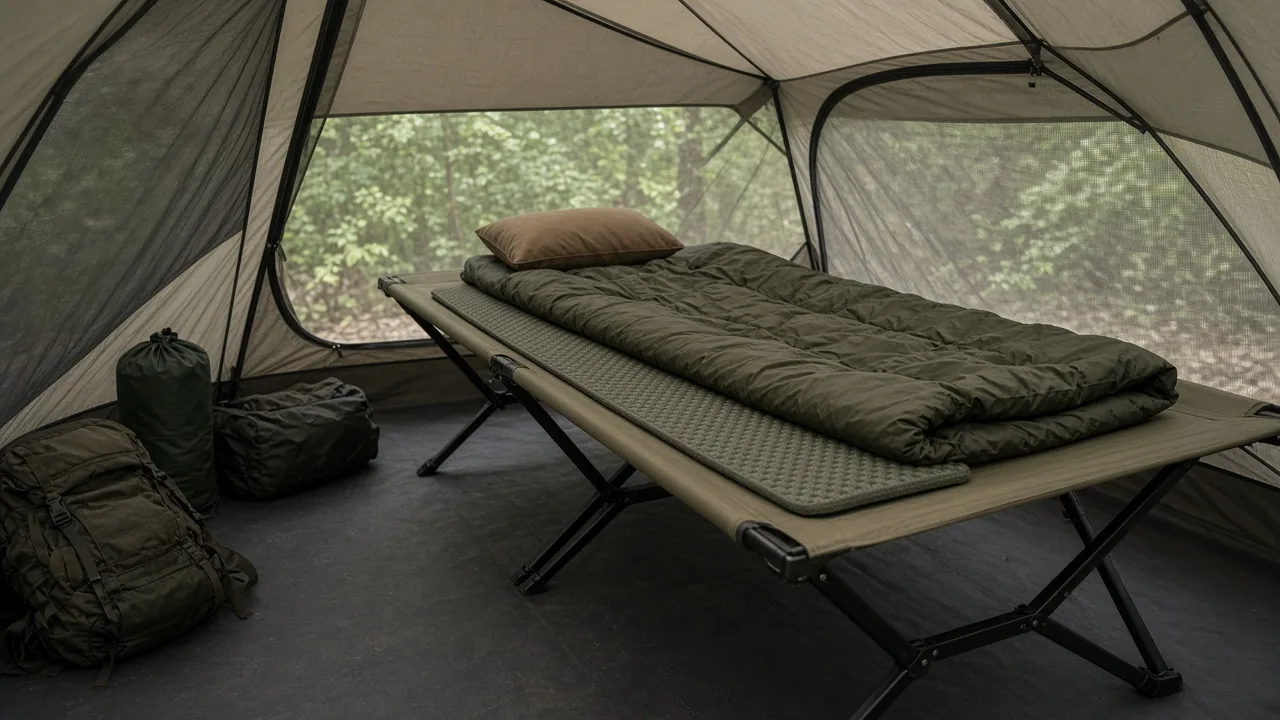
Car campers who set up once and stay put for several nights tend to appreciate a cot most. A cot with a bed height around 17 inches makes sitting on the edge and standing up noticeably easier than getting up from a ground pad, especially for older campers or anyone with stiff knees.
A bed surface around 31 inches wide and 6 feet 10 inches long feels close to a home single bed. That extra width reduces the dropped-arm feeling that narrow backpacking pads create. If you sleep on your back or side, a taut cot surface can provide more consistent support than a partially deflated air mattress.
People who camp in dry, mild conditions also get more value from a cot. A cot keeps you off uneven ground and away from small puddles. It does not, however, provide meaningful insulation by itself on a cold night.
Who should skip this style
If you drive a small hatchback or compact SUV, a folding cot may crowd out water jugs, firewood, or a cooler. Even in a larger vehicle, carrying cots for a family can quickly fill the cargo area.
Backpackers should not consider this style. A folding cot is not designed to be carried over miles. Its weight and folded footprint belong in a car trunk, not on a trail. If there is any chance you will use the same sleep setup for backpacking, a sleeping pad is the more flexible choice.
Also skip a cot if you want minimal setup. A cot still requires unfolding, tensioning the frame, fitting supports, then reversing the process in the morning. That is not difficult, but it is not as simple as unrolling a foam pad.
Cot vs. air mattress vs. sleeping pad
Each sleep option has clear strengths. The table below compares them for car camping and backpacking.
| Factor | Folding camping cot | Air mattress | Sleeping pad |
|---|---|---|---|
| Packed size | Large; bag alone may rival all other gear combined | Moderate; depends on pump | Small to moderate; foam pads can be bulky |
| Weight | Heavy; built for car camping | Moderate to heavy | Light to moderate |
| Insulation | Needs added pad underneath for cold temps | Needs separate insulation in cold weather | R-value rated; varies by model |
| Water resistance | Elevated surface keeps you off wet ground | Can sit on wet floor but may move | Ground-level sleep surface |
| Setup | Unfold, tension, attach supports | Unroll and inflate; may need pump and patch kit | Unroll and inflate or use closed-cell foam |
| Better fit | Multi-night car camping with cargo space | Budget-friendly car camping with separate pump | Car camping plus backpacking |
A cot is the most furniture-like option. A sleeping pad is the most versatile. An air mattress often looks cheap until it loses air at 2 a.m. and you wake up cold on the tent floor.
How to Choose a Folding Cot Without Buying the Wrong One
Check bed width, length, height, frame design, and packed dimensions before you commit. A cot that is too narrow or too awkward to set up will sit in storage.
Look at bed dimensions and height
A bed around 31 inches wide and 6 feet 10 inches long works like a home single bed for most adults. If you are tall, check the listed length. If you move a lot in your sleep, width matters as much as length.
Bed height makes a practical difference. A 17-inch-high cot lets you sit on the edge like a chair while changing shoes. A lower cot may feel less stable or harder to stand from. For taller campers, that height is one of the main reasons to choose a cot over a ground pad.
Understand the frame and fabric
Look for reinforced webbing and supports that are already connected to the frame. Semi-connected designs let you tension the bed by stepping on the frame until it locks straight. That saves setup time and reduces the number of small parts you can lose in the dirt.
The fabric should feel taut, not stretchy. A loose bed surface sags by morning. Reinforced webbing distributed across the underside supports the back and hips. If the frame flexes too much when you kneel on it, it will likely flex under your body weight at night.
Check packed size before you buy
This is the make-or-break spec for many buyers. Watch setup and fold-down videos from reviewers and note the folded footprint. Some cots fold into a package as large as all other personal gear combined.
Take a measuring tape to your cargo area and mock up that footprint with a cardboard box. If the cot will not fit without moving seats or removing a spare tire, rethink the purchase. For car camping, the cot only works when it has a dedicated home in the vehicle.
How to Set Up and Store a Folding Cot
Set the cot on a dry, level surface and store it fully dry. A little care at camp prevents the two most common complaints: mold and frame corrosion.
Assembly steps in plain order
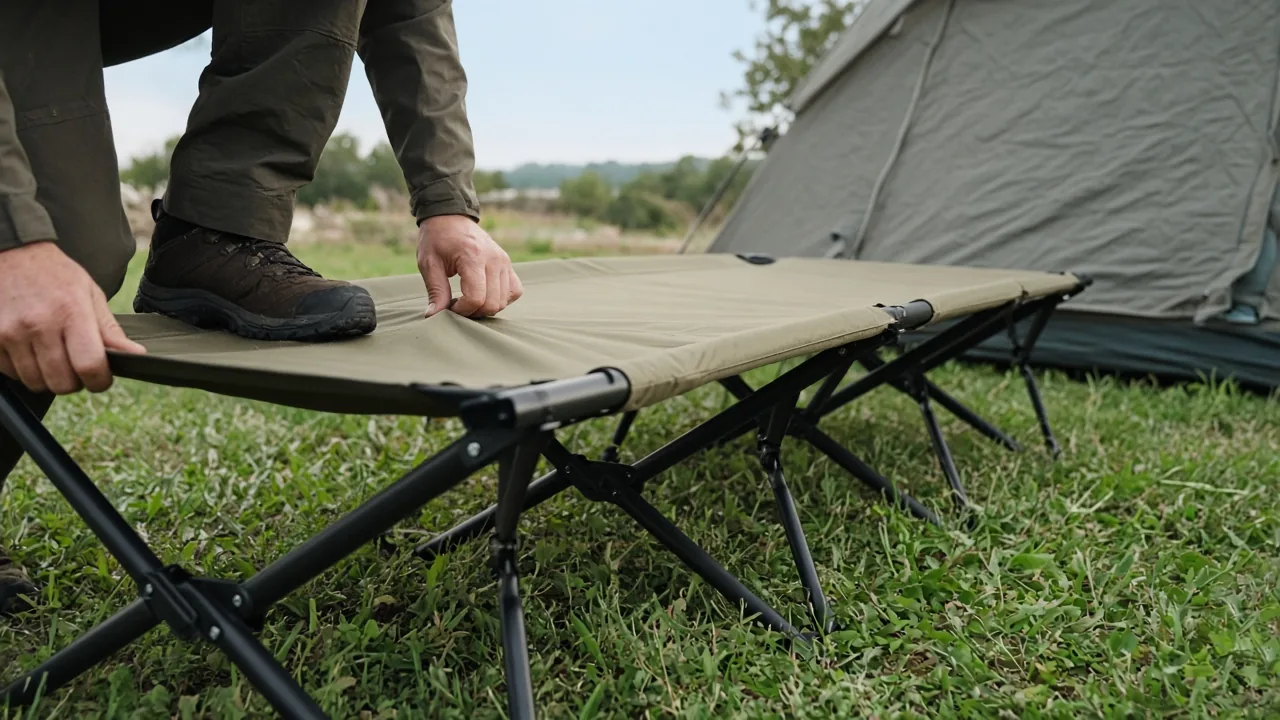
Most folding cots follow the same pattern. Unfold the frame until it lies open on the ground. Press down with your foot at the designated point to tension the bed surface. Attach the center support if the cot has one. Slide on or snap in the legs. Check that the frame is fully seated before you sit on it.
To pack down, reverse the steps: remove the legs, release the center support, fold the frame. Use your foot to help fold stiff sections, but avoid forcing anything. If a joint does not close, dirt or a pebble may be lodged in it.
Store it clean and dry
Before packing, wipe off dirt, sunscreen residue, and anything greasy. These residues can break down fabric and coatings over time. Let the cot fabric and frame dry completely before closing it into its carry bag.
Never seal a damp cot in a stuff sack for the week between trips. Trapped moisture degrades fabric and invites mold. Store the cot in a dry place, but avoid sealing it in an airtight container unless you have a controlled drying solution. A closet shelf or garage rack works for most climates.
Use the cot safely at camp
Follow basic tent safety rules. Never use a stove or heater inside your tent. That applies to all sleep systems, including cots. Place the cot away from tent walls and away from any fuel appliances, lanterns, or heater outlets. Carbon monoxide and fire risk are not reduced just because you are sleeping above the ground.
Keep the cot away from sharp tent stakes, abrasive rocks, and loose debris. A torn cot fabric is harder to repair in the field than a sleeping pad puncture.
Common Problems and How to Avoid or Fix Them
The most common complaints are excessive packed size, heavy carry, high price, cold back, and the clinical look. Address these before you buy so the cot does not become another garage guest.
Packed size and weight regret
If loading and unloading feel difficult, the cot may still be a bad fit. Try a lighter air mattress or a smaller pad instead. The cot only makes sense when it has a dedicated cargo space and you do not dread moving it twice a day.
For some campers, the solution is to leave the cot in the vehicle for multi-night trips only. For weekend overnights, a pad may be enough. Match the gear to the trip length and weather.
Backside cold and sagging
A cot surface exposes your back to air flowing underneath. That can feel cold even when the air temperature is mild. Add an insulated or closed-cell foam pad on top of the cot fabric. A basic inflatable pad may not be enough in shoulder season conditions.
If the bed starts to sag after a few uses, check the fabric tension and the frame supports. A loose center bar or a bent support can cause the fabric to lose tension. Tightening or replacing a support is usually cheaper than replacing the cot.
Looks like a camp bed, not a luxury item
Some campers dismiss cots because they look like a hospital bed or a military frame. Ignore appearance and judge the cot by sleep quality, packability, and setup effort. A plain frame can still outperform a finicky air leak. If the cot keeps you off the cold, uneven ground and gets you out of the tent faster in the morning, the look is secondary.
Bottom Line
Before packing for any trip, check whether it is car camping or backpacking, how cold the night will get, and whether rain is expected. If the answer is car camping, dry and mild, and you have room to spare, a folding cot can replace a sleeping pad as your primary bed. If the forecast turns cold or wet, plan to add an insulated pad on top and keep the cot inside a properly ventilated tent. Pair the cot with a sleeping bag or quilt rated for the expected overnight low, and double-check your headlamp batteries before leaving home.
This article is general information about camping gear, not professional safety, medical, or wilderness training. Check fire restrictions, weather, and campsite rules before you go, and follow the manufacturer's instructions for your own equipment.
FAQ
Is a folding camping cot good for backpacking?
No, a folding camping cot is not designed for backpacking. Its weight and folded size are meant for car camping, not carrying over miles. Use a sleeping pad for backpacking.
How does a folding camping cot compare to an air mattress?
A cot is elevated, furniture-like, and needs no pump, but it has a large packed size. An air mattress can be cheaper but may lose air and requires separate insulation in cold weather. A cot suits multi-night car camping with cargo space.
Do I need a sleeping pad on top of a camping cot?
Yes, in cold weather a cot alone does not provide meaningful insulation because air flows underneath. Add an insulated or closed-cell foam pad on top to prevent a cold back.
What should I check before buying a folding camping cot?
Check bed width, length, height, frame design, and packed dimensions. Measure your cargo area to see if the folded cot will fit without crowding out other gear.
How do I set up and store a folding camp cot properly?
Unfold the frame, tension the bed surface by pressing down with your foot, attach supports and legs. After use, wipe off dirt, dry completely, and store in a dry place to prevent mold and frame corrosion.