Is a Burn Kit Worth It for Camping? What to Pack and Check
A dedicated burn kit is often worth carrying for camp cooking, but the answer depends on your trip style. Learn what to check, when to downsize, and how to pair it with a general first aid kit.
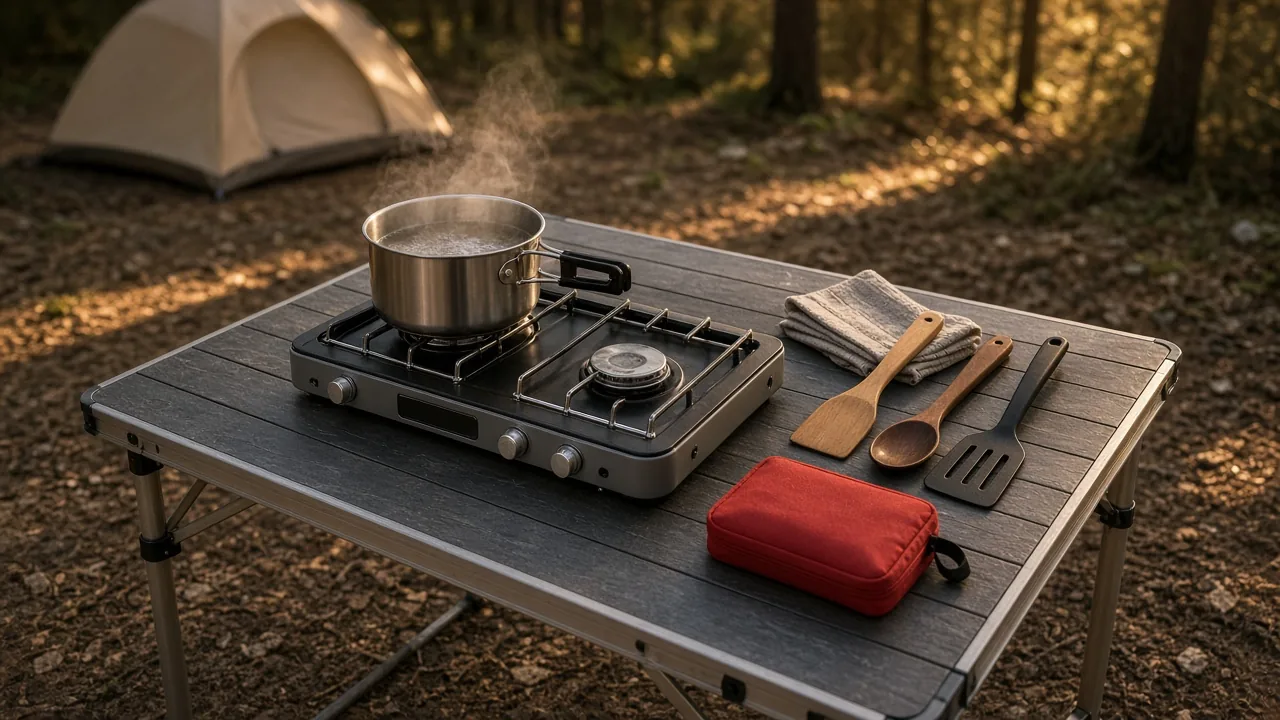
If you cook over a stove or fire, is a burn kit worth it for camping? For most campers, yes: a dedicated burn kit keeps burn dressings and gel in one accessible place rather than scattered through a general first aid kit, and it saves you from fumbling through bandages and blister pads while a burn needs attention. That said, the answer changes with trip style—a car camper with a full camp kitchen can absorb the extra weight and bulk without much thought, while a backpacker counting ounces may prefer a small burn module inside a lighter first aid kit. The question is less about whether burns happen around camp and more about how much heat and flame you actually handle.
Is a Burn Kit Worth It for Camping?
It depends on how much heat and flame you handle. Car campers with a full kitchen, a two-burner stove, and a fire ring can justify the extra weight and space. Backpackers may prefer a small burn module inside a lighter first aid kit because every ounce matters on the trail. Think about your last few trips. If you boiled water, cooked over a canister stove, started a fire, or refilled a liquid-fuel stove, you were already in the situations where most camping burns happen. The kit simply puts the right supplies closer to your hands.
When a dedicated kit makes sense
If your trips involve camp stoves, boiling water, fuel bottles, or fires, a dedicated burn kit earns its place. The pre-matched burn dressings and gel save time and reduce guesswork. Instead of improvising with gauze that sticks to skin or digging for a small burn packet in a general kit, you open one pouch and find everything sized for burn care. That speed matters when someone has knocked over a pot of hot water or touched a stove grate. A burn kit also travels well between locations. One reader mentioned buying four kits to keep in the camp bin, car, home, and day pack. That approach works if you tend to forget to move supplies between places.
When to skip or downsize it
For short backpacking trips with only a canister stove and no fire, a couple of burn gel packets and a non-adherent dressing inside your regular first aid kit may be enough. You are not carrying boiling pots the size of a car camping cookset, and your fuel system is more contained. The risk is not zero, but the likelihood of a large burn is lower. In that case, a full burn kit with multiple dressings, scissors, tape, and an elastic bandage becomes extra weight. Pack the minimum burn module and spend the saved ounces on water, layers, or a headlamp.
What Should You Check Inside a Camping Burn Kit?
Not every burn kit is assembled the same way. Look for large burn dressings, dry burn dressings, water-based burn gel, scissors, gloves, medical tape, and an elastic bandage. The dressings and gel are the items that carry the real value. Scissors and tape matter because you need to cut clothing away or secure a dressing without touching the burn. Gloves keep the area cleaner. An instruction sheet helps when you are tired, cold, or rattled. Before buying, open the kit or read the contents list carefully. Some kits look full but contain mostly small alcohol wipes and bandages, which do not help much with a serious burn.
Burn dressings and gel: the core items
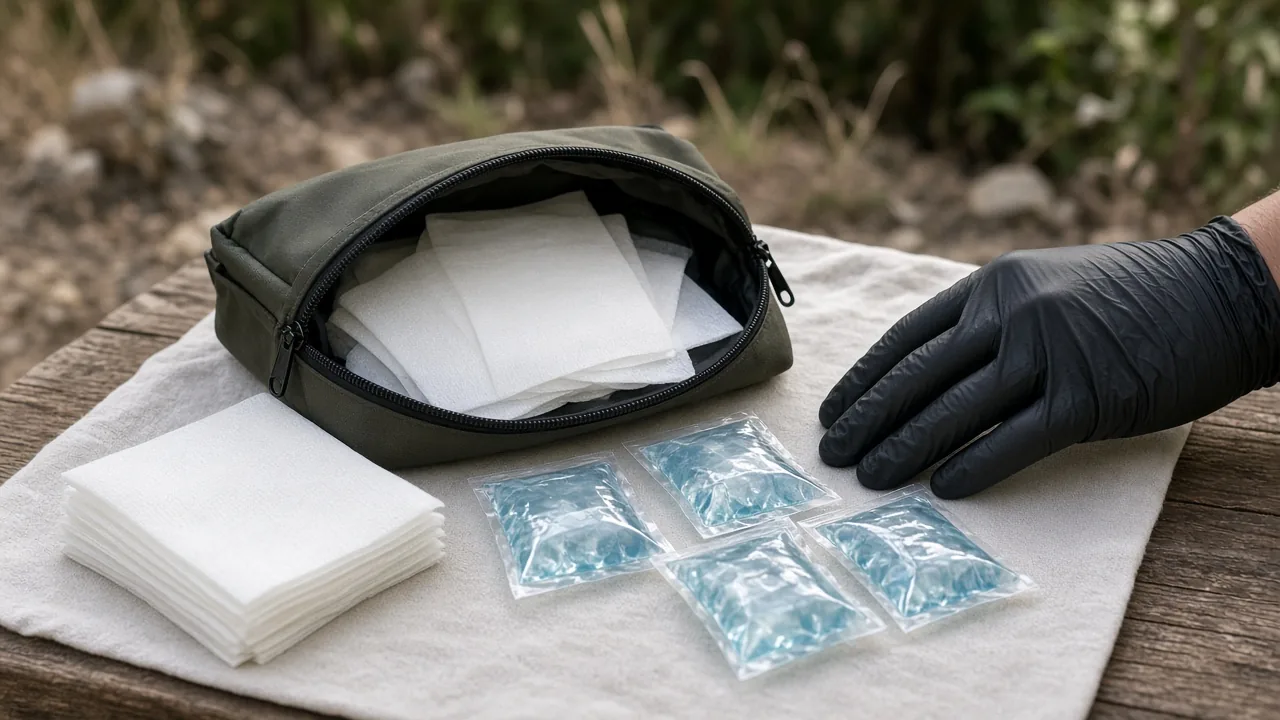
Check that the package states it covers flame, heat, chemical, steam, and electrical burns. That labeling matters because not all burn supplies work for every source. A gel designed to cool a minor thermal burn may not be the right choice for a chemical exposure. A dressing that handles a stove burn may not be indicated for an electrical burn. The package wording is your easiest filter. One burn kit reviewed for camping includes two large burn dressings plus dry burn dressings and eight water-based gel packets. That count gives you enough to treat more than one small burn or a single larger area without immediately running out. The dressings and gel are the reason to buy a dedicated kit instead of stuffing a general first aid pouch with extra gauze.
Tools, wraps, and instructions
Scissors, tape, elastic bandage, and a clear instruction sheet help you apply and secure the dressing without contaminating the burn. Scissors let you cut away fabric rather than pulling clothing over burned skin. Tape and an elastic bandage hold the dressing in place while you get to a car or trailhead. Gloves reduce the chance of introducing dirt from your hands. A quick-reference instruction card is especially useful if someone in your group has less first aid experience. They can follow the steps while you focus on cooling the burn and calming the injured person.
Sealable storage and restocking
A reusable sealable pouch keeps contents dry and lets you see what needs replacing after a trip. Camp kitchens are dusty, damp, and occasionally spilled on. A heat-sealed pouch that cannot be resealed becomes a problem once opened. Look for a kit with a press-to-seal or zip closure. After each trip, open it up, inspect the gel packets and dressings, and replace anything torn, wet, or used. A clear front panel makes that check faster. If the pouch is opaque, label it clearly and keep it in the same camp kitchen location every trip.
Dedicated Burn Kit vs. General First Aid Kit: Which One for Camping?
A general kit alone may not tell you which burn items are present. You might have assorted bandages, gauze pads, and antibiotic ointment, but no burn-specific dressing large enough to cover a forearm. A dedicated burn kit bundles the right dressings and gel together. Still, you need to read the label. Some kits are little more than a repackaged first aid pouch with one burn gel packet added. Others are genuinely burn-focused with multiple dressings, gel packets, gloves, and tools. The comparison below helps you weigh the two options across common camping needs.
| Factor | Dedicated burn kit | General first aid kit alone |
|---|---|---|
| Burn dressings | Multiple large and dry dressings in one pouch | Often none or one small burn pad |
| Burn gel | Usually several packets | Sometimes one packet, or none |
| Speed in a burn emergency | Faster: everything in one labeled pouch | Slower: search through mixed supplies |
| General injuries | Limited to burns | Covers cuts, blisters, stings, sprains |
| Weight and bulk | Extra item in camp bin or pack | Already carried |
| Best for | Car camping with stoves and fires | Backpacking with a small burn module added |
What the dedicated kit gets right
A dedicated kit takes away the sourcing work. One example reviewed for camping includes multiple dressings, eight gel packets, gloves, scissors, tape, and an elastic bandage. That is a complete burn response in one pouch. You do not have to buy sterile pads, gel, and tape separately, then remember to pack them all. The package also states which burn types it covers, which helps when you are shopping. If you cook over flames or boil large pots of water, that pre-assembled design is the main argument for buying a dedicated kit rather than building your own.
What a carrier-style pouch still requires
Some first aid carriers look like they solve the problem but do not include medical items. One pouch reviewed in a separate kit demonstration has useful space, but the medical items shown in the demo are added separately. That same principle applies to many general camp kits. The pouch or bag may have room for a tourniquet, chest seal, triangular bandage, and elastic wrap, but those items are not included. If you are buying a carrier, factor in the cost and effort of filling it with appropriate supplies. For campers, a carrier-style kit only works if you actually add burn dressings and gel before the trip.
Use a simple comparison when shopping
Compare weight, packed size, number of burn dressings and gel packets, and whether the kit includes instructions. This works whether you car camp or backpack. For car camping, weight and size matter less, so a full kit with more gel and larger dressings is fine. For backpacking, look for the smallest pouch that still contains one large burn dressing, two or three gel packets, and a pair of gloves. If the kit does not list quantities on the package, open it in the store or check the manufacturer's contents list. The goal is to know exactly what you are carrying before you need it.
What Are the Most Common Camping Burn Scenarios?
Camp stoves, boiling water, steam, spilled fuel, and vehicle batteries can cause burns. A kit labeled for flame, heat, chemical, steam, and electrical burns covers those bases. Think through your own cook setup. A backpacker on a canister stove risks a pot tipping or a flame flare-up. A car camper with a larger stove, a griddle, and a fire ring adds more heat sources. Anyone refilling a liquid-fuel stove handles fuel that can spill and ignite. A vehicle battery can arc and cause a small electrical burn if you are jump-starting at a trailhead. The burn types in your kit should match the heat and fuel sources you bring.
Stove, fire, and hot water risks
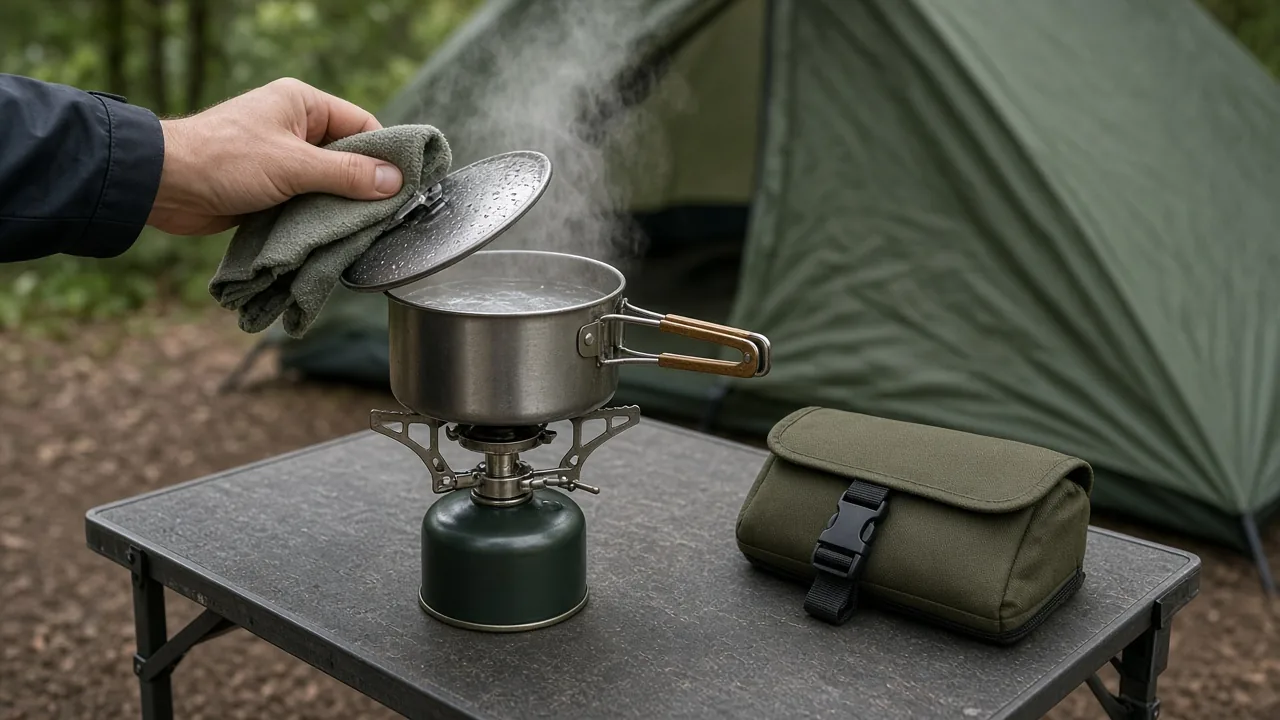
Most camping burns come from stoves, fires, and hot water. A pot handle rotates over the flame, a windscreen makes the canister area hotter than expected, or someone trips near the fire ring. Boiling water is especially dangerous because it holds a lot of heat. Never use a stove or heater inside your tent. Carbon monoxide and fire risk make any enclosed space unsafe. Set up your stove outside on a stable surface, away from tent walls and high-traffic paths. Keep the pot handles turned inward and the cooking area clear.
Chemical, steam, and electrical burns
Fuel spills, radiator steam, and battery sparks are less common but serious. The package labeling on one burn kit explicitly includes flame, heat, chemical, steam, and electrical burns, which is a clue to look for when shopping. A chemical burn from liquid stove fuel needs a different first response than a flame burn, and a dressing that works for one may not be labeled for the other. Steam from a camp oven or a radiator after driving to the trailhead can scald quickly. Electrical burns from batteries or faulty connections are rare around camp, but if you carry jumper cables or a power station, the risk is not zero.
How Many Burn Kits Do You Actually Need?
If you split time between camp, car, and home, one kit per location reduces the chance of forgetting it. One reader bought four for exactly that reason: camping, car, home, and a small kit for daily carry. You may not need four, but think about where you cook or handle heat. A kit in the camp kitchen bin stays with your stove and fuel. A small kit in the car covers roadside radiator steam, battery cables, and impromptu tailgate cooking. If you only buy one kit and move it between places, it will be in the wrong place when you need it. That is true of most emergency gear.
What Else Should You Carry Alongside a Burn Kit?
Keep a general first aid and emergency reference manual close, and confirm fire restrictions and weather before the trip. A burn kit treats injury, but prevention and basic first aid still matter. Fire restrictions can change the way you cook. A full fire ban may mean you rely on a canister stove only, which slightly changes the burn risk profile. Weather matters too. High winds can push flames and smoke, making stove use riskier. Check the forecast the day before and adjust your plan.
Pair it with your regular first aid kit
A burn kit does not replace bandages, pain relievers, or blister care. Carry it as one module within your camp medical supplies. The general kit handles cuts from a knife, scrapes from a fall, blisters from boots, and aches from a long day. The burn kit handles thermal, chemical, steam, and electrical burns. Together they cover most injuries you will see around camp. If your general kit already has a burn gel packet and a non-adherent dressing, a dedicated burn kit may be redundant for short backpacking trips. For car camping, the full kit adds capability without much penalty.
Know the limits of first aid
For serious burns, cool the area, cover with a clean dressing, and seek emergency care. Follow official guidance rather than relying only on a kit. A burn kit is not a substitute for evacuation or professional medical treatment. Large burns, burns on the face or airway, electrical burns, and chemical burns all need a higher level of care than a camping first aid kit can provide. The kit is for the minutes between incident and help. Keep your phone charged, know the nearest trailhead or medical facility, and tell someone your route before you go.
How Should You Store and Restock a Camping Burn Kit?
Store it in a cool, dry place and check before each season that gel packets, dressings, tape, and gloves are intact and within their usable condition. Heat degrades gels and adhesives. A kit left in a hot car all summer or a damp camp bin all spring may not work as intended. Check the packaging for storage guidance, and err on the side of replacing anything that looks dried out, brittle, or torn. After any trip where you use part of the kit, restock it before the next outing. Missing items turn a well-planned kit into a false sense of preparedness.
Pack placement
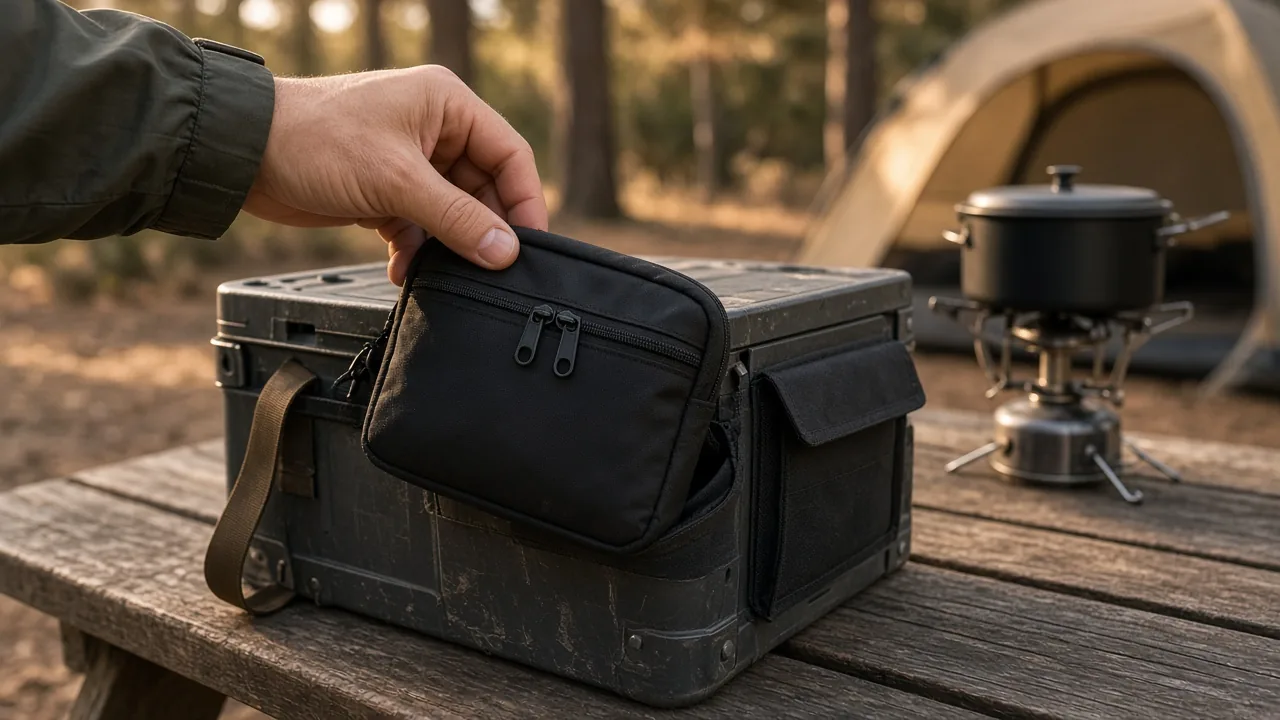
Keep the burn kit in an outside pocket or kitchen bin so you can reach it quickly while cooking. It should not be buried under the tent and sleeping bag. If someone spills boiling water or catches a sleeve on a stove flame, you do not want to empty a backpack to find the dressing. In a car camp setup, the kitchen bin or a labeled side pocket of the camp box works well. In a backpack, use a top lid or hipbelt pocket. The same principle applies to a general first aid kit: accessible beats organized if the organized kit is at the bottom of a dry bag.
Final Check for Your Trip
Decide by trip type. Car camping can absorb a full burn kit without much penalty, and the larger dressings and extra gel packets make sense around a bigger stove and fire ring. Backpacking may warrant only burn gel and a dressing inside your regular first aid kit, especially if you are carrying a small canister stove and no fire. Check overnight lows, rain, and whether you will cook over a stove or fire, then choose the burn supplies that match. A full burn kit pairs well with a camp kitchen kit if your trip involves multiple hot meals, but the lightest option is still a small burn module for an overnight route.
By Camp Kit Journal
This article is general information about camping gear, not professional safety, medical, or wilderness training. Check fire restrictions, weather, and campsite rules before you go, and follow the manufacturer's instructions for your own equipment.
FAQ
Is a dedicated burn kit worth it for camping?
It depends on trip style. Car campers cooking over stoves and fires benefit from a dedicated kit, while backpackers may prefer a few burn gel packets and a non-adherent dressing inside a lighter first aid kit.
What should I check inside a camping burn kit?
Look for large burn dressings, dry burn dressings, water-based burn gel, scissors, gloves, medical tape, and an elastic bandage. Check that the package states it covers flame, heat, chemical, steam, and electrical burns.
Can a general first aid kit replace a burn kit for camping?
A general kit alone may lack burn-specific dressings large enough for serious burns. A dedicated burn kit bundles the right supplies together, but for short backpacking trips a small burn module inside a regular kit may be enough.
How many burn kits do I need?
If you split time between camp, car, and home, one kit per location reduces the chance of forgetting it. At minimum, keep one in your camp kitchen bin and consider a small kit for your car.
How should I store and restock a camping burn kit?
Store it in a cool, dry place and check before each season that gel packets, dressings, tape, and gloves are intact. Keep it in an outside pocket or kitchen bin so you can reach it quickly while cooking.