Inflatable vs Foam Camping Pillow: Support and Packability
Foam pillows offer steadier neck support for car campers and side sleepers, while inflatable pillows save pack space for backpackers. Match support, weight, and packed size to your trip.
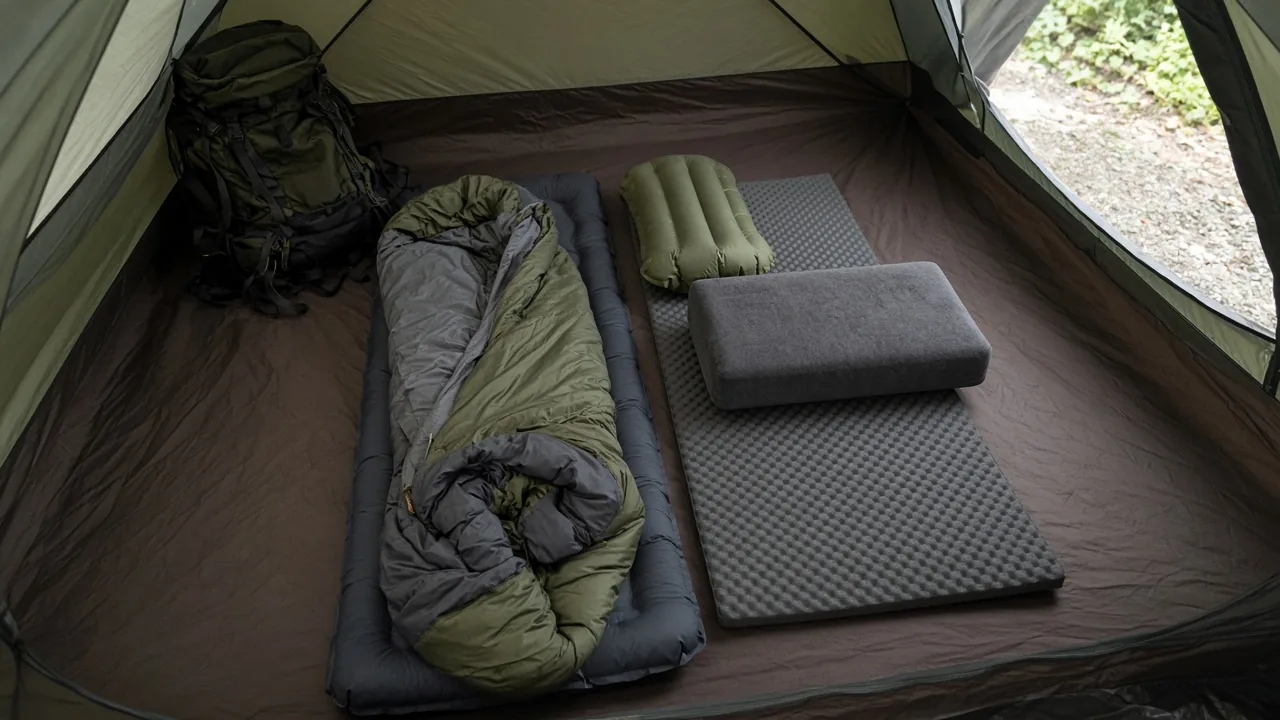
For most car campers and side sleepers, a foam pillow gives steadier neck support. For ounce-counting backpackers, an inflatable pillow saves pack space if you can accept less support. The inflatable vs foam camping pillow decision usually comes down to one trade-off: stable neck alignment versus packed size and weight. Match the fill type to your trip, and a pillow stops being an afterthought.
What to Compare in a Camping Pillow
Before choosing, separate two priorities: sleep comfort and packed footprint. Neck support matters first because a pillow that collapses or rolls leaves you waking stiff. Packed size and weight matter more when you carry everything for miles. Adjustability covers firmness and height, while durability includes how the fill and valve hold up to repeated packing. Car campers can lean toward comfort, while backpackers should weigh ounces and cubic inches.
Inflatable vs Foam Camping Pillow: Support and Packability
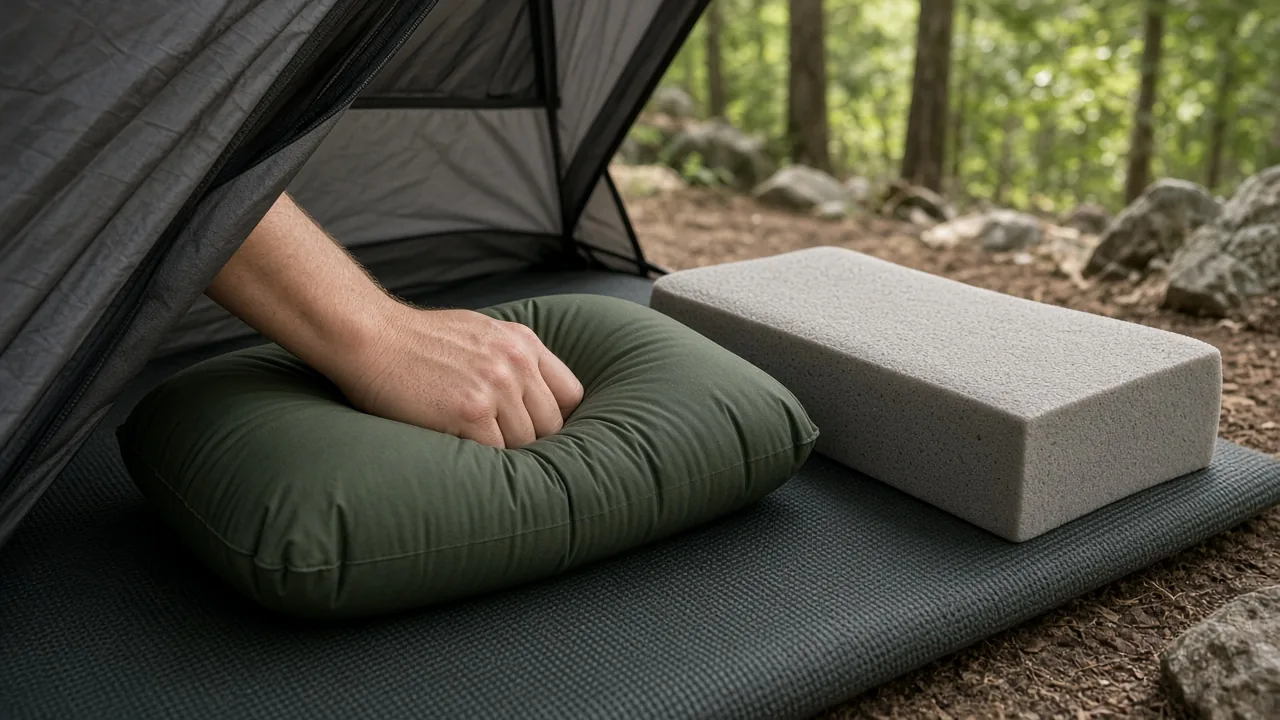
The biggest split between these two styles shows up in support, packed volume, weight, and adjustability. Use the table below as a quick reference, then match the trade-off to the type of camping you actually do.
| Comparison | Inflatable camping pillow | Foam camping pillow |
|---|---|---|
| Neck support | Adjustable by air volume, but can feel too firm when fully inflated or unstable when soft | Holds a steadier shape; high-resilience foam springs back and memory foam conforms |
| Packed volume | Smallest; often rolls down to a compact bundle | Bulkier; memory foam compresses into a travel cover, high-resilience foam needs a strap |
| Weight | Usually the lighter choice for backpacking | Heavier and bulkier, but less important for car camping |
| Adjustability | Mostly air volume only | Shredded memory foam can be softened or firmed; high-resilience foam has fixed loft |
| Best use | Backpacking, short trips, sleepers willing to trade support for pack space | Car camping, side sleepers, or anyone who wants steady neck support |
Neck Support and Sleep Position
Inflatable pillows can be difficult to dial in. Fully inflated, many feel like a rounded ball that pushes your head forward. Underinflated, they tend to shift sideways and let your head roll off center. Foam pillows hold a more predictable shape for back and side sleepers. High-resilience foam opens through a valve and springs back like a self-inflating pad. Memory foam responds more slowly and fills the gap between your shoulder and ear with less bounce.
Side sleepers usually need more loft to keep the neck aligned, and that is where foam has an edge. A stable, raised surface is harder to duplicate with air alone. Back sleepers may tolerate a flatter inflatable pillow, especially if they do not move much at night.
Packed Size and Weight
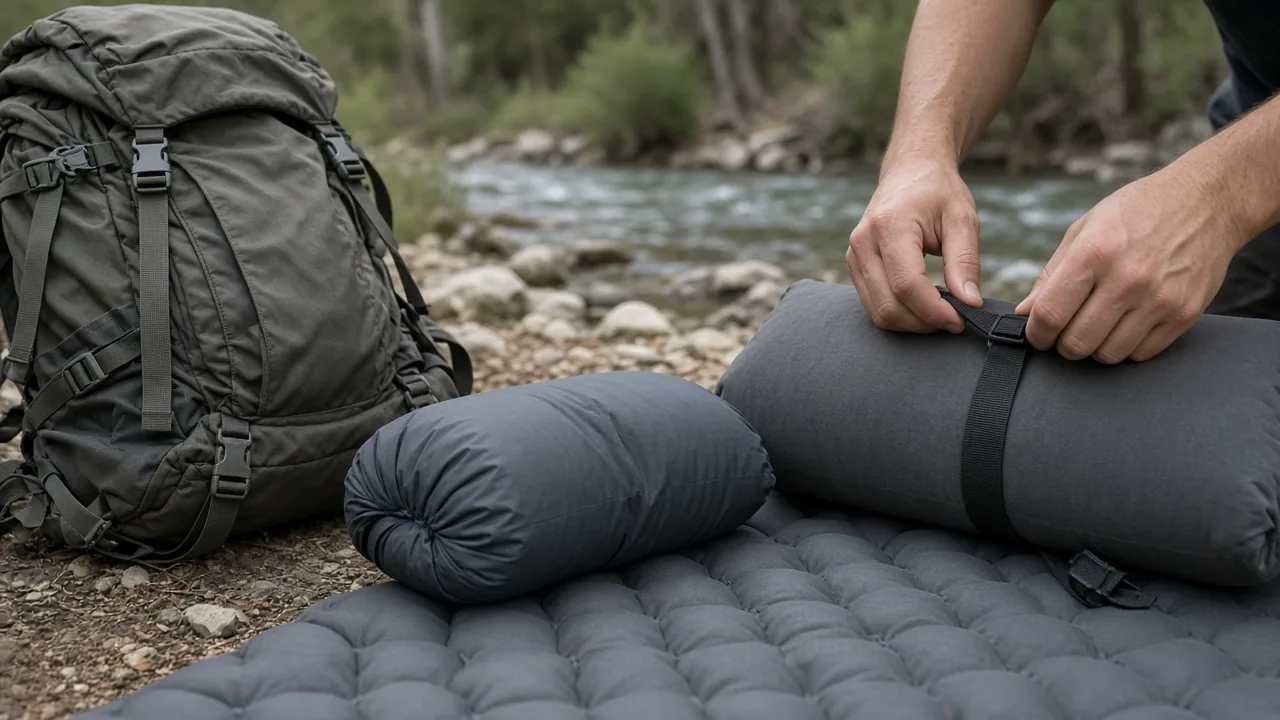
An inflatable pillow compresses to the smallest bundle of the common camping pillow types. That makes it the obvious choice when pack volume is tight. Memory foam and high-resilience foam pillows pack larger and land close to each other in stuffed size. Memory foam can be rolled to expel air and then capped, so it does not fight you as much as high-resilience foam during packing. The size savings of an inflatable pillow usually come with reduced support and stability.
Adjustability and Comfort Tuning
Foam pillows offer more direct ways to change firmness. A shredded memory foam design, such as the HEST Camp Pillow, uses a secondary zipper on the liner so you can remove fill to soften the pillow or add fill for more height. That is useful if you expect to switch from truck camping to a firmer sleeping surface. Inflatable pillows adjust mainly by adding or releasing air, and that tuning can still feel bouncy or uneven. High-resilience foam has a fixed loft once it expands, so you choose the pillow shape rather than fine-tune the fill.
Who Should Choose an Inflatable Camping Pillow
Backpackers counting ounces and cubic inches often prefer an independent inflatable pillow, provided they accept the trade-off in support. It packs small, weighs less than most foam options, and is easier to fit into an already full pack. One pattern to skip is the integrated pillow on some air mattresses. When fully inflated it feels overly tall; when soft, your head rolls to one side.
You may get along with an inflatable pillow if you sleep on your back, do not toss much, and want to save pack volume above everything else. Side sleepers and people with restless sleep may find the air-filled surface shifts too often. Some ultralight down-and-air pillows reduce weight further, but the price climbs quickly.
Who Should Choose a Foam Camping Pillow
Car campers, side sleepers, and anyone who wants adjustable neck support should carry the extra bulk of a memory foam or high-resilience foam pillow. The weight penalty matters less when your vehicle carries the load. Memory foam hugs the head and neck without the sideways roll common on air pillows. High-resilience foam behaves more like a self-inflating pad and returns to shape after you open the valve.
A shredded memory foam pillow can be tuned by adding or removing fill, which makes it easier to match your sleep position. The packed size is larger, but for car camping that is rarely a problem. If you often wake up with a stiff neck after sleeping on an inflatable pad pillow, a foam pillow is the stronger starting point.
How to Pack and Care for Either Pillow
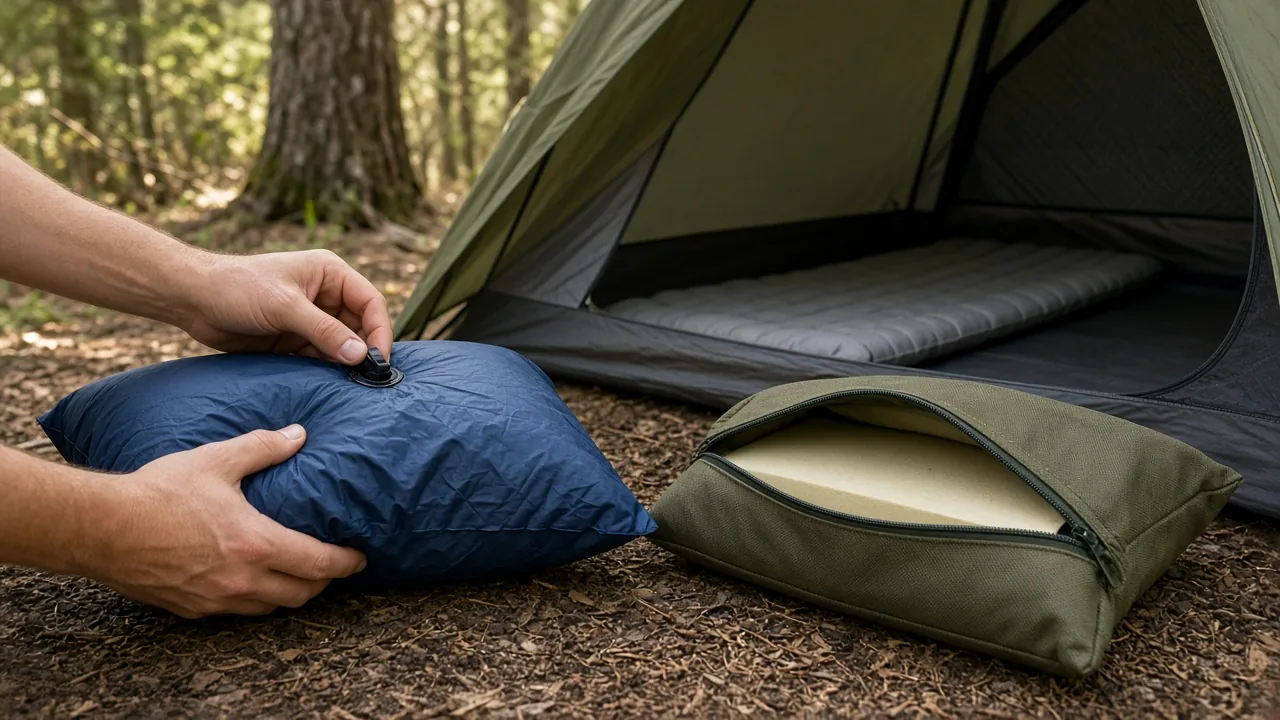
Proper packing keeps foam pillows from losing shape and keeps inflatable valves clean. Follow the manufacturer's instructions for each fill type, and make sure the pillow is dry before long storage. A little care at pack-up helps the pillow hold its loft trip after trip.
Foam and Memory Foam Pillow Packing
Shake out a shredded foam pillow to restore loft, then stuff it back into its cover and zip it closed for travel. The fill can take some pressure during packing, but you do not want to force wet foam into a tight cover. For a solid memory foam pillow, roll it to push out air, cap or cover the opening, and secure it before it rebounds. High-resilience foam needs to be pressed down while you fit the strap; let it expand only after you are ready to sleep.
Inflatable and Self-Inflating Pillow Packing
Let self-inflating foam pillows rise, then press out the air and strap them down. Rolled inflatable pillows pack smallest, but keep the valve dry and free of dirt or sand. Close the valve before storing so grit does not work its way inside. If the pillow feels damp after a cool night, open it and let it air out before packing for the next morning.
How to Choose: Car Camping vs Backpacking
For car camping, prioritize foam comfort and adjustability. You can carry a larger pillow, tune the fill at camp, and sleep better without worrying about cubic inches. For backpacking, prioritize packed size and weight. An inflatable pillow may earn its spot, but expect to spend a few minutes adjusting air pressure before it feels stable.
Whatever pillow you bring, keep the tent a no-flame zone. Never use a stove or heater inside your tent, and follow the manufacturer's instructions for any fuel appliance. Before heading out, check fire restrictions, campsite rules, and the weather forecast. Store food in a bear-safe way where local rules require it.
Match the pillow to the trip: note whether you are backpacking or car camping, how cold and wet the night looks, and whether neck support or pack size matters more. If you are already carrying a bulky sleeping pad and extra layers, a foam pillow may be worth the space. If you are trimming pack weight, an inflatable pillow fits better but usually needs more adjustment before it feels right.
This article is general information about camping gear, not professional safety, medical, or wilderness training. Check fire restrictions, weather, and campsite rules before you go, and follow the manufacturer's instructions for your own equipment.
FAQ
Is a foam or inflatable camping pillow better for side sleepers?
Foam camping pillows usually work better for side sleepers because they hold a steadier, raised shape and help keep the neck aligned. Inflatable pillows can push the head forward when fully inflated or shift sideways when soft.
Are inflatable camping pillows good for backpacking?
Yes. Inflatable pillows pack down to a small bundle and weigh less than most foam options, which makes them a strong choice when pack volume and ounces matter. The trade-off is usually less support and stability.
Can you adjust firmness on a foam camping pillow?
Shredded memory foam pillows can be adjusted by removing or adding fill through the liner zipper. High-resilience foam pillows have a fixed loft once expanded, so you choose the shape rather than fine-tune the fill.
How should I pack a memory foam camping pillow?
Roll the pillow to expel air, cap or cover the opening, and secure it before it rebounds. Make sure the pillow is dry before long storage to help it hold its loft.
Do inflatable camping pillows adjust like foam pillows?
Inflatable pillows adjust mainly by adding or releasing air. This tuning can still feel bouncy or uneven, and it offers less direct firmness control than shredded foam fill.



