How to Use a Trangia Alcohol Stove Without Slow Boiling
Assemble your Trangia alcohol stove with the base holes-up and the closed windshield fitted, then measure fuel and light safely to avoid slow boils and wasted alcohol.
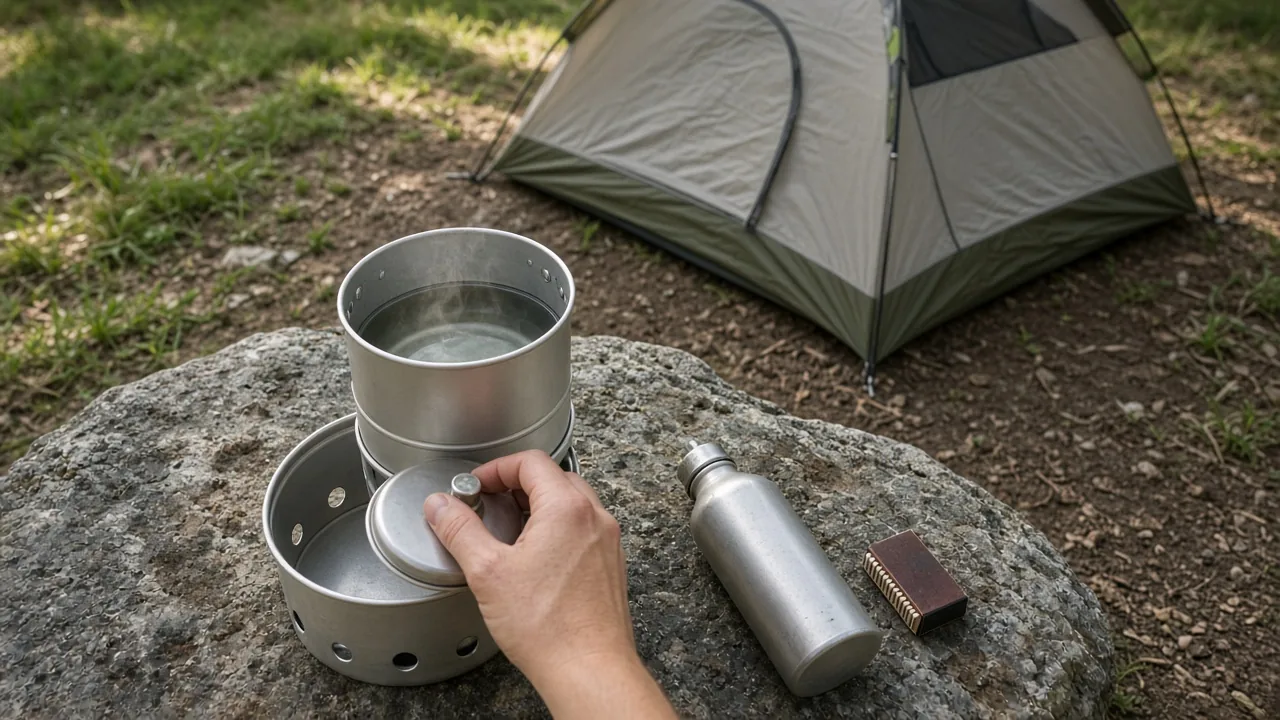
Learn how to use a Trangia alcohol stove by assembling the base holes-up, fitting the full windshield, measuring alcohol, and lighting with a match. This prevents slow boiling and wasted fuel. The most common mistake is placing the lower base upside down, which chokes airflow and turns a normally efficient stove into a frustrating, slow cooker. Get the assembly right and a Trangia can bring 500 ml of water to a rolling boil in roughly seven minutes in mild conditions, using only about 30 ml of alcohol.
What Do You Need to Use a Trangia Alcohol Stove?
Before you light anything, gather the right items and check the rules where you are camping.
Start with denatured alcohol or HEET in the yellow bottle. Both work well in a Trangia burner. You will also need matches or a lighter, a level non-flammable surface, and enough water for your first test boil.
Check fire restrictions before your trip. Alcohol stoves are banned in some areas, including parts of California, because liquid fuel can spill and spread fire quickly. A stove that is legal in one national forest may not be legal in another, so verify the current rules for your specific destination.
Set up away from dry grass, pine needles, tent fabric, and anything else that can catch fire. A flat rock, packed dirt, or a camp table works better than soft ground.
How to Use a Trangia Alcohol Stove: Correct Assembly First
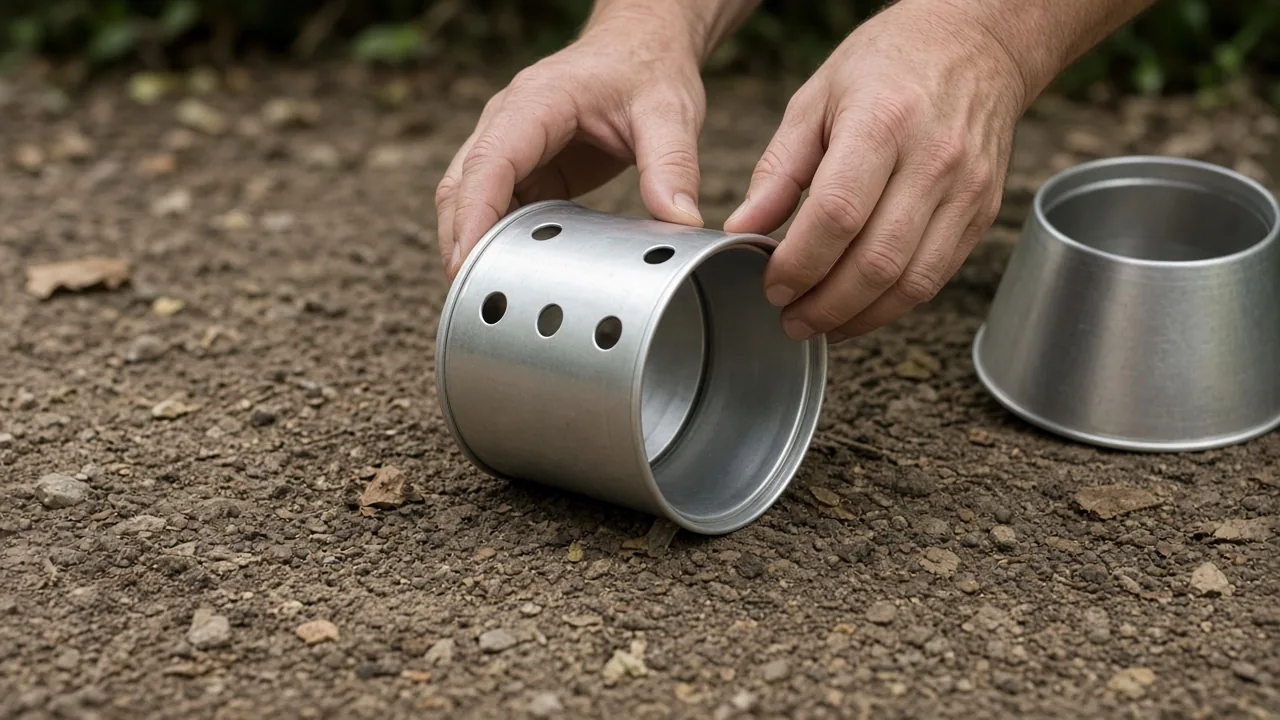
The single biggest fix for slow boiling is assembling the lower windshield the right way. Place the lower base with the hole-side up so the burner sits above the ground, not resting directly on it. This creates an airflow channel under the burner. If the base is flipped the wrong way, the burner gets starved of air and the flame stays weak.
Think of the lower base as a stand, not a tray. The burner needs air moving underneath it. With the holes up, the base lifts the burner slightly and lets flame-friendly air circulate. Many users who reported 15-minute boil times found that flipping the base cut that time in half or better.
How Do You Fit the Burner and Upper Windshield?
Fill the burner first, then place it inside the lower base. Put the pot on the upper supports, then set the closed upper windshield around the pot. The upper shield should wrap the sides of the pot so heat climbs the walls instead of escaping into open air.
The upper windshield on a real Trangia is completely closed, with no vent holes. That matters. Open-sided or hole-punched copies let wind blow through and pull heat away from the pot. A closed upper shield traps a column of warm air around the cookware.
Which Way Should the Base Opening Face in Wind?
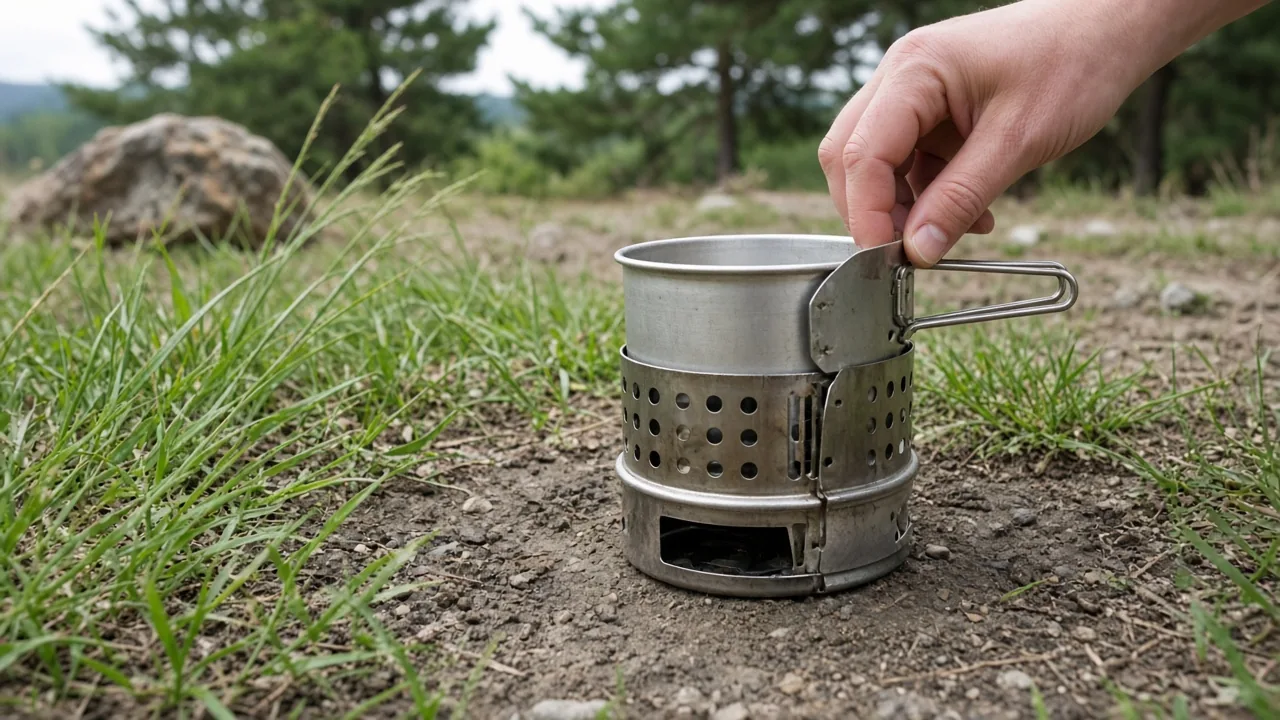
The lower windshield has a single opening on one side. Rotate the base so that opening faces away from or across the wind, not directly into it.
In a light breeze, facing the opening across the wind helps feed air to the flame without letting gusts blast through. In stronger wind, turn the opening further away from the wind until the flame steadies. The base opening is both an air intake and the flame's only weak point in wind.
How to Measure and Ignite Fuel in a Trangia Alcohol Stove
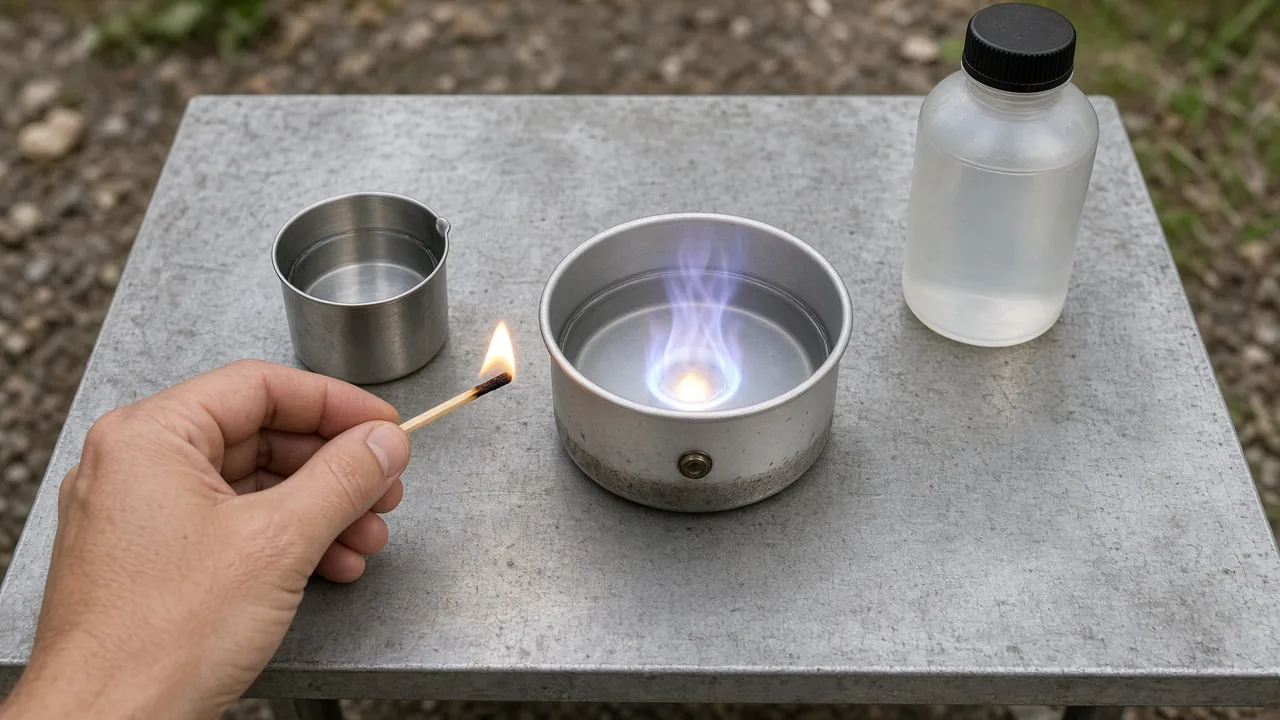
Measure the alcohol before you light it. About 30 ml, or 1 ounce, can boil 500 ml of water in roughly seven minutes in mild wind with a correctly assembled Trangia. Cooking a full meal usually takes more fuel, so plan around 45 to 60 ml for most one-person tasks.
Do not guess and overfill. Extra alcohol in the burner means a longer, hotter burn than you need, and the unused fuel is hard to pour back into the bottle without spilling.
In warm weather a lighter works fine. In cold weather, use a match and hold it near the burner rim. Alcohol vapor ignites more readily from a match flame than from a lighter spark when temperatures drop.
Should You Start the Stove Before Setting Up Camp?
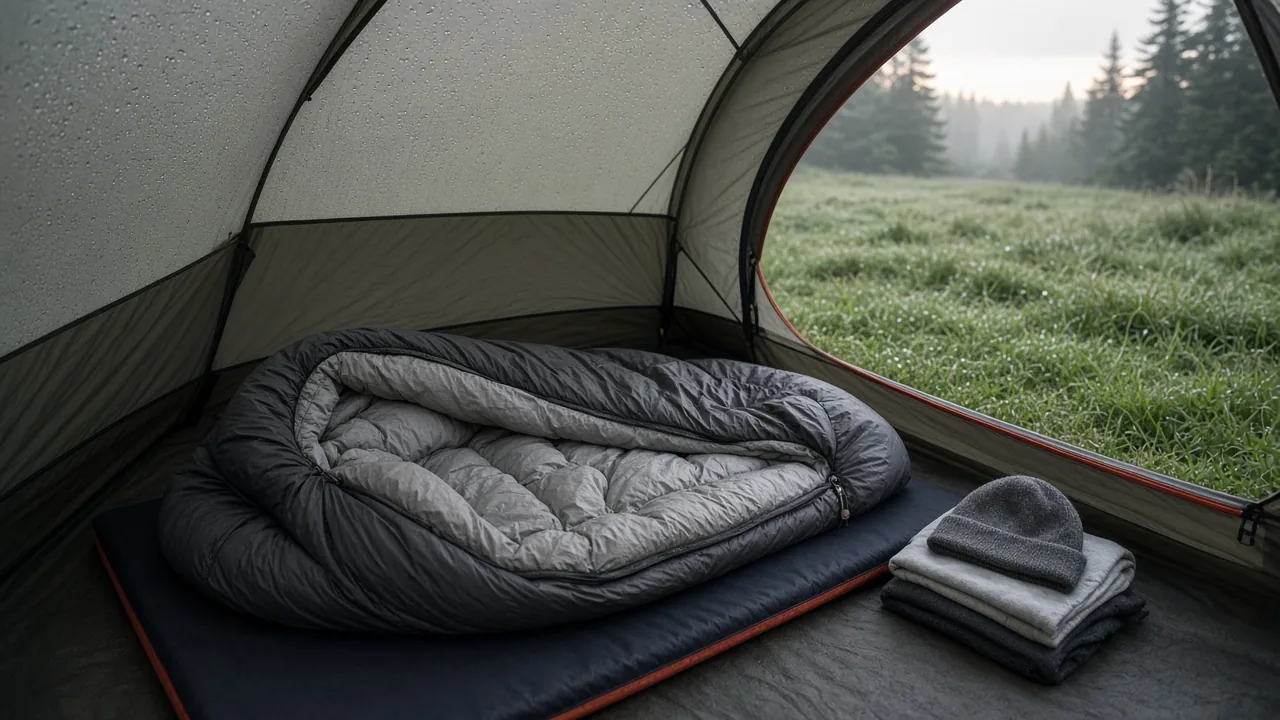
Yes. Light the stove as soon as you reach camp because the assembled Trangia is stable and unlikely to tip over. Water can heat while you pitch your tent or sort your sleep system. By the time camp is set, you have hot water for coffee, a dehydrated meal, or washing up.
This works best on level ground away from main foot traffic. Do not leave any stove unattended, but you can work nearby while glancing over every minute or two.
How Do You Refuel a Trangia Alcohol Stove Safely?
Flames from alcohol can be nearly invisible in daylight. You may look at the burner and think it is out when it is still burning.
Never pour fuel into a burner that might still be lit. Cap the burner with its simmer ring or snuffer and wait 30 to 60 seconds before adding fuel. This gives any hidden flame time to die completely.
Keep the fuel bottle well away from the stove when refueling. One common accident is holding the bottle over the stove while pouring, which can melt or ignite the bottle spout if the flame jumps. And never use a stove or heater inside your tent.
Why Your Trangia Alcohol Stove Boils Slowly or Uses Too Much Fuel
If your Trangia is slow, the base is probably upside down. That single mistake accounts for most "this stove is terrible" complaints. But a few other factors also slow things down.
Wind hitting the open side of the lower base can rob the flame of heat. Too much fuel creates a tall, sooty flame that wastes alcohol without transferring heat well. Too little fuel means the water never reaches a full boil. Clone windshields with vent holes or a taller burner gap also hurt performance because they allow heat to escape sideways rather than wrapping the pot.
The fix list is short: flip the base, keep the upper shield closed, measure the fuel, and turn the lower opening away from the wind.
How Much Better Is a Trangia Than a Look-Alike in Wind?
The difference shows up quickly in controlled conditions. In one outdoor test at 12°C with 30 ml of alcohol, a Trangia 25 boiled water in 7 minutes and 1 second in light wind. A look-alike system took 12 minutes under the same conditions.
In level-3 wind at roughly 5 meters per second, the Trangia 25 with 30 ml still reached 94°C. The copy only reached 54°C. Neither boiled with that small fuel amount, but the Trangia came far closer.
Two design details explain the gap. The Trangia's upper windshield is completely closed, while the look-alike had vent holes that let wind blow through. The pot gap also matters: the Trangia holds the pot about 4 cm above the burner, while the copy sat at 7 to 8 cm. A taller gap lets more heat dissipate before it reaches the pot.
Can Correct Assembly Really Cut Fuel Use?
Yes, and the difference is large. One user reported that 1 ounce of alcohol boiled two cups of water in five minutes after correcting the base orientation. An 8-ounce bottle lasted more than three days on a solo trip. That is a practical fuel budget, not a constant struggle to get water hot.
Alcohol Stove vs Canister Stove: Which Should You Carry?
Alcohol stoves are quieter and mechanically simpler. A canister system like the Pocket Rocket Deluxe weighs only about 1 ounce more than a Vargo alcohol stove with an 8-ounce fuel bottle, and it refuels by swapping canisters in seconds. The right choice depends on trip length, group size, and conditions.
| Factor | Trangia Alcohol Stove | Canister Stove |
|---|---|---|
| Approximate packed weight with fuel | 8.6 oz for stove plus 8 oz alcohol | 9.6 oz for Pocket Rocket Deluxe plus full canister |
| Boil speed | 7 minutes para 500 ml in mild wind, slower in wind | Faster and steadier in wind |
| Noise | Very low | Noticeable burner sound |
| Fuel availability | Denatured alcohol and HEET widely available | Canisters need outdoor retailers |
| Cold weather | Some users report working below 0°F | Canister output drops in cold |
| Group cooking | Slow for multiple people | Better for heating water repeatedly |
Do Alcohol Stoves Work in Cold Weather?
This is where reports split. Some long-time users say a Trangia works below 0°F because liquid alcohol does not need canister pressure to vaporize. One hiker reported that three JetBoil stoves failed on a cold Appalachian Trail night while a Trangia kept running.
Other testers point out that many vaporizing alcohol stoves struggle in extreme cold, especially when the burner and fuel are cold-soaked. The safest approach is to test your own setup before relying on it in freezing weather. What works at 25°F may not work at -10°F.
Is an Alcohol Stove Better for Solo or Group Trips?
Alcohol stoves fit solo short trips better than group cooking. One person can wait seven or eight minutes for water without a problem. When three or four people are waiting for hot drinks and breakfast, those wait times stack up quickly.
A canister stove heats water repeatedly without refilling or cooling down. For groups, the extra ounce or two of a canister system pays for itself in speed and convenience.
Common Trangia Alcohol Stove Questions Answered
Use this checklist every time: base holes-up, upper windshield closed, fuel measured, wind opening positioned, and flame capped before refilling. If boiling still lags, check for soot buildup on the pot bottom or switch to fresh fuel.
Can a Trangia Alcohol Stove Last for Decades?
Many users report 27 to 35 years of service from the same burner. The stove has no moving parts, no seals to crack, and no valves to clog. That is the strongest argument for buying one.
Aluminum pots may discolor above the waterline after hard use. That is cosmetic and does not affect performance. Some users even out the color by boiling the entire pot submerged in a larger pot.
Is a Trangia Alcohol Stove Right for Backpacking?
Weight and fuel bulk make it better for car camping or short solo trips. A canister stove with a full fuel canister weighs nearly the same as an alcohol system with 8 ounces of fuel, but the canister delivers more burn time for that weight. Modern canister stoves suit longer routes for most hikers.
That said, some long-distance users still prefer a Trangia in deep cold because liquid alcohol keeps working when canister stoves falter. It is a niche choice, but a valid one for specific conditions.
Before packing, decide based on car camping versus backpacking, expected night temperatures, rainfall, and fire restrictions. Pair the stove with a windscreen-matched pot system and pack out all trash. If you mostly car camp and value quiet, simple gear, a Trangia rewards you after you learn the assembly. If you backpack long miles with a partner, a modern canister stove will likely serve you better.
This article is general information about camping gear, not professional safety, medical, or wilderness training. Check fire restrictions, weather, and campsite rules before you go, and follow the manufacturer's instructions for your own equipment.
FAQ
Which way should the Trangia base face?
Place the lower base with the hole-side up so the burner sits above the ground and air can flow underneath. Rotate the base opening away from or across the wind, not directly into it.
How much alcohol does a Trangia need to boil 500 ml of water?
About 30 ml, or 1 ounce, can boil 500 ml of water in roughly seven minutes in mild wind with a correctly assembled Trangia.
Why is my Trangia alcohol stove boiling slowly?
The most common cause is an upside-down lower base, which starves the burner of air. Wind hitting the base opening, too much or too little fuel, and open vent holes on clone windshields can also slow boiling.
Can I refuel a Trangia alcohol stove while it is lit?
No. Alcohol flames can be nearly invisible, so cap the burner with its simmer ring or snuffer and wait 30 to 60 seconds before adding fuel. Keep the fuel bottle well away from the stove when refueling.
Does a Trangia alcohol stove work in cold weather?
Some users report a Trangia works below 0°F because liquid alcohol does not need canister pressure to vaporize, but other testers say extreme cold can reduce performance. Test your own setup before relying on it in freezing conditions.