How to Start a Fire with Wet Wood: Dry Fuel First
Learn the reliable order for building a fire with wet wood: dry tinder first, thin split kindling, and small wet fuel added gradually. Includes tips on where to find dry wood, fire starters, and fire lays.
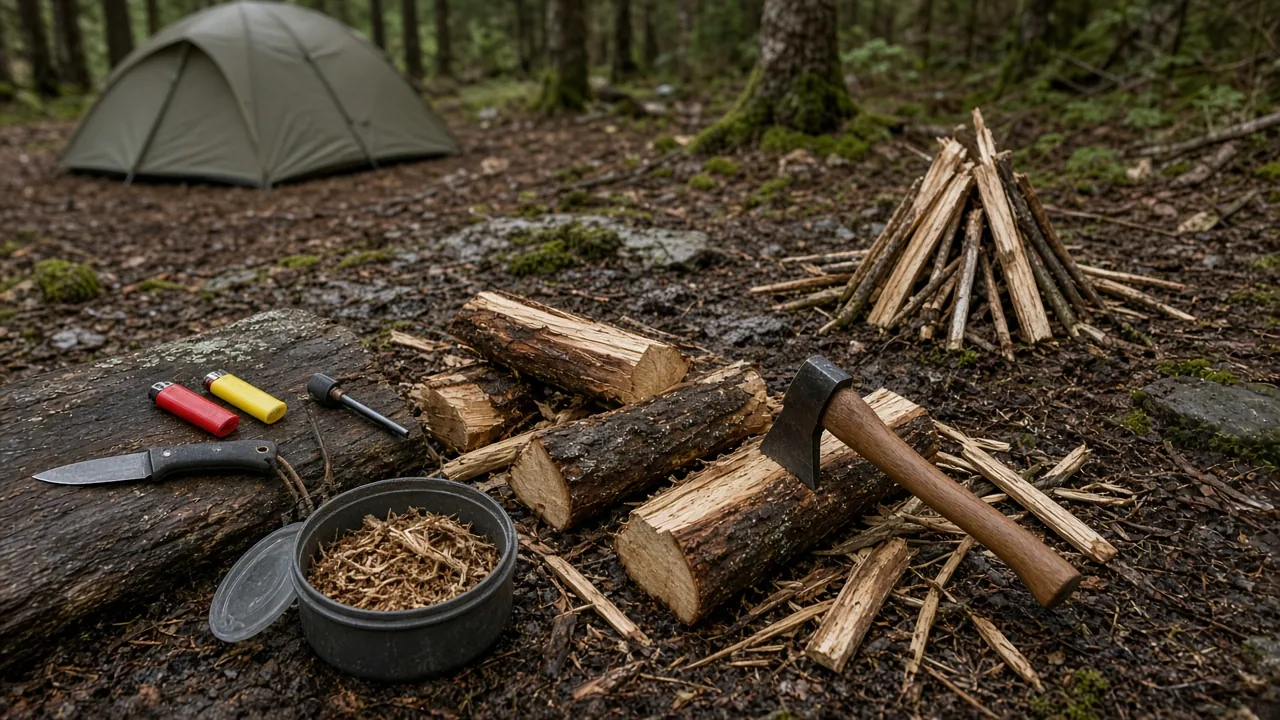
The short answer to how to start a fire with wet wood is that you do not begin with the wet wood itself. You start by finding or making dry tinder and fine kindling, then split wet fuel into thin pieces and let the early flame dry them out before you add anything bigger. If you try to force heat onto a thick, soaked log with a lighter or a match, you will usually waste fuel and time. The reliable order is dry tinder first, then fine dry kindling, then split wet wood added in small steps. This works for both car camping and backpacking, but the gear you carry will change with the trip.
Why Doesn't Wet Wood Catch Fire Like Dry Wood?
Wet wood resists ignition because the moisture inside the wood has to evaporate before the wood can burn. That evaporation pulls heat away from your small flame. Dry tinder and thin kindling are what build a hot enough base to overcome that heat loss and start drying the next piece of fuel.
How Does Water in Wood Change the Burn?
Water vaporizes before wood can ignite. That means a fire built around wet fuel spends much of its energy drying the wood instead of raising its temperature to the ignition point. A round, wet log is especially difficult because the outside can char while the inside stays cool and damp. Split pieces change that. A split stick exposes more surface area, lets air move across the damp fibers, and gives moisture a shorter path out of the wood.
Why Does Tinder, Kindling, and Fuel Order Matter More with Wet Wood?
You need three stages: tinder to catch a spark, fine kindling to build a flame, and split fuel to dry and burn. If you skip ahead and put a wet branch or split round onto a new flame, the moisture can cool the fire enough to smother it. With wet wood, the early fire is fragile. It needs a small, hot core of fast-burning material before it can handle damp fuel.
Is Splitting Wet Wood Enough by Itself?
Splitting wet wood into thin pieces helps because it increases surface area, improves airflow, and speeds evaporation. But splitting alone is a prep step, not a complete method. You still need an initial dry tinder or kindling fire. A pile of wet shavings will not light from a match. Once you have dry tinder burning, however, thin splits of wet wood become much more useful than thick damp rounds.
Gather Dry Tinder and Kindling When Everything Looks Soaked
The first priority in wet conditions is finding material that is already dry or making dry material from protected wood. Look in places where rain has not soaked through: inside dead standing wood, under thick bark, or in resin-rich sources like fatwood and birch bark. Keep your own tinder in a waterproof container so you are not relying on the forest to provide something dry.
Where Can You Find Dry Wood in Wet Conditions?
Dead standing branches and trunks are often the best source. Rain wets the outside, but the interior may stay dry. Split a dead standing branch open and shave from the center. The wood near the middle is more likely to be dry and usable for tinder or fine kindling. Trees that are still alive but have dead lower branches can work too, because those dead branches are often sheltered and easier to split open.
How Do You Make Feather Sticks and Shavings from Wet Wood?
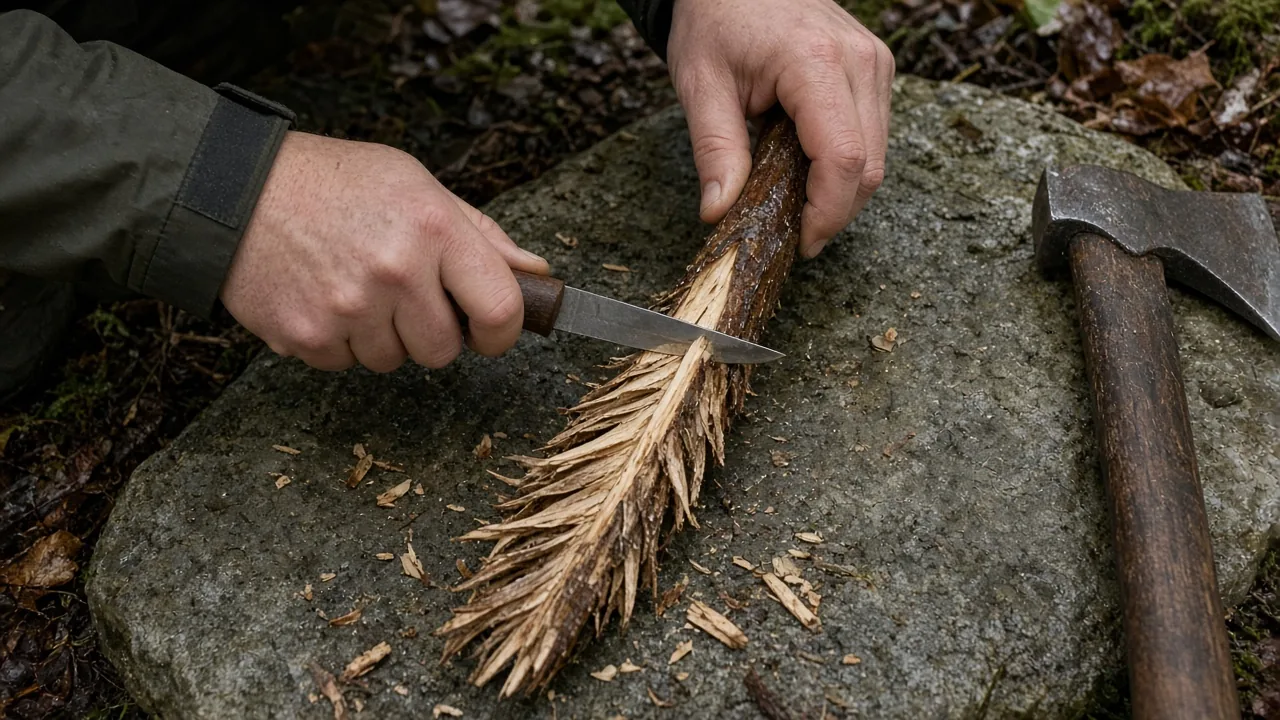
Use a fixed blade or hatchet to split small sticks lengthwise. Once you expose the dry inner face, cut thin curls from that face. These feathers expose much more dry surface to a spark than a round twig. The curls should stay attached to the stick at the base so they form a cluster rather than scattering. A few feather sticks around your tinder give the early flame fine, dry fuel that catches quickly.
What Tinder Works When It's Damp?
Birch bark, fatwood, dry grass, cotton lint, and char cloth catch sparks better than paper or wet leaves. Birch bark and fatwood contain resins that help them burn even when the surface is damp. If your tinder is slightly damp, carry it close to your body for a while before use. Body heat can dry it enough to catch a spark. Keep spare tinder in a waterproof bag or container so it is ready when the woods are soaked.
Which Fire Starter Works Best for Wet Wood?
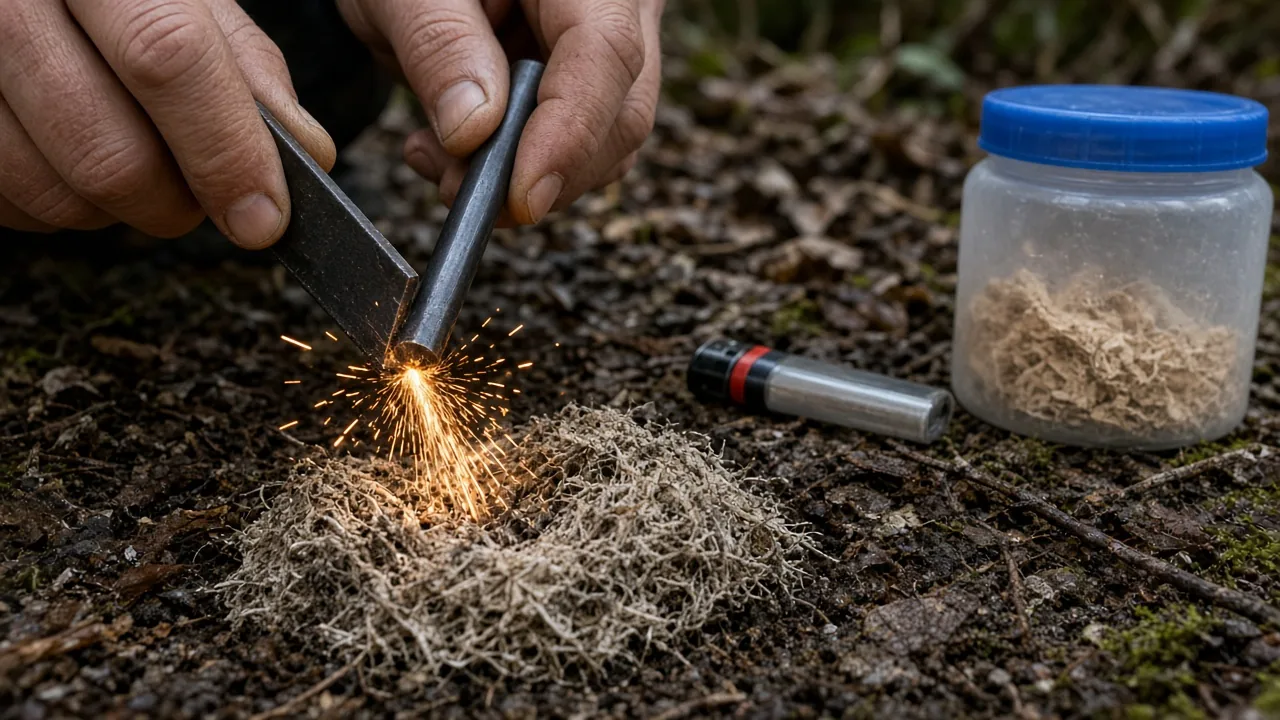
Carry at least two independent ignition methods and keep them warm and dry. A disposable lighter and a ferro rod cover most situations. A waterproof emergency starter can serve as a backup for car camping or a small emergency kit. The key is redundancy, because wet weather and cold hands increase the chance that one method fails.
Why Should You Carry Three BIC Lighters Instead of One?
One lighter is not enough for wet-weather reliability. A common setup is one in a pocket, one in a belt pouch or pack, and one in the main pack. Store at least one close to body heat because a BIC often fails below about 32°F until it warms up. Choose a bright color like orange so it is easier to find if dropped. If a lighter gets wet, dry it out before you need it; moisture in the striker wheel area can prevent it from sparking.
How Do You Use a Ferro Rod Correctly?
Use a sharp 90-degree scraper or the spine of a knife to shave hot sparks into fine tinder. Push the scraper along the rod with controlled speed and keep the rod tip close to the tinder. The sparks are hot enough to catch good tinder quickly. If you do not get an ember within three tries, stop and fix the tinder rather than striking harder. The problem is usually the fuel, not the spark.
When Is a Pull Start Fire Worth Packing?
A Pull Start Fire can light wet kindling quickly from its waterproof package. The product burns long enough to dry small sticks and start a usable fire, and it takes up little space. That said, it is a single-use emergency product with a sulfur-like smell. Treat it as backup for car camping or a small emergency kit, not as your primary method. It is useful when conditions are bad, but it does not replace carrying a lighter and knowing how to prep wood.
Is Friction Fire a Realistic Wet-Weather Option?
Drill, saw, and plow methods are possible but require dry wood, specific dimensions, and practiced technique. Humidity makes them frustrating because moisture in the air and wood works against the ember. A bow drill spindle should be about the thickness of your thumb and roughly 9 inches long, and the hearth board should be dry softwood. If manufactured igniters are lost, friction fire can be a last resort, but it should not be your plan for a rainy night.
How to Start a Fire with Wet Wood: Build Before You Spark
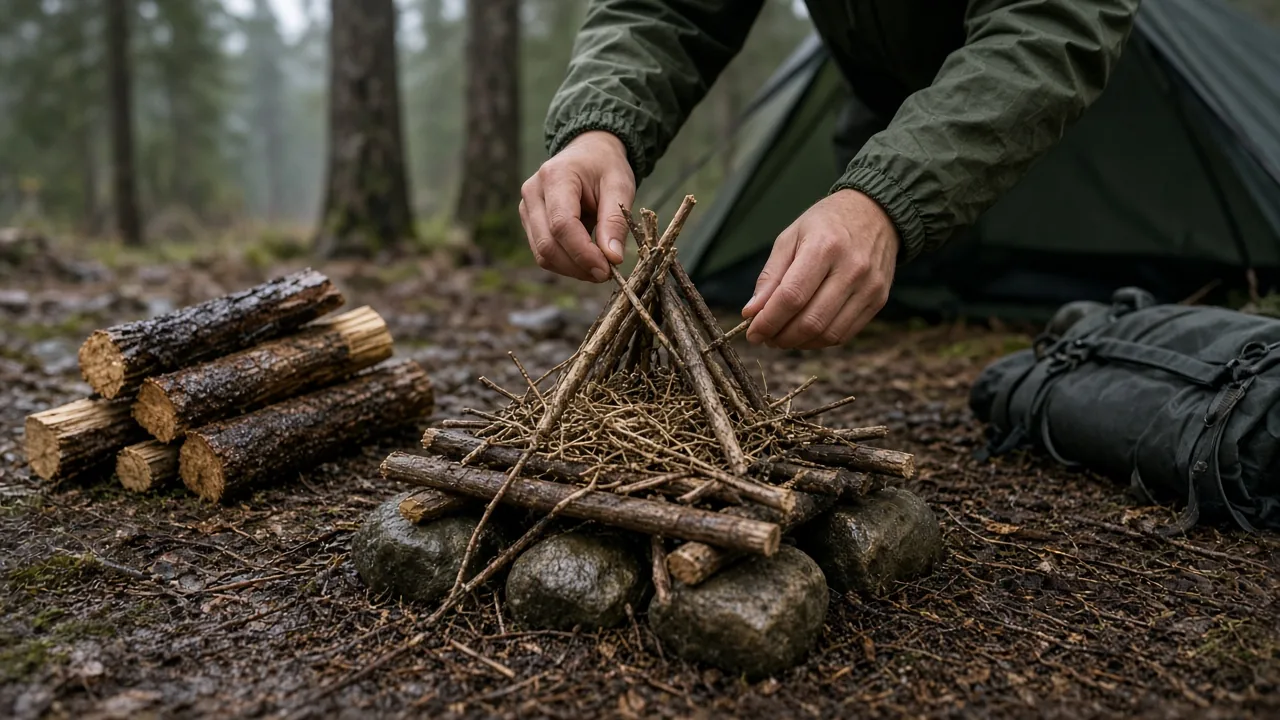
Prepare the fire lay on dry ground or a raised platform before you ignite anything. Place tinder in the center, surround it with fine dry kindling, and have split wet fuel ready to add only after the flame is established. Building before you spark prevents you from scrambling for fuel while the tinder burns down.
How Should You Split Wet Logs for the Fire?
Split wet logs into small sticks rather than burning rounds. Thin, split pieces have more exposed surface and better airflow, so they dry and ignite more quickly than thick damp rounds. Start with pencil-thin splits and work up to finger-thick pieces. If the outside is wet but the inside is drier, split away the soaked outer layer and use the inner wood.
What Fire Lay Works Best for Wet Wood?
A cone or tipi over dry tinder protects the early flame and lets heat dry rising kindling. Keep the base off soaked ground with sticks or stones so moisture does not wick into the fire from below. Avoid leaning too much wet fuel over the flame at first. The cone shape lets the flame climb through fine kindling while the larger wet splits wait on the outside to dry.
How Do You Add Wet Fuel Without Killing the Fire?
Add split wet pieces one at a time, starting with pencil-thin sticks. Place them close enough to dry but not directly on the fragile flame. Once they begin to steam and then char, you can move them closer or add the next size up. If the fire starts to shrink or smoke heavily, back off and return to dry kindling for a few seconds. The goal is to keep the flame hot while gradually introducing damp fuel.
Common Mistakes When Starting a Fire with Wet Wood
Most failures come from trying to ignite wet logs too early, relying on one ignition source, or placing wet fuel too close to the flame. If you fix those three habits, wet-weather fires become much more consistent. Heat sources also belong outside the tent, no matter how cold and wet the trip becomes.
Why Won't a Big Flame Dry Out a Wet Log?
A large but short-lived flame lacks sustained heat to evaporate the moisture inside a thick log. The outside may blacken, but the inside remains cool and wet. Small split pieces dry through a hotter, longer contact time. Prep thin fuel before you light, and add it in stages. That approach gives the fire a chance to dry each piece instead of trying to boil water out of a heavy round.
Never Use a Stove or Heater Inside Your Tent
If wet gear and cold weather make a fire tough to start, the tent can feel like the warmest place to solve the problem. It is not. Never run a camp stove, heater, or charcoal inside a tent, vehicle, or closed space. These devices create carbon monoxide and fire risk regardless of how cold you feel. Dry out and warm up outside, then leave the stove outside.
Should You Rely on One Waterproof Match or Lighter?
No single igniter is reliable enough for wet conditions. Bring at least two types, such as a lighter and a ferro rod, and store them separately. If one pocket or pack gets soaked, the other source may still be dry. Waterproof matches can help, but they are still a single system. Redundancy matters more than any one product's waterproof claim.
What to Carry for Wet-Wood Fires: Car Camping vs. Backpacking
For car camping, weight and bulk matter less, so you can pack extra tinder, a hatchet, and a waterproof emergency starter. Backpackers need lighter, multi-use items like a ferro rod and a small fixed blade. Decide before the trip whether you are prioritizing comfort or pack weight.
What Does a Car Camping Wet-Fire Kit Look Like?
Include dry tinder, a hatchet or full-size knife, multiple lighters, a ferro rod, and optionally a product like Pull Start Fire. Space is less limited, so you can bring redundant dry prep material. A small dry bag with cotton lint, birch bark, or commercial fire starters removes the hardest part of the process. The hatchet makes it easier to split wet wood into thin pieces and expose dry interiors.
What Should Backpackers Carry Instead?
Choose one small ferro rod, a BIC lighter kept warm, and a small fixed blade for making shavings. Carry tinder in a waterproof bag and rely on found dry wood rather than heavy extra fuel. The knife should be strong enough to split small dead branches and make feather sticks. Keep the lighter in a pocket against your body so it stays warm and ready.
Before You Burn: Check Fire Restrictions and Campsite Rules
Wildfire restrictions, burn bans, and campsite fire-ring rules change by season and forest. Check the current forecast and local notice before relying on a campfire. Some areas require established fire rings or prohibit fires entirely during dry spells. Use existing rings where allowed, follow Leave No Trace practices, and pack out trash. A campfire is a tool, not a guarantee that every night can end with one.
Final Check: Pack for the Trip, Not the Ideal Night
If the forecast looks rainy and nights will drop near freezing, pack your fire kit according to car camping or backpacking weight limits. A hatchet or saw plus dry tinder and a backup igniter is often smarter than a heavier stove. Think about whether you are car camping with room for extra tools or backpacking where every ounce counts. Then ask yourself the same question for your sleep system and shelter: does the gear match the conditions, or are you betting on a dry night that may not come?
This article is general information about camping gear, not professional safety, medical, or wilderness training. Check fire restrictions, weather, and campsite rules before you go, and follow the manufacturer's instructions for your own equipment.
FAQ
Why won't wet wood catch fire?
Wet wood resists ignition because moisture must evaporate first, pulling heat away from the flame. Split wet wood into thin pieces to expose more surface area and speed drying.
What is the best fire starter for wet wood?
Carry at least two independent ignition methods, such as a disposable lighter and a ferro rod. A waterproof emergency starter like Pull Start Fire can be a useful backup.
Where can I find dry tinder in wet conditions?
Look inside dead standing wood, under thick bark, or in resin-rich sources like birch bark and fatwood. Split dead branches open and shave from the dry center to make feather sticks.
How should I add wet wood to the fire without killing it?
Add split wet pieces one at a time, starting with pencil-thin sticks. Place them close enough to dry but not directly on the fragile flame, and back off if smoke increases.
Can I use a camp stove inside my tent to dry wet gear or stay warm?
No, never run a camp stove, heater, or charcoal inside a tent, vehicle, or closed space because of carbon monoxide and fire risk.



