How to Set Up an Enclosed Tarp Shelter with a 3x3 Tarp
Learn how to set up an enclosed tarp shelter with a 3x3 tarp in five steps, including door ventilation, hard ground adjustments, and when to choose a tent instead.
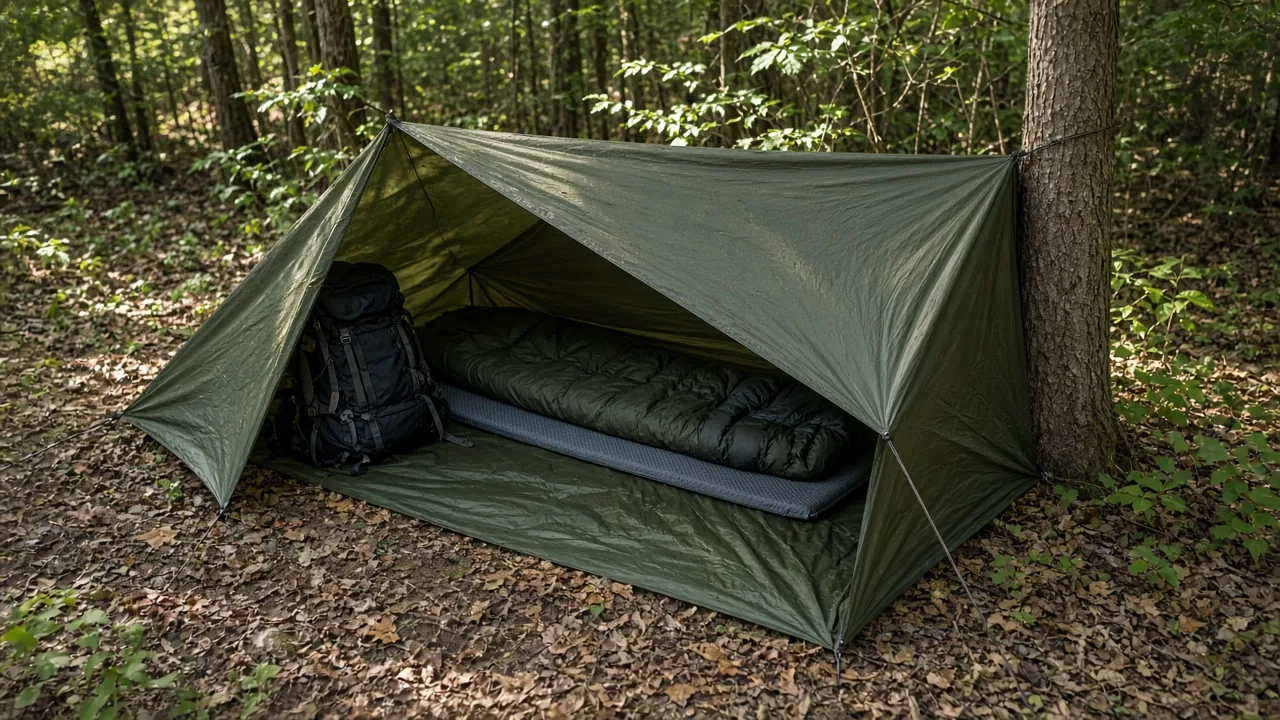
A 3x3-meter tarp, roughly 10 by 10 feet, can become a one-person enclosed shelter for wet and windy weather. The strongest version of this pitch does not seal every edge. Instead, you fold the rear and side triangles under as a partial floor and leave the front partly open. That one detail helps control condensation while still blocking wind and rain. This guide covers how to set up an enclosed tarp shelter step by step, plus when to use it and when a double-wall tent is the better call.
When a 3x3 Tarp Shelter Fits Your Trip
This pitch works best for one person who needs a low, wind-resistant shelter and can accept partial coverage instead of a full bathtub floor. It is a useful option for hard ground where stakes are difficult, but it is not a sealed tent replacement.
What the Enclosed Cave Pitch Gets Right
In wet, windy conditions with hard ground, the enclosed cave shape gives you room to sit up, cuts interior wind, and reduces the spray that reaches your sleeping pad. Trail reports describe it as staying dry inside when the open side and groundsheet are managed. Because the back and side triangles become a partial floor, you need less extra fabric than you would with a flat tarp pitch. It also packs smaller than most one-person tents.
Where It Falls Short
A tarp cannot match a double-wall tent for bug protection or fully sealed storm coverage. That gap becomes obvious when you try to close the entrance using improvised materials. A rain jacket pressed into service as a tarp can leak through gaps and may pull down in a heavy downpour, leaving you retightening before breakfast. If you expect sustained wind-driven rain, this shelter is a compromise rather than a sealed storm shelter.
How to Set Up an Enclosed Tarp Shelter in 5 Steps
Start with the back edge low and anchored. Tie the front to a tree or pole. Stake the two front corners wide. Fold the triangular panels under as a partial floor. Then set the door corners for the current weather.
Anchor the Back and Tree End
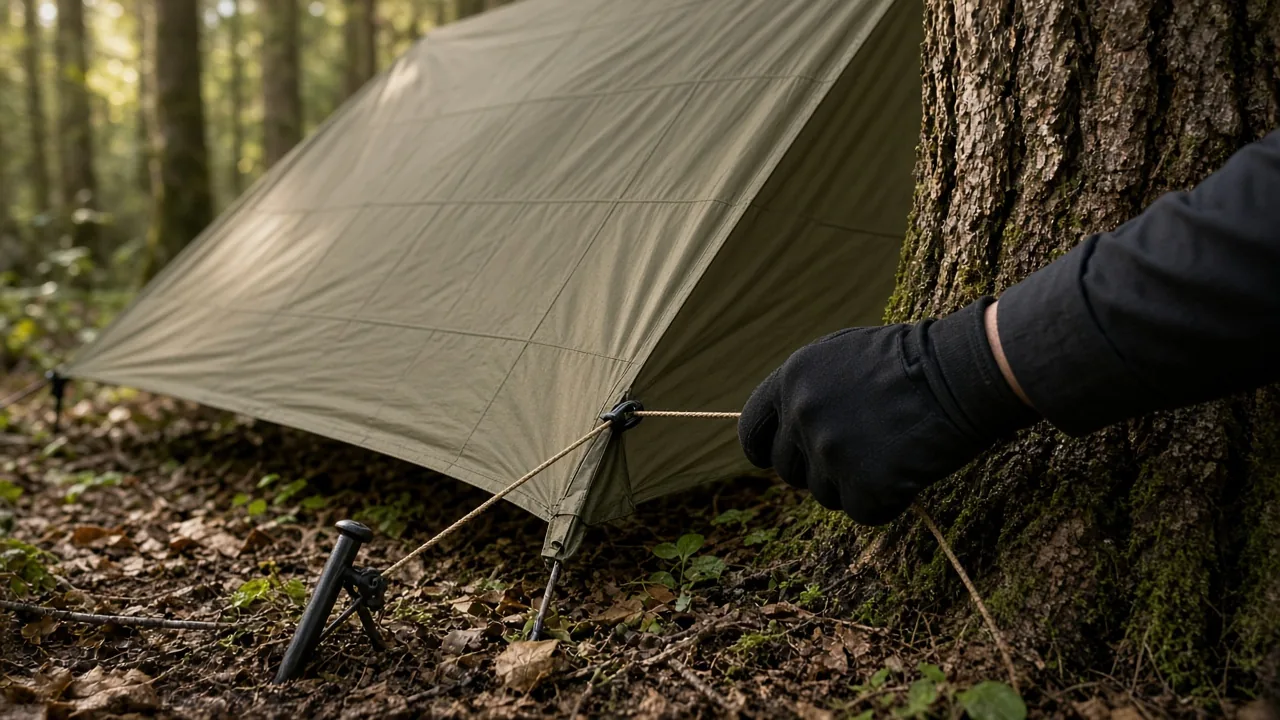
Use low tie-outs at the back and a solid tree or pole at the front. The low back edge keeps wind from lifting the tarp, and the front anchor carries most of the pull. On a hard or uneven site, choose a tree with a trunk thick enough to hold tension without shifting. If you use a trekking pole, angle it slightly away from the tarp so the ridge line stays tight.
Fold Panels Into a Partial Floor
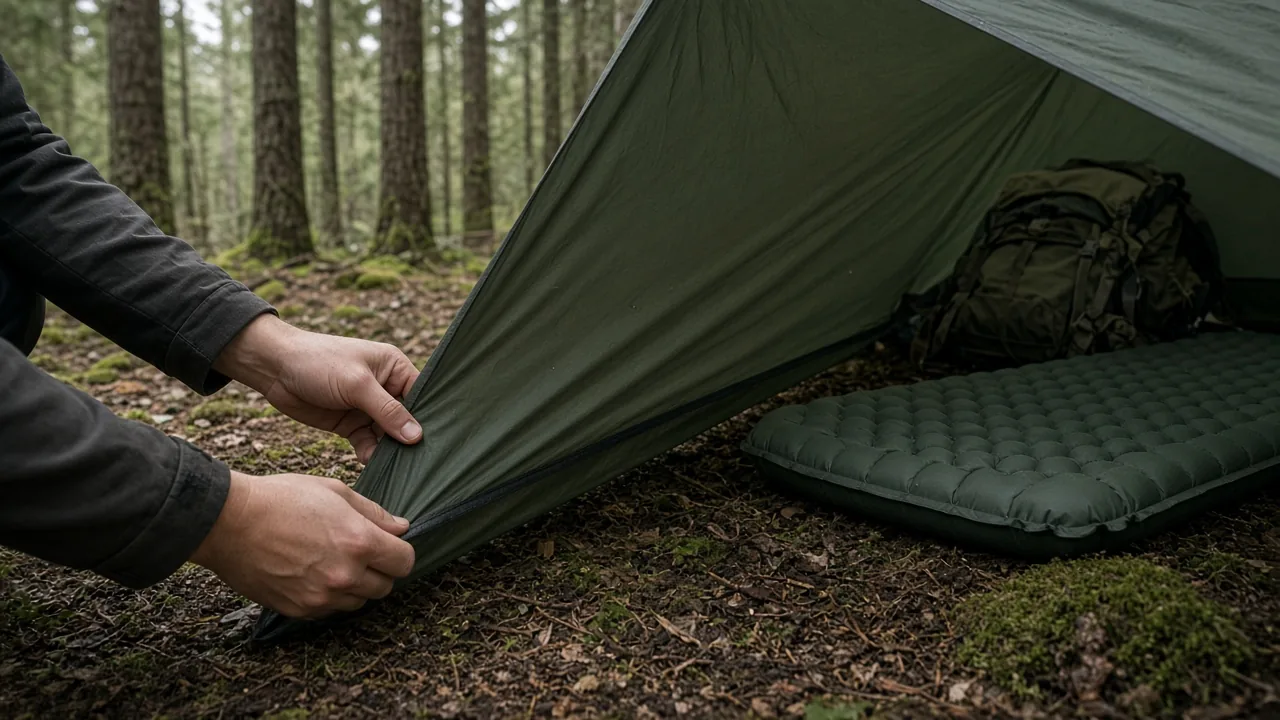
Once the main edges are staked, tuck the side triangles inward. They become a partial groundsheet that protects your pad and sleeping bag from wet ground. When the ground is saturated, add a rain jacket, pack liner, or small groundsheet under exposed areas near the door. Run the corner guylines through the structure where possible, so the panels do not slip loose overnight.
Set the Door for Weather or Ventilation
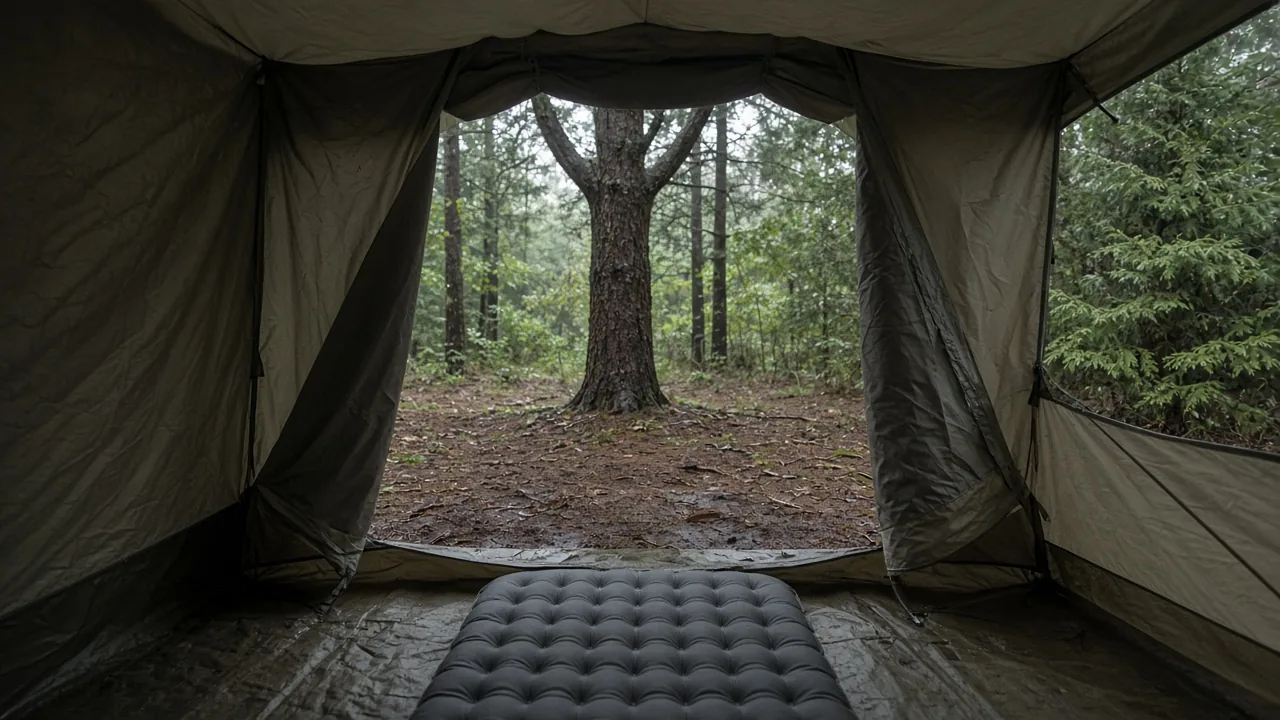
In rain, leave the front entry open enough to allow airflow. A fully closed single-layer tarp holds moisture from your breath and wet gear. If you have a high tree attachment or a taller trekking pole, you can raise the roof and overlap the beak slightly for more coverage, but keep some ventilation path near the ground. In most wet conditions, the open low side is safer than sealing the door completely.
Adjusting an Enclosed Pitch for Wind, Hard Ground, and Closed Doors
The base pitch works, but small changes make it more suited to exposed sites, rocky ground, or hot weather. To close the door more, you need a taller front pole or tree attachment, a central rear lift, or a mid-panel pole.
Using a High Pole or Tree for a Steeper Roof
A steeper roof sheds rain more easily and lets the door panels overlap. The trade-off is wind load. A taller front anchor catches more wind and needs a stronger tree, bigger stake, or a well-tensioned guyline. If the front pole is on the short side, add a rear center lift to increase interior height, or shift the pole to the middle so the front forms a beak.
Managing Hard or Uneven Ground
On rock or thin moss where stakes slip, raise one rear tie-out and link adjacent tie-outs to reduce the footprint. This lets you use natural anchors like roots or rocks instead of forcing stakes into soft soil. If a gap remains near the floor, block it with a backpack or large rock. The idea is to shrink the opening, not to chase a perfect seal.
Switching Between Hot and Stormy Weather
In hot weather, raise the same pitch higher and use it as a sun fly. When storms arrive, drop the whole shelter closer to the ground and add a rain-jacket flap over the open side. Leave a small low gap for air. Keeping the single-layer tarp fully closed creates condensation faster than most users expect.
Common Mistakes When Setting Up an Enclosed Tarp Shelter
The two biggest errors are sealing every edge and expecting a tarp to behave like a tent. Both tend to show up after dark or after hours of rain.
Fully Closing a Single-Layer Tarp Causes Condensation
A single-wall tarp has no separate breathable inner. When the door is closed and all edges are pinned down, your breath and damp clothing raise the humidity inside. In cool weather, that moisture condenses on the tarp and drips onto you. Keep the open side partly clear, even when it feels less protective. Ventilation is part of the weather protection.
Improvised Rain Gear Can Leak and Collapse in a Downpour
A rain jacket used as a tarp may need patching with a plastic bag or pack liner from the outside. Even with patches, it can leak at seams and pull down overnight in heavy rain. Check and retighten the pitch before cooking breakfast, especially after a nighttime storm. If you know rain is likely, carry a coated tarp with enough tie-outs instead of relying on clothing.
Never Use a Stove or Heater Inside the Shelter
Never use a stove or heater inside your tent or enclosed shelter. Stoves, heaters, grills, and charcoal create carbon monoxide and fire risk. Cook outside and follow the manufacturer's instructions for every fuel appliance. A tarp enclosure has even less ventilation margin than most tents, so the same rule applies with no exceptions.
What to Check Before You Pitch and Pack
Before committing to this shelter, check the forecast, fire restrictions, campsite rules, and bear-safe food storage requirements. The shelter itself is only one piece of the decision.
Car Camping vs. Backpacking
| Factor | Car camping choice | Backpacking choice |
|---|---|---|
| Tarp fabric | Heavier coated tarp with more tie-outs | Lighter tarp with fewer, well-placed tie-outs |
| Groundsheet | Larger groundsheet or extra plastic sheet | Pack liner, rain jacket, or bivy sack |
| Packed size | Less important | Small packed size matters |
| Setup practice | Can adjust at camp | Practice the pitch at home first |
A tarp adds no insulation of its own, so the temperature rating of your sleeping pad and bag matters just as much. For cold nights, pair the tarp with a pad and bag rated below the expected low.
Stakes, Guylines, and Groundsheet Choices
Wide stakes hold better in soft ground. On rock and thin moss, you may need to tie to trees or weight the corners with packs. A separate groundsheet protects the folded tarp floor panels from sharp ground and keeps your sleeping bag cleaner. For windy sites, add extra guylines at the front and rear instead of relying on two corner stakes.
When to Leave the Tarp at Home
If you expect heavy sustained rain, high bug pressure, or want a fully sealed interior, a double-wall tent is a better match than an enclosed tarp pitch. The same is true if you are car camping and want simple setup over weight savings. Use the tarp when weight and packed size matter, or when you want a modular shelter for changing weather.
Match the deciding factors—car camping or backpacking, expected nighttime low, and rain chance—to this pitch. Add a bivy or bug net for insects, and never bring a stove inside. If the forecast calls for multiple days of rain or heavy bug pressure, leave the tarp at home and take a double-wall tent instead.
Camp Kit Journal
This article is general information about camping gear, not professional safety, medical, or wilderness training. Check fire restrictions, weather, and campsite rules before you go, and follow the manufacturer's instructions for your own equipment.
FAQ
Can a 3x3 tarp fully enclose a shelter?
A 3x3 tarp can create a one-person enclosed cave pitch, but it is not fully sealed like a double-wall tent. The rear and side triangles fold under as a partial floor while the front stays partly open for ventilation.
How do I reduce condensation in an enclosed tarp shelter?
Keep the front entry partly open and avoid sealing every edge. A fully closed single-layer tarp traps moist air from your breath and wet gear, which condenses and drips inside.
What should I do if I can't stake corners on hard ground?
Raise a rear tie-out, link adjacent tie-outs, and use roots or rocks as natural anchors. Block gaps near the floor with a backpack or large rock instead of forcing stakes into thin soil.
Is an enclosed tarp shelter good for heavy rain and bugs?
It is not a sealed storm shelter or bug protection. In sustained wind-driven rain or high bug pressure, a double-wall tent is the better choice.
Can I use a stove or heater inside the shelter?
No. Stoves, heaters, grills, and charcoal create carbon monoxide and fire risk, and a tarp has even less ventilation margin than most tents. Cook outside and follow the manufacturer's instructions.



