How to Prevent Tent Condensation: A Practical Camp Guide
Condensation forms when humid air inside the tent meets a cooler tent wall. Learn how to prevent tent condensation through smarter tent choice, campsite selection, ventilation, and moisture management.
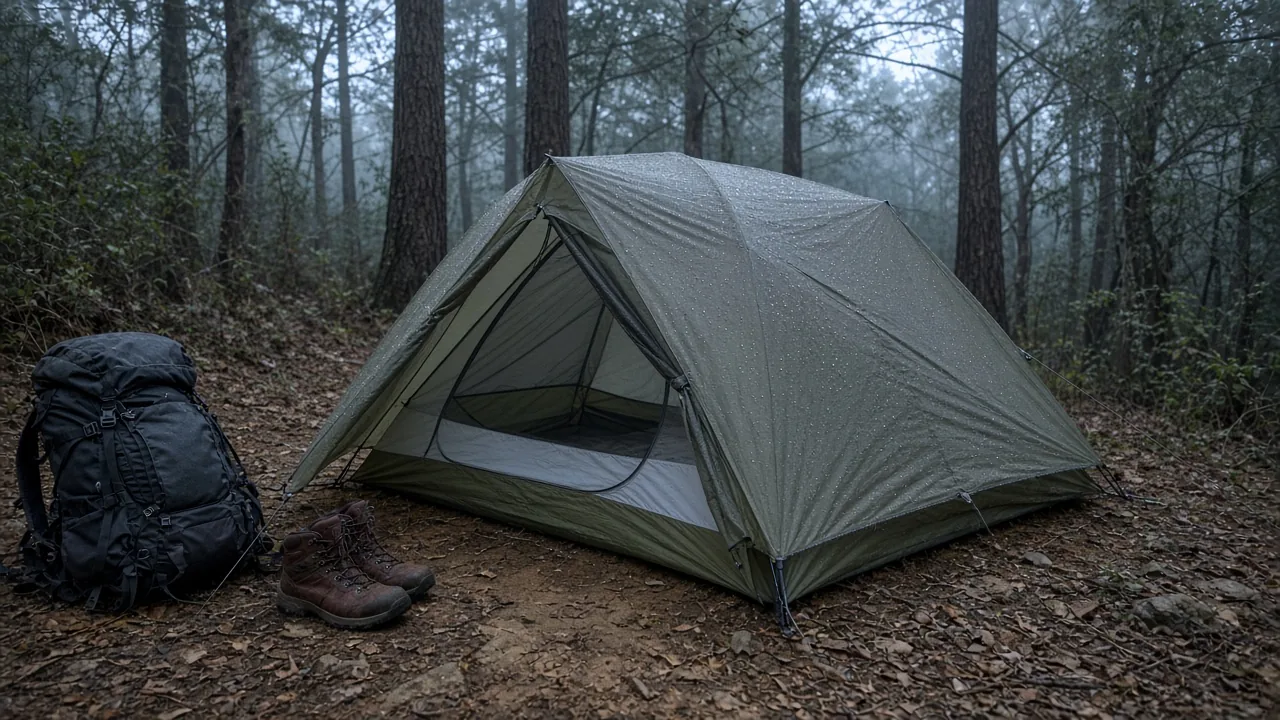
Condensation is one of the most common reasons campers wake up to a damp sleeping bag and a wet tent wall, and learning how to prevent tent condensation is rarely about buying a single product. To cut morning condensation, control the two main drivers—humid air inside the tent and the temperature difference across the wall—by choosing a double-wall or well-ventilated single-wall tent, pitching in a sheltered mid-slope site, and keeping wet gear outside.
This guide covers the practical levers you have before the trip, during setup, overnight, and the next morning. Some changes cost money, some cost nothing, and a few only cost a little more attention to where you put your head and feet.
Why Your Tent Gets Wet: Condensation Basics and the Fixes Worth Comparing
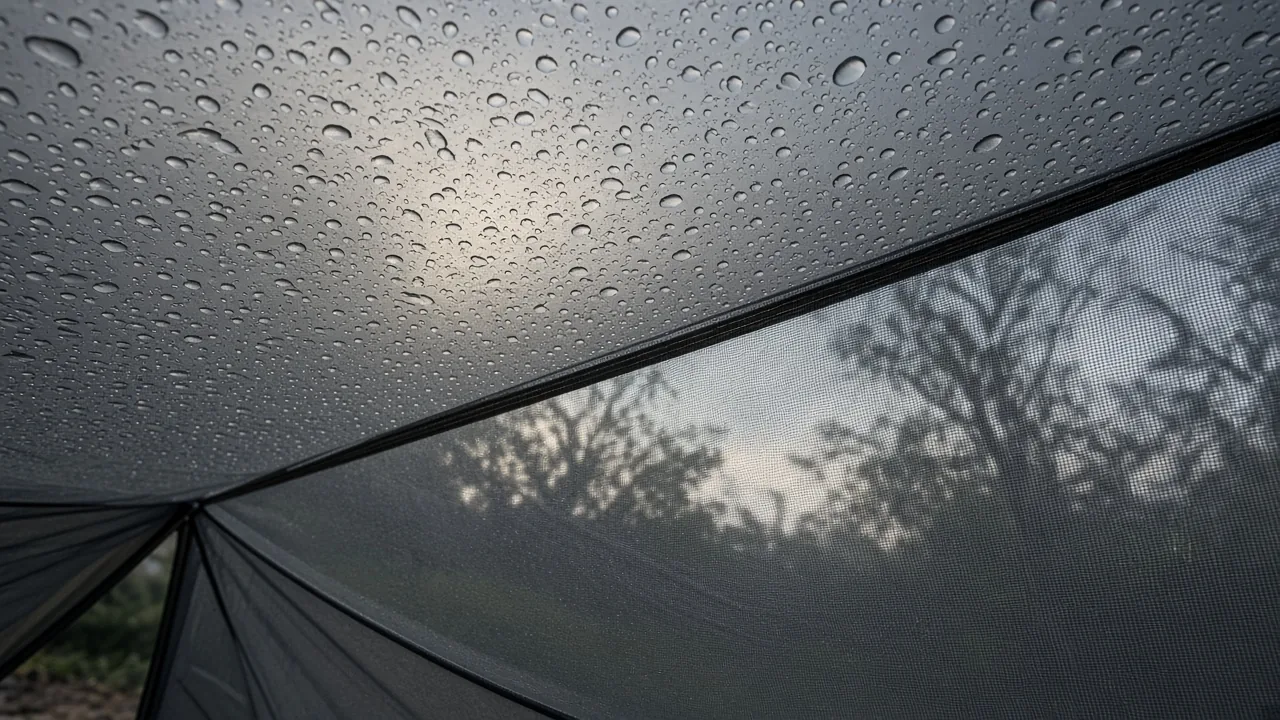
Morning moisture forms when your breath and sweat raise interior humidity and the tent wall is cooler than the air inside. That temperature difference causes water vapor to condense on the fabric. The more humid the air, and the bigger the temperature drop, the more water you will find.
You cannot fully eliminate the temperature difference in most conditions. A clear night can cool the rainfly well below the air inside your tent, especially just before sunrise. What you can control is how much moisture you add and how much of it you let escape.
Compare fixes by how directly they lower humidity or narrow the temperature gap. Opening a door lowers humidity immediately. Moving camp away from a stream lowers the humidity around the tent. A double-wall tent does not stop condensation from forming, but it keeps the moisture on the rainfly instead of on your sleeping bag.
How to Prevent Tent Condensation: Compare the Main Control Points
The highest-value changes are tent type, campsite, ventilation, and moisture management. Weigh each by trip style, weather, and how much damp wall contact you can accept.
A car camper can choose a heavier double-wall tent, bring an extra towel, and leave wet gear in the vehicle. A backpacker counting ounces has to rely more on ventilation, site selection, and sleeping position. In both cases, the order of operations matters: stop adding moisture first, then improve airflow, then adjust the tent and site.
Double-Wall vs Single-Wall Tents: Condensation Contact and Weight
A double-wall tent has a breathable inner tent, usually mesh, and a separate waterproof rainfly. Condensation forms on the inside of the rainfly, with an air gap between it and the inner. That keeps dampness away from your sleep system, so you are less likely to brush against a wet wall.
A single-wall tent uses one waterproof layer that connects directly to the bathtub floor. It is typically lighter than a comparable double-wall tent, which is why many backpackers use one. The tradeoff is that condensation forms on the same wall your bag or head may touch. Some single-wall designs ventilate well, but they demand more attention to site and airflow.
For beginners and most car campers, a double-wall tent is the lower-maintenance choice. For weight-conscious backpackers, a single-wall tent can work if you accept more contact risk and ventilate aggressively.
Campsite Choice vs Ventilation: Which Reduces More Moisture
Campsite sets nighttime temperature and humidity. Ventilation removes water vapor. Ventilation is the more immediate control when you cannot move camp, but a poor site can overwhelm even a well-ventilated tent.
Pitching in a valley bottom puts you in colder, more humid air that may collect pooling water. A ridge top exposes you to colder wind. A sheltered mid-slope spot below treeline is the better balance. If rain or fog forces you into a closed tent on a wet site, ventilation is your only remaining tool, so make it count.
Moisture Sources: Breathing, Sweat, Cooking, and Wet Gear
Your body is a major humidifier. You exhale water vapor all night and you may sweat into your clothing or bag. Wet clothes, a rain-soaked pack, or cooking inside add more water to the enclosed space.
The easiest reduction is to keep the obvious water sources outside. Never cook in the tent. Store wet clothes in a sealed bag outside or in a vestibule that is still open to airflow. Then deal with the body's output by venting near your head and avoiding overheating your sleep system.
Tent Features That Help Prevent Condensation
If you are shopping for a tent with condensation in mind, look for a long enough floor, steep sidewalls, two vestibules, and multiple vents. Avoid a tent where your head or feet will press against the walls.
A short floor or shallow sidewall angle means your sleeping bag footbox or hood touches the tent. That contact transfers condensation directly to your insulation. A floor that is too short cannot be fixed by guylines alone. Steeper sidewalls keep fabric farther from your body and let water run down instead of pooling in low spots.
Two vestibules give you more options for airflow and gear storage. A tent with only one vestibule still works, but you need to orient yourself so your breath moves toward the opening.
Why Vestibules and Vent Panels Matter
Two vestibules and open vents create cross-flow. Air enters low through one opening, picks up moisture, and exits through a vent or the opposite door. That replaces humid air with drier outside air.
With a single vestibule, sleep with your head toward the opening so breath moisture can exit. Do not block the lower gap with a pack or boots. Even a small open space at the door improves the flow that carries vapor away from your face and bag.
Pitch It Tight So the Fly Stays Off the Inner
A loose rainfly sags against the inner tent and transfers condensation. Stake out the fly with guylines so the inner and fly cannot touch. That air gap lets moist air escape instead of dripping onto the inner.
Take the time to tension all four main guylines and any side pullouts. A taut pitch also sheds rain better and reduces flapping in wind. If the tent has vent panels, open them fully so they can do their job.
Campsite and Groundsheet Choices That Cut Condensation
Select a mid-slope, tree-sheltered site away from water and valley bottoms. Use a groundsheet that stays fully under the fly to avoid collecting runoff.
The goal is to camp somewhere slightly warmer and slightly drier than the lowest, most open ground nearby. Tree cover slows radiational cooling, which keeps the tent fly a little warmer and reduces the temperature difference that drives condensation.
Where to Pitch: Mid-Slope, Not Valley Bottom or Ridge
Valley bottoms collect cold, humid air and may hold water. Ridges are exposed and colder. A sheltered mid-slope site below treeline offers a better balance of temperature and wind.
Avoid camping near lakes, rivers, marshes, or even small streams. Air near water is almost always more humid and cooler at night. If you have a choice between a dry pine needle floor under trees and a grassy meadow near a creek, take the dry, sheltered spot.
Check overhead for dead branches or leaning dead trees before you commit. A site that looks dry but sits under a hazard is not a good trade.
Groundsheet Size and Drainage
Keep the groundsheet slightly larger than the inner floor but fully covered by the fly. If it extends past the fly, rain or dew can pool under the tent.
A groundsheet that sticks out collects water running off the rainfly. That water can flow between the groundsheet and the tent floor, leaving you sleeping above a puddle. Tuck any excess under the tent or use a footprint sized for your specific shelter.
Ventilation Routine: How Much Air Is Enough
In dry or mild weather, open one or both vestibules fully and keep vents clear. The more air you can move, the lower the interior humidity.
In rain or fog, leave the door zipper gap and top vents open to keep airflow. A fully sealed tent holds your breath and sweat inside. Even a small opening at the top, paired with a gap at the door, creates enough convection to remove warm, moist air.
The right amount of ventilation depends on conditions. In still, near-freezing weather with a tight double-wall tent, vents can be nearly closed and still stay dry. In humid, foggy weather, open as much as you can without letting rain in.
Open Doors and Keep the Area Under the Vestibule Clear
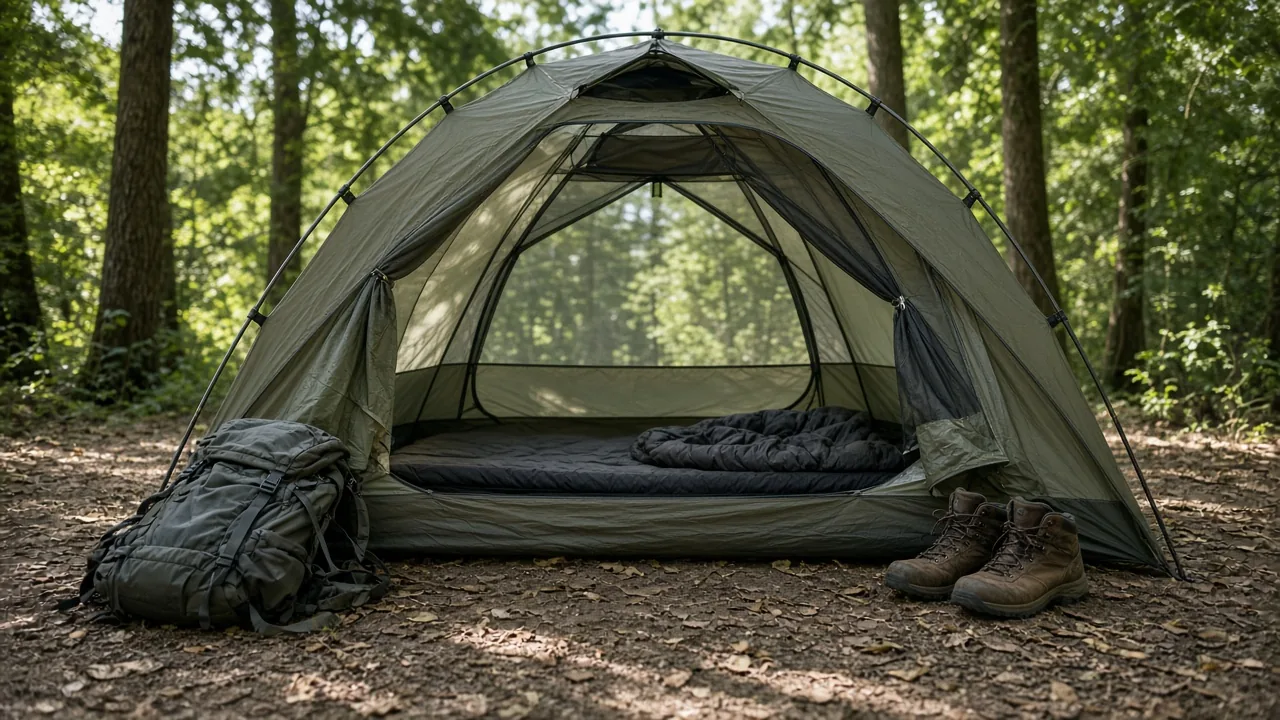
Do not block vestibule openings with packs or boots. Airflow through the lower gap reduces the humid layer near your body.
It is tempting to pile gear in the vestibule to keep it dry. That often blocks the exact space that should be moving air. Store gear outside the tent, or hang it from the vestibule structure so it sits above the airflow path.
What to Do When Rain or Fog Closes Your Doors
Keep the zipper partially open and use top vents. This lets warm moist air escape while still limiting rain entry.
If rain is blowing directly at the door, close that side and open the opposite vestibule or the lee-side vent. The point is to maintain at least one low opening and one high opening so air can move through.
Managing Moisture Inside the Tent Overnight
Keep wet clothes and packs outside, cook and eat away from the tent, and never use a stove or heater inside your tent.
Every wet layer adds moisture to the air as it dries. Your body is already adding water through breath and sweat. Adding a rain-soaked shell or damp socks makes the interior humid enough to condense on every cold surface.
Breathing, Nasal Breathing, and a Buff Over Your Mouth
Mouth breathing loses more water than nasal breathing. Some research suggests mouth breathing during sleep can increase water loss substantially. Breathing through your nose keeps more moisture in your body.
A loose buff over your mouth may catch some vapor, but keep it breathable and not too tight. A snug, non-breathable covering traps moisture against your skin and makes you uncomfortable. If you use a buff, wash it and let it dry during the day.
Avoid the Waterproof Sack Around Your Feet
Putting your feet in a waterproof bag or sack traps sweat and makes the foot of your sleeping bag wet. Your feet sweat overnight even when they feel cold.
A breathable layer, like a dry pair of socks or a supplemental footbox cover that breathes, is the better fix. The goal is to keep foot perspiration from soaking into your sleeping bag's insulation, where it reduces warmth the next night.
Why Candles, Stoves, and Heaters Make It Worse
Combustion adds water vapor and carbon monoxide risk. Candles do not meaningfully dry a tent and can burn it. Any open flame inside a shelter is a fire hazard.
Never use a stove or heater inside your tent. The risk of carbon monoxide poisoning is real, and the added heat is not worth the risk. A candle also produces water vapor from combustion, so the net effect on humidity is worse, not better.
If you want a small measure of chemical drying, some campers use food-grade quicklime-based desiccant packs for a few nights. They are consumable, not a long-term ventilation substitute. Use only food-grade products and follow the manufacturer's instructions.
Morning Dry-Out and Packing Routine
As soon as you wake, open both doors, pull gear out, and let the tent air in sun for about 20 minutes. Wipe condensation early, then air it again before packing.
The morning routine is the difference between packing a damp tent and heading out with dry gear. A few minutes of sunlight and moving air will remove most residual moisture.
Wipe First, Then Air
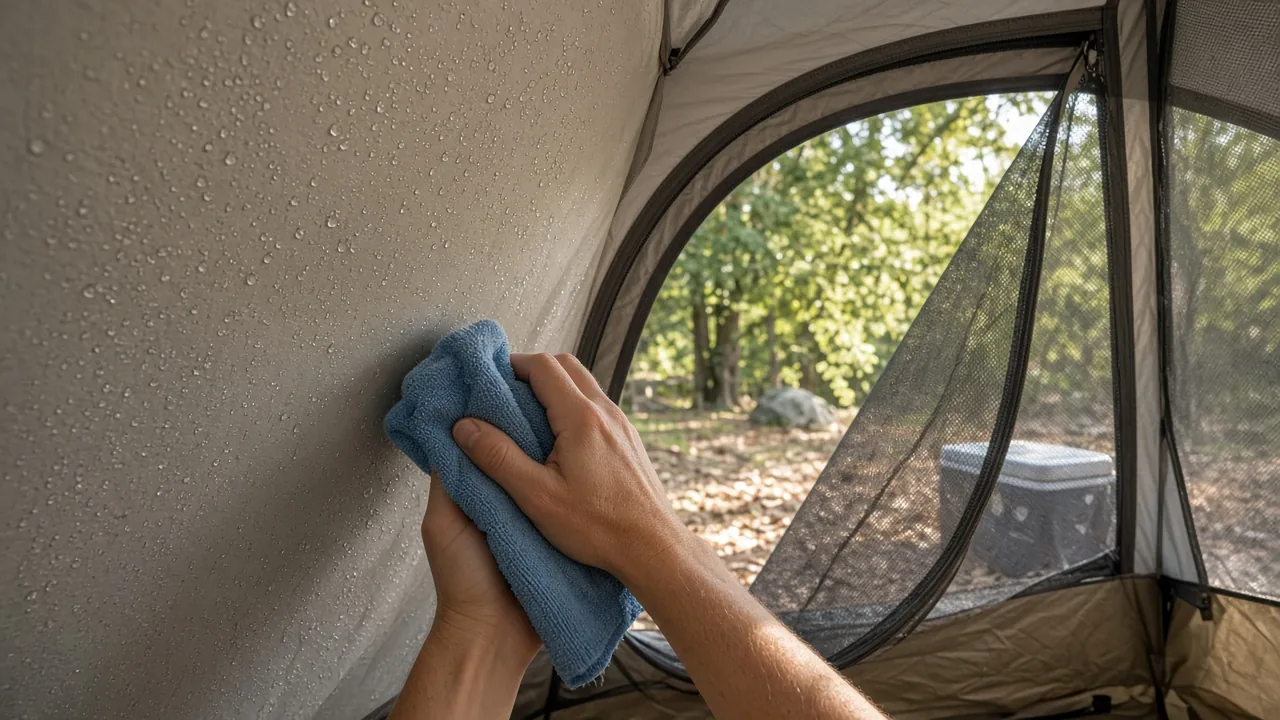
Wiping early with a microfiber towel removes most moisture before it can soak into the fabric. Then let the tent dry in the sun.
The best sequence is to wipe down walls and the rainfly as soon as you see the droplets, then open everything and let the tent sit while you pack up other gear. If you wait until the end to wipe, you are mopping water that has had time to spread into seams and fabric.
How to Pack a Dry Tent
Pack only after the fly and floor feel dry. Leaving even a small amount of moisture invites mildew and makes the next night colder.
Shake off the rainfly, wipe the floor, and check the seams. If you have to pack slightly damp because of weather, unpack and dry the tent as soon as you get home. Mildew forms quickly in a rolled-up tent, and it is difficult to remove once established.
Scenario Picks: Rain, Winter, Car Camping, and Backpacking
Choose a double-wall tent for rainy or winter trips unless saving weight is critical. Use a single-wall tent only if you accept more contact risk and can ventilate aggressively.
The more likely you are to wake up in a damp environment, the more you should favor a design that keeps moisture off your sleeping bag. Rain and cold conditions are where a double-wall tent earns its extra ounces.
Car Camping vs Backpacking Priorities
Car campers can accept heavier double-wall tents and more setup steps for a drier interior. Weight and pack size matter less when the tent goes in a trunk. The extra comfort of not touching damp walls is worth it.
Backpackers may trade weight for more careful campsite and ventilation habits. A lighter single-wall tent can stay acceptable if you pitch it high, keep vents open, and position your body away from the walls. The trade is not weight against dryness; it is weight against how much attention you must pay.
Wet, Foggy, or Cold Nights
In high humidity or cold, keep as much airflow as conditions allow, store wet gear outside, and avoid overheating your sleeping bag. A sleeping bag that is too warm for the conditions makes you sweat, adding moisture from the inside.
In still, near-freezing conditions, a tight double-wall tent can stay dry with vents nearly closed. The key is a proper pitch that keeps the rainfly off the inner tent. In warmer, humid conditions, open everything you can.
For car camping, the simplest configuration is a double-wall tent with two vestibules, pitched on a mid-slope site with the groundsheet tucked. Add a morning wipe-down and a few minutes of sun before packing, and you will face far less water than the first-time camper who seals a wet pack inside a single-wall shelter beside a creek.
For backpacking, the same rules apply, but weight forces you to be more deliberate: pick the driest site you can find, vent both ends, keep wet clothes out of the tent, and check where your feet and head will end up before you commit to the spot. Before you pack, think through whether this is a car trip or a backcountry trip, how cold the night will be, and whether rain is forecast. That will tell you which tent, what site, and how much ventilation the night calls for. Related choices like a quick-drying microfiber towel and a correctly sized footprint make the routine easier, but the main fix is still keeping humid air and a cold wall from meeting in the first place.
This article is general information about camping gear, not professional safety, medical, or wilderness training. Check fire restrictions, weather, and campsite rules before you go, and follow the manufacturer's instructions for your own equipment.
FAQ
Why does condensation form inside my tent overnight?
It forms when your breath and sweat raise interior humidity and the tent wall is cooler than the air inside, causing water vapor to condense on the fabric.
Should I choose a double-wall or single-wall tent to prevent condensation?
A double-wall tent keeps condensation on the rainfly instead of on your sleeping bag, making it lower-maintenance for most campers. A single-wall tent saves weight but requires more attention to ventilation and campsite choice.
Where is the best place to pitch a tent to reduce condensation?
Pitch in a sheltered mid-slope site below treeline, away from valley bottoms, ridge tops, and water sources. This balances warmer, drier air and reduces the temperature difference that drives condensation.
How much ventilation does a tent need overnight?
In dry or mild weather, open one or both vestibules fully and keep vents clear. In rain or fog, keep a door zipper gap and top vents open so warm, humid air can escape.
Can I use a candle or stove inside the tent to dry it out?
No. Combustion adds water vapor and carbon monoxide risk, and any open flame inside a tent is a fire hazard. Never use a stove, heater, or candle inside your tent.



