How to Pitch a Tarp in High Wind and Stay Dry
Anchor the windward corner first, align the tarp's centerline with the wind, and choose a larger or fully closed configuration when gusts are shifting. This keeps the fabric tensioned and gives you a dry footprint even in sideways rain.
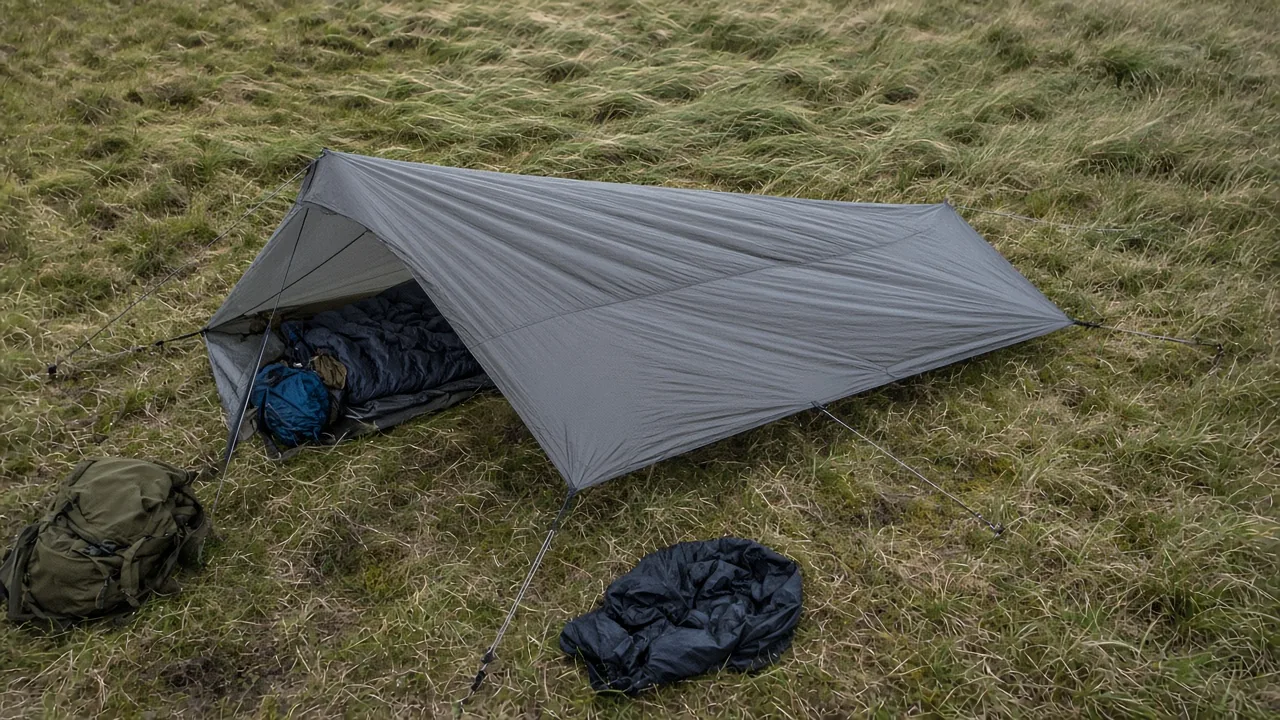
A tarp is one of the most adaptable shelters you can carry, but only if it is set up for the weather you actually get. The short answer to how to pitch a tarp in high wind is not to rely on one clever knot or a heavier stake alone. Align the tarp's centerline with the wind, anchor the windward corner first, and choose a larger or fully closed configuration when gusts are shifting. That sequence gives the fabric a chance to shed wind instead of turning into a sail, and it gives you a dry footprint even when rain comes in sideways.
How to Pitch a Tarp in High Wind Without It Collapsing?
The most reliable starting point is to anchor one top corner to a tree at shoulder height, stake the opposite corner to the ground, and then work outward from that fixed edge. This keeps the tarp under tension from the first minute, so gusts transfer load to the ground rather than flapping loose cloth.
What Is the Busy Shelter Corner Pitch?
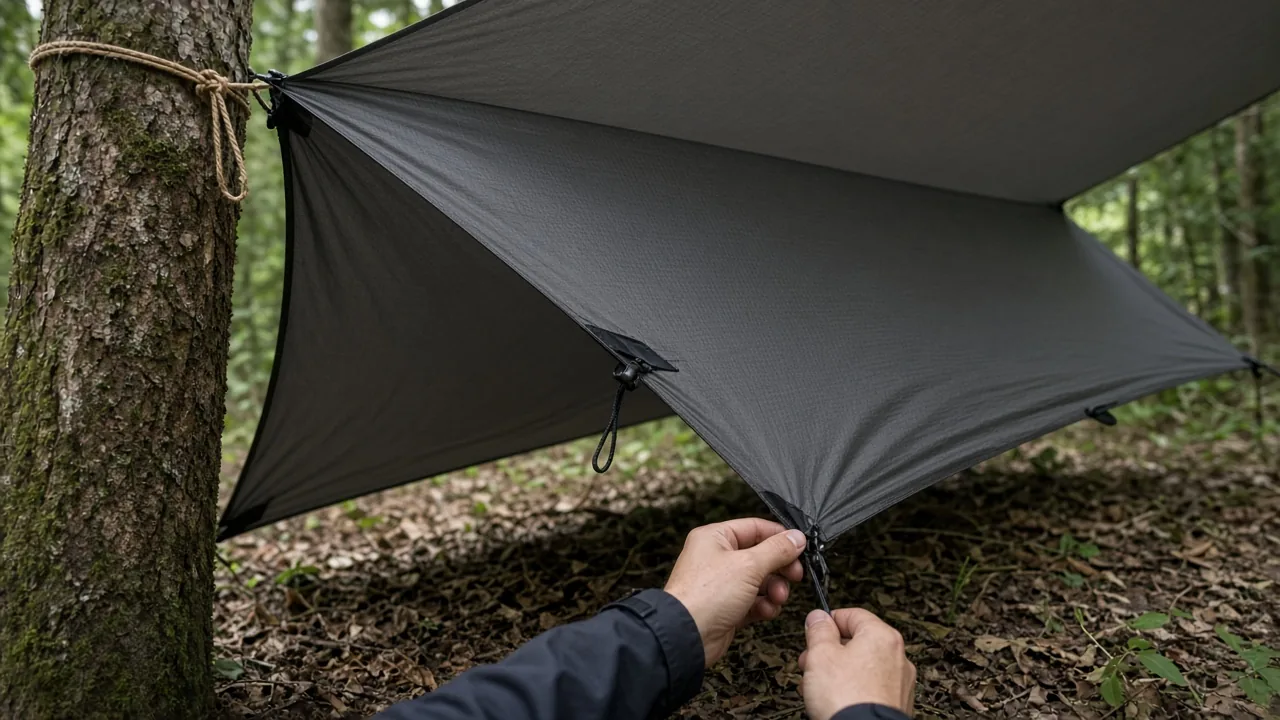
This configuration is built around a single anchored corner, sometimes called a busy shelter corner because so many tie-out points meet near the fixed edge. Start by tying one top corner to a tree or pole at about shoulder height. Take the diagonal corner and stake it directly to the ground.
Once those two points are fixed, return to the corner tied to the tree. Count one, two, three tie-out points along each side and stake them in order. If the outer edge still flaps, tuck the loose fabric under itself and tighten the remaining points so the wall sits straighter. The result is a taught, half-open shelter that faces away from the wind while leaving room to sleep or sit underneath.
The strength of this pitch is speed. It can be completed quickly when rain is already falling and the wind is picking up, and it does not require a second pole or a perfectly flat site. The trade-off is directional coverage. It works best when the wind holds a steady angle, because the open side remains exposed.
Why Stake From the Anchored Corner Outward?
Staking from a fixed point outward keeps the fabric tensioned while you work. That matters more in high wind than in calm weather, because a loose edge can catch a gust and pull a half-set stake out of the ground.
When you work away from the anchored corner, each new stake tightens a section that is already controlled. The load spreads across the fabric and into the ground gradually, instead of accumulating in one flapping panel. If the wind direction shifts slightly while you work, you also have a better chance of adjusting the next point rather than starting over.
Why Does Tarp Orientation Matter in Strong Wind?
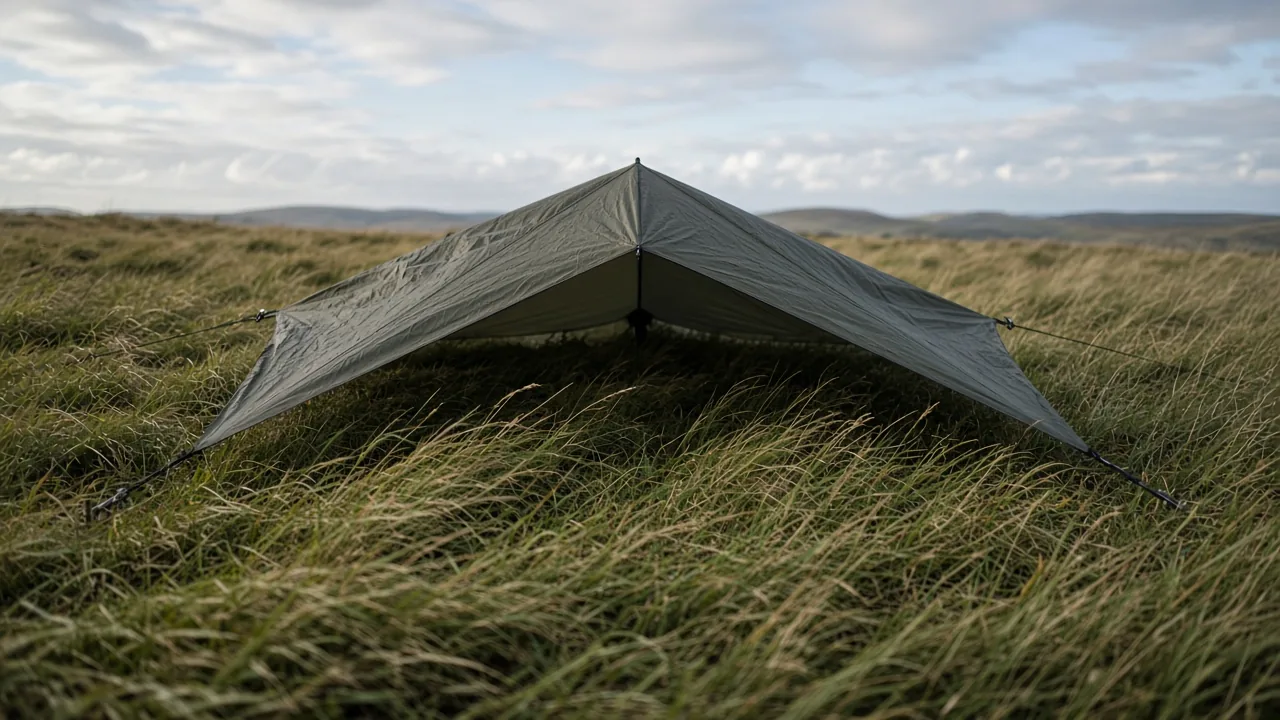
A tarp is axis-symmetric, meaning every common shape has a centerline that runs through its longest plane. In strong wind, that centerline should run parallel to the wind direction. If you set the tarp broadside to the gusts, the flat surface acts like a wall and takes the full force of the wind.
What Happens When Wind Hits the Tarp Broadside?
When gusts hit the broad flat side, the fabric pushes backward and increases leverage on the poles and stakes. That leverage can lift stakes out of soft ground, bend poles, or collapse the pitch entirely. Adding more tie-outs helps, but it does not fix the root problem. A tarp that is broadside to the wind is working against its own shape.
Orienting the centerline into the wind lets air slip over and around the fabric instead of slamming into it. This is more important than adding extra stakes, because a well-oriented pitch with moderate anchor points will usually outlast a heavily staked broadside setup.
How Do You Keep a Tarp Dry When Rain Blows Sideways?
Dryness under a tarp is not only about the fabric overhead. Horizontal rain gets underneath open edges and wets the ground, sleeping gear, and clothing. Two details make the biggest difference: size and closure.
Is a One-Opening Pitch Enough for Variable Wind?
A one-opening pitch like the busy shelter corner works well when the wind is stable and predictable. But experienced tarp campers point out that swirling gusts can wrap around the open side and drive rain into the protected area. One reader described a storm with 360-degree wind shifts and roughly 70km/h gusts where only a fully closed triangular pyramid with a ground cloth kept the sleeping area usable.
That does not mean you must always build a fully enclosed shelter. It means you should match the configuration to the forecast. If the wind is expected to stay from one direction, a single-opening pitch may be enough. If gusts are shifting or a front is moving through, closing the open side into a pyramid shape is more reliable.
What Size Tarp Do You Need for Wet and Windy Conditions?
For one person sleeping outside in wet and windy conditions, experienced users suggest at least 3 x 4 m, which is about 10 x 13 ft. That is larger than many lightweight backpacking tarps. The reason is simple: a small tarp leaves very little space between your sleeping bag and the fabric. In sideways rain, touching the wall can soak through the bag even if the tarp itself is not leaking.
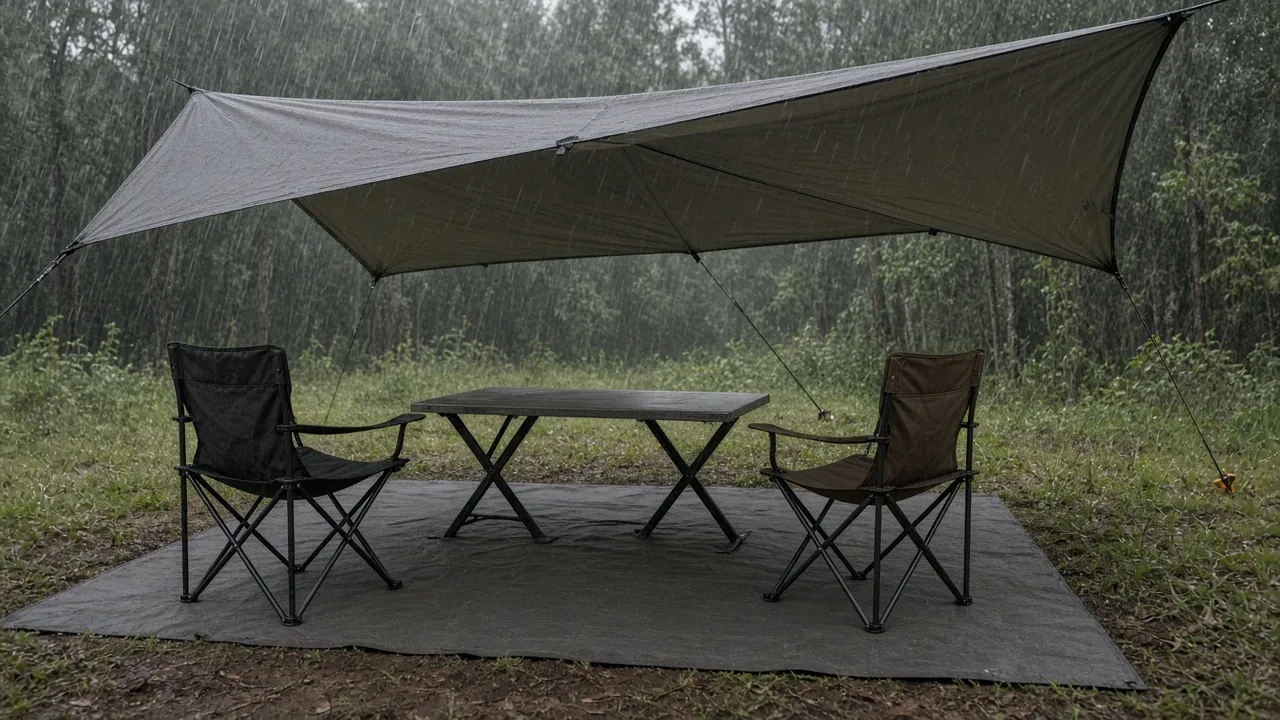
For family car camping, size is easier to estimate by group than by individual area. A tarp that covers a table, chairs, and a cooking space needs room for fixed members plus one or two extra spots. A 16-square-meter tarp, roughly 172 square feet, is one example of a family canopy that can shade or shelter a small group with room for gear. The right size depends more on how you use the space than on a simple per-person formula.
What Should You Check Before You Stake Anything?
Before assembling poles or tightening lines, lay out the tarp and count every part: the body, guylines, stakes, and poles. This seems routine, but it is the step most often skipped when the weather is already bad. A missing stake or tangled line is harder to fix after the tarp is half up.
Find the centerline while the tarp is flat on the ground. Check the wind direction and decide where the windward edge will sit. Only then should you assemble the poles and begin anchoring. This order prevents the common mistake of building a pitch and then realizing it faces the wrong direction.
Why Avoid Dead Knots on Guylines?
Use adjustable hitches or hardware instead of permanent knots. A dead knot that tightens under load can lock in place. When you need to move camp or adjust the line, that knot may be impossible to remove without cutting the cord.
Adjustable guylines also let you tension the tarp after it has settled. Fabric stretches slightly when wet, and stakes can shift in soft ground. Being able to retension each line without untying everything keeps the shelter snug through a long night of wind.
How Do Guylines and Stakes Affect High-Wind Stability?
In exposed wind, use guylines and stakes at every tie-out point available. Continuous tension across the whole tarp is what keeps the fabric from flapping. A flapping edge creates a repeated shock load on the stakes, which loosens them over time.
Are No-Guyline Tarps a Good Choice in Wind?
Some family tarps are marketed as no-guyline designs, with the goal of reducing trip hazards for children and older adults. That is a reasonable priority around a busy camp kitchen or a group site. But in gusty conditions, that type of frame gives you fewer ways to tune the pitch. When the wind shifts, you lose the ability to add tension exactly where the fabric is flapping.
For everyday car camping, a no-guyline tarp can be convenient. For exposed ridgelines, open beaches, or storm-prone nights, a conventional tarp with guylines at every corner gives you more adjustment.
When Is It Safer to Skip the Tarp or Change Plans?
In extreme gusts, forced setup is not worth the risk. Check the forecast before you leave, and check fire restrictions and campsite rules before deciding where to cook or camp. If the wind is strong enough to bend trees or blow loose gear across the ground, move to sheltered terrain, use a tent or vehicle, or wait out the weather.
Never use a stove or heater inside your tent. Even a small flame or burner in a closed space creates carbon monoxide risk and fire danger. This applies to tarps with low walls and to any shelter that does not have dedicated, manufacturer-approved ventilation for combustion.
How Do You Decide Between Car Camping and Backpacking Tarp Setups?
Backpackers need to save weight and packed size, so a lightweight tarp, a compact groundsheet, and a small number of stakes make sense. The trade-off is a smaller dry area and a tent that requires more skill to pitch well in wind.
Car campers can afford a larger, heavier tarp and extra stakes. That extra size and weight translates into storm margin, space for gear and chairs, and a shelter that is easier to live under for a full day. Choose based on the trip, not on a single tarp that tries to do everything.
Before choosing a pitch, confirm whether you are car camping or backpacking, check the overnight low and expected rain, and match the tarp size and configuration to those conditions plus a ground cloth or bivy if needed. A well-chosen tarp that fits the trip and the weather is one of the most useful pieces of shelter you can carry. If you are also rethinking your sleep setup for wet ground, look at the same conditions when checking your sleeping pad's R-value and your bag's comfort rating.
Camp Kit Journal
This article is general information about camping gear, not professional safety, medical, or wilderness training. Check fire restrictions, weather, and campsite rules before you go, and follow the manufacturer's instructions for your own equipment.
FAQ
What is the best way to pitch a tarp in high wind?
Anchor one top corner to a tree at shoulder height, stake the opposite corner to the ground, and then work outward from the fixed edge to keep the fabric tensioned as you add stakes.
How should a tarp be oriented in strong wind?
The tarp's centerline should run parallel to the wind direction so air slips over and around the fabric instead of hitting it broadside and acting like a wall.
What size tarp do you need for wet and windy conditions?
For one person sleeping outside, at least 3 x 4 m (about 10 x 13 ft) is suggested. For family car camping, choose a tarp sized for your group, gear, and planned activity space.
Why should you avoid dead knots on guylines?
Dead knots can lock under load and become impossible to remove without cutting the cord. Adjustable hitches or hardware let you retension the tarp after it settles or the wind shifts.
When is it safer to skip the tarp or change plans?
If the wind is strong enough to bend trees or blow loose gear across the ground, move to sheltered terrain, use a tent or vehicle, or wait out the weather rather than forcing a tarp setup.



