How to Pitch a 3x3 Tarp Tent: Solo or Two-Person Setup
Learn how to pitch a 3x3 tarp tent for solo or two-person use. This guide covers quarter-point staking, tie-out selection, wind and rain setup, and condensation control.
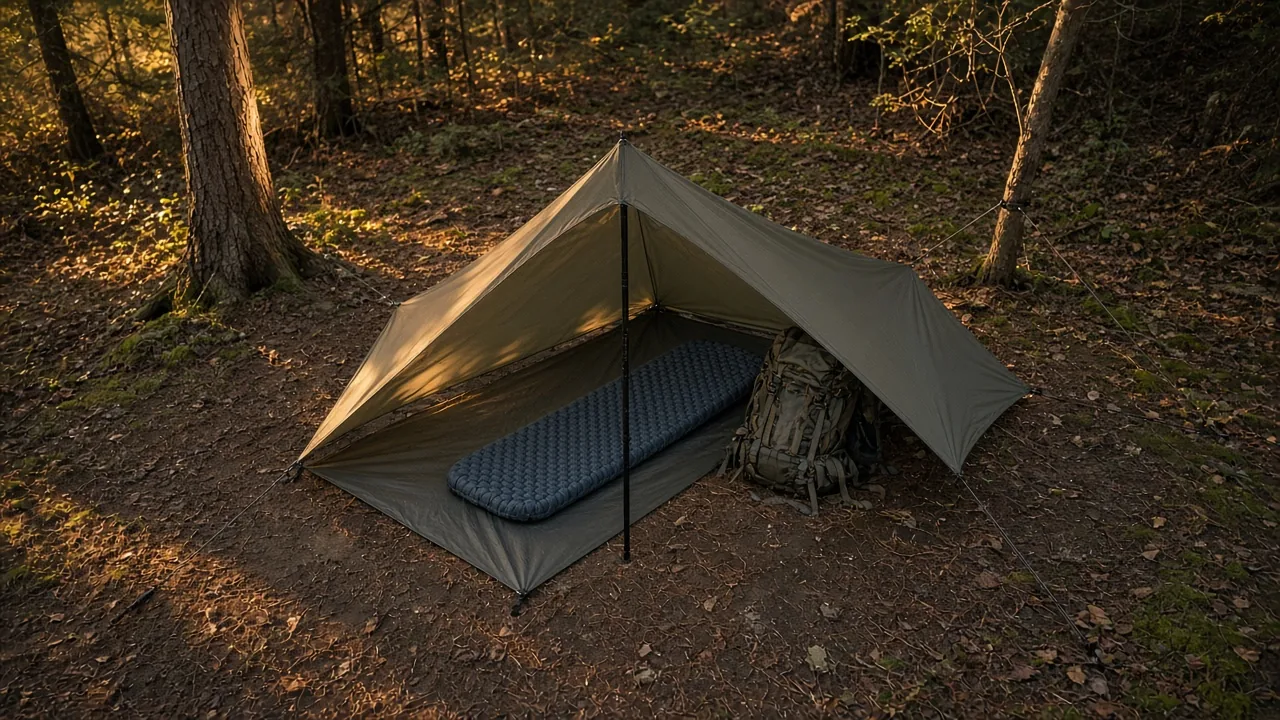
A 3x3 tarp tent makes sense when you want one piece of lightweight fabric that can replace a bivy, a dining canopy, or a full overnight shelter. Learning how to pitch a 3x3 tarp tent starts with one rule: the number and placement of tie-out loops matters more than the tarp's overall size. A multi-point 3x3 meter tarp can work for solo or two-person use if you accept lower headroom and manage condensation carefully. This guide covers tie-out selection, field fixes, step-by-step pitching, and how to handle wind, rain, and wet ground.
Choose a 3x3 Tarp With Enough Tie-Out Points
A 3x3 meter tarp with many attachment loops gives you the most pitch options. Smaller tarps work for day hikes, while a 4x3 can lack the centered points needed for a stable tarp tent shape. Before you buy or pack a tarp, look at the loop layout as closely as the fabric dimensions.
Sizing: solo, two-person, or day-use only
For overnight solo use with gear, a 3x3 meter tarp — roughly 9.8 x 9.8 feet — is the practical minimum. It gives you enough material to create a low enclosed shape while leaving room for a sleeping pad, pack, and boots inside or under the edge. Two people can lie down under a 3x3, but shoulder room is tight, especially when both campers use wide sleeping pads. Think of a two-person 3x3 tarp tent as an emergency or fair-weather shelter, not a roomy replacement for a two-person backpacking tent.
A smaller tarp around 7.2 x 4.6 feet works best as a day-use shade shelter or a minimal overnight cover when paired with a bivy sack and bug net. One experienced tarp user reports using a small tarp most often for day hikes because it weighs little and packs small, but still recommends a 3x3 as the more versatile first tarp.
The table below compares what to expect from different tarp sizes for tarp tent pitches.
| Tarp size | Best role | Solo overnight | Two-person overnight | Notes for tarp tent pitching |
|---|---|---|---|---|
| Small, approx. 7.2 x 4.6 ft | Day hikes, minimal emergency shelter | Tight but possible with bivy | Not practical | Limited tie-out options; low wind resistance |
| 3x3 meter, approx. 9.8 x 9.8 ft | Solo or tight two-person shelter | Good | Tight but workable | Best when it has center and quarter-point loops |
| 4x3 meter, approx. 13.1 x 9.8 ft | Hammock cover, larger group shelter | Roomy | Workable | Often lacks centered tie-outs; harder to shape |
Why multi-point tarps matter
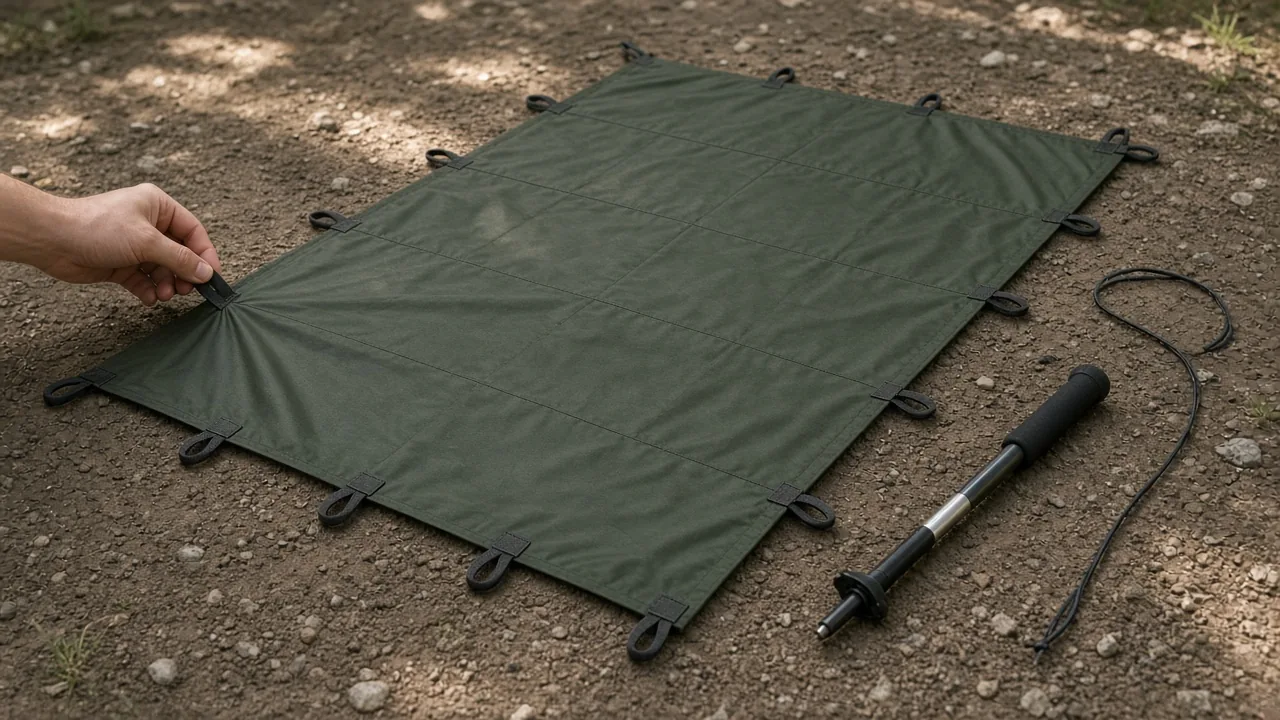
The quarter-point pitch and the classic A-frame both depend on having loops near the center and along the edges. Without those loops, you have to create field tie-outs with tarp clips or a stone-and-cord grip, which adds setup time and can slip under tension. A rectangular tarp with only corner loops can still become an A-frame, but it will not turn into the enclosed tent shape this guide describes. When you compare tarps, count the loops on the ridgeline, mid-panel, and quarter points, not just the four corners.
Add Grip Points When Your Tarp Lacks Them
When a tarp has no loop where you need one, you can still create a solid pull point without cutting or sewing. This fix works with any tarp fabric and takes about a minute.
Wrap a small stone or river pebble inside the fabric at the spot you want to anchor. From the outside, place a cord loop over the bump, pull it snug around the stone, and tie a simple overhand or slip knot. The stone becomes a temporary anchor inside the fabric, and the cord loop becomes your new tie-out. A tarp clip does the same job faster and can be repositioned, but it adds a few ounces to your kit. The stone method costs nothing and works when a clip gets lost, though it can slip on smooth or heavily coated fabrics under strong wind.
Use these added points the same way you would use a sewn loop: for quarter-point stakes, ridgeline guylines, or closing the front opening.
How to Pitch a 3x3 Tarp Tent: The Quarter-Point Method
The quarter-point method turns a flat square tarp into a low, enclosed tent shape with a single center pole. It works best with a 3x3 tarp that has loops or added grip points at the four quarter points along the edges. The finished shape looks like a shallow pyramid or a low single-wall tent, with enough floor area for one person and gear, or two people lying shoulder to shoulder.
Step order and stake tension
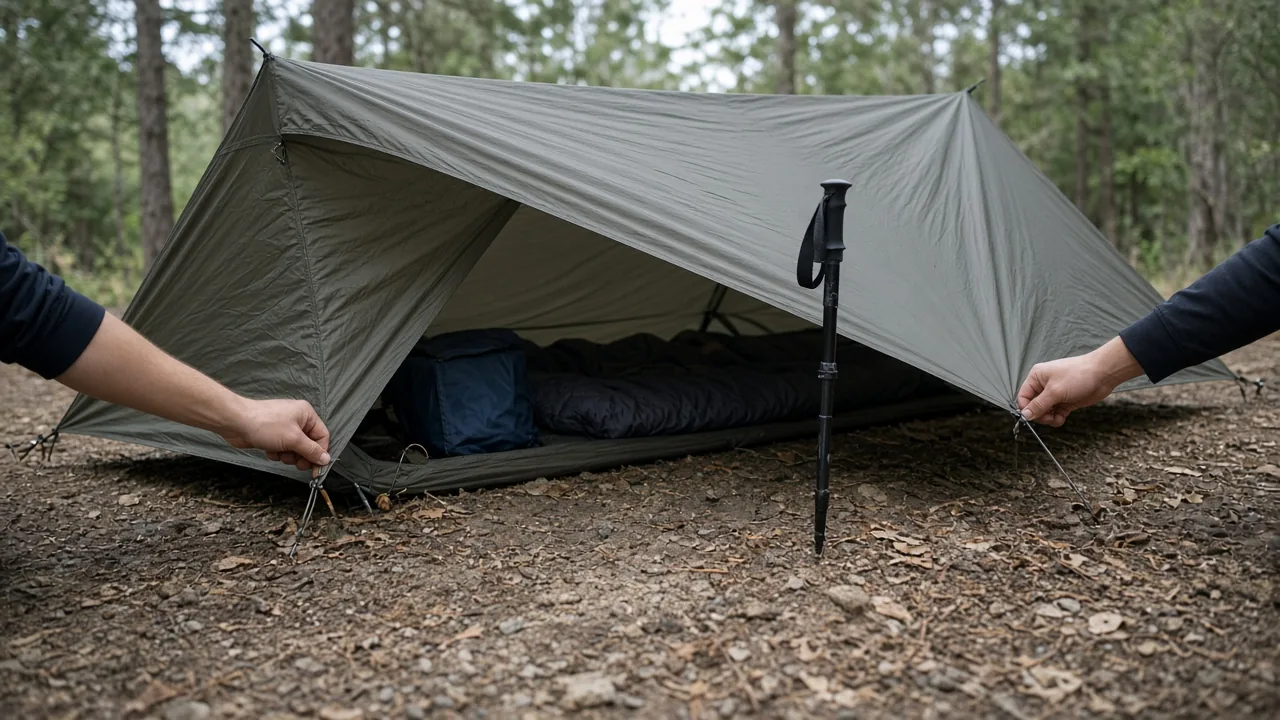
Start by staking the four quarter points first. These are located halfway between the center point and each corner along the tarp's outer edges. Drive stakes through the loops or the stone-grip points and keep light tension on each line. Do not pull them drum-tight yet.
Once the four quarter points are anchored, fold the corners inward under the tarp. Pin the side points about 40 centimeters — roughly 16 inches — from the centerline. Rotate them inward as you stake so the fabric forms walls that angle toward the center. Work from the outside edges toward the center so the fabric stays taut and the shape does not collapse when you insert the pole. If you stake the center first or leave one quarter point loose, the pitch will sag and the pole will push against slack fabric.
Center pole and guyline
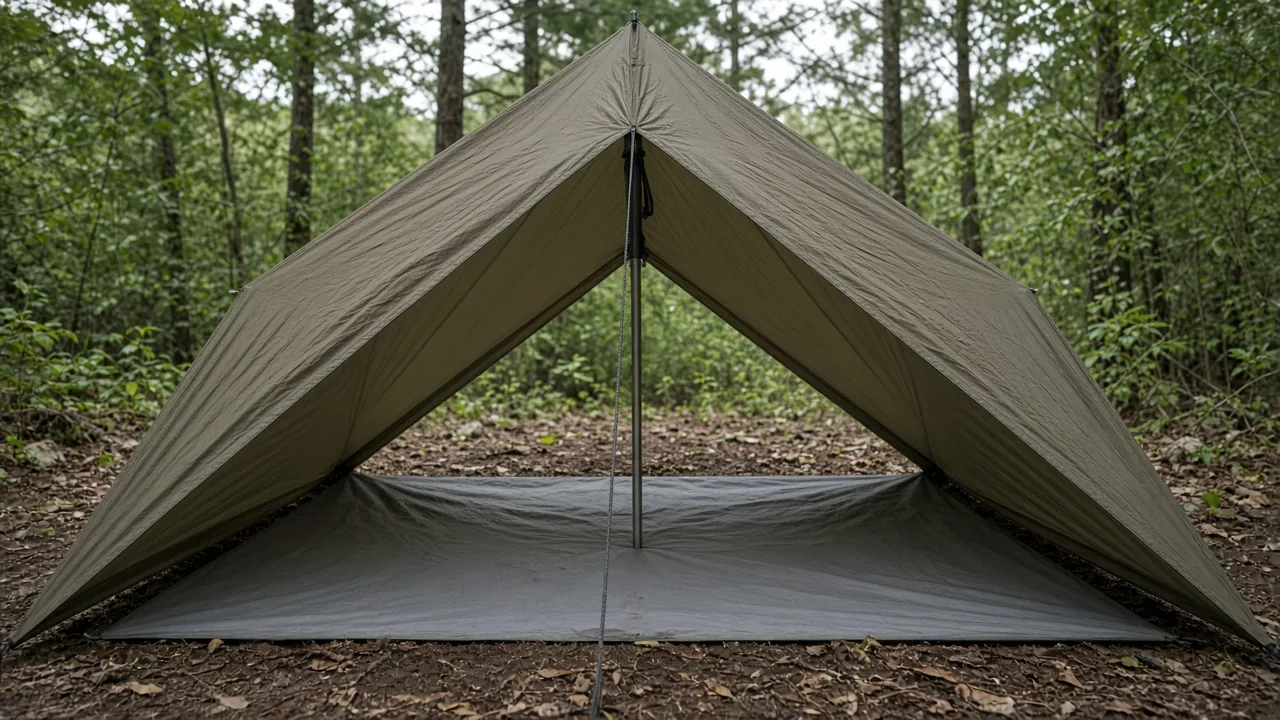
Use a trekking pole at the center point of the tarp, with the handle or tip placed against the center loop or the stone-grip point. Raise the pole from inside the shelter and set it to a height that keeps the walls taut but still low. Run a guyline from the same center point to a nearby tree, stake, or rock to keep the peak upright and stop it from shifting in wind. A single line from the peak to a forward anchor is usually enough, but adding a second line to the rear improves stability in gusty conditions.
Closing the opening
The open end can be pulled shut with two guylines to reduce wind and rain entry, or staked outward to create a larger covered porch. For a storm pitch, close the opening so only a small triangular gap remains near the ground, angled away from the prevailing weather. For dry weather or cooking outside, stake the opening wide and use the extra fabric as a covered sitting area. Either way, keep the opening oriented downwind when possible.
Manage Low Headroom and Condensation
Expect sitting height to be tight for people near 6 feet tall. With the quarter-point pitch, a person around 6 feet can lie down comfortably but may not be able to sit upright without touching the tarp. Clothing changes, packing, and organizing gear happen while lying down or crouched.
Single-wall tarp pitches can collect condensation overnight, especially in humid valleys or after rain. Warm breath hits the cool fabric and forms water droplets on the inside. Leave a vent gap at the opening and, if wind allows, raise the rear edge slightly to create cross-ventilation. Keep your sleeping bag footbox away from the walls to avoid soaking the insulation. Never use a stove or heater inside your tent. Any enclosed shelter with warm exhaust or open flame creates carbon monoxide and fire risk that ventilation cannot fix.
Improve Wind and Rain Performance
A tarp tent does not have a bathtub floor or a rainfly to shed water, so pitch shape and ground protection do more of the work. Use bungee or shock cord at ground tie-outs to reduce stress and tearing in gusty conditions. Solid guylines pull hard during wind gusts, while a short bungee section lets the fabric flex slightly instead of ripping at the loop.
Close the opening toward prevailing weather and angle the low side of the tarp into the wind. For wet ground, add a groundsheet or bivy under the tarp. The groundsheet goes beneath your sleeping pad and should be folded so edges stay inside the tarp footprint; otherwise it channels runoff under you. A bivy sack adds a second moisture barrier and a little warmth.
Wind-resistant pitching
A smaller tarp in a low, taut pitch handles strong wind better than a large loose one. In sustained wind, keep all edges low, anchor every guyline, and remove any slack from the center pole line. If the wind is strong enough to flatten a taller pitch, lower the trekking pole a few inches and restake the side loops tighter. The goal is a shape that sheds wind rather than catching it.
Groundsheet and bug protection
Pair the tarp with a footprint or bivy sack to block ground moisture and insects. A separate bug net can turn the tarp tent into a more comfortable summer shelter, especially in areas with heavy mosquito pressure. A small headnet paired with a hooded sleeping bag keeps weight down, while a full net tent adds comfort at the cost of pack space. Follow Leave No Trace practice by camping on durable surfaces and packing out all trash and food waste.
How to Choose a 3x3 Tarp Tent for Car Camping vs. Backpacking
Backpackers value the low weight and small pack size of a 3x3 tarp and trekking pole pitch. The same tarp that shelters a sleeping pad at night can become a lunch canopy or a gear cover on the trail. For solo backpackers who already carry trekking poles, a 3x3 tarp with a groundsheet weighs less than most one-person tents and fits into a side pocket rather than the main pack body.
Car campers may prefer a dedicated tent for easier entry, more headroom, and simpler setup. At a car-camping site, the weight and pack size of a three-season tent matter less, and a full tent gives you bug-free ventilation, a tub floor, and enough room to sit up inside. A 3x3 tarp still works for car camping as a shade structure, cooking shelter, or extra gear cover, but it does not replace the convenience of a parked-site tent for most people.
Before your trip, check fire restrictions and weather forecasts, and store food in bear-safe containers where required.
When the trip is a backpacking route with a low overnight low and only light rain in the forecast, a 3x3 tarp with plenty of tie-outs and a groundsheet can replace a tent for many solo or two-person trips. For car-camping bases, cold or stormy overnights, or trips where sitting up inside matters, pack a full tent instead. Weigh your shelter choice by how you will sleep, sit, and cook — not just by the square footage on the spec sheet. With the right tie-outs, stakes, and pitch tension, a 3x3 tarp tent earns its place in a backpacking shelter kit.
This article is general information about camping gear, not professional safety, medical, or wilderness training. Check fire restrictions, weather, and campsite rules before you go, and follow the manufacturer's instructions for your own equipment.
FAQ
What size tarp do I need for a solo 3x3 tarp tent pitch?
A 3x3 meter tarp, roughly 9.8 x 9.8 feet, is the practical minimum for solo overnight use with gear. It gives enough material for a low enclosed shape while leaving room for a sleeping pad, pack, and boots.
Can two people sleep under a 3x3 tarp tent?
Yes, two people can lie down under a 3x3 tarp tent, but shoulder room is tight, especially with wide sleeping pads. Treat it as an emergency or fair-weather shelter rather than a roomy two-person tent.
How do I add tie-out points if my tarp does not have them?
Wrap a small stone or pebble inside the fabric at the desired spot, then place a cord loop over the bump and tie it snug. A tarp clip works faster and can be repositioned, but the stone method costs nothing. Use these points for quarter-point stakes, ridgeline guylines, or closing the front opening.
How do I reduce condensation in a 3x3 tarp tent?
Leave a vent gap at the opening and, if wind allows, raise the rear edge slightly for cross-ventilation. Keep your sleeping bag footbox away from the walls to avoid soaking the insulation. Never use a stove or heater inside the tent.
Is a 3x3 tarp tent better for backpacking or car camping?
Backpackers value the low weight and small pack size, especially when already carrying trekking poles. Car campers may prefer a dedicated tent for easier entry, more headroom, and simpler setup, while a 3x3 tarp works well as a shade or cooking shelter.



