How to Keep a Camp Stove from Tipping: 7 Stable Car Camping Fixes
A tippy camp stove usually comes down to a narrow burner, a high table, and crowded gear. Learn how to choose a wide stove, lower table, and matched cookware to keep your camp kitchen stable.
A tippy camp stove usually comes down to three problems: a narrow burner under a wide pan, a table set too high or uneven, and gear placed close enough to bump the flame zone. Here is how to keep a camp stove from tipping by fixing each of those causes before the pot gets hot. The most stable car camping kitchen chooses the stove, table height, and pan size as one system rather than treating each piece as separate gear.
Choose a Stove with a Wide Enough Base for the Meal
The meal you are cooking matters as much as the stove itself. A small burner under a big pan is a common tipping setup, especially when you move from boiling water to frying or simmering a sauce. Match the stove footprint to the cookware and the job.
When a compact canister stove is stable
A small integrated canister stove with a pot support built for one or two cups of water is stable for simple boiling jobs. Use it with a small pot, a mug, or a narrow kettle, and keep the pot centered over the burner. This works well for coffee water, instant soups, or boiling water for pasta when you are traveling light and not building a full camp kitchen.
The weakness shows up when you put a full-size saute pan on that small support ring. A wide pan overhangs the burner, and any pressure on the handle becomes a lever. Compact canister stoves are fine for boiling, but they are not the safest choice for frying or stirring a heavy skillet.
When to switch to a two-burner stove
A wider two-burner stove changes the stability picture. The larger footprint lets you center heavier cookware so the pot or pan does not overhang the support. You can also run two pots at once, which helps when cooking for several people or preparing multiple parts of a meal. Some wide two-burner models, like the Eureka two-burner camp stove, are built for base-camp style cooking and can hold a low simmer without scorching food.
The trade-off is bulk and weight. A two-burner stove takes up more space in the vehicle and is overkill for one person reheating a single pot. Reserve it for multi-day trips, family meals, or when you want a more stable platform for frying.
What to watch for
Before attaching a fuel canister, check that the burner head, support legs, and canister all sit flat. A bent support arm or a canister that sits at a slight angle can tip even a well-designed stove once the pot is full. Store the stove so the legs and burner head are not crushed by other gear, and inspect the connection point for grit or damage before lighting.
Keep the Stove at Sitting Height, Not Standing Height
A high table forces you to reach upward, which changes how much control you have over a hot pot. The best height for a camp cooking surface is low enough to let you sit and brace your elbows on your knees while stirring.
Why low height improves stability
A table set around 14 to 16 inches high shortens your reach and keeps your body lower and more balanced. You can hold the pan handle with one hand and work a spatula with the other without leaning over the burner. That reduces the chance of knocking a handle, shifting the stove, or accidentally pressing down on the edge of a pot.
At standing height, a small bump against the table travels straight into the cookware. Sitting below the stove also keeps your face and chest farther from the flame zone while giving your hands a direct line to the pot.
When the picnic table feels too tall
A standard picnic table is often too high for comfortable camp-stove cooking. If you set a burner on top, the pot ends up near chest level, and any short reach becomes an awkward lean. Some camp kitchen tables have adjustable legs that can drop to the 14 to 16 inch range, which is the sitting-height sweet spot for cooking.
Avoid running an adjustable table at full extension just to match a tall seat. The higher position reduces rigidity, and the table becomes more likely to wobble side to side. Keep the legs on the low setting even if it means using a lower camp chair or a bucket seat.
Mesh or slat tables
A fixed-leg mesh table can hold a stove at a good height on flat ground, and the open surface lets spills drain instead of pooling. The limitation is leveling. Because the legs are fixed, the table cannot correct for uneven sites, and the burner may sit at a slight angle if the ground slopes. Mesh tables work best in established campsites with prepared, flat pads. On uneven dispersed ground, choose a table with adjustable legs or move the setup to a flatter spot.
How to Keep a Camp Stove from Tipping on a Small Burner
A compact burner does not have to be permanently unstable. Widening the support area underneath can make a small stove safer for moderate pots and pans.
What kind of base plate works
A flat, rigid, heat-safe plate placed under the burner can spread the load across a larger contact patch. Some car campers use an aluminum heat sink plate or a cast router plate for this purpose. The plate must sit perfectly flat without rocking, and the stove feet need to rest solidly on it. The goal is to create a wider base, not to raise the stove high off the table.
A thin metal plate also gives the burner a firmer seat when the table surface is soft, slatted, or slightly uneven. It works only if the plate itself is flat and large enough to keep the stove from sliding to one edge.
When to use this fix
Add the base plate when you plan to use a saute pan, a pot of frozen meal that needs stirring, or any cookware that overhangs the burner's support arms. It is a practical compromise when you already own a compact canister stove but occasionally need more stable heat for larger cookware. For regular frying and family meals, a wider stove is still the safer long-term option.
What not to do
Do not stack rocks, plates, cutting boards, or wood scraps under a lit stove. A shifting stack can collapse while the burner is hot, spilling food and fuel. Anything that is not perfectly flat and locked in place becomes a burn and spill risk the moment you stir the pot. If the surface under the stove is uneven, move the whole kitchen rather than trying to shim one side.
Match Pan Size and Handle Position to the Burner
Cookware choice is often overlooked on a camping checklist, but it has a direct effect on how steady the stove feels.
Saute pan vs small pot
A wide saute pan is more likely to tip on a single-burner stove because its weight sits far from the center. A low, squat pot with a lid is easier to keep centered and less affected by a long handle. For car camping, choose flat-bottom pans that fit inside the burner's support area and position the handle so it points away from your main walking path.
A short handle helps keep weight over the burner, while a long handle gives a bump more leverage. If you cook with a saute pan on a compact stove, hold it steady while stirring and keep the handle rotated toward clear space.
Nonstick and electric options
Outdoor cookware sets do not always behave well over a flame. Many cheap camping pans scorch or stick, which leads to aggressive scraping and more movement on the burner. A small nonstick frying pan with a flat base is easier to control and clean.
If you already carry a power station, a flat electric skillet around 1200 watts can sit directly on a low table without an open flame. The flat bottom removes the open-flame tipping concern, but the setup depends on inverter wattage and weather. Lower-wattage models heat slowly, and a larger unit may draw more than the inverter can handle. Check the power budget before relying on an electric skillet.
What to leave in the bin
Skip oversize cookware sets with redundant pots and specialty pans. A small nonstick pan and a couple of flat-bottom pots handle most car-camping meals and pack flatter than a large nested set. Many outdoor kitchen kits include pieces that never get used and take up room that could go to a wider stove or a better table.
Place Fuel, Ingredients, and Utensils Outside the Bump Zone
A stable stove is only part of the solution. The area around the burner also needs to stay clear so you never bump the pot while reaching for an ingredient.
Car camping kitchen flow
Arrange your cooking station so ingredients and spices sit on the side opposite your stirring hand. If you stir with your right hand, put the cutting board, oil, and seasoning on the left. That keeps your body from crossing over the flame and reduces the chance of snagging a pot handle with your elbow.
A low table helps here because you can sit and set up a natural flow: pan in front, ingredients on one side, utensils on the other. The less you reach across the burner, the less the cookware moves.
Fuel placement and safety
Keep spare fuel canisters away from the flame, and never use a stove or heater inside your tent, vehicle, or any closed space. Carbon monoxide and fire risk make enclosed cooking dangerous even when the weather is bad. Store fuel canisters upright in a cool, shaded spot away from the cooking area. If you smell fuel while connecting a canister, stop and check the seal before lighting.
One-bin kitchen limits
A single bin keeps a car camping kitchen portable and easy to load, but it can crowd the stove if placed too close. Keep the bin at arm's reach behind or beside you, not directly next to the burner where a dropped lid or loose spoon can knock the pot. A one-bin system works best when the bin stays closed during active cooking and you pull out only the items needed for that meal.
Test Stability Before the Pot Gets Hot
The easiest time to catch a tipping problem is before the stove is lit and the pan is full.
Adjustable table check
After setup, press lightly on the pot handle and on the stove frame. If either rocks or shifts, lower an adjustable table until the legs feel firm and the cookware sits without wobble. A table at its lowest setting is almost always more stable than the same table raised to counter height. Do the check with a full pot in place rather than an empty one, because the added weight can reveal a lean that was hidden during setup.
Ground check
Use a compact roll-top table or level ground under a fixed-leg table. A roll-top table, such as the NRS compact version, can handle dispersed camping where there is no picnic table. If the ground is not level, move the table instead of shimming one leg with loose objects. A wedge can shift as the ground settles or as you move around the table.
Before you cook
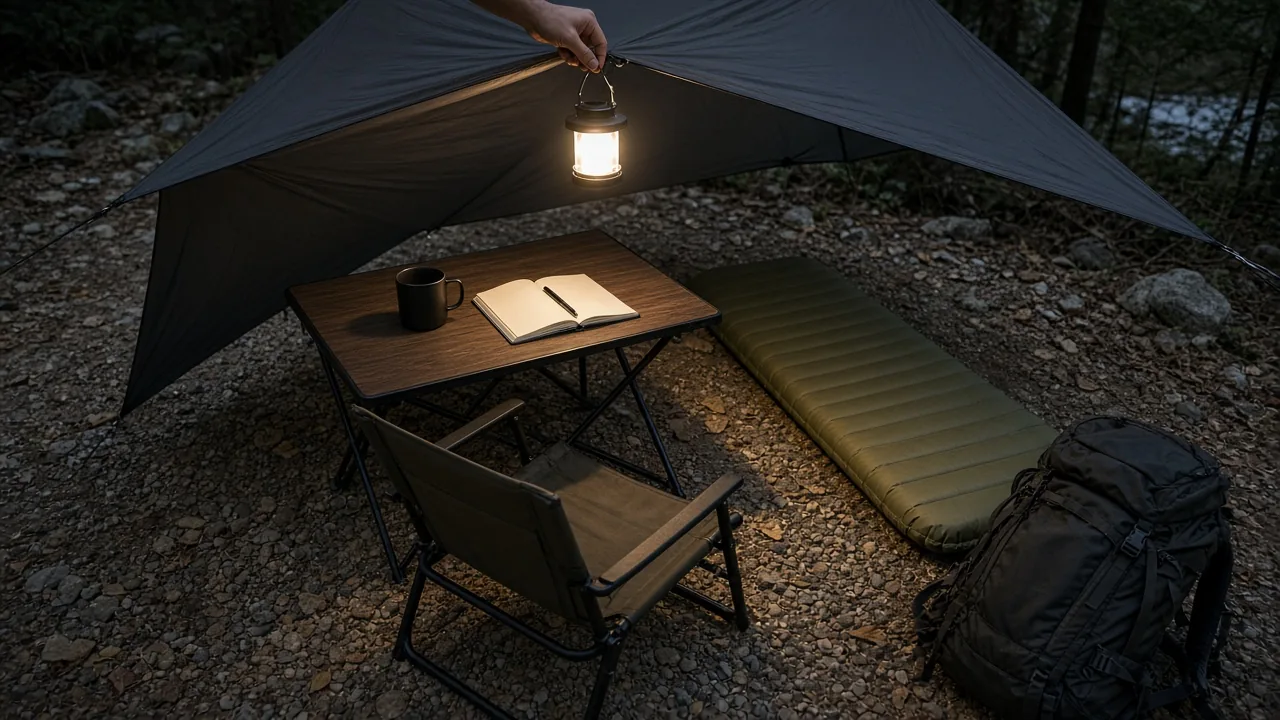
Check fire restrictions, the weather forecast, and campsite rules before using any stove or open flame. Wind can make a flame flicker and force you to work closer to the burner, so a wind screen or natural wind block may help. If rain forces you under a tarp, keep the flame outside the enclosed space and make sure the stove still sits on a flat, noncombustible surface.
How to Choose a Stove, Table, and Cookware for a Stable Setup
Stability comes from choosing the three parts together: burner width, table height, and pan size. Price and brand matter less than whether the pieces fit the way you actually cook.
| Factor | Car camping | Backpacking |
|---|---|---|
| Stove | Wide two-burner or larger butane stove; heavier but steadier | Compact integrated canister stove; lighter but narrower |
| Table | Low-height folding, roll-top, or adjustable-leg table worth the bulk | Skip or use a flat site surface |
| Cookware | Flat-bottom nonstick pan, low squat pots, maybe a 1200W electric skillet | Small titanium or thin pot for boiling water and simple meals |
Car camping vs backpacking
For car camping, choose a wider stove and a lower table because pack size and weight matter less than setup convenience and safety. For backpacking, a compact integrated canister stove saves ounces and pack space, but it demands more care with pot size and handle control. The two setups are not interchangeable, and gear bought for one often becomes a compromise in the other.
When an electric setup makes sense
If you already carry a power station and use it for other devices, a 1200W electric skillet can be steadier than a flame stove because it sits flat without a burner support ring. Confirm the inverter can handle the wattage and remember that electric heat is slower to recover when you add cold food. Weather also matters: an electric setup avoids open-flame restrictions in some campsites, but it adds battery management and may not be practical for multi-night trips without recharging access.
What not to buy
Avoid tall folding tables used at maximum height, oversized pans placed on single burners, and fold-out cutting boards that can collapse under pressure. Also skip large cookware sets that take up bin space without improving stability. A wider stove and a lower table will do more to prevent tipping than a bigger pan or an extra utensil.
For your next trip, check whether you are car camping or backpacking, what the overnight low and rain chance look like, and whether the extra bulk of a low table or base plate is worth the stability. If you cook hot meals in camp often, the answer is usually yes. Pair that choice with a burner wide enough for your pan, and you will spend less time steadying the pot and more time eating.
Camp Kit Journal
This article is general information about camping gear, not professional safety, medical, or wilderness training. Check fire restrictions, weather, and campsite rules before you go, and follow the manufacturer's instructions for your own equipment.
FAQ
What type of camp stove is most stable?
A wide two-burner stove with a larger footprint is more stable for frying and larger pans, while compact canister stoves are fine for boiling small pots.
What height should a camp cooking table be?
A low table around 14 to 16 inches high lets you sit and keep control while stirring, reducing the chance of bumping the pot.
Can I put a plate under my compact stove to make it more stable?
Yes, a flat rigid heat-safe plate can spread the load, but it must sit perfectly flat and never use stacked rocks or wood scraps.
What cookware is safest for preventing tipping?
Flat-bottom pans and low squat pots that fit within the burner supports are safer; avoid wide saute pans on small burners.
Can I use an electric skillet instead of a camp stove?
A 1200W electric skillet can sit flat without open flame but depends on inverter wattage and weather, so check the power budget first.