How to Fold an Extra Large Picnic Blanket Without a Mess
Learn how to fold an extra large picnic blanket without a mess by working from the waterproof backing side, making repeated long-edge folds, and matching the final shape to the handle or closure.
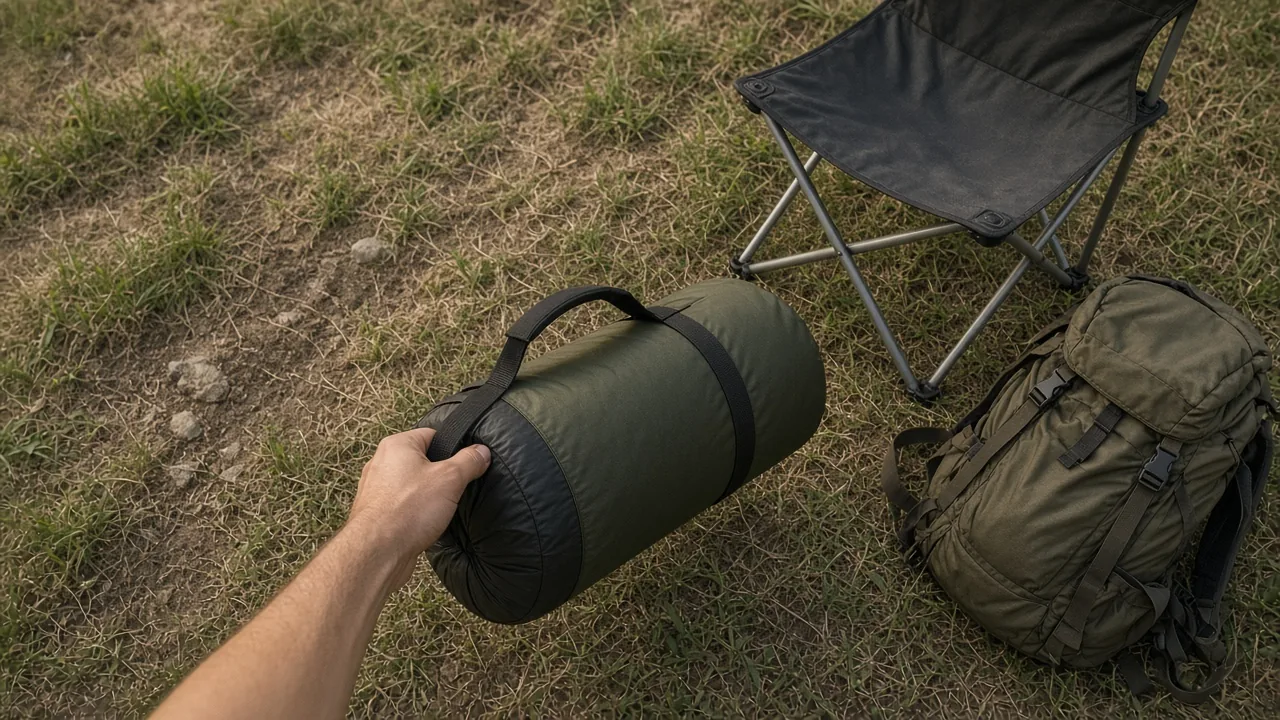
An extra large waterproof picnic blanket earns its space in the car when it gives a group a dry place to sit, but the real test is getting it back into a tidy bundle. Learning how to fold an extra large picnic blanket comes down to working from the backing side, making repeated long-edge folds, and matching the final shape to the handle or hook-and-loop closure. Done that way, the waterproof layer stays clean and the pack shuts without a fight.
Why an Extra Large Waterproof Blanket Gets Messy
A wide sitting area, a soft top fabric, and a slick waterproof backing all work against a random fold. The blanket is big enough that loose air pockets form between layers, while the soft face grabs grass and crumbs and the backing traps moisture. Instead of compacting, the blanket keeps pushing back open or bulging unevenly.
A mat in the 59-by-79-inch range is large enough for eight seated adults or four people lying flat. That same size makes an unstructured fold worse because each fold multiplies the bulk. If you fold by feel instead of working from the long edges, you typically end up with a lumpy bundle that is too thick for the closure or too wide for the carry handle.
What the Waterproof Layer Actually Does
The heavy-duty bottom layer on these blankets sheds water and blocks damp ground. That is the layer that keeps you dry when the grass is wet or the soil is cold. But a waterproof backing does not dry the fleece top or the cushion layer. If you fold the blanket while the soft side is damp, you seal that moisture inside the stack, especially once the waterproof outer layer is folded over it.
Treat the backing as a barrier, not a dryer. Shake off the surface, let the top fabric air out for a minute, and only then start folding. The goal is to keep the fleece and cushion layer dry before the waterproof backing closes around them in the vehicle or closet.
Why the Handle or Closure Position Changes the Fold
Some extra large picnic blankets pack as a rolled carry with a leather or fabric handle at one end. Others finish as a flat rectangle with hook-and-loop tabs on the outside. The fold sequence has to match that style. If you fold without checking, the handle can end up buried inside the roll or the hook-and-loop tab can land on the wrong face.
Before the final crease, look at where the handle, strap, or closure sits. That position decides whether you keep halving the blanket or stop sooner and fold a shorter flap over the bundle. A carry handle on the short end favors a roll, while side tabs favor a flat pack.
How to Fold an Extra Large Picnic Blanket: Step-by-Step
The basic rule is to fold on the back side, not the soft top. Work in repeated halves along the long edge until the blanket is narrow enough for the handle or strap to reach. This sequence removes air as you go and keeps dirt on the outside of the fold.
Flip It to the Backing Side First
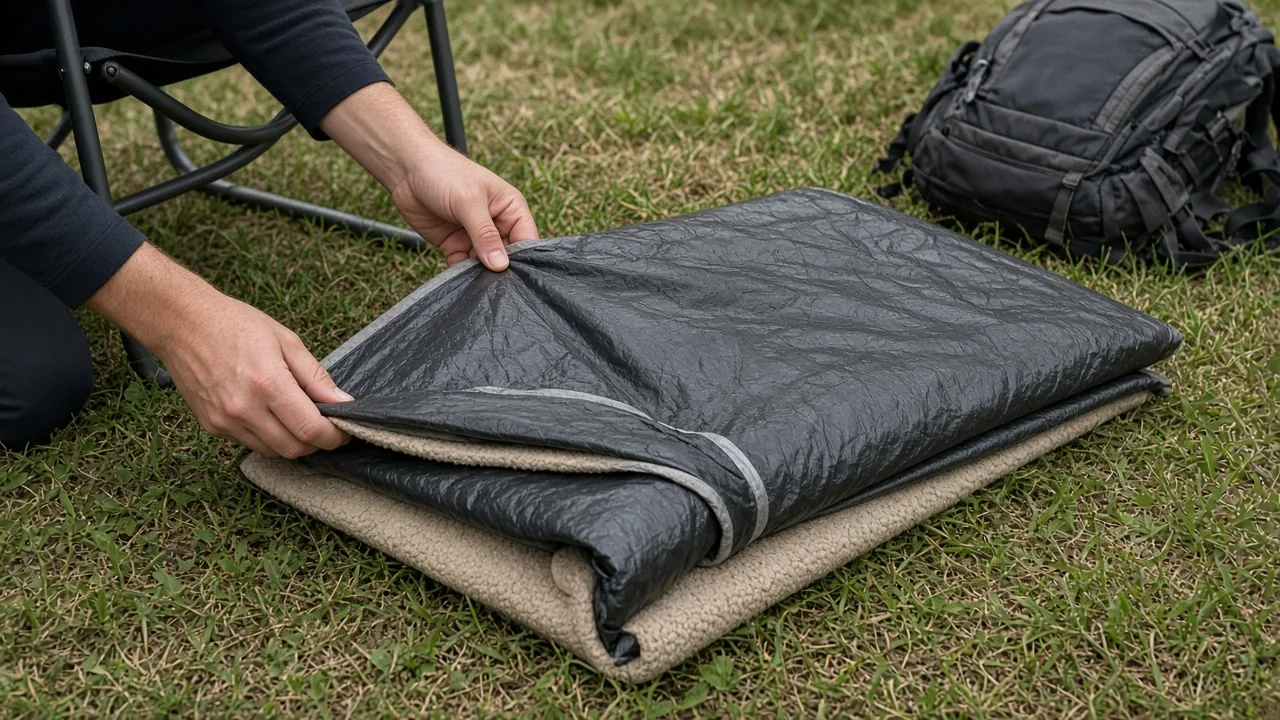
Place the blanket with the waterproof backing facing up and the soft fleece side against the ground or table. That way any dirt, grass, or dampness stays on the outside of the first fold instead of being pressed into the fabric. Work from the long edges rather than making diagonal or random creases.
Start by pulling one long edge over to meet the opposite long edge. Smooth the folded edge with your hands to push out air. Then fold it again along the new long edge if the blanket is still too wide for the closure or handle.
Fold, Check the Closure, Fold Again
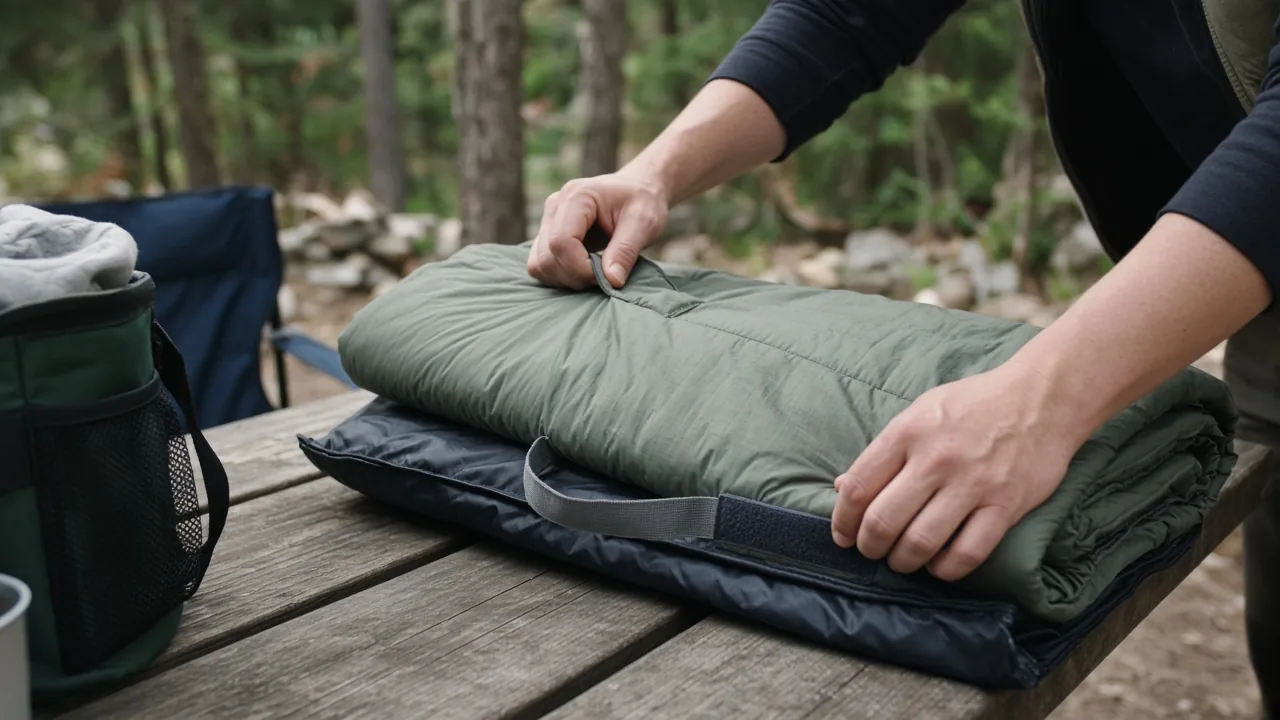
After each long-edge halving, pause and check where the hook-and-loop tab or handle sits. Keep folding from the bottom toward that closure so the final flap attaches without twisting the blanket. If the tab is on the lower half, bring the bottom edge up toward it. If the tab is farther across, make one more fold before testing the position again.
A common working sequence goes like this:
- Shake out the blanket and lay it backing-side up.
- Fold in half along the long side, bringing one long edge to the other.
- Fold in half again along the new long edge if needed.
- Check the handle or hook-and-loop tab position.
- Fold the bottom section toward the closure.
- Continue folding until the tab lines up on the outside.
- Press the bundle flat and secure the tab or handle.
The key is not forcing the last closure. If the tab does not reach, the fold is too wide or too thick. Unfold one step and adjust rather than compressing the bundle into a misshapen lump.
Roll or Flat-Pack: How to Carry a Folded Extra Large Picnic Blanket
The final form depends on how the blanket is built and how you plan to move it. A roll fits well over a shoulder or on a camp chair and suits a quick ground cover. A flat pack sits more predictably in a trunk or pack and works best when the blanket has sewn carry tabs.
Car camping favors either style because weight and packed size matter less than convenience. For backpacking, an extra large three-layer picnic blanket is usually too heavy and bulky. Save it for car trips, short walks to a picnic spot, or campsite use where you are not carrying it far.
| Carry style | Best when | Watch for |
|---|---|---|
| Roll | The blanket has a handle or strap, and you need to move it from the car to a spot without unpacking | Keep the waterproof backing on the outside and roll tight |
| Flat pack | The blanket has corner or side hook-and-loop tabs and you are stacking it with chairs and coolers | Align the tabs before the final fold so the pack stays shut |
When a Roll Carry Works Better
If the blanket has a leather or fabric handle at one end, rolling from a short end keeps the waterproof backing facing outward and gives you a clean place to grip. This works well when you carry the mat under one arm or over a shoulder for a few hundred feet.
Roll the folded blanket from the end opposite the handle. Tension matters here. A loose roll with trapped air will unwind or sag, so roll firmly but without stretching the fabric. Once the handle is exposed, the blanket should feel like a compact cylinder rather than a soft pillow.
When a Flat Carry Works Better
If the blanket has closure tabs on the corners or sides, flat-folding to the tab positions prevents shifting inside a packed vehicle. A flat rectangle stacks under a cooler or slides into the gap beside a camp chair without rolling around.
This style also works better when you are loading several flat items into a trunk or roof box. Instead of fighting a round bundle, you can place the folded mat against the floor or side wall and build other gear on top of it. Just make sure the hook-and-loop tabs are aligned before you lift the pack, because a flat pack that pops open mid-carry is harder to manage than a roll.
Common Mistakes That Turn It Into a Mess
Skipping the shake-out and folding from the wrong side are the two fastest ways to trap grass, crumbs, and damp into the layers. Even after the closure is secured, the blanket stays bulky and can start to smell or mildew.
Packing It Wet or Dirty
A water-shedding bottom will not protect the fleece top from mildew if the blanket is folded while damp. If you pack a damp mat into a car or closet, the moisture has nowhere to go. The backing seals it in, and the cushion layer holds it against the fabric.
Before folding, shake the blanket out on durable ground. Pick off leaves, sticks, and food scraps. Pack out any trash rather than leaving it under the mat. If the top feels damp from rain or dew, give it a few minutes to dry in the open air before the first fold. On a cold morning, even a short time spread over a dry log or rock can help.
Not Checking the Closure Before the Final Fold
The hook-and-loop tab can end up hidden inside the fold if you stop watching its position. Once that happens, the natural move is to force the bundle closed, which strains the tab and leaves the blanket wider than it should be.
Test the tab position before the last crease. If it is on the underside, unfold once and refold the bottom section so the tab lands on the outside. The closure should attach without twisting the pack. A properly aligned tab holds the bundle flat and signals that the fold sequence was right.
How to Pack and Care for It After Folding
Once the blanket is rolled or flat-packed, place it where wet boots and cookware cannot crush or soak it. In a car, keep it away from muddy floor mats and leaky cooler drains. In camp, store the folded mat inside a dry bag or under a vestibule if rain is expected. Never use a stove or heater inside your tent, and keep the folded blanket away from any heat source because the waterproof backing can melt or crack.
Keep the Waterproof Backing Clean
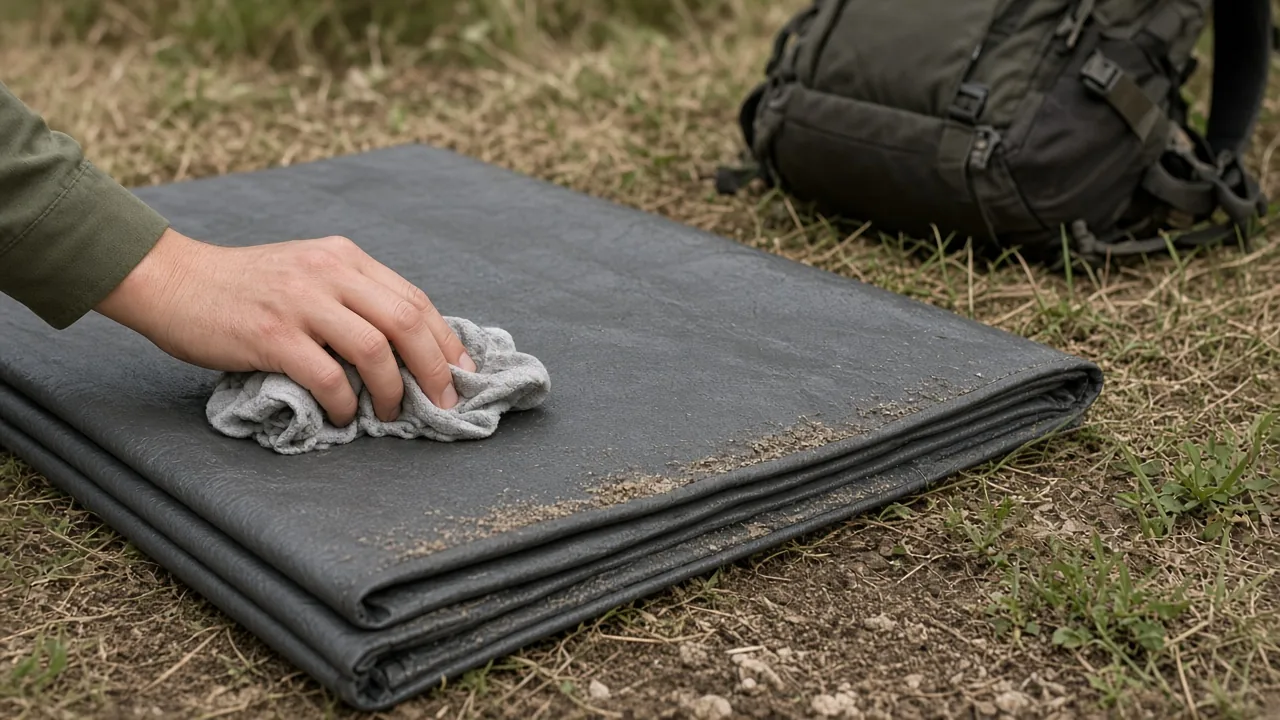
After rocky or muddy ground, wipe the bottom with a damp cloth before storing the blanket. Small stones and grit can work into the backing and create thin spots over time. Let the blanket air dry away from direct high heat, because a radiator, campfire edge, or hot car dash can stiffen and crack the waterproof layer.
Follow the manufacturer's care instructions for deeper cleaning. Most waterproof-backed blankets should not be aggressively scrubbed or dried on high heat. A gentle rinse and line dry is usually safer. Keeping the backing clean also makes the next fold easier, because dirt is not transferred to the fleece top or the inside of the pack.
Before a trip, decide whether this is a car-camping ground cloth or a day-hike picnic blanket. Check fire restrictions, the forecast, and the expected overnight low. If the ground will be cold, add a foam pad under the blanket for insulation. A folded extra large picnic blanket is simple to carry when you match the fold to the closure, but the real point is having a dry, clean place to sit once you get there. Bring it when the group is large, the ground is damp, or you want a quick ground cover that rolls or packs flat without taking over the trunk.
This article is general information about camping gear, not professional safety, medical, or wilderness training. Check fire restrictions, weather, and campsite rules before you go, and follow the manufacturer's instructions for your own equipment.
FAQ
Why should I fold my extra large picnic blanket with the waterproof backing side up?
Folding with the waterproof backing facing up keeps dirt, grass, and dampness on the outside of the first fold instead of pressed into the fleece top. It also helps keep the soft side dry before the waterproof layer closes around it.
Should I roll or flat-pack an extra large picnic blanket?
A roll works well if the blanket has a handle or strap at one end and you need to carry it short distances. A flat pack is better when the blanket has hook-and-loop tabs and you want it to stack flat in a vehicle or trunk.
What should I do if the closure tab doesn't reach after folding?
Unfold one step and adjust the fold rather than forcing the bundle shut. Check the tab position before the final crease so the closure lands on the outside and attaches without twisting the pack.
Can I pack a damp extra large picnic blanket?
No, avoid packing it damp because the waterproof backing seals in moisture, which can lead to mildew or odor. Shake it out and let the top fabric air dry for a few minutes before folding.
How do I keep the waterproof backing in good condition?
Wipe the bottom with a damp cloth after use and let it air dry away from high heat. Avoid radiators, campfire edges, or hot car dashes, which can stiffen and crack the waterproof layer.



