How to Clean Titanium Camping Dinnerware in Fire Without Damage
Learn when and how to burn residue off uncoated titanium dinnerware in a campfire, plus low-water wipe alternatives, material tips, and campfire safety advice.
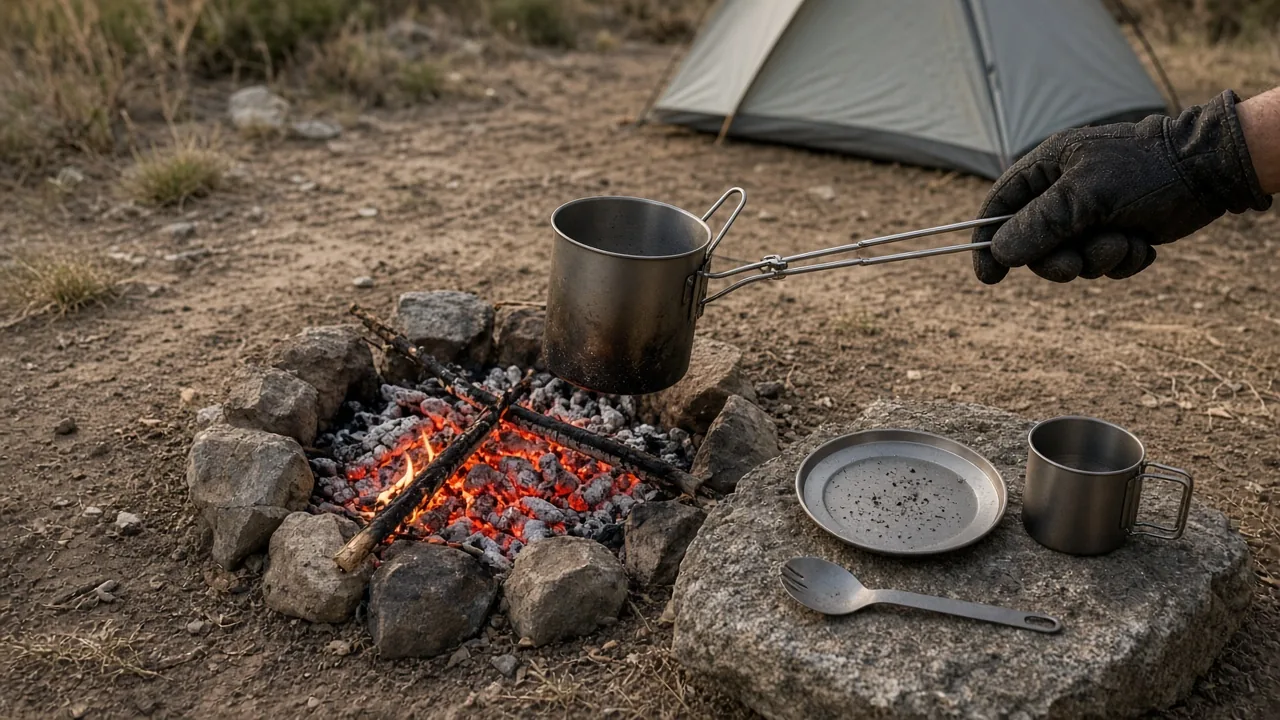
Burnt food on titanium plates and pots doesn’t need a scrub pad or a long soak—knowing how to clean titanium camping dinnerware in fire can turn stubborn residue into ash in about 20 to 30 minutes. If you’re using uncoated titanium dinnerware and already have a hot campfire going, place the piece directly in the flames, using no soap and leaving almost nothing to pack out. If fire restrictions are active or your dishes have plastic parts, skip the flames and use a low-water wipe method instead.
How to Clean Titanium Camping Dinnerware in Fire: Step-by-Step
Fire cleaning works because titanium tolerates campfire temperatures without melting or deforming. The goal is to turn food into carbon, then dump the ash. Keep a pair of tongs or leather gloves nearby, and make sure the fire is legal in your area.
Prep the Fire and Position the Cookware
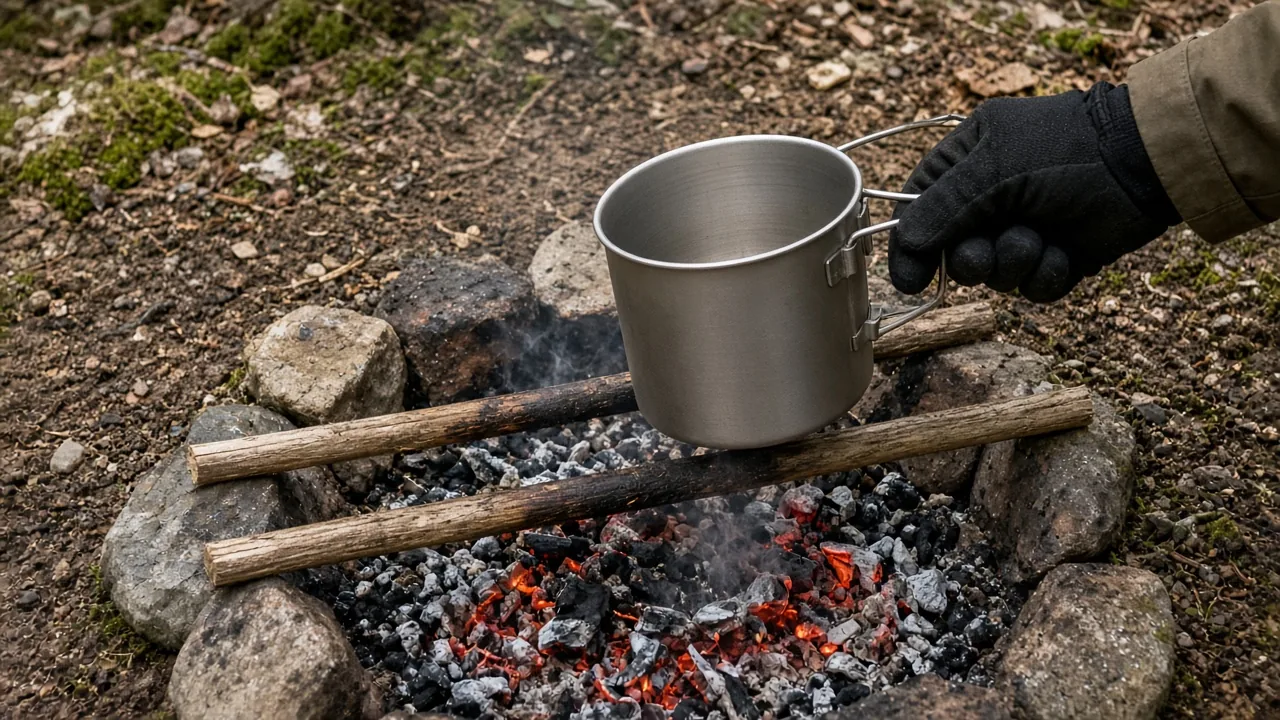
Don't try this method on a weak fire or a pile of smoldering coals. You need a mature fire with a bed of glowing coals and enough airflow to keep them hot. Set two or three sticks across the fire ring and rest the titanium piece on top. Keeping the cookware elevated prevents it from blocking the coals underneath. If a pot sits directly on the coals, the bottom cools and the coals can black out instead of burning hot enough to break down food.
A 750 ml titanium pot with burnt pasta residue is a typical candidate. The food doesn't need to be scraped off first. Loose chunks can be knocked out, but the stuck-on layer stays.
Burn, Rotate, and Cool
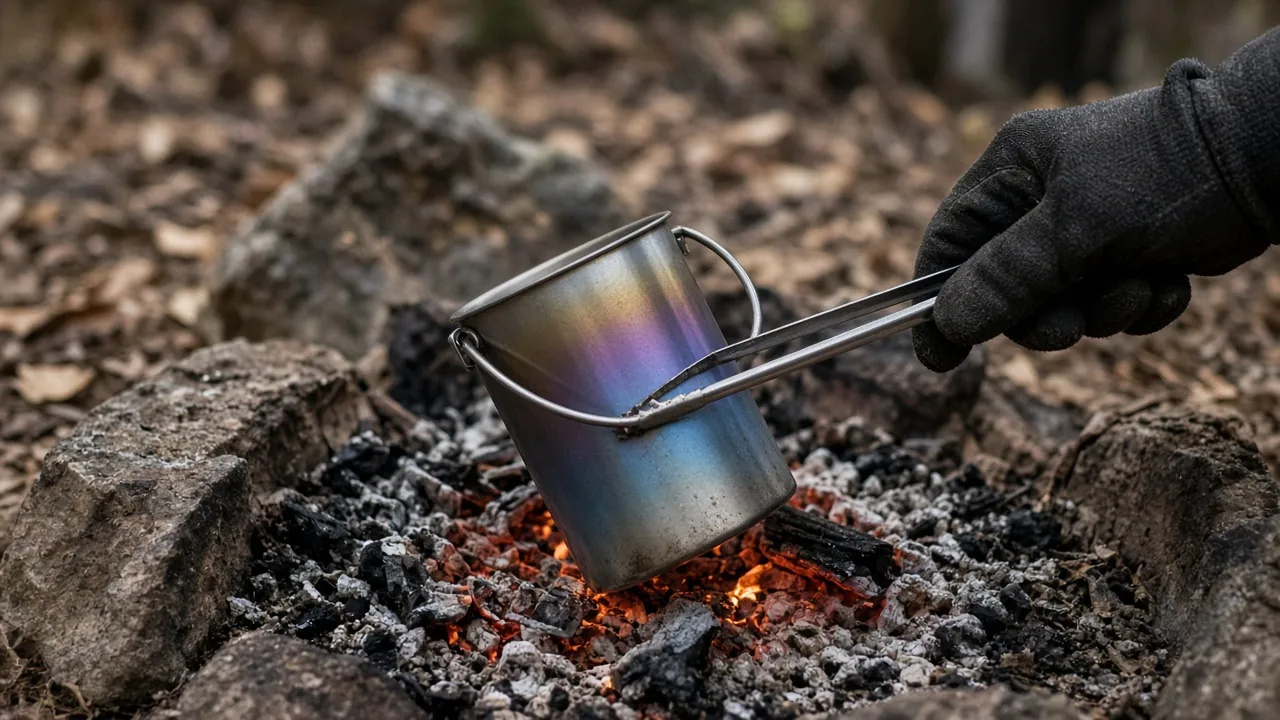
Place the titanium item on its side first. Within about 40 seconds, expect the metal to show white, purple, and blue color shifts around the handle and rim. That's normal titanium oxidation, not damage.
After roughly 10 minutes, rotate the piece upright so heat wraps around the whole surface. Let it burn for another 10 to 15 minutes. Total fire time usually lands around 20 to 30 minutes. The burnt food turns to a dry black ash or carbon layer that releases from the metal.
Remove the piece with tongs or heat-resistant gloves and set it on a rock, gravel pad, or fire ring edge to cool. Don't dump it into snow or cold water, because rapid cooling isn't necessary and can make the piece harder to handle safely.
Finish Without Scrubbing
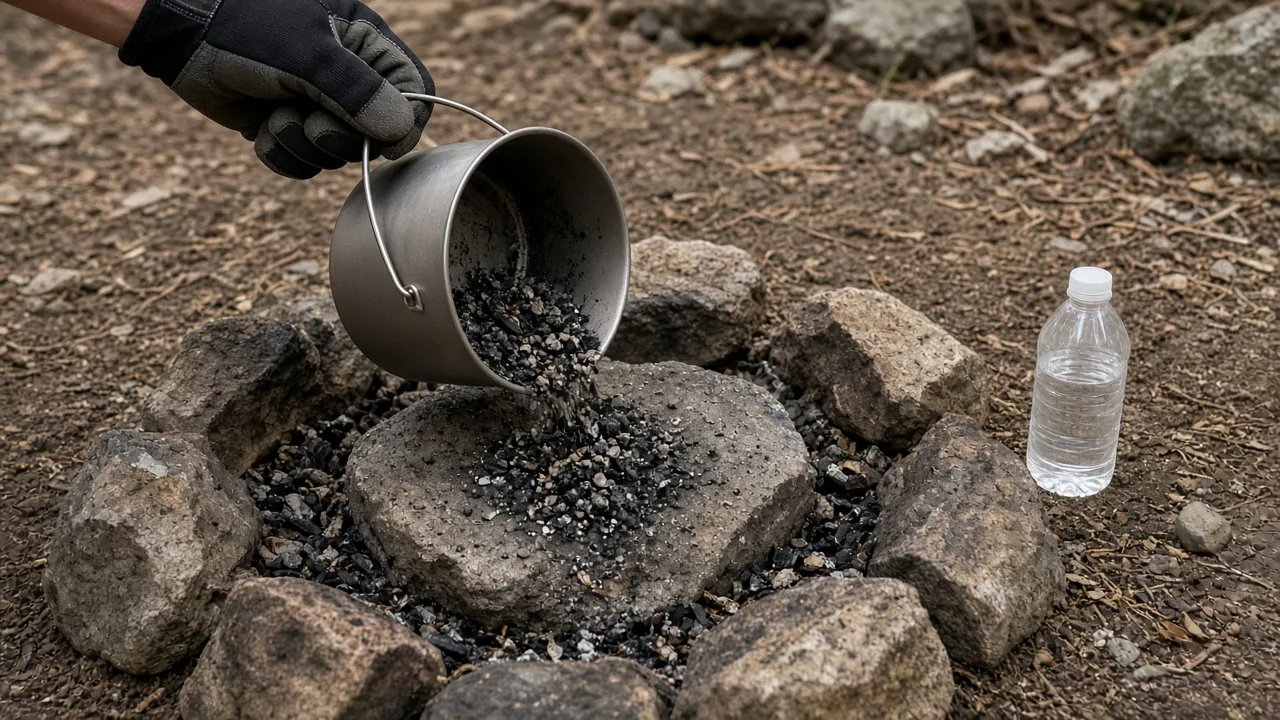
Once cool, tip out the ash. Most residue falls away as powder or small flakes. If a little dust remains, a quick rinse with a small amount of water removes it. No soap, scouring pad, or scraper is needed. The food has already broken down into carbon, and scrubbing mostly just works the ash around.
Laser-etched logos or measurement lines on titanium usually survive this process. They're etched into the metal rather than printed on top, so fire exposure doesn't remove them.
Why Pure Titanium Survives Fire Cleaning When Other Cookware Does Not
Titanium has a combination of properties that make it unusually well suited to fire cleaning. It's light, strong, and corrosion resistant, and it won't rust after repeated exposure to campfire heat. It also cools faster than many other metals, which matters when you need to pack up soon after cleaning.
Coated aluminum, nonstick pans, and anything with plastic handles don't belong in this method. Coatings can fail at high heat, and plastic melts or burns. The same applies to unknown alloys that might warp or contain materials that degrade differently.
What Fire Does to Titanium
The color changes you see — whites, blues, purples — are surface oxidation. They don't indicate structural damage. Titanium forms an oxide layer when heated, and the thickness of that layer changes how light reflects off the metal, producing those colors.
Acidic foods like lemon juice or tomato sauce can leave marks that look like stains or etching. In a fire, those marks burn off. Titanium dinnerware may end up with a permanent mottled finish after many cycles, but it won't lose its function.
Material Comparison Table
| Material | Fire tolerance | Weight | Risk in fire cleaning |
|---|---|---|---|
| Pure titanium | High; survives campfire heat without melting | Very light | Discoloration only |
| Stainless steel | High, but heavier and holds heat longer | Moderate to heavy | Can warp if unevenly heated; harder to pack |
| Coated aluminum | Low; nonstick coating fails at high heat | Light to moderate | Coating failure; possible deformation |
| Titanium with silicone/plastic parts | N/A for fire; metal body survives | Light | Grips and handles melt or ignite |
Campfire Burn-Off vs. Low-Water Wipe Cleaning for Camp Dishes
Fire cleaning and wipe cleaning solve the same problem from opposite directions. One uses heat to turn food into carbon. The other uses alcohol or dish wipes and a small water rinse. Both avoid a soapy full-basin wash in camp.
When Fire Cleaning Wins
Choose fire cleaning when you're car camping or backpacking in an area that allows open fires, you already have an established fire ring, and your dishes are uncoated titanium. It uses zero water for the cleaning step, produces no gray water, and removes burnt-on residue that would otherwise require heavy scrubbing. That makes it useful in dry camps and spots where you'd rather not manage wash water.
It also pairs well with a no-cook or one-pot meal plan. You burn the pot, dump ash, and pack up. There's little to carry out.
When Wipe Cleaning Is Better
Wipe cleaning fits fire bans, gas-stove-only trips, and mixed-material dish kits. Use dish wipes or alcohol-based wipes to remove oil and food. Follow with a small rinse from a water bottle, and pour the rinse water into a bottle to pack out. Don't dump gray water onto vegetation or into a stream.
This method also handles situationally dirty dishes better. For a lightly greasy bowl, three wipes may be enough to get it clean without any fire prep. For burnt-on rice or pasta, the fire method is faster and more thorough.
How to Choose Titanium Camp Dinnerware You Can Clean in Fire
Not every titanium piece is flame-friendly. Read the product description before you buy if fire cleaning is part of your plan. The safest option is uncoated, single-material titanium with metal handles and no glued parts.
Good Candidates
Pure titanium pots, cups, plates, long-handled sporks, and lids with folding metal handles all tolerate repeated high heat. They're also light enough to justify for backpacking. A simple mug-shaped pot with a bail handle works because the bail is metal and the body has no coating.
A titanium spoon that has been through well over a hundred campfires is an example of the material's long-term tolerance. The surface changes color, but the shape and strength remain.
Poor Candidates
Skip titanium cookware with nonstick coatings, silicone grips, plastic knobs, or bonded bases. The metal itself might survive, but those additions won't. At best, the coating degrades and flakes. At worst, the handle melts into the fire.
Also avoid putting titanium pieces into a fire if you can't confirm the alloy. Some "titanium" products are blends or coated steel. If you're not sure, test it in a spot where a failure won't ruin dinner or start a bigger problem.
Campfire Safety and Leave No Trace for Fire Cleaning
Fire cleaning is a high-temperature method, so it inherits every campfire safety rule. Check current fire restrictions and campsite rules before assuming you can light a fire. Some areas allow stoves but prohibit open flames. Others ban all fire during dry spells.
Before You Burn
Confirm the dish is uncoated titanium. Set up away from tents, dry grass, low branches, and fuel bottles. Use an established fire ring where one exists, and keep a shovel and water nearby. Never use a stove or heater inside your tent, and don't carry a burning titanium pot into a shelter to inspect it.
If the fire is small or restricted, don't move the burn to a charcoal grill or a fire pit that isn't rated for open cooking. The fire-cleaning method needs real airflow and a safe place to dump ash.
After You Finish
Let the ash cool completely before you dump it. In rocky areas, you can scatter dry ash over a durable surface. In more sensitive spots, pack out food residue if required. Don't leave charred food bits in the fire ring where animals might dig them up. If you used any rinse water, bottle it and carry it out.
Common Worries: Damage, Discoloration, and Acid Stains
Most hesitation around this method comes from seeing titanium turn blue and purple in the flame. That's the biggest visual shift, but it isn't a sign that the dinnerware is ruined.
Will It Warp or Melt?
No melting or deformation shows up in long-term fire cleaning of pure titanium. A titanium spoon can survive more than a hundred campfire sessions. But that's only true for single-material titanium. Coated or mixed-material pieces can fail, and the first sign is often a bubbling coating or a loose handle.
If a piece is important to you, start with a cheap titanium cup or spork before you commit your full kit to the fire.
How Many Uses Can It Take?
Appearance changes don't mean a short lifespan. The metal can look rainbow-streaked after the first burn and still function for years. Some camp cooks treat the coloring as a plus, not a defect. Acidic food stains from tomato sauce or citrus will burn off in the next fire, so a marked pot doesn't need serious scrubbing.
For car camping and backpacking trips where fires are legal and your kit is uncoated titanium, burning off residue is the lowest-water way to clean burnt pots and plates. If fires aren't an option, pack a few dish wipes and an empty bottle for rinse water, and keep the pan out of the flames. Before you decide which method to bring, check fire restrictions, look at the overnight low and rain forecast, and remember that backpacking favors the lightest system while car camping tolerates a heavier, more forgiving setup.
This article is general information about camping gear, not professional safety, medical, or wilderness training. Check fire restrictions, weather, and campsite rules before you go, and follow the manufacturer's instructions for your own equipment.
FAQ
Is it safe to put titanium dinnerware directly in a campfire?
Yes, uncoated titanium dinnerware can be placed in a mature campfire. It will not melt or deform, though surface color shifts are normal oxidation, not damage.
How long does titanium dinnerware need to stay in the fire to clean?
Total fire time usually lands around 20 to 30 minutes. Rotate the piece after about 10 minutes and let the food burn into dry ash before removing it to cool.
Will fire cleaning damage laser-etched logos or measurement lines?
No, laser-etched logos and measurement lines usually survive. They are etched into the metal rather than printed on top, so fire exposure does not remove them.
What should I do if fire restrictions are active?
Use a low-water wipe method with dish wipes or alcohol-based wipes, then a small rinse from a water bottle. Pour the rinse water into a bottle and pack it out instead of dumping it.
Can I clean titanium cookware with plastic or silicone parts in fire?
No, plastic or silicone grips and knobs can melt or ignite, and nonstick coatings may fail at high heat. Only uncoated, single-material titanium pieces are good candidates for fire cleaning.