How to Clean Soot Off Camp Cookware Without Scratching
Baking soda and a soft scrubber remove campfire soot from stainless camp cookware without scratching. Learn the step-by-step method, plus tips for campground and backcountry cleanup.
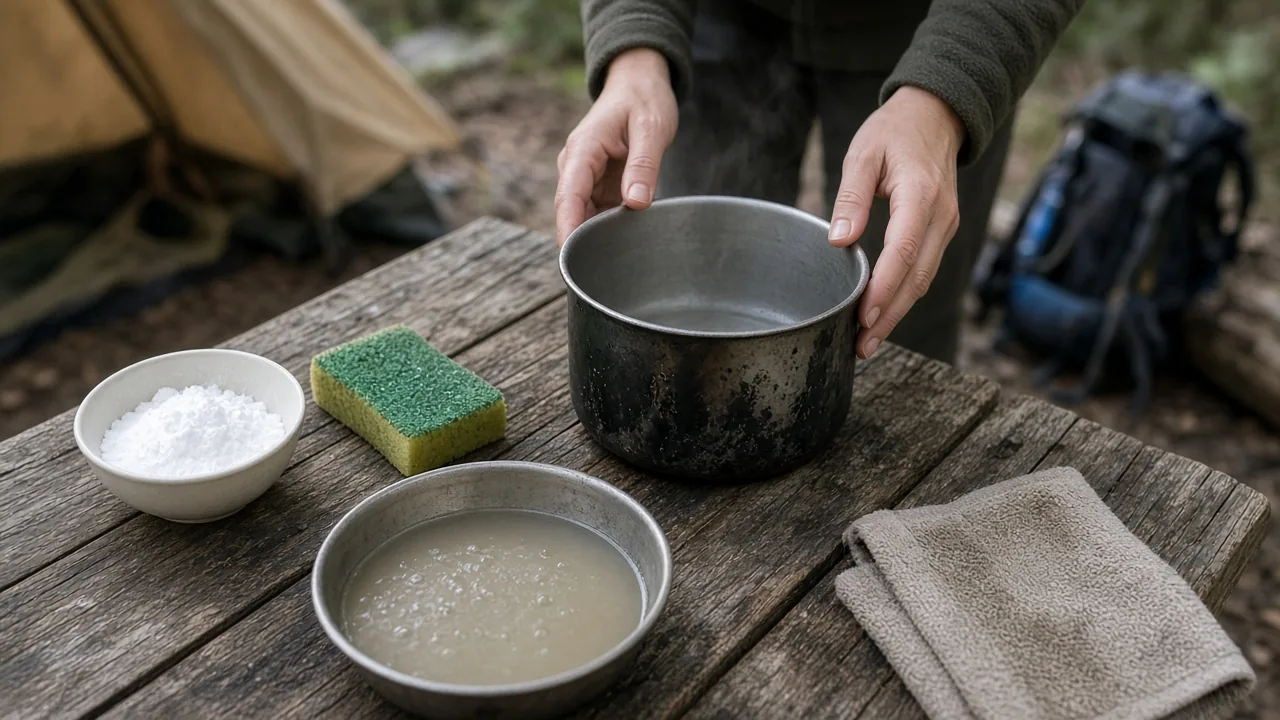
When figuring out how to clean soot off camp cookware, baking soda on a soft scrubber is the first method to try for sooty stainless camp pots. It removes campfire soot without the scratching that steel wool causes, and it costs almost nothing. If you cook over a twig stove or open fire, this routine can keep the outside of your pot bright instead of blackened.
The Baking Soda Method for Sooty Stainless Camp Cookware
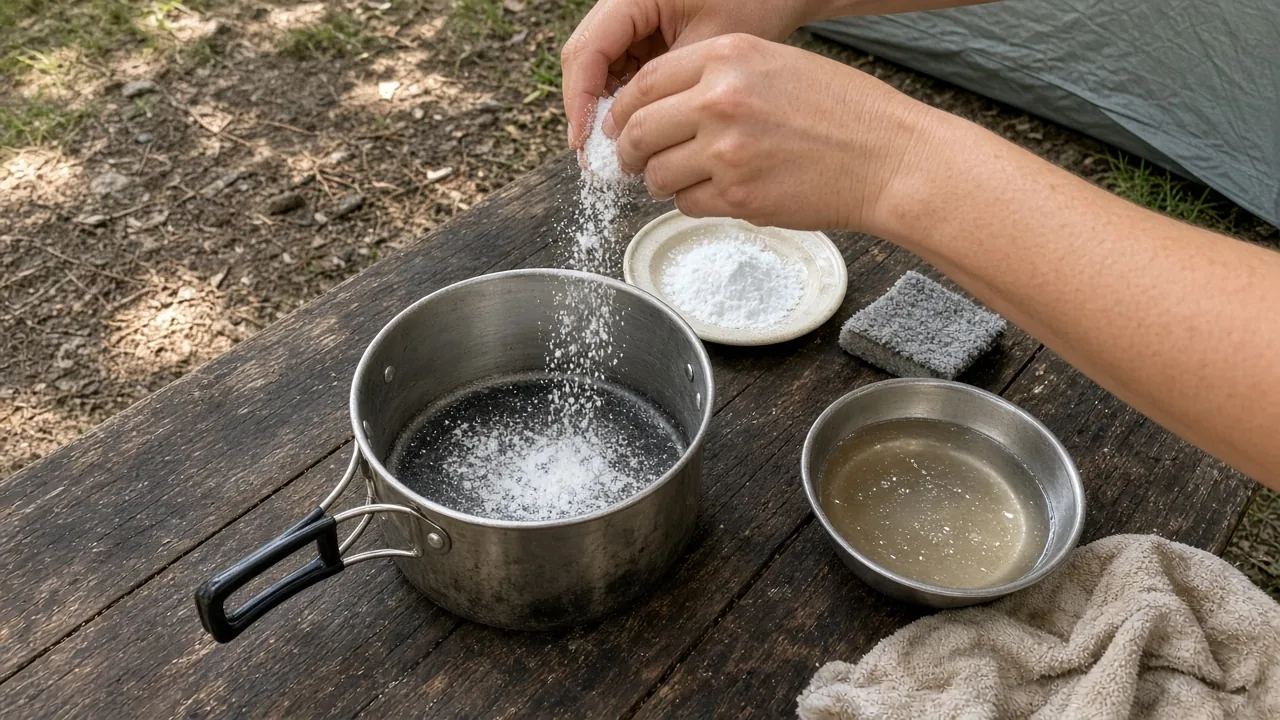
This approach treats outside soot with only baking soda, warm water, and a mild scrubber, so it costs little and avoids special cleaners. Stainless camp pots pick up a sticky, greasy film from wood smoke that does not rinse off with water alone. Baking soda gives you just enough mild abrasion to lift that layer without gouging the metal.
What It Works On
Baking soda targets blackened pot bottoms, sidewalls, and handles from twig stoves or open fires, not just burned food inside the pot. The handle area often gets overlooked, but it collects the same soot film. If you have a stainless percolator, canteen cup, or camp pot that has turned dark from wood smoke, this method is worth trying before you replace it.
Why Scratching Matters
Scratches from steel wool or abrasive powders hold soot and food residue, making future cleanup harder and the surface duller. A scratched pot looks worse and traps grime in tiny grooves that are hard to reach. Once the surface is roughed up, every later cleaning job takes more effort. Keeping the steel smooth is the better long-term play.
How to Clean Soot Off Camp Cookware Step by Step
Spread baking soda on a stable surface, dampen a mild scrubber, load it with baking soda, and rub the sooty areas in small circles with light pressure. Work in sections so you can see what you are actually removing. Keep the scrubber damp but not dripping wet. The goal is a paste-like contact between the scrubber and the pot.
Cleaning the Outside Soot
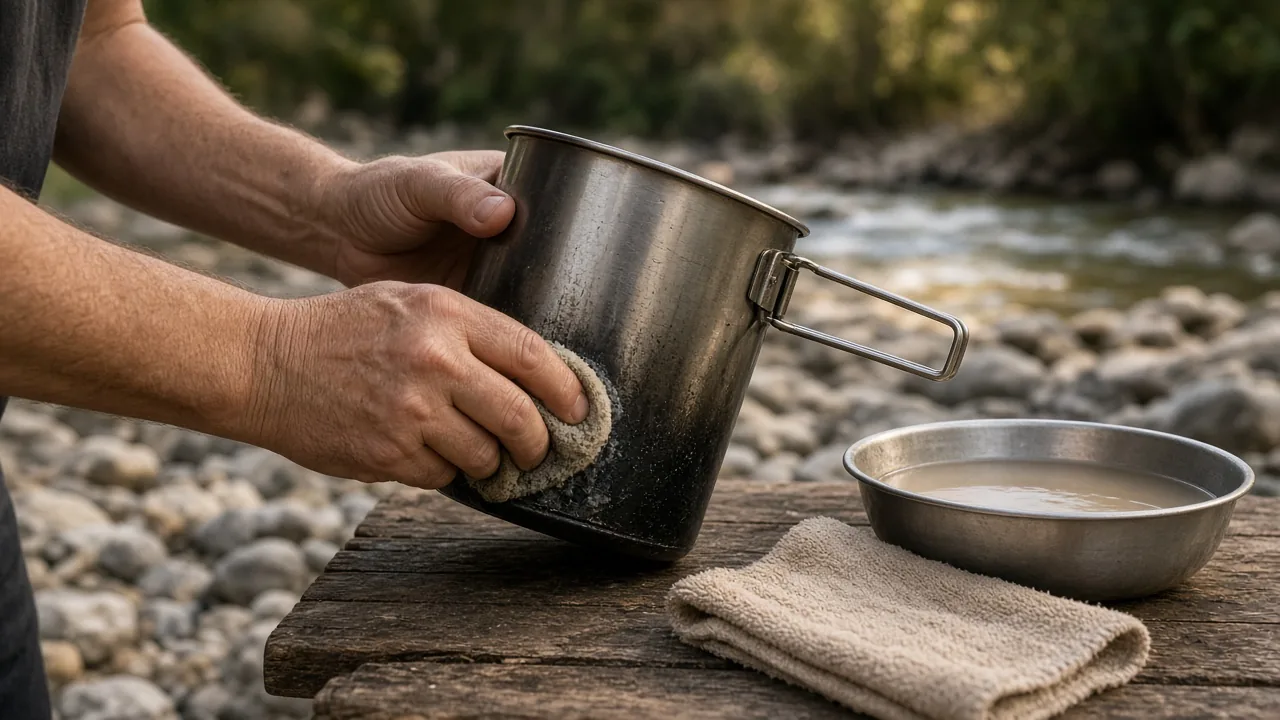
Work the bottom, walls, and handle with the baking soda paste, then rinse in warm water and check for remaining black spots. Small circular motions with light pressure usually lift fresh soot within a few seconds. For the bottom, hold the pot steady with one hand and scrub with the other. After rinsing, dry the pot with a towel and look for any dull or dark patches you missed.
Cleaning a Burnt Interior
For burned food, add roughly one inch of water and a drop of dish soap, boil for five minutes, swirl to loosen residue, then wipe it out. Shut off the heat, swirl the pot gently so the hot water reaches the burned edges, and pour the water out. A paper towel or dish cloth should then remove most of the softened food. This is a separate job from soot removal, but it follows the same low-drama principle.
When This Method Fits Your Camping Trip
It works well for car camping with a water source and for home cleanup after a backpacking trip, but it is easiest if you clean within a day or two. Soot that has sat for weeks or dozens of camp meals turns into a thicker, harder layer. Cleaning early keeps the job short.
Developed Campground Cleanup
In a paid campground with a faucet or sink, rinse the pot after meals, strain food scraps, and use only a small amount of soap if needed. The key is to keep soapy water and food particles out of open ground where they can attract animals or pollute the site. Scrape or wipe your bowl before washing, and dump strained scraps into a trash bag rather than into the brush.
Backcountry and Dry Camps
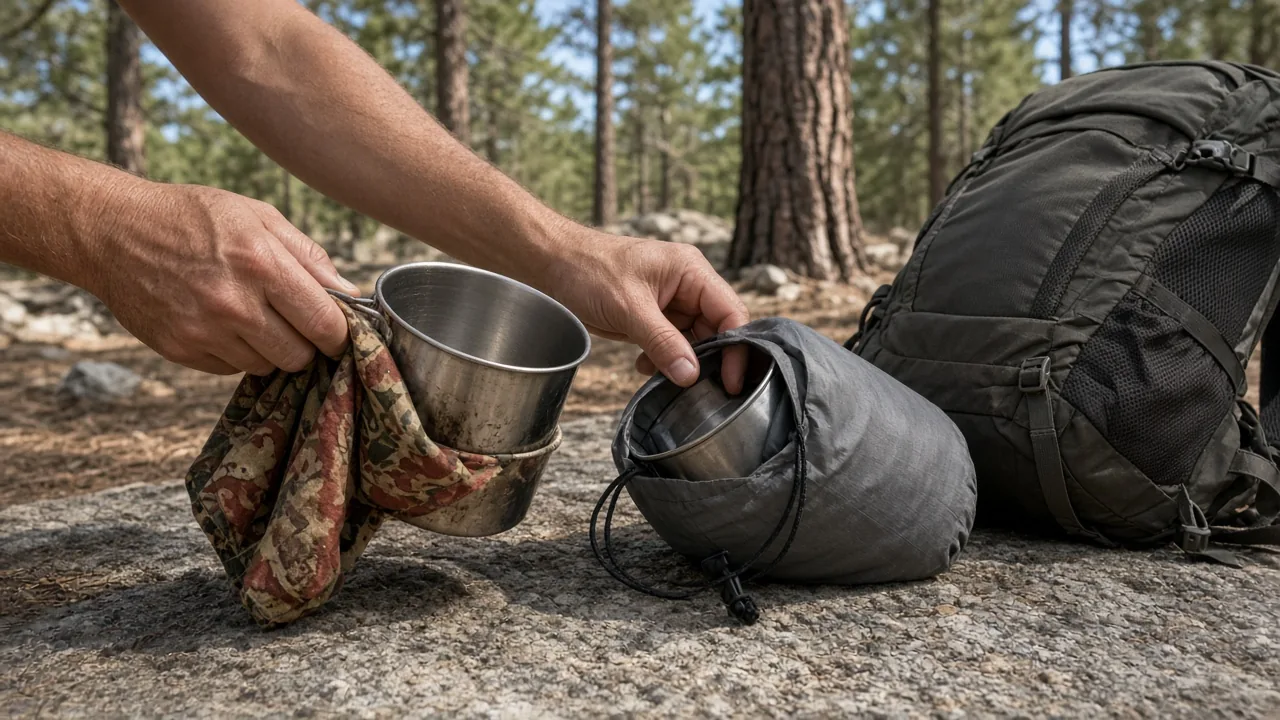
If water is scarce or there is no safe drain, wipe the pot clean, pack it out, and wash at home to avoid releasing soapy water into the site. A quick wipe with a bandana or paper towel after a meal removes most residue while it is still soft. Carry the dirty pot in a stuff sack and plan to do the baking soda scrub when you get back. This keeps soap, grease, and food particles out of the backcountry.
Pros and Cons of Cleaning Stainless This Way
The benefits are low cost, easy-to-find ingredients, and no special tools; the downside is that old, thick soot from many fires demands a lot more scrubbing. Baking soda is cheap and already in many camper kitchens. The soft-scrubber method avoids the deep scratches that make stainless look worn. But if a pot has gone through 30 or 40 fires without being cleaned, the finish will take a long session and some muscle to restore.
Stainless vs. Ceramic-Coated Cookware
Stainless camp cookware can be restored with this method, but some campers still prefer ceramic-coated pots for faster wipe-downs. Ceramic coatings resist sticking and release food more easily, which shortens the after-meal job. The trade-off is that ceramic pots can be heavier, and the coating may wear or chip over time. Stainless is more tolerant of metal utensils, high heat, and aggressive cleaning.
| Cookware type | Soot cleanup | Weight pack size | Durability | Best for |
|---|---|---|---|---|
| Stainless steel | Needs baking soda scrub, but restores well | Moderate | Does not wear off | Cooks over open fire or twig stoves |
| Ceramic-coated | Easier wipe-down | Often heavier and bulkier | Coating can wear or chip | Quick meals and shorter trips |
Both types have a place in a camping kit. The right choice depends on how often you cook over a sooty flame and how much scrub work you are willing to do.
Avoid Abrasive Cleaners
Do not use steel wool, SOS pads, or abrasive powders on sooty stainless because the scratches collect grime and make future cleaning worse. These products feel like they work faster, but they leave behind a rougher surface. From there on, every smoke film and food stain locks into those scratches more tightly. A mild sponge-style scrubber with baking soda is slower but far safer for the metal.
Who Should Try This Method
It suits campers who cook on stainless over wood or twig fires and want to keep the surface bright; it is less useful if you rarely deal with soot. If your cookware only goes over a clean canister stove, you probably do not face thick smoke film. But if you cut branches for a twig stove or cook on an open fire ring, soot will build quickly.
Good Fit
You cook with stainless pots over open flame or twig stoves and want a low-cost routine that avoids scratching from external soot removal. You likely value a pot that can handle abuse and do not mind spending a few extra minutes after a trip. The method also works for percolators and stainless mugs that have gone dark from campfire smoke.
Better Alternatives
If you prefer quicker cleanup and accept more weight or potential coating wear, a ceramic nonstick camp pot may fit your style better. A ceramic pot often wipes clean with less scrubbing after simple camp meals. The decision comes down to durability versus convenience. For car campers who can afford the extra weight, the convenience can be worth it.
Care and Packing After Soot Removal
Dry the pot completely before storing, and never use a stove or heater inside your tent. Moisture trapped inside a packed pot can leave water spots and encourage corrosion around any small scratches. A dry towel pass inside and out takes 30 seconds and protects the finish. Also tap or brush ash from stove parts so the grit does not pack home in your gear.
Before you leave a fire area, knock or brush loose ash from your stove frame, grate, and windscreen. Ash grit will grind against the pot during the ride home and can scratch the surface you just cleaned. Let the stove parts cool completely, then brush them off over the fire ring or a trash bag. Pack the pot separately from sharp tools or stove legs.
Cleaning soot off stainless cookware does not require a special product. Baking soda, warm water, and a soft scrubber handle most smoke film if you tackle it within a day or two. After cleaning, decide whether to pack this pot by car camping versus backpacking weight, expected nighttime low, and rain chance. If soot cleanup feels too frequent, compare a lighter or easier-clean cookset before your next trip.
Camp Kit Journal
This article is general information about camping gear, not professional safety, medical, or wilderness training. Check fire restrictions, weather, and campsite rules before you go, and follow the manufacturer's instructions for your own equipment.
FAQ
What is the safest way to remove soot from stainless camp cookware?
Use baking soda, warm water, and a mild scrubber. Rub the sooty areas in small circles with light pressure to lift the smoke film without scratching the metal.
Can I use steel wool or abrasive powders on sooty camp pots?
No. Steel wool, SOS pads, and abrasive powders can scratch the surface, causing it to trap soot and food residue and making future cleaning harder.
How do I clean a burnt interior of a camp pot?
Add about one inch of water and a drop of dish soap, boil for five minutes, swirl to loosen the residue, then wipe it out with a paper towel or dish cloth.
When is the baking soda method easiest?
It is easiest if you clean within a day or two of cooking over a fire. Soot that has sat for weeks or dozens of meals becomes thicker and harder to remove.
How should I clean cookware in a backcountry or dry camp?
Wipe the pot clean after meals, pack it out, and wash at home. This prevents soapy water and food particles from being released into the site.



