How to Clean and Store a Tent: Mold-Free, Waterproof Care
A practical guide to cleaning tent fabric, zippers, and poles without damaging waterproof coatings, plus drying and indoor storage steps that prevent mold and extend tent life.
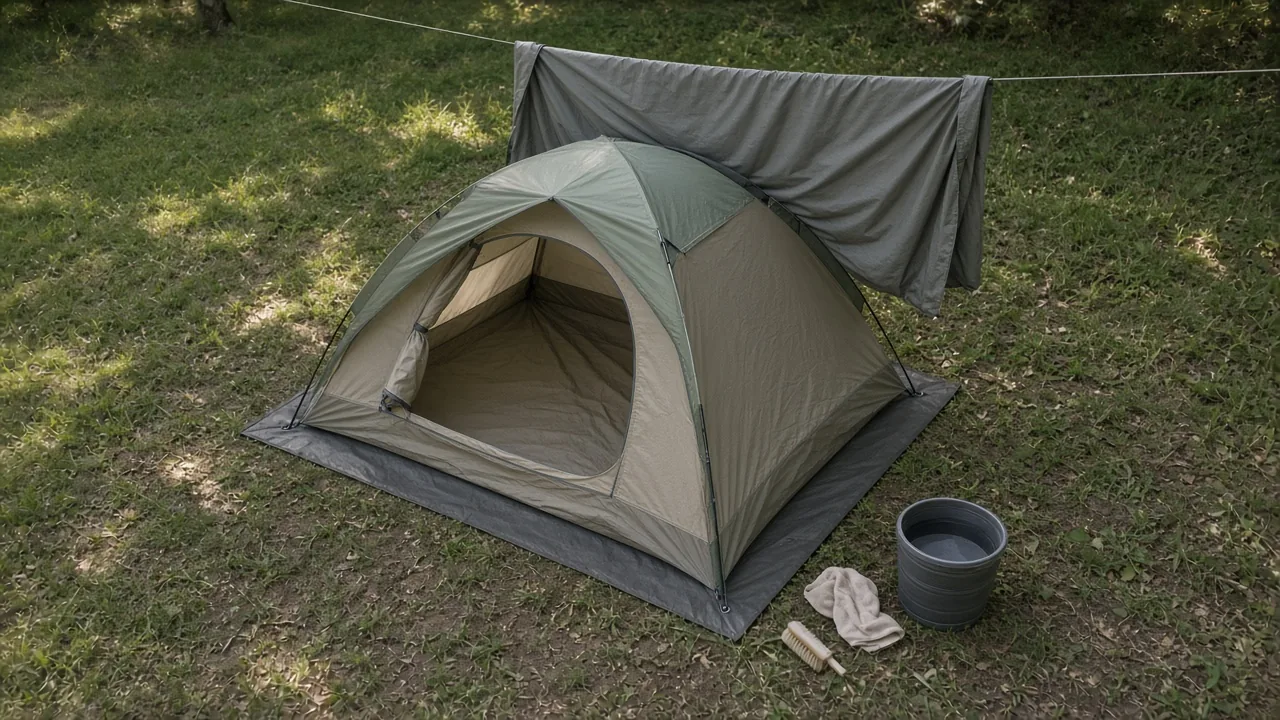
Learn how to clean and store a tent so it stays mold-free and waterproof without resorting to aggressive scrubbing or harsh products. The real protection comes from cold water, thorough drying, and a stable indoor storage spot—not from heavy-duty cleaners. Coated tent fabrics and polyurethane-backed floors are more delicate than they look. Heat, detergent, and trapped moisture do more damage than trail dirt. This guide covers the whole sequence: what to have on hand, how to clean after a trip, how to dry completely, and how to store the tent so the waterproof coating and seam tape last for years.
What You Need for How to Clean and Store a Tent
The right setup keeps the job simple. You need a soft brush or cloth, a bucket of cold water, a toothbrush for zippers, and—only if necessary—a mild soap for spot treatment. Do not plan to use a washing machine, dryer, or any heat source. Aggressive agitation can tear seam-taped fabric, and heat accelerates coating breakdown.
Work outside or in a garage before bringing the tent indoors. Shaking out debris inside just moves pine needles and sand from the floor to the furniture. A shaded outdoor area with some airflow is ideal for cleaning and drying.
One safety note matters here: never use a stove or heater inside your tent to dry it or warm the work area. Camp stoves and portable heaters produce carbon monoxide, which can build up quickly in an enclosed space, and any open flame near tent fabric is a fire risk. Dry the tent with airflow and time, not heat.
How to Clean a Tent After a Trip
Most tents do not need a full wash after every trip. The goal is to remove grit, dried mud, and debris before it grinds into the coated fabric or jams the zippers. Use the gentlest method that works. Start dry, then use water sparingly, and only introduce soap for stubborn stains that plain water cannot handle.
Shake Out Debris and Wipe the Floor
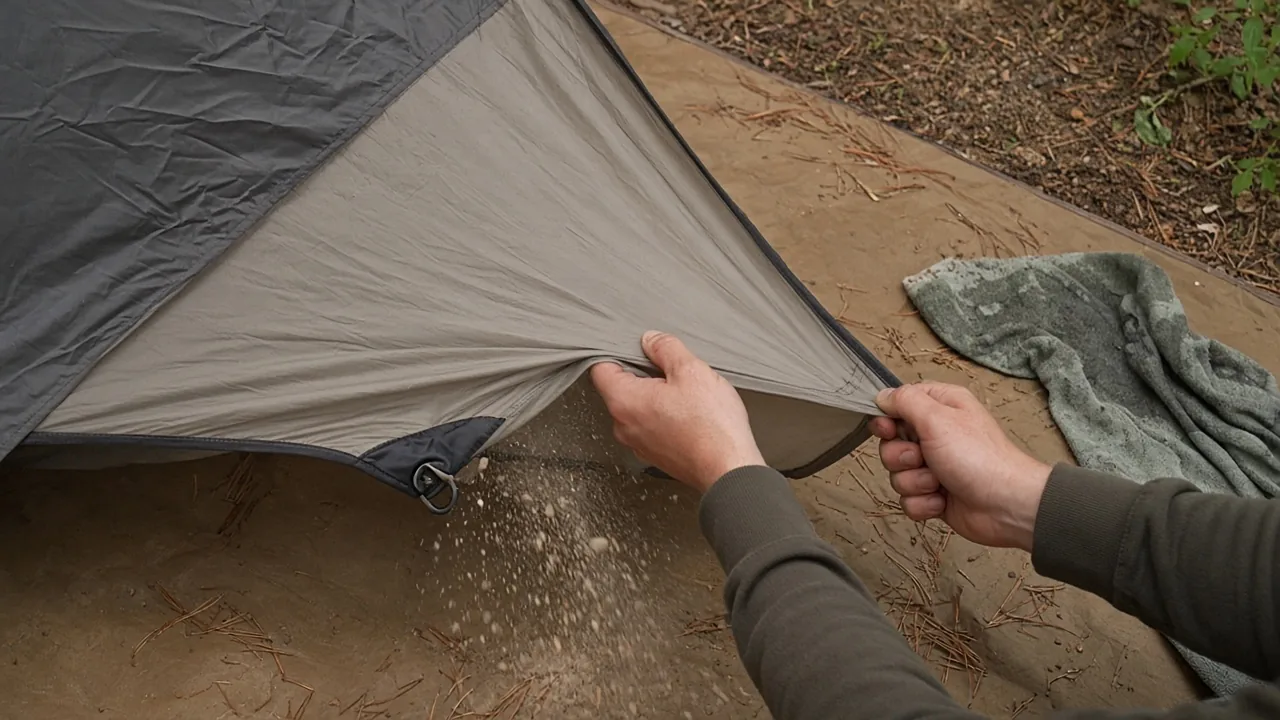
Before packing the tent at the campsite, shake out snow, pine needles, leaves, and loose dirt. Do this outside so debris does not come home with you. If the tent is wet when you pack it, that is a separate problem covered later—but at minimum, remove what you can before it gets rolled into the fabric.
Once home, set the tent up or lay it out in a shaded spot. Wipe the floor with a damp cloth, especially if the tent has a polyethylene or PE bathtub base. Dried mud and sand act like sandpaper against the waterproof layer when the tent shifts in its stuff sack. A simple wipe prevents micro-scratches that show up later as leaks.
Clean Zippers, Poles, and Stakes
Zippers fail before fabric in many tents. Sand and dust collect in the zipper teeth and slider, causing the zipper to stick or skip. Use a soft toothbrush to clear grit from the zipper chain. Work the slider back and forth a few times after brushing to distribute any remaining dust out of the teeth.
Poles and stakes need attention before storage. Wipe down pole ends and joints with a dry cloth. Aluminum poles can corrode at the ferrule junction when moisture sits there. Tent stakes, especially steel ones, can rust if packed with mud. Guylines that are stiff with dirt should be rinsed in cold water and left out to dry before going back in the bag.
Spot-Treat Stubborn Stains and Mildew
Most trail stains respond to cold water alone. Wet a cloth, wring it out, and work the spot with light pressure. Do not use warm or hot water—heat can speed up degradation of the waterproof coating.
If a stain remains, test a small amount of mild soap on a hidden section of fabric before cleaning the visible spot. Cleaners can affect the waterproof coating even when they remove the stain. Apply the soapy water to the cloth, not directly onto the tent, and rinse by wiping with a clean wet cloth. Let the area air dry completely.
For mildew, use a diluted white vinegar solution at roughly 1 part vinegar to 10 parts water. Wipe the affected area, let it dry, and repeat if the spots are still visible. Vinegar is mild enough for coated fabrics at this dilution and helps stop mildew from spreading. Avoid bleach and strong alkaline cleaners—they can strip or break down the coating faster than the mildew itself.
How to Dry a Tent Before Packing It Away
Drying is the step that determines whether the tent is usable next season. Mold grows when a tent goes into storage damp, and coating failure often starts with heat or UV exposure during drying. Dry the tent fully open in a shaded, well-ventilated spot until it is bone dry. That word matters: dry to the touch is not the same as dry at the seams, pole sleeves, and folded edges.
Direct sun feels faster, but UV light ages coated fabric. Tumble dryers are worse—the heat can cause the polyurethane coating to become sticky and flake off. Air drying in the shade is slower but protects the tent's waterproof layer.
Separate Inner, Outer, and Mesh
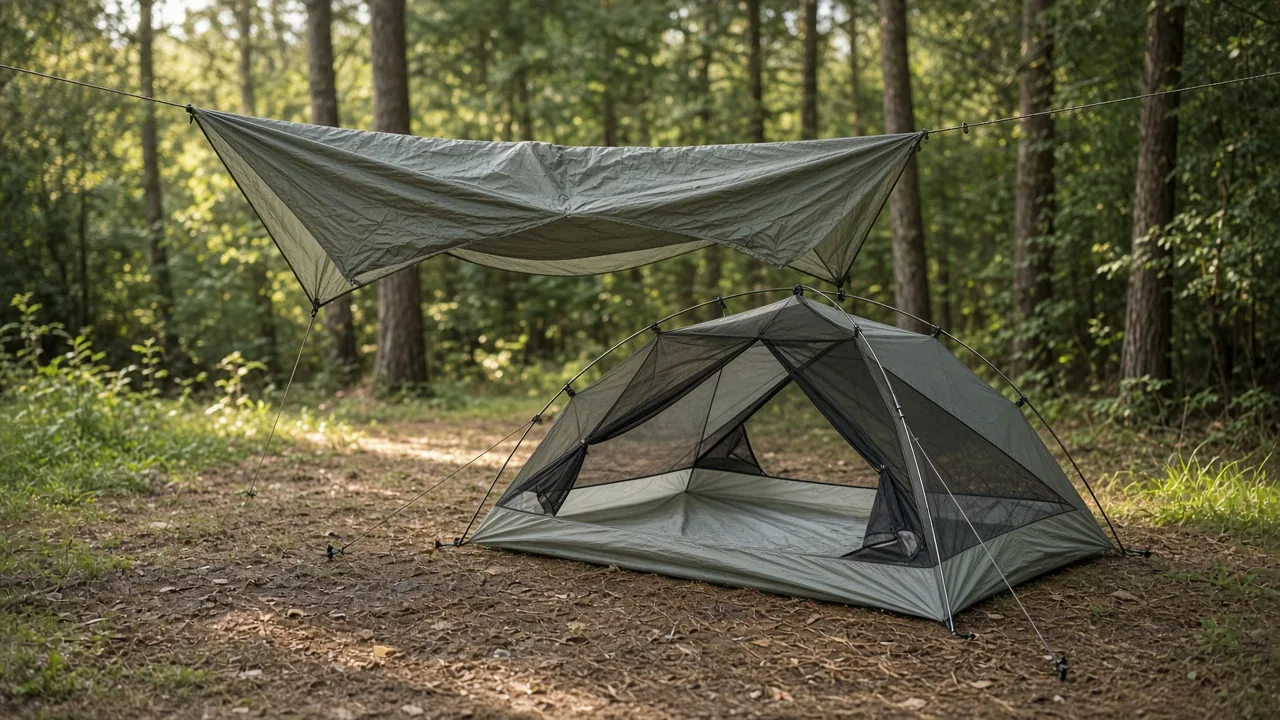
Dry the inner tent and rainfly separately. Clip or hang the rainfly so air moves across both sides. The inner tent should be flipped so the floor and mesh panels are exposed to airflow. Trapped moisture hides in corners, under seam tape, and along the floor seams.
Expect the drying process to take one to two days depending on humidity and airflow. A tent that feels dry in a low-humidity mountain climate might still hold moisture in a coastal garage. Check the heaviest spots—floor corners, pole sleeve ends, and the area around the door zippers—before deciding it is dry.
Check Seams, Coatings, and Zippers While Open
With the tent fully open, inspect the seams, pole sleeves, and zippers. Look for damp patches, grit, or early signs of coating damage. Run your fingers along the main floor seams. If any area feels cool or damp compared with the surrounding fabric, keep drying.
This is also the time to catch small problems before they become storage failures. A zipper with a sticky spot can be brushed again. A seam that is starting to peel can be noted for repair. Finding a damp patch or grit now is much easier than discovering mildew in the spring.
How to Store a Tent So It Stays Mold-Free
Once the tent is completely dry, storage location matters as much as the drying itself. Store the tent in a temperature-controlled indoor space rather than a garage, attic, or car trunk. Those spaces experience wide temperature swings that can create condensation inside the stuff sack, even if the tent went in dry. Heat in attics and cars also accelerates coating breakdown.
A closet, under-bed bin, or a shelf in a spare room works well. Keep the tent away from direct sun, chemicals, and sharp objects. Do not store it near a furnace vent, water heater, or any heat source.
Fold Loosely, Roll, or Change the Crease
The way a tent is folded does not need to be precise. The goal is to avoid stressing the same fold lines trip after trip. Coated fabric can crack along repeated creases over time. Loosely fold the tent, roll it, or change the fold pattern each time you pack it. A slightly larger stuff sack is fine if it means the fabric is not compressed into tight bends.
Keep poles and stakes in their own bags before packing them against the tent body. Pole ends and stakes can wear through fabric when the stuff sack gets compressed in a car or pack. If the tent uses a separate pole bag, use it. If not, wrap the pole bundle in a small towel or cloth before packing it with the tent.
Use a Desiccant and Air It Out Every 3–4 Months
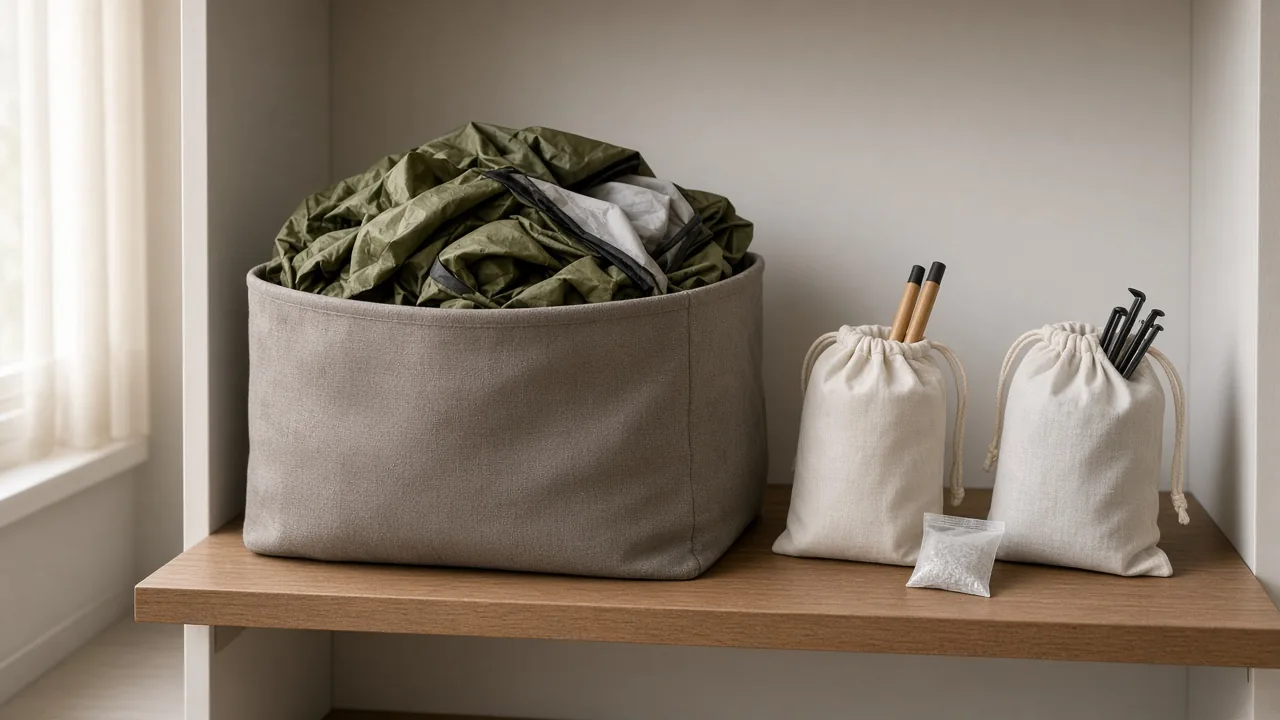
Add a silica gel desiccant pack to the stuff sack or storage bin. This absorbs any residual moisture that sneaks in during storage. It does not replace proper drying, but it adds a margin of protection.
Even in good storage, open the tent every three to four months and let it air out. You do not need to set it up fully. Take it out of the bag, unfold it, and let it sit in a dry room for a few hours before repacking. This releases any trapped moisture and lets you catch early signs of mildew or coating issues before they spread.
Common Tent Cleaning and Storage Problems
Some problems show up even with careful care. The key is recognizing them early and fixing the small issue before it forces an early replacement.
Musty Smell or Mildew After Storage
If the tent smells musty when you take it out, do not ignore it. Air the tent outside in a shaded spot first. For visible mildew spots, wipe the area with a 1:10 white vinegar solution and let it dry. Repeat the process until the spots fade. Mildew left alone continues to damage coated fabric, and the smell will move into the rest of the tent over time.
After treatment, make sure the tent is fully dry before storing it again. If the mildew is widespread, you may need to set up the tent and treat section by section over a few days.
Sticky or Flaking Coating
A sticky or flaking coating is a sign of heat damage or age. Storing the tent in a hot car, attic, or dryer causes the polyurethane coating to break down faster than normal. The fabric may feel tacky in spots, or small flakes may peel from the inside of the floor or rainfly.
If the damage is minor, clean gently with cold water and let the tent dry completely. Do not scrub flaking areas. If the coating is coming off over large areas, contact the manufacturer for repair options. Some tents can be re-coated, but many cannot—once the backing fails, the fabric's waterproof performance is limited.
You Had to Pack the Tent Wet
Sometimes rain forces you to pack a wet tent at the campsite. That is unavoidable. What matters is what you do when you get home. Unpack the tent and air dry it as soon as possible, even if that means laying it over chairs or a clothesline in the house. Leaving a wet tent in its bag can cause mildew and discoloration within days.
If you cannot dry it the same day, at least unpack it and drape it loosely so air starts moving through the fabric. A damp ball in a stuff sack is the fastest way to ruin a coated tent floor.
Before you load the car or check the forecast, decide whether this tent actually fits the trip. For car camping, weight and packed size matter less than convenience and interior space. For backpacking, pounds and packed volume matter more than features you will not use. Match the tent to the expected overnight lows and rain chances, and bring stakes, guylines, and a footprint only if conditions call for them. A well-cared-for tent that suits the trip is the one that stays usable season after season.
This article is general information about camping gear, not professional safety, medical, or wilderness training. Check fire restrictions, weather, and campsite rules before you go, and follow the manufacturer's instructions for your own equipment.
FAQ
How often should I clean my tent?
Most tents do not need a full wash after every trip. Shake out debris, wipe the floor with a damp cloth, and use cold water or mild soap only when plain water is not enough.
Can I machine wash or dry a tent?
No. Washing machines and dryers can tear seam-taped fabric and heat can damage the waterproof coating. Air dry the tent fully open in a shaded, well-ventilated spot.
How do I remove mildew from a tent?
Use a diluted white vinegar solution at roughly 1 part vinegar to 10 parts water. Wipe the affected area, let it dry, and repeat until the spots fade.
How long does a tent need to dry before storage?
Expect the drying process to take one to two days depending on humidity and airflow. Check heavy spots like floor corners, pole sleeve ends, and door zipper areas before packing it away.
Where should I store a tent?
Store the tent in a temperature-controlled indoor space such as a closet or under-bed bin, away from heat and direct sun. Add a desiccant pack and air it out every three to four months.