Hard Cooler vs Soft Cooler for Camping: How to Choose
Hard coolers win on ice retention and durability for multi-day car camping, while soft coolers offer lightweight portability for short carry-ins and beach days. Match the cooler type to your trip length and carry distance.
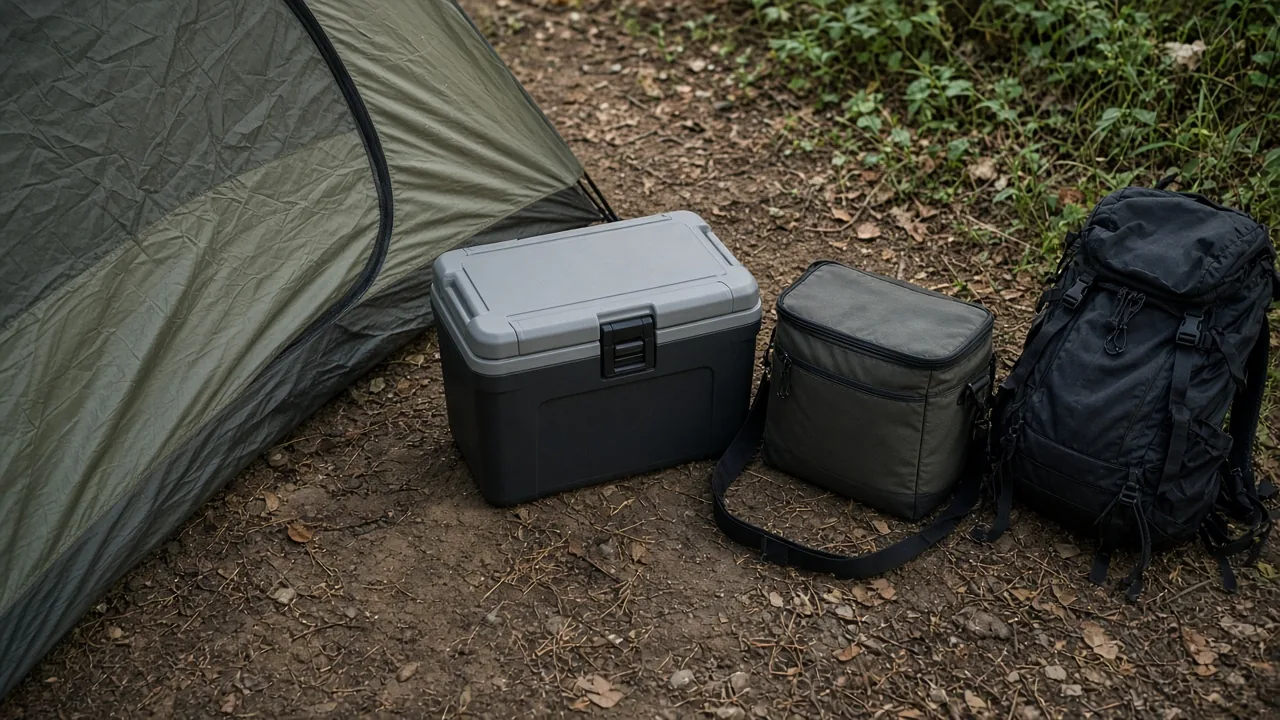
If you are deciding between a hard cooler and a soft cooler for camping, start with one question: are you driving to the site or carrying your gear in? For multi-day car camping, a hard cooler is the stronger choice because it holds ice longer and takes rough handling. For short carry-in trips, beach days, or side excursions, a soft cooler earns its place when low weight and packable size matter more than multi-day ice retention.
Hard Cooler vs Soft Cooler for Camping: Key Specs Compared
Before sorting through brands and sizes, it helps to see where the two types separate. The table below compares the performance areas that matter most on a camping trip.
| Spec | Hard cooler | Soft cooler |
|---|---|---|
| Ice retention | Typically 2+ days in hot conditions with block ice | Often 1 day or less in direct sun; ice packs help but do not match hard-shell performance |
| Common weak points | Gaskets, latches, hinges after repeated impacts | Zippers, seam tape, outer fabric, air-based insulation layers |
| Weight and packed size | Heavier and bulkier; harder to carry long distances | Lighter and collapsible; backpack straps make short carries easier |
| Weather resistance | Handles sun and sand with less visible damage | Fades, leaks at seams, and zippers wear faster after sun and salt exposure |
| Best uses | Multi-day basecamp, truck bed storage, sit-and-stand tasks | Beach days, day hikes, short walks to a site, drink runs |
Hard coolers generally win on ice retention and long-term durability. Soft coolers win on portability and storage. The right choice depends on which trade-off you can live with for a specific trip.
Ice Retention: Hard vs Soft
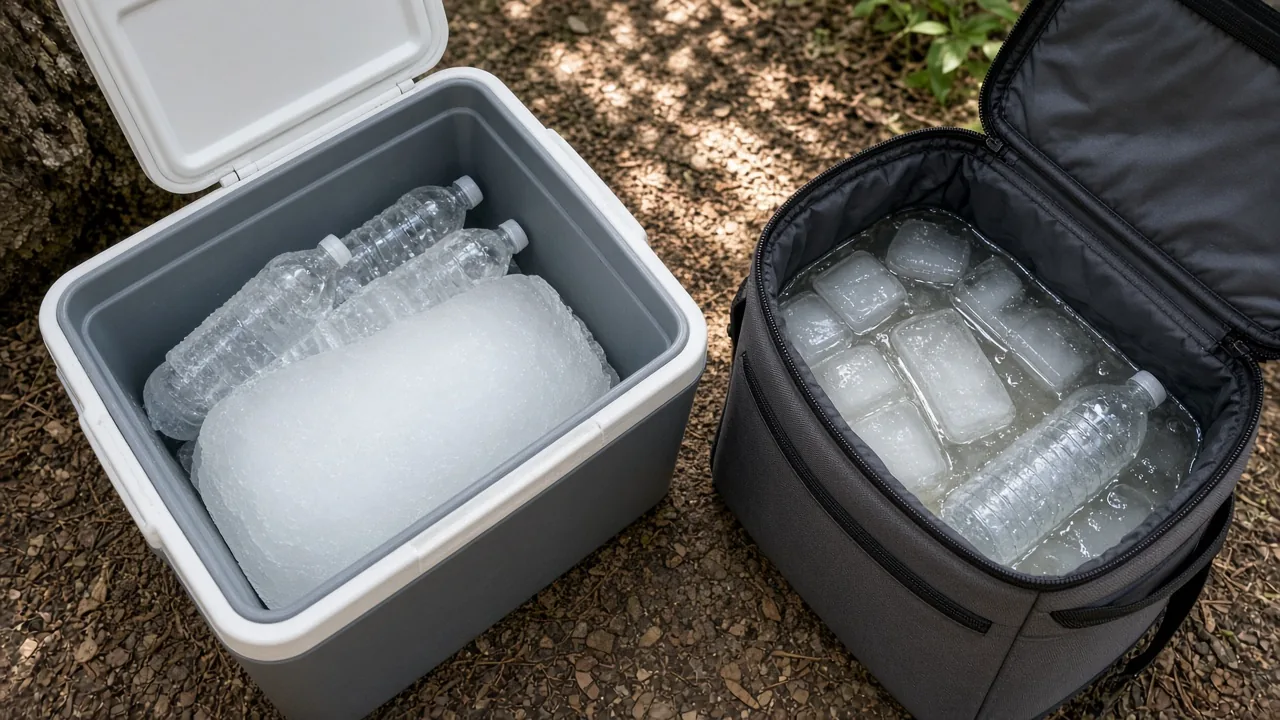
The clearest difference between hard and soft coolers shows up when you load each with ice and leave them outside in summer heat. In one Florida test run in 95°F weather with 20 pounds of ice in each box, a hard cooler still held significant ice after two days. The soft coolers in the same test were mostly melted by day one or day two, even with similar ice loads.
That gap makes sense when you look at how each type is built. Hard coolers rely on thick insulated walls and a solid seal to slow heat transfer. Soft coolers use thinner foam layers or air-filled chambers, and the lighter build simply cannot hold back heat the same way. If an air-filled soft cooler loses pressure or the insulation compresses, its performance drops quickly.
For a weekend campout where you want cold food on day two and day three, a hard cooler is the safer pick. A soft cooler can handle a single hot afternoon, but it is not a reliable multi-day fridge.
Durability: Hard vs Soft
Hard coolers tolerate the kind of abuse that comes with camping: sliding in a truck bed, sitting on the lid, getting kicked around a campsite, and being left in the sun. A hard rotomolded or EPP-style cooler can take those hits without losing much function. Some campers keep a hard cooler locked in a truck bed year-round, and it still performs.
Soft coolers fail more predictably. The zipper is usually the first part to break, especially after repeated exposure to sun, sand, and salt. Outer fabric fades, seam tape can separate, and a failed zipper means the cooler cannot hold cold air. That does not make soft coolers useless, but it does make them a shorter-life item in rough conditions.
If you camp often, sit on your cooler, or store gear in an open truck bed, choose a hard cooler. If you treat a soft cooler gently and keep it out of direct sun when possible, it can last several seasons.
Portability: Hard vs Soft
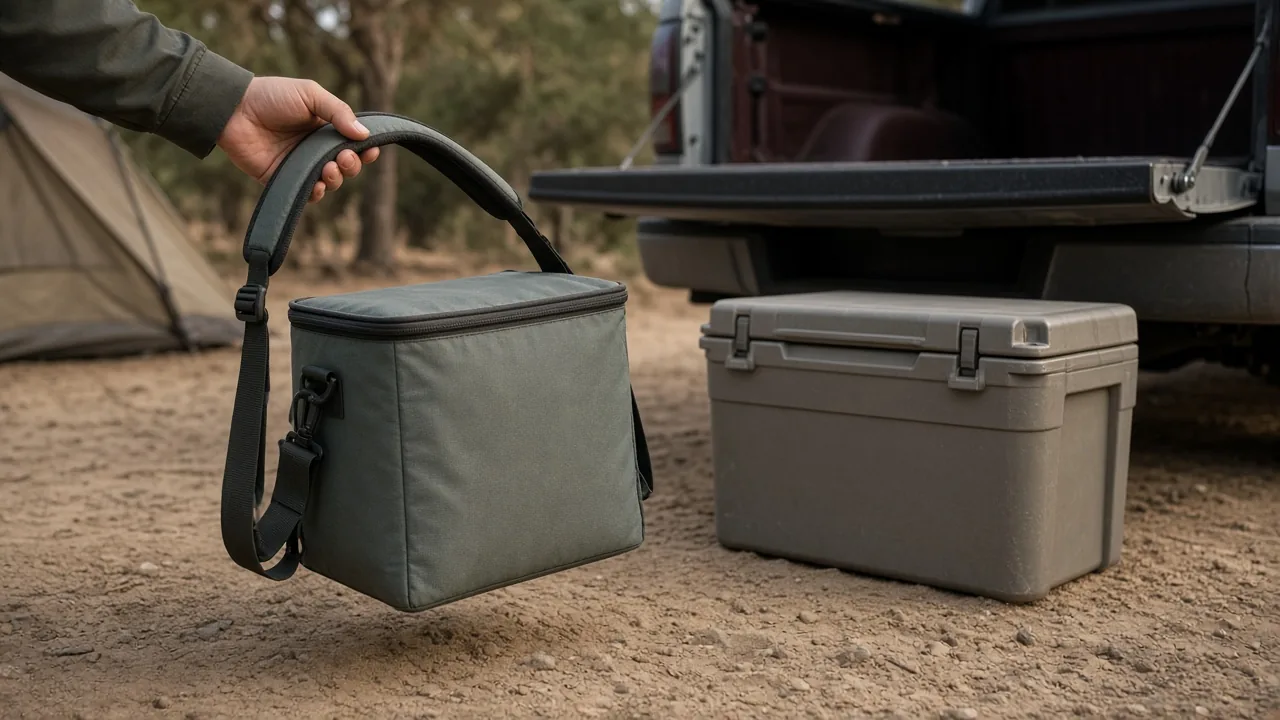
Soft coolers solve a real problem: hard coolers are awkward to carry. Even a 20- to 25-liter hard cooler gets heavy once it is full of ice, food, and drinks. Soft cooler backpacks and shoulder bags spread the load and leave your hands free, which helps on sandy paths, boat landings, or short hikes to a campsite.
That portability comes at a cost. Soft coolers use thinner insulation to stay lightweight and flexible, and some rely on air chambers that can lose pressure. You get a comfortable carry but give up the long ice retention and structural toughness of a hard box.
For walk-in sites under a mile, a soft backpack cooler may work if you pack frozen ice packs and plan to use it the same day. For anything longer, the ice loss is usually too great.
Weather Resistance: Hard vs Soft
Hard coolers handle direct sun and blowing sand with less damage. The shell may get hot to the touch, but it keeps its shape and seal. Soft bags fade in sunlight, and the fabric and zippers degrade faster after repeated UV and salt exposure. On reflective sand, surface temperatures climb even higher, which speeds up both melting and material wear.
If you camp in hot, sunny places, hard coolers are the lower-maintenance option. If you carry a soft cooler to the beach or lake, choose a light color when available, keep it in the shade, and cover it with a towel. A white or light gray bag reflects more visible light and helps slow heat gain.
How to Pick the Right Type for Your Camping Trip
Match the cooler to the trip length, carry distance, and expected heat. Most campers get more value from a hard cooler as the basecamp main box and a small soft cooler for day trips, drinks, or short carries. You do not need both on every trip, but the combination covers more situations than one cooler alone.
Car Camping and Multi-Day Trips
For car camping, a hard cooler around 25 liters or larger is the workhorse. You can drive it right to the site, park it in shade, and use it for two or more days without constant ice refills. A hard lid also doubles as a seat or a small table, which soft coolers cannot reliably provide.
A few habits make a big difference. Keep the cooler in the shade, open it only when you need something, and avoid leaving the lid off while cooking or repacking. And a safety note that always applies: never use a stove or heater inside your tent. Cooking heat and cooler management are separate tasks, and fuel appliances belong outdoors.
If bears or other animals are a concern where you camp, follow local food-storage rules. A hard cooler is not a substitute for a bear locker or a locked vehicle when rules require secured storage.
Backpacking and Short Carry-In Camps
Soft backpack coolers work best on short walks and day trips. If you are hiking a quarter mile to a picnic spot or carrying drinks to a lakefront, a soft cooler beats a hard box on comfort. Pack frozen ice packs rather than loose ice; the bag stays drier, and some users report better performance with cold packs inside soft-sided models.
Set realistic expectations. A soft cooler in summer heat may keep contents cool for part of a day, not for multiple days. If your trip requires food safety beyond a few hours, a soft cooler alone is the wrong tool. For overnight carry-in camps with real distance, most backpackers skip coolers altogether and rely on shelf-stable food instead.
Beach, Lake, and Hot Sun Conditions
Soft bags are convenient when you are carrying gear over sand or loading a boat. They fold down smaller, and a backpack-style soft cooler leaves your hands free for chairs, umbrellas, or kids' gear.
But hot sun is hard on soft bags. Reflective sand bounces heat upward, and direct sunlight raises surface temperature fast. Keep the bag covered with a towel, set it under a shade canopy, and choose white or light-colored fabric when you can. Even with those habits, expect ice to go quickly. Plan for a day trip, not a weekend.
Sizing, Packing, and Care for Longer Cooler Life
A practical camping kit often includes one hard cooler near 25 liters for main food and a small soft cooler for drinks or side trips. That split keeps the main cooler closed more often, which helps ice last longer. It also gives you a lightweight option when you only need a few cold items.
How Much Capacity You Really Need
Twenty to 25 liters is a workable weekend size for most car campers. It holds enough food and drinks for two days without becoming impossible to lift when full. Larger coolers hold more but get heavy quickly, especially loaded with ice and water. A full hard cooler over 40 liters can easily exceed what one person wants to carry alone.
Small soft packs in the 10- to 20-liter range suit day trips, not multi-day ice storage. If you camp with a group, a second hard cooler for drinks helps preserve the food cooler because it gets opened less often. If you camp solo or as a pair, one 25-liter hard cooler plus a small soft bag covers most needs.
Packing for Maximum Ice Retention
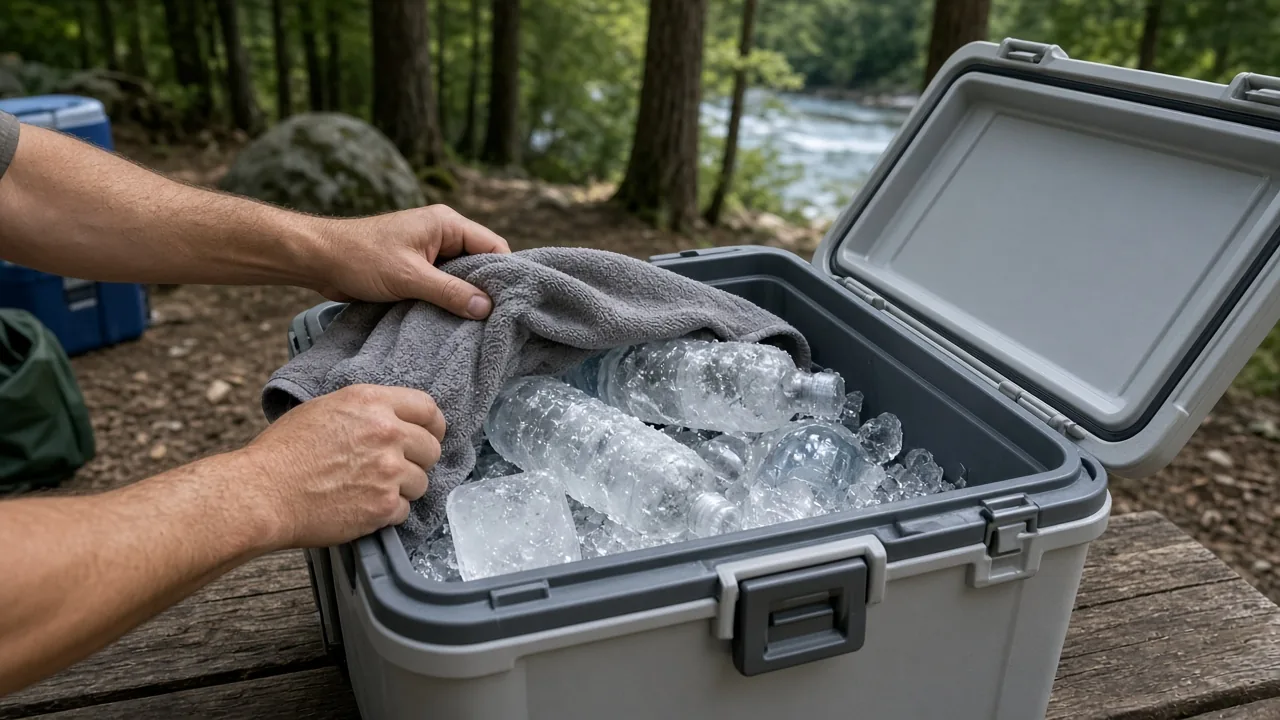
How you pack a cooler changes ice life as much as the cooler type. Start by pre-chilling the box with a sacrificial bag of ice or cold water the night before a trip. A cold interior means the first ice you add does not immediately work to cool the walls.
Use block ice or frozen water bottles for base cooling. Blocks last longer than cubes, and frozen bottles double as cold drinking water as they melt. Fill dead space with extra insulation, towels, or more ice, because air pockets warm up fast. Keep the lid closed as much as possible, and store the cooler in shade during the hottest part of the day.
Cleaning and Storage
After a trip, wipe hard surfaces with a damp cloth to remove food residue and prevent smells. If juice or meat juices pooled in the bottom, wash and dry the interior thoroughly before storing. For soft coolers, dry the liner and zipper area completely before packing it away. A wet zipper stored closed can corrode or grow mildew.
Inspect seals regularly. A cracked gasket on a hard cooler or a failing zipper on a soft bag sharply reduces ice retention. If the seal is damaged, the cooler is working against itself. Store soft coolers unzipped or loosely closed in a dry place so the fabric and zipper are not under stress.
Before packing for your next trip, check whether you are car camping or hiking in, how warm the days will be, and whether rain or sun will hit the cooler. That quick review tells you whether a hard cooler, a soft cooler, or one of each earns space in the truck or on your back.
Camp Kit Journal
This article is general information about camping gear, not professional safety, medical, or wilderness training. Check fire restrictions, weather, and campsite rules before you go, and follow the manufacturer's instructions for your own equipment.
FAQ
Which holds ice longer, a hard or soft cooler for camping?
Hard coolers typically hold ice for two or more days in hot conditions with block ice. Soft coolers often last about one day or less in direct sun.
Is a soft cooler good for backpacking or hiking into camp?
Soft backpack coolers work best for short walks and day trips. For overnight carry-in camps with real distance, most backpackers skip coolers and rely on shelf-stable food.
What size hard cooler is best for weekend car camping?
A hard cooler around 25 liters is a workable weekend size for most car campers. A second hard cooler for drinks can help preserve the food cooler because it gets opened less often.
How can I make a soft cooler last longer in hot sun?
Keep it in the shade, cover it with a towel, and choose white or light-colored fabric when possible. Even with those habits, expect ice to go quickly and plan for a day trip rather than a weekend.
What are the most common durability issues with soft coolers?
Zippers, seam tape, outer fabric, and air-based insulation layers are common weak points. A failed zipper means the cooler cannot hold cold air.



