Hammock Underquilt Cold Weather Camping: Stay Warm Setup
An underquilt is the critical cold-weather layer for hammock camping. Learn setup steps, gear needs, temperature limits, and common mistakes before your next winter trip.
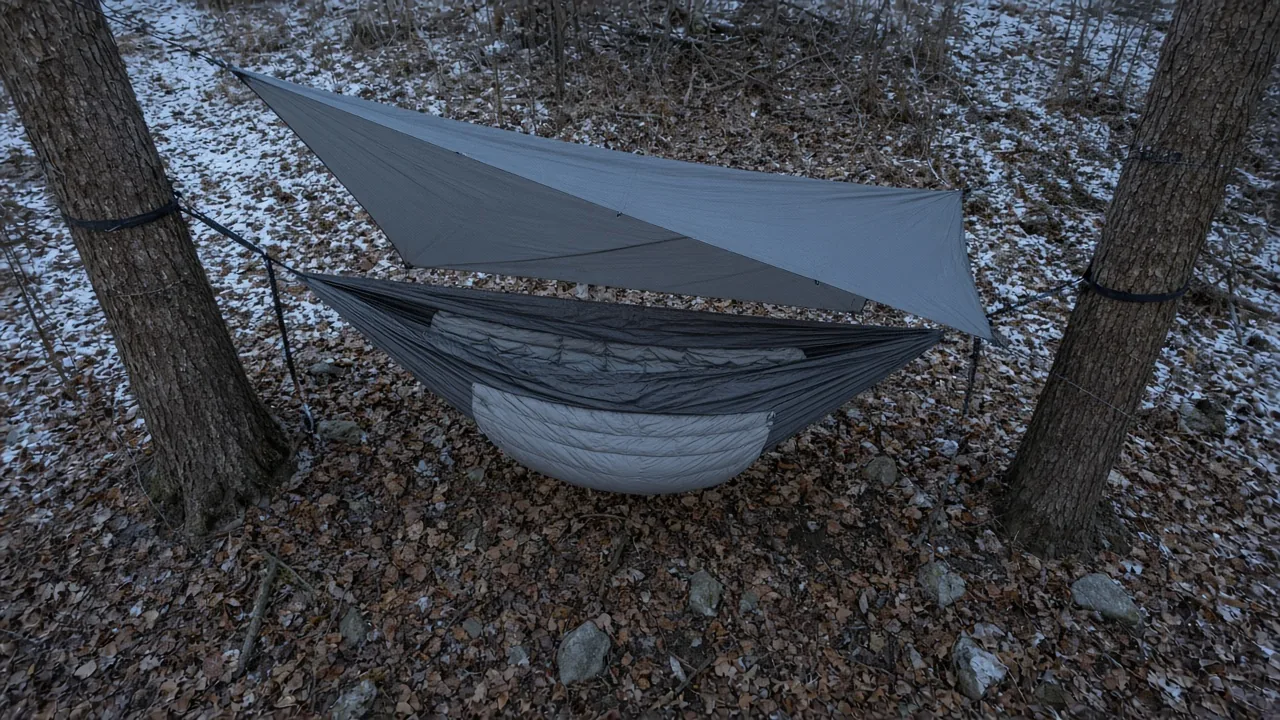
Yes — an underquilt is the critical cold-weather layer for hammock underquilt cold weather camping. It hangs below the hammock and preserves loft instead of compressing under your body. Winter test reports show warm sleep even in open, wind-exposed camps when paired with a sleeping bag. If your back has turned cold in a hammock before, or you want a more reliable winter sleep setup, here is how the pieces fit together.
How Does a Hammock Underquilt Keep You Warm in Cold Weather?
An underquilt traps warm air beneath the hammock instead of compressing insulation under your body. That keeps your sleeping bag or top quilt lofted, and you lose less heat to convection from your backside.
In a winter field test with a 3x3-meter—roughly 10-by-10-foot—tarp with open sides, one camper recorded 85.3°F inside the sleeping bag before bed while outside air sat around 54.1°F. The next morning, with outside temperatures at 43.3°F, the inside reading still held at roughly 89.6°F. The setup used a hammock underquilt paired with a sleeping bag, not a bag alone.
That type of result shows why the underquilt matters. It carries insulation work outside the hammock where your weight cannot crush it.
Why Doesn't a Sleeping Bag Alone Work in a Hammock?
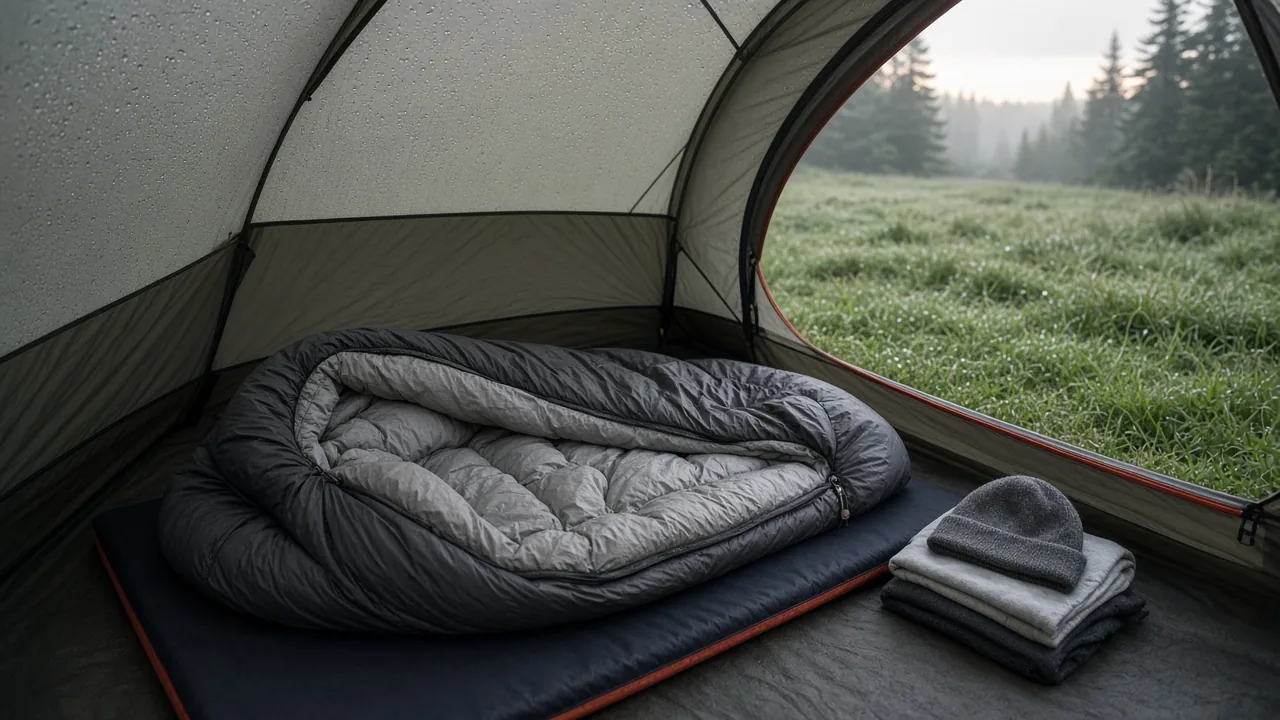
Body weight compresses the bag's insulation beneath you, creating a cold spot along your back and shoulders. In a hammock, the fabric wraps around you, which means more of the bag gets pressed flat than on a tent floor.
An underquilt shifts that insulation outside the hammock body. It stays fluffy because nothing is pressing it flat, so it can trap warm air and block wind from below. Even a highly rated sleeping bag cannot recover what compressible loft loses under your weight.
What Temperature Can a Hammock Underquilt Handle?
No single temperature rating covers all conditions. The warmth you get depends on the underquilt's fill, how well it is adjusted, wind, humidity, and your own cold tolerance.
The winter field test recorded roughly 89.6°F inside the bag at 43.3°F outside, but that is not a promise for every camper. That test used an open-sided tarp and a sleeping bag on top, and the camper still reported wind on his face. Think of an underquilt as one part of a system rather than a standalone temperature guarantee.
Hammock Underquilt Cold Weather Camping: What Gear Do You Need?
For cold weather, use a hammock-specific underquilt, a sleeping bag or top quilt, and a tarp or rainfly to block wind and precipitation. Choose the setup based on the forecast low and whether you are car camping or backpacking.
A hammock-specific underquilt follows the hammock body and attaches to the ends. A flat blanket thrown underneath cannot keep consistent contact without sagging gaps.
Your top insulation matters just as much. The underquilt covers heat loss below you; your chest, arms, and head still need a sleeping bag or top quilt rated for the expected temperature.
Finally, add a tarp or rainfly. Wind strips warm air from under the hammock, and rain or snow hitting the underquilt can reduce its loft.
Do You Still Need a Sleeping Bag or Top Quilt?
Yes. The underquilt reduces heat loss below you, but your top side still needs insulation. The winter test that recorded roughly 89.6°F inside the bag used both an underquilt and a sleeping bag together. The sleeping bag handled top warmth while the underquilt handled the underside. A top quilt can work the same way if it is wide enough to tuck around your sides.
Should You Add a Tarp or Rainfly?
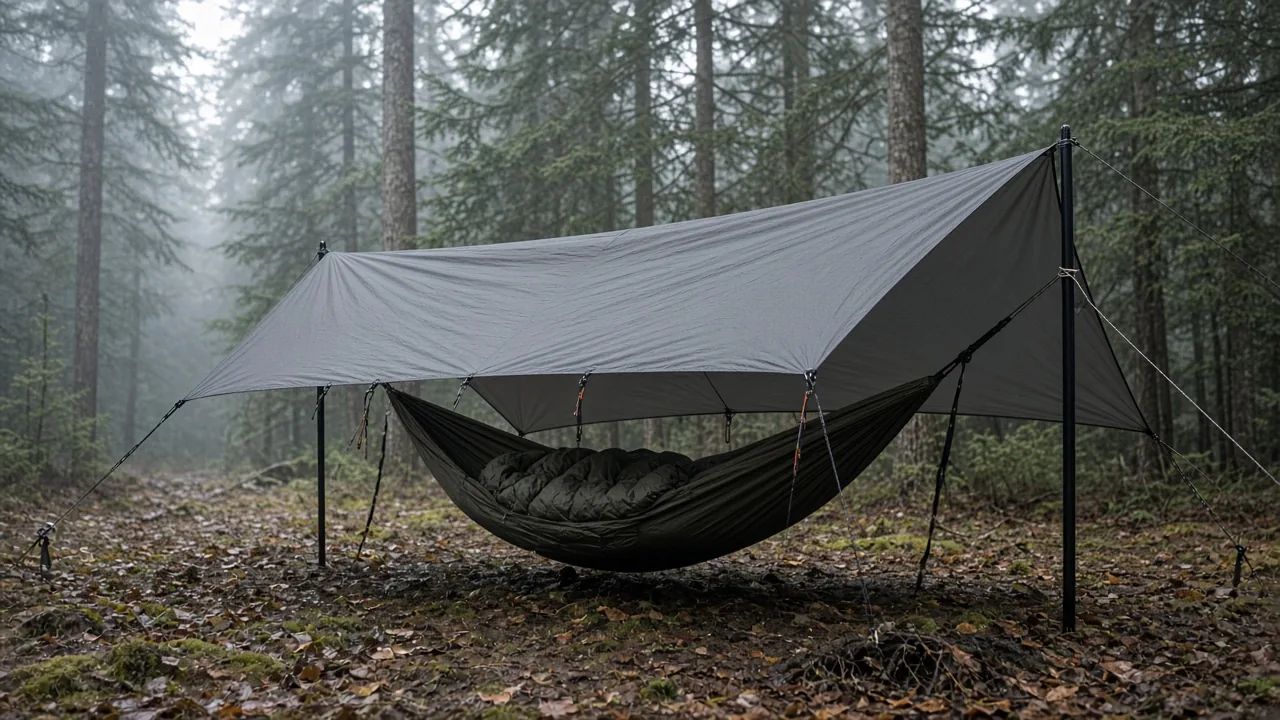
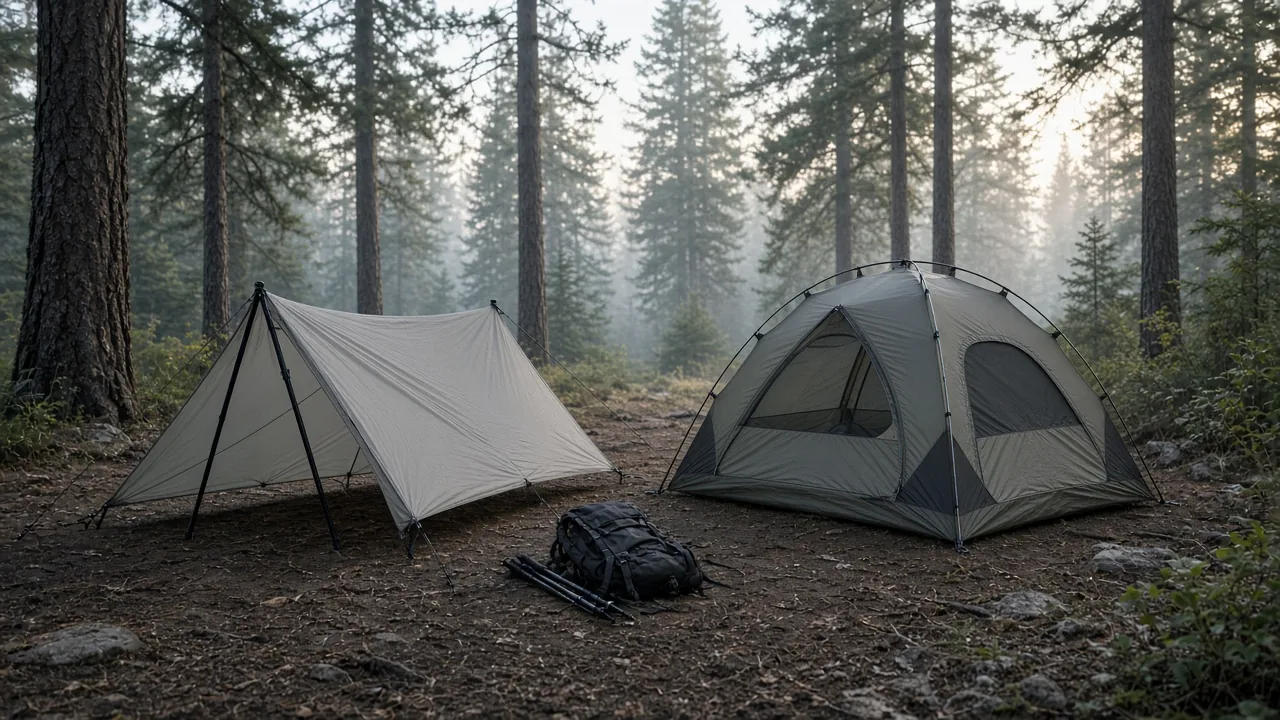
Tarps cut wind and rain that can undo underquilt warmth. The winter test with open sides still felt comfortable in moderate cold, but the camper noted wind on his face. A rainfly gives more coverage than a basic rectangular tarp when pitched properly.
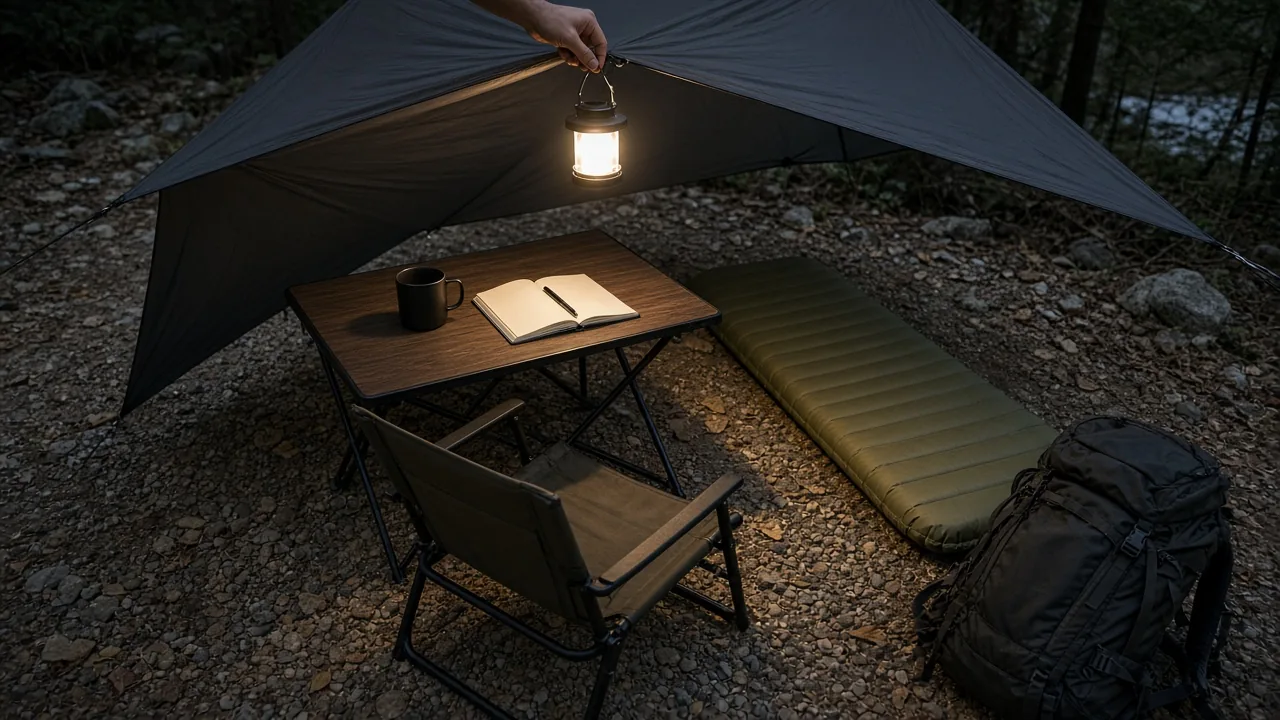
Look for a tarp with a top attachment point over the ridgeline and side tie-outs. Add slight slack rather than pulling it guitar-string tight. In gusty conditions, shock cord around poles or tie-outs adds a little flex and reduces stress on the fabric.
How Do You Hang and Adjust the Underquilt?
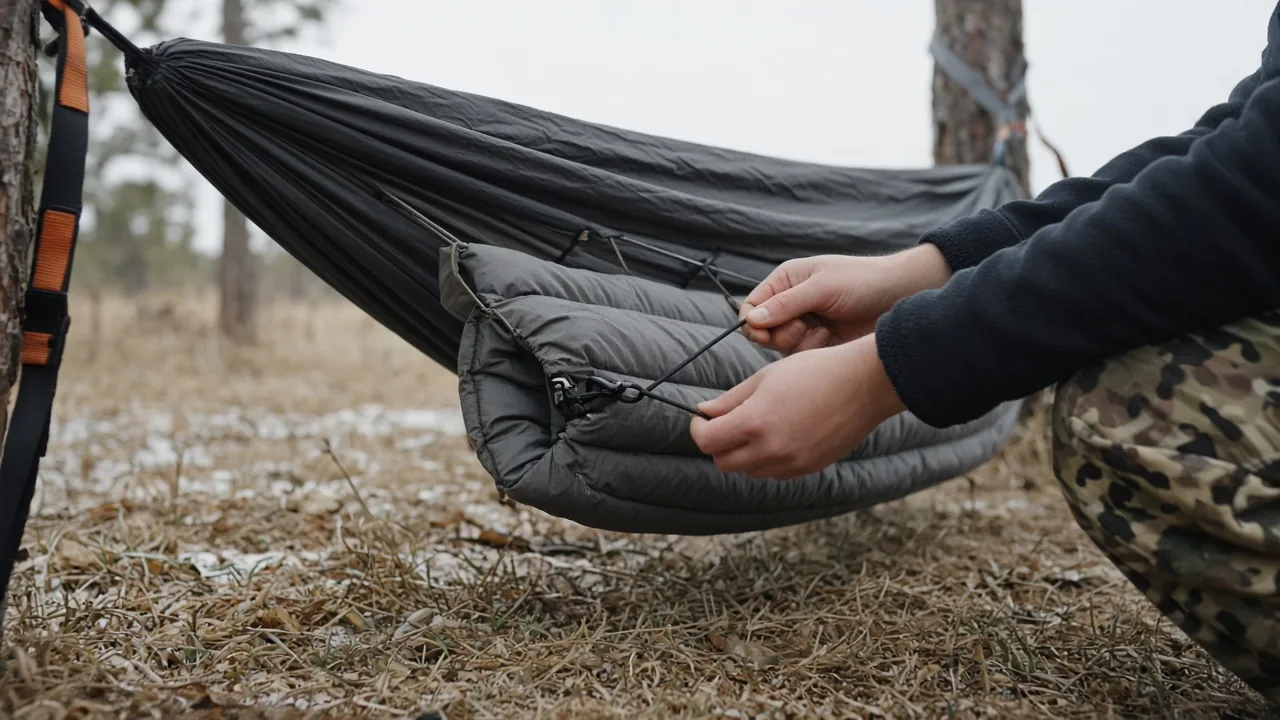
Attach the end hooks first, then snug the side and length cords evenly. Check that the underquilt follows the bottom of the hammock without binding.
Leave about 1 to 2 inches of slack between the underquilt and the hammock body. When you settle in, your body should not press the underquilt flat. If you feel the underquilt bottom out under your weight, loosen the suspension slightly.
What Are the Setup Steps Before a Cold Weather Hammock Trip?
Inspect suspension and hardware, check fire restrictions, campsite rules, and the forecast, and test the full system at home. Never try a new underquilt for the first time on a subfreezing night.
Set up your hammock and underquilt in daylight, in a controlled spot, before trusting it in the cold. Small hardware problems become serious when your fingers are stiff and your headlamp is fading. If you are camping in bear country, plan for bear-safe food storage according to local rules.
Also confirm fire restrictions before you leave. Many areas prohibit or limit campfires during dry periods, and some campsites restrict where hammocks can be hung.
How Do You Check Carabiners and Straps?
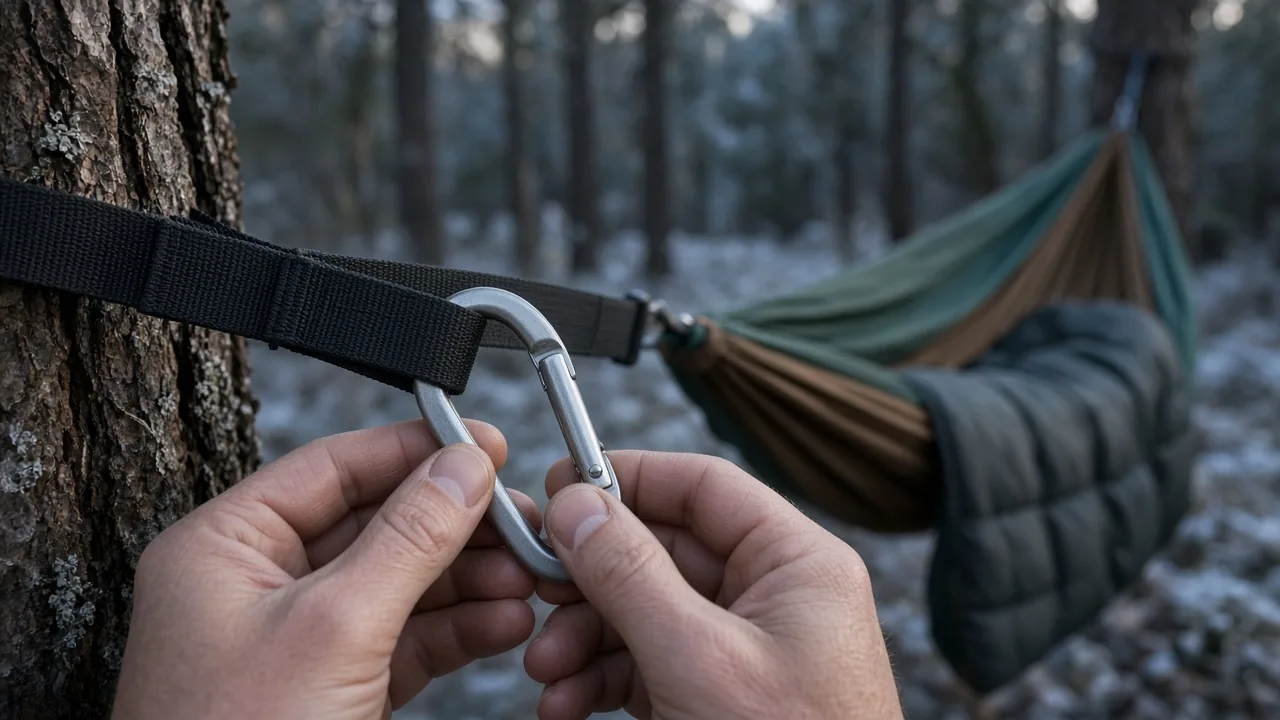
Look for sharp edges or burrs on carabiners that can cut webbing. Replace damaged hardware before loading the hammock. Run your finger carefully along the gate and spine of each carabiner. A sharp edge may not be visible, but it can saw through a strap under load. If you find any rough spot, swap in a rated carabiner with a smooth finish.
How Do You Assemble a Spreader Bar Hammock?
Assemble spreader bars like tent poles, keep rear steel cables untwisted, and connect hammock rings to tree straps with rated carabiners. Spreader bars give the hammock a flatter, more open lay than a traditional gathered-end hammock.
Seat each pole section firmly, check that the steel cable runs straight, and clip the hammock rings to tree straps using carabiners rated for the load. If you prefer the wrapped feel of a conventional hammock, remove the spreader bars; the mosquito net can stay in place either way.
How Do You Pitch the Rainfly for Cold and Wet Weather?
Attach the top point over the ridgeline, secure the side tie-outs, and keep slight slack. Add shock cord around poles for extra stability in wind.
Overtightening a rainfly can make it drum in wind and pull stakes loose. A little slack lets the fabric shed gusts without transferring so much force to the tie-outs. Keep the rainfly oriented into the wind when you can, and position the hammock so the tarp blocks the prevailing direction.
Is a Hammock Underquilt Worth the Weight and Packed Size?
For car camping, the added comfort is usually worth the weight. For backpacking, a hammock and underquilt system can be heavy, so compare total ounces and packed size before choosing.
The math changes depending on how far you carry the gear. A car-camping setup can absorb the extra pounds; a backpacking setup may push you over a reasonable base weight.
| Factor | Car Camping | Backpacking |
|---|---|---|
| Weight | A roughly 4.25-pound system is manageable | Notable extra weight to carry |
| Packed size | Larger pack acceptable | Requires separate underquilt bag |
| Setup time | 3–5 minutes with practice | Same, but practice before cold nights |
| Better alternative | Tent if back pain is severe | Tent if every ounce matters or rain is likely |
How Much Does a Hammock and Underquilt System Weigh?
One combined hammock and underquilt setup weighs about 4.25 pounds, mostly from steel spreader bars. That is manageable for car camping but notable for backpacking.
The weight comes largely from the metal spreader bars that open up the hammock body. A lighter aluminum or titanium spreader bar would cut the load, but as-built, this system competes with a lightweight tent and pad rather than beating it ounce for ounce.
Who Should Choose a Tent or Pad Instead?
If you have severe back pain or cannot find a comfortable side-sleeping position, a hammock may not be the best fit. Some campers with spine issues report that even a spreader-bar hammock is not comfortable for side sleeping.
In one review, the tester's mother loved the hammock and said she could stay in it all day, while the tester with a back injury could not fall asleep. That is not a fault of the hammock; it is a reminder that body mechanics matter more than marketing language.
What Mistakes Make Cold Weather Hammock Camping Colder?
Overtightening the underquilt, ignoring face wind, and using a stove or heater inside a tent are common but avoidable mistakes. Correct tension and safe heat sources matter.
How Tight Should the Underquilt Be?
Leave about 1 to 2 inches of slack between the underquilt and the hammock body. Overtightening can cause bottom-out and cold compression.
If the underquilt is pulled flat against the hammock, your weight has nowhere to go and the insulation compresses the same way a sleeping bag would. The goal is a small air gap that lets the underquilt hang below your body, not cling to it.
How Do You Protect Your Face From Wind?
Even with warm body insulation, open hammock setups expose your face. Orient the tarp into the wind and wear a hood or balaclava if the forecast calls for cold wind.
In the winter field test, the camper noted that his face was the only part of his body getting wind. A sleeping bag hood or a separate balaclava solves that without adding much weight. A tarp pitched with the open end away from the wind helps more than many campers expect.
What Heat Source Should You Never Use Inside a Tent?
Never use a stove or heater inside your tent. Carbon monoxide can build to lethal levels even with vents open.
Fuel-burning appliances release carbon monoxide, which is odorless and deadly in enclosed spaces. That applies to canister stoves, liquid fuel stoves, grills, charcoal, and any heater marketed for outdoor use. Cook outside, a safe distance from the tent and any flammable surfaces, and let the burn area cool before packing up.
Can You Sleep in a Hammock Without an Underquilt Below Freezing?
Some users report survival with heavy sleeping bags and blankets below freezing, but an underquilt is the more reliable and repeatable layer. Lacking one depends on luck and body heat.
What Do Real Cold Weather Reports Show?
One reader described sleeping at 7°F without an underquilt using a 0°F sleeping bag, three fleece blankets, and layered clothing. The same report also mentioned touching snow after using rope in place of proper suspension straps.
That is not a safe setup standard. Waking up cold and touching snow are signs that the system failed, not that it worked. A single warm night without an underquilt does not rewrite how heat loss works under a hammock.
Why Is an Underquilt Still the Safer Recommendation?
It reduces cold spots and wind chill below the hammock, so you are less likely to wake up shivering or compress all your insulation under body weight.
An underquilt is a designed solution for the problem hammocks create. It puts loft where you need it without weighing down the hammock body. Heavy blankets can work in a pinch, but they are bulkier, less predictable, and easier to shift out of place during the night.
How Do You Pack and Store a Hammock Underquilt?
Dry the underquilt completely before packing to protect loft and prevent mildew. Store it loose or in a breathable sack rather than compressed for long periods.
Down and synthetic insulation both lose loft when stored compressed for months. Between trips, fluff the underquilt and let it air out before stuffing it. If you hang it in a closet or keep it in a larger breathable sack, it will hold its loft longer.
Can the Underquilt Fit in the Hammock Stuff Sack?
A hammock and its straps may fit into the original stuff sack, but an underquilt usually needs its own bag to avoid overstuffing and damage. Forcing two bulky items into one small sack stresses the fabric and makes packing slower. Keep the underquilt in a separate stuff sack, even if it costs a little more pack space.
How Long Does Setup and Takedown Take?
One review recorded setup at about 3 to 5 minutes and takedown under 4 minutes, with the reviewer estimating it could be done in 2 minutes with practice. Those times assume you have practiced at home and know the order of operations. The first attempt in the dark on a cold night will take longer and is not the time to learn.
What Are the Limits of a Hammock Underquilt in Cold Weather?
An underquilt is not a guarantee of warmth. Face wind, condensation, and prolonged rain can still make conditions uncomfortable, so check the forecast and be ready to change plans.
Is a Rainfly Enough for Days of Rain?
A well-pitched rainfly does a good job in wet conditions according to some reports, but no shelter is guaranteed in continuous rain. Inspect seams and pitch it tautly with proper drainage.
Days of rain test every shelter. Water can work through seams, drip around the edges, and soak gear you leave exposed. Keep drainage paths clear, angle the rainfly so water sheds away from the hammock, and accept that some trips are better suited to a tent.
When Is a Tent a Better Cold Weather Choice?
If weather includes heavy sustained rain, high wind, or you have back pain that worsens in a hammock, a tent may give easier sleep and fewer setup variables.
A tent provides a floor, four walls, and a more controlled sleeping space. For side sleepers who cannot find a comfortable angle in a hammock, that floor is worth the weight. For trips with days of rain, a tent keeps more of your gear out of the weather without requiring as many adjustments.
Match the underquilt and tarp to your trip type and forecast low before packing. Check whether you are car camping or backpacking, how cold the night will likely get, and whether rain is in the forecast. Then cross-check your sleeping bag rating, suspension hardware, and underquilt fit. Back pain, side sleeping, or wet weather may push you toward a tent, but otherwise this system works well for car and backpacking use when the pieces are matched to conditions.
This article is general information about camping gear, not professional safety, medical, or wilderness training. Check fire restrictions, weather, and campsite rules before you go, and follow the manufacturer's instructions for your own equipment.
FAQ
Why doesn't a sleeping bag alone work in a hammock in cold weather?
Body weight compresses the bag's insulation beneath you, creating cold spots along your back and shoulders. An underquilt hangs below the hammock and stays lofted to trap warm air.
Do you still need a top quilt or sleeping bag with an underquilt?
Yes. The underquilt covers heat loss below you, but your top side still needs insulation rated for the expected temperature.
How tight should an underquilt be adjusted under a hammock?
Leave about 1 to 2 inches of slack between the underquilt and the hammock body. Overtightening can cause bottom-out and cold compression.
Is a hammock underquilt worth the weight for backpacking?
For car camping it is usually worth the weight, but for backpacking compare total ounces. A hammock and underquilt system can be heavy and may compete with a lightweight tent.
Can I use a stove or heater inside a tent to stay warm?
Never use a stove or heater inside a tent. Carbon monoxide can build to lethal levels even with vents open.