Gathered End vs Bridge Hammock for Side Sleepers: A Comparison
Bridge hammocks offer flatter side-sleep comfort but can feel tippy, while gathered-end hammocks are more stable and pack smaller. This guide compares comfort, setup, and durability to help side sleepers choose.
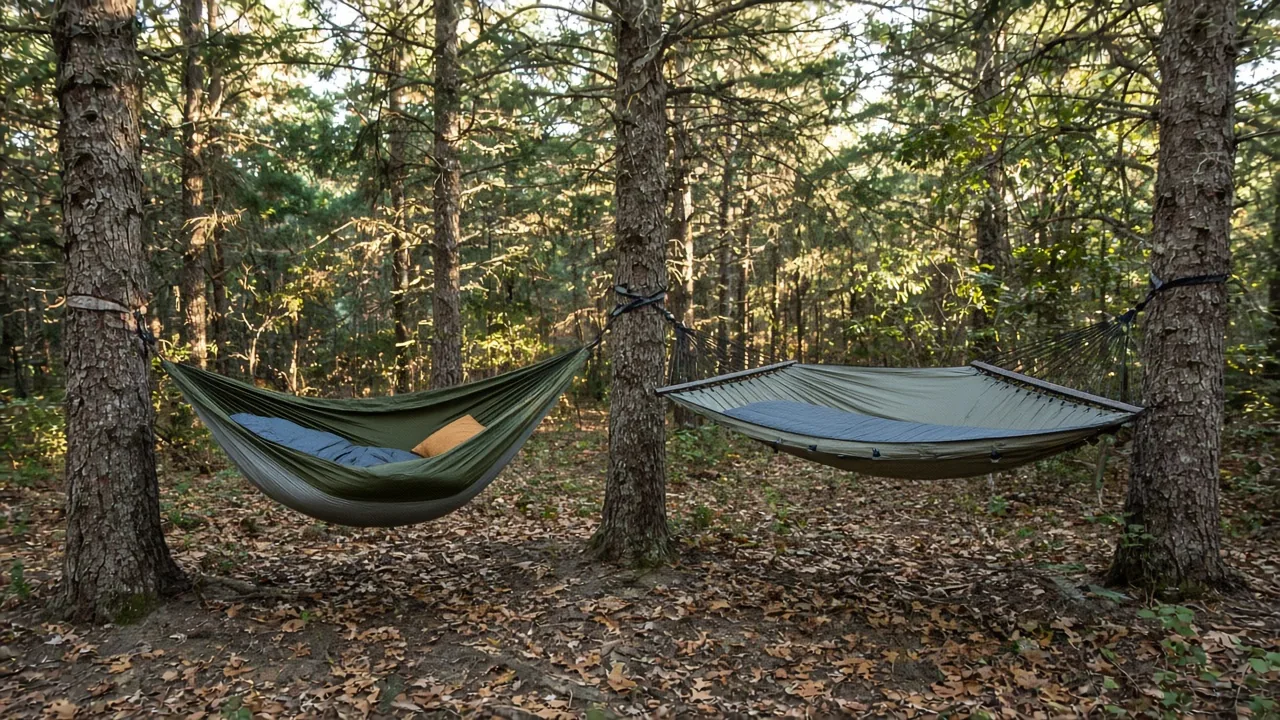
If you side sleep and want a flatter, knee-friendly lie, a bridge hammock often wins for comfort; if you move around at night or prize stability and simpler tree spacing, a gathered-end model is usually the safer pick. In this gathered end vs bridge hammock for side sleepers comparison, the real question is what you are willing to trade: a flatter side-sleep position versus a steadier, easier campsite setup.
The two designs suit different sleepers. A bridge hammock spreads fabric between spreader bars and gives side sleepers a more open position, but it shifts noticeably when your weight leaves the center line. A gathered-end hammock bunches fabric at each end and requires a diagonal lay, but it sits lower and resists tipping. Both can work for side sleepers, but neither is perfect for everyone.
Gathered End vs Bridge Hammock for Side Sleepers: Comfort and Stability Compared
Think of this as a trade-off. Bridge hammocks favor a flatter, more open side-sleep position. Gathered-end hammocks resist tipping and are easier to live with. You will hear strong opinions on both sides, and a lot of them come down to how much you move at night and whether you can tolerate a slightly curved side-sleep lie.
How Each Hammock Feels When You Lie on Your Side
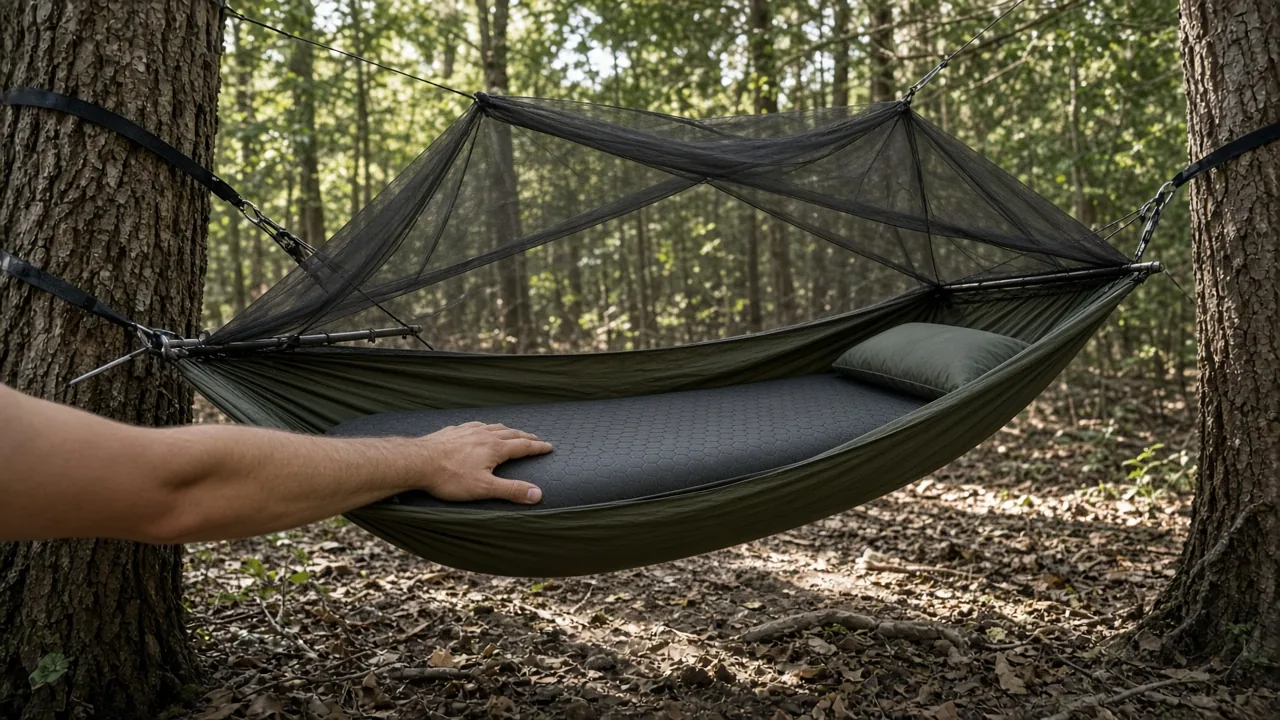
Bridge hammocks give side sleepers a flatter, more open position. The spreader bars hold the fabric wider, so your shoulders and hips have more room. The catch is that you have to stay near the center line. If your body drifts to one side, the whole hammock pitches with you, and your face can end up against the bug net.
Gathered-end hammocks use a diagonal lay to flatten the sleeping surface. That diagonal position works well for back sleeping, but side sleeping is not as naturally open as it is in a bridge hammock. The fabric still wraps around you, and your knees and shoulders sit in a slight curve. Some side sleepers find that comfortable with a knee pillow. Others miss the flat bridge feel.
The key difference is that a bridge hammock rewards a still sleeper who stays centered, while a gathered-end hammock gives you more freedom to shift around without the whole setup leaning.
Why Stability Differs More Than Comfort
A bridge hammock shifts when your weight leaves the center line. Moving around, reaching for a water bottle, or sitting up can all make the hammock lean quickly. That tippy feel is the biggest complaint from people who try a bridge hammock after using gathered-end models. The center of gravity sits closer to the spreader bars, so small weight changes translate into noticeable movement.
A gathered-end hammock sits lower and resists tipping because your body position is below the suspension points. You can shift, sit up, or reach for gear without the hammock suddenly leaning. That stability matters a lot at night, especially if you wake up to adjust a pillow or check the time.
For side sleepers this is a real trade. Bridge hammocks feel better on your hips and shoulders but can feel twitchy. Gathered-end hammocks feel less flat but more planted.
| Feature | Bridge hammock | Gathered-end hammock |
|---|---|---|
| Side-sleep flatness | Flatter, more open | Less flat, slight curve |
| Stability when moving | Tippy if off center line | Resists tipping, sits lower |
| Back-sleep comfort | Very flat, no diagonal needed | Needs diagonal lay |
| Stomach sleeping | Comfortable option | Not suitable |
| Tree spacing required | Longer suspension, wider spacing | Shorter suspension, fits tighter sites |
| Packed size | Cables can tangle | Simpler, packs smaller |
| Bug net zipper | Often curved, harder to remove | Often straighter, easier zipper |
| Setup direction | May be directional | Usually either end works |
| Best fit | Car camping, side/stomach sleepers | Backpacking, active sleepers |
Stomach Sleeping and Diagonal Lay Trade-Offs
If you often stomach sleep, bridge hammocks are the clear option. The flat, open spread makes stomach sleeping much more comfortable, and gathered-end hammocks cannot provide that comfort even with the diagonal lay that flattens back sleeping. No amount of adjustment in a gathered-end hammock gets you into a good stomach-sleep position.
For back sleepers, the equation changes. A gathered-end hammock with a proper diagonal lay flattens well enough for many people, and it is easier to set up and pack. A bridge hammock is still flatter, but the advantage is less dramatic.
Side sleepers sit in the middle of this argument. A bridge hammock gives a better side-sleep position, but only if you can stay near the center line. A gathered-end hammock gives up some flatness but stays steady when you move.
Setup, Tree Spacing, and Packing Differences
Setup speed and campsite tree spacing can matter as much as sleep position, especially for backpackers who arrive late or camp in tighter sites. Before you choose based on side-sleep comfort alone, check what your typical camp looks like.
Tree Spacing and Suspension Length
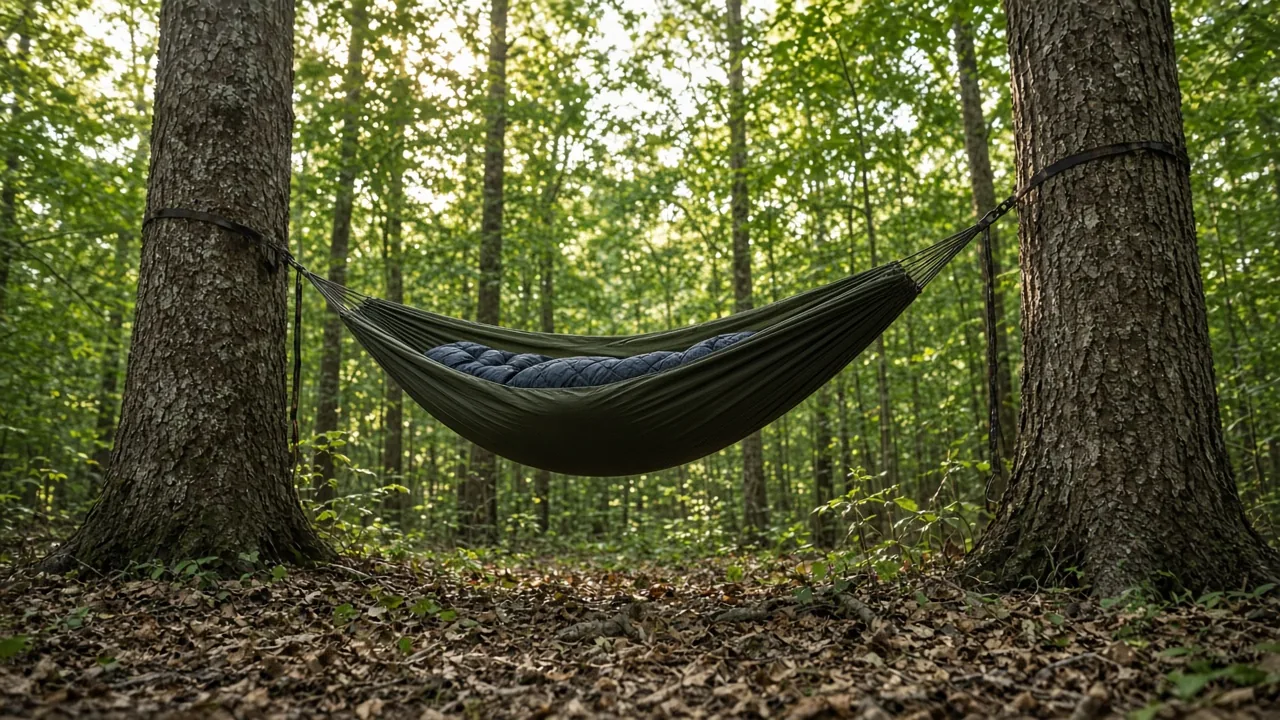
Bridge hammocks need longer connecting lines and greater tree distance. The spreader bars and suspension cables add length to the whole system, so the trees you pick must be farther apart. That can be a problem in dense forest, established campgrounds with fixed anchor points, or sites where trees are close together. The longer cables also tend to tangle when you pull the hammock out of its stuff sack.
Gathered-end hammocks use shorter suspension and fit smaller sites. The connection points are compact, and the hammock body does not require extra cable length beyond standard straps. Packing is simpler because there is less hardware and fewer lines to sort.
If you backpack into areas where good tree spacing is hard to find, the gathered-end advantage is significant. A bridge hammock can force you to hunt for a wider site or settle for a less-than-ideal hang.
Directional Setup and Bug Net Zippers
Bridge hammocks may be directional, requiring the correct head end. Some models use a color tag to mark the head side, and if you hang the hammock backward, the lay does not work as intended. That is one more thing to check when setting up in fading light.
The bug net zipper is another friction point. Bridge hammocks often use a curved zipper that has to travel around the spreader bar hardware. Getting the bug net off can be awkward, especially when your hands are cold or the net is wet. Gathered-end models like the Chameleon have straighter zippers that are easier to open and allow quicker removal of the bug net.
None of this is a dealbreaker by itself, but together the setup details add time and annoyance. If you set up after dark, simple beats complicated.
Pack Size and Weight for Backpacking
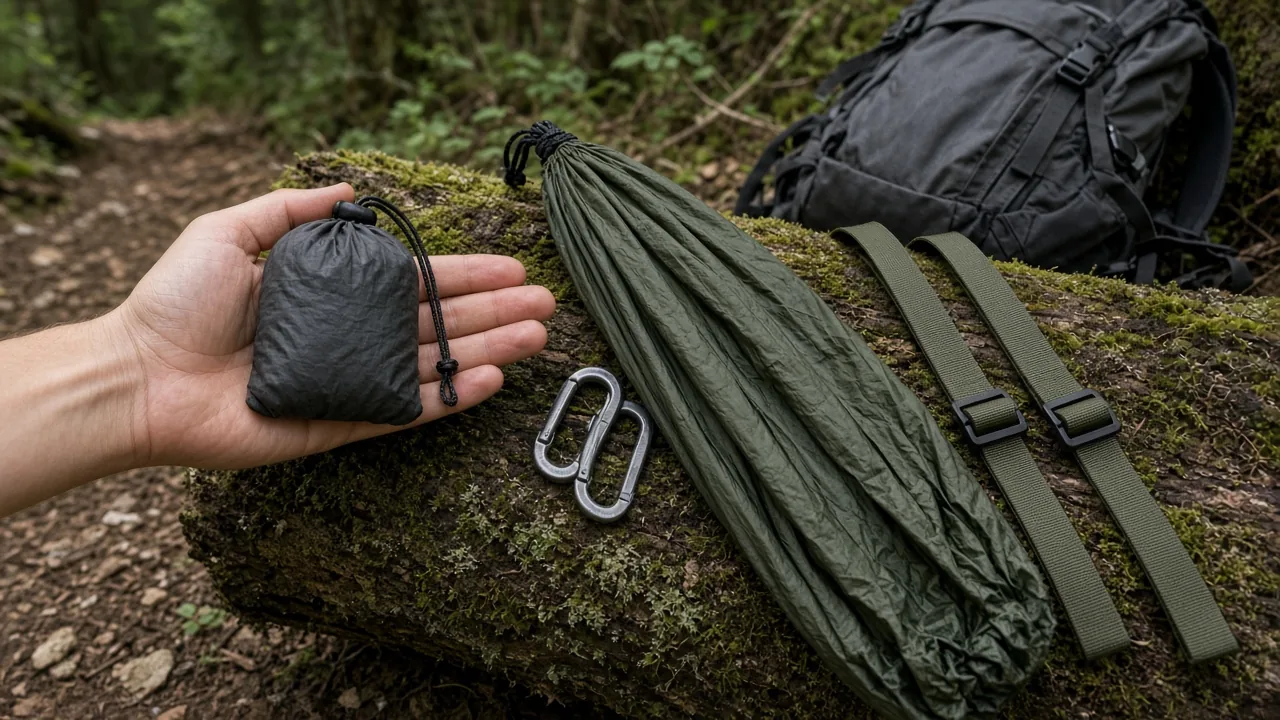
Some ultralight gathered-end systems weigh about 380 grams, or roughly 13.4 ounces, and pack to palm size. The hammock body, two carabiners, and two tree straps fit into a small package. That is a strong argument for gathered-end designs on foot.
Wide tree straps can add bulk if you swap them in. The original narrow straps pack down small, but wider straps take up noticeably more room and may not fit back into the original stuff sack. If you want wider straps for tree protection, plan on carrying them separately or accepting a larger packed size.
Bridge hammocks tend to be heavier and bulkier because of the spreader bars and longer suspension. For car camping that does not matter much. For a week of backpacking, the ounces and the tangle potential add up.
Fabric, Rain Management, and Durability
Fabric choice and rain details change how much you trust a hammock overnight. Compare denier, material, and drip design instead of assuming all hammocks handle weather the same.
Fabric Thickness and Weight for Hammock Duty
The bridge hammock in this comparison uses Hexon 1.6, while the gathered-end Chameleon used a heavier Hexon 2.0 or 2.4 depending on the source. The heavier fabric feels more substantial and resists abrasion better, but it also weighs more. The lighter Hexon 1.6 is still a proven hammock fabric and reduces pack weight.
Thin 20D parachute-type fabric can feel flimsy but still work in tested designs. A 20D hammock looks almost translucent and feels like a lightweight shell jacket, but with proper stitching and load-rated hardware it holds up. The thin fabric dries quickly and packs extremely small.
The trade-off is durability versus weight. Heavier fabric resists wear over years of use. Lighter fabric needs more care around sharp objects and rough surfaces. Neither is wrong; they serve different priorities.
Rain Drip and Bug Net Considerations
Choose straps with a drip path so rain runs to the ground rather than along hardware into the hammock. A well-designed tree strap has a drip feature near the top that directs water down the strap and away from the carabiner and hammock body. Without that, rainwater can follow the suspension line and soak the foot or head end of your hammock during a steady rain.
Check whether the bug net zipper is easy to manage when wet. A wet zipper on a curved bridge hammock net can bind, and forcing it can damage the zipper. Straight zippers on gathered-end nets generally handle moisture better and are easier to operate one-handed.
A rain tarp is still recommended for any hammock. The drip design helps, but it is not a substitute for overhead coverage.
Tree Straps and Leave No Trace
Wide, flat straps reduce tree damage. Narrow lines dig into bark and can girdle or scar trees, especially on thin-barked species. Wrapping wide straps twice around thin trunks increases surface area and fits Leave No Trace practices better than narrow lines. The extra wrap also keeps the strap from sliding down the trunk once you load the hammock.
Look for straps with reinforced stitching and full-length attachment points. The original narrow straps in some ultralight systems have attachment points along the whole 2.5-meter length, which speeds setup and allows precise adjustment. Some wide aftermarket straps only have attachment points on a small section, which limits adjustability. Before you swap straps, check how much usable adjustment range you are giving up.
How to Choose for Car Camping vs Backpacking
Match the hammock type to your trip format, expected weather, and sleep position. Extra weight and bulk matter more on foot, while stability and easy entry matter more at a drive-up site.
When a Bridge Hammock Is Worth the Extra Setup
Choose a bridge hammock for car camping or short trips where side-sleeping or stomach-sleeping comfort and a flat lie outweigh longer tree spacing and a tippy feel. When you are not carrying gear far, the extra weight of spreader bars and longer suspension does not matter. The flat sleeping surface does.
Bridge hammocks also make sense if you are a dedicated stomach sleeper. That is the one position gathered-end hammocks cannot accommodate, and no amount of diagonal adjustment changes that. If you wake up on your stomach most mornings, the bridge design solves a problem that gathered-end models simply ignore.
Car campers who arrive early and have time to set up can adjust to the directional setup and curved zippers. Those are annoyances, not reasons to avoid the design when the sleep quality is right.
When a Gathered-End Hammock Fits Better
Choose a gathered-end hammock for backpacking or small sites when lower weight, simpler suspension, and resistance to tipping matter more than maximum side-sleep flatness. If you hike long distances and want the lightest possible sleep system, a 380-gram gathered-end setup is hard to beat.
Gathered-end hammocks also suit restless sleepers. If you change positions through the night, the stable, low-slung design means you can adjust without the hammock lurching. Side sleepers who add a knee pillow and accept a slight curve can make the design work well.
Tight treed sites favor gathered-end hammocks too. The shorter suspension fits between closer trees, which gives you more site options. When you are tired and it is getting dark, that flexibility counts.
Side Sleepers on Their First Hammock
A longer gathered-end hammock with a diagonal lay and a knee pillow can make side sleeping work, but treat that as a lighter, simpler option rather than a certainty. One reader reported more than 900 nights in a gathered-end hammock as a side sleeper, using a knee pillow to ease hip and knee pressure. That level of experience shows gathered-end side sleeping is possible, but not every first-time user adjusts quickly.
If your first hammock is a gathered-end model, expect a learning curve. Practice the diagonal lay, experiment with pillow placement, and give yourself several nights before deciding. If side-sleep flatness remains the top priority after that trial, a bridge hammock is the next thing to try.
What to Check Before You Choose a Side-Sleep Hammock
Look beyond style. Hammock length, strap width, fabric hand, and seam quality determine whether your overnight system is comfortable and durable. A poorly made hammock in either style will disappoint regardless of design.
Hammock Length and Width for Side Sleepers
Pick a hammock at least about 2 feet longer than your height. The standard 60 centimeter guideline converts to roughly 2 feet, and it gives you enough fabric to find a comfortable diagonal lay in a gathered-end hammock. A hammock that is too short pulls your body into a steeper curve and makes side sleeping harder.
For side sleepers, also check whether the bridge hammock center line gives enough space without pushing your face into the bug net. Bridge hammocks can feel narrow at the head and foot ends, and side sleepers who curl slightly may find their nose against the netting. Look at the spreader bar length and the overall hammock width before committing.
Suspension and Strap Features
Prefer wide, flat tree straps with reinforced stitching and full-length attachment points. Wide straps reduce tree damage and comply with Leave No Trace practices. Reinforced stitching at the loop ends prevents failure at the highest-load points. Full-length attachment points let you adjust the hang without re-tying knots or moving the strap.
The carabiner or quick-link hardware should have a real load rating. An ultralight system with carabiners rated to 12 kilonewtons, tested to 17 kilonewtons, provides a wide safety margin. Do not swap in hardware-store carabiners without a verified load rating.
Safety and Weather Checks Before You Go
Check fire restrictions, campsite rules, and the forecast before any overnight trip. Hammock camping puts you in direct contact with trees, and many public lands have specific rules about straps, tree size, and where you can hang. A burn ban changes your cooking plan, and a thunderstorm forecast changes your site selection.
Never use a stove or heater inside your tent. Carbon monoxide is invisible and deadly, and a hammock bug net creates a similar enclosed space. Cook outside and away from sleep areas. Follow the manufacturer's instructions for any fuel appliance or hammock suspension components. If you are new to hammock camping, do a backyard test hang before taking gear into the backcountry.
Bottom Line: Matching Hammock Type to Your Sleep Style
For side sleepers, the choice hinges on whether a flatter but tippier bridge hammock or a less flat but steadier gathered-end hammock better matches your trip and nighttime movement. If you sleep still, prioritize flatness, and do not mind a longer setup, a bridge hammock delivers a side-sleep surface that gathered-end models cannot match. If you move at night, hike long distances, or camp in tight trees, a gathered-end hammock is the more practical system.
Customize the decision with a knee pillow, wider straps, and a tarp matched to expected rain. Nothing about either design removes the need for a good sleep pad or underquilt in cool weather. Think through how many nights you will spend in the hammock and how much weight you are willing to carry for those nights.
Check your trip type, overnight low, and rain risk; if side-sleep flatness matters most, choose a bridge hammock, but for stability and smaller pack size, choose gathered-end. Pair either choice with a tarp sized for the forecast and straps that protect the trees. — Camp Kit Journal
This article is general information about camping gear, not professional safety, medical, or wilderness training. Check fire restrictions, weather, and campsite rules before you go, and follow the manufacturer's instructions for your own equipment.
FAQ
Is a bridge hammock better for side sleepers than a gathered-end hammock?
Bridge hammocks generally offer a flatter, more open side-sleep position, but they can feel tippy if your weight leaves the center line. Gathered-end hammocks are less flat but more stable for active sleepers.
Can side sleepers comfortably use a gathered-end hammock?
Yes, many side sleepers use a diagonal lay and a knee pillow to reduce hip and knee pressure. It may take a few nights to adjust, but a longer gathered-end hammock works well for some people.
Why are bridge hammocks less stable when you move?
The center of gravity sits closer to the spreader bars, so small weight changes cause noticeable leaning. If you move around, reach for gear, or sit up, the hammock can pitch quickly.
Which hammock type is better for backpacking?
Gathered-end hammocks usually weigh less, pack smaller, and fit tighter tree sites, making them better for backpacking. Bridge hammocks are heavier and bulkier, so they are often more practical for car camping.
What tree spacing do bridge hammocks need?
Bridge hammocks require longer suspension and wider tree spacing because of the spreader bars and cables. Gathered-end hammocks use shorter suspension and fit closer trees.



