Foam Cooler vs Premium Camping Cooler: Which Is Enough?
A cheap foam cooler can handle short car-camping weekends, but premium camping coolers earn their cost for multi-day heat and food safety. Learn how to size, pack, and choose between foam and premium models.
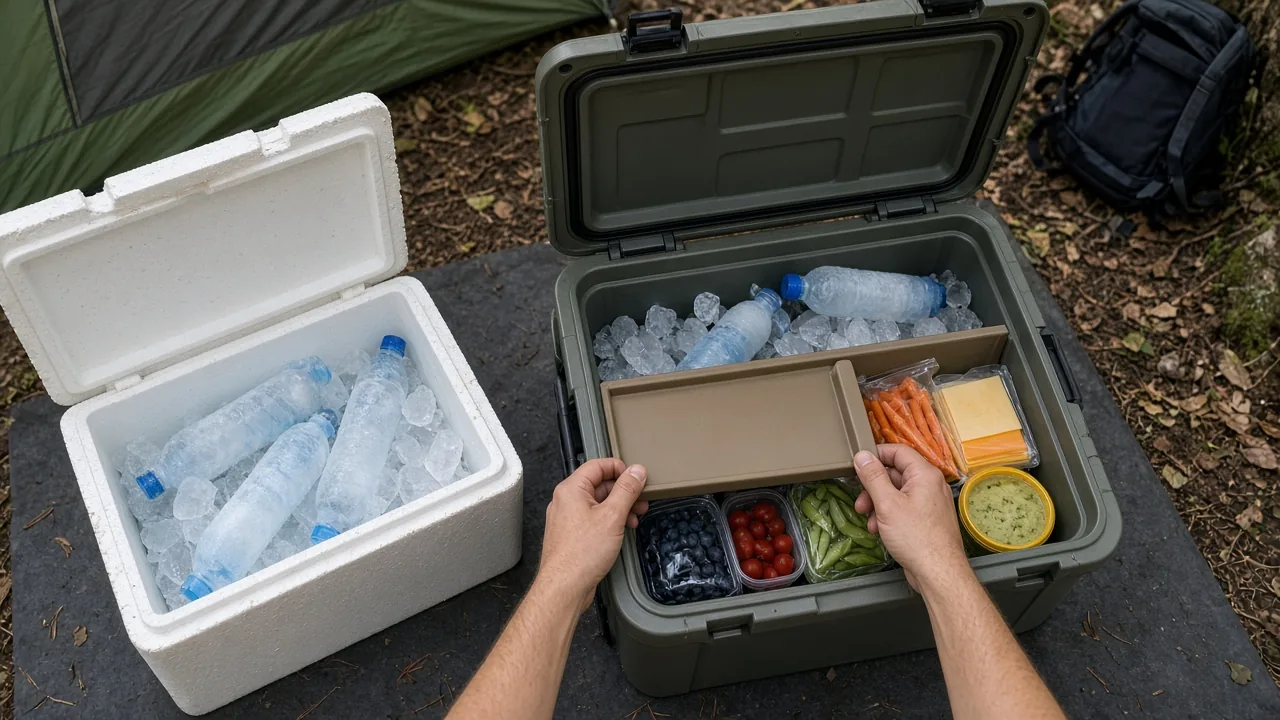
A cheap foam cooler can absolutely replace a premium camping cooler for short car-camping weekends, but it is not the same tool once you need multi-day cold food safety in hot weather. This guide filters coolers two ways: first match capacity to your trip length and group size, then compare what a cheap foam cooler and a premium camping cooler can do once ice starts melting.
Before you spend anything, the real question is not "foam vs roto-molded" but what size and shape your trip actually requires. A premium cooler packed wrong will underperform a foam box packed right.
Size the Cooler Before You Compare Foam and Premium Models
Start with the cooler volume your trip actually requires, because capacity and packing style affect ice retention as much as shell material or brand does. Two coolers with identical insulation can behave very differently if one is sized for the load and the other is overstuffed.
Capacity by trip length and group size
Use 20-30 qt for a one-day or weekend trip, 50-75 qt for 3-5 days, and 75-100 qt for large groups, allowing roughly 20 qt per person. A two-person weekend can fit in a 30 qt box if you pack deliberately. A family of four heading out for four days needs something closer to a 75 qt unit, not a pair of small boxes.
These numbers assume you are cooling food and drinks, not just holding snacks. Drinks pack tightly and drain cold air when the lid opens, so oversized is easier to manage than undersized. A cooler that is too small forces you to open it more often, and every lid lift costs ice melt.
Car camping vs backpacking needs
Choose a hard-sided large cooler for car camping, but a soft cooler under 20 qt for backpacking or walk-in sites where packed size and weight matter. Foam boxes are hard-sided and bulky, which makes them a car-camping or basecamp option. You would not carry a 30 qt foam box down a trail.
Soft coolers make sense when you carry your own load, but they trade ice retention for packability. A 12-18 qt soft cooler with a sealed liner can hold lunch cold for a day hike or a short walk-in overnight. For anything longer at a walk-in site, pre-frozen bottles plus a soft cooler beats a foam box, because the foam shell crushes and leaks if it gets knocked around.
Pack Ice and Food at the Right Ratio Before Any Test
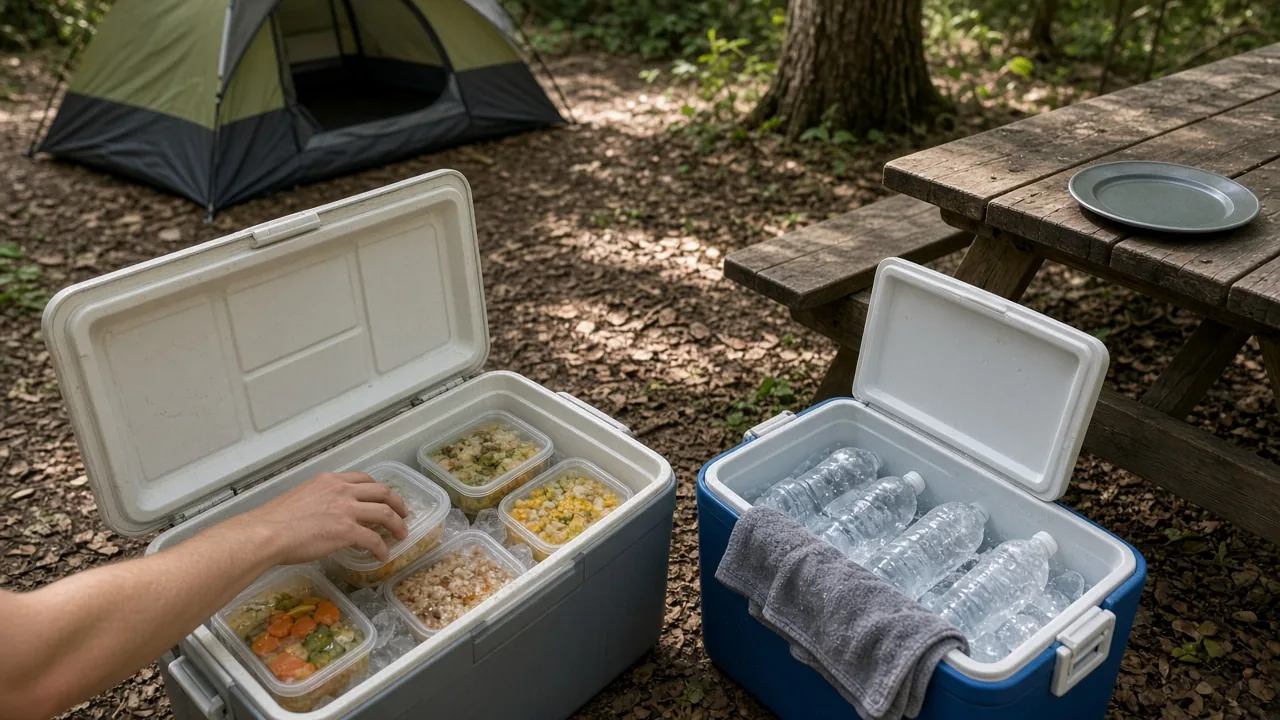
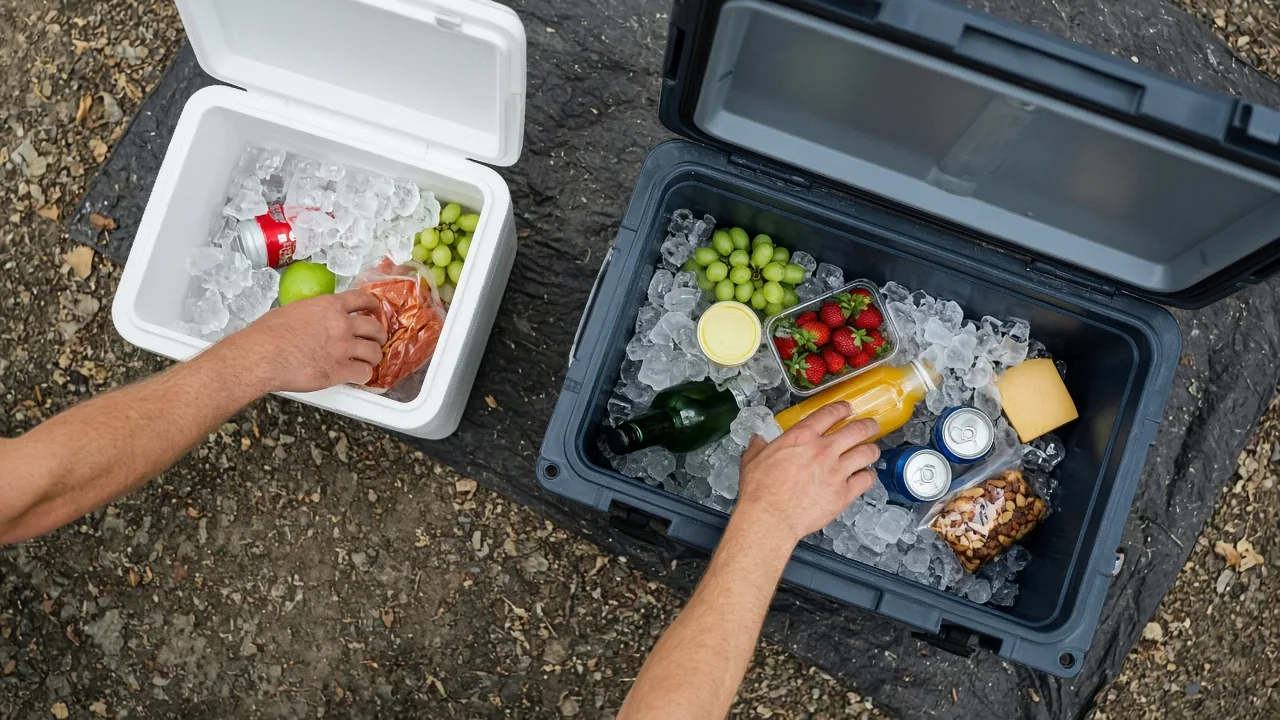
Load about two-thirds ice and one-third food or drinks, because a crowded food-only cooler melts ice faster and makes even a premium cooler look weak. Many cold-cooler complaints trace back to packing, not insulation quality.
Why the ratio matters
Two-thirds ice keeps enough thermal mass to hold cold air and reduces how often you open the lid to rearrange food. A full-ice box stabilizes around the ice temperature for hours because the ice absorbs heat first. A box packed with mostly food has less thermal mass, so air temperature rises quickly after each lid opening.
Pre-chill everything that goes inside. Room-temperature drinks are heat loads. Frozen water bottles double as ice and drinking water, which helps on short trips where restocking ice is not an option.
Weather adjustments
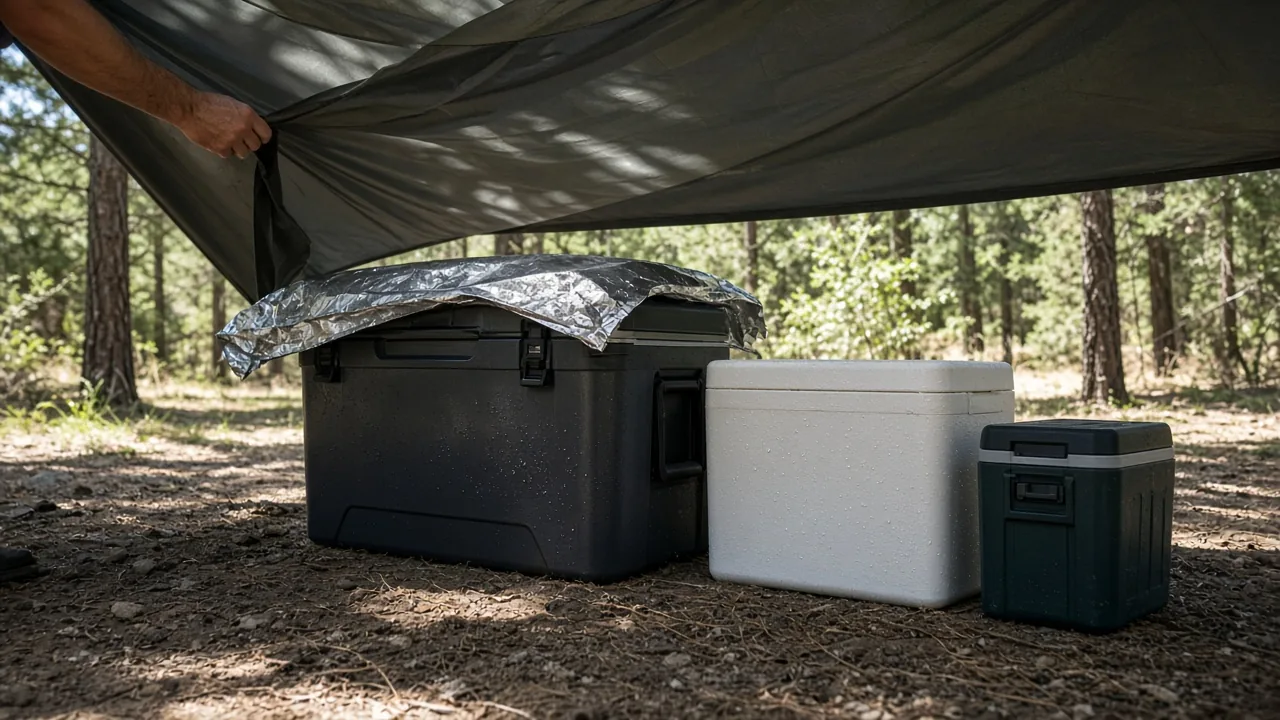
In hot conditions, choose a larger or thicker-insulated cooler because a small one thaws sooner; in cool weather, a smaller box is easier to manage. Direct sun on a dark cooler shell pushes heat into the ice, so park the cooler in shade or throw a reflective blanket over it.
For night temps in the 40s and 50s Fahrenheit, a foam box with frozen bottles can coast. For daytime temps in the 90s, even a premium cooler loses ground if you open it hourly for drinks. A second small cooler for drinks keeps the food cooler closed most of the day.
Foam Cooler vs Premium Camping Cooler: Read the Short Ice Test Carefully
A six-hour residual ice test can show differences, but it does not prove a cheap foam box beats a premium cooler for a full weekend trip. Short-term ice weight is useful data, but it measures one narrow condition: how much ice remains after a fixed window, in one set of outdoor conditions.
What the test reported
In one 6-hour comparison, a low-cost foam box kept more ice than some premium models, but capacity and pre-cooling were not the same across all units. The foam box held roughly 605 grams of remaining ice after six hours, which placed it ahead of several branded coolers and behind only two premium names in that specific run.
That result surprised people because a foam box costs a fraction of a roto-molded cooler. But the test did not equalize box volumes, did not pre-chill the boxes, and used a short time window. A foam box with thick walls can hold its own in that limited setting.
Why the method has limits
Equal ice weight in different-size boxes, no pre-chilling, and a short window measure initial heat loss rather than multi-day food-safe cold retention. A 24 qt box with the same ice load as a 50 qt box starts differently. Pre-chilling matters because an un-chilled cooler absorbs heat first, and that heat comes straight out of the ice.
Six hours is enough to rank initial performance but not enough to tell you whether food stays below 40°F for three days. For food safety, internal air temperature over time matters more than leftover ice weight at hour six.
Where a Cheap Foam Cooler Can Replace a Premium Camping Cooler
A foam cooler can work for car-camping weekends if you pre-chill food, pack frozen water bottles, and plan to restock ice daily rather than hold cold for days in heat. The foam box is not a long-term vault, but it is a legitimate low-cost tool for the right trip shape.
Best foam cooler scenarios
Use a thick EPP foam box or an insulated seafood-market box for short trips when you can treat it as a low-cost cooler, not a long-term food vault. EPP foam is denser than standard styrofoam and survives more handling. Seafood-market boxes often have thicker walls and a snug lid.
Weekend car camping in spring or fall is the sweet spot for foam. You drive to the site, you can bring extra ice, and nights are cool enough that the box does not fight extreme heat. For perishables like raw meat, add frozen bottles and keep the box in shade.
Upgrades that extend foam box cold time
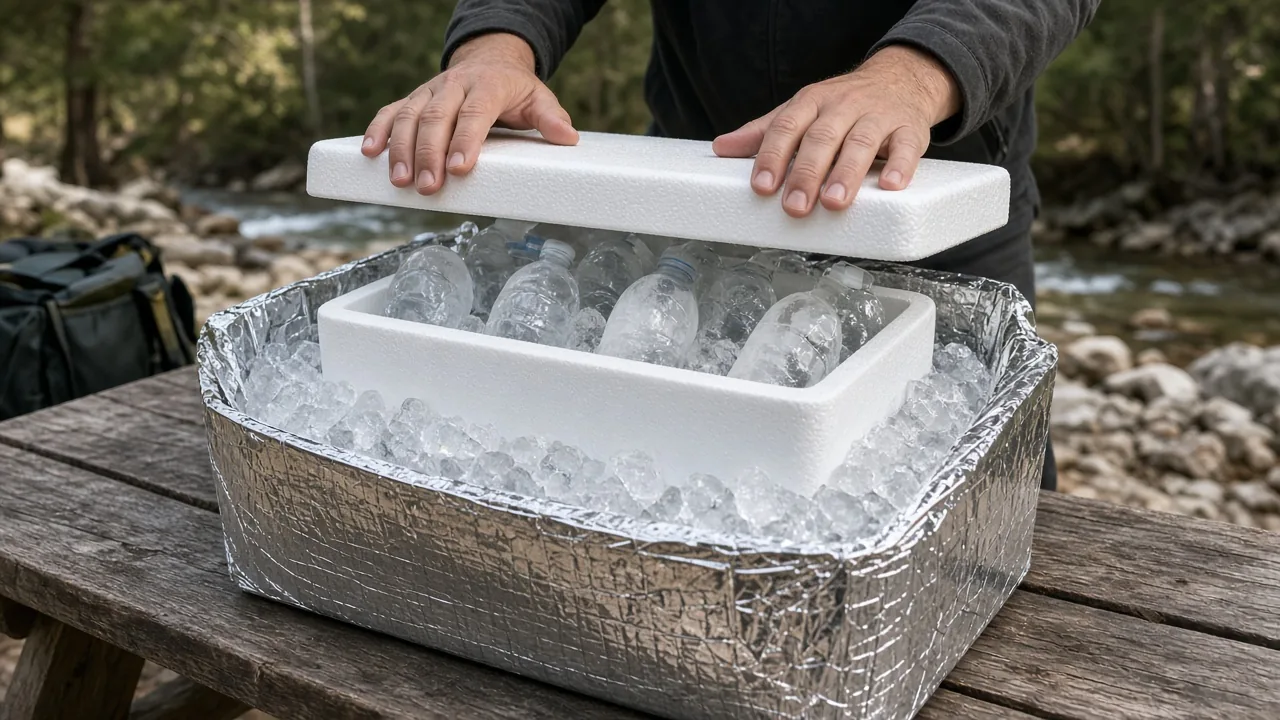
Nest a small foam box inside a larger one, fill the gaps with crushed ice, and wrap the outside with reflective foil to push cold retention closer to 48-72 hours. The gap ice acts as a second insulation layer while adding thermal mass.
Frozen water bottles placed inside the inner box act as cold sources that do not flood the food when they melt. A reflective wrap reduces solar gain if the box sits in sun. These upgrades help, but they do not make a foam box as durable or seal-tight as a premium roto-molded unit.
Camp safety reminder
Never use a stove or heater inside your tent, even when you set up a cooler-based camp kitchen, because carbon monoxide and fire risk remain. That rule holds whether your cooler is a $10 foam box or a $400 rotomolded chest. Cook and heat water outside, in open air, away from tent walls and vehicle interiors.
When a Premium Camping Cooler Is Worth the Extra Weight and Cost
A premium cooler earns its place when multi-day food safety, bear-resistant storage, or repeated hot-weather use matter more than saving money on a box. Premium models are heavier and cost more, but they hold temperature more stable over time and survive rough handling.
Premium cooler strengths
A sealed, insulated premium cooler usually keeps internal temperature steady longer and holds ice in heat, but its advantage shrinks on a short, shaded car-camping trip. The sealed gasket lid and drain design reduce air exchange and let you dump meltwater without opening the whole lid.
Bear-resistant designs matter where food storage rules apply. Some premium rotomolded coolers carry bear-resistant certification, which a foam box cannot match. If you camp where bear canisters or approved coolers are required, a foam box is not a substitute.
Watch for false equivalence
Some premium coolers are essentially a foam core inside a rotomolded shell, so check wall thickness, drain design, and seal quality rather than price alone. Price does not guarantee insulation. Look at wall thickness in inches and whether the lid seals evenly under compression.
A premium shell with a thin foam core may underperform a thick EPP foam box. The shell adds durability, but insulation comes from the foam, the air seal, and thermal mass. Read the specs and compare wall thickness before assuming a higher price means colder food.
How to Choose Between a Foam Cooler and a Premium Camping Cooler
Decide first by trip type and weather, then by durability and how often you camp, because the cheapest option only works when you can pre-chill and carry extra ice. The decision tree is straightforward: short and cool favors foam; long, hot, or bear-country favors premium.
For car camping weekends
A thick foam box or upgraded foam setup is usually enough if nights are mild and you can restock ice daily. Pre-chill the box, load two-thirds ice, keep it shaded, and open it less often. Replace the foam box when the lid starts cracking or the walls compress.
For backpacking or multi-day heat
Choose a premium cooler or a smaller soft cooler that seals well, because long walk-ins and hot days punish a foam box that leaks and crushes. Backpackers should skip hard foam entirely. For car camping in heat, a premium cooler with a sealed lid and thick walls keeps food below the danger zone longer.
For large groups
Match capacity with the two-thirds ice ratio, then pick either a large premium cooler that survives frequent opening or a double-foam-box setup you can discard after the trip. Large groups open the cooler constantly, which favors a premium unit with a good seal. If budget is tight and the trip is one weekend, a nested foam setup with extra ice can work, but expect to babysit the ice.
The foam cooler versus premium camping cooler decision comes down to time, temperature, and access to ice. A foam box is not a defective product; it is a short-trip tool with a narrow performance window. A premium cooler is not overkill for the right conditions; it is long-term food storage built into a heavy shell.
Before you pack, check whether you are car camping or backpacking, how cold nights will be, and whether rain is likely; then pair a foam cooler with frozen water bottles or choose a sealed premium cooler if needed. If your trip includes bear-country food rules or multi-day heat, a certified or thick-walled premium unit is the safer choice. For a mild weekend drive-up trip, a thick EPP foam box with pre-chilled contents can handle the job without costing more than the food inside it.
This article is general information about camping gear, not professional safety, medical, or wilderness training. Check fire restrictions, weather, and campsite rules before you go, and follow the manufacturer's instructions for your own equipment.
FAQ
When can a foam cooler replace a premium camping cooler?
For short car-camping weekends in mild weather, if you pre-chill food, pack two-thirds ice or frozen bottles, and can restock ice daily.
What ice-to-food ratio should I use?
Load about two-thirds ice and one-third food or drinks, and pre-chill everything before packing.
Is a six-hour ice test enough to compare coolers?
No, it measures initial heat loss and leftover ice weight; it does not prove multi-day food-safe cold retention.
Are premium coolers always better than foam coolers?
Not always. Some premium coolers have thin foam cores inside a rotomolded shell, so check wall thickness, drain design, and lid seal rather than price alone.
What size cooler do I need?
Use 20-30 qt for a day or weekend, 50-75 qt for 3-5 days, and 75-100 qt for large groups, roughly 20 qt per person.