Emergency Blanket Against Skin or Over Clothes: What Works
Learn whether to put an emergency blanket against skin or over clothes, plus the best way to wrap your core, block wind, and use it as a cold-weather camping backup.
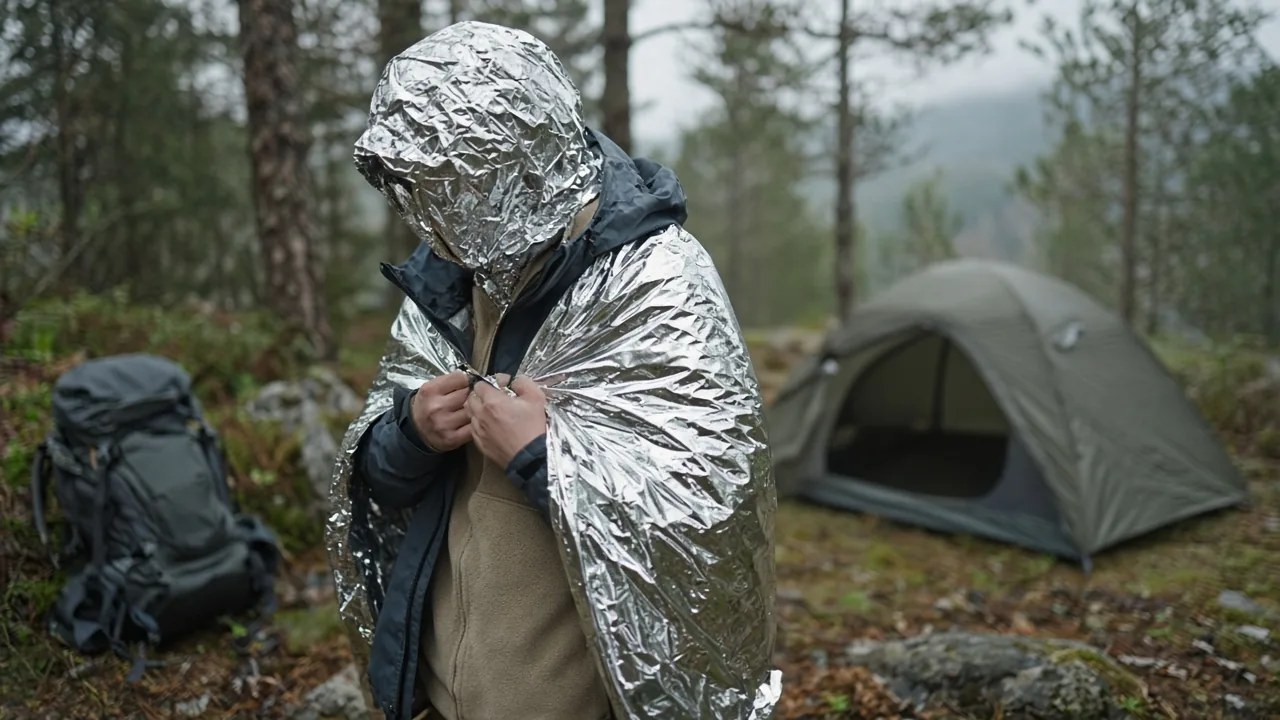
An emergency blanket does the most when you put it over dry base layers and around your head and torso, not when you treat it as a crinkly sleeping bag liner. The question of emergency blanket against skin or over clothes is usually answered by comfort: over a dry base layer is less clammy, quieter, and easier to manage. Against bare skin can reflect heat faster but often turns sweaty and sticky. For most cold-weather camps, pack the blanket where you can reach it in seconds, and use it before you start shivering.
When an Emergency Blanket Helps on a Cold-Weather Camping Trip
An emergency blanket works best as a compact backup for unexpected cold, rain-soaked layers, or an injured person who cannot move around to generate heat. It is not a substitute for a sleeping bag or insulated pad. A sleeping bag traps warm air around your whole body, and a pad slows heat loss into the ground. The blanket only reflects some of your body’s radiant heat and blocks some wind.
That limited job still matters. If a storm soaks your puffy jacket or the temperature drops faster than the forecast suggested, a blanket can keep your core from losing more heat while you change layers or get back to the car. If someone in your group is injured and stuck in place, wrapping their head and torso can slow heat loss while you wait for help.
Cold Weather Is Not the Only Risk
Pack one for cool, wet, or windy summer trips too. Hypothermia can happen when you are stationary in damp clothes, even if the air temperature feels mild. A hiker who stops after sweating through a shirt can become chilled quickly once wind or shade hits. Keeping an emergency blanket in a daypack or vehicle costs very little space and gives you a fast backup for those shoulder-season and summer storms.
Emergency Blanket Against Skin or Over Clothes: Step-by-Step
The goal is to keep the reflective layer close to your head and chest, where heat loss can be fastest in cold conditions. If the blanket has one shiny side, start with that side facing inward toward your body. Some blankets look the same on both sides, so check the packaging before you rely on a specific orientation.
Tie It into a Hood First
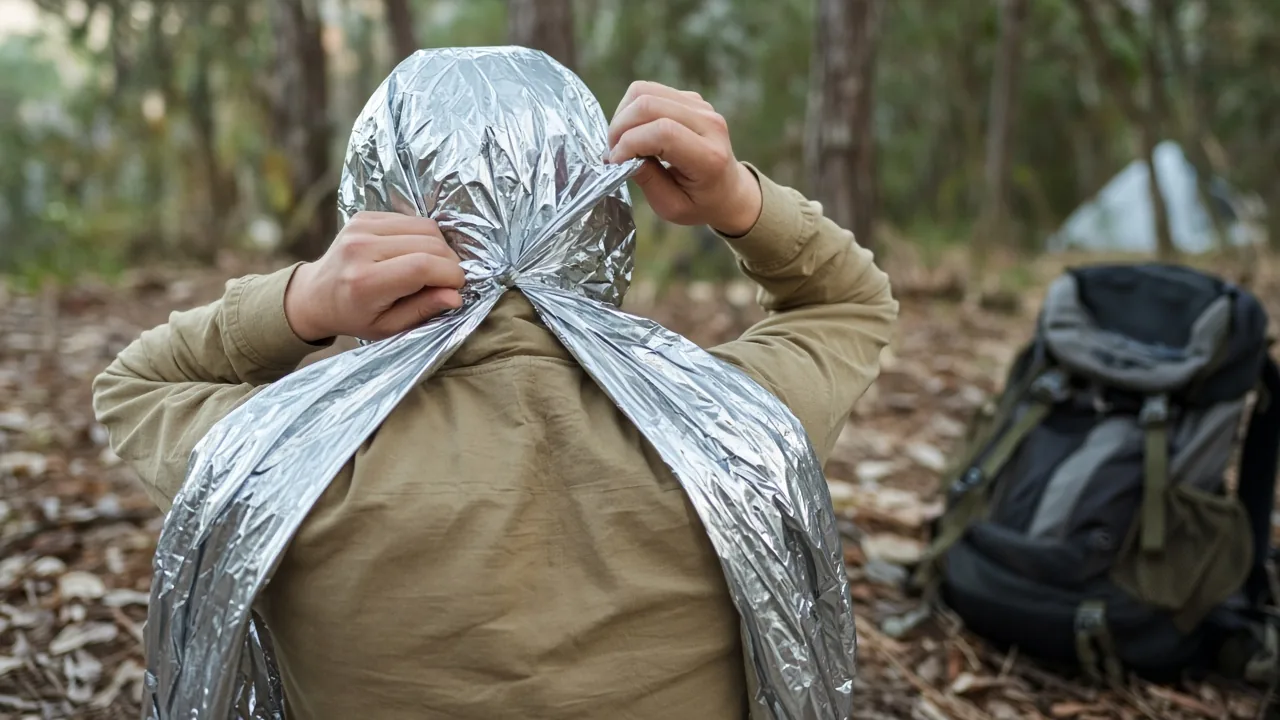
Tie one end into a small knot. Slip the knot behind your neck, then pull the knotted end over the top of your head so it stays close to your scalp. This keeps the blanket from sliding down when you move and helps cover your head without using your hands. The hood should feel snug but not tight enough to pull against your throat.
Spread the Rest Under Your Outer Layers
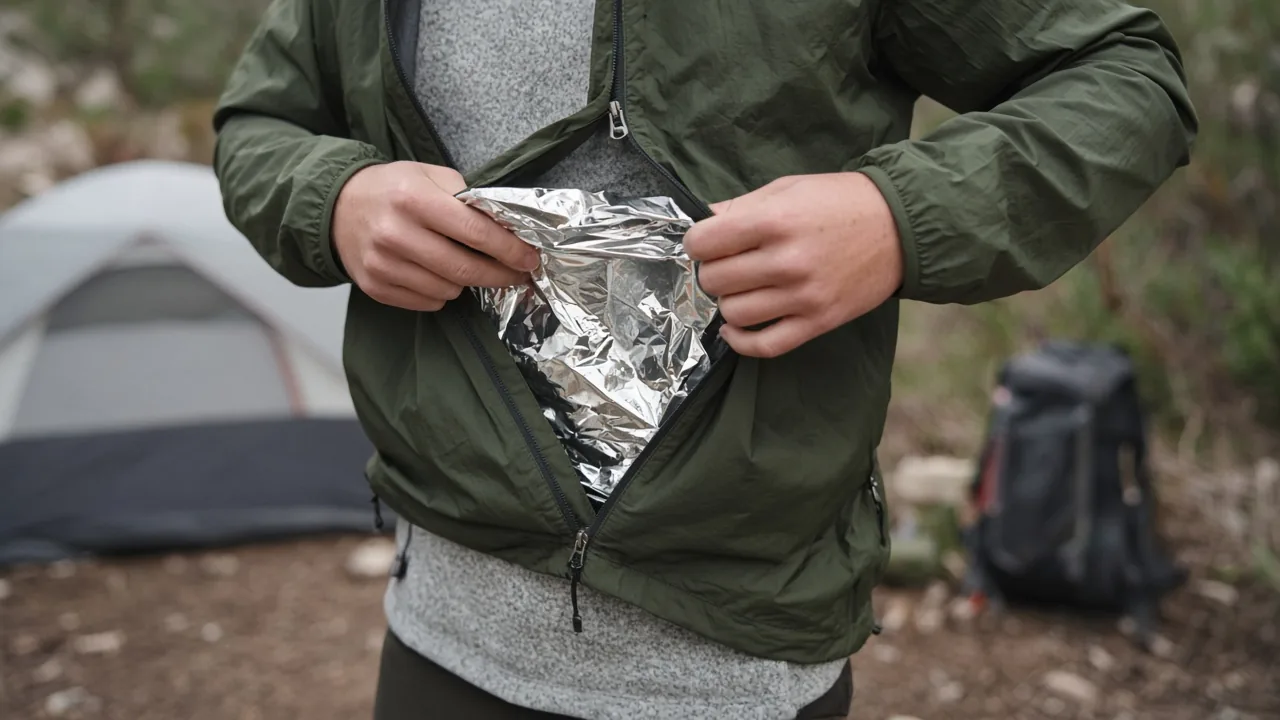
Open the remaining material inside your shirt or jacket. Cover your chest and back first, then tuck the edges over your shoulders. Add a wind shell on top. The outer layer blocks moving air and reduces the crinkling and flapping that can tear a thin emergency blanket or make it hard to wear.
Against Skin or Over Clothes?
Over dry base layers is usually more comfortable and less clammy than putting the blanket directly against bare skin. Against skin can trap heat faster, but many campers find it causes sweat, stickiness, and extra noise. A wet or sweaty inner surface can also feel colder once you stop moving.
| Placement | Comfort | Heat Behavior | Best Use |
|---|---|---|---|
| Against bare skin | Can feel sweaty and sticky | Reflects heat quickly but moisture may build up | Short emergency wrap if your clothes are soaked and you have no dry layer |
| Over a dry base layer | Less clammy and quieter | Reflective layer stays near core without direct skin contact | Most cold-weather camping stops |
| Loose over an outer shell | Feels like a cape | Wind can enter gaps and carry heat away | Not recommended as primary use |
Common Mistakes That Cancel Out an Emergency Blanket
Wrapping only your arms and legs, leaving gaps, or using the blanket as a loose cape lets heat escape and gives you a false sense of protection. The shiny layer helps only when it is close enough to your body to reflect heat back toward you.
Focusing on Limbs Instead of Core
In cold conditions, your head and trunk need the reflective layer first. Arms and legs can be covered with dry clothing or tucked inside a jacket. If you use most of the blanket on your legs, your core may keep losing heat even though your legs feel covered.
Waiting Until You Are Already Shivering
Use the blanket early when you stop moving or feel a chill, not after you are already losing coordination. Shivering is a sign your body is working hard to stay warm. Once your hands get stiff, opening the tiny folded package and tying the hood becomes much harder.
Trying to Stay Warm the Wrong Way
Never use a stove or heater inside your tent. That creates a carbon monoxide and fire risk, and an emergency blanket does not change that. Combine the blanket with dry layers, a sleeping pad, and wind protection instead. If you are inside a tent, use your sleeping bag and pad first, and add the blanket around your core only if needed.
Forgetting Wind and Ground Heat Loss
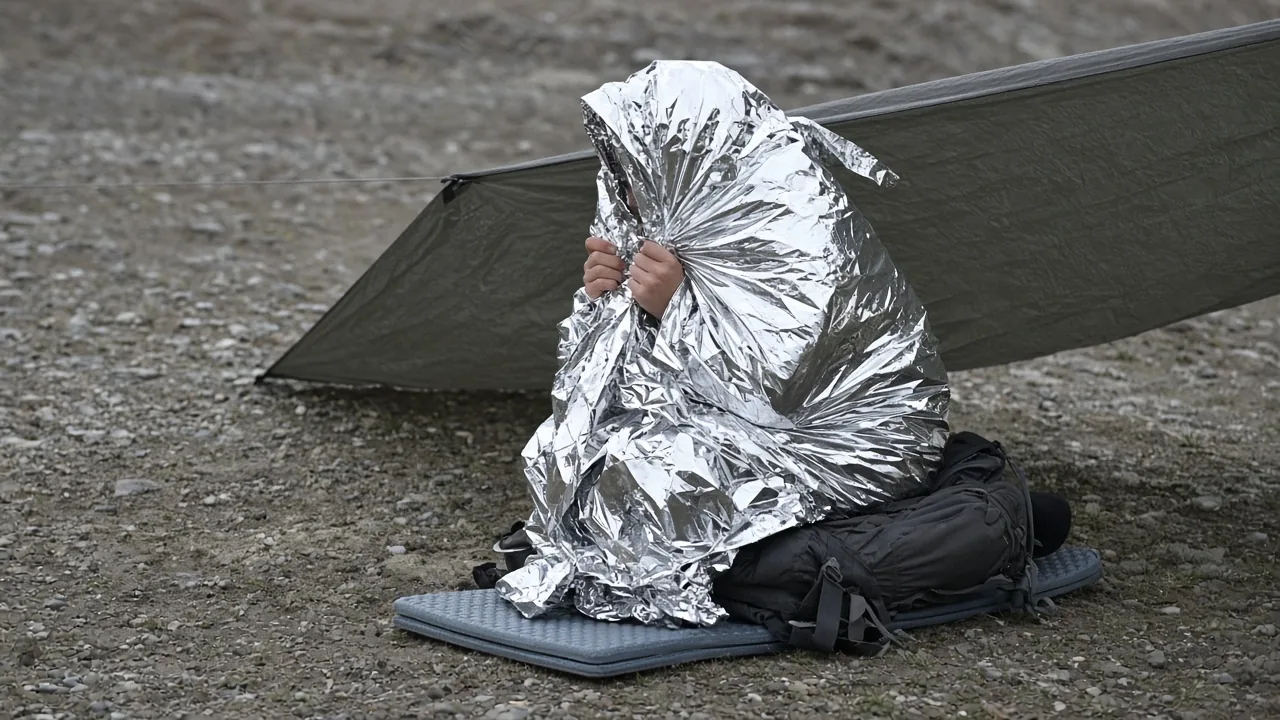
Add a shelter or windbreaker and sit on a pad. An emergency blanket alone does not stop conductive or convective loss. If you sit directly on cold ground, the earth can pull heat out of your body even while the blanket reflects some heat from your chest. A foam pad, backpack, or spare clothing under you helps more than another wrap around your shoulders.
How to Carry and Retrieve an Emergency Blanket Fast
Store one in an easy-to-grab pocket, first-aid kit, or pack lid, and practice opening it once. An unopened backup buried in a kit does not help when your hands are cold or someone else is trying to help you.
In a Group First-Aid Kit
A clearly labeled hypothermia module with the blanket and gloves can help someone else find it quickly in a large kit. A red pack with visible internal labels works well, but if your kit is all one color, mark the blanket pouch with tape or a bright tag. In a big group, the person who finds the kit may not know where the blanket sits.
In a Car or Backpack
For car camping, keep one in the glovebox or door pocket where you can reach it from the driver’s seat. For backpacking, place it in a hipbelt or top pocket rather than the bottom of the main compartment. The point is speed: you want to reach and open it without pulling apart your entire pack.
FAQ: Quick Answers About Emergency Blanket Use
Campers often ask about reflective sides, off-label uses, and whether one belongs in every kit. The answers depend on conditions, not blanket thickness.
Does It Have a Right and Wrong Side?
The demo does not confirm a fixed front or back, so inspect the packaging or try both orientations before relying on it. If one side is shiny and the other is colored, face the shiny side toward your body. If the blanket appears identical on both sides, test it inside a jacket to see which way holds less moisture against your clothing.
Can It Work as a Sunshade or EMF Shield?
No, its design is for reflecting body heat and blocking some wind. There is no evidence in the materials or typical construction to support sun canopy or electromagnetic shielding claims. For sun protection, use a proper tarp, umbrella, or shade structure made for that purpose.
Should Every Camper Carry One?
It is cheap and light enough for most cold or wet trips, but you do not need to replace a proper sleep system. Use it as a backup layer. If you already carry a sleeping bag with a temperature rating below the expected low and a pad with enough R-value, the blanket is still useful in an emergency kit or vehicle.
Match it to the trip. For backpacking, weight and packed size matter, so choose a small blanket that fits in a hipbelt or lid pocket. For car camping, keep it accessible rather than buried in a bin. Use it over dry base layers and around your core, and treat it as a backup, not a shelter or sleeping bag. Check the forecast and your sleep system before you go: if nighttime lows could dip below your bag’s comfort rating or rain could soak your layers, bring the blanket and pair it with a pad and wind shell.
— Camp Kit Journal
This article is general information about camping gear, not professional safety, medical, or wilderness training. Check fire restrictions, weather, and campsite rules before you go, and follow the manufacturer's instructions for your own equipment.



