How to Use a Down Blanket Inside a Sleeping Bag for More Warmth
A down blanket inside a sleeping bag can add 5–9°F by filling cold gaps, but only with correct placement, anchoring, and supporting gear. Learn when it beats buying a winter bag.
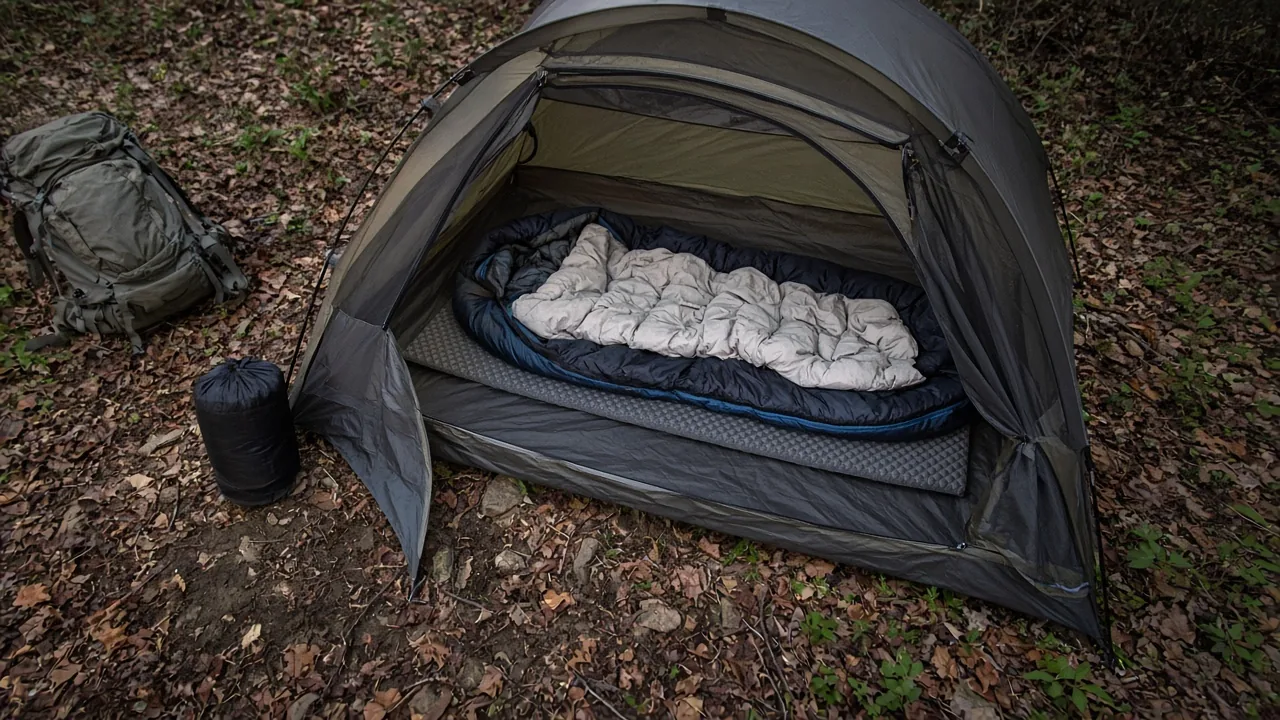
A down blanket inside a sleeping bag can add real warmth by filling the cold gaps around your torso, hips, and legs. It works best as a flexible boost for occasional cold nights, not as a dependable substitute for a winter-rated bag. If you already own a three-season bag and want to stretch it a few more degrees without spending on a full winter setup, this is one of the cheapest and most packable ways to do it. The key is getting the placement, anchoring, and supporting gear right.
How Does a Down Blanket Inside a Sleeping Bag Add Warmth?
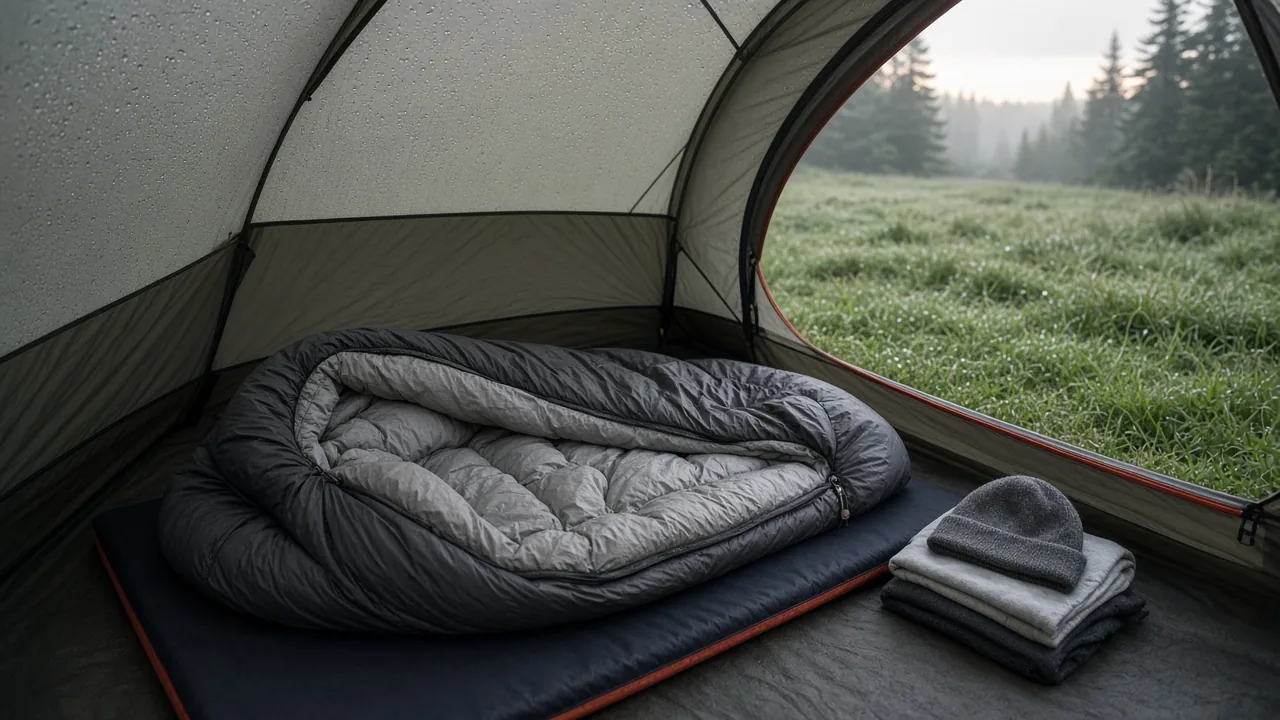
A sleeping bag keeps you warm by trapping a layer of air that your body heats. When that layer has empty space, cold spots form where the bag's insulation cannot fully loft or where the shell pulls away from your skin. A down blanket inside the bag fills those spaces. It sits between your body and the bag's inner shell, holding another warm-air boundary right against your base layers instead of slipping off the outside.
The result is a more even temperature across the sleeping surface. That matters most when you move at night. A bag that felt fine when you first zipped it can feel drafty after a few position changes, especially through the legs and side seams.
Why the inside position beats laying it on top
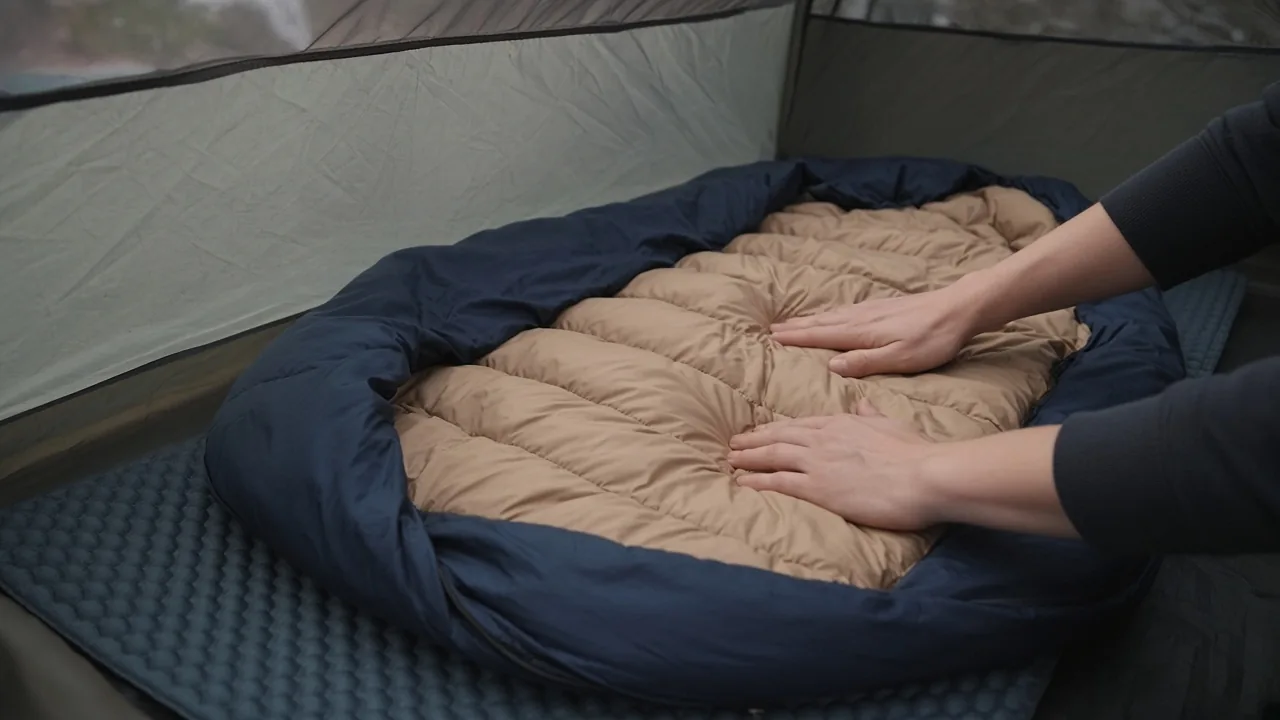
Draping a blanket over the outside of a sleeping bag can help, but it comes with a basic problem: the outer shell is slick, and you move in your sleep. A blanket placed on top often slides off within an hour. Once it falls to the tent floor or bunches against your side, it stops contributing much.
Inside the bag, the blanket moves with you. When you roll from your back to your side, the extra layer stays close to your body. That reduces the drafts that happen when the bag's shell shifts and creates a gap. Inside placement also lets the blanket loft into the bag's inner space instead of being compressed by the bag shell from both sides.
What cold spots it actually fixes
A down blanket inside the bag adds the most noticeable warmth around your torso, hips, and upper legs. Those are the areas where a three-season bag can feel underfilled, especially if the bag is a few years old or has lost loft. Adding a blanket there builds loft exactly where your core needs it.
There are limits. A blanket does not replace the hood of a mummy bag. It does not wrap the footbox in the same way a shaped winter bag does. And it cannot fix heat loss caused by an under-insulated sleeping pad. Think of it as a targeted mid-body layer, not a full conversion.
What Temperature Range Can This Setup Cover?
No blanket converts a three-season bag into a true winter bag. What it can do is extend the comfortable range of your current bag by a few degrees, typically around 5 to 9°F in real conditions. The exact number depends on the blanket's fill weight, your pad, the tent's exposure, and your own metabolism.
Start with your sleeping bag's comfort temperature. Do not start with the limit rating. Then add a 3–5°C or 5–9°F personal margin for wind, damp ground, or a slightly cold sleeper. The down blanket inside the bag can cover part of that margin, but not all of it.
Why the comfort rating is the number to use
Sleeping bag temperature ratings assume a young, healthy person wearing long underwear base layers and sleeping in a relaxed position. The comfort rating is the temperature at which that person is expected to stay reasonably warm. The limit rating is much colder, but it assumes a curled-up, tolerably cold night rather than restful sleep.
For a realistic trip plan, use the comfort rating. If the forecast low matches your bag's comfort rating, you should bring extra insulation. A down blanket inside the bag can serve that role without forcing you to buy another bag.
How pad R-value changes the result
Your sleeping pad matters as much as anything above you. Ground cold pulls heat through the bottom of the bag, where the bag's insulation is compressed under your body weight. If your pad's R-value is too low for the temperature, no top layer will make your back warm.
Before adding a down blanket, check the pad first. For shoulder-season nights near or below freezing, most backpackers want at least an R-value in the mid-range, and cold sleepers often need more. If the pad is under-insulated, the blanket will only keep your front warm while your back stays cold.
Reported layering math from backpackers
One useful rule of thumb comes from backpackers who combine quilts and bags. By their estimate, a quilt or blanket adds roughly 10°C of warmth over base layers, a sleeping bag adds about 20°C, and both together add about 30°C. That maps to workable setups for roughly 50°F, 32°F, 14°F, and -4°F trips using different combinations of the same pieces.
Treat this as a rough planning aid, not a tested rating system. Individual results vary heavily. But the logic is useful: layering insulation inside a bag extends a system more effectively than guessing or overpacking for one extreme trip.
What Type of Down Blanket Works Best Inside a Sleeping Bag?
The best down blanket for this job is lightweight, compact, and smooth enough to slide against the bag's inner lining without catching. It should be large enough to wrap over your shoulders, but not so long or wide that it folds into thick bundles inside the bag.
A small quilt or throw-style blanket works. So does a backpacking quilt with adjustable foot-end ties. Avoid oversized home down blankets. Extra fabric bunches, shifts, and takes up space that the sleeping bag shell can no longer loft effectively.
Down fill versus synthetic
Down packs smaller and provides more warmth per ounce than synthetic fill. That makes it the better choice for backpackers who care about compressed size. A down blanket can compress to a fraction of the volume of a synthetic fleece or polyester throw with similar warmth.
The trade-off is moisture. Down loses loft when it gets wet, and in high-humidity trips it can slowly absorb moisture overnight. Synthetic insulation is heavier and bulkier, but it keeps more of its warmth when damp. For rainy climates, condensation-heavy tents, or trips where gear may not fully dry each day, a synthetic blanket is more forgiving.
Attachment points and cut
Look for a down blanket with corner loops, side clips, or a foot-end tie. These make it easier to anchor the blanket inside the bag so it does not migrate. Without attachment points, you will spend part of the night repositioning it.
The cut of your sleeping bag also matters. A roomier rectangular bag accepts an extra blanket more easily than a tight mummy cut. A mummy bag traps heat better once everything is secure, but a rectangular bag gives you the space to adjust the blanket without crushing its loft.
Why machine washability matters
Some down blankets are machine washable, but many require hand washing or special detergent. Always check the care label before cleaning. Improper washing can clump the down, strip the shell's coating, or damage the stitching. A blanket that will be used inside a sleeping bag will pick up body oils and dirt over time, so choose one you can realistically clean at home.
How Do You Keep a Down Blanket From Sliding or Bunching Inside a Sleeping Bag?
Slick sleeping bag liners and slick blanket shells do not stay stacked on their own. After an hour of movement, the blanket can pile up near your feet or twist around one leg. The fix is simple: give the blanket something to hold onto.
Anchoring matters most at the foot end and around the hips. If the foot end stays put, the rest of the blanket can settle naturally. If it starts loose, every turn pulls it farther out of position.
Simple fixes with clips or ties
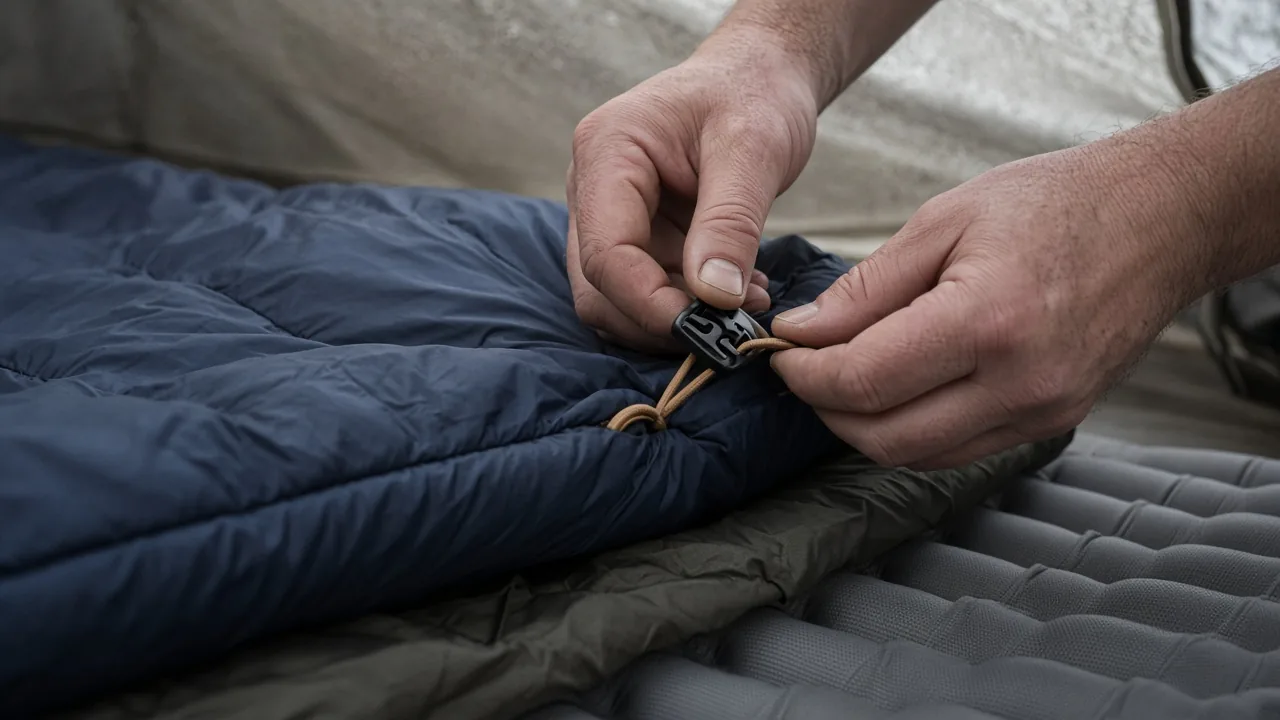
If your blanket has corner loops, clip them to the sleeping bag's liner loops if available. If not, use small plastic clips or soft ties to attach the foot corners of the blanket to the footbox area of the bag. A lightweight cord or elastic loop around the foot area also works.
Some backpackers run a soft tie through the blanket's foot-end attachment and around the outside of the sleeping bag, closing the foot section like a loose envelope. That keeps the blanket from creeping up without making the bag feel tight.
Mummy bag versus rectangular bag for layering
A mummy bag with a good hood and draft collar will trap heat more efficiently once the blanket is in place. But the narrow cut leaves little room for error. If the blanket bunches, there is nowhere for the extra fabric to go.
A rectangular bag gives you more room to position the blanket and less risk of compressing its loft. That makes it easier for first-time layering and for car camping setups where the bag does not need to be as thermally efficient. For backpacking in cold weather, a mummy bag with a carefully secured blanket is usually the warmer combination.
When Should You Use a Down Blanket Inside a Sleeping Bag Instead of Buying a Winter Bag?
This approach makes the most sense for occasional cold nights. If you use a three-season bag for most trips and only hit near-freezing temperatures once or twice a year, a down blanket can handle those nights without forcing you to store and maintain a dedicated winter bag.
Cold sleepers who already feel the chill in a three-season bag can add a down blanket inside the bag as a cheap upgrade. Backpackers who want one flexible layer that works as a summer quilt, camp blanket, and sleeping bag insert get the most value from this setup.
It is not the right fix for regular deep-winter lows. If your trips routinely drop well below your bag's comfort rating, the extra layer becomes a nightly hassle rather than an occasional backup.
Car camping versus backpacking trade-offs
For car camping, the weight and packed size of a down blanket barely matter. You can throw a roomy blanket into a duffel, use it around camp, and put it inside the sleeping bag at night. There is almost no downside.
For backpacking, the trade-off is tighter. You are carrying a down blanket plus a sleeping bag, which may weigh and pack larger than a single warmer bag. Before choosing the blanket route, compare its compressed size and weight to the cost and pack space of a winter-rated bag you would only use on cold trips.
Wet or high-humidity trips
Down loses loft when damp. If rain, condensation, or wet ground is likely, a down blanket inside the bag can become less effective as the night goes on. Keep the blanket in a waterproof stuff sack until you are inside the tent, and avoid letting it touch wet tent walls.
If your trips consistently involve high humidity or damp conditions, a synthetic blanket is the safer choice. It will not pack as small, but it will keep more warmth when moisture builds up inside the tent overnight.
When a winter-rated bag is still the better buy
If you regularly camp more than 10°F below your bag's comfort rating, a winter bag is the simpler and often lighter solution. A true winter bag includes a hood, draft collar, and shaped footbox that work together. A down blanket inside a three-season bag can add loft, but it cannot replicate that integrated design.
Layering every night also adds time. If you are tired, cold, and setting up in the dark, one warm bag is easier to manage than a bag plus a shifting blanket.
What Else Do You Need to Make This Warmth Actually Work?
A down blanket inside a sleeping bag only works if the rest of your sleep system is doing its job. The two biggest factors are the sleeping pad underneath you and the air temperature around your head. Ignore either one and the blanket will not make up the difference.
Ventilation matters too. A tent with heavy condensation or poor airflow makes everything damp. No extra top layer can fix a wet shelter.
Check pad R-value before adding loft
Start with the pad, not the blanket. If the ground is cold and the pad is thin, heat leaves through your back faster than the blanket can trap it above you. Under-insulated pads are one of the most common reasons cold-weather sleep fails even with a correctly rated bag.
For near-freezing nights, choose a pad with enough R-value for the season. If you are unsure, err on the side of more insulation rather than more top layers.
Keep your head and neck covered
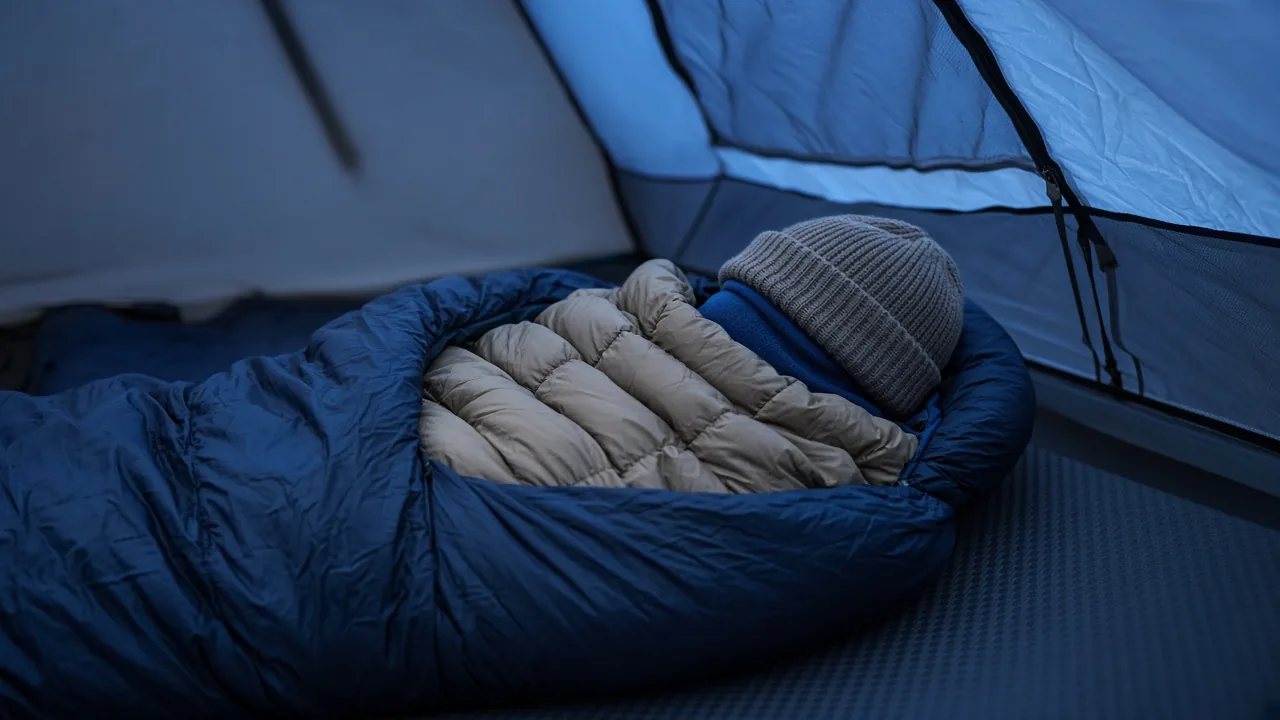
A down blanket does not wrap around your head like a mummy hood. That means your neck and head can release a large share of your body heat, especially if the tent air is cold. Wear a warm hat or a hooded base layer to bed. Some sleepers also tuck the top edge of the blanket around the shoulders and up behind the neck to reduce the gap at the collar.
Tent heat safety rule
Never use a stove or heater inside your tent. Even a small fuel-burning appliance produces carbon monoxide, and in a closed tent that can become deadly. The same applies to grills, lanterns, and charcoal. Use insulation layers, a proper pad, and a well-ventilated tent to stay warm instead.
How Should You Care for and Pack a Down Blanket for This Use?
Down loft depends on keeping the fill dry and uncompressed when not in use. Long-term compression flattens the clusters and reduces warmth. Store the blanket loosely in a mesh bag or hang it in a dry closet between trips.
After each trip, air the blanket out. If it feels damp from tent condensation or body moisture, dry it thoroughly before packing. Trapped moisture can break down the down and encourage mildew.
Packing for backpacking versus car camping
For backpacking, pack the blanket in a dry sack or waterproof stuff sack, away from wet gear. Down compresses well, but keep it protected. Packing it next to a damp tent or rain jacket can transfer moisture over the course of a day.
For car camping, a mesh bag or roomy duffel works fine. You do not need to compress the blanket, and letting it breathe between trips helps the fill stay lofted.
Drying before storage
Always check the care label before drying. Some down blankets can go in a dryer on low heat with dryer balls to restore loft. Others require air drying flat. Do not put a damp blanket into long-term storage. That causes odor, clumping, and eventual loss of insulation.
Match the blanket to the trip. If you are car camping and nights may drop below your bag's comfort rating, a down blanket inside the sleeping bag is an easy backup. If you are backpacking, weigh its packed size against carrying one warmer bag, and check the forecast before you decide which system to pack. A pad with the right R-value and a good hat do as much for cold-weather comfort as any extra layer above you.
This article is general information about camping gear, not professional safety, medical, or wilderness training. Check fire restrictions, weather, and campsite rules before you go, and follow the manufacturer's instructions for your own equipment.
FAQ
How much warmth does a down blanket inside a sleeping bag add?
It typically extends the comfortable range of a three-season bag by about 5–9°F (3–5°C), depending on fill weight, pad R-value, and moisture conditions.
What type of down blanket works best inside a sleeping bag?
A lightweight, compact, smooth-shelled down blanket with corner loops or side clips works best. A small backpacking quilt or throw is better than an oversized home blanket.
How do you keep a down blanket from sliding or bunching inside a sleeping bag?
Anchor the foot end first using clips, ties, or liner loops. If the foot section stays secure, the rest of the blanket settles naturally and moves with you instead of bunching.
When should you use a down blanket inside a sleeping bag instead of buying a winter bag?
Use it for occasional cold nights, if you are a cold sleeper with a three-season bag, or when you want one flexible layer for summer quilts and camp blankets. For regular deep-winter lows more than 10°F below comfort rating, a winter bag is simpler.
Is a down blanket safe in wet or high-humidity trips?
Down loses loft when damp, so keep it in a waterproof sack and dry thoroughly after use. Synthetic blankets are safer in consistently rainy or condensation-heavy conditions.