Dome vs Cabin vs Pop Up Tents: How to Choose
Dome tents are the safest all-weather first choice for new campers, while cabin tents prioritize standing room and pop up tents deliver fast fair-weather setup. Learn how to match each type to your camping style and region.
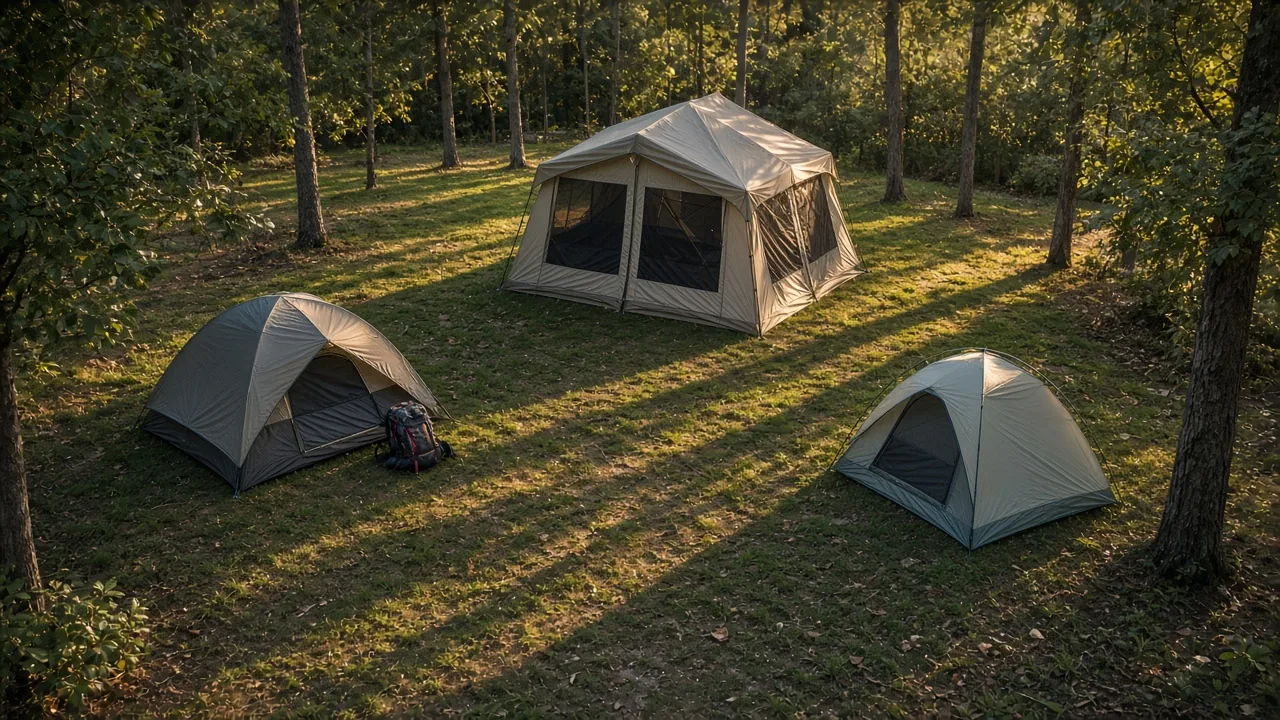
For most new campers, a double-wall dome tent is the safest first choice. If you are driving to a developed campground and want standing room and space for cots, a cabin tent makes more sense. Reserve a pop up tent for calm, dry, low-risk outings such as backyard camping, festivals, or a fair-weather weekend in a sheltered site. The right pick depends on one question: what kind of weather could actually hit your campsite?
Dome vs Cabin vs Pop Up Tents: Core Design Trade-Offs
Weather resistance, usable space, setup time, and packed size are separate decisions. Each tent type trades one for another. Once you see those trades clearly, the choice becomes easier.
What does a dome tent do best?
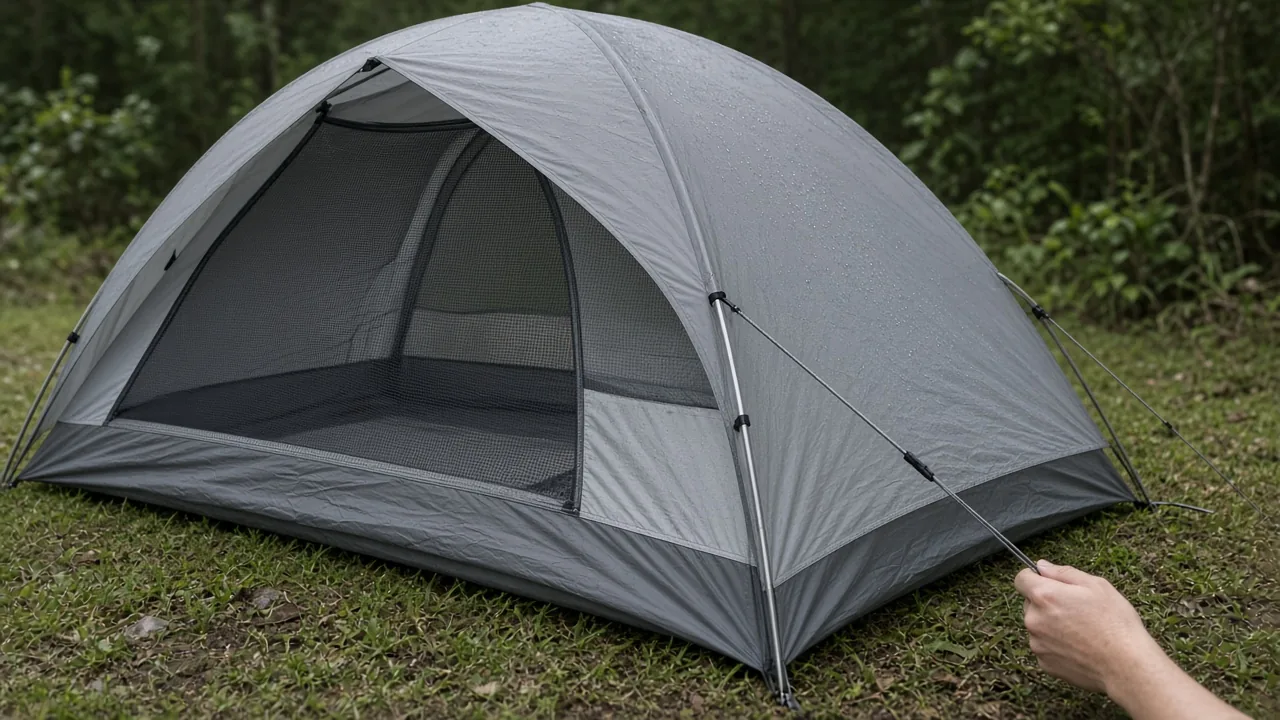
Dome tents use arched poles and a separate rainfly. That combination gives the strongest all-around weather performance of the three types. The arch shape sheds wind and rain well, and the gap between the rainfly and the mesh inner tent creates airflow. That airflow is the main reason a double-wall dome controls condensation better in wet or variable conditions. Dome tents are widely available, generally affordable, and the most versatile option for new campers.
What does a cabin tent do best?
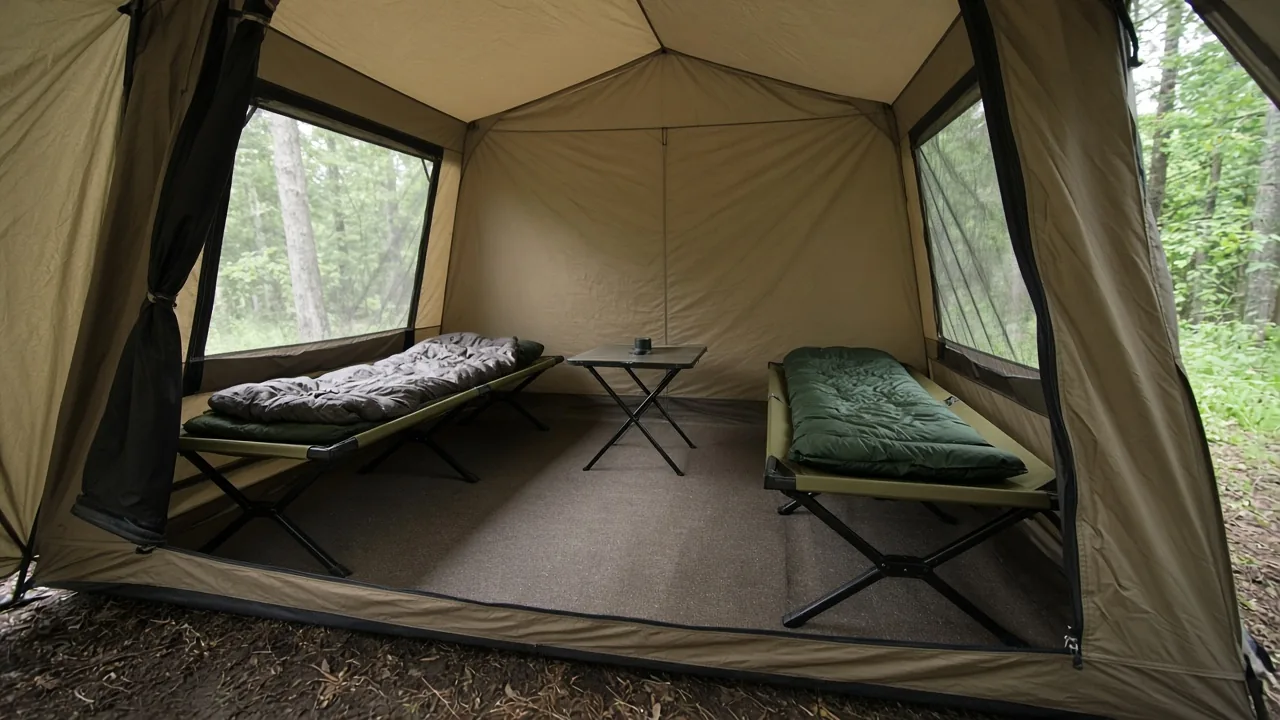
Cabin tents prioritize standing height, vertical walls, and easy door clearance. You walk in instead of crawling. That makes them comfortable for car camping, family trips, and anyone who wants to use cots, air beds, or a camp table inside. The trade-off is bulk. Cabin tents take up significant space in the vehicle and at home. They are also more prone to condensation when fully closed, especially on cool or humid nights.
What does a pop up tent do best?
Pop up tents prioritize very fast fair-weather setup. Beginners can pitch one in minutes, which makes them popular for kids, backyard use, and festival camping. The light ring structure is the weak point. It relies heavily on guylines and does not handle strong wind or heavy rain dependably. Treat a pop up tent as a convenience item, not an all-weather shelter.
How Do Setup Time, Space, and Packed Size Compare?
The table below sums up the practical differences for a typical two-to-four-person tent in each category.
| Factor | Dome tent | Cabin tent | Pop up tent |
|---|---|---|---|
| Pitch time, solo | Longer, often 8–15 min | About 5–7 min | About 2–4 min |
| Standing room | Rarely; sloped walls | Yes in most models | No |
| Weather reliability | Best overall | Good frame, larger wind profile | Weakest of the three |
| Condensation tendency | Lowest, with double-wall design | Higher if closed up | High; single-wall design |
| Packed size | Moderate | Largest | Slim but awkward flat disc |
| Car camping fit | Good | Excellent | Good for short trips |
| Backpacking fit | Best of the three | Too bulky | Not trail-weight |
Which tent is fastest to pitch?
A pop up tent is the fastest. Releasing the tension band and letting the frame unfold can take under a minute, and staking plus guylines brings the total to roughly 2–4 minutes. A cabin tent with a hub-style frame takes about 5–7 minutes solo. A traditional dome usually takes longer because you have to thread or clip poles, arch them, attach the rainfly, and stake it out. Large domes often benefit from two people.
Which tent gives you the most usable interior room?
A cabin tent wins here. Vertical sidewalls mean you can place cots or air beds against the edges without losing floor space, and most adults can stand upright. Dome tents lose headroom to sloped walls, so a four-person dome often feels tighter than a four-person cabin. Pop up tents are the most compact of the three and rarely offer meaningful standing height.
Which tent packs down small enough for the trail?
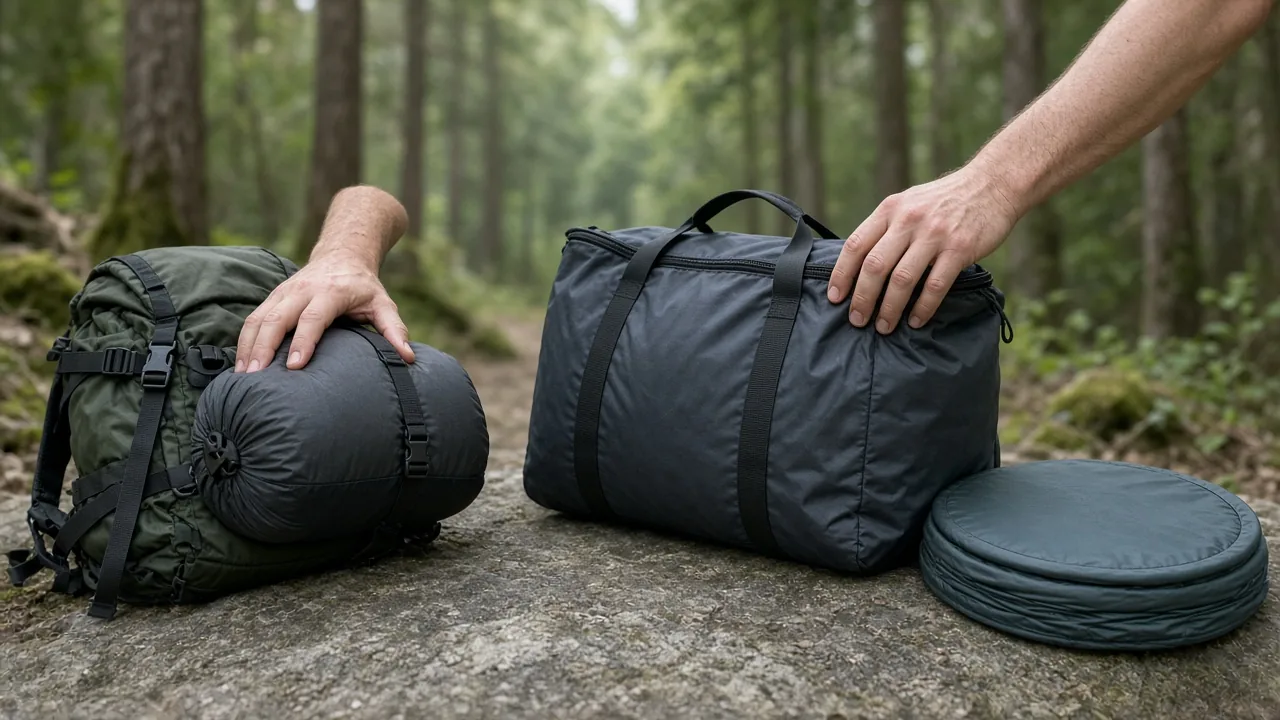
Dome-style backpacking tents with aluminum poles pack down the smallest and fit in a pack reasonably well. Cabin tents are heavy and bulky, even when folded, and make sense only when driving to the site. Pop up tents fold into a flat disc that is awkward to strap to a backpack and generally too heavy for trail use.
How Do Dome, Cabin, and Pop Up Tents Handle Storms and Moisture?
Weather protection comes mostly from frame shape and whether the tent uses a separate rainfly. Condensation control comes from ventilation and how much mesh is built into the body.
Which type is better in wind and rain?
Dome tents handle wind and rain best for most campers. The arched pole structure is strong, and the separate rainfly leaves a ventilated gap above the mesh inner tent. That lets water run off while moist air escapes. Cabin tents use sturdy aluminum frames and can survive storms, but their tall vertical walls present a larger wind-facing profile. A cabin tent will often stand up to weather, but you may feel more movement and hear more flapping than in a dome. Pop up tents are not dependable in strong wind or heavy rain, and their fixed rain layer can leak along seams under pressure.
Why does condensation differ among the three types?
Condensation collects when warm, moist air from your breath meets a cooler tent surface. Single-wall pop up tents and many cabin tents trap that air unless you leave a vent open. Double-wall domes perform best because the inner tent is largely mesh, and the rainfly sits a few inches above it. That gap allows airflow while the fly blocks rain.
What should you check for ventilation if you buy a cabin or pop up?
Look for large mesh panels, adjustable windows, or doors that can be opened and closed. The key is adjustability. In cool weather, closing everything up will raise interior moisture unless at least one vent stays open. If you camp in the Southeast or Southwest, cross-ventilation matters even more, so choose a cabin tent with windows on opposing sides.
Which Type Should You Choose for Your Camping Style and Region?
Match the tent to the trip. Ask whether you are driving to the site or carrying gear, what the overnight low might be, and what the local season can throw at you.
What should car campers prioritize?
For vehicle-accessible sites, a cabin tent makes sense if you want standing room, cots, and easy entry. It can become your basecamp for several nights. If storms are possible and you want one tent that handles most conditions, a large dome is the safer all-weather choice. Car campers can afford the extra weight of either option, so let comfort and forecast guide you.
What should backpackers choose?
Backpackers should favor a compact double-wall dome or tapered backpacking tent with aluminum poles. Packed weight and storm reliability matter more than standing height. A tent in the 2–3 lb range with a separate rainfly and mesh inner body is the most practical setup. Cabin tents and pop up tents are not trail-weight.
How do you match a tent to US regions?
Dome tents suit the rainy Pacific Northwest and the Northeast mountains, where precipitation and wind arrive together. Cabin tents fit the humid Southeast and hot Southwest, where large windows provide cross-ventilation during warm nights. Pop up tents work only in calm, dry forecasts, so they can be fine for a mild Midwest weekend but should not be your only shelter during thunderstorm season.
What if you are a new camper who isn't sure?
Start with a double-wall dome tent. It provides the widest safety margin across weather and seasons, packs down reasonably, and costs less than a quality cabin tent of the same capacity. Practice pitching it at home before your first trip. Add a fair-weather pop up later only for low-risk outings, not as your main tent.
What Should You Check Before You Buy and Before You Pack?
Check pole material, tent body and rainfly design, floor size, packed size, ventilation openings, and small usability details. Then pair the tent with a ground cover and the right sleep insulation.
What specs matter when comparing affordable tents?
Look for aluminum poles rather than fiberglass. Aluminum resists snapping better and weighs less. Check for taped seams and a separate rainfly. Many dome tents list PU coatings from 2,000 mm upward; the number gives you a baseline for fabric water resistance, but it won't fix condensation or a poorly fitted fly. A tent with a 3,000 mm fly and bad ventilation will still feel damp inside on a cool night.
How do you judge build quality without seeing the tent in person?
Compare small details: interior pockets, lamp hooks, door tie-backs, mesh adjustability, and seam tape. One reader who used an older budget tent for seven years found it never leaked through the body, but the seam-taped areas began to peel. That kind of detail is visible in close-up product photos and often explains the difference between a tent that lasts and one that annoys you. Look for an inner tent with a mesh layer you can adjust, a rainfly door that can be tied back, and stake points that line up cleanly with the floor.
Should you buy a speed-open dome hybrid?
Speed-open dome designs lower the setup barrier, which helps beginners. But if the frame uses hub or ring systems rather than standard arched poles, treat the tent like a pop-up structure and reserve it for fair-weather use. A three-second setup is convenient, but the mechanism has to survive real wind. If the forecast includes storms, a traditional pole-sleeve or clip dome is the more conservative choice.
How do you set up and care for any tent safely?
Use a footprint or groundsheet under the tent to protect the floor from abrasion and moisture. Stake and guy it out even when the sky is clear, because calm evenings can turn gusty. Inspect seam tape, poles, and zippers over time. Store the tent dry and loosely folded rather than compressed. Never use a stove or heater inside your tent. Carbon monoxide and fire risk are real, and a tent is not a ventilated shelter.
What else should your trip checklist include?
Check the weather, fire restrictions, and campsite rules before you go. Follow Leave No Trace by camping on durable surfaces and packing out trash. Carry a sleep system rated for the overnight low, not just the daytime high. Store food according to bear-safety rules for the area, and keep the campsite clean after dark.
For most new campers, the answer is a dome. Choose a cabin tent when standing comfort leads the priority list on car-camping trips. Choose a pop up only when the forecast is calm and the outing is low stakes. Then apply the same weather, weight, and space check to your sleeping bag, pad, and stove before you pack the car or hoist the pack.
This article is general information about camping gear, not professional safety, medical, or wilderness training. Check fire restrictions, weather, and campsite rules before you go, and follow the manufacturer's instructions for your own equipment.
FAQ
Which tent type is best for most new campers?
A double-wall dome tent is the safest first choice because it offers the strongest all-around weather performance, better condensation control, and versatility across trips.
When should I choose a cabin tent over a dome tent?
Choose a cabin tent for car camping or family trips when standing height, vertical walls, and space for cots or air beds matter more than packability or storm performance.
Are pop up tents reliable in wind or heavy rain?
No. Pop up tents prioritize very fast setup for calm, dry conditions and should be reserved for low-risk outings such as backyard camping, festivals, or fair-weather weekends.
Which tent packs down small enough for backpacking?
Dome-style backpacking tents with aluminum poles pack down the smallest and are the best of the three types for trail use. Cabin and pop up tents are generally too bulky or awkward for backpacking.
What tent features help prevent condensation?
A double-wall design with a mesh inner body and a separate rainfly improves airflow and reduces condensation. For cabin or pop up tents, look for adjustable mesh panels, windows, or doors that can stay open.



