Do You Need a Tent Footprint? A Practical Camping Guide
Most campers benefit from a tent footprint, but ultralight backpackers on clean ground can skip it. Learn when a groundsheet protects your tent floor and how to choose the right material.
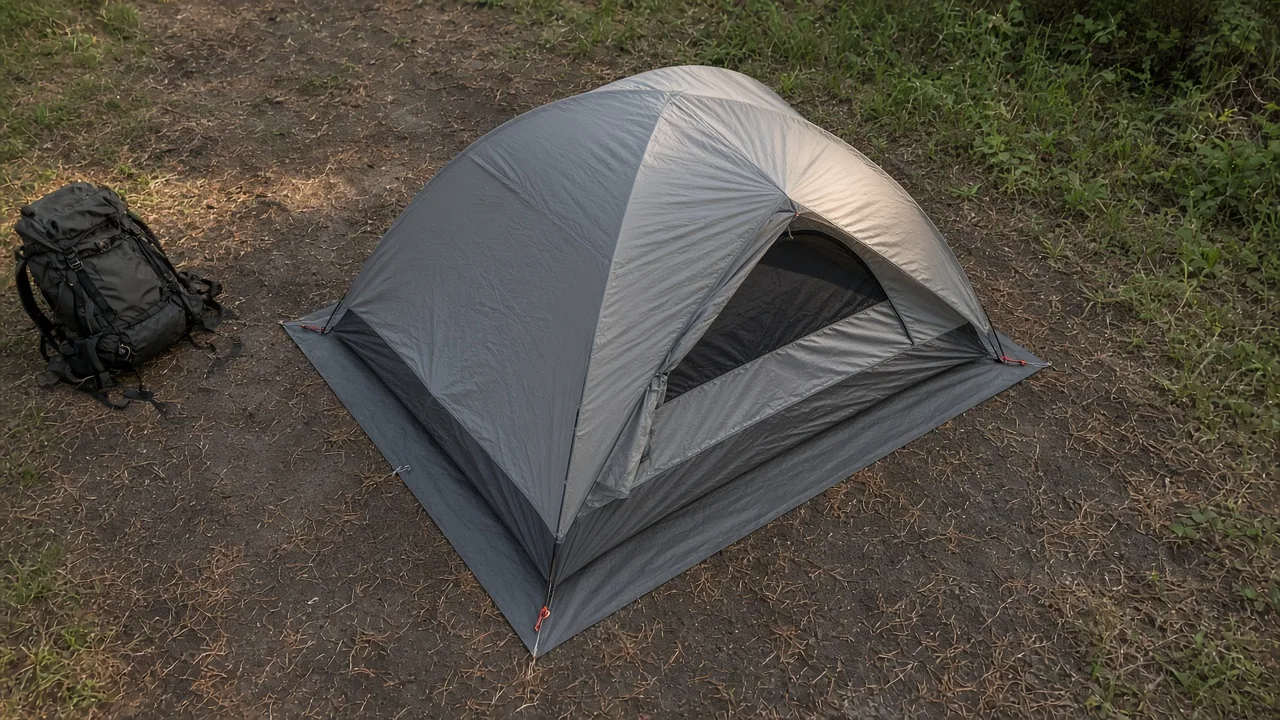
A tent footprint is generally worth carrying because it reduces floor abrasion, punctures, and mud, but ultralight campers who clear sites carefully can skip it and pack repair tape instead. The answer depends on where you camp, what tent you own, and how much weight you're willing to carry. For car campers, the decision is easy: bring one. For backpackers counting ounces, the math gets more personal. Here is how to think through whether you need a tent footprint, what it actually does, and how to choose one that suits your trips.
Do You Need a Tent Footprint?
Most car campers and many backpackers should use one, but frequent campers on clean ground may not need the extra piece. If you camp on established pads, soft forest duff, or grassy sites, your tent floor can survive a long time without a dedicated groundsheet. If you camp on granite slabs, desert gravel, or root-covered ground, a footprint becomes cheap insurance against punctures and worn waterproofing.
What the Short Answer Depends On
Your decision should turn on tent floor fabric, campsite surfaces, pack weight tolerance, and how often you camp in wet or rocky terrain. A budget tent with a thin floor benefits more from a footprint than a heavier expedition tent with a thick bathtub floor. A backpacker who trims gear to the ounce will weigh the risk differently than a car camper who drives gear to the site.
Why Some Experienced Campers Skip It
A common counterpoint is that careful site selection, clearing debris, and carrying repair tape can replace a footprint for ultralight trips. Some people who use a tent 75 or more nights a year treat the floor as a wear item. They accept that the tent will eventually need patching or replacement, and they would rather carry a small roll of tape than a groundsheet. That approach works only if you are disciplined about site prep and comfortable making field repairs.
What Does a Tent Footprint Actually Do?
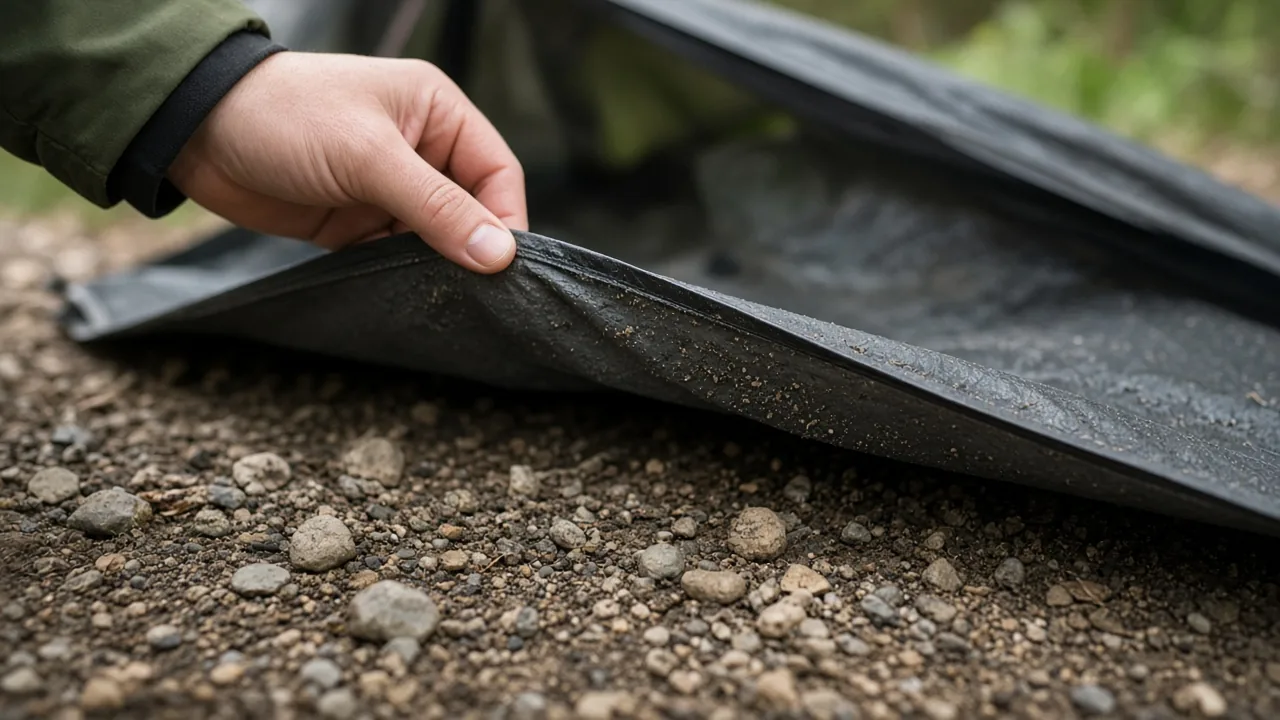
A footprint mainly reduces abrasion and punctures on the coated tent floor, keeps the underside cleaner, and adds a thin barrier against ground moisture. It sits between the ground and your tent body, taking the friction that would otherwise wear away the floor coating. It also gives you a clean surface to lay the tent on while you check whether the space is big enough.
Wear and Waterproofing
Tent waterproofing comes from a coating that ground friction can slowly wear away, so a sacrificial layer can help preserve that coating. The fabric itself is not what keeps water out; the coating is. Every time you shift inside the tent, the floor rubs against dirt, sand, or rock. A footprint absorbs that abrasion, extending the useful life of the factory floor coating.
Cleanup, Condensation, and Insulation
It also makes packing faster because the tent underside stays cleaner; the added insulation effect is modest and less critical than puncture resistance. If you have ever packed a tent with a wet, muddy floor, you know how much extra mess lands in your pack. A footprint reduces that. It can also reduce ground-side condensation in cool, damp conditions, though the effect is smaller than many people assume. The extra layer does not meaningfully raise the temperature inside the tent.
When a Tent Footprint Is Worth the Extra Weight
Car campers, budget tent owners, and people camping on rocky or abrasive ground benefit most because floor damage and mud cleanup are bigger concerns. If replacing your tent would be painful, a footprint protects that purchase. If you often camp after rain, a footprint keeps the floor drier and easier to pack.
Car Camping vs Backpacking
For car camping, the weight penalty is almost irrelevant, so a footprint is an easy choice; for backpacking, ounces matter more. When your gear rides in a trunk or truck bed, there is little reason to skip the protection. Backpackers, by contrast, feel every ounce over 20 miles. A 6-ounce polycryo sheet may make sense for them, while a heavy polyester footprint may not.
Protecting an Expensive Tent or Thin Floor
If your tent has a thin floor or costs enough that replacing it would hurt, a footprint can be cheaper than early wear. Quality tents often start around $200 and can run much higher. A footprint that costs a fraction of the tent price and adds a season or two of life is often the better financial choice. Thin floors on lightweight backpacking tents are especially good candidates for protection.
When You Can Skip the Tent Footprint
You may skip it if you camp often, choose soft and clear ground, carry repair tape, and accept faster wear as part of gear replacement. This approach suits hikers who prioritize a low base weight over long-term gear preservation. It also works for people who mostly camp in grassy campgrounds or on designated sites with few sharp objects.
Ultralight and High-Mileage Exceptions
Some frequent backpackers treat the tent floor as a wear item and prefer patching over carrying a separate groundsheet. If you use the tent enough to wear it out in two or three years anyway, the footprint may not extend its life as much as the weight penalty costs you. Repair tape is lighter, smaller, and can fix a puncture in minutes.
What to Do Instead
Clear sharp objects carefully, wipe the floor before packing, and stash tape for punctures; this reduces but does not eliminate risk. Check the site for sticks, rocks, pinecones, and broken glass before pitching. When you break camp, shake or wipe the tent floor dry before stuffing it. Keep a small roll of repair tape in your kit and patch punctures as soon as you notice them.
Manufacturer Footprint vs Aftermarket vs DIY
Manufacturer footprints are convenient and precise but often cost much more and weigh more than aftermarket or DIY options. A branded footprint can run $40 to $80, which may be about a quarter of the tent's total price. That is a steep premium for a piece of fabric that mostly sits in the dirt. Aftermarket and DIY options can cost a few dollars and weigh less.
When the Original Footprint Can Make Sense
If it has grommets or straps that allow fly-first pitching in rain, that specific structure may justify the higher price and weight. Some footprints are designed to mate with the tent poles so you can pitch the rainfly first, then hang the inner tent underneath while staying dry. If you camp in rain often, that feature is genuinely useful and difficult to replicate with a generic sheet.
Cheaper and Lighter Alternatives
Aftermarket tarps and DIY polycryo or Tyvek sheets work well if you tuck excess material under the tent and accept a looser fit. A generic tarp may not match the tent floor shape exactly, but you can fold extra material underneath so it does not collect rain. You can also buy polycryo window film or Tyvek sheeting by the foot and cut it to size yourself. Old shower curtains, blue tarps, and worn rain ponchos can serve as low-cost substitutes in a pinch.
How to Choose a Footprint Material
Compare polyester, nylon, silnylon, polycryo, Tyvek, and DCF by weight, puncture resistance, packed size, durability, and price before choosing. The right material depends on whether you prioritize strength, low weight, or low cost. No single option wins in every category.
Material Trade-Offs at a Glance
| Material | Weight | Puncture Resistance | Water Resistance | Car Camping Fit | Backpacking Fit |
|---|---|---|---|---|---|
| Polyester | Heavy | Good | Good | Excellent | Average |
| Nylon | Moderate | Good | Good | Good | Good |
| Silnylon | Light | Moderate | Good | Average | Good |
| Polycryo | Very light | Low | Good | Average | Excellent |
| Tyvek | Light | Moderate | Good when used correctly | Good | Good |
| DCF | Very light | Moderate to high | Good | Average | Excellent, but pricey |
Temperature and R-value ratings do not apply to footprints. A groundsheet is not a sleeping pad and will not add meaningful warmth.
Best Material for Most Campers
Polycryo or Tyvek suits budget- and weight-conscious backpackers; polyester and nylon are tougher and easier for car camping but heavier. If you want a single recommendation, Tyvek is a strong middle ground: cheap, light enough for backpacking, and durable enough for regular use. Polycryo is lighter but requires more care during setup. DCF is excellent and extremely light, but the price puts it in a niche category.
How to Size, Set Up, and Care for a Footprint
Choose or trim the footprint slightly smaller than the tent floor edge, clear the site first, and tuck excess material under the tent to avoid rain collection. If the footprint sticks out beyond the floor, rain can run between the footprint and tent floor, creating a puddle under you. A footprint that is slightly smaller disappears beneath the tent and still protects the center of the floor where most pressure occurs.
Site Prep and Setup Steps
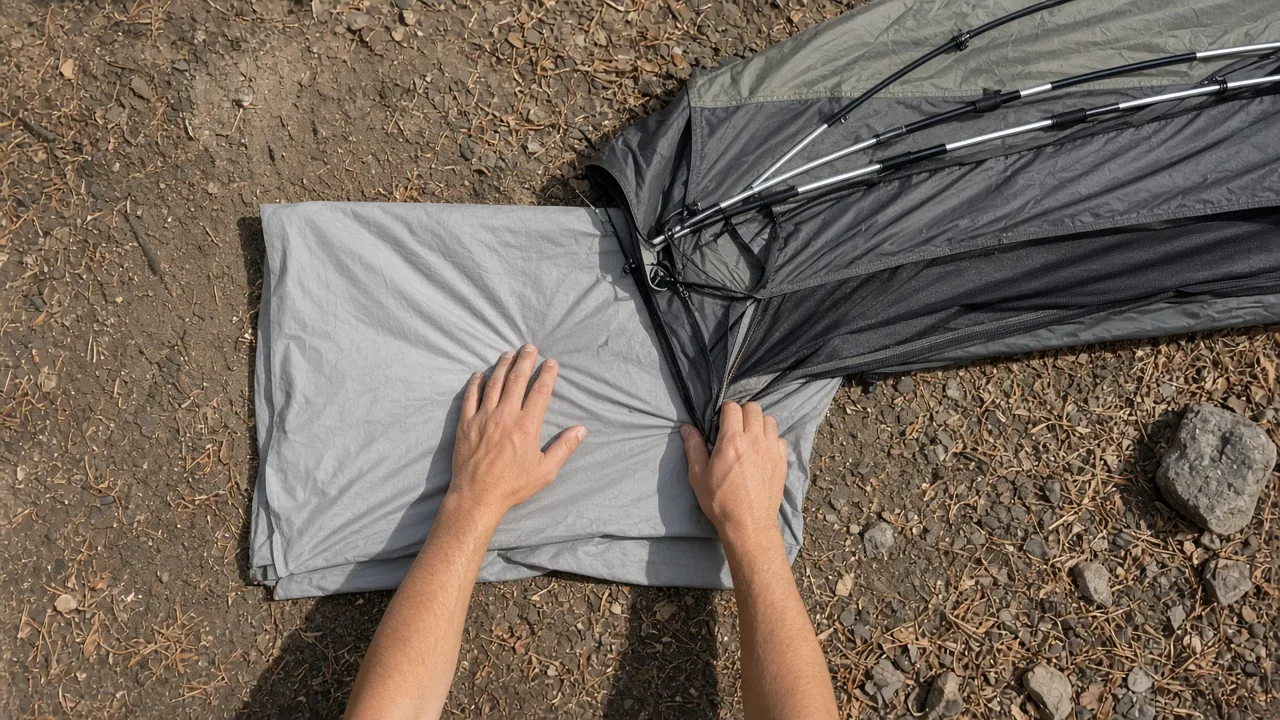
Check for overhead hazards, remove rocks and sticks, lay the footprint, then pitch the tent so the footprint does not stick out beyond the floor. Look up for dead branches or anything that could fall before you commit to a spot. Sweep the ground clear with a boot or gloved hand, even if using a tough footprint. Lay the groundsheet, then assemble the tent on top and tuck any excess material underneath.
Cleaning, Repair, and Storage
Shake or wipe the footprint dry before packing; small polycryo tears can be fixed with tape and used for multiple seasons. Do not stuff a wet footprint into the bottom of a pack where it can dampen other gear. A polycryo sheet with a small tear is not ruined—a strip of tape over the puncture keeps it serviceable. Tyvek can also handle tape repairs well.
Tent Heating Safety Reminder
A footprint does not make a tent a heated shelter; never use a stove or heater inside your tent. Carbon monoxide and fire risk remain serious dangers in any enclosed space. Follow the manufacturer's instructions for every fuel appliance, and keep all stoves and heaters outside.
Can a Footprint Double as a Tarp or Wind Block?
Some footprints with corner loops, buckles, or grommets can be rigged as a temporary tarp or wind wall, but this works best with stronger materials. This is a useful emergency option, but it should not be your primary plan. The fabric and stitching on a footprint are usually lighter than those on a dedicated tarp, so tension and wind can stress them quickly.
Emergency Uses and Limits
Use this only when the footprint is strong enough; thin polycryo is a poor tarp, while Tyvek or silnylon can handle more tension. A polycryo sheet will tear under even moderate tarp rigging. Tyvek and heavier nylon can handle improvised use for limited periods. Think of this as a backup option, not a reliable shelter system.
How to Set It Up Safely
Stake or tie corners properly, avoid sharp edges, and pack a small repair kit because field rigging can stress the fabric. Use the corner loops or grommets if the footprint has them. Do not pull the material drum-tight; give it a little slack so wind gusts do not rip seams. Check for sharp edges on poles, stakes, or nearby branches that could abrade the fabric.
Footprint, Wet Tents, and Packing
A footprint keeps the tent floor drier and cleaner, but if the tent body is already wet, putting it inside a pack can dampen sleep gear. The footprint helps with ground-side moisture, not rain that falls on the rainfly or inner tent. You still need a strategy for packing a wet or damp tent.
Wet Tent and Pack Strategy
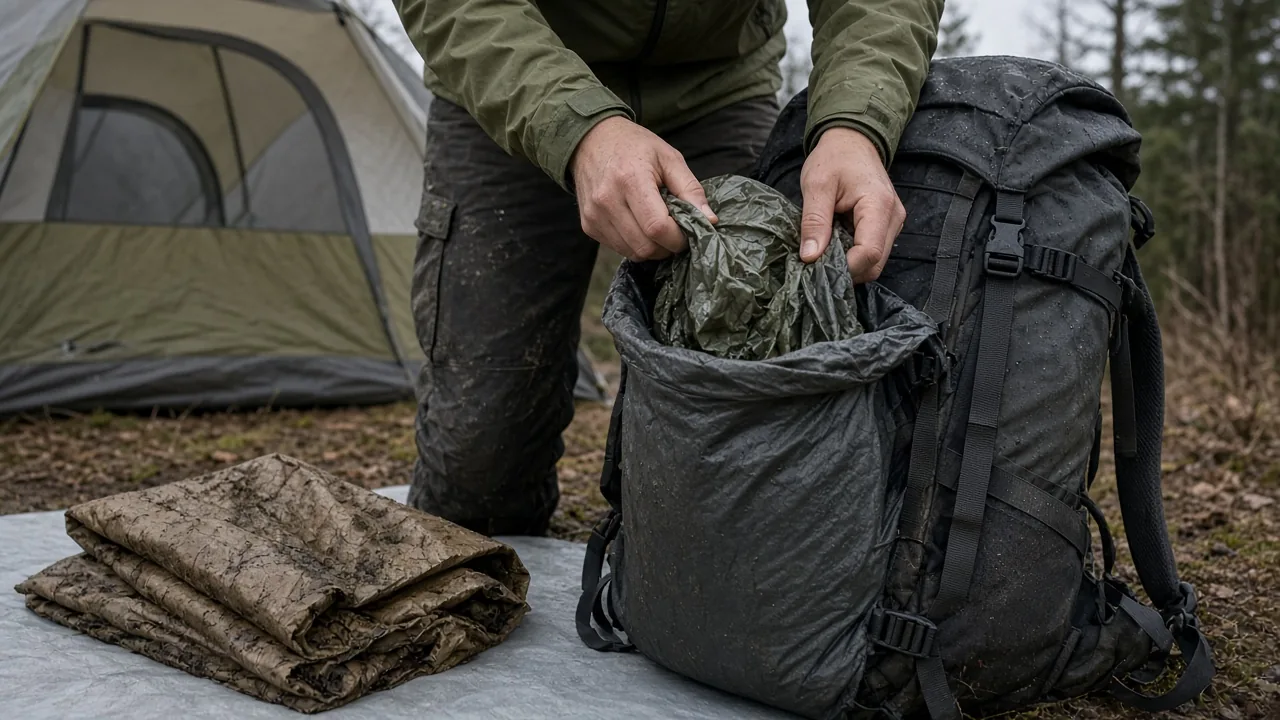
Pack a dry tent inside near your back when possible; a wet or muddy tent may need to ride outside or in a separate dry sack. General pack-fitting advice says to keep heavier items close to your back and around the middle to upper part of the pack, not swinging from the bottom. That works well for a dry tent. A wet tent is different: keeping it inside can soak clothing and sleep gear. In that case, strap it to the outside or put it in a waterproof stuff sack first.
Where the Footprint Helps
Using a footprint reduces ground-side moisture and mud, so you will have less wet fabric to manage when breaking camp. It will not solve rain-saturated fabric, but it removes one common source of grime and dampness. That makes packing quicker and keeps your pack interior cleaner over the course of a trip.
The Bottom Line
Check whether your trip is car camping or backpacking, how cold and wet it may get, and then decide between bringing a footprint or carrying repair tape and clearing the ground. Car campers should almost always include one. Backpackers should weigh the ounces against the likely terrain and their tent's floor durability. If you want one simple rule: bring a footprint unless you are counting grams and are confident in your site prep. Next, check your tent's floor fabric, look at your sleeping pad's R-value for the nighttime low, and make sure your rainfly seams and zippers are ready for any weather in the forecast.
This article is general information about camping gear, not professional safety, medical, or wilderness training. Check fire restrictions, weather, and campsite rules before you go, and follow the manufacturer's instructions for your own equipment.
FAQ
Do I really need a tent footprint for car camping?
For car camping, the weight penalty is almost irrelevant, so a footprint is an easy choice to reduce floor abrasion, punctures, and mud. Most car campers should use one.
When can I skip a tent footprint?
You may skip it if you camp on soft, clear ground, carry repair tape, and accept faster wear. Some ultralight backpackers treat the tent floor as a wear item and prefer patching over carrying a separate groundsheet.
What does a tent footprint actually do?
It reduces abrasion and punctures on the coated tent floor, keeps the underside cleaner, and adds a thin barrier against ground moisture. It also makes packing faster because the tent stays cleaner.
Can I use a DIY or aftermarket footprint instead of the manufacturer version?
Yes, polycryo, Tyvek, or a generic tarp can work if you trim or tuck excess material under the tent. Manufacturer footprints are convenient and exact but often cost much more and weigh more.
What is the best footprint material for backpacking?
Polycryo or Tyvek suits budget- and weight-conscious backpackers. Tyvek is a strong middle ground because it is cheap, light enough, and durable enough for regular use.



