Do You Need a 4 Season Tent or Is 3 Season Enough?
Learn whether you need a 4 season tent or if a 3 season tent is enough for most camping, winter forest camps, and exposed alpine routes.
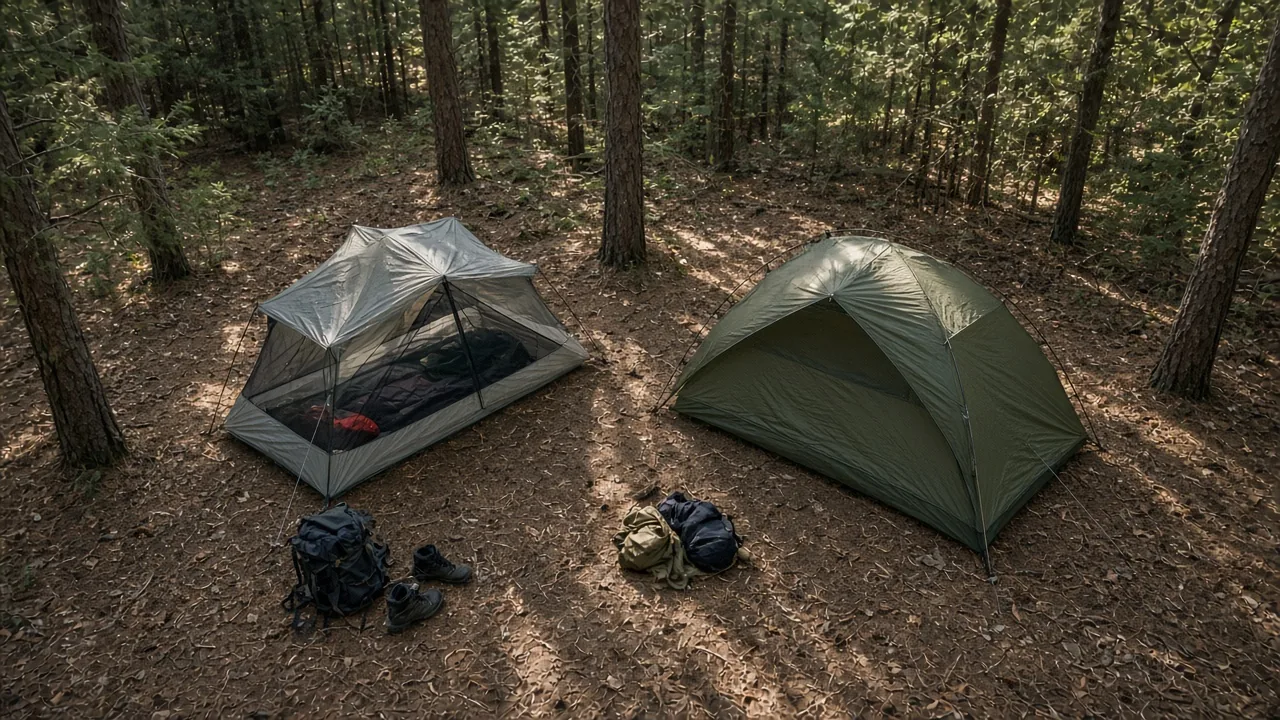
For most US camping trips, the practical answer is simple: use a 3-season tent, and reserve a 4-season tent for routes where sustained wind, heavy snow loading, or exposed alpine camps make shelter failure a safety problem. The term “4-season” leads many campers to buy more tent than they need, adding weight and cost without meaningfully improving comfort on ordinary trips. Before you shop or pack, think about the actual conditions you will face, not the season printed on the label.
Quick Answer: Do You Need a 4 Season Tent?
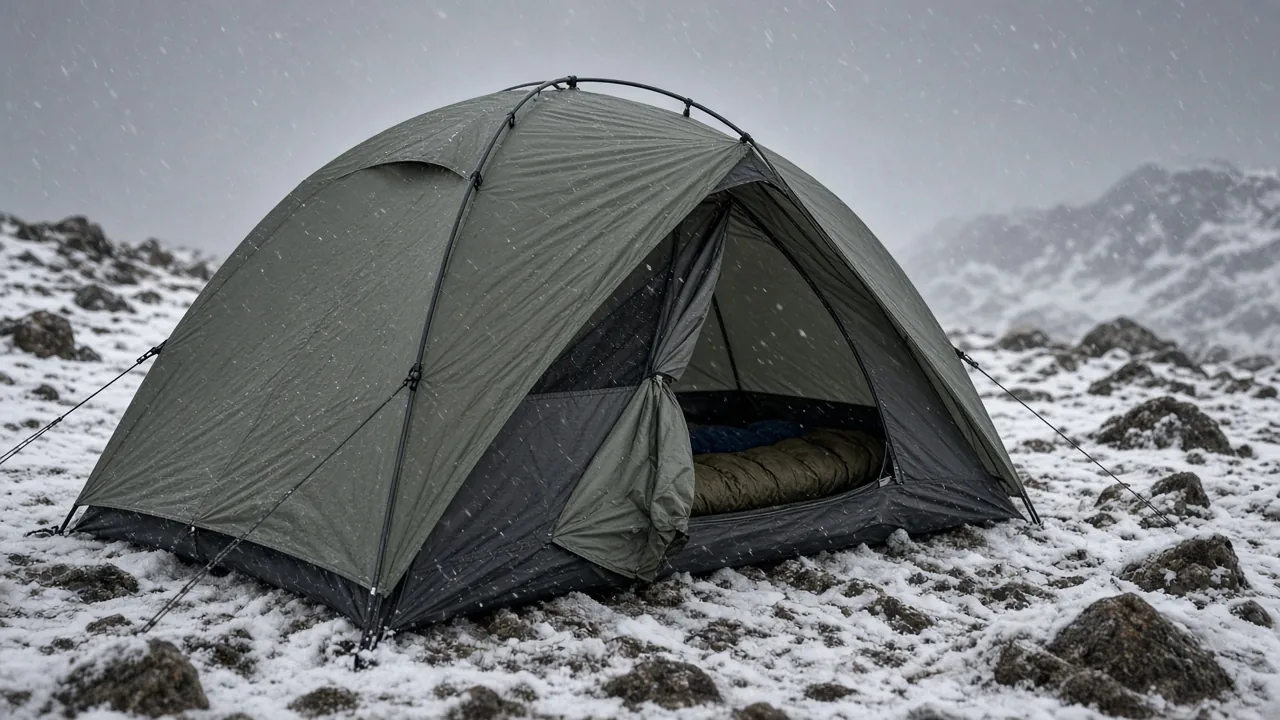
For most campers, a 3-season tent is enough. A 4-season tent becomes the better choice mainly when you expect above-treeline storms, heavy snow, or constant high wind. Those specific conditions, not the calendar month, determine whether the stronger fabric, stiffer poles, and lower-cut fly of a four-season design justify the extra packed weight and reduced ventilation.
The key distinction is exposure. A winter camp in a sheltered forest or beside a frozen lake can feel calm even at 10°F, while a spring trip on a wind-scoured ridgeline can batter a lightweight shelter at 35°F. Choose the tent for the scenario, not for the season name.
When a 3-Season Tent Is Enough
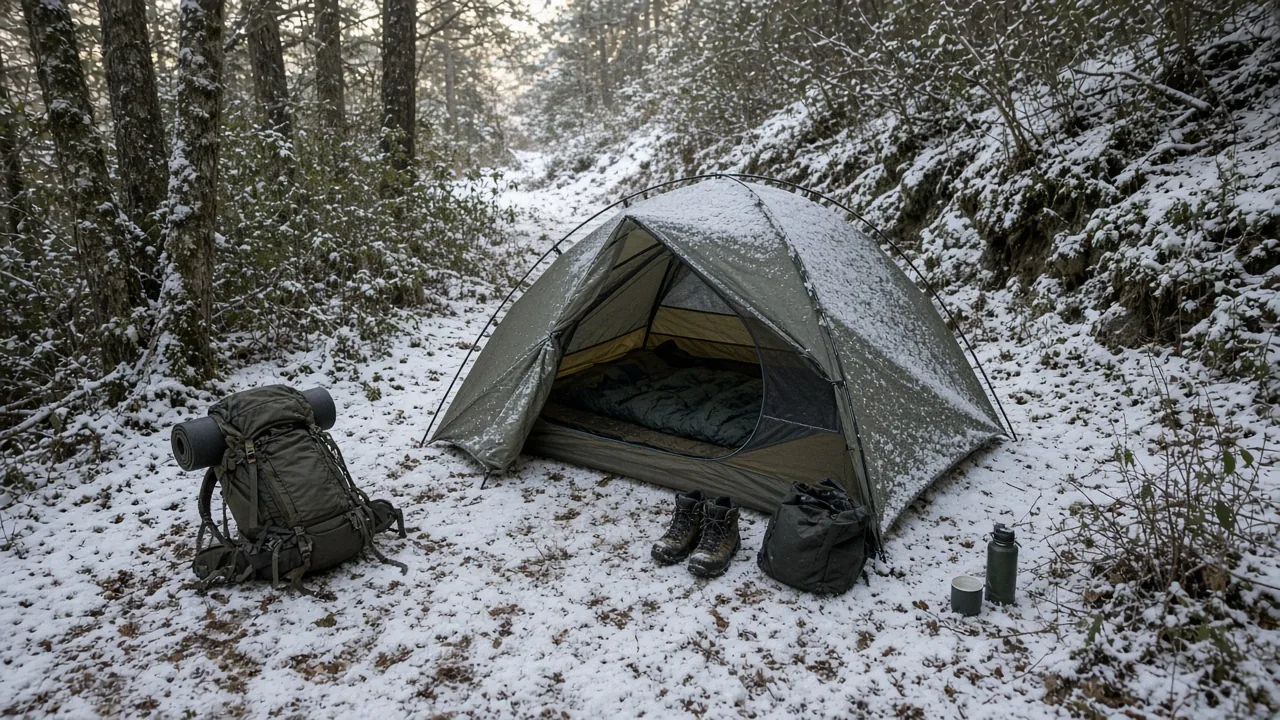
Choose a 3-season tent for spring through fall, winter forest or lake camps, and anywhere heavy snow or extreme wind is unlikely. A 3-season tent with a good sleep system covers most US conditions. The large mesh inner vents moisture well, the rainfly sheds rain and brief storms, and the lighter poles and fabric keep your pack weight manageable.
Many experienced winter campers have spent dozens of nights below freezing in standard 3-season tents, including nights near 0°F with wind and snowfall, by selecting protected sites and managing snow around the tent. The shelter does not need to be a fortress if the environment does not try to knock it down.
When a 4-Season Tent Is Worth Considering
Consider a 4-season tent for exposed winter ridgelines, persistent snowfall that may load the fly, or camps where tent failure would create a serious safety problem. In those situations, the solid inner fabric blocks wind-driven snow, the stronger poles resist bending under snow accumulation, and the lower fly edge reduces spindrift entry. Think of it as a storm tent, not a warmth tent.
The calculation changes when you are far from a bail-out. A snowed-in alpine camp or an above-treeline wind event can turn a collapsed pole or torn rainfly into an emergency rather than an inconvenience. If that describes your route, the extra storm margin is not overbuying.
Step 1: Match the Tent to Conditions, Not the Label
Season ratings are marketing shorthand, not precise weather ratings. A “3-season” tent handles light snow and moderate wind. A “4-season” tent resists sustained wind and heavy snow better. But neither label tells you exactly when a specific model will fail or succeed. Write down your expected overnight low, wind exposure, snowfall, and whether you will walk or drive to camp.
Altitude and terrain matter as much as temperature. The same 20°F night can feel very different in a sheltered forest versus an open ridge, so pair the tent choice with site selection and forecast. A low-elevation winter camp in Michigan woodland is often less demanding than a summer storm camp above treeline in Colorado.
Temperature Alone Does Not Decide
The same 20°F night may feel very different in a sheltered forest versus an open ridge, so pair the tent choice with site selection and forecast. A tent does not generate heat. It blocks wind and traps a small layer of still air. If wind is low and your sleeping bag and pad are rated for the cold, a light 3-season shelter can handle temperatures well below freezing.
Wind-driven cold changes everything. Moving air strips the boundary layer of warmth around your body and can force snow or rain through mesh panels and gaps. Before choosing a tent, check not just the low temperature but the wind speed and direction at your intended camp elevation.
Backpacking vs. Car Camping Changes the Trade-Off
For backpacking, save weight with a 3-season design; for car camping, you can accept a heavier four-season tent if extra storm margin simplifies setup. Weight matters when you carry it on your back for miles. A four-season tent can weigh 5, 8, or even 10 pounds, while many 3-season backpacking tents come in under 4 pounds. Some ultralight four-season models exist, but they require trade-offs in durability or interior space.
From a car trunk, a heavier tent is far less burdensome. You can treat the extra fabric and pole stiffness as cheap insurance for a trip where you cannot easily walk out. Car campers should still consider ventilation and packed size, but the penalty for extra weight is smaller.
Step 2: Compare 3-Season and 4-Season Construction
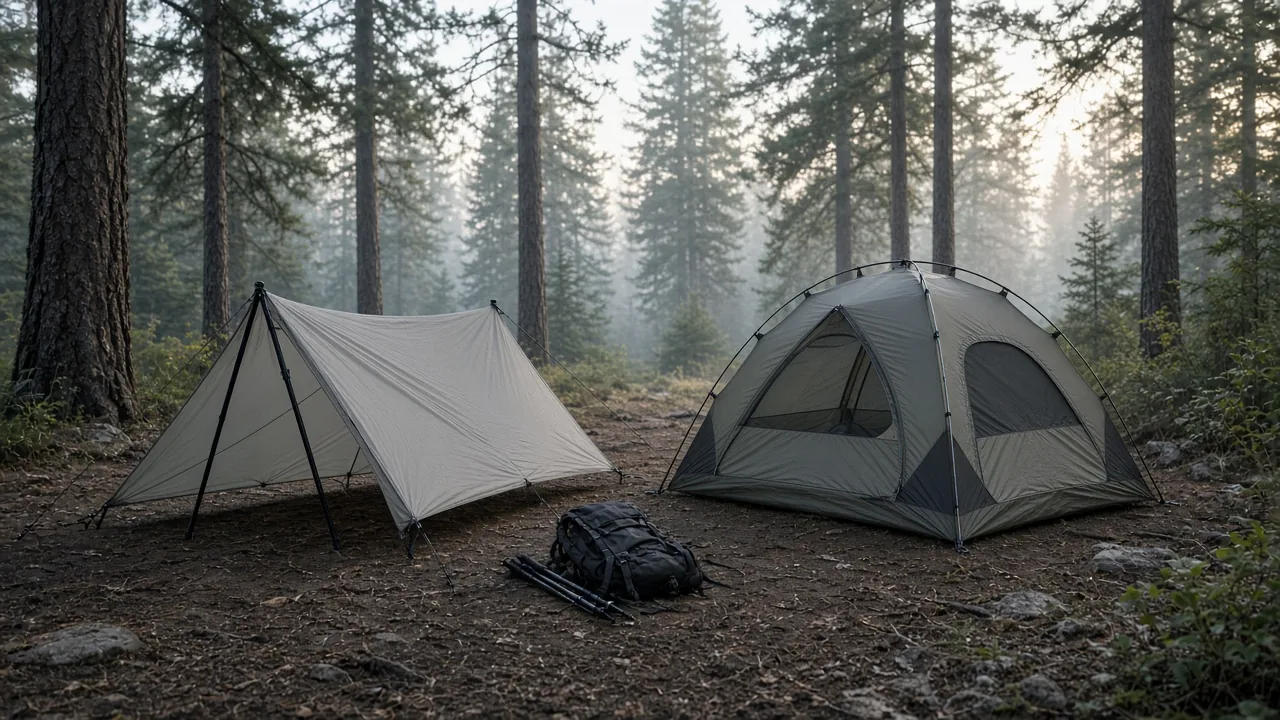
Season ratings correspond to real construction differences. Check inner-wall material, pole stiffness, fly coverage, snow skirts, and packed weight. Four-season tents use stronger frames and less mesh, while 3-season models favor ventilation and lighter fabric. Understanding these details helps you read a spec sheet instead of relying on a label.
The biggest differences show up in the inner tent and rainfly. A 3-season inner is often mostly mesh for airflow. A 4-season inner swaps much of that mesh for breathable fabric panels that block wind-blown snow but trap more moisture. The fly on a 4-season tent typically extends closer to the ground, and some models add snow skirts that you can weight down with snow.
3-Season Tent Features
Large mesh inner, lighter poles, and a vented fly make a 3-season tent easy to pitch and comfortable in warm weather. It can handle rain and brief storms when staked properly. The mesh walls allow water vapor from your breath and damp gear to escape, reducing condensation. In summer, that same mesh works like a bug-free net room.
The trade-off is less protection from wind and spindrift. If wind direction shifts and blows snow sideways, fine snow can sometimes pass through mesh panels or collect under a higher-cut fly. For most summer trips and sheltered winter sites, that risk is manageable.
4-Season Tent Features
Fabric inner, stronger poles, lower fly edge, and sometimes snow skirts resist wind-driven snow but add weight and can reduce airflow. The solid inner walls keep spindrift out of the sleeping area, which matters on exposed snowfields. Stiffer poles bend less under sustained wind and can carry more snow weight before failing.
The downside is condensation. Because the inner panels block more airflow, moisture from your breath remains inside the tent longer. In very cold conditions, that moisture can freeze or frost the interior walls, which can be annoying and, over multiple nights, dampen your sleeping bag.
At a Glance: Use a Comparison Table
List typical packed weight, inner material, fly/ground coverage, best car camping vs backpacking use, and limitations for each design so you compare specs instead of labels. Use the table below as a starting point.
| Feature | 3-Season Tent | 4-Season Tent |
|---|---|---|
| Typical packed weight | Often 2 to 6 lb | Often 5 to 10 lb, some lighter models available |
| Inner tent material | Large mesh panels | Fabric or solid panels with small mesh vents |
| Pole structure | Lighter, often 2 to 3 poles | Stiffer, often 4 or more poles |
| Rainfly coverage | Vented fly, may sit higher off ground | Lower fly edge, sometimes with snow skirts |
| Best for | Backpacking, summer, sheltered winter camps | Exposed alpine camps, persistent snow, high wind |
| Main limitation | Less wind and spindrift protection | Heavier, more condensation, reduced ventilation |
| Price trend | Wide range, budget models available | Often higher for comparable materials |
The table shows why most campers choose 3-season models. The 4-season tent narrows its advantage to specific, demanding conditions. If your trips rarely include those conditions, the extra weight and moisture penalty work against you.
Step 3: Keep Warmth and Condensation Separate
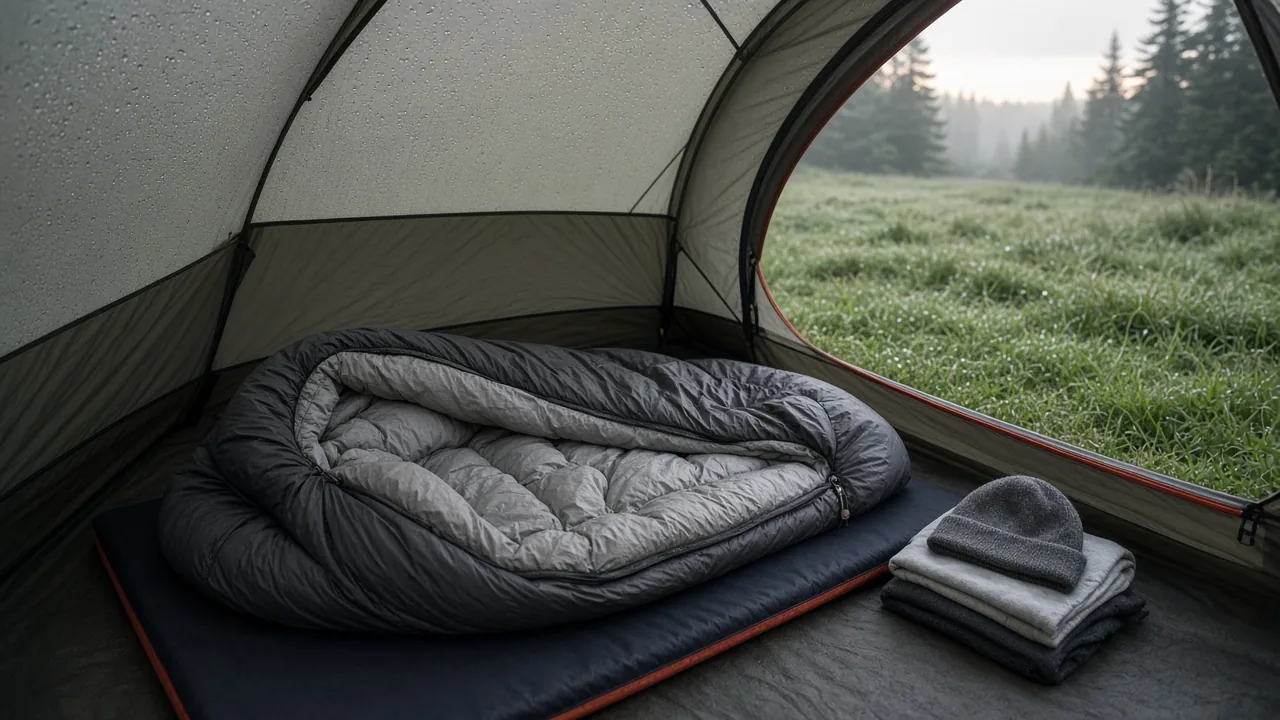
Do not expect a four-season inner to make you noticeably warmer. Sleeping bag loft and sleeping pad R-value do most of that work, while extra fabric can trap moisture. A tent’s job is wind and precipitation protection. Heat retention comes from your sleep system.
Some campers feel a slight warmth gain in a solid-inner tent because less air circulates against the skin. But that same stagnant air holds more moisture. Over a few nights, the resulting damp can reduce the loft of a down sleeping bag and make you colder, not warmer.
What Actually Keeps You Warm
Never use a stove or heater inside your tent. Carbon monoxide builds up quickly in an enclosed space and can be fatal, even with a vent open. Instead, choose a sleeping bag and sleeping pad rated for the expected low temperature. A pad with an R-value appropriate for frozen ground matters just as much as the bag rating. If you expect winter lows, upgrade your pad and bag before considering a heavier tent.
Never use a stove or heater inside your tent. This bears repeating: fuel appliances belong outside, a safe distance from the tent, in open air. If you need extra warmth, add a hot water bottle made from a leak-proof container and wrap it in cloth, or adjust your sleep layers.
Why Ventilation Still Matters in Cold Weather
A mesh inner lets moisture escape and reduces condensation. A warmer but wetter shelter can make you colder than a well-vented 3-season tent. Exhaled air contains a surprising amount of water vapor over an eight-hour night. In a closed tent, that vapor condenses on cold surfaces. In a mesh tent, much of it passes through and escapes. Cold and dry beats slightly warmer and clammy over consecutive nights.
If you do camp in a four-season tent, use the vents. Many solid-inner designs include adjustable high and low vents for a reason. Open them even when it feels counterintuitive in cold weather. Letting humid air out is one of the most reliable ways to stay dry and comfortable.
Step 4: Manage Snow and Wind Without Overbuying
For occasional winter trips with a 3-season tent, bury stakes in snow, pitch behind a natural windbreak or snow wall, and clear heavy snow from the fly at night. These techniques can extend a lightweight shelter into conditions it was not explicitly designed for, as long as you remain realistic about limits.
Site selection is your first and best tool. A spot behind trees, boulders, or a terrain fold reduces wind load more effectively than any pole material. Take ten extra minutes to find a sheltered spot rather than pitching in the most convenient open spot.
Anchoring in Snow
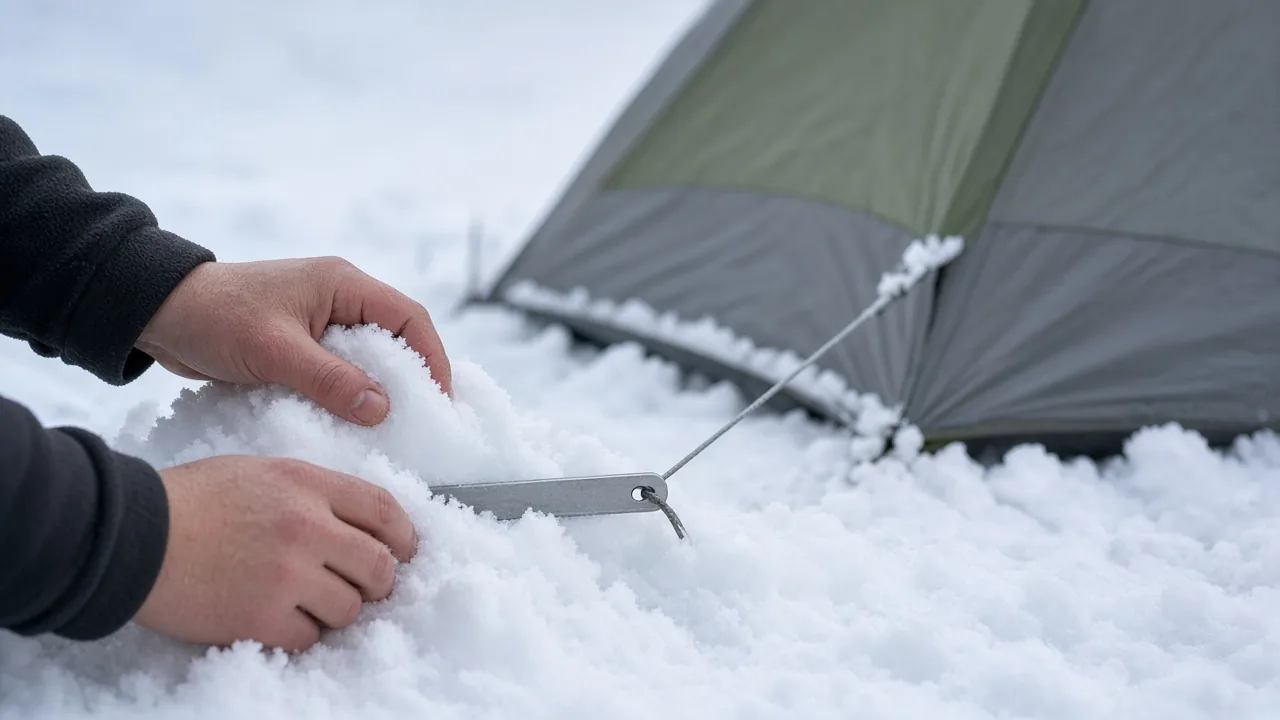
Place ordinary stakes horizontally in soft snow, bury them, and pack snow over them until they set. Use dedicated snow stakes for hard snow or ice. Standard aluminum pegs will not hold in powder if driven vertically. Burying them sideways creates a deadman anchor that tightens as the snow compresses around it. Give the snow time to set before applying full tension from the guylines.
For hard snow or ice, standard pegs may bend or refuse to go in. Dedicated snow stakes are wider and often have holes or teeth that grip frozen surfaces better. In soft snow, you can also fill stuff sacks with snow and bury them as anchors in an emergency.
Reducing Wind Load
Choose a sheltered site first. If wind remains, build a snow wall on the windward side to deflect gusts away from the fly and reduce flapping. A knee- to waist-high wall a few feet upwind can change the airflow enough to keep gusts from slamming the tent and lifting the rainfly. Pack the snow firmly and build the wall wider than the tent to prevent wind from sneaking around the edges.
Position the tent’s narrowest profile into the wind rather than presenting a broad side. This reduces the surface area the wind must push against and lowers stress on the poles and guylines.
Clearing Snow Overnight
A sloped 3-season fly often sheds snow, but if accumulation builds, knock it off from inside or outside before it loads the poles. Heavy wet snow weighs far more than dry powder. Even a few inches of dense snow can bend a lightweight pole set. If you wake up and notice the tent ceiling sagging or the fabric drumming less freely, clear the snow. From inside, a firm push against the walls can dislodge fresh accumulation. If it has frozen into a crust, go outside and gently brush it off.
Step 5: Decide When You Only Want One Tent
Base the one-tent call on your regular trips. Low-elevation, forested, or summer routes favor a 3-season or 3.5-season tent. Open winter ridges favor a four-season model. Ask yourself where you camp most often, not where you imagine a once-a-year trip might take you. If 90 percent of your nights are below treeline in three-season weather, a four-season tent becomes a heavy, damp liability for most of the year.
Some campers argue that one four-season tent is the safer all-rounder. That logic works only if your most common trips involve real storm exposure. If not, you are paying weight and ventilation penalties for a worst-case scenario that rarely happens.
When One 4 Season Tent Makes Sense
If you often camp above treeline, on wind-scoured snow, or in areas where a failed tent would be dangerous, the extra storm resistance can outweigh weight and cost. A broken tent pole at 11,000 feet in January is not an inconvenience. A collapsed shelter in those conditions can force an emergency evacuation. In that context, heavier poles, solid inner walls, and a lower fly edge are sensible insurance.
A four-season tent also makes sense for winter mountaineers who spend multiple nights on snow and cannot rely on trees or terrain to block the wind. The extra interior condensation is manageable if you use the vents and manage moisture daily. The weight penalty is real, but so is the consequence of shelter failure.
When One 3 Season Tent Is the Better Buy
If most nights are below treeline or in three-season conditions, a 3-season tent with a strong sleep system is lighter, less expensive, and simpler to own. It ventilates better in summer, packs smaller, and still handles winter trips when you choose protected sites and use snow-management techniques. You can always rent a four-season tent for a rare high-exposure objective, or borrow one from a partner.
The money you save can go toward the gear that affects comfort more directly: a warmer sleeping bag, a higher R-value pad, or better rain gear. Those purchases will improve more trips than a heavy tent you use twice a year.
What a 3.5-Season Tent Splits
Some solid-inner or lower-fly models reduce drafts and snow entry without true four-season weight, making them a reasonable middle option for mixed shoulder-season use. These designs often keep a mostly mesh inner but add fabric panels around the walls, or they extend the rainfly closer to the ground for better protection. They are sometimes called “solid inner” versions of existing 3-season tents.
A 3.5-season tent suits campers who regularly face cold shoulder-season nights, wind, or light snow but do not need full alpine protection. It delivers more wind resistance than a standard 3-season with less weight penalty than a true 4-season. The trade-off is still more condensation than a fully mesh inner, so check the ventilation design before buying.
Troubleshooting Common 4 Season Tent Questions
Use these checks to resolve the most common doubts before buying or packing a tent.
Will a four-season inner make me warmer?
It adds only a small warmth gain, if any. Your sleeping bag and pad matter far more, and the inner can increase condensation. A solid inner wall may reduce air circulation against your body, but it cannot create heat that your sleep system does not provide. If you are cold in a 3-season tent, the fix is usually a warmer bag or pad, not a switch to a solid inner.
Can a cheap 3-season tent handle 0°F?
It may survive a calm cold night if your sleep system is strong, but wind, snow, and exposed sites change the risk quickly. A cheap tent often has weaker poles, a higher-cut fly, and more mesh. Those limitations matter less in a protected forest and much more on an open slope with wind. The tent does not care about the thermometer. It cares about wind load and snow accumulation.
Do I need snow skirts for winter camping?
Snow skirts help seal wind-blown snow, but you can often pile snow around the fly edge or use a lower-cut fly instead. A skirt acts like a gasket at the base of the fly. Without one, spindrift can enter under the gap between fly and ground. But you can achieve a similar effect by shoveling snow or loose earth around the fly perimeter. A lower-cut fly reduces the size of the gap to start with.
Why are four-season tents less common now?
Backpackers prioritize low weight, four-season models can be heavy and condensation-prone, and many winter campers get by with three-season plus site selection. As lighter materials improved, the weight penalty of a full four-season tent became harder to justify for trips that were never truly alpine. Condensation complaints also pushed many users back toward more ventilated designs. The modern trend favors adding wind protection through design details rather than stamping a whole tent as “four season.”
Conclusion
Before packing, match the tent to this trip’s car camping or backpacking style, overnight low, and rain or snow chance. Pair it with a sleeping pad and bag rated for those conditions. A 3-season tent handles most US camping trips, including many winter forest camps, when combined with good site selection and snow-management skills. A 4-season tent earns its place on exposed ridges, in persistent snowfall, and wherever a collapsed shelter would turn a hard night into a dangerous one.
Check whether this trip involves hiking or car camping, expected overnight lows, rain or snow, and wind exposure before choosing. Then pack the lightest shelter that still gives enough storm margin, and verify your sleep system before you go.
This article is general information about camping gear, not professional safety, medical, or wilderness training. Check fire restrictions, weather, and campsite rules before you go, and follow the manufacturer's instructions for your own equipment.
FAQ
Will a four-season inner make me warmer?
It adds only a small warmth gain, if any. Your sleeping bag and pad matter far more, and the inner can increase condensation.
Can a cheap 3-season tent handle 0°F?
It may survive a calm cold night if your sleep system is strong, but wind, snow, and exposed sites change the risk quickly. A cheap tent often has weaker poles, a higher-cut fly, and more mesh.
Do I need snow skirts for winter camping?
Snow skirts help seal wind-blown snow, but you can often pile snow around the fly edge or use a lower-cut fly instead.
Why are four-season tents less common now?
Backpackers prioritize low weight, four-season models can be heavy and condensation-prone, and many winter campers get by with three-season plus site selection.
When is a 4-season tent worth considering?
Consider a 4-season tent for exposed winter ridgelines, persistent snowfall that may load the fly, or camps where tent failure would create a serious safety problem.