Do Sleeping Bag Liners Add Warmth? A Realistic Guide
A practical look at whether sleeping bag liners add warmth, how to read liner temperature claims, and when to use one for cleanliness or comfort.
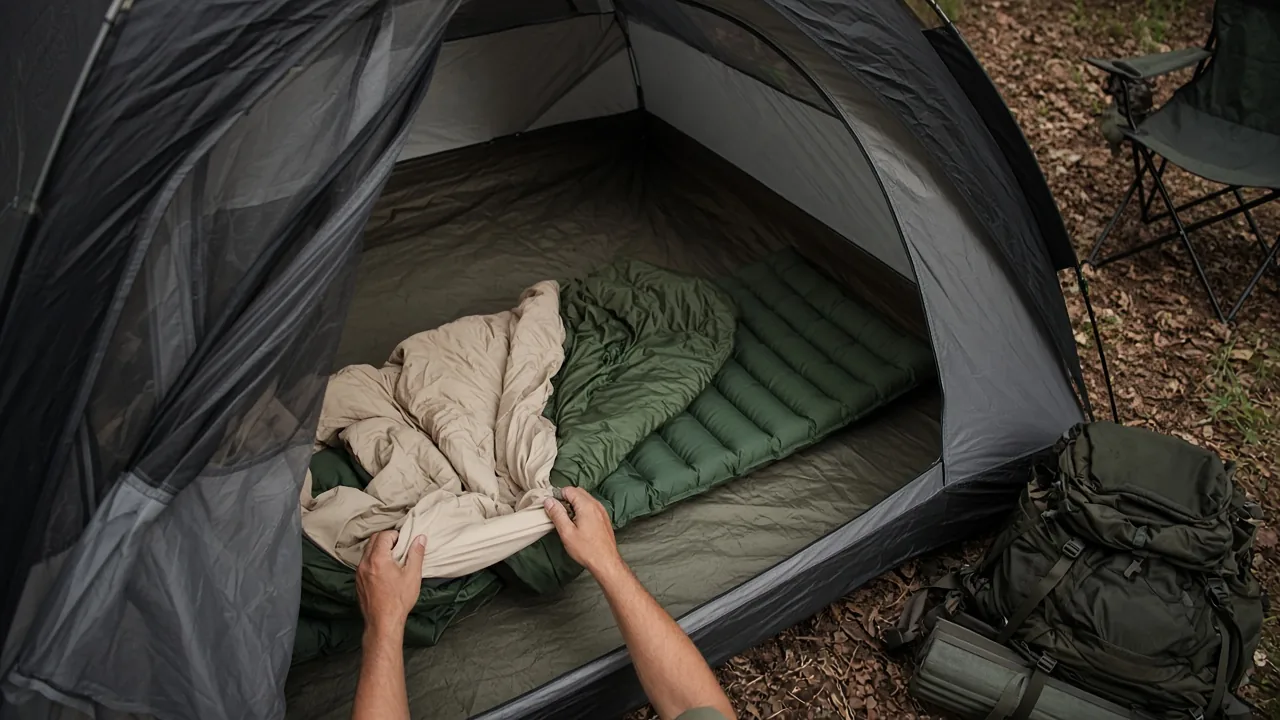
You can use a sleeping bag liner to add modest warmth, keep your bag cleaner, and stretch one sleep system across more nights, but only if you read material and temperature claims instead of trusting blanket numbers. The honest answer to “do sleeping bag liners add warmth” is yes, some can, but almost never as much as the package headline suggests. Think of a liner as a small adjustment tool, not a rescue layer. Its bigger job is protecting your sleeping bag from sweat and body oils while giving you a softer surface to sleep against.
What a Sleeping Bag Liner Actually Does
A sleeping bag liner is a removable fabric sack that goes inside your sleeping bag or quilt. Its primary functions are practical: it keeps body oils and trail grime off the bag’s inner fabric, adds a softer hand against your skin, and creates a thin barrier layer that can add a small amount of warmth.
Liners also work outside a sleeping bag. In hot, humid summer conditions, a thin liner can be used alone as a light sheet when your full sleeping bag is too warm. Travelers use them as a personal barrier in hostels, huts, or any bunk with bedding that may not have been washed to their standard. On a backpacking trip, that dual use means you are not carrying an extra item that only does one job.
The warmth estimate on a liner package should be viewed differently from a sleeping bag’s EN or ISO comfort rating. Sleeping bag ratings follow a standardized test method. Liner add-warmth claims do not go through the same independent certification process, so manufacturers have more room to choose optimistic numbers.
Do Sleeping Bag Liners Add Warmth? Evaluate the Claim
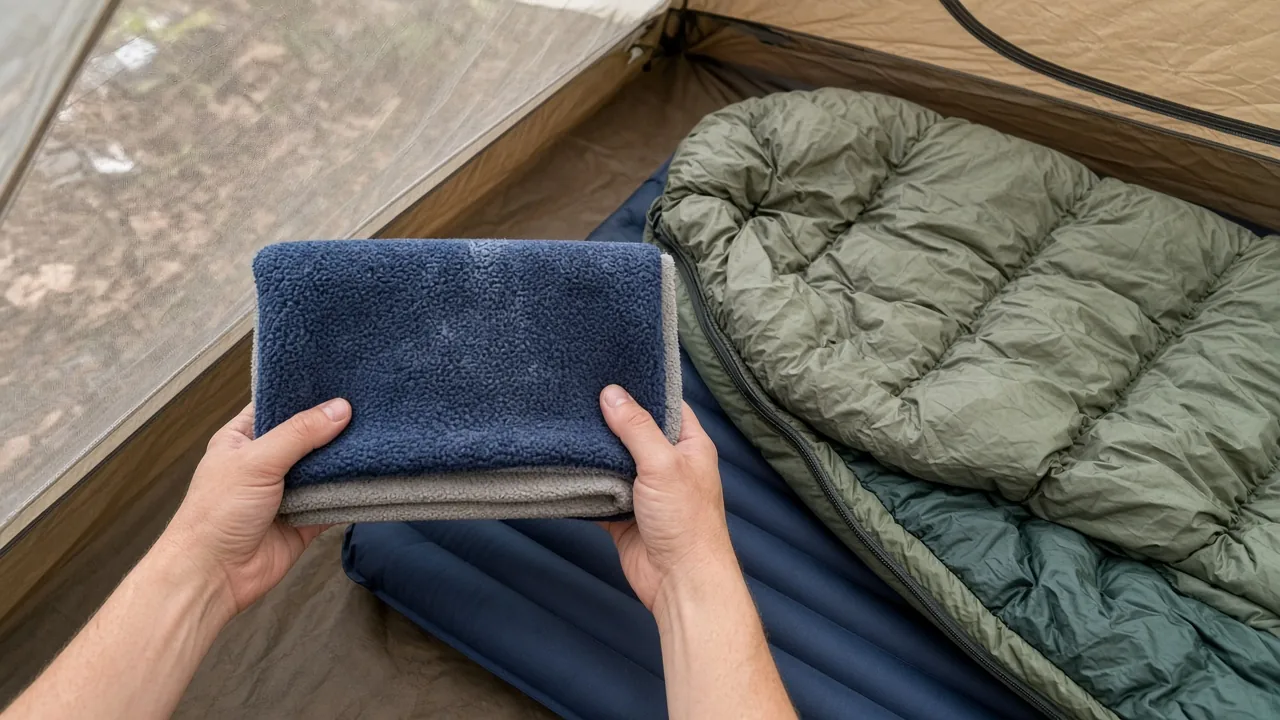
Do sleeping bag liners add warmth in a way you can rely on? The short answer is yes, but the amount varies by fabric weight, fit, and how the liner interacts with the rest of your sleep system. A snug liner made from thicker fleece or microfiber can trap more still air near your body. A loose rectangular cotton sheet inside an already roomy bag may feel almost identical to sleeping without one.
Treat manufacturer warmth ratings as a rough range, not a fixed rating. Look at three things together: the package number, the fabric weight in ounces per square yard or grams per square meter, and the shape. If those details are not listed, the number is less useful. After that, discount cold-weather claims until you see multiple owner reports from people using the liner in conditions similar to yours.
Where the 25 Degree F Claim Comes From
Some synthetic liner makers state up to 25 degrees F of added warmth. That number is not a lie, but it is rarely a standard comfort rating. It usually represents an optimistic maximum for a snug liner inside a sealed sleep system, often paired with a warm base layer, a hat, and an insulated pad underneath.
In most real camp conditions, you should expect less. If the label says “up to 25 degrees F,” treat it the way you would a car’s highway fuel economy number: possible under ideal conditions, not a promise for every trip. A liner may realistically extend a bag’s comfortable range by a few degrees to perhaps half the stated maximum, depending on fabric and fit. If you need 25 degrees of real added warmth, you generally need a warmer bag or puffy layers inside it.
Why Fabric and Fit Matter More Than the Number
A close mummy cut reduces dead air space around your shoulders and legs. That snugger fit means your body heats a smaller volume of air, which can make the same fabric feel warmer than it would in a loose rectangular liner. For backpacking, the mummy shape also matches the bag’s dimensions and saves packed space.
Breathable knits and moisture-moving synthetics can feel warmer in practice because they manage perspiration better. If a liner traps sweat against your skin, the damp layer cools you as it evaporates. A liner that wicks moisture away from your body feels drier and more comfortable, which helps you stay warm longer.
Using the Liner for Cleanliness Instead of Extra Degrees
If you already own a temperature-appropriate sleeping bag, use the liner mainly to cut washing frequency and extend bag loft. Washing a sleeping bag repeatedly can degrade the insulation and reduce loft, especially with down bags. A liner takes most of that wear.
Do not add a liner expecting to turn a summer bag into a winter bag. A 40 degree F bag with a liner rated for 15 degrees of added warmth will not necessarily keep you comfortable at 25 degrees F. You are better off using the liner to keep a three-season bag clean during its normal operating range, then adding real insulation through clothing or a warmer bag when temperatures drop.
Choose a Liner Material by Trip and Conditions
Material choice drives weight, packed size, moisture handling, price, and how many degrees the liner can plausibly add. Use the table below as a quick reference, then match the material to your trip.
| Material | Weight & Packed Size | Moisture Handling | Warmth Notes | Best For |
|---|---|---|---|---|
| Silk | Very light, highly compressible | Breathable, dries well | Adds a few degrees at most | Backpacking, travel, summer use |
| Synthetic sheet | Light, compact | Wicking, quick-drying | Cooling versions add little; warm versions add more | Humid trips, budget travel, bug-prone bunks |
| Microfiber/fleece | Heavier, bulkier | Wicks reasonably well | Often has the highest claimed added warmth | Cold-weather car camping, cold sleepers |
| Merino wool | Midweight, somewhat bulky | Excellent moisture management | Modest warmth, very soft | Car camping, cooler sleepers, skin-sensitive users |
| Cotton | Heavy, bulky when packed | Absorbs moisture, dries slowly | Feels warm when dry, dangerous when damp | Travel, warm car camping, indoor bunks |
Silk Liners
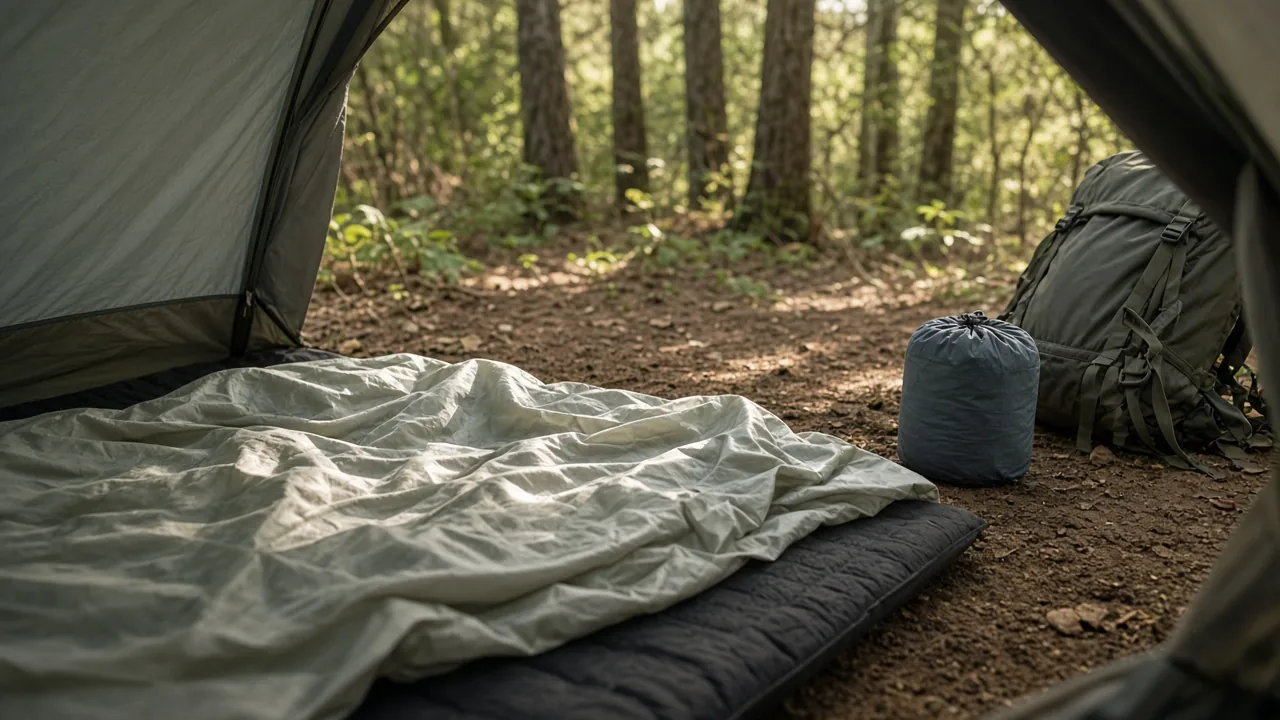
Silk is very light, compressible, breathable, and dries better than cotton. It packs small enough to ride in a backpack pocket, which makes it a popular choice for backpacking and summer adventure travel. The fabric is also soft against skin and less likely to feel clammy in humid weather.
The drawbacks are price and pure warmth. Silk costs more than basic synthetic sheet liners, and per ounce it adds less measurable warmth than thicker microfiber or fleece. If your goal is a clean, light comfort layer rather than a heat booster, silk earns its place. If you want real extra degrees, look at thicker options.
Synthetic and Microfleece Liners
Synthetic liners span a wide range. On the cool end, there are thin cooling sheets designed for hot, humid nights when even a summer bag feels too warm. They wick moisture and dry quickly, but they add almost no warmth. On the warm end, microfiber and fleece liners use thicker fabric to trap more still air, and these are the products with the boldest add-warmth claims.
Check the label for the claimed added warmth and the fabric weight before you buy a warmer synthetic liner. Expect a bulk and weight penalty on the thicker versions. A fleece liner can take up as much space as a small sleeping bag, which matters if you are backpacking. For car camping, the extra weight is a non-issue, and the softer hand and warmth can make a marginal sleeping bag more comfortable.
Merino Wool Liners
Merino feels soft next to skin and manages moisture like a high-quality wool base layer. It resists odor better than synthetics, which is a real advantage on multi-night trips when you cannot wash the liner. The fabric breathes well across a range of temperatures and feels less slick than some synthetic options.
The downsides are price and packed size. Merino liners cost noticeably more than silk or thin synthetic choices and roll up larger. That makes them a better fit for car camping or cool sleepers who will accept extra bulk for comfort. Backpackers counting ounces will usually prefer silk or a thin synthetic sheet.
Cotton Liners
Cotton feels familiar and affordable, but it absorbs moisture, dries slowly, and packs heavy. In warm, dry conditions, a cotton liner works fine as a simple barrier sheet. In cold or damp weather, cotton becomes a liability because the moisture it traps against your skin can make you colder.
Reserve cotton for travel, warm car camping, or indoor bunks. Do not put one in a backpack for a mountain trip where weight, dry time, and warmth management all matter.
Build a Flexible Sleep System
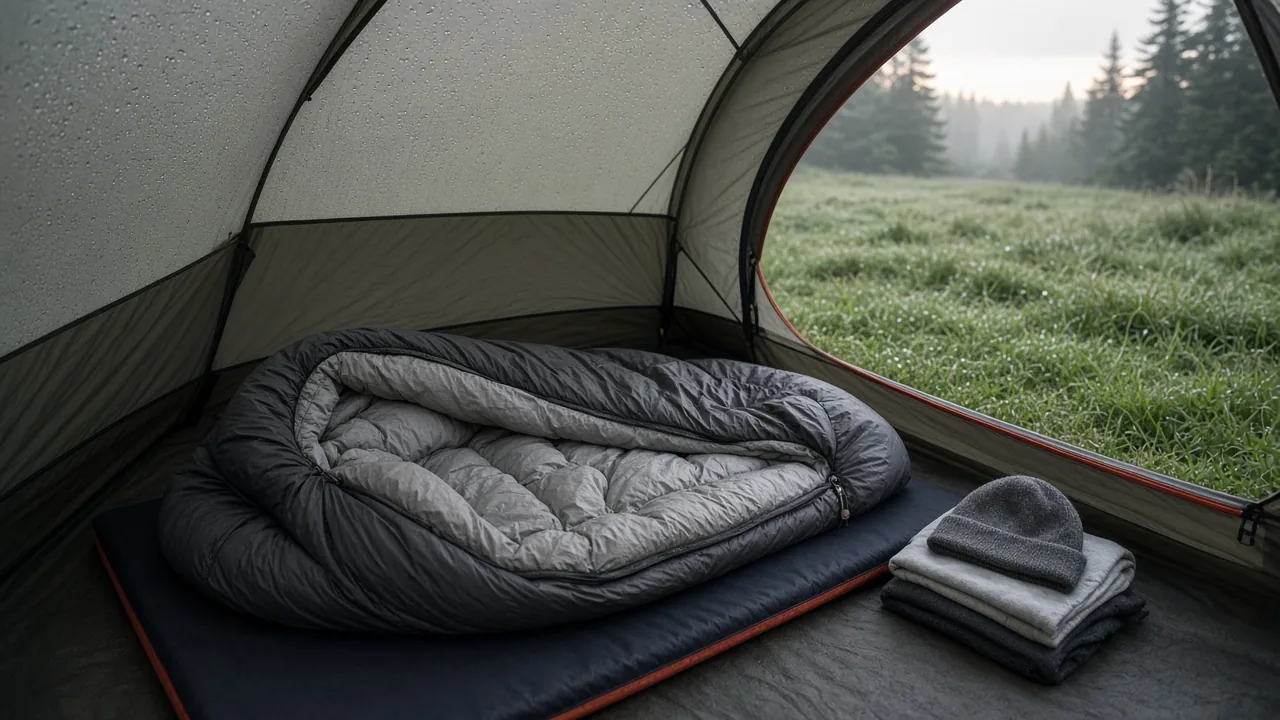
A liner works best as one part of a sleep system, not as a standalone fix. Combine a mid-rated bag or quilt with a liner, dry clothing, and an insulated pad. That approach lets you adjust for wider temperature swings instead of carrying one very cold-rated bag that may be too warm on mild nights.
Start With the Lowest Expected Camp Temperature
Check the overnight low for your camp and backcountry route before you choose your bedding. Mountain valleys, high ridges, and clear nights can run colder than the regional forecast suggests. Select a sleeping bag rated a few degrees below the expected low, then add a liner only to close the remaining comfort gap.
If the overnight low is around 35 degrees F, a 30 degree F bag plus a thin liner gives you a small buffer without packing a bulky winter bag. If the forecast drops to 15 degrees F, a liner will not make up that difference. Match the bag rating first and use the liner as insurance against slight temperature dips, not major cold fronts.
Example Layering for Around Freezing
For a camp around 32 degrees F, a 25 to 35 degree F bag plus a liner rated for a few degrees of added warmth can be more versatile than a dedicated 10 degree F bag. The liner-and-bag combination still works on a 45 degree F night when you can push the bag down and just use the liner, while the 10 degree F bag would be uncomfortably hot.
That flexibility only works if the sleeping pad also insulates. Sleeping bag insulation compresses under your body weight, so the pad is what keeps you from losing heat to cold ground. A well-insulated pad makes the liner’s small warmth contribution meaningful. A thin pad drains heat faster than any liner can replace it.
Do Not Skip the Sleeping Pad
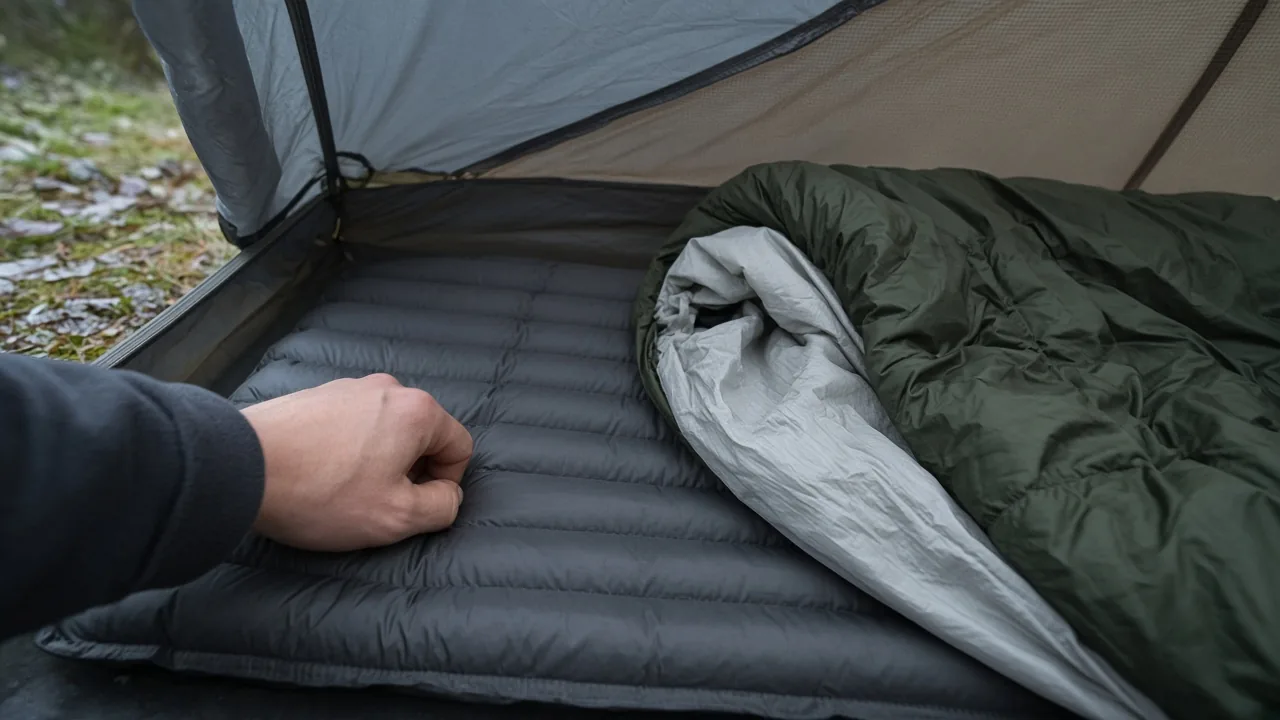
A sleeping pad works by trapping still air beneath you, the same principle as sleeping bag insulation and warm clothing. Cold ground can overwhelm any liner or bag, because your body weight crushes the bag’s loft and puts you directly against a cold surface.
Treat pad R-value as part of the same sleep-system decision as your bag and liner. For freezing conditions, use an insulated pad with enough R-value for the expected low. The liner only adds warmth above you. The pad is what protects you below. If you are waking up cold on your back or shoulders, fix the pad before you add a liner.
Use Dry Clothing and Shelter Choices First
Before trusting a liner to add heat, sleep in dry layers. Sweat-soaked hiking clothes cool you rapidly once you stop moving. Change into a dry base layer before getting into bed, wear a soft hat to slow heat loss from your head, and keep the tent closed to reduce air movement.
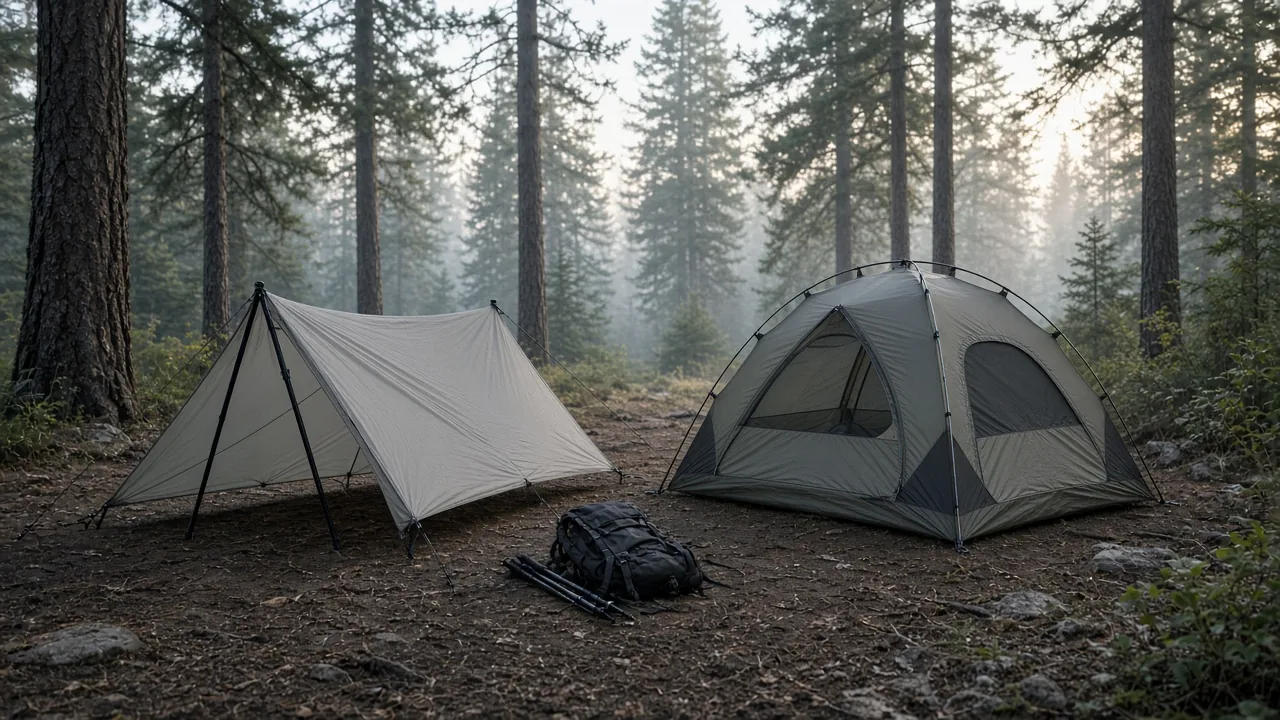
Choose a sheltered campsite away from cold air that collects in valley bottoms and out of ridge-top wind. Camp on durable surfaces such as established tent pads, gravel, or dry grass. Overheating is a real problem too: if you wake up sweating, that moisture evaporates and cools you later. Keep your layers just warm enough, not hot.
Common Liner Problems and When to Skip One
If a liner feels clammy, too tight, or you are still cold, adjust material, shape, or your clothing and pad before adding or changing the liner. Sometimes skipping the liner altogether and wearing a warmer base layer is the better move.
Liner Feels Damp or Sticky
Switch from cotton to silk, merino, or a moisture-moving synthetic if you wake up damp regularly. Perspiration trapped against skin can make you feel colder than the same bag used without a liner, because evaporation pulls heat from your body. A breathable, wicking fabric moves that moisture outward where it can vent.
Rectangular vs. Mummy Fit
Choose a rectangular liner for room and travel use, where a little extra fabric is not a problem and you may want to use it as a sheet on a bunk. Choose a mummy liner for backpacking because it follows the bag shape, reduces bunching, and saves weight and packed space. A rectangular liner inside a mummy bag creates folds and gaps that can feel restrictive and reduce the liner’s warmth.
Travelers Worried About Unclean Beds
A silk or synthetic sheet-style liner gives a barrier in hostels and mountain huts where bedding may be shared or infrequently washed. For bedbug concerns, inspect the room and follow local travel health guidance rather than relying only on fabric as protection. No liner is a guarantee against pests. A silk weave may discourage some insects from reaching your skin, but it is not a replacement for checking mattress seams and headboards. Never use a stove or heater inside your tent.
If You Are Still Cold
Add an insulated pad, dry base layers, or a puffy jacket worn inside the bag before you blame the liner. These changes usually add more real warmth than upgrading a liner. If you are consistently cold on trips, get a warmer sleeping bag with a more suitable comfort rating.
Never use a stove or heater inside your tent because it creates carbon monoxide and fire risk and is not a safe sleep-system fix. Any fuel-burning appliance belongs outside, away from tent fabric and enclosed spaces. For medical concerns like hypothermia, recognize the early warning signs and follow official first aid guidance.
Care, Storage, and Packing
Hang or dry liners after each trip, store them loose in a dry place, and wash according to the fabric label so they do not hold dirt or transfer body oils to your bag. A damp liner packed away invites odor and can affect the down or synthetic insulation next to it.
Keep the Liner Clean to Protect the Bag
Because a liner collects sweat and body oils, washing it more often and washing your sleeping bag less helps preserve bag loft and insulation over multiple seasons. Most silk and synthetic liners can handle a gentle machine wash, but check the label for temperature and drying limits. Merino may need a wool-specific detergent or air drying.
Storage for Car Camping vs. Backpacking
Car campers can prioritize comfort and a larger cotton or fleece liner because weight and packed size do not matter much. Store the whole sleep system loose in a dry bin or closet at home rather than compressed in a stuff sack, which protects loft.
Backpackers should pack a compact silk or thin synthetic liner in a dry sack with the sleep system. A waterproof stuff sack or pack liner keeps the liner and bag dry if rain gets into the pack. Follow Leave No Trace principles by packing out all trash and keeping your camp clean, just as you would with any other gear.
A sleeping bag liner is a useful piece of gear when you match it to the trip type, overnight low, and rain chance. Bring it mainly for cleanliness and a few degrees of added warmth, not as a substitute for a proper sleeping bag rating. If cold weather is likely, pair the liner with an insulated pad or transition to a warmer bag. Before you pack, check whether this is a car camping weekend or a backpacking route, what the forecast says for the lowest hours before dawn, and whether rain or humidity will stress a cotton or down system.
This article is general information about camping gear, not professional safety, medical, or wilderness training. Check fire restrictions, weather, and campsite rules before you go, and follow the manufacturer's instructions for your own equipment.
FAQ
Do sleeping bag liners add warmth?
Yes, some liners add modest warmth, but usually less than package claims. The amount depends on material weight, fit, and the rest of your sleep system.
How much warmth can a sleeping bag liner realistically add?
A liner may add a few degrees to perhaps half of a stated maximum like 25°F under real conditions. Treat manufacturer numbers as optimistic, not fixed comfort ratings.
What is the best sleeping bag liner material for backpacking?
Silk is very light, compact, breathable, and adds a few degrees at most. Thin synthetic sheets also work for humid trips when you mainly want cleanliness and a light barrier.
Can a sleeping bag liner replace a warmer sleeping bag?
No. Use the liner for cleanliness and a small temperature buffer, but add real insulation with a warmer bag, dry clothing, or an insulated pad when cold weather is likely.
Should I choose a mummy or rectangular sleeping bag liner?
A mummy liner fits backpacking bags better, reduces bunching, and saves packed space. A rectangular liner suits travel or bunk use where extra room is more important.