Do Foam Coolers Work for Camping? DIY Reality Check
A DIY foam cooler can work for short, mild car-camping trips if pre-chilled and shaded, but it lacks the ice retention and durability of a rotomolded cooler. Match it to trip length, heat, and bear-safety needs.
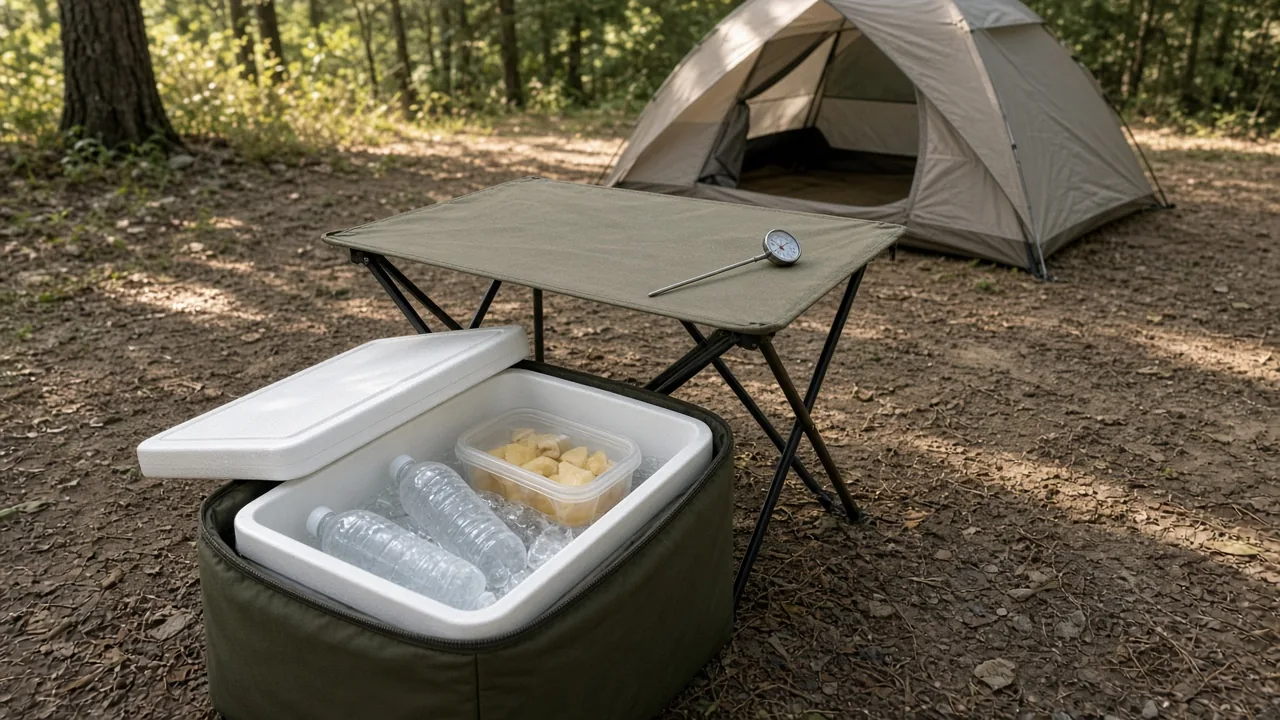
A DIY foam cooler can keep food cold enough for a short weekend car-camping trip in mild weather, but it is not a rotomolded cooler replacement in heat or on longer trips. If you are asking "do foam coolers work for camping," the useful answer is yes, within limits. They are cheap, light, and easy to assemble. They are also fragile, less sealed, and quicker to warm up than a molded cooler. Before packing perishables into a foam box, think about trip length, outside temperature, how often you will open it, and whether you need bear-resistant storage. For a cool-weather overnight with frozen bottles and shade, a foam cooler can work. For July heat or a three-day camp, it becomes a food-safety gamble.
Do Foam Coolers Work for Camping? The Short Answer
A DIY foam box works for short, mild car camping but lacks the ice retention and durability of a rotomolded cooler. Foam insulation slows heat transfer, but the thin walls, loose-fitting lid, and soft exterior allow more warm air in than a gasketed hard cooler. The result is that a foam cooler can hold safe temperatures for roughly one to two days when you pre-chill it, pack it with enough frozen material, and keep it shaded. Under hot sun or frequent opening, that window shrinks quickly.
What the DIY setup includes
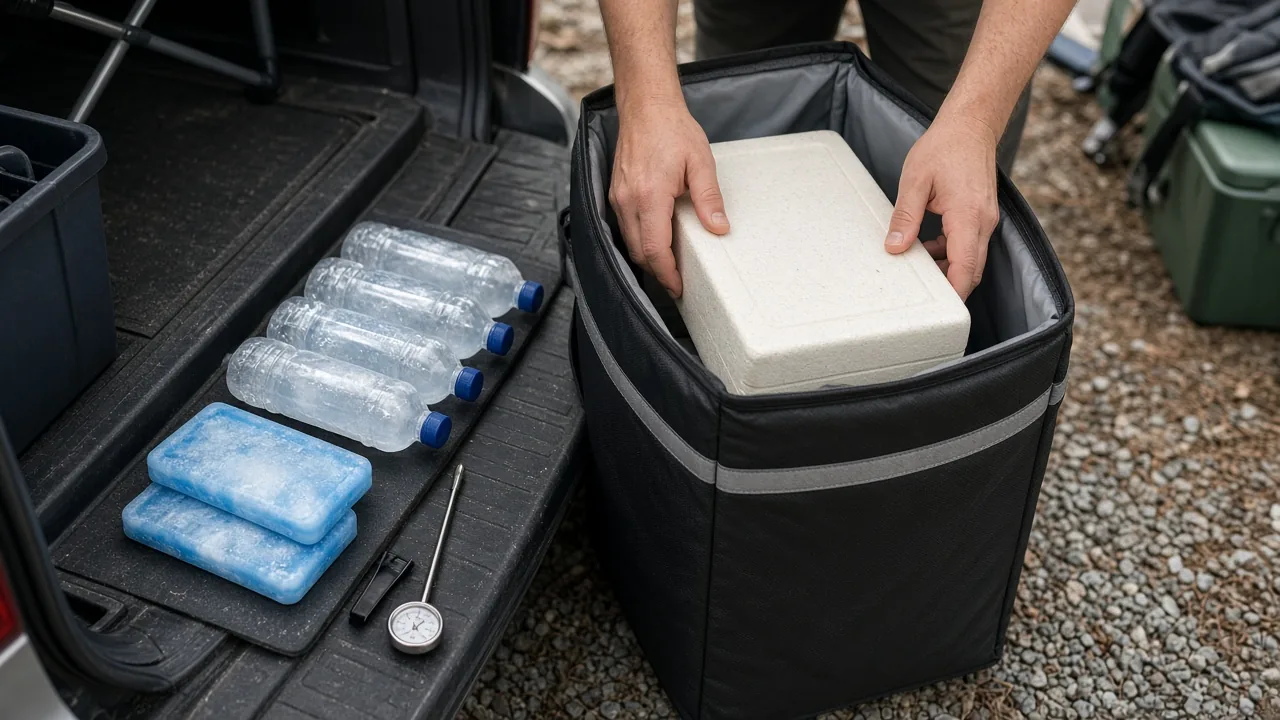
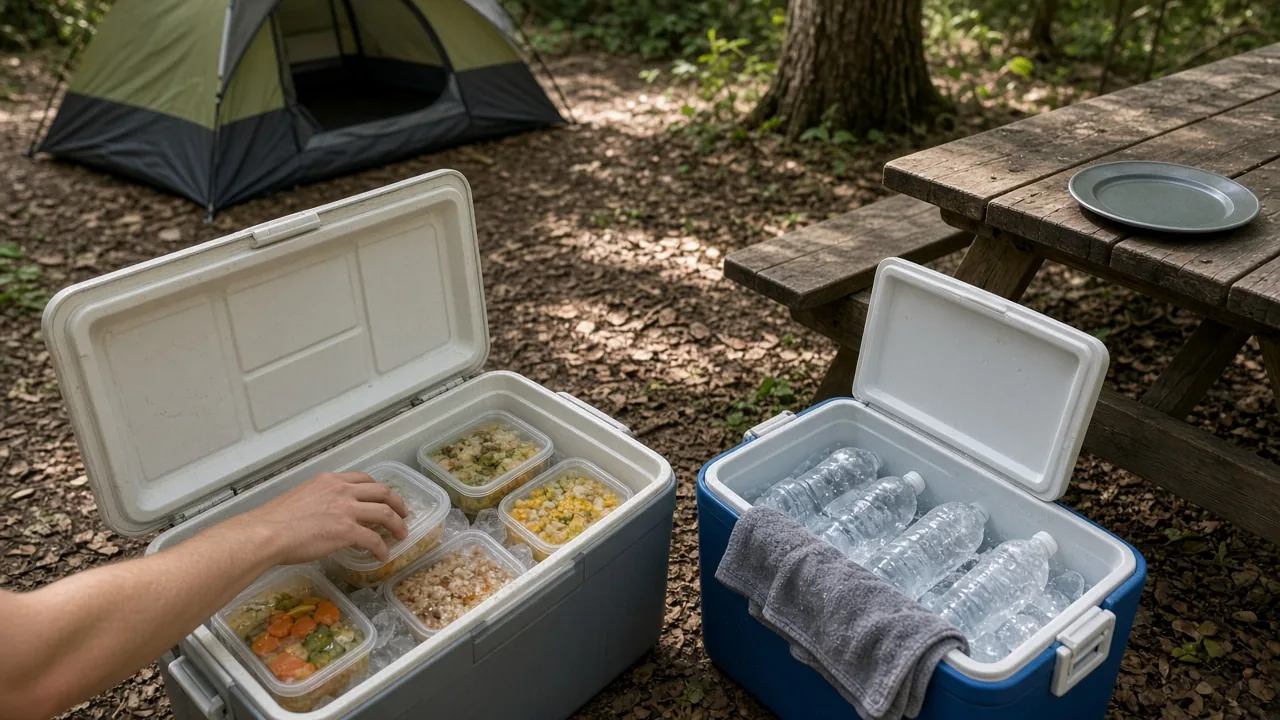
A practical DIY setup uses a roughly 32-quart EPP foam box placed inside a roughly 55-quart insulated delivery bag. Add ice packs or frozen water bottles, and include a probe thermometer so you can read the internal temperature without opening the lid. The outer insulated bag acts as a second layer and helps close some of the gaps around the foam box. Fit matters. If the outer bag is too loose, warm air pockets form around the foam. If it is too tight, the lid may not close cleanly. Measure both pieces before buying or reusing delivery bags you already have.
How cold is cold enough
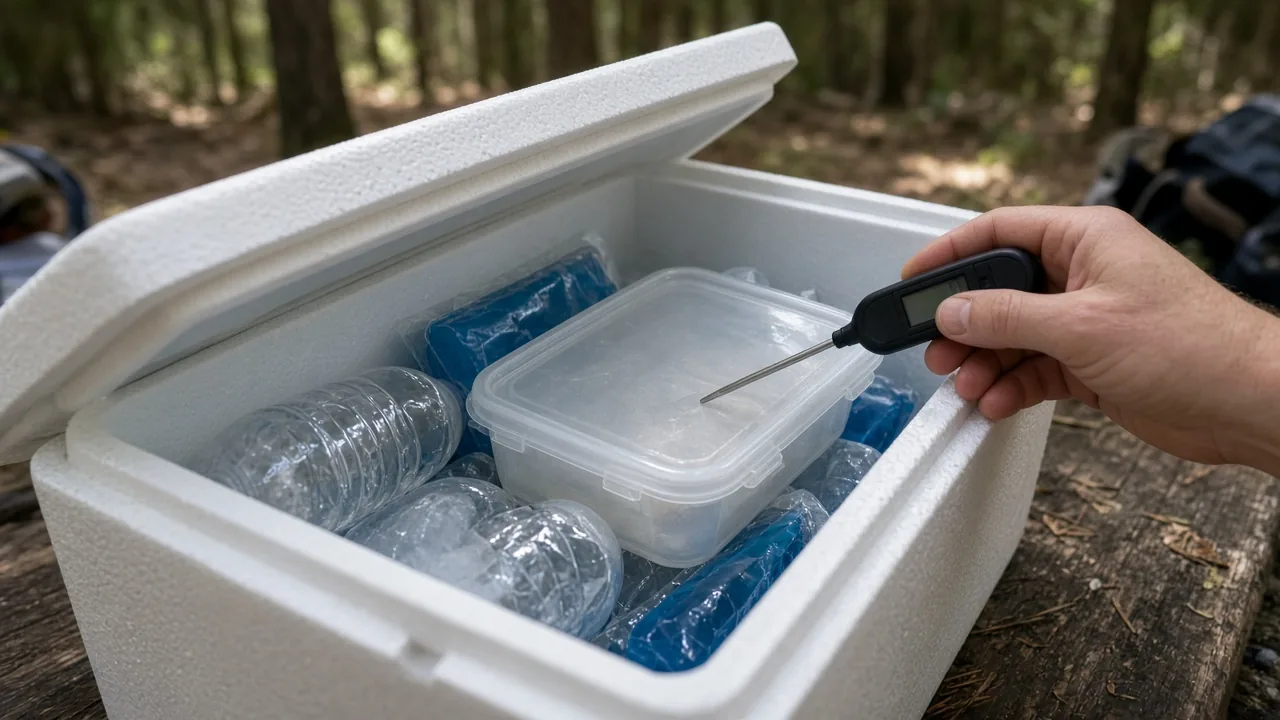
Cold food needs to stay below 40 degrees Fahrenheit for short trips. That is the temperature line you are trying to hold, not simply "the ice is still partly frozen." A box can feel cool inside while the food has already climbed above 40 degrees Fahrenheit. Check with a probe thermometer mounted through the foam or placed against the food zone. Compare the internal temperature with the outside air temperature rather than guessing from melted ice. If the probe shows 38 to 40 degrees Fahrenheit after a hot afternoon, use the food soon or add fresh ice. If it reads higher, treat perishables as unsafe.
What DIY Foam Coolers Get Right
A foam cooler is inexpensive, light for car camping, and easy to upgrade with foil, extra ice packs, or a tighter outer bag. The most obvious advantage is cost. A basic foam box and insulated delivery bag can be assembled for well under $100, compared with $50 to $325 or more for a molded camping cooler. For a first trip or a one-off picnic, that price difference matters.
Another benefit is weight. A foam box is far lighter than a rotomolded cooler that can weigh 23 to 30 pounds empty before ice and food. Car campers who are lifting gear in and out of a trunk will notice that difference immediately. A foam box also takes up less complicated space when empty, and it can be replaced without much regret if it cracks or gets dirty.
Mild-weather performance
In moderate temperatures, a pre-chilled foam box can hold drinks and food cold for one to two days when opened rarely and kept in shade. Pre-chilling helps more than people expect. Put frozen water bottles or spare ice packs in the empty foam box for a few hours before loading food. Then replace them with the food load and fresh frozen material. Close the lid fully each time. In 60 to 75 degree Fahrenheit weather with shade and limited opening, a foam box can hold safe temperatures through a weekend. Inside a hot car or in direct sun, it can lose the safe zone by late afternoon.
Cheap upgrades that extend ice life
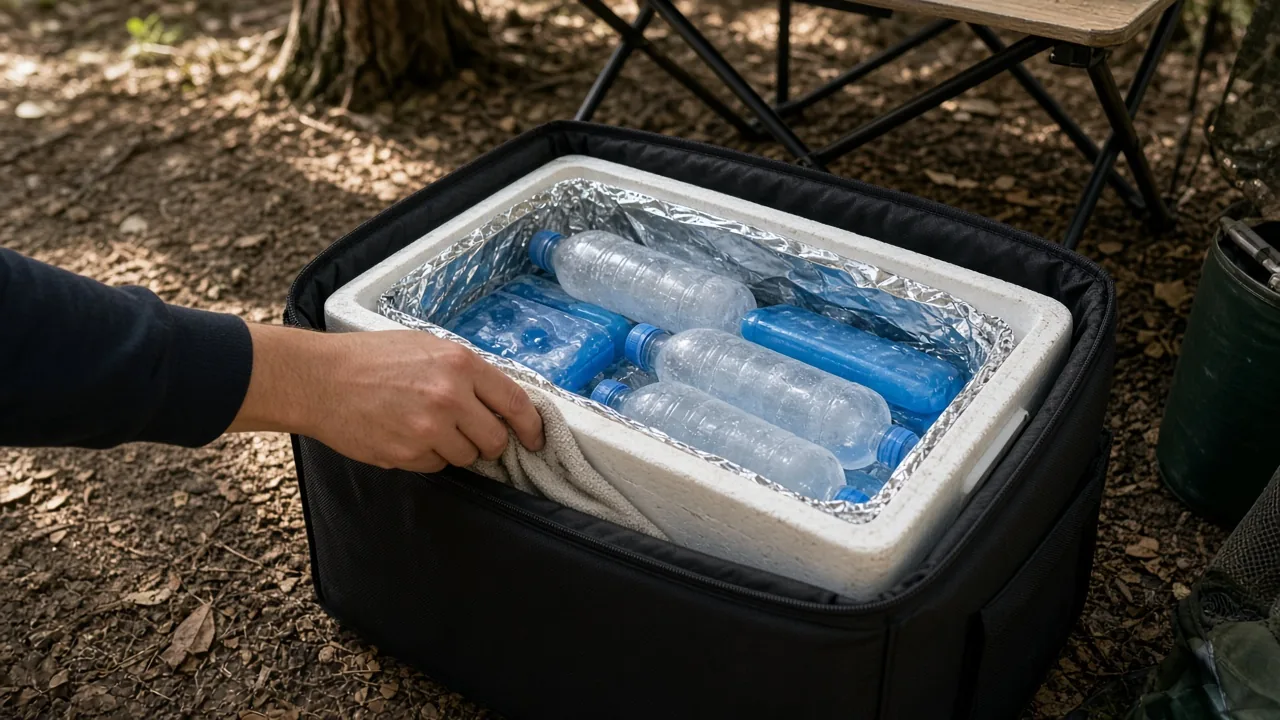
Line the foam with foil, use more ice packs, freeze water bottles, and close gaps between layers to slow heat transfer. Foil reflects some radiant heat, especially when the box sits near a warm car wall or in filtered sun. Frozen water bottles work well because they are both coolant and later drinking water. Pack the food at 70 to 80 percent full, leaving room for the frozen material to do its job. If the outer delivery bag has folds or gaps, stuff a thin towel or closed-cell foam scrap into those spaces. Every layer of still air you trap helps a little.
Ice and capacity rules
For one or two people use about 6 to 20 liters, which converts roughly to 6 to 21 quarts. For three to five people use 30 to 50 liters, roughly 32 to 53 quarts, and load only 70 to 80 percent full. Overpacking is a common mistake. When food blocks the lid or presses against the walls, cold air cannot circulate and the frozen material works less efficiently. In hot conditions, increase the amount of ice packs or frozen bottles. A useful rule from cold-chain packing is to plan more frozen mass per quart when daytime highs climb above 85 to 90 degrees Fahrenheit.
Where DIY Foam Coolers Fall Short
Thin walls, loose lids, and no drain or bear resistance make foam boxes less reliable in heat, rain, and rough handling. A foam lid usually does not seal. Warm air finds its way through the seam, and melted ice can pool around food unless you use sealed containers. Foam also lacks a drain port, so you cannot pour off water without unloading the box. In rain, the outer delivery bag may soak through. In direct sun, the surface temperature climbs fast, and the thin foam cannot hold back that heat as long as a thick-walled cooler.
Ice retention vs. retail coolers
A Coleman Classic claims five days of ice retention, while a foam box is more realistic for one to two days in warm weather. Claimed ice retention is usually measured under controlled conditions, not a hot trunk or a campsite in full sun. Even so, the comparison shows the gap. A molded cooler with a tighter lid and thicker insulation slows heat transfer far better than a foam box with a loose top. If your trip depends on keeping meat, dairy, or medication cold for three days or more, a foam cooler is the wrong tool.
Durability and weather limits
Foam can crack, insulated bags can tear, and rain or direct sun shortens cooling unless the cooler stays shaded and covered. Foam does not handle being dropped onto rocks or pinched against sharp gear in the trunk. Once cracked, the insulation value drops. The fabric outer bag also snags and tears. Keep the cooler under a camp table, in a covered vehicle, or beneath a reflective tarp. A wet outer bag feels cool at first but eventually conducts heat. If you expect rain, keep the cooler inside a dry bin or vehicle rather than trusting the delivery bag to protect the foam.
Bear-safety limits
In bear country, use an IGBC-certified hard-sided cooler. A foam box is not a bear-resistant food storage method. Even a strong rotomolded cooler only works as bear-resistant storage when it is properly locked and certified. In areas with bear requirements, store food and scented items in an approved hard-sided cooler or a food locker, or use a proper bear hang where allowed. Check the local ranger district or campground rules before you go. A foam cooler left on a picnic table is an invitation, not protection.
Who Should and Should Not Use a DIY Foam Cooler
Try it for front-country car camping, day trips, and tight budgets. Avoid it for backpacking, hot-weather trips, or places with bear requirements. The foam cooler makes sense when you are not far from the vehicle, the trip is short, and you can add ice or replace frozen bottles before the food warms up. It makes less sense when the stakes are higher: remote campsites, no resupply, high heat, or long drives home with leftovers.
Good fit: short weekend car camping
It suits first-time campers and small groups who want cold drinks and simple meals without buying a high-end cooler. One or two people heading out for a Friday-to-Sunday trip in spring or fall can often make it work. Use frozen water bottles, keep the lid shut, and pack foods that tolerate slight temperature rise: hard cheese, cooked vegetables, sealed dips, and drinks. Raw meat and pre-cut fruit need more careful temperature control, so plan to cook those early or leave them out of a foam-only setup.
Poor fit: backpacking and extended heat
Backpackers need compact, leakproof insulation, and hot-weather trips call for thicker rotomolded walls and better seals than foam provides. A foam box is too bulky and fragile to carry on a trail. For backpacking, a small soft cooler or insulated food pouch works only for a day carry; most overnight backpackers rely on shelf-stable meals instead. In extended heat, the same foam cooler that worked in May may not hold 40 degrees Fahrenheit through a July afternoon. If nighttime lows stay warm and daytime highs sit above 90 degrees Fahrenheit, switch to a molded cooler or plan meals that do not need refrigeration.
Camp kitchen safety with a foam cooler
Keep the cooler shaded and open it less, and never use a stove or heater inside your tent. That last point matters beyond cooler choice: camp stoves, heaters, grills, and charcoal produce carbon monoxide, and using any fuel-burning appliance inside a tent or closed space creates a serious carbon monoxide and fire risk. Cook in the open, away from the tent and away from flammable gear. For the cooler itself, position it on the north side of the vehicle or under a table. Open it once, take out everything you need for that meal, and close it again. Frequent opening is the fastest way to lose cold air.
Cooler Upgrades and Alternatives When Foam Is Not Enough
If you need multi-day ice, wheels, drain ports, or lighter weight, a molded camp cooler is a stronger choice than DIY foam. The cooler market splits into budget hard-sided boxes, mid-range rolling models, and high-performance rotomolded options. Choose based on trip length, how far you have to carry the cooler, and whether weight or ice retention matters more for your style of camping.
Budget and mid-range car camping coolers
Coleman Classic and Igloo Marine Ultra suit long weekends and water-side trips. The Coleman Classic in the 52-quart size is a common budget starting point, with a claimed five-day ice retention and a seat-style lid. The Igloo Marine Ultra is useful near water because its UV-shielded body and threaded drain plug make it easier to clean and drain without tilting the whole cooler into your vehicle. If you do not want to carry a full cooler, a rolling model such as the Coleman Extreme Rolling helps on smooth surfaces, though wheels still struggle over rocks and roots. These are car-camping coolers, not backpacking gear. They work best when you can park close to the site.
High-performance and bear-resistant options
Rotomolded coolers like RTIC Ultra Tough and Yeti Tundra give thicker insulation and IGBC bear certification but add noticeable empty weight. The RTIC Ultra Tough uses thick closed-cell foam and one-piece rotomolded construction. The Yeti Tundra adds a gasketed seal and IGBC bear certification, but a 45-quart size can weigh more than 23 pounds empty. Add ice and food, and the loaded weight climbs quickly. These coolers suit campers who take long trips in hot weather, fish or hunt, or camp where bear-resistant storage is required. They are overkill for a one-night picnic and punishing to lift repeatedly.
DIY vs. retail specs at a glance
Compare capacity in quarts, empty weight in pounds, claimed ice retention days, and whether the cooler fits car camping or backpacking before choosing. The table below is a general comparison, not a field test result. Claimed ice retention comes from manufacturer specs and should be treated as an optimistic reference point, not a guarantee.
| Option | Approx. Capacity | Empty Weight | Claimed Ice Retention | Best Fit |
|---|---|---|---|---|
| DIY EPP foam box + delivery bag | 32 qt inner / 55 qt outer bag | Very light | Realistic 1–2 days in mild weather | Short car camping, day trips, tight budgets |
| Coleman Classic 52 Qt | 52 qt | Moderate | 5 days claimed | Long weekends, budget car camping |
| Igloo Marine Ultra 54 Qt | 54 qt | Moderate | Not specified in sources | Water-side trips, easy draining |
| Coleman Extreme Rolling 50 Qt | 50 qt | Moderate, with wheels | 5 days claimed | Car camping when you don't want to carry a full cooler |
| RTIC Ultra Tough 45 Qt | 45 qt | Heavy | Strong, no day count given in sources | Hot weather, rough handling, repeated use |
| Engel 60 Qt Ultra Light | 60 qt | Lighter than rotomolded | 7 days claimed | Car camping when weight is a concern |
| Yeti Tundra 45 | 45 qt | 23+ lb empty | Strong, no day count given in sources | Bear country, extreme heat, long trips |
For one or two people on a day trip, a small cooler in the 6 to 20 quart range is enough. For three to five people on a family campout, the 30 to 50 quart range makes sense. Load no cooler beyond 70 to 80 percent full, and fill the remaining space with ice packs or frozen bottles. A larger cooler loaded loosely often holds temperature better than a small cooler stuffed tight.
The Bottom Line
For a mild weekend car-camping trip, a DIY foam cooler may be enough. For heat, rain, or multi-day food safety, choose a molded cooler and check the forecast before you pack. Match the cooler to the trip: day trips and shoulder-season weekends can tolerate foam; longer, hotter, or bear-country trips cannot. Before you leave, ask whether this is a car-camping trip or a backpacking trip, what the nighttime lows and daytime highs will likely be, and whether rain or direct sun will sit on the cooler all afternoon. If you plan to store raw meat, dairy, or anything temperature-sensitive, check the forecast and pack enough frozen mass. If the answer keeps leaning toward precooked meals and shelf-stable food, that may be the simpler upgrade than a more expensive cooler.
This article is general information about camping gear, not professional safety, medical, or wilderness training. Check fire restrictions, weather, and campsite rules before you go, and follow the manufacturer's instructions for your own equipment.
FAQ
How long can a DIY foam cooler keep food cold while camping?
In mild weather with pre-chilling, frozen bottles, shade, and limited opening, it may hold safe temperatures for one to two days. Hot sun or frequent opening can shorten that window.
Are foam coolers bear-resistant?
No. A foam box is not bear-resistant food storage. In bear country, use an IGBC-certified hard-sided cooler or a food locker.
What upgrades help a foam cooler hold ice longer?
Pre-chill the foam box, line it with foil, use more ice packs or frozen water bottles, keep the cooler shaded, and close gaps between the outer bag and foam.
Should I use a foam cooler for backpacking?
No, foam coolers are too bulky and fragile for backpacking. They are best for front-country car camping and day trips.
What temperature should food stay below in a camp cooler?
Cold food should stay below 40 degrees Fahrenheit. Use a probe thermometer to check the internal temperature without opening the lid.