Do Camping First Aid Kits Expire? What to Do With Expired Supplies
A camping first aid kit’s printed date doesn’t mean every item inside is bad. Learn which supplies to replace, keep, or use for practice, and how to repack and schedule your next kit review.
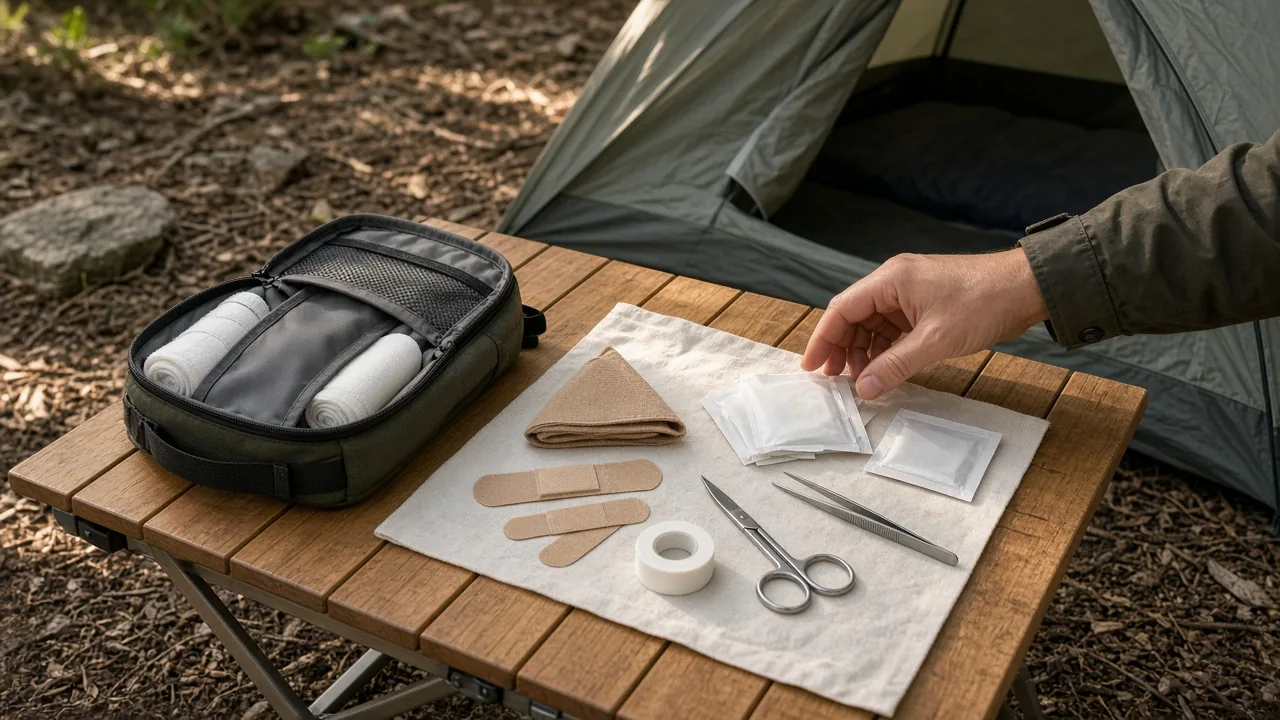
You pull out the camping first aid kit before a spring trip, see a printed date that passed two years ago, and wonder: do camping first aid kits expire, and does that mean you need to replace everything inside? The short answer is that the printed date usually matters most for a handful of high-risk items, not the whole kit. This checklist sorts expired camping first aid supplies by risk and use, so you replace only what needs replacing and keep safe items for practice or backup.
Do Camping First Aid Kits Expire? What the Date Actually Means
A camping first aid kit’s printed expiration often reflects about five years from production, but storage and retail time can cut that by a third. A kit that sat in a warehouse, then on a store shelf, then in a hot garage may have only three or four years of useful life left when you buy it. Many inner items have no separate expiration date, only a production code. That means the date on the outer box is not a reliable signal that every bandage and tool inside has gone bad.
Check the Date Source Before You Trust the Label
Before you toss anything, confirm whether the date is from manufacture or a retail sticker. A production date tells you the kit’s age from the factory, while a retail sticker may track when it was put on the shelf. Watch for clearance kits that may already be near the end of their useful life. If you buy a kit on deep discount, assume you are buying less remaining shelf life. Write the actual purchase date and the earliest replaced item’s date on the outside so you can review the kit on a schedule instead of relying on the original label.
What Expires Differently Inside the Same Kit
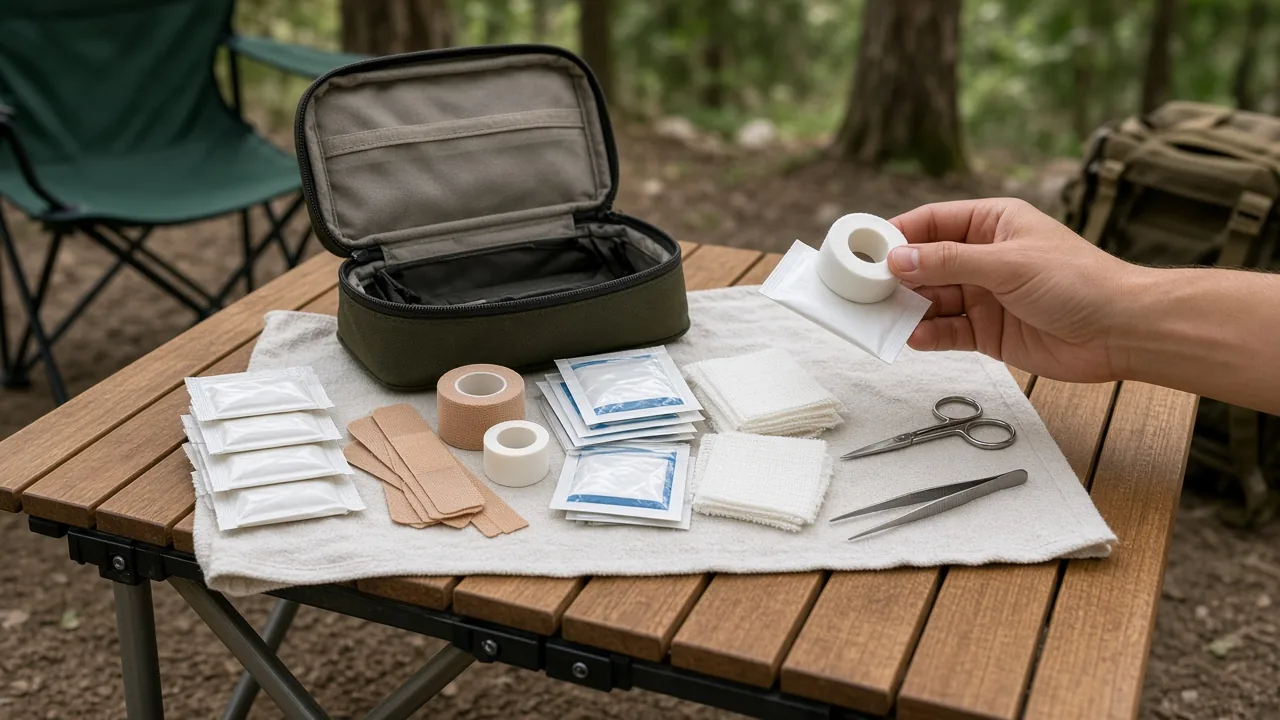
Different items inside the same kit fail in different ways. Medicines can chemically degrade, lose strength, or become unsafe or more concentrated as liquids dry out. Adhesive bandages and medical tape can weaken, dry, or harden. Alcohol pads and iodine swabs may dry into stronger concentrations that irritate skin. Meanwhile, gauze pads, scissors, triangle bandages, and metal tweezers may remain usable for years if they stay dry, clean, and free of rust or package damage. Approach the kit as a collection of separate items with separate risks, not one uniform expiration.
Sort Every Item Into Replace, Keep, Practice, and Toss
Open the kit on a clean surface and divide supplies into four groups. Replace high-risk drugs and sticky wraps. Keep clean, non-expired items that still pass a visual and touch check. Move expired but intact items into a practice bag for home training. Toss anything opened, discolored, stiff, leaking, or compromised by moisture, rust, or visible contamination.
When to Keep an Item That Has No Date
If the packaging is unbroken and the material feels and looks normal, low-risk items like rolled gauze, triangle bandages, scissors, and tweezers can stay. Check for smell, stiffness, brittleness, rust, or package tears. A sterile gauze pad that has stayed sealed and dry is usually fine past a missing date. A roll of tape that has turned yellow and lost its adhesive is not. When in doubt, downgrade the item to practice use instead of putting it back in the field kit.
Ask Before Using Expired Supplies on Someone Else
If you only have expired items for a group member or stranger, tell them it is expired and get consent before applying it. For a family member or close friend, that conversation is easier. For someone you just met at a trailhead, explain what the item is and what the date means. Some people are fine with an expired sterile pad; others are not. Do not make that choice for someone else in an emergency unless the person cannot respond and the alternative is doing nothing.
Replace High-Risk Items: Medications, Adhesives, and Wound-Cleaning Liquids
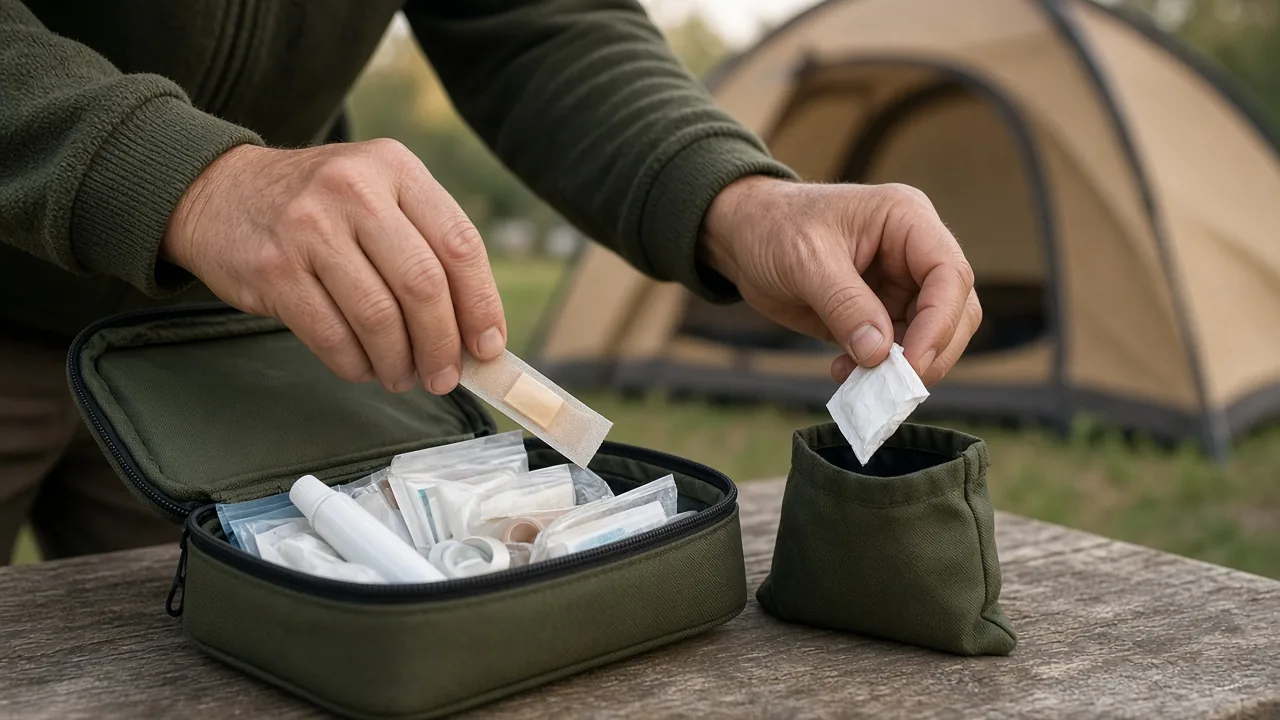
Swap out oral and topical medicines, antibiotic ointments, alcohol pads, iodine swabs, and adhesive bandages first. These are the items most likely to lose strength, dry out, or become unsafe. Pain relievers and antihistamines in open containers can absorb moisture and degrade. Antibiotic ointment can separate or lose potency. Alcohol pads can dry into a stronger concentration that burns or irritates. Adhesive bandages may not stick when you need them. Replace these every review or whenever they pass their printed date, whichever comes first.
Why Cotton Medical Tape Fails and What to Use Instead
Cotton cloth tape often hardens and loses stickiness over time, especially if the kit sits in a hot car or garage. When you reach for it to anchor a dressing, the roll may feel stiff or refuse to peel cleanly. Choose PE breathable tape for longer storage. It resists hardening better than cotton cloth tape and holds up across temperature swings. Still, replace the roll at each review. Tape is cheap insurance compared with a dressing that falls off.
Keep Paper Instructions With Any Replacement Medicine
When you replace medicine, keep the original drug information sheet in a sealed bag inside the kit. That small paper gives you dosage, allergy, pregnancy, and child warnings when you need them most. A camping trip is the wrong time to guess whether an antihistamine is safe for a kid or whether a pain reliever conflicts with a group member’s medication. Store the folded sheet behind the medicine pouch so it is there on the night you have to read it by headlamp.
Keep Low-Risk Supplies If They Pass a Visual and Touch Check
Gauze pads, triangle bandages, scissors, and tweezers without an expiration date can stay if they are dry, clean, flexible, and free of rust or package damage. Squeeze the package gently to check for air leaks. If a sterile wrapper has been compromised, treat it as non-sterile but still maybe useful for practice or as a clean barrier. Metal tools can rust in humid environments; a little surface rust on scissors is a sign to replace or relegate to practice. A torn package is a discard signal, because you cannot guarantee cleanliness.
Use Expired Supplies for Practice and Familiarization
Unpack expired bandages, wraps, and dressings at home to rehearse wound care and splinting. The motions of opening a sterile pad without contaminating it, wrapping an elastic bandage at the right tension, and folding a triangle bandage into a sling are easier to learn when you are not bleeding and shivering. Expired items are perfect for this because you do not care if you use them up or get them dirty. A reader who had too many expired supplies once mentioned using them to practice opening packages one-handed, which is a hard skill to learn for the first time in the dark.
Practice Without Wasting Fresh Supplies
Set aside only expired or opened items for practice, and keep the new batch sealed for actual emergencies. You may be tempted to open a fresh sterile pad just to see how it unfolds. Do not. Use the expired pad instead, and leave the new one intact. Once you practice with a new item, it is no longer guaranteed sterile, so it moves to the practice bag by default. This keeps your field kit clean and your training kit full.
Repack, Label, and Set the Next Review Date
After refreshing, write the new expiration or review date on the outside with an oil-based marker. An oil-based marker resists rain, sunscreen, and gear abrasion better than a regular permanent marker. Use moisture-resistant pouches or small dry bags for medicines and adhesive items. Schedule a check every six months or before each season. If you camp in desert heat or coastal humidity, check more often, because temperature swings shorten the life of adhesives and liquids.
Packaging Tricks That Reduce Early Expiry
Choose composite-film or granule packets for pills instead of loose bottles. These individual packets are more crush-resistant and keep out moisture better than cotton-stuffed bottles. If you have soft packaging that might get crushed, back it with small strips of duct tape to add stiffness. That works well for blister packs of small tablets or thin foil pouches. Tape also doubles as emergency repair tape later, though peeling the pill out takes a few extra seconds.
Add a Light Source and Temperature Card for Night Checks
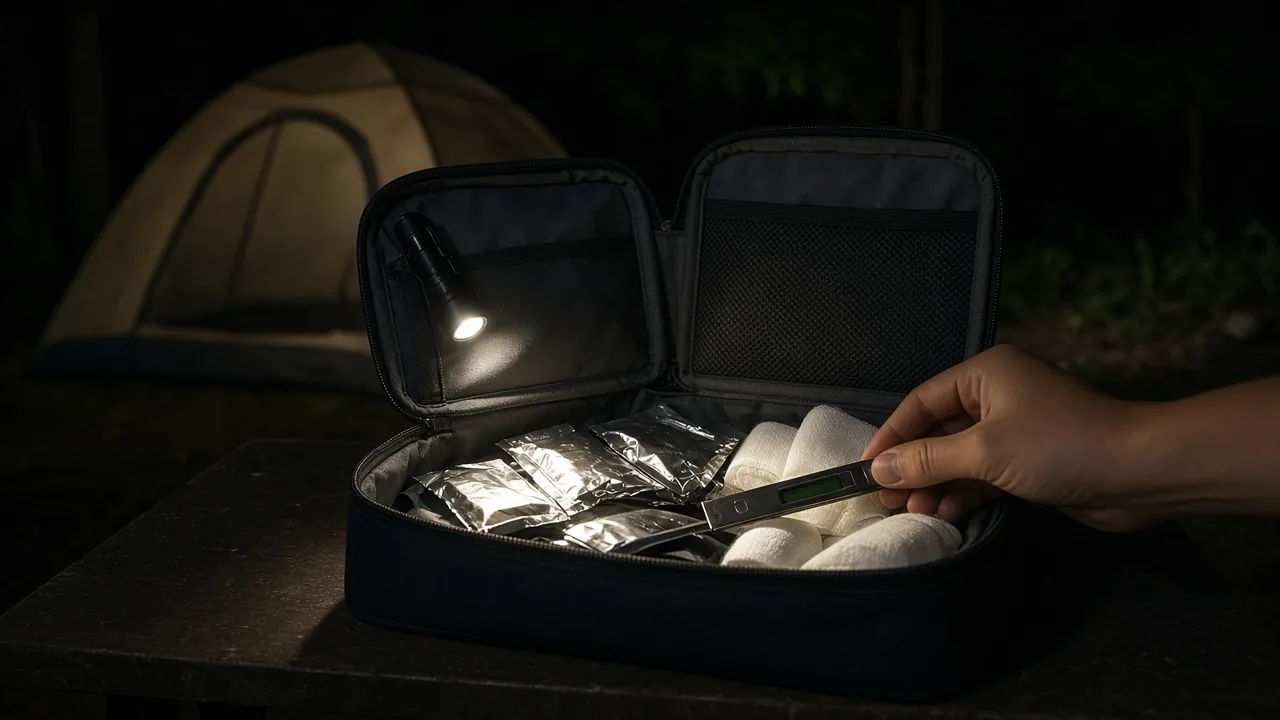
Clip a small flashlight inside the kit so you can read labels and handle supplies after dark. The light should be small enough to stay in the pouch and bright enough to check a wound or read a drug information sheet. Pack a thin LCD thermometer card as well. It weighs almost nothing and lets you check for fever without guessing. A fever reading in camp changes how you treat a person and whether you walk out that night.
How to Choose and Maintain a Camping First Aid Kit for Car Camping vs Backpacking
Match the kit size to your trip. Car camping allows a larger trauma and medicine kit with more options and spare items. Backpacking needs lightweight, multi-use items that you will realistically review and replace. In a backpacking kit, every ounce matters and every item should earn its spot. A car camping kit can hold more variety, but that also means more items that can expire quietly in the back of the vehicle.
Avoid the Overstock Trap
Buy small, frequent refills of core items rather than one huge medical stockpile. Many drugs and adhesives will expire before you use them if you buy in bulk for several seasons at once. A reader who had stocked a large medical supply later found most of it expired and ended up keeping only a few daily-use items. That is common. For camping, it is better to refresh a small set of pain relievers, antihistamines, antibiotic ointment, alcohol pads, and adhesive bandages every spring and fall than to buy a family-size box that dies in storage.
Safety First When You Sort and Restock in Camp
If you are reorganizing the first aid kit at the campsite, do it outside or in a well-ventilated shelter. Never use a stove or heater inside your tent, including for warmth while you sort small items. Carbon monoxide builds up fast in enclosed spaces, and open flames near fabric and bandages are a fire risk. Work on a camp table or ground cloth, keep small items in a bowl so they do not blow away, and close the kit before the wind picks up.
Before your next overnight, check the overnight low, rain chance, and whether you are driving or hiking, then review the kit with that trip in mind. Replace expired high-risk items and pack only what fits the trip. A car camping burn kit may be worth it, while a backpacking kit probably is not. Match the cure to the conditions, and you will not have to guess whether that bandage will stick when you finally need it.
— Camp Kit Journal
This article is general information about camping gear, not professional safety, medical, or wilderness training. Check fire restrictions, weather, and campsite rules before you go, and follow the manufacturer's instructions for your own equipment.
FAQ
Do camping first aid kits expire?
Yes, the printed date matters most for high-risk items such as medicines, adhesives, and wound-cleaning liquids. Low-risk supplies like sealed gauze, scissors, and tweezers can remain usable if they stay dry, clean, and undamaged.
Can I use expired first aid supplies on someone else?
If you only have expired items for a group member or stranger, tell them the item is expired and get consent before using it. Do not make that choice for someone else unless the person cannot respond and doing nothing is the only alternative.
What should I replace first in an expired camping first aid kit?
Replace oral and topical medicines, antibiotic ointments, alcohol pads, iodine swabs, and adhesive bandages first. These items are most likely to lose strength, dry out, or become unsafe.
How often should I review and restock a camping first aid kit?
Review the kit every six months or before each season, and more often in desert heat or coastal humidity. Write the new date on the outside with an oil-based marker after restocking.
Can expired bandages still be useful?
Yes, expired bandages, wraps, and dressings can be set aside for practice and familiarization at home. Use them to rehearse wound care and splinting, and keep fresh supplies sealed for actual emergencies.