Day Hiking First Aid Kit Checklist: Lightweight Essentials
A practical guide to packing a lightweight day hiking first aid kit checklist with the wound care, medications, and safety items matched to your trail length and weather.
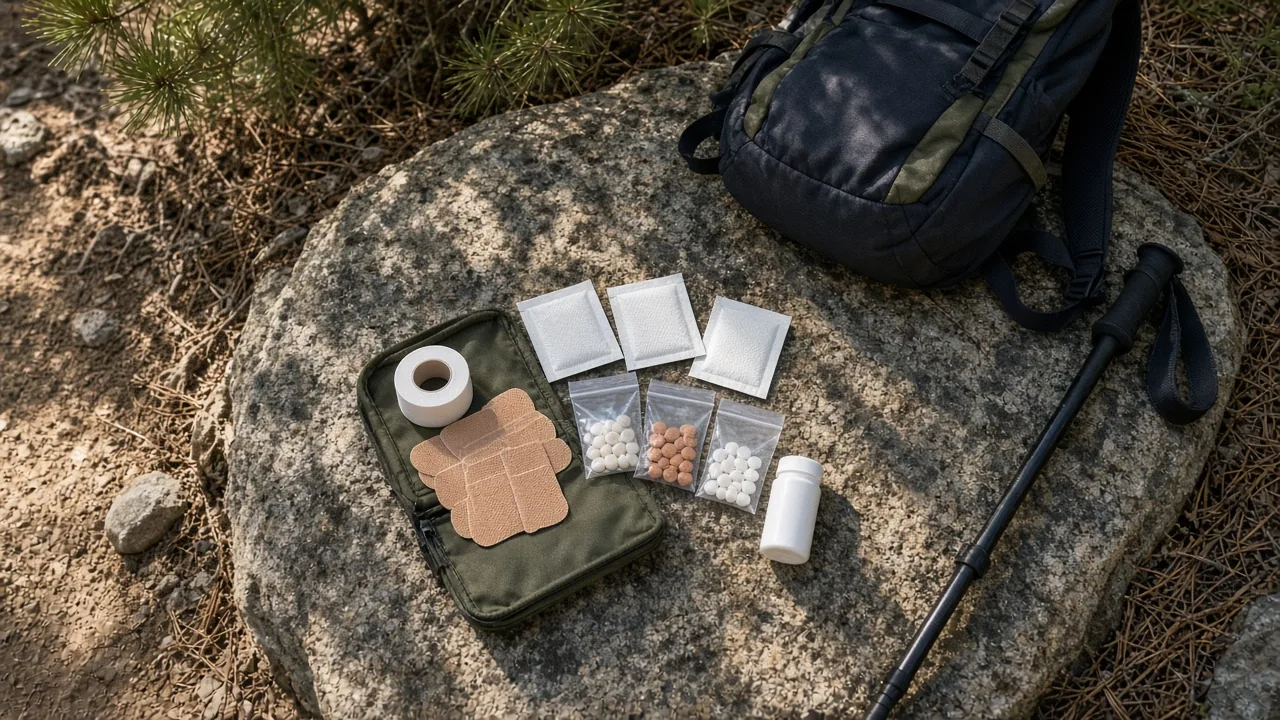
A day hiking first aid kit should be lighter than an overnight kit, but it still needs to handle the problems that actually end a short hike: hot spots and blisters, dirty scrapes, headache, nausea, and a surprise allergic reaction. Use this day hiking first aid kit checklist to build a kit that matches the forecast and the trail length instead of carrying a full pharmacy or a uselessly thin pouch. Start with wound care and personal medications, then add only what the route and weather make relevant.
Day Hiking First Aid Kit Checklist: Why Weight and Trip Length Decide What Goes In
Day hikes sit in a strange middle ground. You are not carrying enough gear to justify a full expedition medical kit, but you are often far enough from the car that a bad blister or stomach issue can turn a three-hour walk into a very long afternoon. The practical answer is to split the difference: carry a compact kit built around friction care, wound cleaning, pain relief, stomach medicine, and personal prescriptions, and leave the bulky trauma supplies at home unless the route is remote, technical, or far from help.
A useful way to think about this is to compare two loadouts. The first is an ultralight approach: a flat trail wallet with a short roll of leukotape, a few bandages, antiseptic wipes, a single oral pain reliever, an anti-diarrheal, and any personal meds. This is a reasonable day hiking first aid kit checklist for a maintained frontcountry trail where you can walk out or call for help. The second is a fuller kit for longer or more isolated day trips: the same basics plus a pressure dressing, a small roll of elastic bandage, iodine swabs, an antihistamine, and perhaps a multi-tool with a whistle and fire starter. Neither kit needs sutures, oral antibiotics, or a full trauma pouch for most day hikes.
The deciding factors are trip length, distance from the trailhead, weather, and how rough the terrain is. A two-mile loop on a gravel path asks for the light kit. A nine-mile ridgeline walk with rain in the forecast and no cell service for the last four miles asks for the fuller one. Before packing, check the overnight low and the chance of storms even if you plan to be back by dinner—day hikers get stranded too, and a small kit should still cover an unplanned cold, wet wait.
Start With a Container That Fits Your Pack and Stays Dry
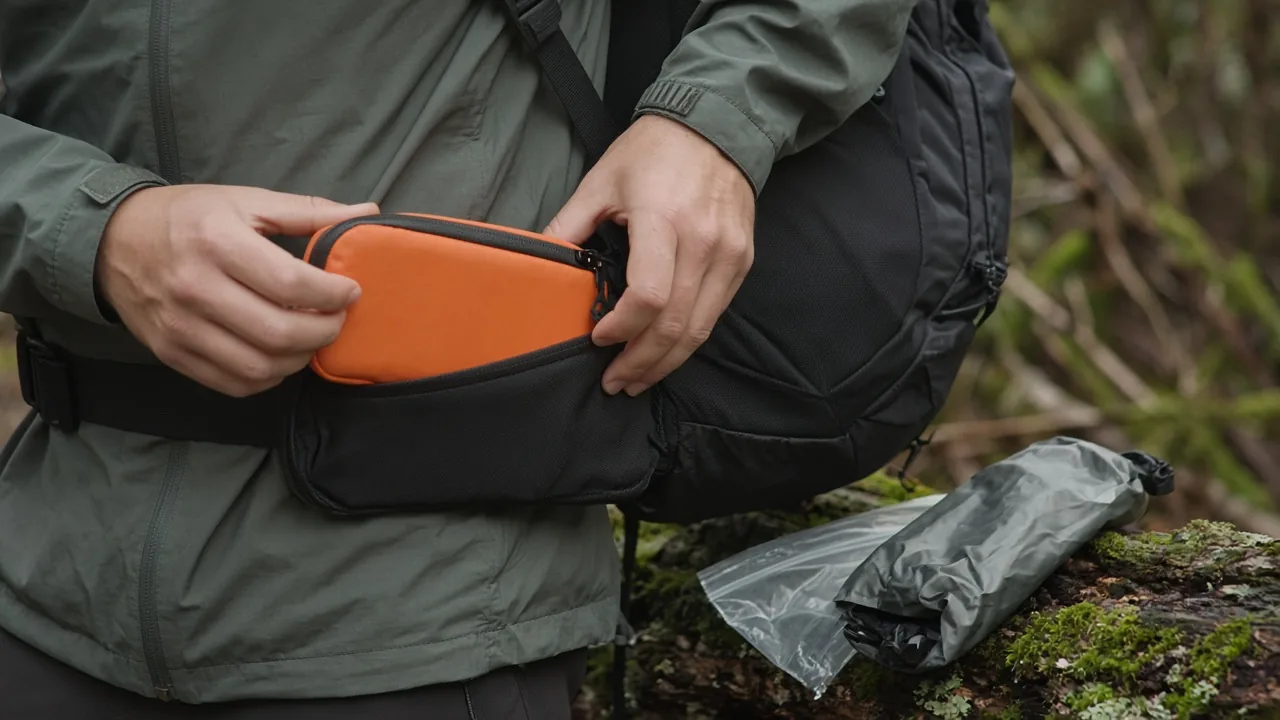
A day hiking first aid kit works only if you can find it quickly and if the contents stay dry. Use a flat trail wallet or a small zip pouch that slips into a hipbelt pocket, side pocket, or the top of a daypack. If the shell is not sealed, place the entire kit inside an inner waterproof bag. Some day hikers use a lightweight dry bag inside a non-waterproof waist pack for this reason.
The container should be just large enough to hold the checklist items without encouraging you to fill every extra cubic inch. A tight pack forces you to make decisions. Label every repackaged medication with the drug name and dose, not just the brand. In low light or bad weather, you do not want to guess which small bag holds ibuprofen and which holds an anti-diarrheal.
Wound Care Basics: Blisters, Cuts, and Bleeding Control
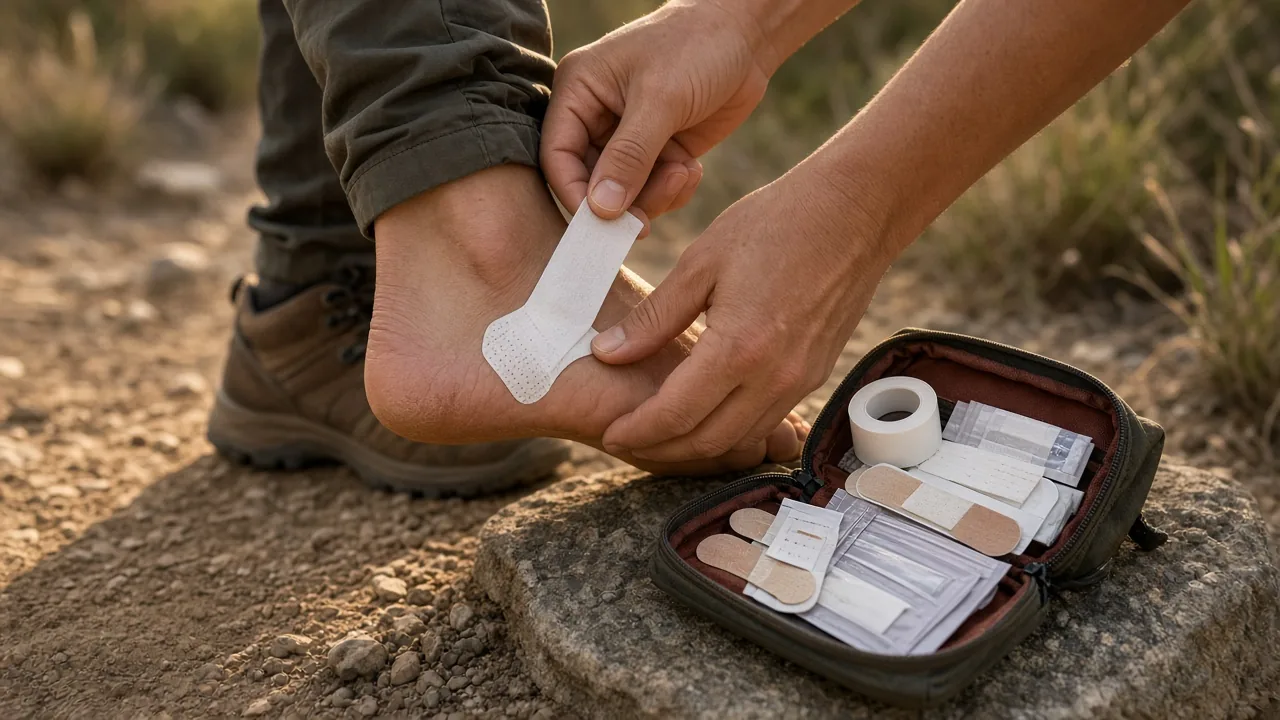
Blisters are the most likely injury on a day hike, so the wound care section should lead with friction management. Leukotape is one of the most useful items you can carry: it can cover a hot spot before it opens, protect a formed blister, patch a torn jacket, or reinforce a failing shoe. A few hikers carry a dedicated heel blister pad in addition to leukotape, but the tape can be cut to shape and does double duty.
For cuts and scrapes, carry a small number of adhesive bandages in a couple of sizes, plus antiseptic wipes or iodine swabs. Single-use iodine or alcohol swabs with a break-off tip are easy to pack, though alcohol wipes dry out faster and some travelers report being stopped with them at transit security. A small pressure dressing and a short roll of self-adherent elastic bandage cover the rare deeper wound. The sequence that makes sense for most day hikers is simple: clean the area, apply a bandage, and wrap only if you need to keep pressure or protect the wound from dirt. Skip sutures and large trauma supplies on routine day hikes unless you are climbing, scrambling, or traveling in remote terrain where evacuation is difficult.
How to Choose Medications for a Day Hiking First Aid Kit
The medicine section is where day hikers most often overpack or underpack. A practical day hiking first aid kit checklist includes one oral pain reliever, an anti-diarrheal, an antihistamine for stings or mild allergic reactions, and only the prescription drugs your doctor has told you to carry for your own conditions. Those four categories cover most problems you will actually treat on the trail.
Oral antibiotics are not a routine item for short frontcountry hikes. They require a doctor's guidance, expire, and add weight for a problem you should not be self-diagnosing on a day walk. If you have a prescription for a specific recurring condition and your doctor has advised you to carry it, include the labeled supply and the package insert. Otherwise, leave the antibiotics at home.
Pain and Stomach Medicines: Acetaminophen, Ibuprofen, and Imodium
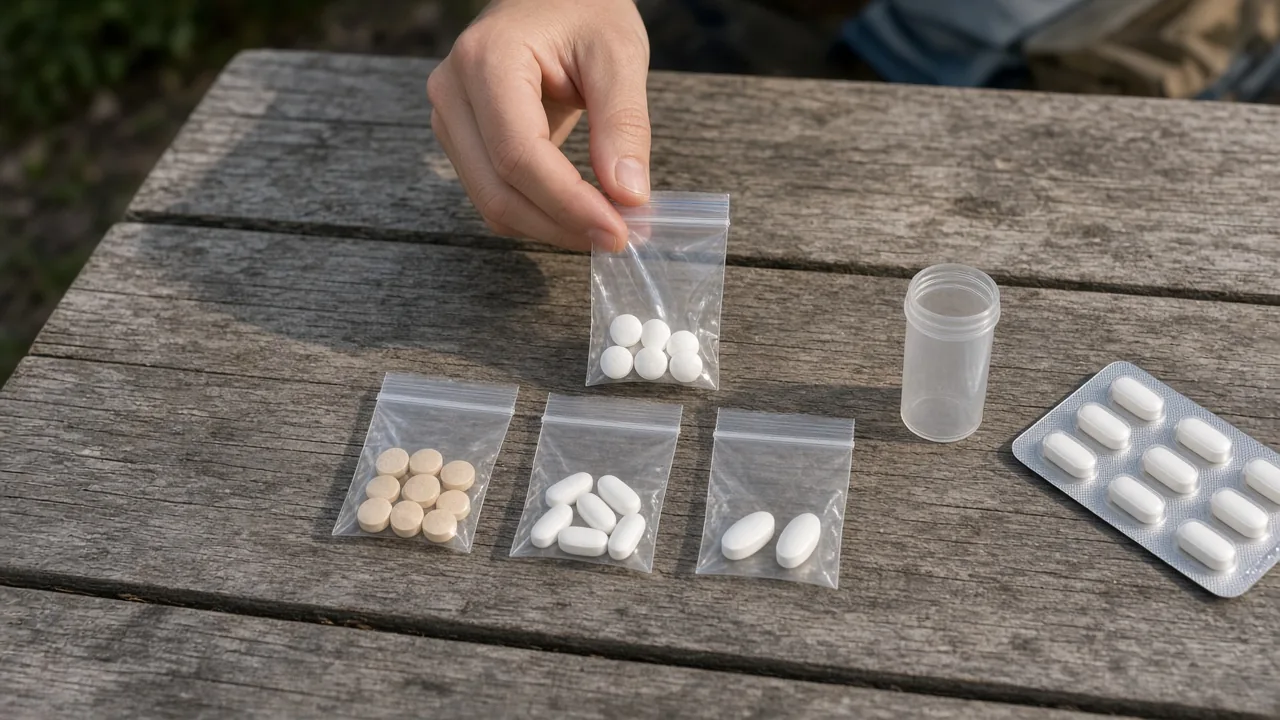
Pick one oral pain medicine such as acetaminophen or ibuprofen. Both handle headache, minor muscle pain, and fever. Acetaminophen is often easier on the stomach; ibuprofen adds an anti-inflammatory effect that can help with a sore knee or mild sprain. You do not need both on a short day hike, though some hikers prefer ibuprofen for joint pain after a rocky descent. Repackage pills into a small labeled zip bag or a tiny pill vial rather than carrying a whole bottle.
Add an anti-diarrheal such as loperamide, sold as Imodium A-D, for the stomach problems that can derail a hike faster than a blister. A few doses are enough. Pack them in a labeled container and keep them separate from pain medicine so you do not mix pills in low light.
Allergy and Prescription Medications: What You Can Safely Add
Carry an antihistamine for bee stings, insect bites, or mild allergic reactions. This is especially useful in summer and around flowering or nesting areas. An antihistamine such as chlorpheniramine or loratadine can reduce swelling and itching, though it will not replace epinephrine for a severe reaction. If a doctor has prescribed an epinephrine auto-injector for you, carry it with the instructions and know how to use it.
Personal prescription medications go in the kit only if you might need them on the trail—such as an inhaler, heart medication, or medication for a known allergy. Read package inserts before combining anything. A key interaction to remember: alcohol-based remedies should not be combined with cephalosporin antibiotics such as cefradine. If you carry any prescription or over-the-counter medicine that contains alcohol, keep it out of the same kit section as those antibiotics, and verify the label before taking both.
Common Mistakes When Packing a Day Hiking First Aid Kit
The most common mistake is carrying a full trauma kit for a short, frontcountry trail. Extra gauze rolls, tourniquets, sutures, and three kinds of bandages add weight and make it harder to find the small items you will actually use. A related mistake is relying on strong topical pain sprays to numb a sprain and keep walking. That can mask an injury that needs rest and create a false sense of safety about how far you can safely push.
Another frequent error is mixing medications without checking labels. Some hikers carry remedies that contain alcohol, such as certain herbal waters or liquid stomach medicines, and do not realize these should not be taken with cephalosporin antibiotics. Treat blisters early instead of waiting for them to open. A piece of leukotape over a hot spot is faster, lighter, and less painful than cleaning and bandaging a full blister later.
Why Strong Topical Pain Sprays Can Create a False Sense of Safety
Some hikers report numbness or heart discomfort after using a strong topical pain spray such as Yunnan Baiyao red spray on a sprain. The spray can numb the area enough that a person continues walking on an injury that should be rested. A nonprescription NSAID such as ibuprofen, combined with rest and a short wrap, is often a safer first response for a minor sprain than numbing the pain and pushing on. If you are more than a short walk from the trailhead and the injury affects your ability to bear weight, the safer decision is usually to slow down, support the joint, and turn back rather than mask it.
Drug Interactions and Alcohol Warnings
Huoxiang Zhengqi Water, a common stomach and heat remedy in some kits, may contain alcohol and should not be taken with cephalosporin antibiotics such as cefradine. The interaction can cause a serious reaction. The same caution applies to any alcohol-based tincture or liquid medicine. Verify every medication's label before you pack, and do not store incompatible drugs in the same unlabeled bag where they might be taken together by mistake. If you are carrying both an alcohol-based remedy and a cephalosporin, keep them clearly separated and add a note inside the kit.
How to Pack a Light First Aid Kit Without Leaving Out Essentials
A light kit is not about removing useful items; it is about choosing compact, multipurpose versions of them. Single-dose packaging saves weight and makes items easier to find. Repackaging medicines into small labeled containers keeps the kit compact. A short length of duct tape replaces a full roll. Leukotape covers blisters and repairs gear. A small multi-tool with a whistle adds survival options without much weight.
Repackage, Label, and Waterproof Every Medicine
Instead of carrying whole bottles, fill small straws with antibiotic ointment such as Neosporin, seal both ends, and use one per application. Split pills into tiny labeled zip bags with the drug name and dose written on the outside. Place the whole kit inside a dry bag or sealed liner if the outer pouch is not waterproof. Keep compressed wipes in their own small bags so they do not get damp and contaminate other items. For a liquid medicine that comes in a glass bottle, consider whether a plastic bottle version is available if you are trying to save weight and avoid breakage.
Multipurpose Gear That Replaces Single-Use Items
Leukotape is the best example: it works as a blister cover, a bandage reinforcement, a shoe repair, and a temporary patch. A short length of duct tape can patch a torn jacket, a pack strap, or a punctured hydration hose. A small multi-tool with a whistle and fire striker gives you a signal and a way to start an emergency fire without carrying separate items. Small zip ties can hold a broken buckle or lace eyelet temporarily. These items do not replace proper medical supplies, but they reduce the number of single-use tools you need for non-medical trail repairs.
Match your kit to the trip: check whether this is a car camping basecamp walk or a long day hike, note the overnight low and chance of rain, and decide whether the light or fuller loadout fits. Think about the pack space and whether you are carrying the kit on your hipbelt or deep in the pack. Review the day hiking first aid kit checklist before each trip, and remember that no first aid kit replaces the basic safety rule: never use a stove or heater inside your tent.
This article is general information about camping gear, not professional safety, medical, or wilderness training. Check fire restrictions, weather, and campsite rules before you go, and follow the manufacturer's instructions for your own equipment.
FAQ
What should a basic day hiking first aid kit include?
A basic kit should include leukotape for blisters, a few adhesive bandages, antiseptic wipes, one oral pain reliever, an anti-diarrheal, an antihistamine, and any personal prescription medications you may need.
Do I need a full trauma kit for a short day hike?
No. For maintained frontcountry trails, a compact kit built around friction care, wound cleaning, pain relief, stomach medicine, and personal prescriptions is enough; leave bulky trauma supplies at home unless the route is remote or technical.
Why is leukotape recommended in a day hiking first aid kit?
Leukotape can cover a hot spot before it blisters, protect a formed blister, patch gear, or reinforce a failing shoe, making it one of the most useful items for day hikers.
What medications should be avoided or used carefully in a day hiking kit?
Avoid oral antibiotics without a doctor’s guidance, and do not combine alcohol-based remedies such as Huoxiang Zhengqi Water with cephalosporin antibiotics like cefradine because of a serious interaction risk.
How can I keep a day hiking first aid kit light?
Use compact single-dose packaging, repackage pills into small labeled bags, carry leukotape and a short length of duct tape as multipurpose items, and waterproof the whole kit inside a dry bag or sealed liner.



