Car Camping Roadside Emergency Kit: What to Carry
A practical guide to building a car camping roadside emergency kit for remote roads, covering tire repair, battery recovery, coolant, small tools, shelter, and cash fallback.
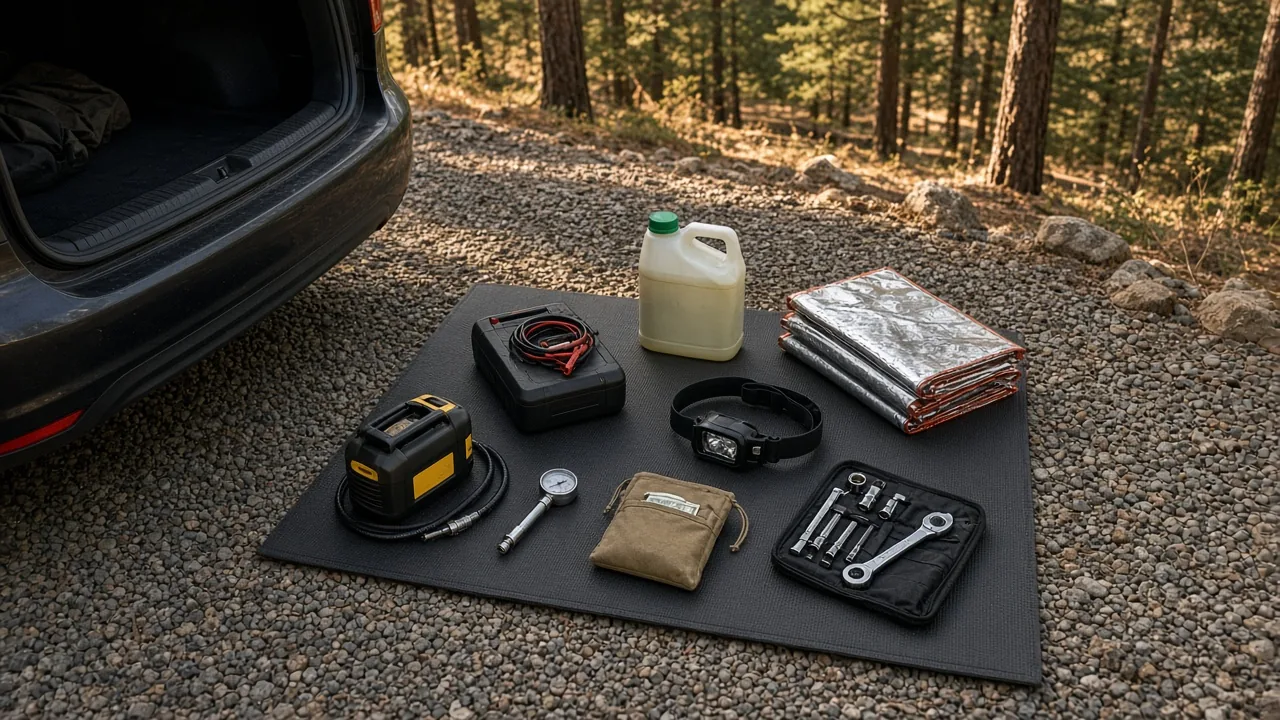
A car camping roadside emergency kit for remote roads should focus on the failures you are most likely to actually face: slow tire leaks, a dead battery, mild overheating, loose fittings, a short wait for help, and the cost of an unplanned tow or room. The goal is not to rebuild your vehicle on a forest service road. It is to carry only what you can inspect, use, and justify when space and payload matter.
What Should a Car Camping Roadside Emergency Kit Include?
Remote unpaved roads change the math. Help may be slow, phone signal may drop, and a minor tire or battery problem can turn into an overnight stop. A useful kit covers tire repair and inflation, battery recovery, cooling, small tools, temporary shelter, and cash fallback.
Tire repair, inflation, and spare gear
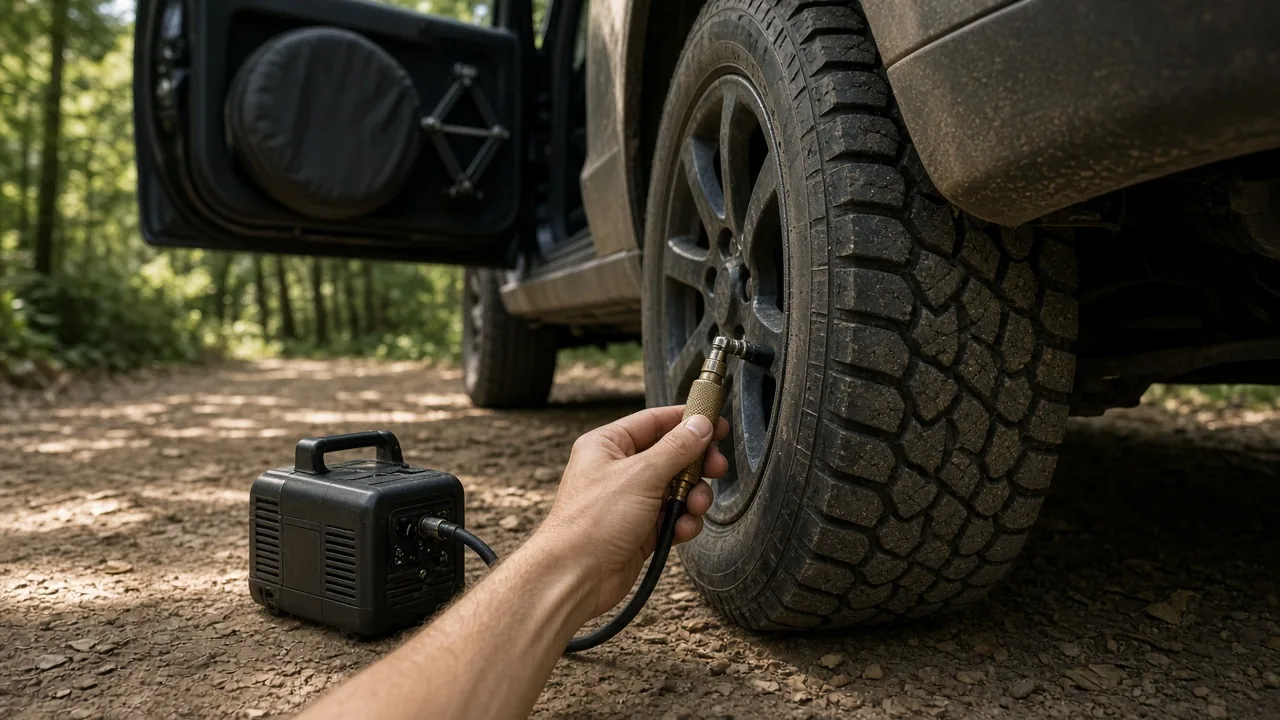
Slow leaks are one of the most common problems on rough roads. A 12V compressor lets you air up before leaving pavement and after a rocky descent. Check tire pressure before and after forest service roads, especially if you lower pressure for comfort on washboard.
Carry a spare tire in good condition, stored covered and dry. A jack should be rated for your vehicle weight, and you should know how to use it before you need it. Some car campers also keep a tire sealant on board for low-pressure leaks that do not require a full spare swap. If you buy tires with road-hazard coverage, a slow leak or sidewall cut may be replaced at no cost at a tire shop, but that only helps once you are back in town.
A compact 12V compressor and a basic tire gauge take up little room. They also save you from hunting for a gas station air pump or paying a few dollars each time you need to top off.
Jump pack and battery habits
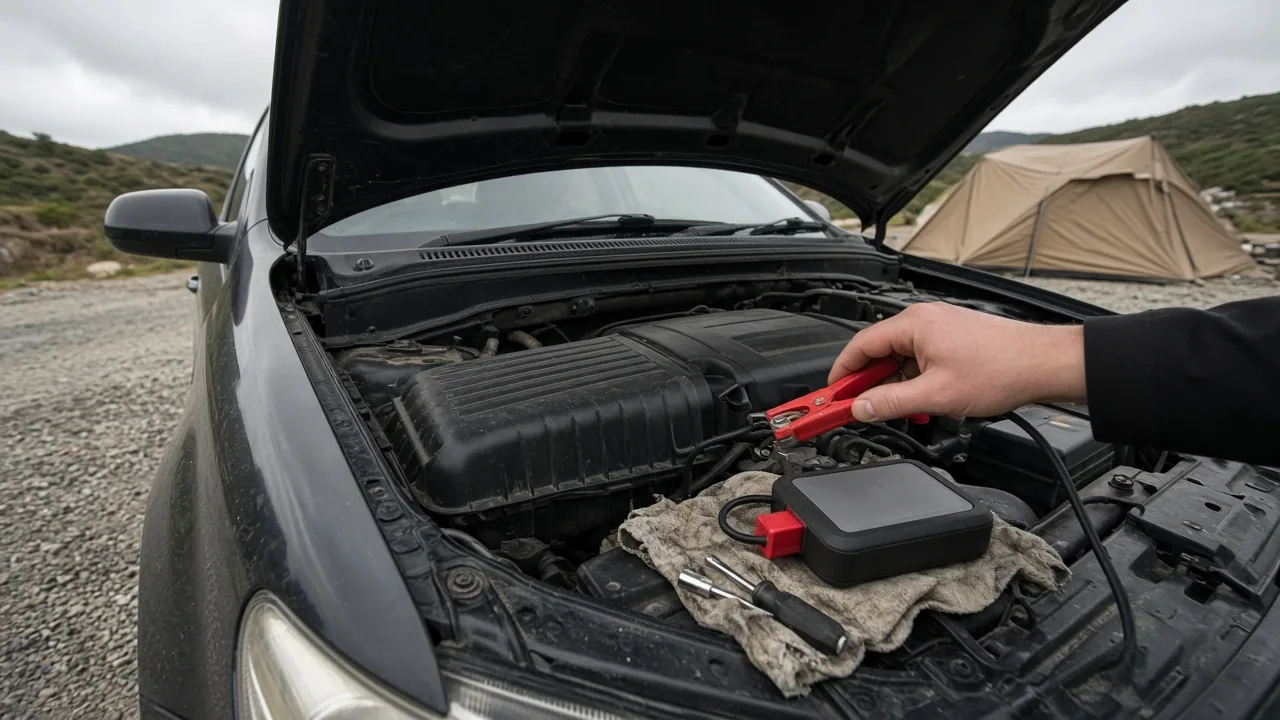
A jump pack can restart your vehicle without another car, and it can also help another driver on a remote road. Keep it charged and check it before a long trip. Test your vehicle battery at oil changes, especially in a car that sees rough roads and temperature swings.
If you charge a power station from the alternator while driving, do not leave it plugged in for the entire drive. A four-hour trip with about three hours of charging leaves time for the vehicle battery to recover. That small habit reduces the chance of arriving with a drained starting battery.
Coolant, basic tools, and small repairs
Keep a jug of 50/50 premixed coolant. It is inexpensive and easier to use than mixing concentrate at the roadside. Check the coolant level before hot mountain climbs, especially if your vehicle has a history of running warm.
A compact socket, plier, and wrench set can handle small problems: a loose door handle, a latch, a window that will not stay up, or a fitting that works loose on washboard. These are not major repairs, but they can keep the trip moving. Carb cleaner or a similar spray may have a place in some kits, but only if you know when and how to use it.
Emergency shelter and light
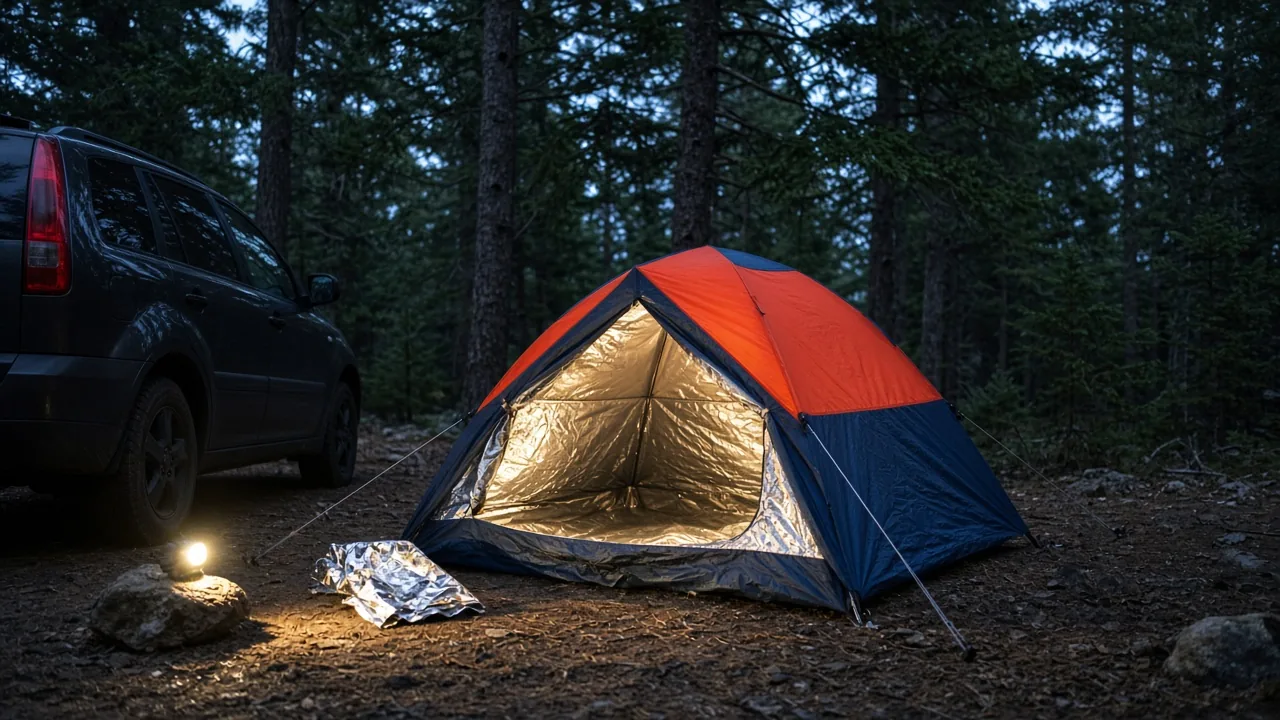
A small emergency tent or reflective blanket gives temporary wind and rain cover if you have to wait outside the vehicle. An emergency tent may include a cord and an aluminum-lined body that reflects some body heat, with a bright outer color for visibility. Set it up by staking or weighting the corners and securing the top line. It is not a substitute for a real tent or sleeping bag.
Never use a stove or heater inside your tent, including an emergency tent. That creates carbon monoxide and fire risk. Treat an emergency shelter as short-term cover only.
For light, a headlamp or the LED built into a power station can be enough for checking tires or looking under the hood. A small separate flashlight is still useful if your power station is dead or buried under gear.
Where This Kit Works and Where It Falls Short
This setup helps most if you are comfortable using the jack and basic tools, and if you mostly drive remote unpaved roads where small failures are more common than major mechanical damage. It does not replace insurance, first aid, or local emergency services.
Strongest for common remote-road problems
Tire sealant, a 12V compressor, a jump pack, coolant, and emergency cash match the typical slow leak, dead battery, and mild overheating seen on forest service roads. These are the items that get used most often by car campers who spend time on dirt and gravel. They are also light and compact enough to keep in the vehicle without eating into sleeping and cooking space.
Weakest for serious breakdowns or medical events
A kit cannot fix a damaged radiator, a failed alternator, or a broken suspension part. It also cannot treat hypothermia, heat illness, or a cut that needs real medical care. Review your insurance policy before a trip so you know what towing or hotel benefits you already have. Carry a first aid kit, and call local emergency services for serious injury or exposure. General gear advice is not wilderness medical training.
Roadside membership vs. cash fallback
One car camper waited over two hours for a national roadside service, then used cash for a faster local tow. The lesson is not that memberships are useless, but that they are not a guarantee of quick help on remote roads. Keep a separate emergency fund for a tow or a motel room. Some insurance policies cover towing and two or three nights of lodging after a breakdown, but only if you know the benefit exists.
How to Build and Trim a Car Camping Roadside Emergency Kit
Base the kit on route, season, and how comfortably you can use each tool. Weight matters less for car camping than for backpacking, but unused gear still takes up space and payload. If you do not know how to use a tool or would not inspect it before a trip, leave it out.
For forest service roads and dispersed camping
Prioritize tire repair, a covered spare, a jump pack, coolant, small tools, water, food, and emergency shelter. Help may be slow, and phone signal may be unreliable. A basic breakdown can turn into a long wait, so the kit should cover both the vehicle problem and your own comfort while you handle it.
On forest service roads, follow bear-safe food storage, pack out trash, and camp on durable surfaces. Check fire restrictions before you go. These practices matter more when you are far from a ranger station or trash bin.
For frontcountry or highway car camping
A lighter kit is reasonable: a phone charger, jump pack or cables, tire gauge, water, flashlight, and a warm layer. Passing help and service are usually closer. You still want the basics, but you do not need the full remote-road loadout for a weekend at a developed campground near a highway.
Before you leave, check these
Inspect tire pressure, spare condition, coolant level, battery health, and jack fit before a trip. A jack that does not match your vehicle weight or a spare that is flat is not real backup. Also review your insurance tow or hotel benefit so you know what you can actually use. That takes a few minutes and may change what you carry.
Emergency shelter setup and limits
An emergency tent sets up by pulling the ridgeline or cord tight and weighting the bottom corners. Some users note that the open ends limit warmth, so it works best as short-term wind and rain cover. It is not a replacement for a sleeping bag, dry clothing, or a plan to stay in the vehicle or walk out.
Before a remote-road trip, check the forecast, route, nighttime lows, rain potential, fire restrictions, and campsite rules. Then decide whether each item earns its weight and space in your car camping roadside emergency kit. If you are driving rough roads far from help, tire and battery gear, coolant, a small shelter, and cash for a tow or room usually earn their place.
This article is general information about camping gear, not professional safety, medical, or wilderness training. Check fire restrictions, weather, and campsite rules before you go, and follow the manufacturer's instructions for your own equipment.
FAQ
What should a car camping roadside emergency kit include?
A useful kit covers tire repair and inflation, battery recovery with a jump pack, coolant, small tools, temporary shelter, and cash for an unplanned tow or room.
Is a roadside assistance membership enough on remote roads?
No, help can be slow or unavailable. Keep a separate emergency fund for a local tow or motel because memberships do not guarantee quick help.
Can I use a stove or heater inside an emergency tent?
No, never use a stove or heater inside any tent, including an emergency tent, due to carbon monoxide and fire risk. Treat an emergency shelter as short-term cover only.
How do I decide what belongs in my car camping roadside emergency kit?
Base your kit on route, season, and how comfortably you can use each tool. If you do not know how to use a tool or would not inspect it before a trip, leave it out.
What should I check before a remote-road car camping trip?
Inspect tire pressure, spare condition, coolant level, battery health, and jack fit. Also review your insurance tow or hotel benefit so you know what you can actually use.



