Car Camping Kitchen Essentials Checklist: Build a Practical Kit
A practical car camping kitchen checklist covering a lidded bin, dual-burner stove, cast iron skillet, deep pot, full-size utensils, and a simple wash kit.
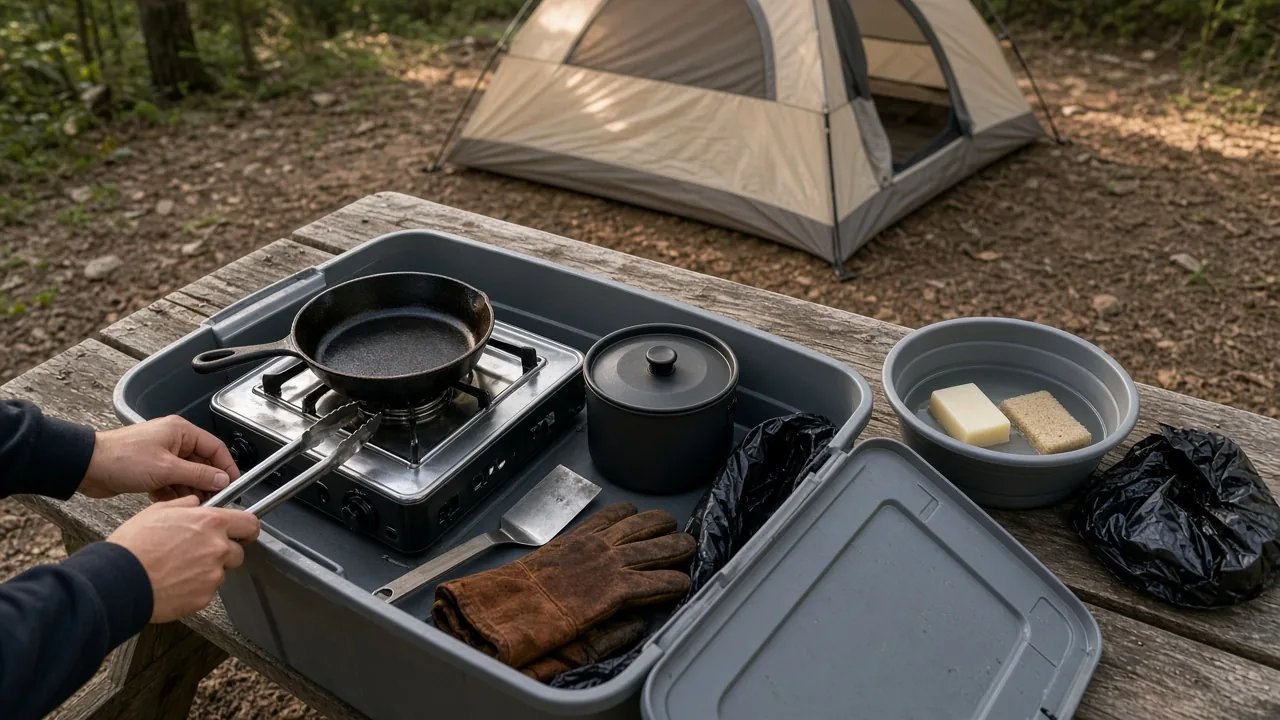
A practical car camping kitchen starts with a large lidded bin holding a dual-burner propane stove, a cast-iron skillet or griddle, one deep pot, full-size utensils, heat-protection gloves, and a small wash kit. That core list covers most meals without turning your cargo area into a rolling pantry. Use this car camping kitchen essentials checklist to buy durable, budget-friendly gear once, skip single-purpose gadgets, and keep a bin ready for the next trip.
Start with a Car Camping Kitchen Essentials Checklist
Pack the items you reach for on almost every trip into one large plastic bin. A two-burner propane stove, cast-iron skillet, multi-use deep pot, full-size utensils, gloves, wash supplies, and basic pantry staples should stay together so you can load quickly and cook without sorting through loose gear.
Core Items to Pack First
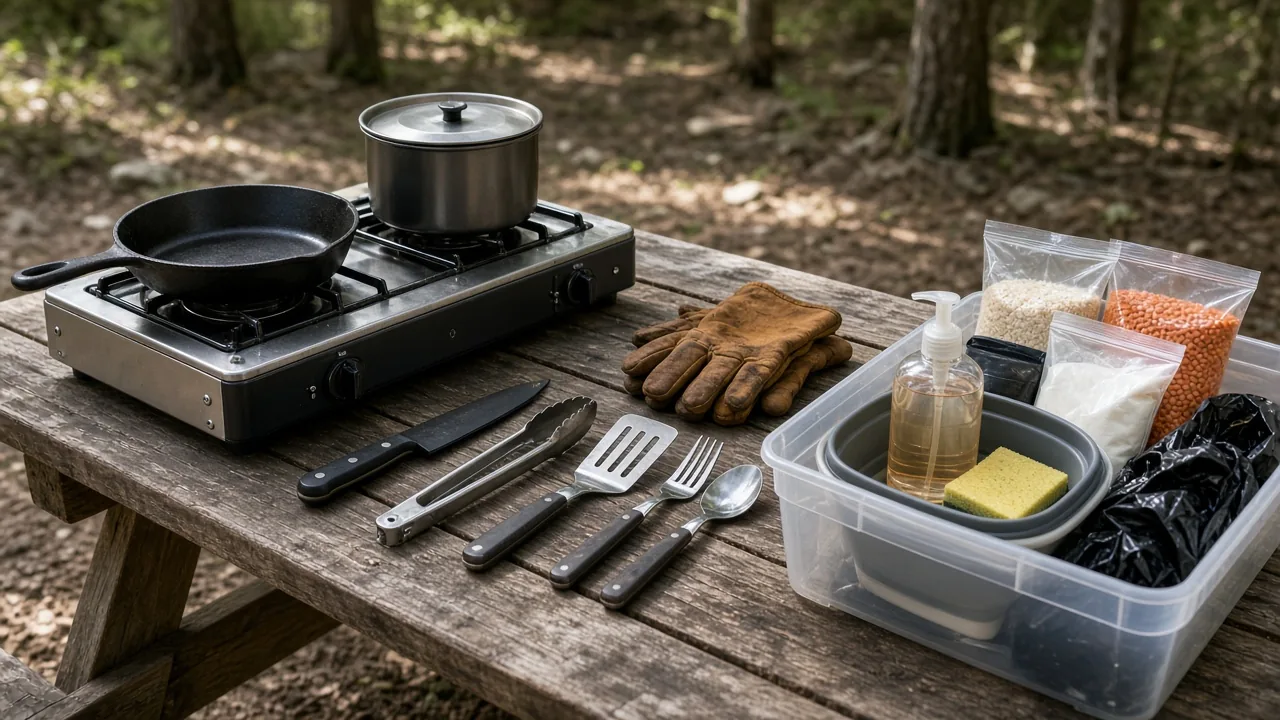
Start with a stove, one skillet or griddle, one deep pot, a full-size kitchen knife, metal tongs, a solid spatula, leather or welding gloves, full-size forks and spoons, a wash basin, soap, sponge, trash bags, and a few nonperishable basics. This shorter list handles breakfast, dinner, coffee, and cleanup without weighing down the bin with tools you will rarely use.
Metal tongs are one of the most useful items around a camp stove or fire. They work for turning food, moving hot cookware, and repositioning coals if you cook in a fire ring. Add a large spatula sized for your skillet, and use wood or plastic tools when you want to protect a seasoned cast-iron surface or nonstick coating.
Why a Bin and Minimal Kit Work
A lidded bin keeps dust, rain, and loose gear out of your kitchen equipment. It also makes setup faster because everything has a place. When you return from a trip, clean and dry the contents, restock pantry items, and close the lid. The kit is then ready for the next weekend.
A minimal pot-skillet-bowl approach prevents the common problem of buying extras before you know your cooking style. One deep pot can boil pasta, heat water for dishes, hold leftovers, and sometimes serve as a wash basin. One skillet or griddle can handle eggs, pancakes, vegetables, and meat. Once you cook several trips with that setup, it becomes clearer which additional pieces are worth the space.
Pick a Stove That Matches Car Camping, Not Backpacking
Car camping allows more weight and bulk, so a stove should prioritize stability, burner space, and ease of use over saving ounces. A two-burner propane stove covers most meals and is easier to control than a tiny backpacking burner. That said, a standalone high-output burner or an IGT-style insert may fit some camp tables and cooking habits better.
Dual-Burner Propane vs. Alternative Fuel
The most common car camping choice is a dual-burner propane stove. It can handle two pots at once, sits at a comfortable height for cooking, and works well with a cast-iron skillet sized to the grate. Basic models and used options can be inexpensive, and the setup is simple enough for first-time campers.
A separate burner or butane stove can be a better fit if your table is low, you prefer a more compact cook surface, or you use an IGT table with an insert. Some campers find a standalone burner more stable and easier to keep away from the table edge. The trade-off is usually fewer burners and less room for large pots. Choose by how you cook: a dual-burner propane stove is the standard for multi-dish meals, while a single burner or insert may work for boiling water and one-pan meals.
Stove Setup and Maintenance
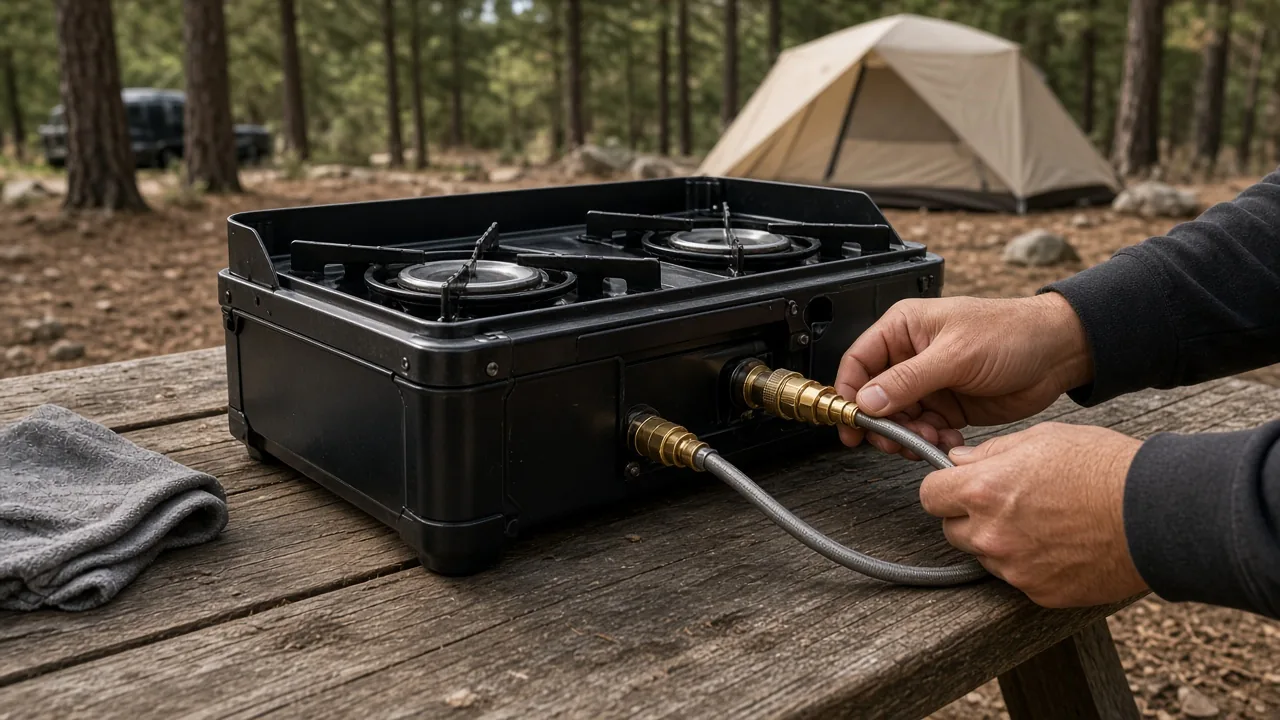
Set the stove on a stable, level surface away from the vehicle, tent, and overhanging branches. Follow the fuel instructions for your model, and check the connection points before each trip. Look for cracked hoses, bent fittings, and debris around the canister seat or valve. A dirty or poorly seated connection can cause weak flame or fuel leaks, so wipe down the stove after use and store it with the valve closed.
Choose Cookware That Does More Than One Job
A cast-iron skillet matched to your burners and a deep pot that can double as a wash basin reduce the number of items in your bin. That keeps setup quick and leaves more room for food, water, and cleanup supplies.
Cast Iron, Griddle, and Deep Pot
A cast-iron skillet tolerates high heat and works on a propane stove or over a fire. Choose a size that fits your burner grate so heat spreads evenly instead of concentrating in the middle. If you use metal tools on cast iron, accept that they can scrape away seasoning over time. Some campers prefer wooden or plastic spatulas and spoons to protect that surface. Keep a plastic spatula for nonstick pans to avoid scratching the coating.
A deep pot with a lid serves multiple roles. You can boil water, cook pasta or stew, store leftovers, and heat water for dishes. A used or budget pot will discolor over open flame, but that does not affect basic cooking performance. A griddle or baking pan can expand your meal options for pancakes, bacon, or foil-wrapped meals without adding much bulk.
When to Add Extra Pots and Pans
Start with one skillet, one deep pot, and one griddle or baking pan. That combination covers most car camping menus. Add specialty pieces only after repeated trips show a real gap, such as a Dutch oven for slow cooking or a second pot for large groups. Buying more cookware early often means carrying pieces that never leave the bin.
Utensils, Gloves, and Tools That Hold Up to Heat
Full-size stainless steel utensils and a real kitchen knife outperform sporks and plastic cutlery for car camping. Weight and pack size matter less when you drive to camp, so choose tools that feel like the ones you use at home.
Full-Size Utensils vs. Ultralight Options
Several car campers agree that full-size forks and spoons work better for real meals. A spork may save a few ounces, but it is often a poor fork and a poor spoon at the same time. Full-size stainless steel utensils cost little, last longer, and make eating easier. Store them in a small zippered pouch so they stay together inside the bin.
Plastic cutlery can snap, warp, or create more trash. A compact set of metal utensils adds a little weight and bulk, but that trade-off is usually worth it when you are not backpacking.
Knife and Heat-Protection Choices
Carry one full-size kitchen knife for food prep. A cheap model with a blade guard or cardboard sleeve works fine, and it is easier to use than a small multi-tool knife. Some campers who cook larger meals prefer a small knife roll, but one sharp kitchen knife is enough for most groups.
For hot pans, firewood, and Dutch oven handling, leather gloves protect your hands. Welding gloves provide more forearm coverage and can be a better choice if you regularly reach over a fire or move heavy cast iron near coals. Keep the gloves in the kitchen bin so they are always within reach.
Wash Kit, Water, and Cooler Choices
A collapsible sink or a deep metal pot and a small soap-and-sponge kit handle dishes without a full camp kitchen setup. Bring a large water jug and use any functional cooler rather than spending heavily on a high-end rotomolded model.
Simple Dishwashing Without a Dedicated Camp Sink
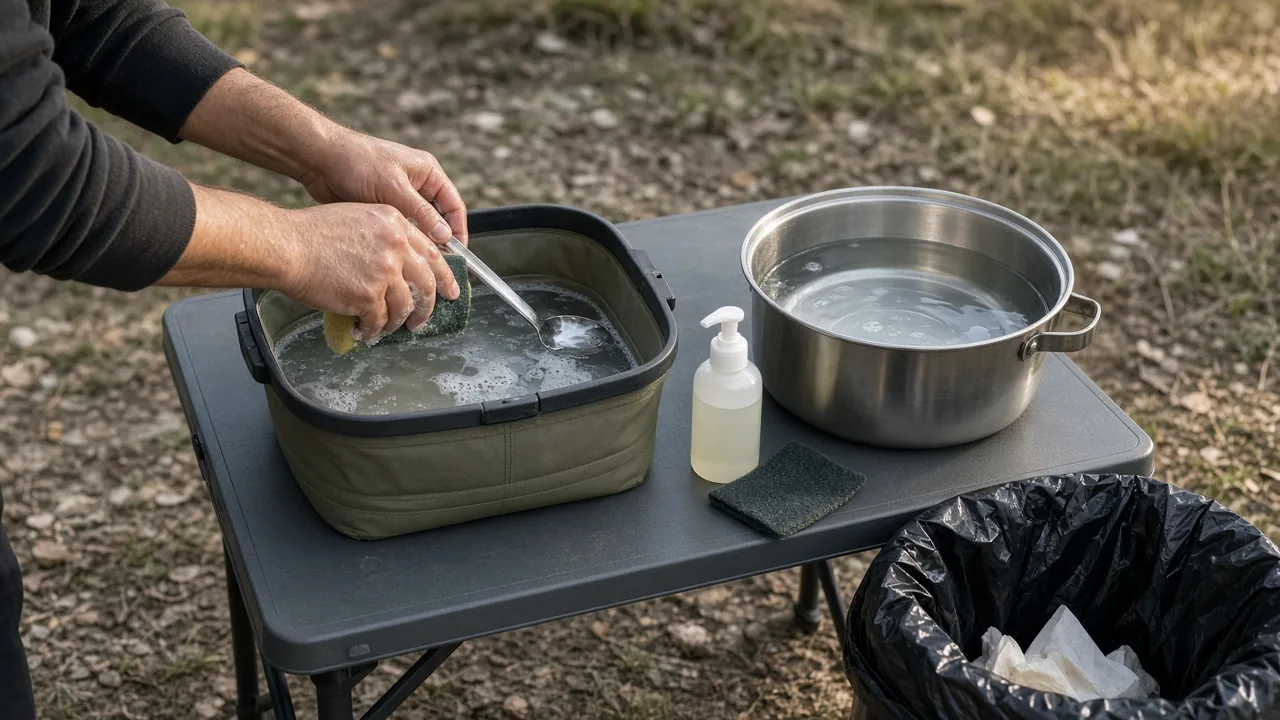
Use a multi-use pot or a foldable sink as your wash basin. Heat water on the stove, add a few drops of biodegradable soap, and wash with a sponge. A collapsible strainer can help drain pasta or rinse vegetables without taking up much space. Paper plates can cut cleanup time in areas where fires are allowed; burn them only in an established fire ring and follow local rules.
Pack a small container with soap, a sponge, and a scrub pad so dishwashing supplies do not spread through the rest of the bin. Trash bags should always ride in the kitchen kit for food waste and used paper products.
Water and Cooler Upgrades
Size water storage to your group and trip length. A large jug with a spigot is easier to use than several small bottles, and it refills pots for cooking and cleaning. For a cooler, do not assume you need a premium model. A basic cooler holds ice well enough for many weekend trips. Upgrade only after you learn how much ice you need and how long you stay out.
Avoid Common Car Camping Kitchen Mistakes
The most serious mistakes are safety-related. Never use a stove or heater inside your tent. Check fire restrictions and campsite rules before cooking, and store food in bear-safe containers or your vehicle as required. Avoid packing fragile tools and single-purpose gadgets that slow down setup.
Fire and Carbon Monoxide Safety
Keep any stove, grill, or charcoal outside and away from tents, vehicles, and enclosed spaces. Carbon monoxide risk does not end when you turn off the burner, and hot surfaces remain a fire hazard. Set up your cooking area on a durable surface clear of dry grass and overhanging branches. Follow local fire restrictions, and never leave a lit stove unattended.
What Not to Pack in a Car Camping Kitchen
Skip fragile plastic utensils, thin spatulas, single-purpose gadgets, and oversized knife sets unless you have a specific meal plan. Bulky extras make camp setup slower and harder to pack away. One full-size spatula, one tong, one knife, and a few basic utensils handle more meals than a drawer full of specialty tools.
Who Should Use This Kit and What to Upgrade First
This checklist fits first-time and weekend car campers who want durable, low-cost gear that stays organized. It is not ideal for backpackers counting ounces or RV users with built-in storage and larger cook surfaces.
Good Fit vs. Not a Good Fit
Choose this bin-based system for car camping where setup convenience matters more than weight. It works well for tent campers, weekend trips, and families cooking near the vehicle. If you hike to camp, choose lighter backpacking cookware and a single-burner stove, and leave the large bin and full-size kitchen kit at home.
Where to Spend and Where to Save
Spend on a dependable stove and full-size utensils you will use every trip. A dual-burner propane stove and solid stainless forks and spoons make cooking and eating easier. Save on coolers, tableware, and pantry containers until you see how often you cook and how many people you feed. A basic cooler, reusable plastic bowls, and sealed containers work fine for many campers.
Before your next trip, check the forecast, night temperatures, and fire rules, then keep only the items on this checklist that match your group size and cooking plan. That quick pass keeps the bin practical, safe, and ready for the road.
This article is general information about camping gear, not professional safety, medical, or wilderness training. Check fire restrictions, weather, and campsite rules before you go, and follow the manufacturer's instructions for your own equipment.
FAQ
What should I pack first in a car camping kitchen kit?
Start with a dual-burner propane stove, one cast-iron skillet or griddle, one deep pot, full-size utensils, heat-protection gloves, and a small wash kit. Store them in a large lidded bin so they stay clean and ready to load.
Can I use a backpacking stove for car camping?
You can, but a dual-burner propane stove is usually a better car camping choice because it prioritizes stability, burner space, and ease of use over saving weight.
What cookware is best for car camping?
A cast-iron skillet matched to your burner and a deep pot with a lid cover most meals. A griddle or baking pan can add options without adding much bulk.
How do I wash dishes while car camping?
Heat water on the stove, add a few drops of biodegradable soap, and wash with a sponge in a multi-use pot or foldable sink. Pack soap, sponge, and trash bags together in the kitchen bin.
What safety mistakes should I avoid with a camp kitchen?
Never use a stove or heater inside a tent, and keep cooking surfaces away from vehicles, tents, and overhanging branches. Check fire restrictions and never leave a lit stove unattended.



