Camping Lantern Battery Life Comparison: Honest Runtime Picks
Four rechargeable camping lanterns compared on real runtime, dimming behavior, beam quality, and IPX5 weather resistance so you can pick a light that lasts as long as your trip.
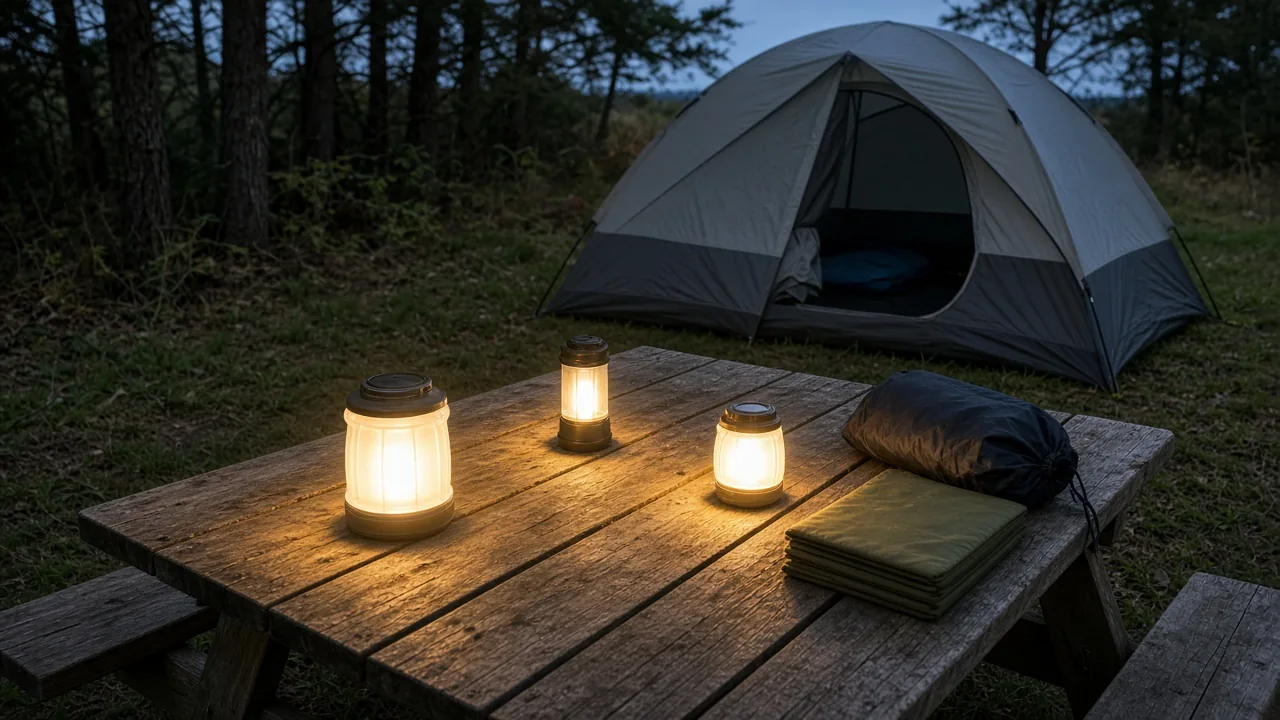
Choosing a rechargeable camping lantern starts with one question: will it hold useful brightness for as long as you need it? A camping lantern battery life comparison shows that advertised lumens and milliamp-hours are only part of the story. Some models dim early, some run long but step down, and a few keep usable charge after others shut off. Look past the box numbers and match runtime behavior, beam quality, and charging method to your trip.
What Does a Camping Lantern Battery Life Comparison Actually Show?
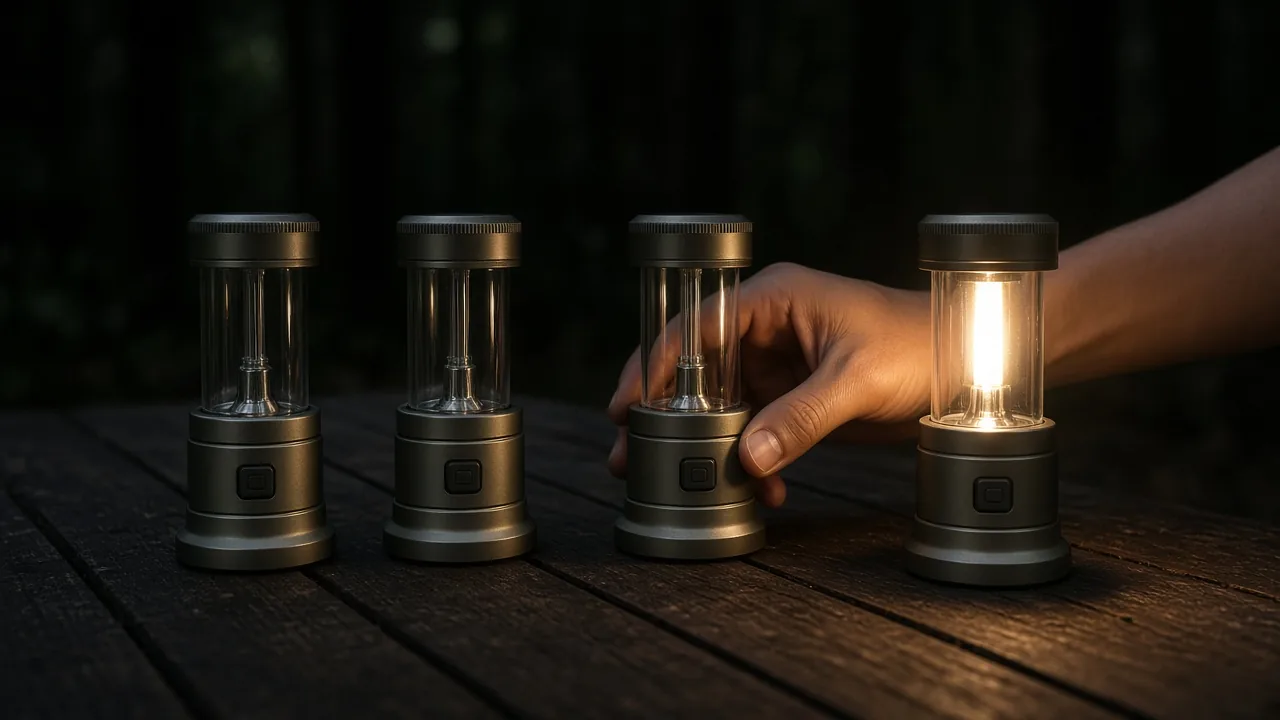
A side-by-side runtime test is more useful than battery capacity alone, because some lanterns step down brightness or show more usable time than their mAh rating suggests.
Why battery capacity alone won't predict runtime
Battery capacity is an input, not an output. A pack with more mAh can still deliver less useful light if the driver pushes too hard or if thermal protection forces the lantern to dim. In one comparison, a 15,000mAh lantern ran for ten hours but dropped brightness several times during the test. A 20,000mAh model still had 30% battery left after that first lantern shut off. So the bigger cell wasn’t just bigger; it held high utility longer.
The lesson is simple: if you judge only by mAh, you may buy a lantern that looks strong on paper and then disappoints after hour three. Look for measured runtime, not just battery size.
What a fair runtime test should measure
A useful runtime test has to remove variables that flatter the light. Lock the camera or meter exposure, remove diffusers or lampshades, turn off ambient light, and record until shutoff. Note whether output drops from the highest setting during the run. That drop matters because a lantern may stay lit for ten hours but only produce its brightest light for the first thirty minutes.
Without those controls, any comparison can be misleading. A bright room or a short clip can hide automatic step-downs. When you see a runtime spec, ask what brightness level it was measured at and whether the lantern dimmed before the end.
Here is how four rechargeable camping lanterns compare on the core battery and runtime details:
| Lantern | Battery capacity | Advertised brightness | High-mode runtime result | Beam and glare | Case and mounts |
|---|---|---|---|---|---|
| Xiaowali fourth-gen Pro | 15,000mAh | 1,500 lumens, CRI 95% | 10 hours, but dimmed several times | No frosted diffuser, more direct glare | EVA hard-shell case |
| Shanlishi 4C1500 Pro | 13,500mAh | 1,500 lumens (1,050 with lampshade) | Not listed as a specific total; smallest battery pack | Wide beam, no frosted lens | Soft canvas case, less crush protection; 1/4-inch threaded socket and magnetic mount |
| Banmi | 16,000mAh | 1,250 lumens, CRI 90% | 6 hours | Frosted diffuser, wide multi-face beam | EVA hard-shell case |
| Yanhou | 20,000mAh | 1,400 lumens | Still showed 30% battery after Xiaowali shut off | Frosted diffuser, softer light | EVA hard-shell case |
Which Rechargeable Camping Lantern Specs Matter for Car Camping vs Backpacking?
Car campers can prioritize brightness, beam spread, and ease of use; backpackers should focus on weight and packed size, though this reviewed group did not list weights.
Brightness, beam angle, and glare
Not all lumen numbers feel the same. Two lanterns rated around 1,250 to 1,500 lumens can look different depending on diffusers and beam angle. The Yanhou and Banmi have frosted diffusers, which make them easier on your eyes when the lantern is at table height. The Banmi and Shanlishi throw light wider than the other two models in the comparison. That matters if you are lighting a shared picnic table, but a narrower beam may reach farther into a dark camp kitchen.
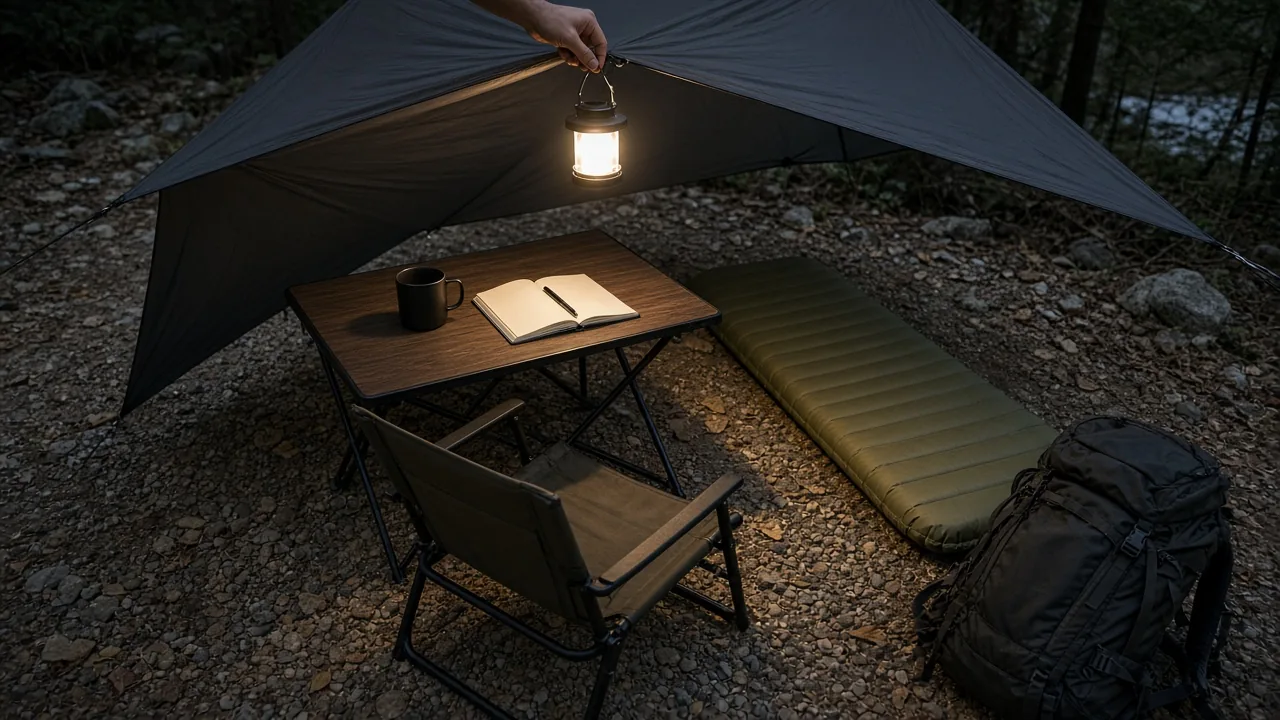
For car camping, pick the beam that matches your basecamp layout. A wide, soft light is better inside a screen shelter or under a tarp. A more focused hot spot can help when you are aiming at a trailhead sign or sorting gear from a distance.
IPX5 weather resistance and what it means
All four compared lanterns carry an IPX5 rating. That means they should handle moderate rain or a splash from a camp sink, but it does not mean they are submersible. Do not leave them in standing water or expect them to survive a drop into a creek.
If you camp often in wet Pacific Northwest weather or coastal drizzle, IPX5 is a reasonable minimum. But you still need to keep the charging port cover closed. And remember that no rating in this class is a promise of storm performance; it only describes limited water-jet exposure.
How Long Will a Camping Lantern Last on a Full Charge?
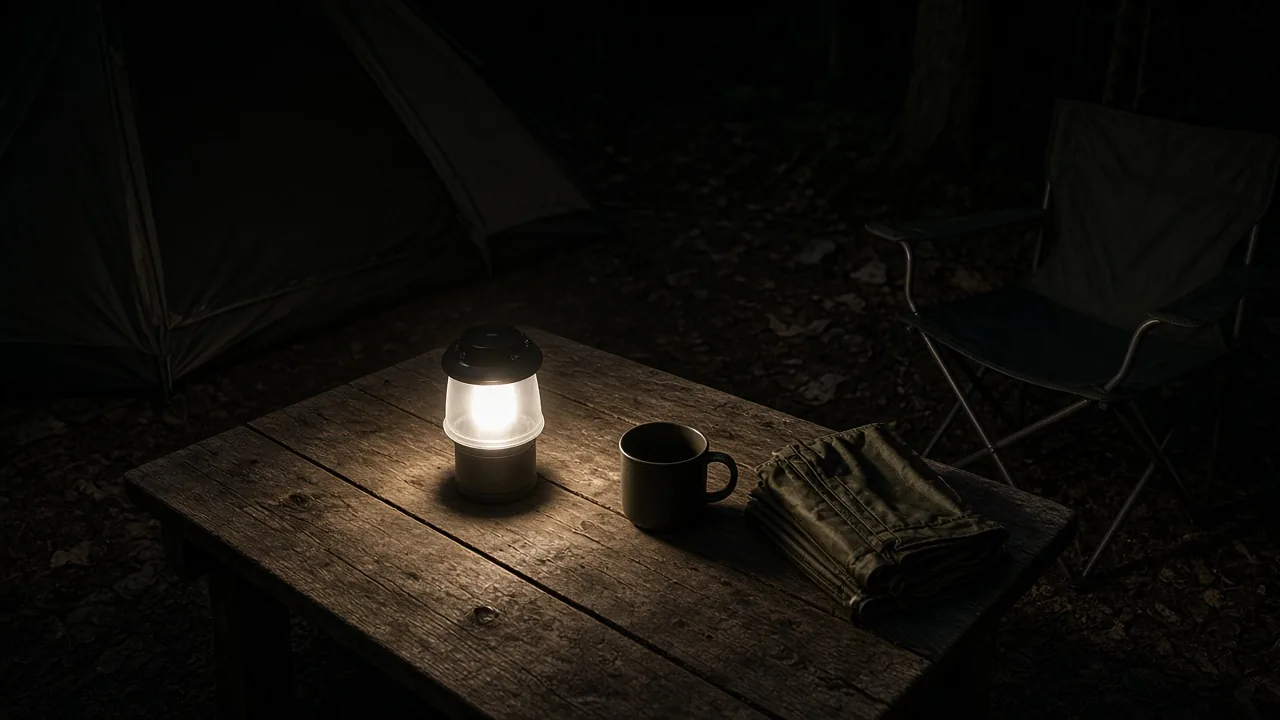
In the high-mode test, the Banmi lasted six hours and the Xiaowali ten hours with dimming; the Yanhou still showed 30% battery after the Xiaowali shut off.
What the measured runtimes mean for real trips
A six-hour runtime isn’t automatically bad. If you are car camping for two nights and can recharge from a power station or vehicle during the day, the Banmi may cover dinner, dish cleanup, and a short reading session. But if you need one lantern to run from dusk until midnight without charging, the Yanhou’s extra capacity is more reassuring.
A ten-hour runtime that dims repeatedly is trickier. You may still have light at hour eight, but it might be too weak for fine tasks like tying knots or reading a map. Think about the lowest brightness you can tolerate, not just “is it still glowing.”
Why some lanterns dim long before they go dark
Automatic dimming is usually a protective response. The driver may reduce output to manage heat or preserve battery voltage. In the Xiaowali test, the exact cause of the step-down was not confirmed. What that means is you cannot assume a 1,500-lumen lantern will stay at 1,500 lumens all night.
When comparing specs, note whether the manufacturer lists runtime at the highest setting or at a lower eco mode. A spec that says “10 hours” may only apply at an output you would not choose for camp tasks.
What Features Actually Help in Camp, and Which Ones Add Complexity?
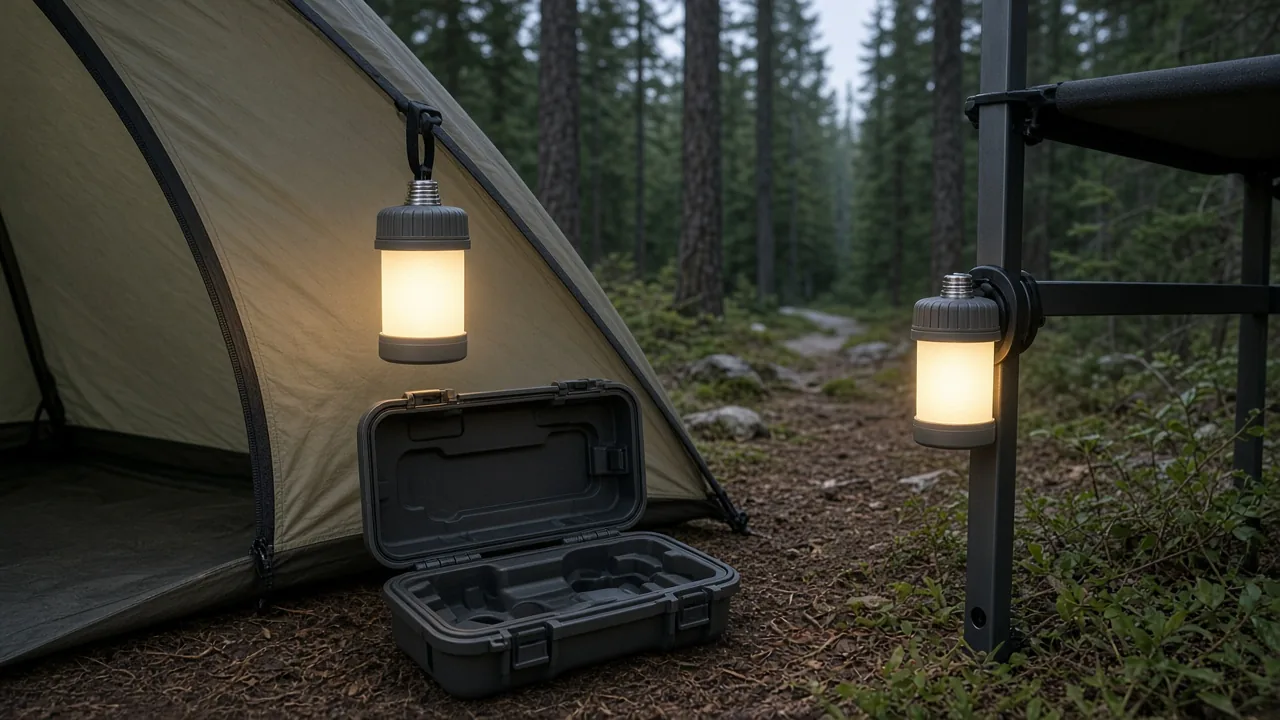
Voice control, app adjustments, and percentage displays are convenient but not essential; look for a hard case, useful mounting options, and simple physical controls first.
Voice control and app-based brightness adjustments
The Xiaowali responds to voice commands and a mobile app. You can ask it to turn on, off, or go to maximum brightness. That can feel helpful when your hands are dirty, but physical buttons remain more reliable when your hands are cold or the battery is low. Voice control also requires the microphone to be awake, which may draw power or respond poorly in noisy conditions.
For most campers, a simple rotary dial or a couple of clearly marked buttons beat an app. The fewer steps between you and light, the better.
Storage cases, magnetic mounts, and threaded sockets
EVA hard-shell cases protect better than soft canvas when gear is tossed into a car trunk. Among the four compared lanterns, only the Shanlishi came with a soft case, which is roomier but less crush-resistant. The other three used harder cases.
The Shanlishi also includes a 1/4-inch threaded socket and a magnetic mount. Those are useful if you want to hang the lantern from a tent loop, attach it to a metal table leg, or aim it precisely. Magnetic mounts can be weak on thick plastic or wood, so check the surface before relying on one.
Solar Charging vs High-Capacity Rechargeable Lanterns: Which Fits Your Trip?
A solar panel is useful for multi-day trips without a power source, but the XTAUTO review did not measure charge time; a large built-in battery is simpler for short overnights.
When a solar-ready lantern makes sense
The XTAUTO folding LED lantern supports both solar-charging and micro-USB charging. It has multiple handles for hand-carrying and hanging, plus a flashing mode. That design fits backcountry camps or emergency kits where you may not have a vehicle or wall outlet for days.
But solar charging is not magic. Without a measured charge time, you still have to plan around sunlight, panel angle, and battery size. Treat solar as a backup top-off, not a guaranteed full refill. If you expect multiple cloudy days, carry a power bank as well.
When a high-capacity battery is the better call
For car camping or weekend trips with easy USB access, a large built-in battery is simpler and more predictable. The Yanhou’s 20,000mAh pack showed more remaining runtime in the comparison than the lower-capacity models. That extra reserve is useful when you cannot remember whether you recharged after the last trip.
High capacity also matters in cold weather, when lithium batteries can lose usable capacity. A larger pack gives you more cushion before output drops too low. If you are backpacking, however, bigger batteries usually mean more weight, so check the packed weight before adding a 20,000mAh monster to your pack.
What Should You Check Before Relying on a Rechargeable Camping Lantern?
Charge fully, check the battery indicator and waterproof port, and understand your lantern's voltage input if you travel abroad; ask about flicker if you'll use it for reading or cooking.
Pre-trip battery installation and charging checks
For replaceable-battery lanterns like the XTAUTO, installation is easy to get wrong if you rush. Press down on the battery compartment, insert the battery, and rotate it to lock. Watch for the charge indicator light when the solar panel is charging, so you know power is actually flowing.
For built-in battery lanterns, do a full charge before a trip. Check the battery level display if the lantern has one, and inspect the charging port cover for cracks or dirt. A loose port cover can let moisture in and cause early failure.
Flicker, voltage compatibility, and travel limits
Some readers have asked about flicker, 120V versus 220V charging, and whether a lantern can be carried on high-speed rail. These are practical trip questions with no universal answer. Some LED drivers flicker at low brightness, which can be annoying for reading or cooking. If you are sensitive to flicker, ask the manufacturer or look for a lantern with a no-flicker driver claim.
Voltage compatibility matters if you travel outside North America. Many USB chargers accept 100–240V, but some wall adapters or built-in chargers may be limited to 120V. Check the label before plugging in overseas. And carry-on rules for batteries vary by airline and rail carrier, so confirm the watt-hour rating and local policy before you pack.
Match the lantern to your trip: car campers can favor brightness and runtime, backpackers need lighter packed size, and everyone should check rain and cold before packing one. Never use a stove or heater inside your tent. Before you zip the bag, run through whether this is a car-camping weekend or a backpacking route, how cold the nights will get, and whether rain is in the forecast. A small headlamp or spare power bank is worth packing as backup.
Camp Kit Journal
This article is general information about camping gear, not professional safety, medical, or wilderness training. Check fire restrictions, weather, and campsite rules before you go, and follow the manufacturer's instructions for your own equipment.
FAQ
Which lantern in this camping lantern battery life comparison had the longest remaining battery?
The Yanhou 20,000mAh lantern still showed 30% battery after the Xiaowali shut off, suggesting more reserve than the lower-capacity models in the test.
Does higher battery capacity always mean longer runtime?
No. Some lanterns dim early or step down brightness to manage heat or voltage, so a smaller mAh pack can deliver less useful light if its driver pushes too hard.
What does an IPX5 rating mean for a camping lantern?
IPX5 means it should handle moderate rain or splashes but is not submersible. Keep the charging port cover closed and avoid standing water.
Is solar charging a good option for multi-day camping?
Solar can be a useful backup top-off, but you still need to plan around sunlight and panel angle. Carry a power bank if you expect cloudy days.
Should car campers and backpackers prioritize the same lantern specs?
Car campers can favor brightness and runtime, while backpackers should focus on weight and packed size. Many high-capacity lanterns weigh more, so check weight before packing.