Camping Flashlight Buying Guide: Lumens Beam Battery Durability
A practical camping flashlight buying guide covering lumens, beam distance, battery type, durability, and weight to help you choose the right light for car camping and backpacking.
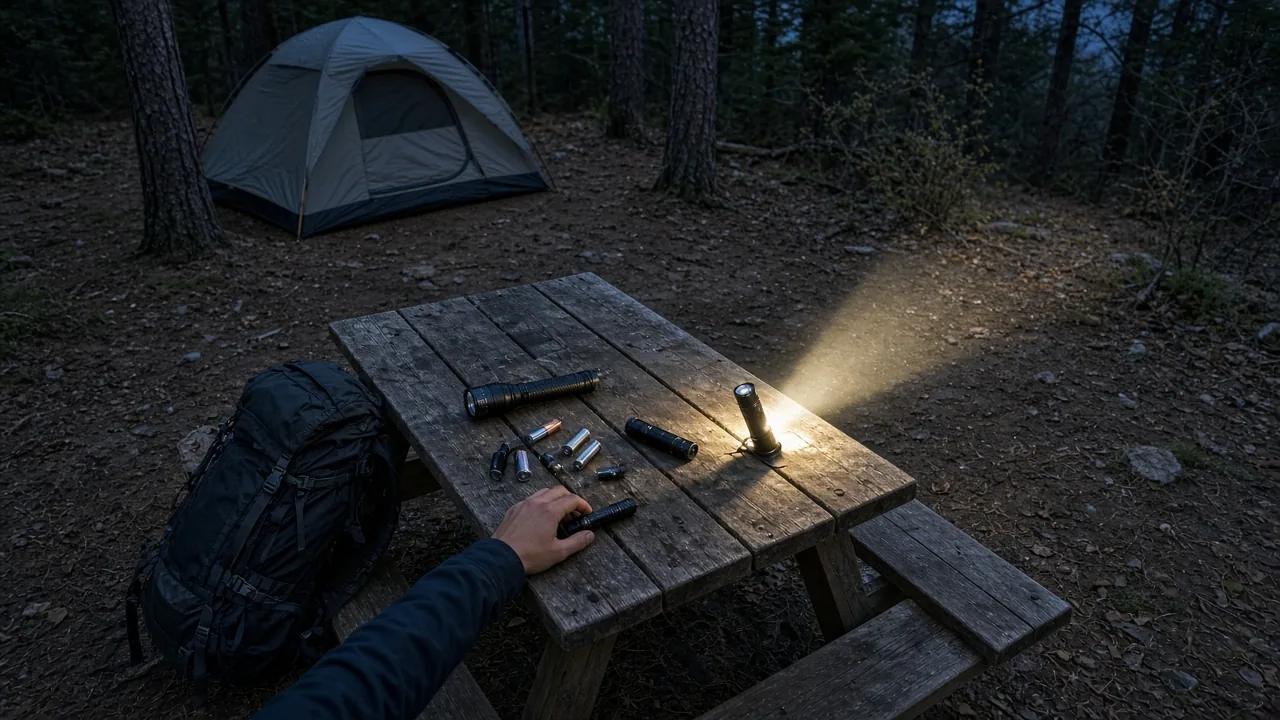
A practical camping flashlight buying guide starts with one rule: match the light to the trip, not to the highest lumen rating. For most campers, a 100-500 lumen LED flashlight with a focused beam, shared or lithium batteries, and a weather-resistant body is practical. Brightness is only one part of the decision. Beam reach, battery type, weight, and water resistance determine whether a light is useful at camp, on the trail, or in rain.
Camping Flashlight Buying Guide: Which Specs Matter First?
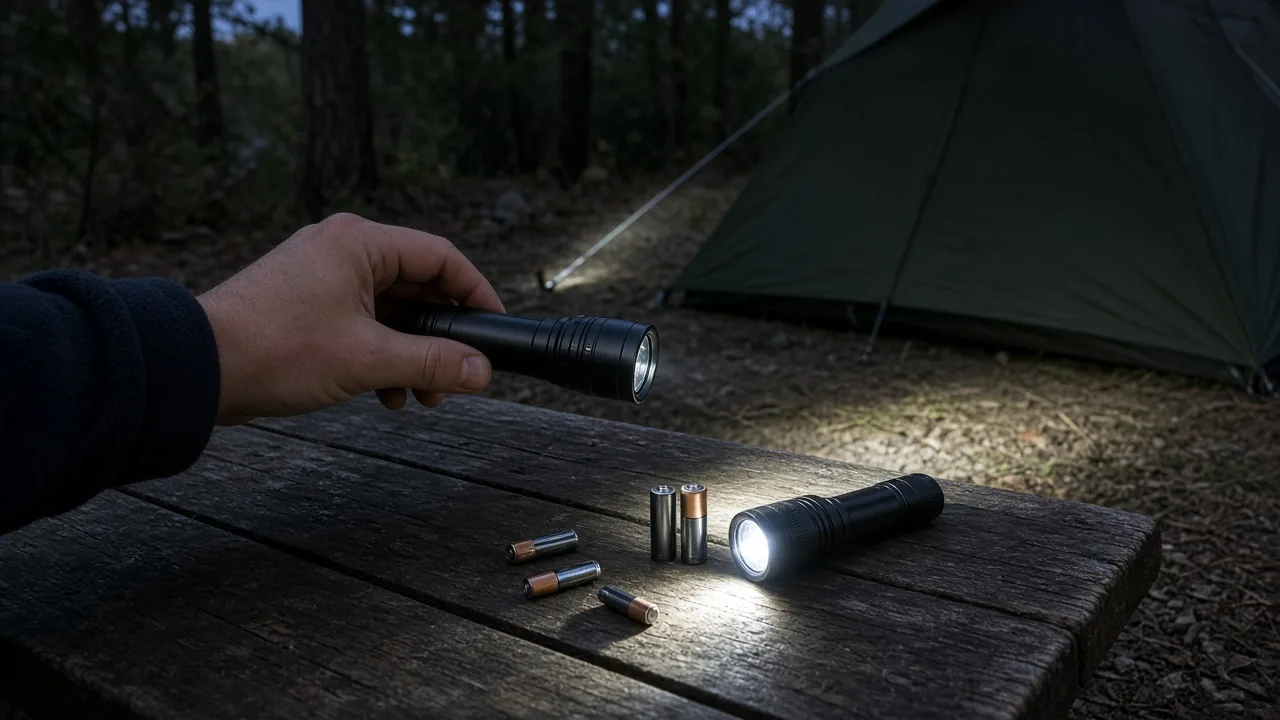
Before checking extras like magnetic tails or rotating heads, screen any model by four specs: lumens, beam distance and spread, battery type, and durability. These determine how well the light works when you are cooking, finding a tent stake, walking to the latrine, or dealing with a wet night.
Lumens: most camp tasks need 100-500, not the maximum
Use 100-500 lumens for general camp lighting and cooking. That range is enough for packing gear, reading a map, checking the fire ring, or lighting the path back to your tent. Reserve higher output for long-distance searching or lighting a wide open area.
A bright light is not automatically a better light. LED sources are the standard now because they are efficient, long-lived, and less likely to break from impact. Look for a known LED emitter such as CREE or Nichia when the manufacturer lists it. The emitter quality affects beam consistency and color more than a raw lumen number does.
If your trips mostly involve setting up a tent after dark and moving between picnic table, fire ring, and vehicle, stay in the 100-500 lumen range. You will get longer runtime, less heat, and often a lighter body than a 1,000-lumen light with a larger battery or more cells.
Beam distance and beam shape are separate from lumens
A 55-lumen light can reach about 230 meters, while a 500-lumen model may only reach about 35 meters if the reflector and focus differ. That is the key mistake in a camping flashlight buying guide: treating lumens as distance.
Beam distance depends on the reflector, lens, and whether the beam is focused. A concentrated beam carries farther. A wide flood beam lights a larger area but falls off quickly. Some flashlights have a fixed pattern; others are focusable and move between a narrow spot and a wide flood.
For general camp use, you need both close-area coverage and enough reach to check a bear box or follow a trail marker. A focusable light gives you that flexibility. A wide flood-only light may feel bright on paper but fail to show a tent guyline 50 feet away. Before buying, check the beam distance in feet or meters and ask whether the pattern matches how you will use it.
Battery type changes weight, runtime, and pack logistics
Lithium cells are lighter and longer-lived than alkaline batteries, but AAA models are common and easy to replace in small towns. The real question is whether the flashlight shares battery size with the rest of your gear.
If you already carry AA batteries for a GPS or headlamp, a handheld that uses the same size reduces the number of spares you pack. If you carry a USB-C power bank, a rechargeable light that uses the same cable can be more convenient. But a built-in battery that cannot be removed is a risk on multi-day trips because you cannot swap in a fresh cell.
Some flashlights use proprietary positive-negative shared cell designs. Those batteries can be expensive and hard to replace. Stick with standard cells such as AA, AAA, 18650, or similar common lithium sizes. When you buy a replacement cell, check whether your light needs a flat-top or button-top version. Even the same battery model can vary between brands or upgraded versions.
Durability: check water resistance, body material, and impact survival
Look for IPX8 or comparable wet-weather ratings and coated aluminum or high-strength polymer bodies. Lighter plastic may work only for dry, low-risk use. Rubber armoring helps with grip and shock absorption, but the body underneath still needs to be rigid enough to protect the circuit and battery compartment.
Water resistance matters most when rain moves through camp or the light rolls off a table onto wet ground. IPX8 is a strong rating for outdoor use, but no rating makes a flashlight invincible in every condition. Check that the battery cap and focus ring seat tightly. Dirt and sand can wear down O-rings over time.
Titanium and high-strength carbon-based materials offer good corrosion and impact resistance without excessive weight. Coated aluminum is the most common mid-weight option. Hard plastic bodies can be extremely light, but they are more likely to crack if dropped on rock or concrete.
How Do Camping Flashlights Compare by Weight and Best Use?
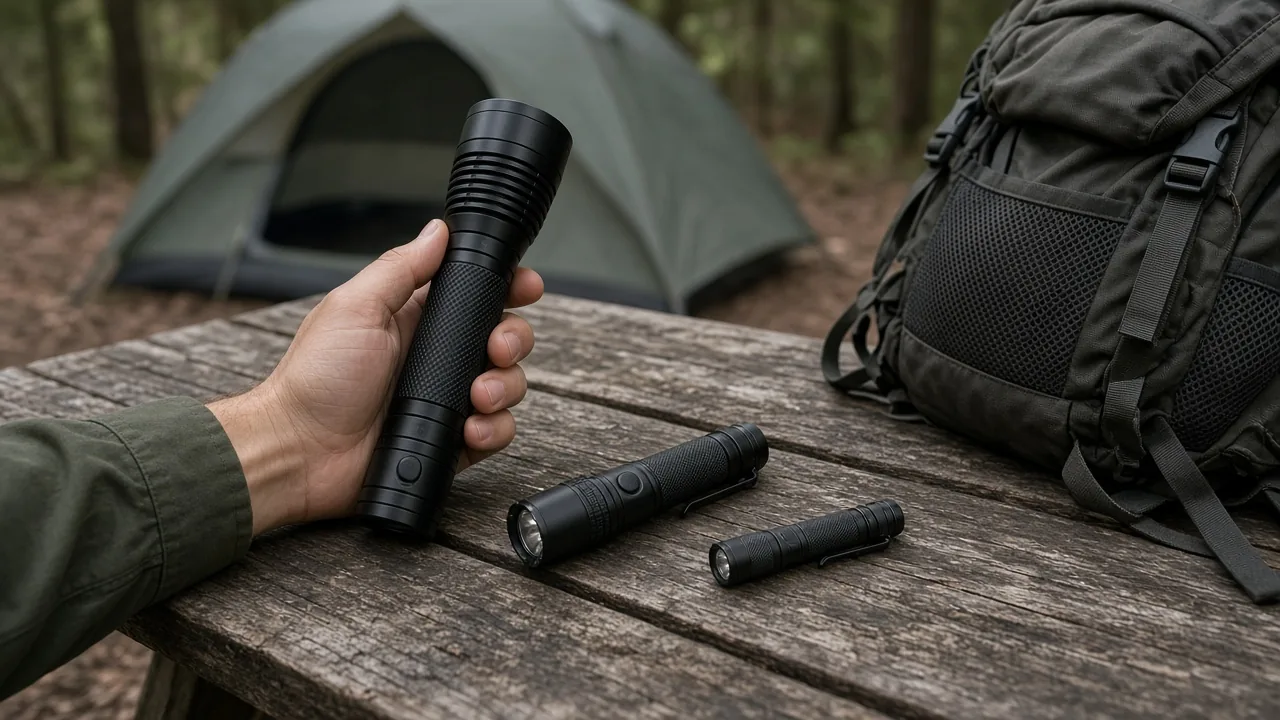
Use this table to compare common camping flashlight types before narrowing down a specific model. The listed specs come from manufacturer data and show how weight, battery, and water resistance change with design.
| Flashlight type | Output | Beam distance | Battery | Weight | Water resistance | Best fit |
|---|---|---|---|---|---|---|
| Small focusable AAA light | 140 lumens | 500 ft | 3 AAA | 104 g (about 3.7 oz) | Water resistant | Close camp work, light backpacking |
| Basic emergency light | 20 lumens | Not stated | Standard zinc-carbon | Very light; 3.74 in long | Not waterproof | Dry-weather backup |
| Mid-size rechargeable focusable | 120 lumens | 200 m (about 656 ft) | Rechargeable AA lithium | Not stated | Water and shock resistant | Car camping, short backpacking |
| Higher-output rechargeable | 800 lumens | 1,640 ft (about 500 m) | 3,600 mAh rechargeable | Not stated | Not stated | Route finding, base camp use |
| Compact thrower | 55 lumens | 230 m (about 755 ft) | 3 AAA | Not stated | Waterproof | Trail finding, compact carry |
| High-output 8-AA light | 500 lumens | 35 m (about 115 ft) | 8 AA | About 10.5 oz | Not stated | Car camping near tent or table |
Small and light options for close camp work
Models like a 104-gram focusable AAA light or a 20-lumen emergency light keep weight low but often lose water resistance or throw. That is the tradeoff. A small AAA light works well for reading in the tent, cooking on a table, or walking to the water spigot. A very light 20-lumen emergency model makes sense only as a dry-weather backup because it lacks waterproofing.
Who they suit: backpackers counting ounces, fair-weather campers, and anyone who wants a second light in a glove box or first aid kit. Who they do not suit: campers who need a dependable light in rain, snow, or around water, or anyone who wants to identify a trail junction at distance.
If you choose an ultralight option, pack a spare set of batteries and keep the light in a dry bag or zippered pocket when the forecast turns wet.
Mid-size rechargeable and focusable lights balance throw and control
Rechargeable lithium options with 120-800 lumens and adjustable focus cover more distance while adding some weight. Check charging method and spare cell compatibility.
A 120-lumen focusable model can reach about 200 meters and runs on rechargeable AA lithium or standard AA cells. That flexibility helps when you are away from a charger but near a gas station. A 700-lumen light with an aluminum body and rechargeable lithium-ion cell adds durability and output without becoming a brick, though it still weighs more than a compact AAA light.
An 800-lumen light with a 1,640-foot beam and a 3,600 mAh rechargeable battery pushes into route-finding territory. It works well for car camping, base camp, or navigating open ground. The tradeoff is recharging time and the need to pack a cable or power bank. If the battery is not replaceable, you are limited by its runtime.
High-output lights suit wide areas but can get heavy
A 500-lumen model using eight AA batteries weighs about 10.5 ounces, so it is workable for car camping but burdensome for backpacking despite the output. That same light may have a short beam distance because the reflector spreads light broadly rather than focusing it.
High-output lights with multiple AA cells often feel stable and bright around the picnic table or truck bed. For base camp use, the weight is acceptable. For a multi-day backpack, those eight batteries add up and create a bulky lump in a side pocket.
If you want high output for backpacking, look for a rechargeable lithium light that stays under roughly five ounces. Do not assume more batteries or more lumens means better trail performance.
How Do You Choose Between Car Camping and Backpacking Lights?
Weight and pack space matter more for backpacking. Controls, runtime, and toughness matter more when the vehicle carries the load. The same light can work for both, but the priorities shift.
Car camping: prioritize simple, durable lights
Choose a bright, water-resistant light with easy controls and common batteries, and accept a few extra ounces because you are not carrying it all day. A simple push-button or twist-head interface is easier to use with cold or muddy hands than a complex multi-click UI.
For car camping, a light that runs on AA batteries is practical because you can find replacements at most convenience stores. A heavier 8-AA body is not a problem in a camp bin. What matters more is that the light stays dry in rain and does not crack when dropped on gravel.
Check the campsite rules and fire restrictions before you go, and keep the light stored where you can find it after dark. A headlamp or area lantern can complement a handheld light when you need hands-free camp work, but a dependable handheld is still the fastest tool for checking a noise outside the tent.
Backpacking: favor USB-C charging, replaceable cells, and lower weight
A light under roughly five ounces with USB-C charging and a replaceable lithium cell fits backpacking better. Avoid eight-AA designs and non-standard battery formats. USB-C means you can charge from the same power bank or wall adapter you already carry for a phone.
A replaceable cell lets you swap in a fresh 18650 or similar battery instead of waiting at an outlet. That matters on a five-day route where resupply is not guaranteed. Stick with standard cells and note whether your light requires a flat-top or button-top. One reader learned the hard way that an upgraded version of a light could use a different end-cap style, so its own spare battery did not fit.
Pack two or three charged spare cells. Store them in a small plastic case, not loose in a pack pocket where they can short against keys or a stove. Keep the light accessible in a hipbelt pocket or pack lid so you are not digging after sunset.
How Should You Use and Maintain a Camping Flashlight?
A camping flashlight works best when you protect the battery compartment, keep the lens clean, and use the right light for the task. Safe use also means separating lighting from fuel-burning appliances.
Never use a stove or heater inside your tent
Never use a stove or heater inside your tent. Carbon monoxide and fire risk remain even in cold or wet conditions. A flashlight or headlamp is the safe light source for reading, changing clothes, or organizing gear inside the tent. Fuel-burning devices belong outside, away from tent walls and flammable materials.
If you need warmth inside the tent, use a sleeping bag and pad rated for the expected overnight temperature. Keep the flashlight near the tent door at night so you can reach it without fumbling. In a fuel emergency or suspected carbon monoxide situation, get fresh air immediately and seek help.
How many spare batteries should you pack?
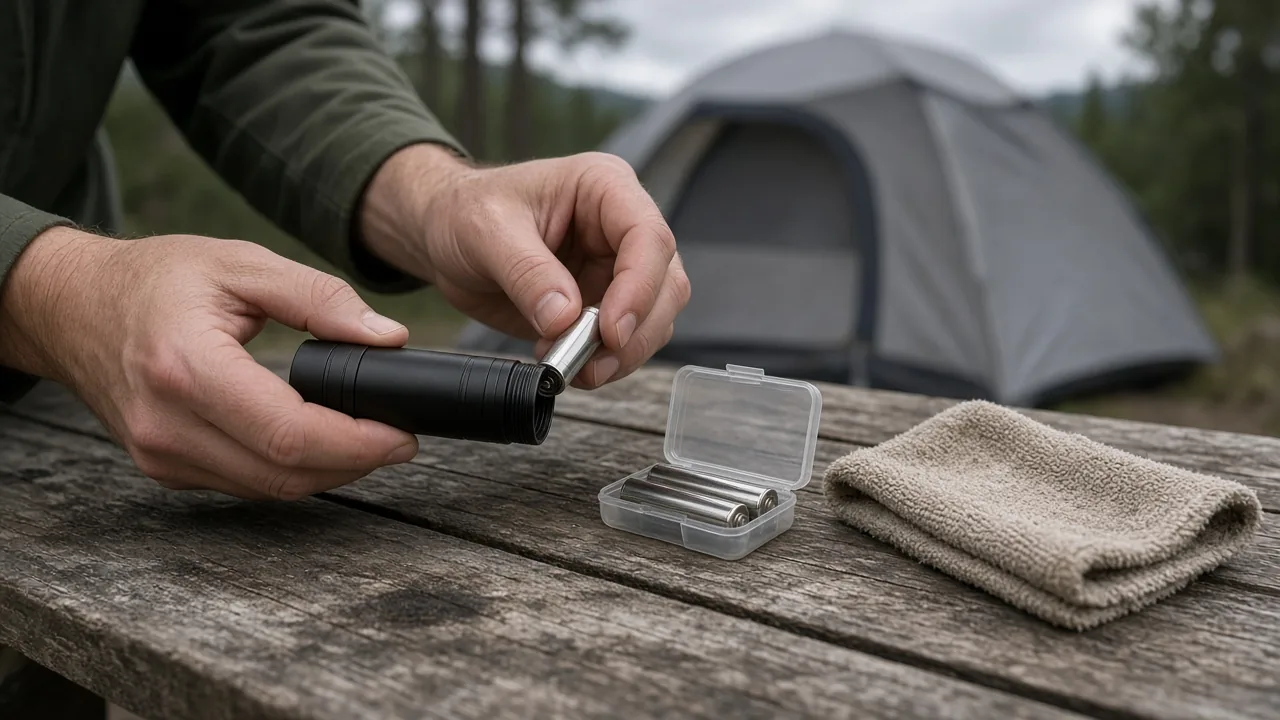
Carry two or three charged spare cells, match flat-top or button-top versions to your light, and avoid proprietary positive and negative shared-cell designs that limit replacements. Cold weather and long runtimes drain batteries faster than many campers expect.
Before a trip, test the light with the spare cells you plan to bring. A battery that fits the case may still not make proper contact if the terminal shape is wrong. Wipe the battery contacts and the inside of the tail cap with a dry cloth after wet trips. If the light has been in salt air or muddy conditions, rinse the exterior with fresh water only if the manufacturer says that is okay.
When you finish a trip, remove alkaline batteries if the light will sit unused for weeks. Leaking cells can damage the contacts and battery tube. Rechargeable lithium cells should be stored with a partial charge in a cool, dry place.
Match the flashlight to your trip type, expected night temperatures, and chance of rain before packing it. If you are car camping, a heavier light with AA batteries and simple controls is fine. If you are backpacking, favor a sub-five-ounce light with USB-C charging and replaceable standard cells. A headlamp or area lantern can round out your lighting kit for hands-free camp work, but a practical handheld light remains the core of your after-dark setup.
By Camp Kit Journal
This article is general information about camping gear, not professional safety, medical, or wilderness training. Check fire restrictions, weather, and campsite rules before you go, and follow the manufacturer's instructions for your own equipment.
FAQ
How many lumens do I need for a camping flashlight?
For most camp tasks, 100-500 lumens is enough for cooking, packing gear, reading maps, and walking to the latrine. Higher output is only needed for long-distance searching or lighting large open areas.
What battery type is best for a camping flashlight?
Lithium cells are lighter and longer-lived, but AA and AAA models are easy to replace. Rechargeable USB-C lights are convenient if you carry a power bank, but a removable standard cell is safer for multi-day trips.
What is beam distance in a flashlight?
Beam distance measures how far the focused light reaches and depends on the reflector and lens, not just lumens. A lower-lumen light can have a much longer beam distance than a high-lumen flood light.
How do I maintain a camping flashlight?
Keep the battery compartment clean and dry, remove alkaline batteries for long storage, and pack two to three charged spare cells in a plastic case. Check that spare batteries match the flat-top or button-top style your light requires.



