Best Small Coolers for Day Trips: Soft vs Hard Choices
Discover how to choose the best small coolers for day trips, whether soft-sided, hard roto-molded, or lunch-box style, with advice on capacity, ice retention, and packing.
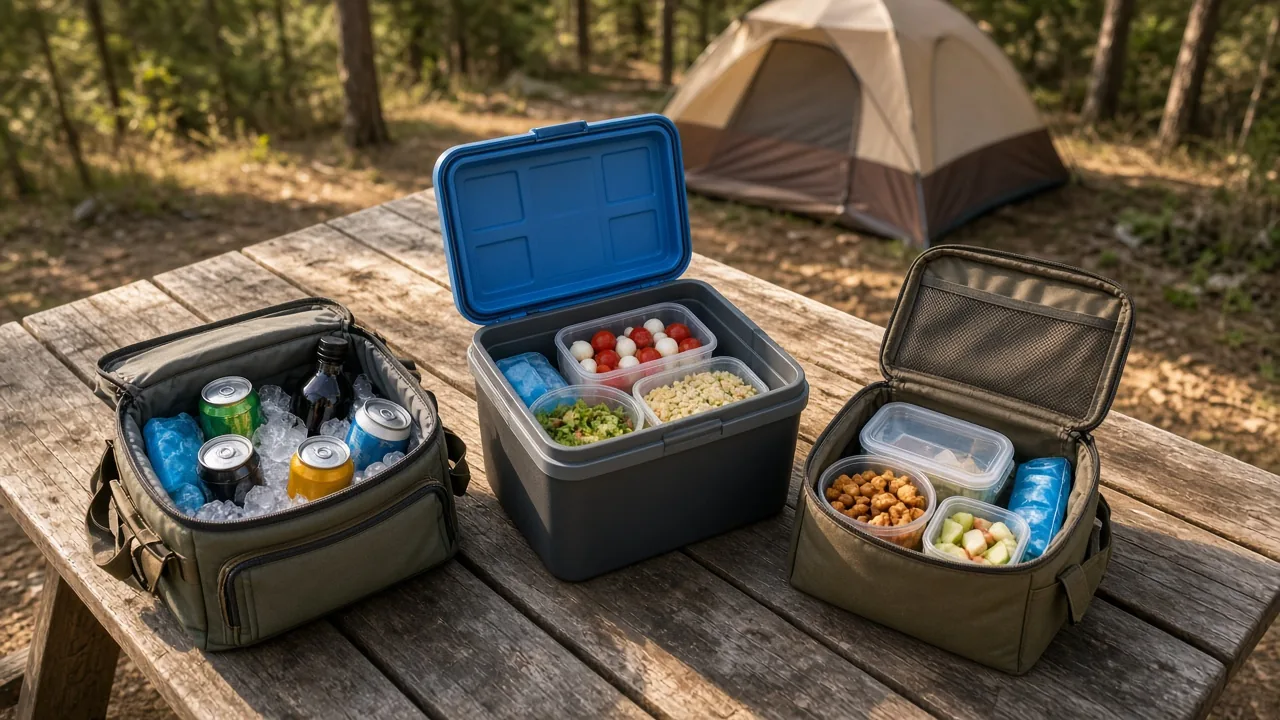
For most day trips and short outings, the best small coolers for day trips are either a soft-sided cooler or a compact hard model that matches your food and drink volume, carries easily, and seals tightly—not the model with the biggest advertised ice-time number. A lunch-bag style can work for one person, while a heavy roto-molded box is usually more than a beach stop needs. The right choice starts with style, then capacity, weight, and lid design.
What should the best small coolers for day trips get right?
A small cooler for a day trip has a different job than a large camping cooler. You need enough cold-holding to get through a few hours outdoors, but you do not want to carry extra weight or a bulky box that takes up the whole back seat. The best option balances portability, cold retention, and the amount of food and drink you actually pack.
| Cooler style | Typical weight | Capacity | Ice retention | Best use |
|---|---|---|---|---|
| Soft-sided | Lightest; folds or compresses when empty | Varies by shape; often less rigid interior volume | Moderate, depends on zipper and liner quality | Beach runs, picnics, quick stops |
| Hard roto-molded | Heaviest; harder to carry one-handed | Compact sizes often around 8–16 qt | Highest, but often more than a day trip needs | Tailgates, fishing, rough handling |
| Lunch-box cooler | Very light; packs flat | Small portions, one meal | Short, enough for half-day solitary use | Work, school, solo meals |
Each style works, but they solve slightly different problems. Matching the box to the outing matters more than chasing the longest ice-life claim.
When does a soft cooler fit better?
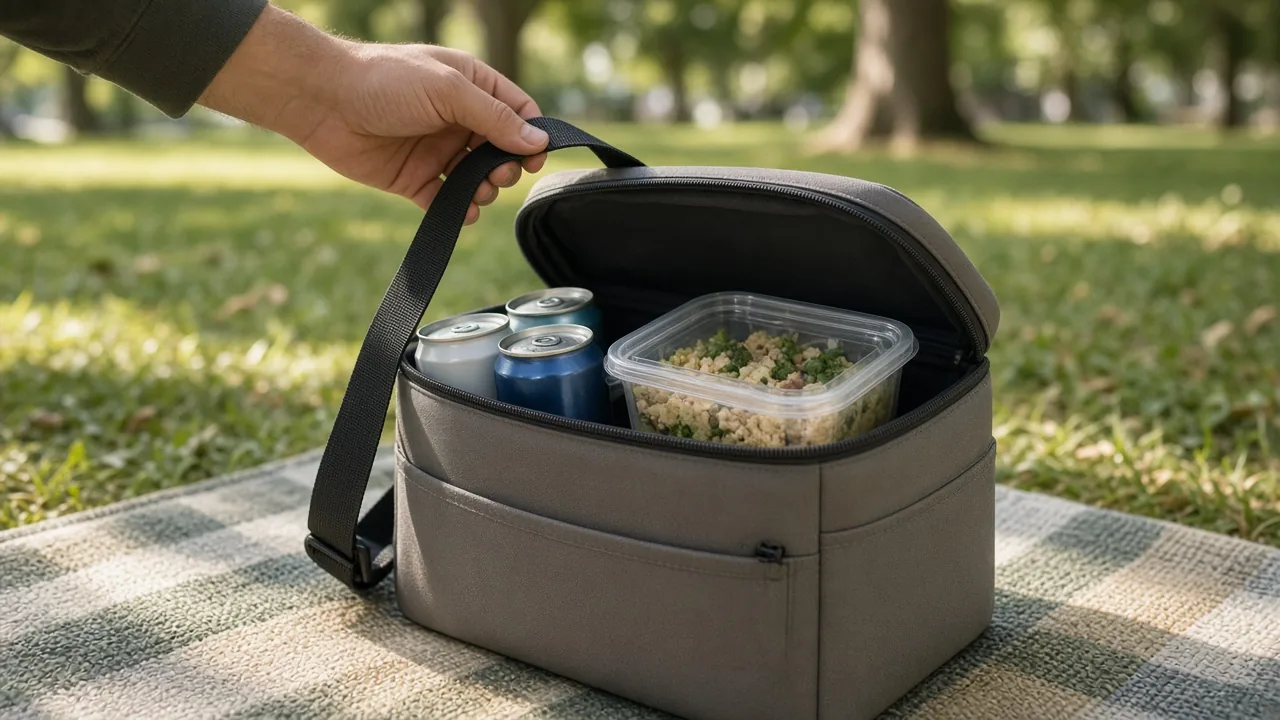
Pick a soft cooler for beach runs, picnics, and quick stops where light weight and easy folding matter more than holding ice for several days. Soft-sided models usually have flexible walls and a zippered top, so they compress into a trunk or gear bin when not in use.
A soft cooler fits well when you are walking from a parking lot, spreading a blanket at a park, or carrying other beach gear. You give up some maximum ice retention compared with a hard roto-molded box, but for a four- to six-hour outing that trade is usually worthwhile. Look for a snug zipper and a reinforced liner, because those are the first places warm air gets in.
When does a hard roto-molded cooler earn its weight?
Choose a hard cooler like the Titan by Arctic Zone for tailgates, fishing, or rough handling. The gasket lid and heavy insulation help hold cold longer and survive being kicked around a truck bed or dock. The same design makes it less pleasant for quick, one-hand carry or tight storage, so skip it when you want a compact, grab-and-go option.
A hard roto-molded box pays off when you know the cooler will sit in direct sun for hours or get opened frequently. The trade-offs are weight and bulk. If you mostly take short walks from a vehicle, a roto-molded model can be fine. If you are carrying it more than a few minutes, a soft cooler often makes more sense.
When is a lunch-box cooler enough?
Use a lunch-bag style such as Fit & Fresh for work, school, or solo meals. It keeps small portions cold and packs flat, not because it can cover a group outing. One advantage is that some lunch-box coolers put an ice pack directly into the lid, so you do not have to pack separate gel packs around your food.
A lunch-box cooler is not the right tool for a family picnic or a full day in the sun. The capacity is too small for several drinks and meal containers, and the ice retention runs shorter. But for one person who wants a cold sandwich, fruit, and a drink at midday, it is the lightest and easiest option.
How much capacity and weight do you actually need?
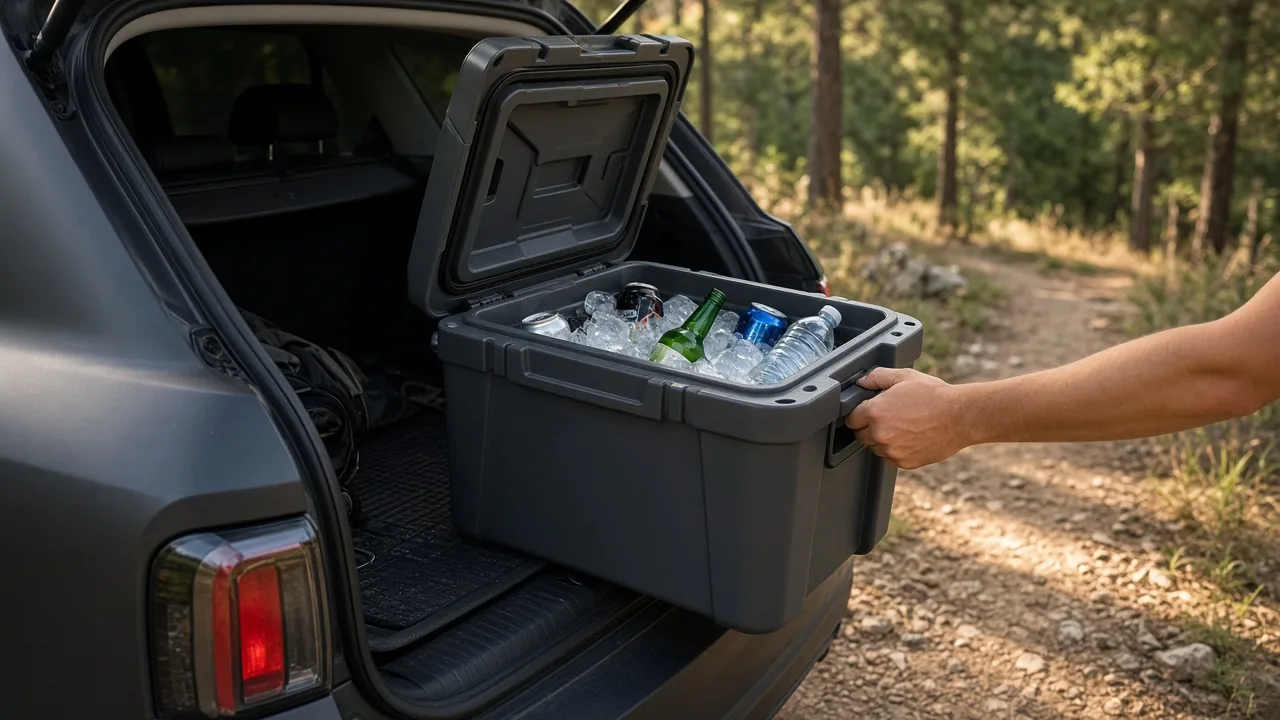
Before choosing a cooler, compare capacity in quarts or liters and weight in pounds. An 8 L cooler holds about 8.5 qt, may chill about six drinks, and can weigh roughly 4 lb 3 oz. That is enough for one to three people on a short outing, but it will not feed a large group.
A useful reference point is that an 8 L model may measure about 11 by 11 by 13 inches, which fits in most car trunks and is still carryable by the handle. For a group of four or more, you usually need either two small coolers or a larger capacity. The problem with going too large is that empty space inside works against cold retention.
How do you estimate food and drink volume?
Count drinks and meal containers, then add space for ice. Ice takes up room, and an undersized cooler forces you to leave something behind. A simple method is to pack the contents you expect to carry, then add enough ice to fill gaps and cover the top layer.
For a day trip, plan for roughly one drink per person per meal or rest stop plus water. Meal containers and fruit or snacks add bulk quickly. If your cooler is so tightly packed that the lid barely closes, you probably need one size up or a second small cooler.
Car camping or backpacking: how much does weight matter?
For car camping or a short walk from the vehicle, prioritize access and capacity. You can tolerate a heavier hard cooler because you will not carry it far. For any trip on foot, treat packed size and pounds as critical, because you carry the cooler along with other gear.
Backpackers usually do not carry a traditional cooler at all, but if you are walking to a picnic spot or lake access, a soft-sided or lunch-box style is easier to manage. The lighter the cooler, the more likely you will actually bring it instead of leaving it in the car.
How do ice retention claims compare on small coolers?
Do not pick by the biggest hour number alone. One 8 L cooler claims 66–70 hours of ice retention, but in 86–104°F summer heat that same cooler may hold useful cold for only about 13 hours. Lid seal and insulation quality matter more for a day trip than a lab-style maximum time.
Manufacturers often list ice retention under mild or indoor test conditions, not inside a hot car or on a sunny beach. For a short outing, you only need a cooler that stays cold until you finish eating and drinking, so focus on how well the lid closes and how much ice the interior can hold.
How do lid seals and pressure vents affect cold retention?
Look for a snug lid or gasket to reduce warm-air exchange. A hard cooler with a gasket seals more predictably than a soft cooler with a loose zipper. If a cooler has a pressure vent, keep it closed to hold cold in and open it only when pressure makes the lid hard to open.
The vent is useful after the cooler has been closed for a long time and the pressure difference resists opening, but leaving it open during a trip lets warm air circulate freely. On a small cooler, that can shorten useful cold time by hours.
How do you pack ice to extend cold time?
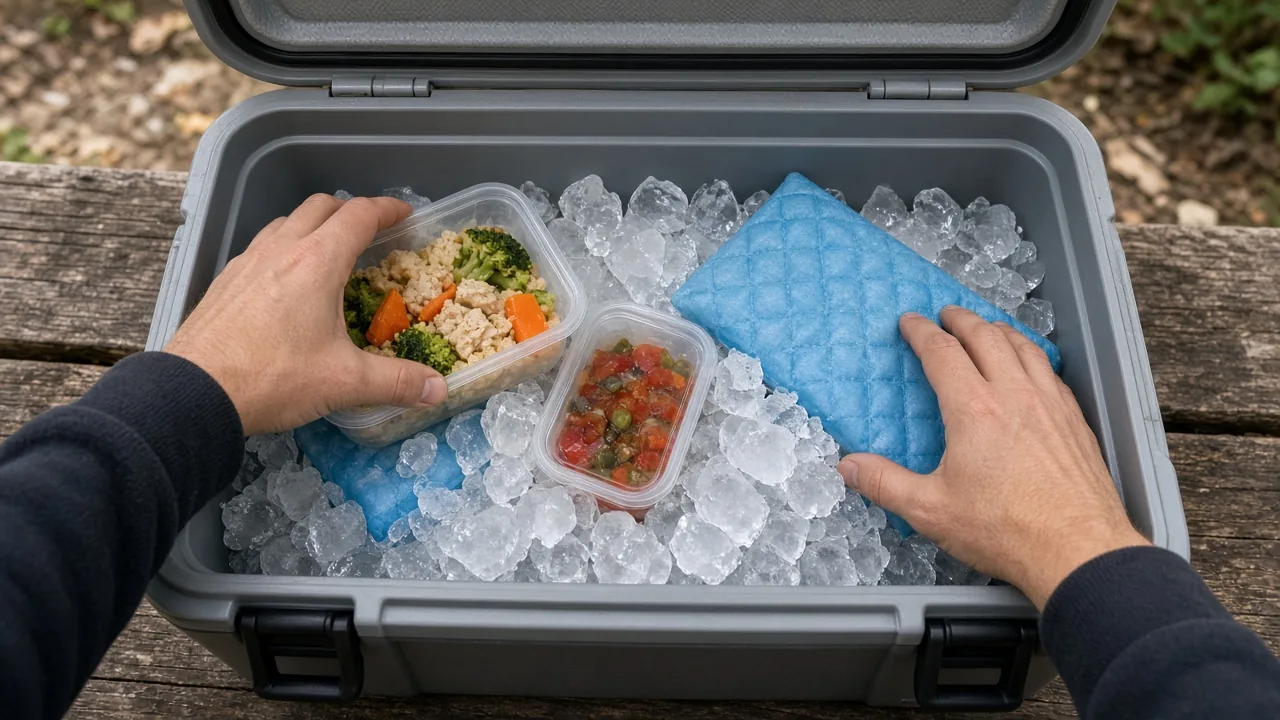
Pre-chill the cooler when possible, put ice at the bottom and between containers, and close the lid tightly. Warm air gaps and frequent opening melt ice faster than ordinary outside heat. A small cooler stays cold by holding cold mass rather than by quickly cooling warm contents.
Fill empty spaces with ice or frozen packs. If the interior has large empty areas, cold air escapes and warm air takes its place every time the lid opens. A tightly packed cooler with ice distributed through the contents will hold temperature longer than a half-empty box with a few cold packs on top.
What mistakes make a small cooler lose ice faster?
Common errors include loading warm drinks, opening the lid often, and relying on insulation without filling air gaps with ice. All of these shorten useful cold time even on a half-day outing. The insulation only slows heat transfer; it does not magically make warm items cold.
Why do warm contents and empty space melt ice faster?
Chill drinks before packing and fill unused space with ice or frozen packs. A small cooler stays cold by holding cold mass rather than by cooling warm items quickly. If you put room-temperature cans inside, the ice melts faster as it gives up its cold to the drinks.
Empty space is also a problem because every opening replaces cold air with warm air, and the ice then has to cool that new air. Packing the cooler full reduces the volume of warm air that enters and gives the ice a stable job.
What safety rule applies when a cooler is used for camp cooking?
Never use a stove or heater inside your tent. Fuel appliances create carbon monoxide and fire risks in closed spaces, even if you are just trying to warm a meal or dry gear. Keep cooking outside and check fire restrictions before you light anything.
A cooler often sits next to the cooking area, but it does not change the basic safety rule. If you bring a camp stove, operate it on a stable, non-flammable surface away from tent walls, dry grass, and the cooler. The carbon monoxide risk inside a tent or vehicle is not worth the convenience.
Is a cooler bear-proof food storage?
Check campsite food-storage rules and use an approved bear canister or locker where required. A small cooler alone does not keep bears or other animals out of your food. The plastic or soft sides will not stop a bear, raccoon, or squirrel working on an unattended lunch.
In some campgrounds, a cooler left on a table overnight is a nuisance-animal magnet even if no bears are present. Store food and scented items in a hard-sided vehicle, a bear box, or an approved canister according to local rules. During the day, keep the cooler within reach and do not leave it half-open.
How do you clean and store a small cooler after a trip?
Rinse it, dry all surfaces, let the lid air out before closed storage, and pack out food scraps or melted ice water instead of dumping them at the site. A cooler that goes back into storage wet or with crumbs inside can grow mildew and pick up odors.
If the cooler has a drain spigot, open it to release melted ice water, but do not empty that water onto a trail or into a lake. Dispose of it at a sink, drain, or another appropriate spot. Wipe down the gasket and zipper, then leave the lid open indoors until the interior is fully dry.
So which small cooler should you choose for a day trip?
Match the style to the outing—soft for beach stops and short walks, hard for tailgates or rough use, lunch-box for solo meals—then verify capacity, weight, and seal before you pack. A 14–16 qt hard cooler can serve a small gathering, while an 8 L ice bucket fits one to three people without overpacking.
The best small coolers for day trips are the ones you can actually carry, close tightly, and pack with enough ice. Before you buy or pack, check the weather forecast and whether you are car camping or walking. Choose the smallest cooler that still holds your food and drinks, and pair it with pre-frozen ice packs or block ice from home. If nights look cold or wet, also confirm your insulation layers and shelter are matched to the conditions; the cooler only needs to earn its space for the day.
This article is general information about camping gear, not professional safety, medical, or wilderness training. Check fire restrictions, weather, and campsite rules before you go, and follow the manufacturer's instructions for your own equipment.
FAQ
Should I choose a soft cooler or hard cooler for a day trip?
Choose a soft cooler for beach runs, picnics, and short walks where lightness and easy folding matter. Choose a hard roto-molded cooler for tailgates, fishing, or rough handling where durability and longer ice retention are more important.
How much capacity do I need in a small cooler for a day trip?
For one to three people, an 8 L cooler (about 8.5 qt) may hold about six drinks and weighs roughly 4 lb 3 oz. For groups of four or more, consider two small coolers or a larger capacity, but avoid too much empty space.
How can I make ice last longer in a small cooler?
Pre-chill the cooler and contents, fill empty space with ice or frozen packs, distribute ice throughout, and close the lid tightly. Avoid frequent opening and loading warm drinks, as these melt ice faster.
Are small cooler ice retention claims reliable?
Ice retention claims are often based on mild or indoor conditions, not hot summer heat. In 86–104°F, an 8 L cooler claiming 66–70 hours may only hold useful cold for about 13 hours, so focus on lid seal and insulation quality.
How do I clean and store a small cooler after a trip?
Rinse and dry all surfaces, leave the lid open to air out before closed storage, and dispose of melted ice water at a sink or drain rather than dumping it on a trail or into a lake. Wipe down gaskets and zippers to prevent mildew.



