How to Choose the Best Red Light Headlamp for Camping
Learn how to choose the best red light headlamp for camping by comparing red-mode brightness, white beam distance, battery type, weight, and weather resistance.
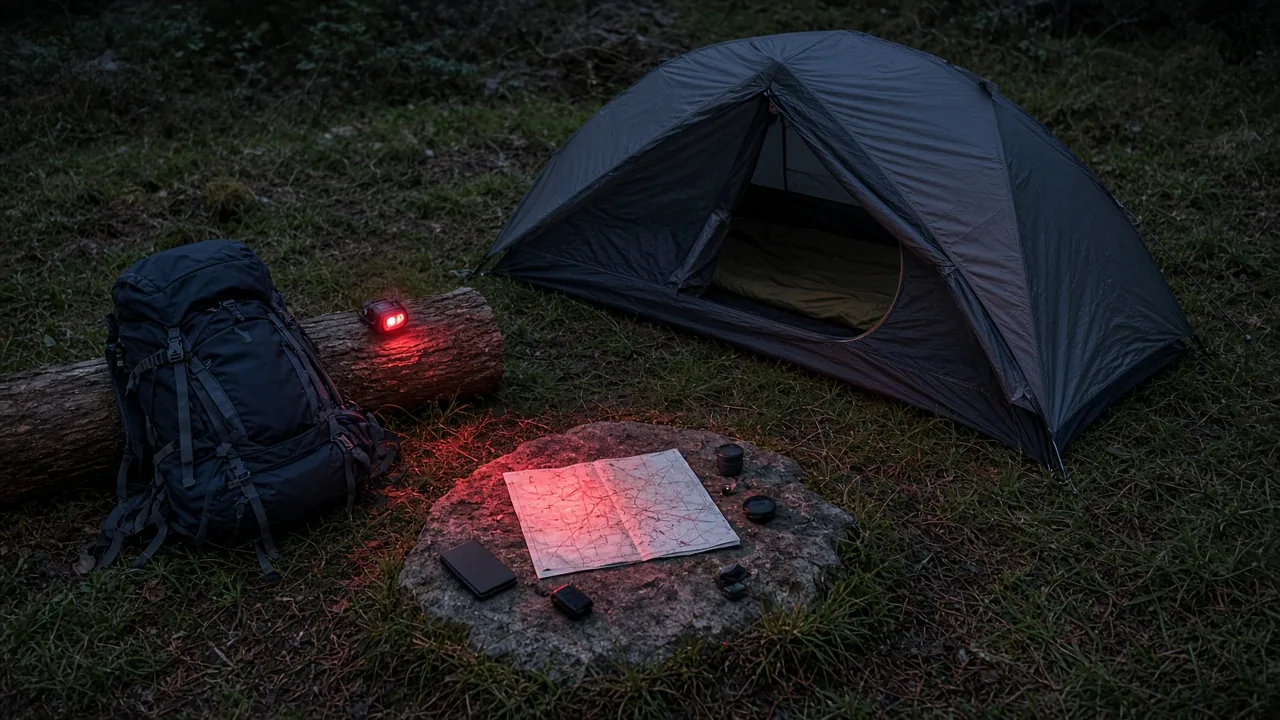
A red-light headlamp is worth carrying for night vision and campsite courtesy, but the best red light headlamp for camping depends on red output, battery access, weather resistance, and how much weight you will accept. Some models are bright enough for route-finding after dark. Others are better for close tasks, map checks, or signaling without waking the next campsite.
How to Choose the Best Red Light Headlamp for Camping: Compare Red-Mode Brightness, White Beam Distance, Battery Type, Weight, and IP Rating Before Trusting a Red-Light Headlamp to Protect Night Vision
A red LED alone does not make a headlamp good. The red mode has to be bright enough for your actual use, easy to reach without blasting white light, and built to handle the weather you expect. Battery access also matters because a dead red-light headlamp at midnight is just extra weight on your head.
Why red light protects night vision and reduces camp disturbance
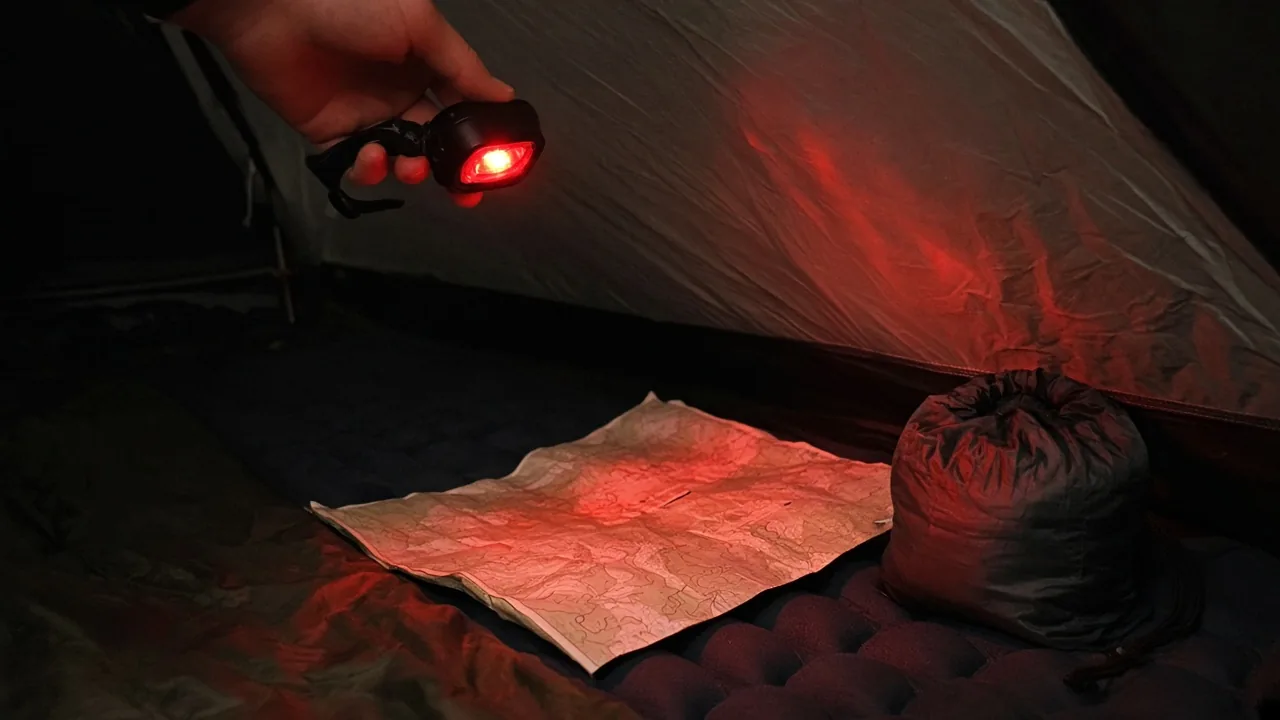
Red wavelengths above roughly 650 nanometers leave the rod cells in your eyes much less affected than white or blue light. That means your night vision recovers faster after you turn off the lamp. A lower red output can also reduce glare for nearby campers and cut down on light spilling into other tents.
Red is not a magic invisibility mode. A very bright red beam can still glare, but most red modes run at a fraction of the white output. That lower power, combined with the eye’s reduced sensitivity to red, makes the mode useful for navigating camp, reading a map, or moving around a tent without resetting your dark adaptation.
Check actual red output, not just the presence of a red mode
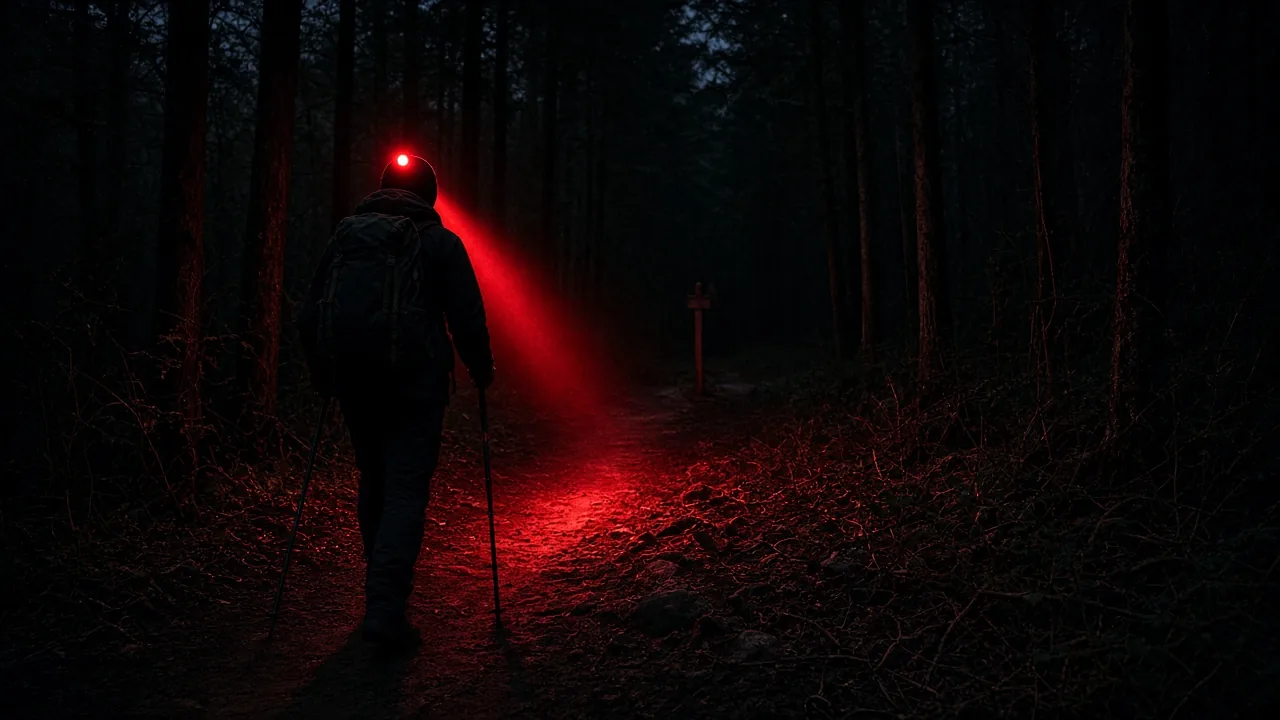
Some camping headlamps offer only 5 lumens of red light. Others reach 177 to 200 lumens. A 5-lumen red mode is fine for close tasks and short-range signaling, but it is not a route-finding beam. Match red brightness to how far you need to see.
A headlamp with a 177-lumen red output at 660 nanometers can be a legitimate camp work light. At its higher red settings, one such model reached roughly 110 feet in third mode and farther in fourth mode. Its lower red modes were more limited, around 8 to 25 feet, which is enough for packing gear or finding a water bottle but not for spotting a trail junction. If red is your primary night-hiking mode, choose a model with at least 100 usable red lumens. If red is only for inside the tent and short walks, a 5-lumen mode can still work.
Battery style and charging affect how you pack and resupply
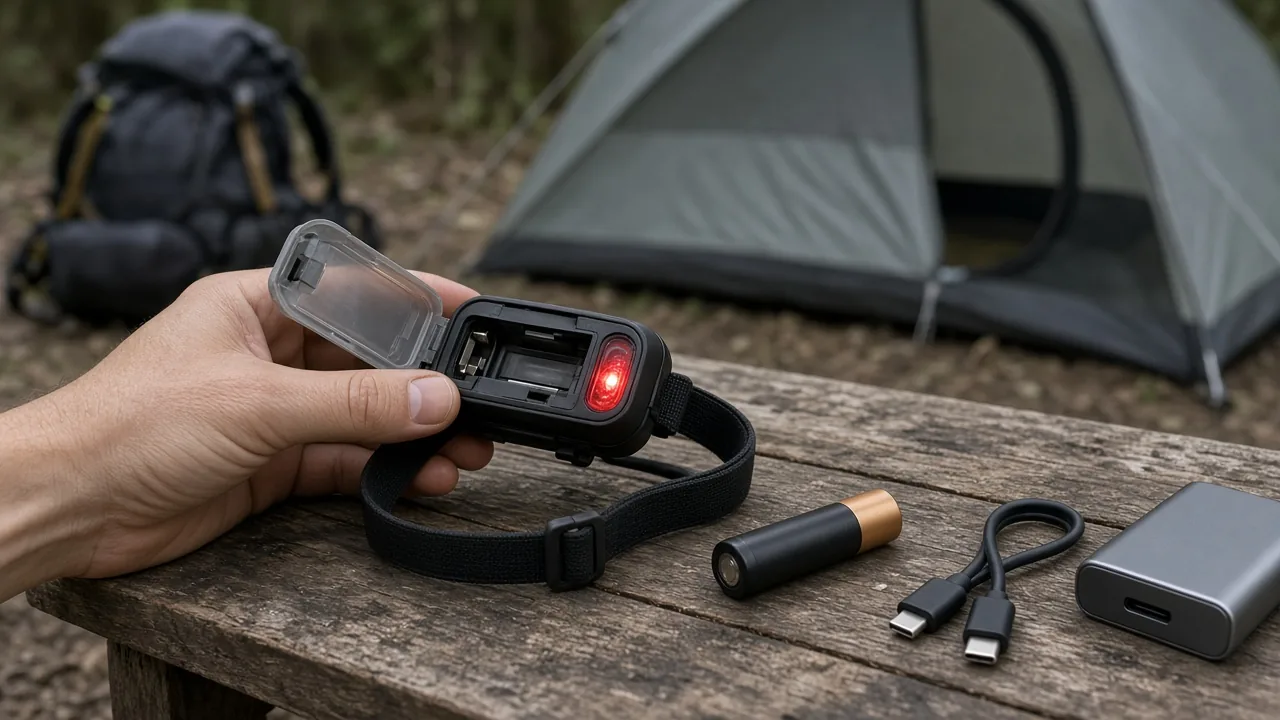
Replaceable 18650 cells with USB-C or magnetic charging give you the option to swap in a fresh battery on multi-day trips. Built-in lithium batteries usually save weight and bulk, but they are less flexible if you are away from power for several nights.
For backpacking, a headlamp that runs on a standard 18650 can share cells with other gear, if your other lights use the same size. Before buying spares, check whether your lamp needs flat-top or button-top cells. Some battery tubes are tight, and a protected button-top 18650 may not fit every model. A light with a built-in battery can still be practical for weekend trips if it supports pass-through charging from a power bank, but once the internal cell wears down or drains, you cannot simply swap it in the field.
Weather resistance and weight change what the headlamp is for
Water resistance ratings describe different conditions. IPX6 means the light is designed to handle strong water spray or heavy rain. IP67 adds protection against temporary immersion. IP68 is stronger still, with some models rated for short immersion and more severe drops. IPX3 is only light water resistance, suitable for splashes and light rain but not a dependable downpour.
Weight is the other tradeoff. A heavier aluminum body often resists impacts better, but you feel that extra ounces on a long hike or technical trail. A headlamp around 3.9 ounces may feel nearly unnoticeable, while one closer to 5.4 ounces is still manageable but more present. If you mostly car camp, choose durability and output. If you are counting pack weight, pick the lightest model that still has the red output and weather rating you need.
Red-Light Headlamp Models Compared: Pros, Cons, and Who They Suit
Use these specs and reported observations to narrow choices by red output, beam control, battery access, weight, and how much water or abuse you expect.
| Model | Red mode | White beam | Battery | Weather rating | Weight | Who it suits |
|---|---|---|---|---|---|---|
| 77outdoor D25 LR dual | 177 lumens, 660 nm | 500 lumens; visible to about 100 yards in high mode | Replaceable 18650, USB-C charging | IPX6 | Not listed; aluminum body, heavier than compact lights | Camp work, bright red light, tough use |
| Fenix HM75R PRO | Four modes, low to high plus strobe | 3,500 lumens; 398 meters beam; up to 516 hours max runtime | 5,500 mAh dedicated battery, Type-C fast charge | IP68, 2-meter immersion and drop | Not listed; larger build | Hard trips, search use, long night work |
| Nextorch eStar | 1 to 50 lumens | 5 to 650 lumens white; up to 1,300 lumens combined; 205-meter spot | Built-in 1,200 mAh lithium polymer, USB-C | IP67, 1-meter drop | 110 g (3.9 oz) | Light car camping, day hikes, simple rotary control |
| Fenix HM61R V2.0 | 5 lumens max, 1-lumen low | 1,600 lumens max; 162-meter beam | Replaceable 3,400 mAh 18650 or 2 CR123A; magnetic charging | IP68, 2-meter drop | 152 g (5.4 oz) | Headlamp, chest light, magnetic work light |
| Olight Array 2 Pro | 45/100/200 lumens | Up to 1,500 lumens combined; 150-meter beam | Built-in 3,350 mAh 18650, not replaceable; USB-C | IPX3, 1-meter drop | 135 g (4.8 oz) | Runners, fast hikers, rear warning lights |
77outdoor D25 LR dual: bright red mode and tough body
The 77outdoor D25 LR dual stands out for its 177-lumen red mode. That is brighter than the red output on many camping headlamps, and the 660-nanometer wavelength is within the range that preserves night vision more effectively. The aluminum shell and dual O-ring sealing give it a sturdy feel, and the light survived a reported drop from about 15 feet.
The tradeoff is weight and controls. The body is heavier than compact plastic lights, and the single-button operation requires practice. A long press enters red mode, while a short press from off enters white. Each color has four output levels, but the sequence can be easy to fumble if you are tired or wearing gloves. The lamp rotates in its mount and can be removed for handheld use, which helps when you need directional light for camp work.
This model fits campers who want a bright red mode and are willing to carry more weight for a durable housing. It is less ideal for ultralight backpackers who want a simple, glove-friendly interface.
Fenix HM75R PRO: high output and independent light paths
The Fenix HM75R PRO is built for serious night work. Its white beam reaches 3,500 lumens with a 398-meter throw, and the manufacturer lists a maximum runtime of 516 hours. The red mode has its own optical path, and a rotary switch jumps directly to red without cycling through white modes.
That independent control is useful when you need red light quickly around a dark camp. The light uses a dedicated 5,500 mAh lithium battery with 18-watt fast charging and pass-through use. IP68 dust and water resistance plus a 2-meter drop rating make it suited to rough weather and hard travel.
The downside is size and weight. This is not a lightweight trail headlamp, and the specialized battery means you cannot simply drop in a common spare 18650 from another light. It suits multi-day base camp use, trail maintenance, or backcountry work where output and reliability matter more than saving a few ounces.
Nextorch eStar: light rotary control and compact size
The Nextorch eStar weighs about 3.9 ounces and uses a rotary head to select off, flood, spot, combined, red, and SOS modes. A separate dial adjusts brightness steplessly from 5 to 650 lumens on white, with the combined mode reaching 1,300 lumens. Red runs from 1 to 50 lumens, which is modest but adequate for close camp use.
The rotary dial is easy to learn and less likely to jump into white mode than some press-and-hold systems. IP67 water resistance and a 1-meter drop rating are reasonable for light to moderate weather. The built-in 1,200 mAh battery is the main limit. At high output, battery life can be short, with one report of around 1.5 hours at the 1,300-lumen maximum. Red lasts much longer, and USB-C charging allows a power bank top-up, but multi-day backpackers may prefer a replaceable cell.
This headlamp fits car camping and day hikes where small size and simple controls matter. It is less suited to long backcountry trips with no easy charging.
Fenix HM61R V2.0: right-angle versatility with modest red output
The Fenix HM61R V2.0 is a right-angle light that works as a headlamp, chest light, or magnetic work light. White output reaches 1,600 lumens with a 162-meter beam. The red mode is far more limited at a maximum of 5 lumens, with a 1-lumen low.
That red level is enough for reading, close sorting, signaling, and preserving night vision in a tent. It is not a beam for navigating a trail after dark. The light runs on a replaceable 3,400 mAh 18650 or two CR123A cells, and magnetic charging adds convenience without removing the battery. IP68 water resistance and a 2-meter drop rating give it a harder-use rating than many general-purpose lights.
At 5.4 ounces, it is lightweight for its durability but heavier than compact plastic models. The right-angle shape and magnetic tail make it especially practical around camp, inside a vehicle, or clipped to a jacket. It suits campers who want one multipurpose light and do not need a high-output red mode.
Olight Array 2 Pro: triple beam and rear warning lights
The Olight Array 2 Pro combines a 1,500-lumen white beam with a red mode that reaches 45, 100, or 200 lumens. That red output is high enough for real trail use and makes this one of the few models aimed at runners and fast hikers. Gesture control works within about 5 centimeters of the lamp: wave right for high beam, wave down to reduce brightness. Red and SOS modes do not respond to gestures, so you still need the button for those settings.
The rear battery pack has six red warning LEDs, which is useful for road crossings, night running, or being seen from behind on a trail. The built-in 3,350 mAh 18650 is not replaceable, but USB-C charging supports pass-through use with a power bank. The main weakness is the IPX3 water rating. It is only splash-resistant, not built for steady rain or creek crossings. The non-three-point headband may also feel less stable during aggressive movement.
This model fits runners, day hikers, and warm-weather overnight trips where visibility and quick controls matter. It is not the best choice for heavy rain or extended backcountry use.
Using and Storing a Red-Light Headlamp Without Ruining the Trip
The best red light headlamp for camping is only useful if you can reach red mode quickly and keep the battery charged. Learn the switch sequence before you leave, and store the light where water and accidental presses cannot ruin it.
Quick red-mode access and avoiding accidental white beams
Many models use long presses, rotary detents, or separate switches to reach red mode. Some require a long press from off, while others have a dedicated rotary position. Whatever your light uses, practice with gloves on. A bright white beam in a dark tent can wake everyone and destroy your night vision.
Lock the light when it goes into a pack. Several models have a lockout function to prevent accidental activation. If you need to organize gear after dark, switch to red before entering the tent. Never use a stove or heater inside your tent when sorting gear or warming up after dark; keep fuel appliances outside and follow the manufacturer’s instructions for every stove, heater, or lantern.
Charging, battery swaps, and storage
Check flat-top versus button-top 18650 fit before buying spare cells. Not every battery tube accepts all protected button-top batteries. If your lamp uses a built-in cell, top it off before leaving and pack a USB-C cable in a dry pocket. For replaceable-battery models, carry at least one spare 18650 or the compatible CR123A cells your light accepts.
After charging, test red mode before you leave. A light that charges normally may still have a dirty switch or a battery that sits slightly loose. Store the headlamp and charging cable separately from wet gear, and match your weather expectations to the IP rating. If you expect steady rain, IPX3 is not enough; choose IPX6, IP67, or IP68 depending on how much water and immersion risk you may face.
Check whether your trip is car camping or backpacking, how cold or wet the nights may get, and pack a spare 18650 cell or USB-C cable so the red light still works when you need it. A red-mode headlamp becomes more than a courtesy light when the white beam is too harsh, the night is cold, and your eyes need every bit of dark adaptation they can keep.
Camp Kit Journal
This article is general information about camping gear, not professional safety, medical, or wilderness training. Check fire restrictions, weather, and campsite rules before you go, and follow the manufacturer's instructions for your own equipment.
FAQ
Why does a red light headlamp protect night vision?
Red wavelengths above roughly 650 nanometers affect rod cells less than white or blue light, so your night vision recovers faster after the lamp is off. Lower red output also reduces glare for nearby campers.
How many red lumens do I need for camping?
If red is only for close tasks in a tent, a 5-lumen mode can work. If red is your primary night-hiking or camp work beam, choose a model with at least 100 usable red lumens.
Should I choose a replaceable 18650 battery or a built-in battery?
A replaceable 18650 lets you swap in fresh cells on multi-day trips. A built-in battery saves weight and bulk but is less flexible if you are away from power for several nights.
What weather rating is best for a camping headlamp?
IPX3 is only splash-resistant, so it is not enough for steady rain. Choose IPX6 for heavy spray or rain, IP67 for temporary immersion, or IP68 for stronger water and drop protection.
Can a bright red mode be used for route-finding after dark?
Yes, models with roughly 100 or more red lumens can work for trail use. A bright red beam can still glare, but most red modes run at a fraction of white output and help preserve dark adaptation.