Best Lightweight Folding Camping Table: 8 Models Compared
Compare the best lightweight folding camping tables by weight, packed size, stability, and setup effort. Find the right solo-camp table for backpacking or car camping.
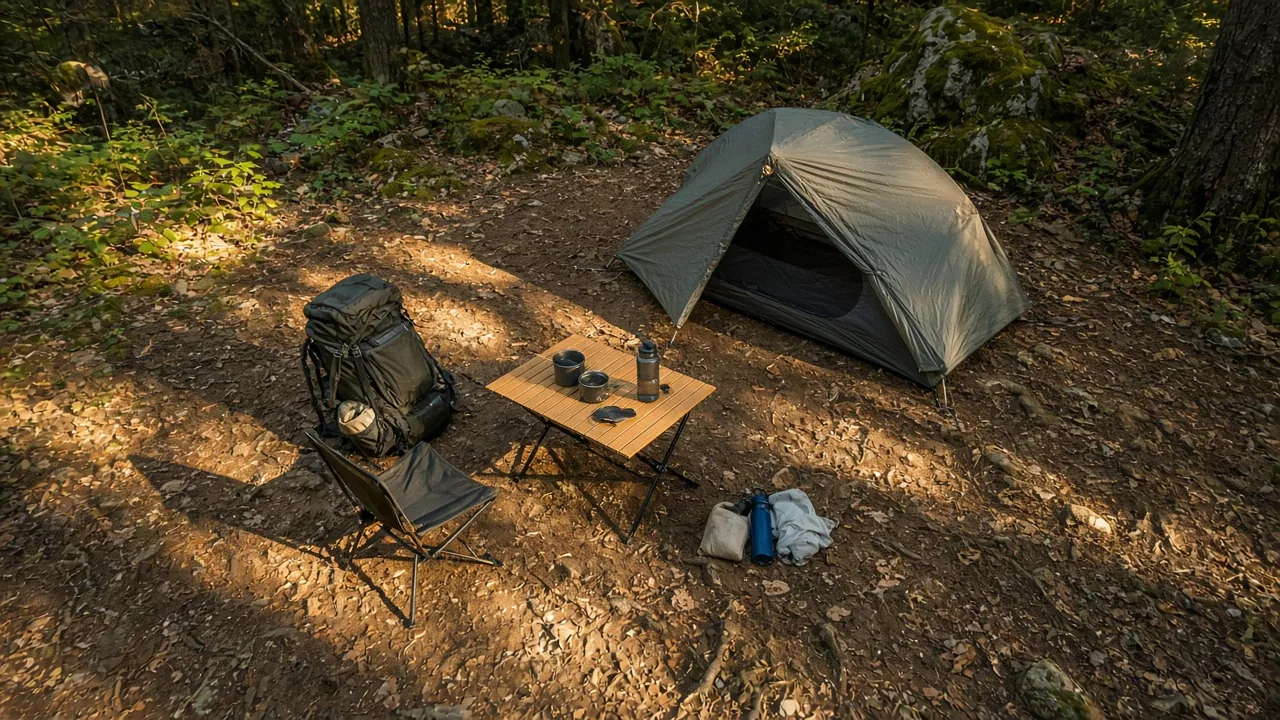
Solo campers often ask whether a folding table is worth the weight. The short answer: the best lightweight folding camping table depends on how you camp. If you backpack, look for a small table that packs flat and weighs about 1 lb or less. If you drive to camp, choose a height-adjustable aluminum table that stays put in wind and gives you standing-height work space. This guide compares lightweight folding camping tables by weight, packed size, stability, and setup effort so you can choose a solo-camp table that holds gear without slowing you down. Have your pack type and camp tasks in mind before comparing.
Step 1: Match the Best Lightweight Folding Camping Table to Your Trip
Decide whether you need a backpacking table that folds small, like the 460 g (about 1 lb) DIY carbon-fiber build, or a car-camping table where standing-height prep space and storage matter more than packed size. A table that works under a tarp may be a poor fit for a pickup camp kitchen, and the reverse is also true.
Backpacking solo setups
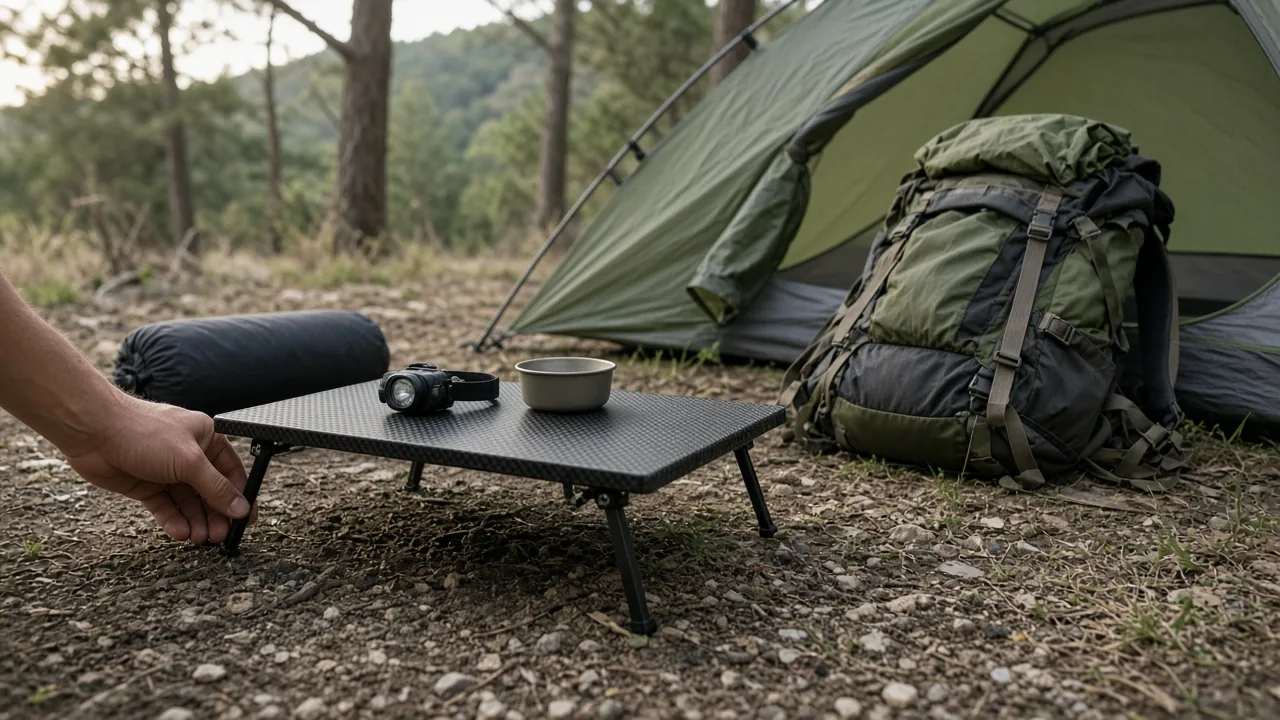
Choose low-profile or carbon-fiber tables that pack into a backpack in under a minute. They suit one person’s stove or side table, not large group meals.
A 460 g carbon-fiber table can fold down to roughly 13.8 × 3.1 × 2.4 inches and fit inside a pack. That is the right size for holding a small stove, a bowl, or a headlamp at camp, but it will not give you enough surface for chopping vegetables or spreading out a full cook kit. For solo backpacking, that trade-off usually makes sense because every ounce and every cubic inch matters.
The smallest folding tables also tend to sit low. That works for tent-side use, sitting on a sleeping pad, or placing gear off the ground. It does not work well if you want standing-height meal prep.
Car camping and basecamp setups
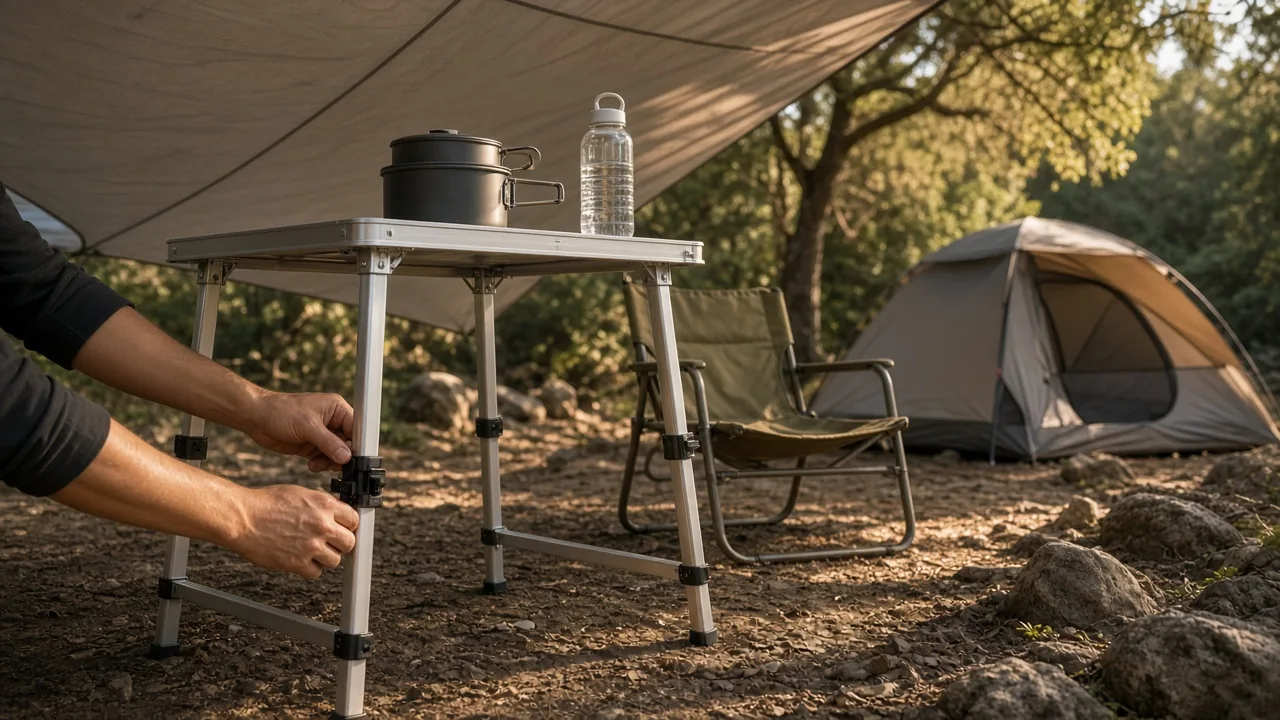
Choose a heavier aluminum or wood table with adjustable legs if you drive to camp. Stability and work surface outweigh the penalty of carrying it from the vehicle.
In car camping, a table can be 10 lb or 15 lb and still be worth packing because you only carry it a short distance. A taller aluminum table with a waterproof top and adjustable legs becomes a real camp kitchen surface. You can set a stove on it, prep food, and keep gear off wet ground.
Wood tables also fit basecamp use when you value a warmer look and are willing to manage moisture and weight. They often need more care, but the extra surface area and standing height can make camp cooking easier for several days at a fixed site.
Step 2: Compare Table Weight, Material, and Weather Resistance
Compare aluminum, carbon fiber, wood, and soft-top table options by weight and weather resistance. The lightest choice may flex or collect water, while a heavier top resists wind better.
Aluminum vs wood vs carbon fiber
Aluminum resists weather and wipes clean, but it can feel hot in summer sun and cold in winter. That is a minor problem for a work surface, but it matters if you often camp in exposed places. Aluminum is also typically the easiest material to clean after spilled drinks or sauce.
Wood looks warmer and feels less industrial, but it can warp, stain, or crack if left wet or baked in direct sun. A wood table may be 4 to 6 lb heavier than a similar aluminum model. If you camp in rain or coastal humidity, wood requires more maintenance.
Carbon fiber saves weight and can be quite stiff, but it costs more and is rarer in ready-made camping tables. A DIY carbon-fiber table at 460 g is one of the lightest options available, and it holds about 33 lb without flexing in normal use. The downside is that you have to build it yourself or pay a premium.
Soft-top tables, often with a fabric-like surface and cup holders, are friendly for drinks and low-stakes gear. They usually do not perform as well in wind or rain as a hard aluminum or sealed wood top.
Spec checker: weight, folded size, and camp type
Use a spec table for each candidate covering weight, folded dimensions, material weather resistance, and whether it suits backpacking or car camping.
| Model/style | Weight | Folded size | Material/weather resistance | Best camp type |
|---|---|---|---|---|
| DIY carbon-fiber table | 460 g (about 1 lb) | 13.8 × 3.1 × 2.4 in | Carbon fiber; stiff, not soft | Backpacking |
| Small mini table | Not specified, very light | Slim two-piece carry sack | Hard top; low surface | Backpacking solo side table |
| Portal-style aluminum table | Heavier than mini tables | Carry bag with shoulder or hand carry | Aluminum; wipes clean, wet-weather friendly | Car camping |
| Camp Field-style table | Heavier, flat fold | Hand-carry stacked panels | Aluminum top with closed side storage | Car camping, longer setup |
| Westfield-style aluminum table | 3 lb 12 oz | 21.3 × 5.9 × 4.7 in | Aluminum; weather resistant | Backpacking or light car camping |
| Westfield-style wood table | 15 lb 3 oz | 35.4 × 9.8 in rolled | Wood; warm look, needs moisture care | Car camping or basecamp |
These numbers show the split clearly: if packed size and weight are your first concern, the carbon or small aluminum tables win. If you want a taller, hard-wearing surface and do not mind trunk space, the heavier aluminum or wood tables are more useful.
Check table height and adjustable legs
Height-adjustable legs fit taller solo campers and uneven ground, while fixed low tables work only for tent-side or ground-level use. If you are 5 feet 10 inches or taller, a height-adjustable model set to its highest position may be the only way to avoid hunching over while cooking.
Review the leg clips before deciding. Some height-adjustable designs use color-coded buttons that are easy to see and snap into place. Others use friction locks that feel snug but can slip if not fully engaged. In side-by-side setup tests, models with clear height settings were easier to trust on uneven soil.
Fixed low tables are simpler and lighter. They suit a sitting posture on a pad or low chair, not standing prep. If your back or knees complain after a day on trail, a fixed low table may not be enough for meal prep comfort.
Step 3: Time Assembly and Inspect Leg Locks Before You Buy
Look for tables that open and lock without aligning complicated brackets or straps. The most helpful solo table sets up in a couple of minutes and stays locked when bumped.
Test the leg-to-table connection first
Avoid tables with leg brackets that can install upside down or pop loose. Check that plastic height clips snap fully rather than feeling snug but partial.
One design that looked promising in photos became frustrating in practice because the legs and tabletop clips were hard to align. Another had a bottom support frame that could fall off if the base was turned over during setup. That does not make a table unsafe by itself, but it adds annoyance when you are tired at the end of a travel day.
The best designs connect the top to the legs without straps or small hardware that can be lost. If a table requires you to thread straps under the surface to flatten it, expect assembly to take longer and feel less secure.
Load it only after locking the frame
Set the table on level ground, lock every leg joint, and then add cookware or water bottles. Do not pile gear onto a partly locked frame and assume it will settle into place; it may fold or tip when you turn away.
The same rule applies to stoves. Place a stove only on a stable, level surface outside the tent. Never use a stove or heater inside your tent, because of carbon monoxide and fire risk. Even a small stove needs clear space and a locked, wobble-free table.
In wind, a loaded table with weak locks can fold on its own. A light clip-in table may hold fine on calm evenings but become a spill hazard on an exposed ridgeline. If conditions turn windy, lower the table or move it to a sheltered spot.
Step 4: Pack the Table Without Wasting Space or Adding Straps
Folded shape matters as much as weight. A thin two-piece table can slide into a pack, while bulky semi-circular or hand-carry designs are better for car trunks.
Backpack-friendly packed sizes
Pick tables that fold into a slim block or tube with a simple carry sack, and note whether the bag includes a shoulder strap or requires one hand to carry.
The DIY carbon-fiber table is the clearest example: it folds in under a minute into a narrow 13.8 × 3.1 × 2.4 inch shape. That slips into a pack along the back panel or against the hydration sleeve. There is no complex folding pattern, so you can break camp quickly.
Some mini tables come as two pieces: a folded top and a foldable leg frame. That is acceptable if both parts slide into one sack. If the carry sack has no shoulder strap, you will need one hand to carry it, which is fine for short walks but annoying on a long approach.
Avoid soft-top tables with semi-circular folded shapes for backpacking. They tend to be bulky and do not stack well inside a pack, even when they are light.
Car-camping packed sizes
For vehicle trips, larger flat tables can be worth the trunk space if their height and closed storage make camp cooking easier.
A table with a one-piece folded top and separate bottom shelf may stack flat against the side of a trunk or under a bed platform. It takes up more room than a tube-style model, but the standing height and extra storage can justify that space for multi-day basecamps.
A wood table that rolls or folds into a 35-inch-long cylinder also belongs in car camping rather than in a backpack. It may be too long for a pack, but it fits easily in a pickup bed, SUV, or car trunk.
Step 5: Troubleshoot Wobble, Soft Tops, and Under-Table Storage
If a table rocks, re-seat the legs and check for reversed support frames. Treat soft-sided under-table bins as light convenience storage, not as a cure for a weak frame.
Fixing legs that slip or rock
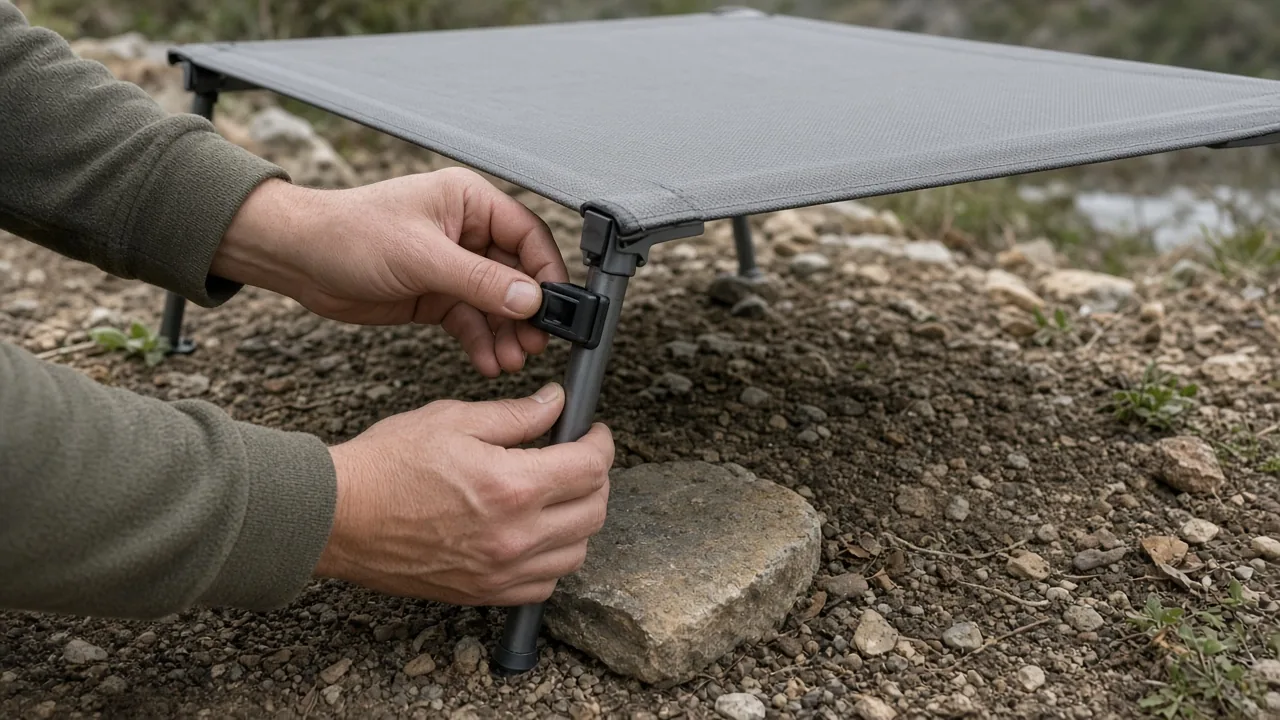
Make sure the base stays upright when you attach the top. One viewer noted that some support frames fall off when inverted, and partial locks can cause wobble.
If a leg feels loose, take the top off and inspect the connection point. Look for a clip that is only partially snapped or a leg that has been inserted at a slight angle. Re-seat it until you hear or feel a firm lock. On height-adjustable legs, run your hand along each joint to confirm the button pops fully through the hole.
On uneven ground, a four-leg table will almost always rock unless you shim one leg or choose a model with independent height adjustments. A small folding shovel or a flat rock can work as a trail-side shim in soft ground.
When cup holders and bottom shelves feel flimsy
Soft-top tables with cup holders and non-waterproof bins are okay for drinks or dry clothes, but they do not protect gear like a hard aluminum or closed storage panel.
Cup holders built into a soft top can look useful, but a tall bottle or mug may tip on flexible fabric. That makes them better for cans or insulated cups with wide bases. If you need a surface for a stove and pot, a hard top is safer.
Bottom shelves are useful for keeping bread, paper towels, or a jacket off the ground. Most use small hooks or soft fabric, so they are not built for heavy pots or full water jugs. A closed side compartment, like the one on the Camp Field-style table, can help keep animals away from food, but it adds setup time.
Which Best Lightweight Folding Camping Table Should Solo Campers Pick?
Small low tables suit one person because they pack light and set up quickly. Mid-size aluminum tables suit campers who want standing-height meal prep without a bulky group table.
Best use cases from the comparisons
The smallest mini table fits solo side-table duty. It is easy to set up, light to move around, and enough for a stove, a bowl, and a headlamp at one-cook camp. It is not a good choice for people who want a full kitchen work surface.
The aluminum Portal-style model provides a taller wet-weather work surface. Its aluminum top wipes clean and handles rain better than soft fabric. The weight is higher than a backpacking mini table, but for car campers that penalty is small. Setup took around 1 minute 30 seconds in comparisons, which is reasonable for a standing-height table.
The Camp Field-style table adds closed storage but needs longer assembly. The bottom storage compartment took the most time to install, and the whole table still needed one hand to carry when packed. Choose it when you want secure food storage at a basecamp and are willing to spend a few extra minutes setting up.
When a wood or DIY table is worth it
Wood or DIY designs make sense for car camping or hobby builds when you accept more weight and moisture maintenance, not for fast-pack overnight trips.
A wood table can be the visual anchor of a car-camping kitchen, but it needs to stay dry and out of prolonged sun. If you like the look, choose a hardwood like black walnut rather than soft pine, which is more likely to dent and warp. A wood table may not be worth it if you pack wet gear in the same trunk space.
A DIY carbon-fiber table is a different kind of project. It can be extremely light and packable, but building one requires patience with hinges, slot cutting, and small hardware. It is better for a camper who already enjoys workshop time than for someone who wants a table ready to go this weekend.
For backpacking, choose the smallest table with secure legs only if rain or wind won’t turn it into a weak cook surface. For car camping, choose a stable height-adjustable table and check fire rules, overnight temperature, and weather before packing. Pair it with a compact stove and a low chair if you want a full but simple solo camp kitchen.
— Camp Kit Journal
This article is general information about camping gear, not professional safety, medical, or wilderness training. Check fire restrictions, weather, and campsite rules before you go, and follow the manufacturer's instructions for your own equipment.
FAQ
What is the lightest folding camping table for backpacking?
The DIY carbon-fiber table weighs about 460 g (1 lb) and folds to roughly 13.8 × 3.1 × 2.4 inches, making it one of the lightest options. It suits solo backpacking side-table use but has limited surface area.
Are aluminum or wood camping tables better?
Aluminum resists weather and wipes clean but can feel hot or cold in extreme conditions. Wood looks warmer but is heavier, needs moisture care, and can warp or stain if left wet.
How do I stop a folding camping table from wobbling?
Re-seat the legs and check that all clips or buttons are fully locked. On uneven ground, use a small shim or choose a model with independently adjustable legs.
Can I use a folding camping table for a stove?
Yes, but only set a stove on a stable, level, locked table outside the tent. Never use a stove inside a tent due to carbon monoxide and fire risk.
What packed size is best for car camping vs backpacking?
Backpacking tables should fold into a slim block or tube like the 13.8 × 3.1 × 2.4 inch carbon table. Car camping can use larger flat or roll-up tables that fit in a trunk.



