Best Camp Chair for Bad Back: Skip the Moon Chair
The best camp chair for a bad back usually has an upright back, a flat seat, and firm armrests. This guide covers seat shape, lumbar support, and build safety for car camping and backpacking.
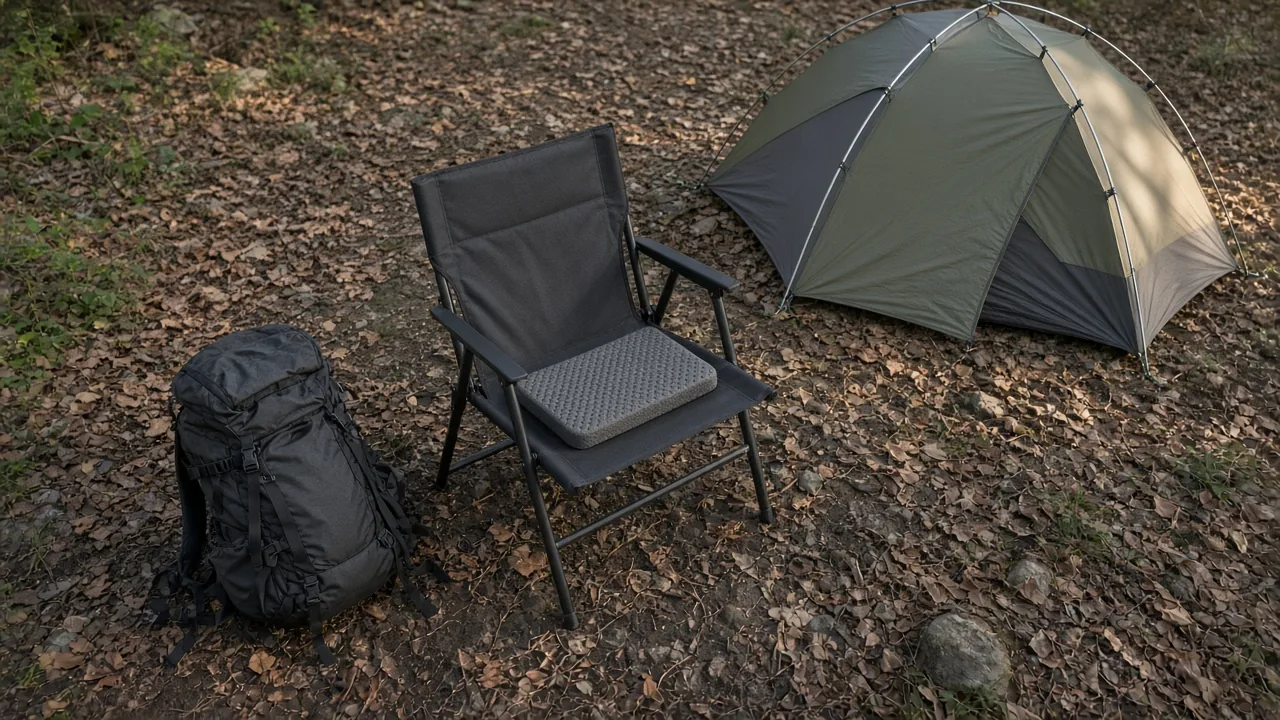
A bad back can turn a campfire evening into a long walk home, and the wrong chair makes it worse. The best camp chair for bad back users is usually not the one with the deepest recline or the softest sling. It is a chair with a fairly upright back, a flat or gently supportive seat, and enough structure to let you stand up without twisting. Start with seat shape, then match lumbar support and recline to how you will actually sit.
Best Camp Chair for Bad Back: Start with Seat Shape
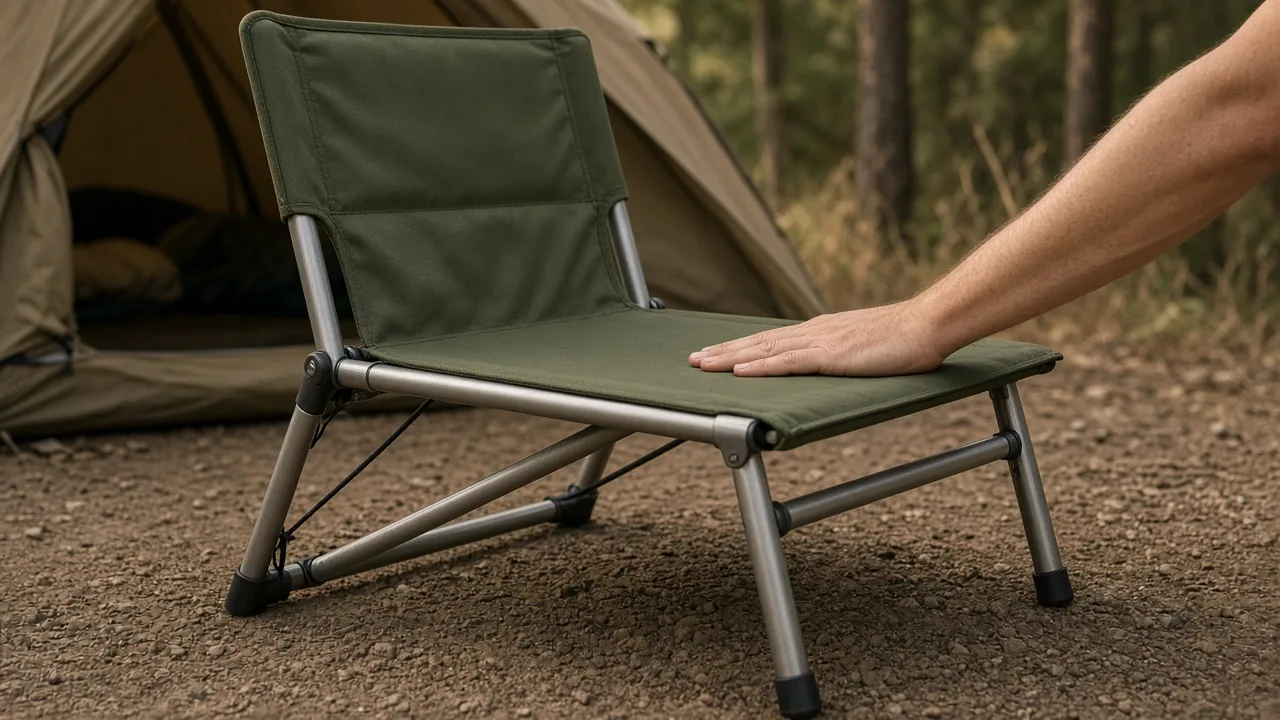
Choose a chair with a fairly upright back and a flat seat. That shape spreads your weight across your hips and the back of your thighs while keeping your spine stacked, instead of forcing your pelvis to roll backward.
Skip sling-style moon chairs and butterfly chairs if you have lumbar strain, disc trouble, or a back that tightens after sitting. Those chairs look comfortable for the first ten minutes because the fabric wraps around you, but the curve usually puts pressure between your lower back and mid-back. Many people report feeling fine at the campsite and paying for it later.
A Kermit-style chair is a better starting point. Its seat is close to flat, and the backrest sits fairly upright rather than curling the shoulders forward. That position lets the seat carry more of the load and asks less of the small muscles around your spine.
Match Lumbar Support and Recline to How You'll Sit
Lumbar support only works if it lands in the right place and fits the activity. A built-in pad can help, but the pad should press into the curve of your lower back without pushing your hips out of the seat.
For meals, map reading, or camp work, keep the chair upright. Save reclined angles for short rest only. A chair that leans back too far during dinner can leave you slouched and reaching forward at the same time.
Upright chairs with firm armrests
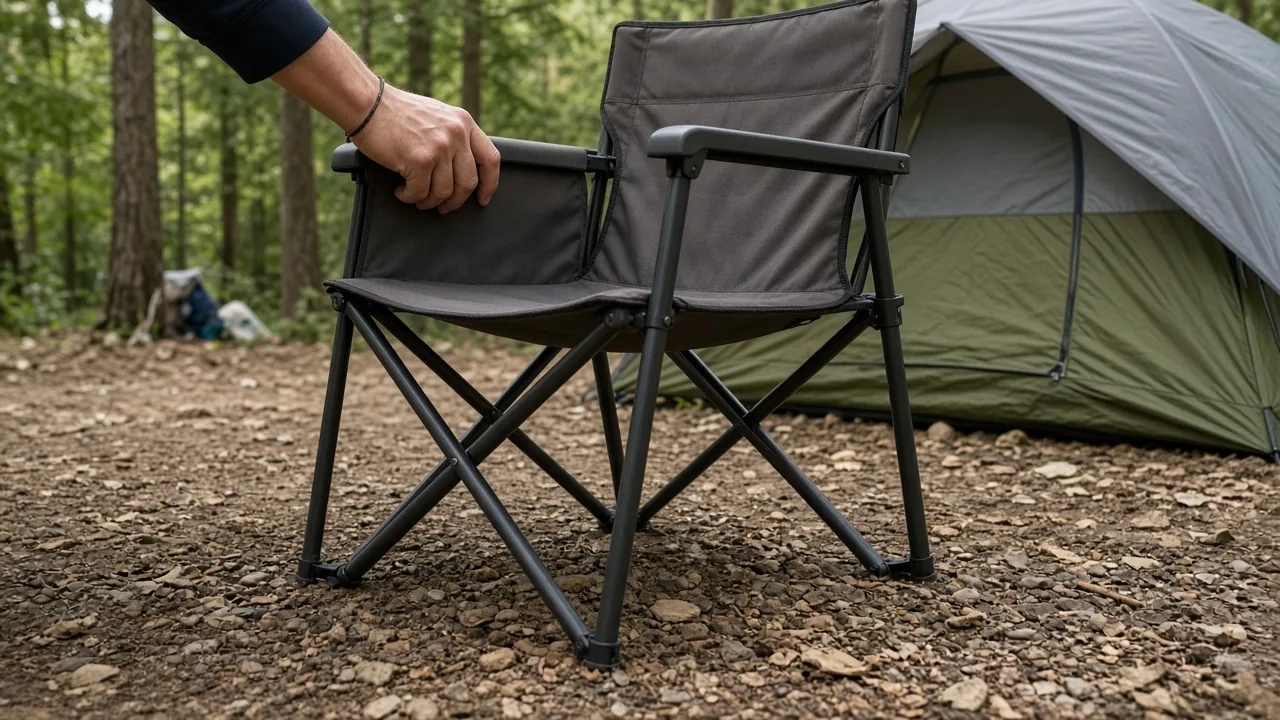
Firm armrests do more than hold your elbows. They give you something to push against when you stand up, which reduces the load on your lower back.
Soft or fabric-only armrests do not give the same leverage. If you already have trouble rising from a low seat, look for hard armrests that sit high enough for your hands to press down without leaning far forward. Chairs labeled for bad backs often include aluminum or reinforced plastic armrests for this reason, and some also include lumbar mesh or a small storage pocket under the arm.
Zero-gravity and multi-position chairs
Adjustable frames let you shift pressure points through an evening. A zero-gravity chair with a steel frame and multi-position recline can work well for car camping, especially if you alternate between upright and reclined positions.
Before you rely on a recliner, check the mechanism. The recline should move smoothly and lock firmly at each position. If a chair sags on one side or slips out of position while you are sitting, it can surprise your back into a sudden twist.
High-back and beach chairs
Backrest height matters most for taller users. A low-back chair may leave the upper back and neck with nothing behind them, which can turn a relaxed position into neck strain.
High-back beach chairs and high-back camping chairs can support the head when the backrest is tall enough for your body. Some low-back beach chairs advertise a high-back version with a seat height around 33 in and a wider seat, but only the high-back version addresses head and upper-back support. Match the backrest height to your torso rather than choosing by chair category alone.
Pick the Right Build for Car Camping vs. Backpacking
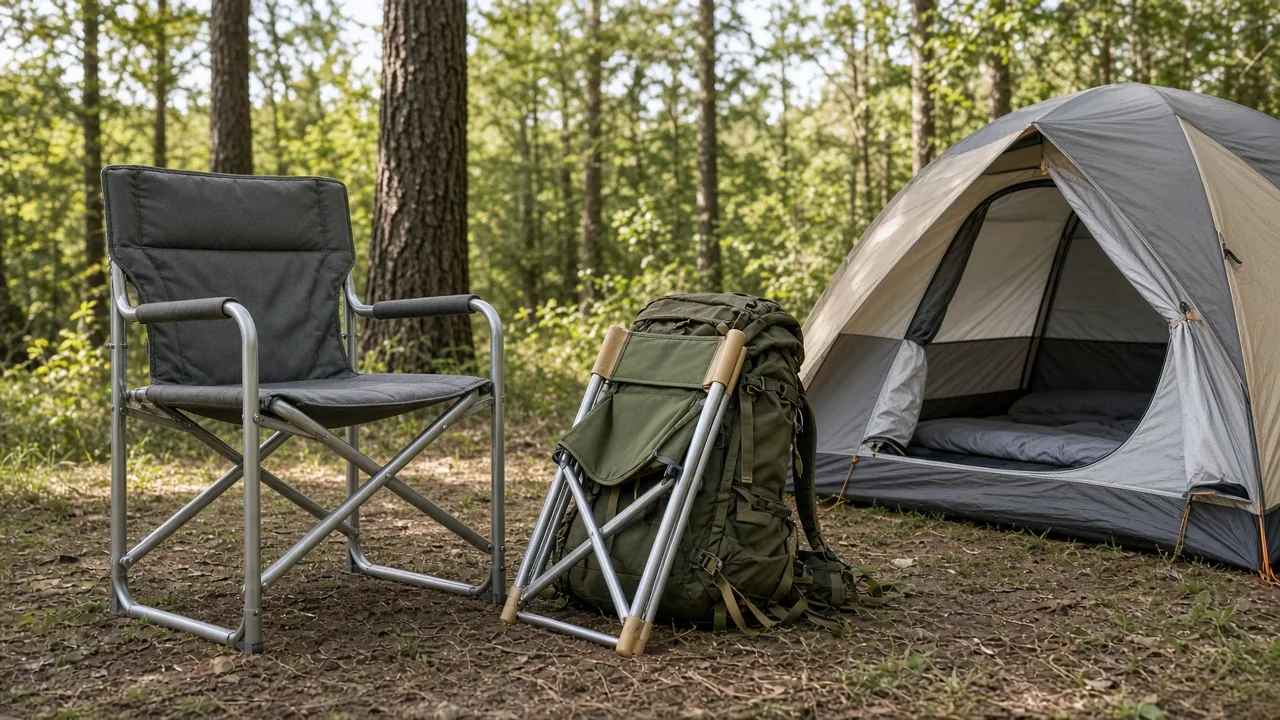
Back support should not disappear just because you are counting ounces. The trade-off changes by trip type, not by how much your back hurts.
For car camping, favor steel frames, wider seats, and built-in support even if the packed size is large. A 350 lb rated chair with a steel tube frame and a firm seat may be bulky, but it is more stable and easier to use over a full camp weekend.
For backpacking, drop weight only after keeping an upright, non-sling seat shape. A chair that is light enough to pack but curved enough to hurt you is not a real weight saving.
| Use | Better choice | Why |
|---|---|---|
| Car camping, bad back | Steel frame, firm seat, high back, hard armrests | Stability and all-evening support matter more than packed size |
| Backpacking, bad back | Aluminum Kermit-style chair with flat seat | Saves weight without forcing a curved spine |
| Short trail break | Ultralight stool or pad | Fine for 10 minutes, not a long camp sit |
| Tall user | High-leg or extendable high-back chair | Keeps head and upper back supported |
Kermit-style chairs
Kermit-style chairs use a flat seat and a comparatively upright back. The aluminum versions strike a balance between back support, weight, and packed size. Wood versions can look great, but they are heavier and harder to carry over a full camp weekend, especially if you are also carrying a pack, water, and food.
A folding Kermit-style chair is usually compact enough for the car but may take up more space than a detachable model. A detachable aluminum version packs flatter and costs more. If your lower back likes a flat seat, this style is one of the easiest starting points.
When to skip the ultralight option
A very light chair that forces a curved seated position may be fine for a ten-minute stream break. It can become painful for a bad back over a long camp evening, especially if you keep shifting and end up sitting on one hip.
If your current ultralight chair feels comfortable at first and hurts later, treat that as a shape problem rather than a personal weakness. The same pattern shows up with moon chairs and butterfly chairs, and it usually improves when you switch to a flatter, more upright seat.
Check Build Safety Before You Buy or Sit
Weight ratings do not guarantee a chair is safe. A 300 lb or 350 lb rating tells you the chair may hold a static load, but it says nothing about loose joints, sharp edges, folding pinch points, or long-term fatigue.
Look for closed tube ends, no exposed sharp edges, and folding joints that do not create a finger-sized pinch zone between 7 mm and 18 mm. Check the area under the seat and around the frame, not just the parts you can see when the chair is open.
What EN 581 tests cover
Outdoor chair safety standards include static load, fatigue, seat impact, armrest, and stability testing. In plain terms, a chair should survive repeated sitting cycles, a sudden drop into the seat, pressure on the armrests, and force against the front edge without cracking, loosening, or tipping.
A chair that shows loose joints after light use is poor value even if it has a high weight rating. Look for chairs that stay firm at the connection points after sitting, shifting, and folding. If the frame rocks or a rivet wobbles on day one, expect more movement later.
Quick pre-trip chair inspection
Before each trip, check for cracks near joints, loose fasteners, torn fabric, and any newly exposed edges. Pay attention to metal tube ends that may have lost a cap.
Do not load a wobbly chair past its listed weight. A damaged chair can fail suddenly when you lean back or push on one armrest, and a fall from a camp chair can turn an ordinary trip into a medical problem.
Common Problems and Fixes for Bad Backs
Most camp chair pain comes from one of three issues: a curved seat shape, no way to stand up safely, or a backrest that hits the wrong place. Match the fix to the problem instead of buying another soft chair and hoping.
I have lumbar strain and moon chairs hurt
This is a common pattern. Moon chairs and butterfly chairs can feel cozy for a short sit, but the curved fabric position tends to keep the spine rounded. If you have lumbar strain, the chair may feel fine while you are sitting and hurt hours later or the next morning.
Switch to a flat-seat Kermit-style chair or an upright camping chair with a firmer seat. Test it for a longer sit before buying. Ten minutes on a store shelf is not the same as ninety minutes beside a fire.
The chair feels good but I can't get out of it
Choose a chair with strong, hard armrests and a seat height that keeps your knees level with or slightly below your hips. If the seat is too low, you must hinge deeply from the waist to stand.
Push through the armrests rather than using your lower back to lift your whole torso. A chair with soft armrests may still be comfortable for sitting, but it will not help you exit.
The backrest hits at the wrong height
For adjustable high-back chairs, match the height to your body. Someone under about 5 ft 7 in of body height may fit a lower-leg model better. Taller users usually need a high-leg or extendable model, especially if they want head support while reclining.
If the backrest only reaches the middle of your upper back, the chair can create a pressure point instead of supporting you. Look for a backrest that reaches the head, or accept that the chair is a low-back chair and do not force a reclined position in it for long.
Can I heat the chair or tent?
No. Never use a stove or heater inside your tent. That includes canister stoves, liquid fuel stoves, charcoal, and any appliance made for outdoor cooking or heating. The carbon monoxide and fire risk is serious even with open vents.
For cold-weather sitting, add a closed-cell foam sit pad to the chair. The pad insulates without changing the chair shape, and it can double as a kneeling pad or a pack frame pad. Let dry clothing or a sleeping bag handle warmth when you are not moving.
Before Packing: Pick by Trip, Temperature, and Rain
Before packing, choose a chair by trip type, expected night temperature and rain, and whether its packed size and weight fit your load. A supportive chair only helps if it actually comes along.
For car camping, bring the chair that supports your back all evening, even if it is bulky. For backpacking, take the lightest chair that still has a flat or upright seat, and consider whether a sit pad is enough if the trip is short. Check the forecast before you go, and follow any fire restrictions or bear-safe food storage rules at the campsite. Pack in, pack out, and use established fire rings only. By Camp Kit Journal.
This article is general information about camping gear, not professional safety, medical, or wilderness training. Check fire restrictions, weather, and campsite rules before you go, and follow the manufacturer's instructions for your own equipment.
FAQ
What is the best type of camp chair for a bad back?
Usually a chair with a fairly upright back, a flat seat, and firm armrests works best. Kermit-style chairs are a good starting point because they keep the spine stacked and make it easier to stand up.
Why do moon chairs hurt my lower back?
Moon chairs and butterfly chairs wrap the fabric around you, which often rounds the spine and puts pressure between the lower and mid-back. The pain may appear hours later or the next morning.
How can I make it easier to stand up from a camp chair?
Choose a chair with hard, high armrests and a seat height that keeps your knees level with or slightly below your hips. Push through the armrests instead of lifting your torso with the lower back.
Should I use a stove or heater in my tent to stay warm?
No. Never use a stove or heater inside a tent because of carbon monoxide and fire risks. Use a closed-cell foam sit pad and dry clothing for cold-weather sitting instead.



